

Consumer Insights
Uncover trends and behaviors shaping consumer choices today
Procurement Insights
Optimize your sourcing strategy with key market data
Industry Stats
Stay ahead with the latest trends and market analysis.
The global high speed motor market attained a value of USD 15.09 Billion in 2025 and is projected to expand at a CAGR of 6.20% through 2035. The market is further expected to achieve USD 27.54 Billion by 2035. The growing trend of oil-free compression systems adoption in different processing industries is surging the demand of high-speed motors, which can provide higher efficiency, less vibration and, at the same time, have lower maintenance costs at continuously high speeds.
Long-term supply contracts with semiconductor and data center cooling OEMs are bringing about demand volume stability. Consequently, the high-speed motor market is turning into a contract-driven, performance-focused field where fewer, but more capable suppliers are leading the way for future growth. Besides, the market is also influenced by stricter industrial efficiency norms and the continuous electrification of auxiliary systems trend. Purchasers are opting for direct-drive high speed motors instead of mechanical gear-based systems to cut down energy losses and to lengthen the equipment's operating life.
The high speed motor market dynamics are being transformed by focused product launches rather than expansion through increased production volume. A number of top-tier motor manufacturers are bringing forward permanent magnet synchronous high-speed motors for industrial compressors and turbo blowers. Moreover, buyers are demanding motors that reduce footprint, maintenance downtime, and total system cost. Manufacturers are focusing on combined motor-drive architectures, thus enabling OEMs to simplify machine design and reduce commissioning time. For example, in September 2025, ABB merged its NEMA Motors Division with ABB Baldor-Reliance and emphasizing quality, heritage, and performance.
The core structural demand in the high speed motor market is shifting away from general-purpose motors towards application-specific high-speed units. The transition is being led by industries such as oil-free air compression, HVAC chillers, and precision machining. For example, in February 2026, Trane announced a strategic collaboration to accelerate next generation, oil-free centrifugal compressor technology for commercial HVAC applications. Suppliers are changing their offerings to compact, high power density motors which are in line with the stricter efficiency requirements. Premium motor lines are increasingly being associated with digital monitoring modules, thus facilitating predictive maintenance and offering industrial buyers the possibility to justify higher initial prices through lifecycle savings.
Compound Annual Growth Rate
6.2%
Value in USD Billion
2026-2035
Daihatsu highlighted next-generation electrified powertrain development integrating compact, high-speed motors to enhance efficiency and vehicle performance. Suppliers can innovate compact, high-RPM motor solutions tailored for small electric platforms and urban mobility applications.
IzmoMicro revealed advanced motor control technology enabling higher efficiency, precision torque management, and improved performance in high-speed applications. Such high speed motor market developments encourage control system developers to partner with OEMs to deliver intelligent, software-driven optimization.
Garrett Motion introduced high-speed, high-power-density e-powertrain architecture designed to deliver compact integration and superior energy efficiency. Component manufacturers can focus on lightweight materials and thermal management systems supporting higher rotational speeds and power density.
BYD launched Super e-Platform supporting megawatt flash charging and ultra-high-speed motors for enhanced electric vehicle acceleration and efficiency. Infrastructure providers and motor innovators can align with fast-charging ecosystems demanding robust, high-speed drivetrain technologies, capitalizing on such high speed motor market opportunities.
Manufacturers are shifting from standardized motor platforms to application-tuned high-speed motors. Designs are now focused on compressors, turbo expanders, CNC spindles, and vacuum pumps. This makes it possible for suppliers to offer higher torque stability at extreme speeds. United States and European government energy efficiency programs are facilitating this high speed motor market trend by urging industrial buyers to replace the old systems with the new ones. In January 2026, Ingersoll Rand introduced RSBN Nirvana high-efficiency screw compressors, enhancing industrial productivity with lower energy consumption and optimized performance.
In an attempt to reduce installation complexity for OEMs and end users, a number of high, speed motor suppliers are increasingly offering motors pre-integrated with variable frequency drives and control software. Integrated systems also allow better performance stability at high RPM ranges. For example, in September 2025, Renesas introduced advanced motor control MCUs delivering industry-leading performance, enhanced precision, and high-speed networking for next-gen motor applications. Industrial users are able to monitor real-time temperature, vibration, and bearing conditions. Government support for smart manufacturing and Industry 4.0 initiatives is therefore, indirectly, acting as a driving factor of the high speed motor market growth. Digital integration has now become the norm in industrial tenders rather than an optional upgrade.
The expansion of semiconductor fabricators and hyperscale data centers is a key factor behind the continuous demand in the high speed motor market. These types of facilities need compression and cooling systems that are oil-free and have low vibration. High speed motors are a key component of chillers, vacuum pumps, and cleanroom air handling units. In February 2023, Infinitum announced the launch of a sustainable motor designed specifically for data center cooling applications. Public funding under semiconductor manufacturing incentive programs is indirectly supporting this trend. Motor vendors with solid track records in terms of reliability are gaining preferred vendor status.
Process industries are cutting down their dependence on lubricated mechanical systems. High speed motors make it possible for compressors and blowers to operate without oil. This reduces the risk of contamination and the frequency of maintenance. Chemical, food, and pharmaceutical manufacturers are upgrading their facilities with such systems, redefining the entire high speed motor market dynamics. OEMs are also upgrading the bearing technology and thermal management in order to keep up with the demand. For instance, ABB introduced streamlined motor and drive platform, simplifying integration, enhancing performance, and reducing setup time for industrial automation systems in June 2025. Environmental regulations as well as workplace safety standards are further supporting this shift.
Motor manufacturers are investing in regional assembly and testing facilities for high speed motors. This shortens lead times and improves service responsiveness. Motor suppliers are also co-developing systems with compressor and machinery manufacturers at early design stages to lock in volumes and reduce competitive pressure, boosting the high speed motor market penetration. Government incentives supporting local manufacturing in the United States, India, and Southeast Asia are influencing these decisions. In February 2026, Eicher Motors approved INR 958 crore capacity expansion for Royal Enfield, boosting engine and drivetrain production to support growing motorcycle demand and high-speed motor output.
Read more about this report - REQUEST FREE SAMPLE COPY IN PDF
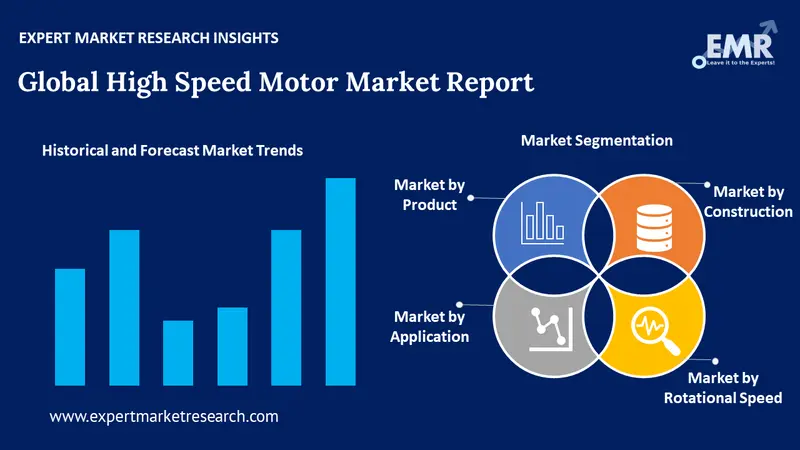
The EMR’s report titled “Global High Speed Motor Market Report and Forecast 2026-2035” offers a detailed analysis of the market based on the following segments:
Market Breakup by Product
Key Insight: AC motors lead the high speed motor market growth where durability and compatibility matter most. They support standardized industrial systems and long operating cycles. DC motors serve performance-driven niche categories demanding speed accuracy and compact layouts. In March 2025, Toshiba launched gate-driver IC that enhances automotive brushed DC motor performance, enabling equipment downsizing and improved efficiency. Buyers evaluate product choice based on load behavior, control needs, and lifecycle costs. Manufacturers align portfolios accordingly and maintain broad AC dominance while selectively expanding DC capabilities. Product decisions are increasingly tied to system-level optimization rather than standalone motor performance.
Market Breakup by Construction
Key Insight: As per the high speed motor market report, induction motors continue to be prevalent in applications where durability and long-term operational stability are required. They are the ideal choice for heavy-duty systems and machinery that run for long hours. On the other hand, permanent magnet motors are becoming more popular among buyers seeking compactness and high efficiency. These motors are the most suitable for sophisticated mechanical systems with restricted spaces. Manufacturers align products with the needs and priorities of customers.
Market Breakup by Application
Key Insight: Applications as considered in the high speed motor market report differ in operational priorities. Industrial machinery focuses on durability and continuous output. Aerospace and transportation emphasize precision and weight reduction. In February 2026, Vertical Aerospace selected Evolito to develop high-speed electric propulsion units for Valo aircraft, advancing e-VTOL performance and efficiency. Power generation values efficiency and stability. Automotive applications demand compact integration; meanwhile household uses remain limited. Application requirements influence motor design, materials, and control systems. This segmentation shapes portfolio development across suppliers.
Market Breakup by Rotational Speed
Key Insight: Lower speed ranges are primarily suited to stable and heavy-duty industrial applications requiring reliability and long operating lifetimes in place of performance, widening the high speed motor market scope. The mid-range speed strikes a reasonable balance between mechanical reliability and energy efficiency, suitable for a broad range of general industrial applications and commercial uses. Higher speed operating ranges are suited to advanced applications requiring compact designs that provide higher power density and performance.
Market Breakup by Region
Key Insight: Asia Pacific continues to be the largest and most intensive manufacturing region, while North America lays stress on high-value, performance-driven systems. Europe focuses on efficiency improvement and strict adherence to regulations. The high speed motor market in Latin America is gradually moving forward with a steady industrial expansion, and the Middle East and Africa are mainly project-driven, especially in the case of infrastructure and energy applications. Manufacturers have to adjust their approaches according to these different structural situations.
Read more about this report - REQUEST FREE SAMPLE COPY IN PDF
By product, AC motors dominate the market due to reliability, scalability, and wide industrial compatibility
AC motors hold the dominant position in the high speed motor industry due to their adaptability across industrial platforms. Manufacturers continue refining rotor balancing and thermal insulation to support sustained high-speed operation. AC designs continue to be preferred by OEMs producing compressors, blowers, and spindles requiring continuous loads. Their compatibility with variable frequency drives simplifies integration for machinery builders. Suppliers are also improving lamination materials to reduce core losses at elevated speeds. In March 2025, AEM launched second-generation magnet-free heavy-duty electric motor, delivering high efficiency, reduced rare-earth dependency, and robust performance for industrial and EV applications.
DC motors are gaining momentum across the high speed motor market scope where precision speed control is critical. High speed DC motors are increasingly used in aerospace actuators and specialized transportation systems. Manufacturers are enhancing brushless DC designs to minimize wear and improve efficiency. Compact size remains a major advantage in this category. OEMs value DC motors for applications requiring rapid acceleration and deceleration. Although cost remains higher, buyers accept pricing for performance gains.
By construction, induction motors lead market growth because of cost stability and operational robustness
Induction motors maintain their relevance in the high speed motor market because of their mechanical simplicity and straightforward operating characteristics. Producers keep improving rotor designs to minimize the generation of heat in these machines. These motors find extensive applications in compressors as well as in industrial machinery that needs stable torque output. Their robust construction makes them suitable for heavy-duty working conditions. The supply chain of induction motors is well developed and at a mature stage, thus they experience the benefit of a well-established procurement process and distribution channels. In September 2025, ABB India introduced IE5 high-efficiency motors without rare-earth magnets, boosting sustainability and performance in industrial applications.
Permanent magnet motors are also contributing to the high speed motor market revenue due to superior power density. High speed designs allow smaller motor footprints without sacrificing output. Manufacturers are improving magnet materials and cooling techniques. This supports higher rotational speeds. OEMs favor these motors for compact systems and energy-efficient designs. Reduced losses improve overall system efficiency. Although material costs fluctuate, buyers accept premiums for performance.
By application, industrial machinery accounts for a substantial share of the market, driven by continuous duty cycles and efficiency needs
Industrial machinery emerges to be the biggest application for high speed motors. They provide power to compressors, spindles, and process equipment that are operating without a pause. Motor manufacturers design them to be capable of carrying heavy loads over long periods and withstanding thermal stress. Customers are most concerned with the machine being operational and having predictable maintenance times. High speed motors increase the output of the plant by allowing shorter cycle times. OEMs design the motors in such a way that they are inseparable from the machinery. In October 2025, ASTEMO developed a new rare-earth-free synchronous reluctance motor achieving up to 315 kW output, cut resource risk and boost sustainable EV powertrains.
Aerospace and transportation applications are rapidly contributing to the high speed motor industry value. High speed motors are used to run actuators, propulsion subsystems, and auxiliary equipment. One of the main reasons for weight reduction is that manufactures are focusing on compact and lightweight designs. Customers want the same level of performance even under changing conditions. Therefore, suppliers are increasingly investing in advanced testing and certification facilities.
By rotational speed, 6000–10,000 RPM captures the largest share of the industry revenue with balancing performance, durability, and system integration
The 6000–10,000 RPM range continues to register the dominant high speed motor market share due to balanced performance. Motors in this range deliver high efficiency without excessive mechanical stress. OEMs favor this speed for compressors and industrial machinery. Meanwhile, manufacturers standardize designs to serve multiple applications. Buyers benefit from reliability and easier maintenance, and suppliers position these motors as core revenue generators. In November 2024, BorgWarner secured high-voltage coolant heater contracts across China, Korea, and Japan, expanding its thermal management footprint in key EV markets.
Motors operating above 15,000 RPM are witnessing comparatively faster growth in the high speed motor market. This is because of their need for sophisticated compressor technology, turbo machines, and even aeronautics products. To engineer products for such speeds, it is critical to have better balancing of the rotors, sophisticated bearings, and robust construction of the motor shafts. Managing thermal stress is critical in products operating above 15,000 RPM because they tend to have large thermal loads. The demand for more compact products with maximum power density appears to be on the rise.
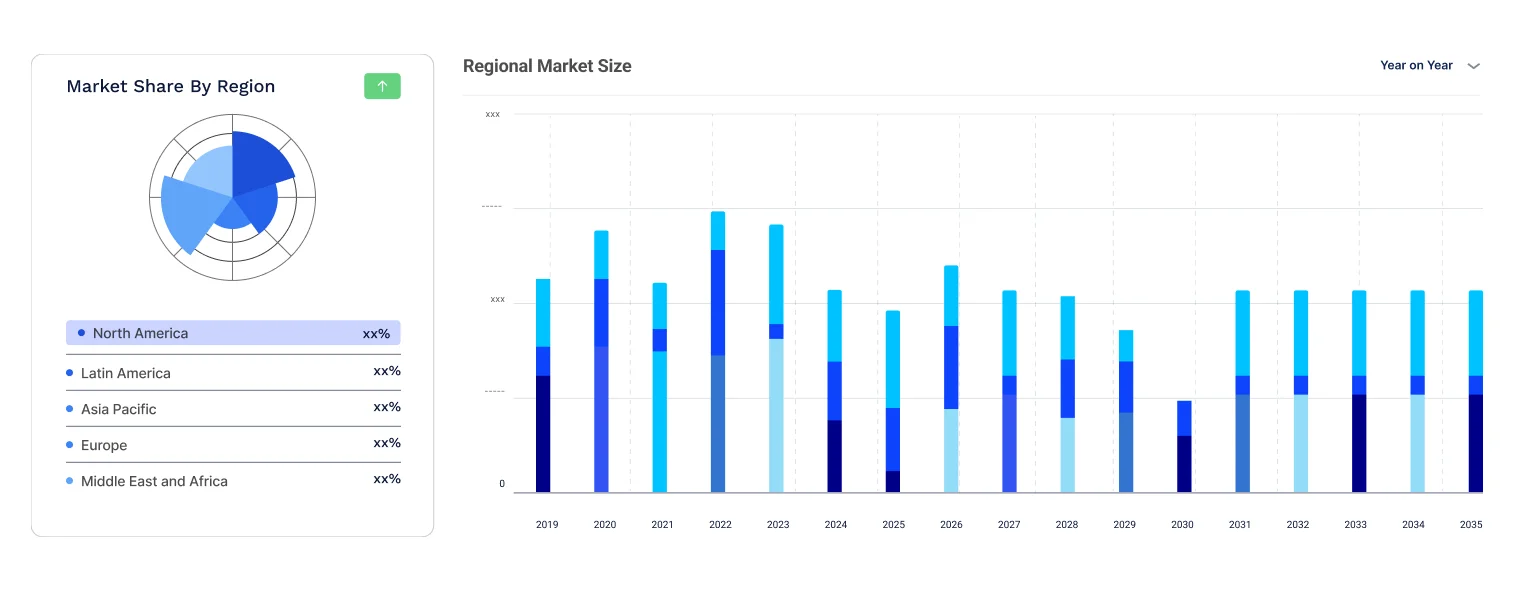

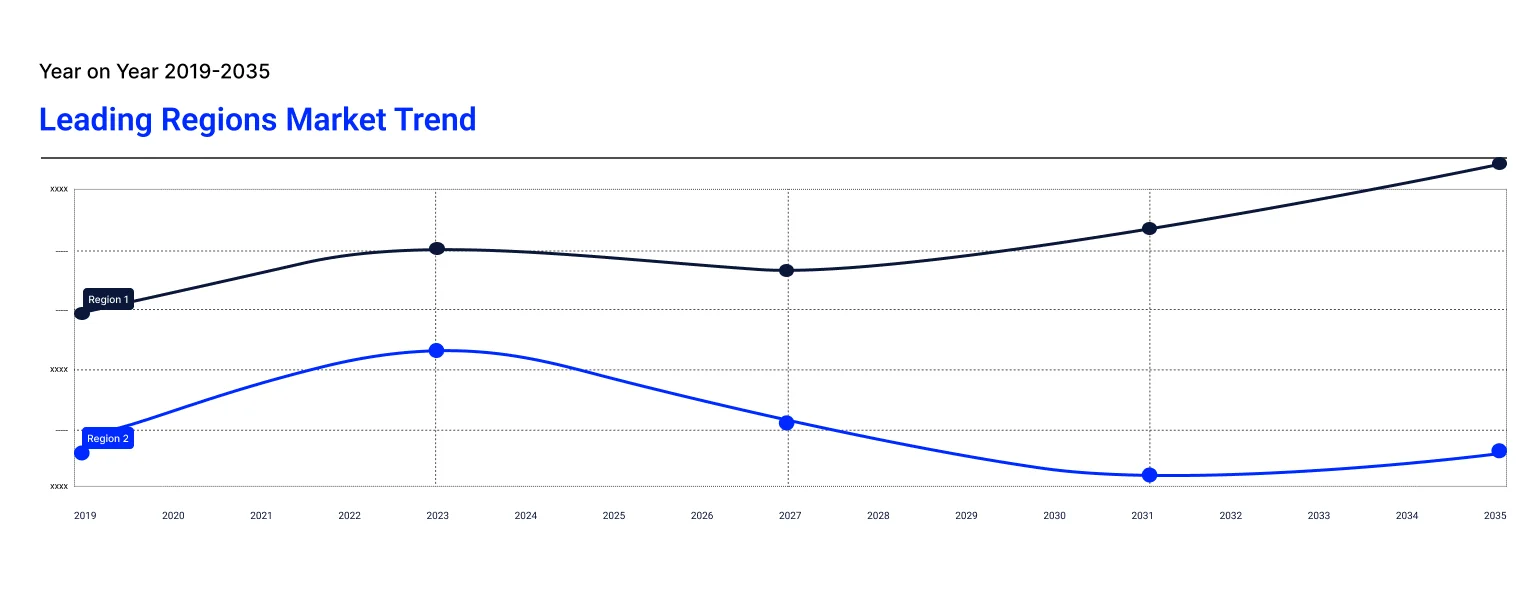
Asia Pacific clocks in the largest share of the market due to manufacturing density and rapid industrial motor adoption
Asia Pacific, powered by expanding manufacturing ecosystems and industrial clusters, is leading the global high speed motor market. Motor suppliers are serving high production levels from manufacturing of machinery, automotive, and electronics. Production strategies are mostly influenced by cost competitiveness and economies of scale, while OEMs are increasingly demanding reliable supply chains and localized technical support. As a result, manufacturers are enhancing regional assembly, calibration, and testing facilities to guarantee faster turnaround time and quality assurance.
On the other hand, North America is positioning itself as the fastest-growing regional market. Growth is driven by investments in advanced manufacturing, upgrades in automation and electrification in mobility and industrial sectors. Buyers are increasingly prioritizing energy efficiency, regulatory compliance, and lifecycle performance. Hence, motor suppliers are focusing on application-specific high-value solutions instead of volume-driven strategies only. The localization processes, such as setting up regional production and technical service centers, are enabling faster deliveries and stronger partnerships with OEMs.
Competition in the global market is centered on engineering depth rather than scale. Leading high speed motor market players are prioritizing ultra-high RPM stability, advanced cooling architectures, and tighter motor drive integration. Opportunities are strongest in compressors, semiconductor equipment, and electrified transport systems.
High speed motor companies are investing in permanent magnet materials optimization, oil free bearing systems, and digital diagnostics to secure long term OEM contracts. Another focus area is localization of high precision assembly to shorten lead times and support service intensive customers. Margins are improving where suppliers move upstream into system level collaboration. Players that align motors with application specific performance targets are gaining preference. The market competition is mostly leaning towards those manufacturers who manage to balance innovation, reliability, and supply chain control, at the same time, they avoid price led competition.
ABB is a company, founded in 1988 and headquartered in Zurich, Switzerland. The company is supporting the high speed motor market by means of application specific motor and drive packages. ABB is concentrating on high efficiency permanent magnet motors for compressors, turbochargers, and industrial spindles.
Hitachi, founded in 1910, has its main office in Tokyo, Japan. The corporation offers high speed motors for various sectors such as industrial machinery, transportation, and energy systems. Hitachi is known for the precision engineering, thermal management, and durability of its products. The company’s motors are fitted in compressors, rail systems, and the most advanced manufacturing equipment.
Regal Beloit Corporation, founded in the year 1955 and has its main office in Beloit, Wisconsin, United States. The firm caters to the high speed motor industry via engineered motor offerings for HVAC, industrial processing, and power transmission.
Meidensha Corporation is a 1897-established company with its headquarters in Tokyo, Japan. It is engaged in the production of high speed motors for industrial equipment, transportation, and power infrastructure. Meidensha mainly concentrates on electrical reliability, insulation technology, and vibration control. Its motors find applications in compressors, turbines, and heavy-duty systems.
*Please note that this is only a partial list; the complete list of key players is available in the full report. Additionally, the list of key players can be customized to better suit your needs.*
Other key players in the market include Fuji Electric Co., Ltd., Mitsubishi Electric, and Emerson, among others.
Unlock the latest insights with our high speed motor market trends 2026 report. Discover regional growth patterns, consumer preferences, and key industry players. Stay ahead of competition with trusted data and expert analysis. Download your free sample report today and drive informed decisions in the market.


Upto 15% Off
USD
$2499 $2249
$3999 $3599
$4999 $4249
$5999 $5099


*While we strive to always give you current and accurate information, the numbers depicted on the website are indicative and may differ from the actual numbers in the main report. At Expert Market Research, we aim to bring you the latest insights and trends in the market. Using our analyses and forecasts, stakeholders can understand the market dynamics, navigate challenges, and capitalize on opportunities to make data-driven strategic decisions.*
The market is projected to grow at a CAGR of 6.20% between 2026 and 2035.
Stakeholders are investing in application focused R&D, forming OEM partnerships, localizing precision assembly, integrating digital diagnostics, strengthening supply chains, and targeting high value industrial niches with long term service models.
The continuous development of electrification in several industries and increasing energy demand are the key industry trends propelling the market's growth.
The major regions in the industry are North America, Latin America, the Middle East and Africa, Europe, and the Asia Pacific.
The various products in the market are AC motors and DC motors.
Based on construction, the market is divided into induction motor and permanent magnet motor.
The significant applications include industrial machinery, aerospace and transportation, power generation, automotive, and household applications, among others.
Based on rotational speed, the market is divided into 3000-6000 RPM, 6000-10,000 RPM, 10,000-15,000 RPM, and above 15,000 RPM.
The key players in the market include ABB, Hitachi, Regal Beloit Corporation, Meidensha Corporation, Fuji Electric Co., Ltd., Mitsubishi Electric, and Emerson, among others.
In 2025, the market reached an approximate value of USD 15.09 Billion.
Companies face thermal management limits, bearing wear at extreme speeds, magnet material volatility, integration complexity with drives, certification delays, and rising customization costs under tighter efficiency regulations globally for suppliers.
Explore our key highlights of the report and gain a concise overview of key findings, trends, and actionable insights that will empower your strategic decisions.
| REPORT FEATURES | DETAILS |
| Base Year | 2025 |
| Historical Period | 2019-2025 |
| Forecast Period | 2026-2035 |
| Scope of the Report |
Historical and Forecast Trends, Industry Drivers and Constraints, Historical and Forecast Market Analysis by Segment:
|
| Breakup by Product |
|
| Breakup by Construction |
|
| Breakup by Application |
|
| Breakup by Rotational Speed |
|
| Breakup by Region |
|
| Market Dynamics |
|
| Competitive Landscape |
|
| Companies Covered |
|
Datasheet
One User
USD 2,499
USD 2,249
tax inclusive*
Single User License
One User
USD 3,999
USD 3,599
tax inclusive*
Five User License
Five User
USD 4,999
USD 4,249
tax inclusive*
Corporate License
Unlimited Users
USD 5,999
USD 5,099
tax inclusive*
*Please note that the prices mentioned below are starting prices for each bundle type. Kindly contact our team for further details.*
Flash Bundle
Small Business Bundle
Growth Bundle
Enterprise Bundle
*Please note that the prices mentioned below are starting prices for each bundle type. Kindly contact our team for further details.*
Flash Bundle
Number of Reports: 3
20%
tax inclusive*
Small Business Bundle
Number of Reports: 5
25%
tax inclusive*
Growth Bundle
Number of Reports: 8
30%
tax inclusive*
Enterprise Bundle
Number of Reports: 10
35%
tax inclusive*
How To Order

Select License Type
Choose the right license for your needs and access rights.

Click on ‘Buy Now’
Add the report to your cart with one click and proceed to register.

Select Mode of Payment
Choose a payment option for a secure checkout. You will be redirected accordingly.
Strategic Solutions for Informed Decision-Making
Gain insights to stay ahead and seize opportunities.

Get insights & trends for a competitive edge.

Track prices with detailed trend reports.

Analyse trade data for supply chain insights.

Leverage cost reports for smart savings

Enhance supply chain with partnerships.

Connect For More Information
Our expert team of analysts will offer full support and resolve any queries regarding the report, before and after the purchase.
Our expert team of analysts will offer full support and resolve any queries regarding the report, before and after the purchase.
We employ meticulous research methods, blending advanced analytics and expert insights to deliver accurate, actionable industry intelligence, staying ahead of competitors.
Our skilled analysts offer unparalleled competitive advantage with detailed insights on current and emerging markets, ensuring your strategic edge.
We offer an in-depth yet simplified presentation of industry insights and analysis to meet your specific requirements effectively.




