

Consumer Insights
Uncover trends and behaviors shaping consumer choices today
Procurement Insights
Optimize your sourcing strategy with key market data
Industry Stats
Stay ahead with the latest trends and market analysis.
The global home and personal care preservatives market attained a value of USD 1.35 Billion in 2025 and is projected to expand at a CAGR of 4.60% through 2035. The market is further expected to achieve USD 2.12 Billion by 2035. The growing requirement of microbiome-friendly skincare formulas and sustainable packaging solutions is leading to increased investments in irritation-resistant multifunctional preservatives with enhanced stability properties in waterless and sulfate-free personal care formulations.
There are also additional factors behind the growth in the home and personal care preservatives market, including rising regulatory issues associated with microbial contamination in cosmetic and hygiene formulas. Brands are investing heavily in advanced broad-spectrum preservatives that can ensure product efficacy during transport and different storage situations. The other significant factor influencing the growth of the market is the expansion of the premium segment of baby care products and cosmetic products suitable for sensitive skin, where manufacturers are opting for less toxic preservation systems.
There is a drastic change observed in the global home and personal care preservatives market as an increasing number of manufacturers are shifting toward the use of bio-preservatives that align with the new cosmetic safety regulations and goals of sustainable retailers. For example, in March 2024, Symrise launched Savelite HB, a biodegradable multifunctional cosmetic ingredient protecting formulations from oxidation, microorganisms, while enhancing moisturization and stability. This move demonstrates the increasing investment by premium beauty brands in preservative systems that allowed them to position themselves as having 'clean labels' while maintaining shelf-life safety.
The home and personal care preservatives market is also gaining impetus from premiumization of personal hygiene products in regions such as Asia Pacific and North America. Manufacturers are reformulating shampoos, liquid soaps, baby care products, and wet wipes in milder combinations of preservatives. Major players in the market are focusing on creating products that are compatible with both alcohol and sulfate-free formulations as beauty brands seek additives with multiple functions like formula stability in addition to protection from microbes. For example, in April 2025, Clariant Beauty launched innovative personal care solutions emphasizing sustainability, high-performance ingredients, enhanced sensory experiences, and eco-conscious cosmetic formulations.
Compound Annual Growth Rate
4.6%
Value in USD Billion
2026-2035
Read more about this report - REQUEST FREE SAMPLE COPY IN PDF
Innovations in personal care preservatives that employ biotechnology, multifunctionality, and sustainable formulation technologies were introduced by Ashland. This opens opportunities for producers in the home and personal care preservatives market to focus on developing multifunctional preservatives that are also made from biomass, thereby enabling a cleaner label of cosmetic formulation.
The launch of Savor’s personal care and beauty segment brought out innovations in carbon-based sustainable ingredients that can be used for cosmetics and preservatives. This paves way for producers of preservatives to look at alternative carbon-based preservatives.
BASF launched sustainable personal care products focusing on biodegradable raw materials, formulation security, and environmental cosmetic preservation technology. Such initiatives create possibilities for businesses in the home and personal care preservatives market to create environmentally friendly preservative systems compatible with the changing environmental laws and consumer demands.
Clariant launched Nipaguard SCE Vita, which is a naturally sourced preservative combination that facilitates efficient cosmetic preservation and sustainable beauty formulations. Innovations like this encourage market players to expand naturally sourced preservative portfolios while meeting rising demand for green and transparent skincare ingredients.
Natural source-based preservation technologies are transforming formulation practices in the home and personal care preservatives market as brands increasingly focus on sustainable product positioning strategies. Manufacturers of raw materials are increasingly launching preservative blends containing antimicrobials obtained through fermentation techniques, glycols, and organic acids to cut down on the use of conventional formaldehyde-based preservatives. In January 2026, SEQENS expanded its AdvensProtect portfolio with four bio-based multifunctional preservative blends supporting sustainable, high-performance cosmetic formulations and protection systems. Government-sponsored sustainable initiatives in Europe are also pushing manufacturers to minimize dependence on artificial chemicals for rinse-off and leave-on products.
The growing adoption of non-aqueous shampoos, concentrated cleansers, and compact skincare products is increasing the overall demand in the home and personal care preservatives market. In contrast to aqueous formulations, non-aqueous cosmetics must be stabilized by preservatives that can withstand varying levels of moisture content. In December 2025, Croda introduced naturally derived Crodabond CSN, enhancing SPF performance while improving sunscreen sustainability, spread-ability, and formulation efficiency. Regulators in multiple countries are also promoting lower packaging waste production, contributing to the expansion of compact cosmetic products.
Microbiome-based innovations in the realm of skin care products represent one of the most promising opportunities for preservative manufacturers since high-end beauty brands strive to achieve a balance between microbial protection and skin microbiome preservation. Conventional preservatives are being gradually modified because of the safety issues associated with skin irritation and barrier damage. Reflecting this trend in the home and personal care preservatives market, in June 2025, Epicutis unveiled Hydrobiome Mist, supporting skin microbiome balance, hydration, barrier protection, and daily defense against environmental stressors.
The use of artificial intelligence in preservative evaluation and formulation testing is becoming increasingly common in cosmetics production organizations, accelerating demand in the home and personal care preservatives market. Supplier companies are implementing AI-enabled predictive stability systems that assist brand owners in determining appropriate preservative levels, packaging interactions, and contamination hazards during the initial stages of product design. In April 2025, Nouryon launched BeautyCreations, an AI-powered formulation discovery platform accelerating innovative personal care product development and ingredient selection processes. Various government-backed digital manufacturing programs in North America and Europe promote adoption of automated laboratory technologies.
The need for extremely mild preservatives is increasing tremendously as consumers prefer personal care products that are safe to use on babies and are tested by dermatologists. Companies are using less parabens and other aggressive antimicrobial agents, and they are employing preservative systems that perform multiple functions while being safe, thereby boosting the overall home and personal care preservatives market penetration. In November 2025, Ceuticoz entered the baby care segment with science-driven newborn skincare products emphasizing dermatological safety, transparency, gentle formulations, and pediatric skincare innovation.
Read more about this report - REQUEST FREE SAMPLE COPY IN PDF
The Expert Market Research’s report titled “Global Home and Personal Care Preservatives Market Report and Forecast 2026-2035” offers a detailed analysis of the market based on the following segments:
Market Breakup by Type
Key Insight: The phenoxyethanol segment dominates the home and personal care preservatives market owing to ease of formulation, its acceptance by regulatory authorities, and compatibility with high-end cosmetics. The parabens preservatives continue commanding selective preference in manufacturing settings that seek a cost-effective method for ensuring stability of products. DMDM hydantoins are used mostly in rinse-off products which require higher levels of microbial protection due to moisture content. Benzoate/benzoic acid is becoming a preferred preservative in naturally formulated products due to its less aggressive nature. For example, in June 2025, Curie Co launched AmpliPQ, extending sodium benzoate preservative efficacy across broader pH ranges for advanced clean beauty formulations. The CMIT/MIT preservative system continues to maintain its relevance in industrial hygiene and some cleansing products despite increased safety concerns about it.
Market Breakup by Applications
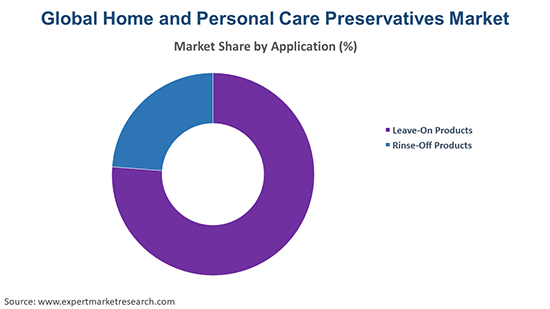
Key Insight: As per the home and personal care preservatives market report, leave-on products are expected to continue as the leading application category, owing to the need for effective preservation over time, along with compatibility with skin care actives and formulas for sensitive skin types. The rinse-off products category is growing consistently owing to the increasing preference for sulfate-free cleansers, luxury shampoos, and refillable hygiene products. Companies operating in both categories are focusing on formulating preservatives that have low irritation potential while delivering sustained antimicrobial action across different formulations.
Market Breakup by Region
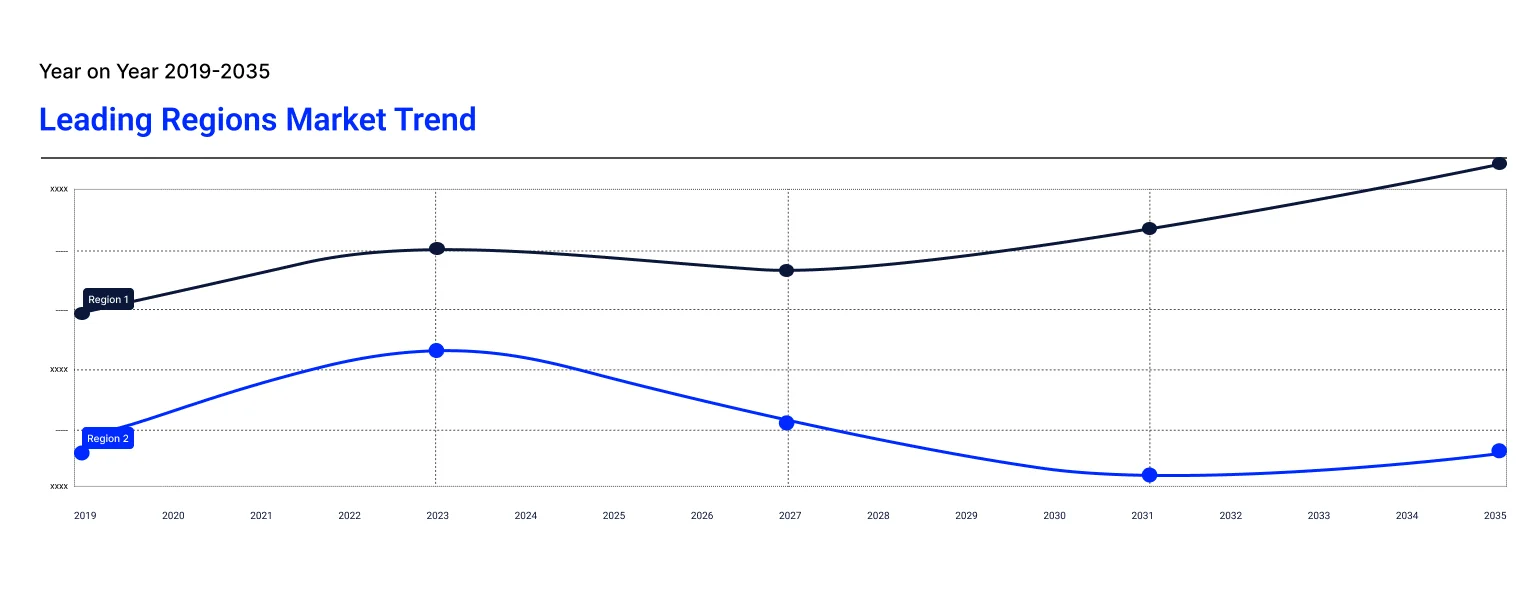
Key Insight: Europe is expected to retain its dominance within the global home and personal care preservatives market scope as a result of the stringent compliance in cosmetics, sustainable formulation approaches, and robust manufacturing of premium skin care formulations. North America continues to be a crucial market with respect to developments in dermatological beauty and multi-functional cosmetic ingredients. The Asia Pacific market is growing rapidly owing to higher consumerism in premium beauty, cosmetic exports, and the need for advanced preservation systems. Latin America is showing potential in terms of rising demand for preservatives through growth in hair and personal care products in climate-sensitive formulations. The Middle East and Africa regions are expected to develop gradually owing to increasing investments in premium grooming and halal cosmetics. In November 2025, Dow unveiled innovative beauty solutions featuring sustainable ingredients, advanced conditioning technologies, multifunctional polymers, and high-performance cosmetic formulation capabilities.
By type, the phenoxyethanol category dominates the market due to broad-spectrum formulation compatibility
Phenoxyethanol remains the dominant preservative in home and personal care formulations because there is growing demand for preservatives that are stable and globally acceptable in place of parabens. Phenoxyethanol is being extensively adopted for use in high-end skincare, baby care, wet wipes, and multi-function cosmetics because of its ability to be combined well with fragrances, emulsifiers, and botanical extracts. Manufacturers are using this preservative in surfactant-free and alcohol-free formulations where stability is vital, leveraging such trends in the home and personal care preservatives market. In March 2026, LANXESS showcased sustainable preservatives, multifunctional, and personal care solutions supporting safer, high-performance, environmentally conscious cosmetic formulations.
Caprylyl glycol is experiencing accelerating growth in the home and personal care preservatives market because of the need for multifunctional ingredients that can act as moisturizers while providing preservative functionality. Caprylyl glycol is receiving more preference in premium skincare formulations by manufacturers seeking lower preservative content without losing microbial inhibition capability. Manufacturers are marketing caprylyl glycol as a preservative synergist for low-water cosmetics, serum formulations, and sensitive skins. Caprylyl glycol also functions as a skin-conditioner in premium formulations.
By application, leave-on products account for a substantial share of the market revenue due to rising premium skincare formulation requirements
Leave-on formulations represent the largest share in the home and personal care preservatives market as such formulations are designed for long-term use and require a longer period of microbial stability. Premium moisturizers, anti-aging serums, sunscreens, and dermatological creams are becoming increasingly dependent on high-quality preservatives that do not negatively impact the efficacy of active ingredients. Currently, major investments are being made by cosmetic manufacturers into multifunctional preservative blends that enable the production of microbiome-friendly products and formulas for sensitive skin. Low-irritant preservative blends that can be used in retinol, peptides, probiotics, and plant actives formulas are being developed by suppliers. For example, in May 2025, BASF introduced retinol-based sustainable personal care innovations emphasizing biodegradable ingredients, formulation efficiency, and environmentally responsible cosmetic solutions.
Rinse-off formulations are witnessing rapid growth in the home and personal care preservatives market as brands are increasingly offering milder preservative blends and sulfate-free products like shampoos, body washes, facial cleansers, and intimate hygiene products. Increased consumer demand for products based on natural position statements results in the development of new preservative systems that allow them to retain their antimicrobial protection even at a higher-level exposure to water. The growing trend of concentrated and refill-based rinse-off formulations creates further complexities regarding microbial stability.
Read more about this report - REQUEST FREE SAMPLE COPY IN PDF
Europe dominates the global market due to stringent cosmetic safety regulations and sustainability initiatives
The European home and personal care preservatives market remains dominant because the region’s cosmetic regulations strongly influence formulation and ingredient selection strategies worldwide. Cosmetic firms that operate within different European nations are increasingly spending on safe preservative chemistry, biodegradable antimicrobial systems, and non-sensitizing cosmetic raw materials to meet strict regulations. High-end skincare and dermo-cosmetic products from German, French, and Italian firms are increasingly driving demand for multifunctional preservatives that work well with natural formulations. For example, in April 2026, WACKER showcased bio-based personal care ingredients supporting sustainable formulations, enhanced sensory performance, biodegradability, and advanced cosmetic application technologies.
The fastest-growing regional home and personal care preservatives market is Asia Pacific, driven by the rapid growth of middle-income populations and their increasing use of premium beauty products that require advanced cosmetic preservation systems. Cosmetics manufacturers in South Korea, Japan, China, and India are increasingly spending on multifunctional skincare, hybrid cosmetics, and products for sensitive skin that need sophisticated antimicrobial systems. Additionally, rising beauty product exports from the region to Europe and North America are increasing compliance with international preservative regulations.
The global industry is experiencing heightened innovation trends among ingredient makers in terms of multifunctional preservatives, microbiome-friendly preservatives, and non-irritating antimicrobials. Manufacturers are emphasizing the use of preservative mixes which minimize complexity but maximize protection in their coverage range among high-end skincare and hygiene products. Home and personal care preservatives market players are developing artificial intelligence-driven testing capabilities as well as environmentally friendly ingredients that are biodegradable and compatible with waterless cosmetics.
The collaboration among ingredient makers, indie beauty firms, and contract manufacturers enables companies to benefit from customized preservative platform innovations that have potential for commercialization. Some home and personal care preservative companies are expanding formulation laboratories in specific regions to provide rapid, application-specific regulatory guidance for multinational cosmetic firms. There is demand for natural preservatives in the market which is prompting ingredient makers to refine fermentation preservatives, booster preservatives, and organic acids-based preservatives.
The Dow Chemical Company was founded in 1897 and is based in Midland, Michigan, United States, specializing in multifunctional preservation ingredients for premium personal care and household formulations. This corporation designs sophisticated antimicrobial formulations suitable for sulfate-free and low water-content products.
BASF SE was established in 1865 and has headquarters located in Ludwigshafen, Germany. It manufactures and supplies broad spectrum preservatives and formulation solutions for cosmetics producers around the world.
Founded in 2006 with its base in Washington, United States, Emerald Kalama LLC produces preservatives from benzoin along with specialty antimicrobial compounds for personal care products. The firm emphasizes natural preservation systems and cosmetic products that are irritation-free.
Founded in 2015 and based in Germany, Thor GmbH works on developing antimicrobial compounds and specialty preservatives for cosmetics, toiletries, and industrial hygiene products. The firm is working on innovations for developing broad spectrum preservatives for high-end formulations.
Other key players in the market include Ashland LLC, LANXESS, Troy Corporation, Arkema S.r.l, Minasolve, The Procter & Gamble Company, Unilever PLC, L’Oréal S.A., Johnson & Johnson, Reckitt Benckiser Group Plc, Colgate-Palmolive Company, Henkel AG & Co. KGaA, and Estée Lauder Companies Inc., among others.
*Please note that this is only a partial list; the complete list of key players is available in the full report. Additionally, the list of key players can be customized to better suit your needs.*
Unlock the latest insights with our home and personal care preservatives market trends 2026 report. Discover regional growth patterns, consumer preferences, and key industry players. Stay ahead of competition with trusted data and expert analysis. Download your free sample report today and drive informed decisions in the market.


Upto 15% Off
USD
$2499 $2249
$3999 $3599
$4999 $4249
$5999 $5099


*While we strive to always give you current and accurate information, the numbers depicted on the website are indicative and may differ from the actual numbers in the main report. At Expert Market Research, we aim to bring you the latest insights and trends in the market. Using our analyses and forecasts, stakeholders can understand the market dynamics, navigate challenges, and capitalize on opportunities to make data-driven strategic decisions.*
The market is expected to be driven by the global preservative industry, which is expected to grow at a CAGR of about 4.60% in the forecast period of 2026 and 2035.
The major drivers of the industry such as rising disposable incomes, increasing population, and the rising household care industry.
China and India are the leading markets in the region, with India expected to witness a healthier growth in the coming years. The rising demand for home and personal care preservatives in China and India is expected to be a key trend guiding the growth of the industry.
North America, Europe, the Asia Pacific, Latin America, and the Middle East and Africa are the leading regions in the market.
Phenoxyethanol is the dominant type of the product in the market.
The leading application segments of the market are leave-on products and rinse-off products.
The leading players in the global home and personal care preservatives market are The Dow Chemical Company, BASF SE, Emerald Kalama LLC, Thor GmBH, Ashland LLC, Lanxess, Troy Corporation, Arkema S.r.l, and Minasolve, among others.
In 2025, the market reached an approximate value of USD 1.35 Billion.
Explore our key highlights of the report and gain a concise overview of key findings, trends, and actionable insights that will empower your strategic decisions.
| REPORT FEATURES | DETAILS |
| Base Year | 2025 |
| Historical Period | 2019-2025 |
| Forecast Period | 2026-2035 |
| Scope of the Report |
Historical and Forecast Trends, Industry Drivers and Constraints, Historical and Forecast Market Analysis by Segment:
|
| Breakup by Type |
|
| Breakup by Applications |
|
| Breakup by Region |
|
| Market Dynamics |
|
| Competitive Landscape |
|
| Companies Covered |
|
| Consumer Analysis |
|
| Report Price and Purchase Option | Explore our purchase options that are best suited to your resources and industry needs. |
| Delivery Format | Delivered as an attached PDF and Excel through email, with an option of receiving an editable PPT, according to the purchase option. |
Datasheet
One User
USD 2,499
USD 2,249
tax inclusive*
Single User License
One User
USD 3,999
USD 3,599
tax inclusive*
Five User License
Five User
USD 4,999
USD 4,249
tax inclusive*
Corporate License
Unlimited Users
USD 5,999
USD 5,099
tax inclusive*
*Please note that the prices mentioned below are starting prices for each bundle type. Kindly contact our team for further details.*
Flash Bundle
Small Business Bundle
Growth Bundle
Enterprise Bundle
*Please note that the prices mentioned below are starting prices for each bundle type. Kindly contact our team for further details.*
Flash Bundle
Number of Reports: 3
20%
tax inclusive*
Small Business Bundle
Number of Reports: 5
25%
tax inclusive*
Growth Bundle
Number of Reports: 8
30%
tax inclusive*
Enterprise Bundle
Number of Reports: 10
35%
tax inclusive*
How To Order

Select License Type
Choose the right license for your needs and access rights.

Click on ‘Buy Now’
Add the report to your cart with one click and proceed to register.

Select Mode of Payment
Choose a payment option for a secure checkout. You will be redirected accordingly.
Strategic Solutions for Informed Decision-Making
Gain insights to stay ahead and seize opportunities.

Get insights & trends for a competitive edge.

Track prices with detailed trend reports.

Analyse trade data for supply chain insights.

Leverage cost reports for smart savings

Enhance supply chain with partnerships.

Connect For More Information
Our expert team of analysts will offer full support and resolve any queries regarding the report, before and after the purchase.
Our expert team of analysts will offer full support and resolve any queries regarding the report, before and after the purchase.
We employ meticulous research methods, blending advanced analytics and expert insights to deliver accurate, actionable industry intelligence, staying ahead of competitors.
Our skilled analysts offer unparalleled competitive advantage with detailed insights on current and emerging markets, ensuring your strategic edge.
We offer an in-depth yet simplified presentation of industry insights and analysis to meet your specific requirements effectively.




