

Consumer Insights
Uncover trends and behaviors shaping consumer choices today
Procurement Insights
Optimize your sourcing strategy with key market data
Industry Stats
Stay ahead with the latest trends and market analysis.
The global horizontal directional drilling market attained a value of USD 10.61 Billion in 2025 and is projected to expand at a CAGR of 6.80% through 2035. The market is further expected to achieve USD 20.48 Billion by 2035. Rising investments in last-mile fiber connectivity and cross-country gas pipeline upgrades are accelerating demand for HDD rigs capable of long bores, high pulling forces, and real-time geological monitoring for safer underground deployment.
The global market is gaining renewed momentum as equipment manufacturers prioritize automation, better torque control, and precision guidance systems to support large-scale underground utility expansion. A notable development occurred in September 2022 when Vermeer introduced its next-gen D550 HDD rig equipped with an intelligent bore-planning engine and remote-assist diagnostics. This launch is well-timed, considering that fiber deployment hit a record level in 2023 with nine million newly connected homes, reflecting a 13% year-over-year growth, according to the horizontal directional drilling market analysis, a figure that directly amplifies the need for high-capacity HDD rigs equipped with digital monitoring.
Operators are shifting toward machines that reduce downtime and enhance job-site predictability. Drilling system providers are integrating telemetry modules, rig-health monitoring, hybrid hydraulic systems, and bore-path automation that help contractors manage geological complexity with less manual intervention. In November 2024, SLB launched Stream high-speed intelligent telemetry that increases drilling confidence and performance for complex wells. These updates also reflect growing demand from telecom, energy, and water authorities seeking faster project turnaround without compromising environmental standards, accelerating the horizontal directional drilling market value. HDD is also being positioned as the preferred method for urban infrastructure upgrades because it reduces surface disruption and aligns better with stringent municipal permitting norms.
Compound Annual Growth Rate
6.8%
Value in USD Billion
2026-2035
SINOCOREDRILL officially released the THD-280 Horizontal Directional Drilling Rig, an advanced solution intended for urban infrastructure, pipeline installation, and trenchless construction. Equipped with sophisticated hydraulic systems and accurate control features, the THD-280 provides outstanding torque, pullback strength, and drilling steadiness for demanding underground tasks. This launch boosts HDD efficiency for dense urban utility and pipeline installations.
Ditch Witch, the drill manufacturer from Oklahoma, introduced a new directional drill named JT21, providing 40% greater downhole horsepower compared to the current JT20 model. This horizontal directional drilling market development enhances performance with higher downhole horsepower for tougher underground jobs.
SLB unveiled Neuro autonomous geosteering, which adapts in real time to subsurface challenges to create more efficient, high-performing wells, while lowering the carbon footprint of drilling activities. This autonomous geosteering elevates HDD accuracy and drilling efficiency with real-time subsurface optimization.
Vermeer launched the D24 horizontal directional drill, crafted for urban utility setups. With its automated rod exchange, enhanced diagnostics, and rapid capabilities, the D24 provides greater efficiency and user-friendliness in crowded urban settings. Vermeer D24 improves HDD productivity through automated rod handling and diagnostics for urban utility work.
Growth in the market is strongly lifted by the rapid expansion of fiber-optic networks, especially across North America and Europe where governments are running aggressive broadband acceleration programs. In the United States, the BEAD program is pushing multi-billion-dollar investments toward rural fiber rollout, which naturally increases the need for trenchless installations to avoid surface disruptions. In February 2025, GD Energy Products (GDEP) launched the GD 500HDD pump, the latest addition to its line of horizontal directional drilling pumps. Contractors are responding by adopting longer-reach rigs and precise guidance systems that reduce strike risks in congested corridors, accelerating the demand in the horizontal directional drilling market. Companies like Vermeer and Ditch Witch are rolling out rigs optimized for telecom bores, supporting operators managing tight timelines and complex permitting tied to large-scale connectivity projects.
Oil and gas pipeline rehabilitation programs across the United States, Canada, and Latin America continue to anchor the market growth. Regulatory bodies are mandating safer replacement of aging steel lines, encouraging utilities to adopt HDD due to its controlled bore accuracy and minimal ecological disturbance. In April 2022, Vermeer unveiled the newest generation of maxi rig drills with the introduction of the 550,000-pound (249,475.8-kg) D550 horizontal directional drill (HDD). Energy companies are increasingly commissioning large-diameter crossings to navigate rivers, highways, and wetlands, redefining the horizontal directional drilling market trends.
With cities expanding utilities beneath highly congested zones, municipal authorities are emphasizing HDD for water, gas, and electrical conduit installations. Urban planners see HDD as a practical alternative to open-cut trenches, especially because it keeps traffic, business activity, and public movement relatively undisturbed. In May 2023, Ditch Witch reimagined DD240T mid-size directional drill features an upgraded CAT engine and industry premier Gardner Denver fluid pump. Major metro projects such as stormwater rehabilitation in Toronto and smart-grid cabling upgrades in Chicago have embedded HDD specifications into their tender processes, driving the overall horizontal directional drilling market value.
Environmental compliance is becoming a deciding factor in underground construction, pushing HDD forward because it minimizes surface excavation and soil displacement. Regulators across Canada and Europe are enforcing stricter erosion and sediment control mandates, making traditional trenching less favorable in protected ecological zones. In February 2024, Numaligarh Refinery Limited (NRL) executed one of the longest activities in Subansiri River, directly exemplifying new horizontal directional drilling market opportunities. HDD providers are responding by developing low-viscosity drilling fluids, fluid recycling systems, and bore-path modeling tools that reduce inadvertent returns.
The drilling ecosystem is undergoing a fast digital shift, enabling contractors to improve job-site efficiency and reduce operational risks. Leading manufacturers are embedding gyro-based guidance modules, cloud-linked telemetry units, automated drill cycles, and bore-planning software into new rigs, accelerating the horizontal directional drilling market growth. Halliburton, for example, launched the StreamStar wired drill pipe interface system, a breakthrough solution that delivers real-time, high-speed data and continuous downhole power in October 2025. Remote maintenance tools are also gaining traction because they cut downtime and support teams working in difficult terrain.
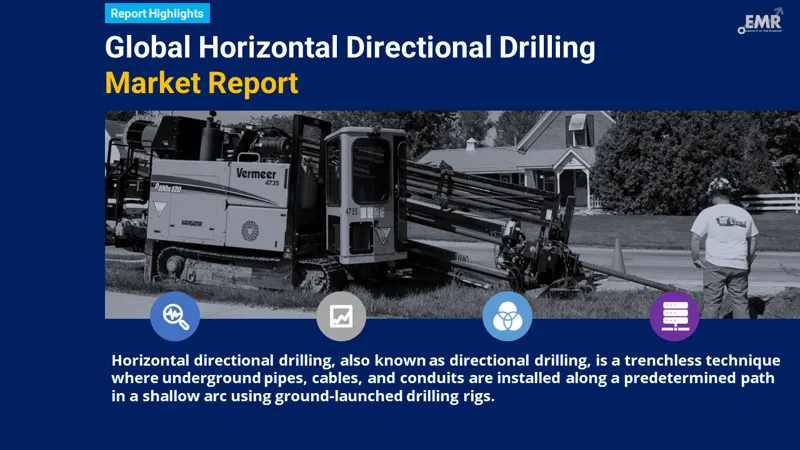
Read more about this report - REQUEST FREE SAMPLE COPY IN PDF
The EMR’s report titled “Global Horizontal Directional Drilling Market Report and Forecast 2026-2035” offers a detailed analysis of the market based on the following segments:
Market Breakup by Technique Type
Key Insight: Technique categorization as considered in the horizontal directional drilling market report shows conventional rigs retaining dominance because of cost-effectiveness, service networks, and regulatory comfort. At the same time, rotary steerable systems are expanding quickly as their automation, gyro guidance, and accuracy solve modern project pain points, particularly in congested urban and environmentally sensitive corridors.
Market Breakup by Component
Key Insight: Components analyzed in the market report include rigs, pipes, bits, reamers and ancillary tooling, each driven by durability, material science, and integration with fluid management and guidance technologies. Rigs dominate the horizontal directional drilling market with a huge margin, by delivering power and mobility, while high-performance reamers and bits are becoming revenue engines due to improved uptime and fewer rework cycles. Pipes and couplings are evolving with corrosion-resistant alloys and quick-join systems for faster assembly.
Market Breakup by Application
Key Insight: The onshore sector currently leads the market owing to tender volume and straightforward logistics, while offshore application is growing rapidly because of renewable energy, subsea fiber, and coastal pipeline needs. Technology suppliers are responding with quieter, low-emission rigs for urban onshore work and marine-capable packages for offshore tasks, driving the horizontal directional drilling market revenue growth. Contractors are forming hybrid fleets and cross-discipline partnerships combining civil, marine, and telecom expertise to win multi-modal projects.
Market Breakup by End Use
Key Insight: The report highlights telecom’s dominance in the horizontal directional drilling market due to widespread fiber rollout needs and predictable shallow-bore profiles, while utilities are accelerating HDD adoption for pipeline and duct replacement work demanding higher capacities and certified installation standards. Other uses such as oil and gas, power distribution, and remediation require specialty tooling and often project-specific certifications. Buyers are favoring suppliers that bundle equipment with training, QA, and validated installation procedures to reduce client liability and speed permit approvals.
Market Breakup by Region
Key Insight: Regional segmentation demonstrates how North America’s mature procurement and funding frameworks drive volume and technology adoption, making it the dominant horizontal directional drilling market. While Asia Pacific’s rapid urbanization and infrastructure programs are fueling growth. Europe is driven by environmental compliance and sophisticated utility tenders. Latin America is adopting HDD for pipelines and fiber where road disruption risk is high. Middle East and Africa are selectively deploying HDD for oilfield, infrastructure, and strategic fiber projects.
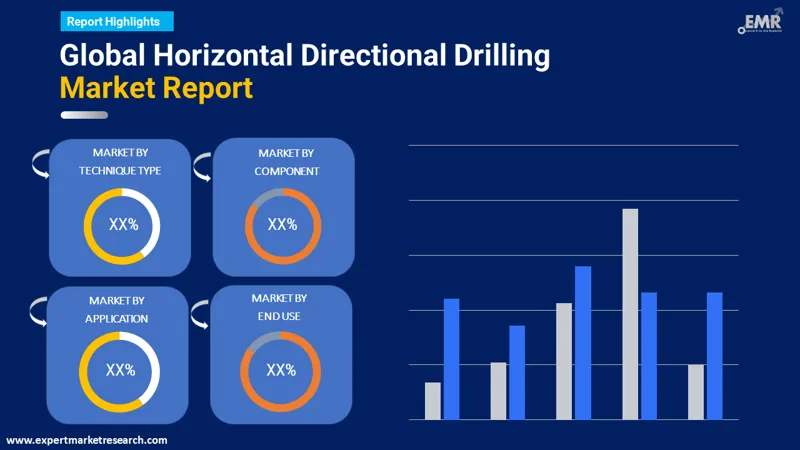
Read more about this report - REQUEST FREE SAMPLE COPY IN PDF
By technique type, conventional technique holds the dominant market share due to cost-effectiveness and operator familiarity advantages
Conventional HDD techniques remain dominant in the market because they combine proven reliability with broad operator familiarity, lower capital cost per unit, and compatibility with diverse utility projects across municipal, telecom, and pipeline sectors. Contractors favor conventional rotary-percussive and mud-rotary rigs since aftermarket parts and field-service networks are mature. These rigs help reduce repair lead times and improve fleet utilization, widening the horizontal directional drilling market scope.
Rotary steerable systems (RSS) are gaining traction because they materially improve bore-path accuracy, reduce doglegs, and accelerate penetration rates in difficult geology. Telecom and pipeline contractors prize such attributes when avoiding existing utilities. RSS vendors are integrating high-fidelity gyro steering, automated course-correction algorithms, and real-time downhole telemetry to shrink pilot-hole time and cut reamer passes. In March 2021, Wolverine Oilfield Technologies announced a commercial launch of its proprietary rotary steerable system Zenith 4 ¾. This precision reduces inadvertent returns and rework in urban corridors where utility strikes carry severe penalties.
By component, rigs register the dominant market share because of durability, power and versatility
Rigs remain the dominant component because they deliver the core mechanical capacity for HDD, required for long bores and large-diameter reaming. Manufacturers are differentiating through hybrid propulsion, predictive maintenance telematics, and modular designs that let operators configure rigs for telecom or pipeline demands. In August 2025, with the HDD20-E, Streicher presented the first fully electric horizontal drilling rig in its performance class, propelling demand in the horizontal directional drilling market. Fleet owners prioritize rigs that reduce fuel spend, simplify transport, and lower time-to-bore through automated rod handling and remote diagnostics.
Reamers are emerging as the fastest-growing component category since improved metallurgy, advanced cutters, and flow-optimized designs are enabling longer, cleaner reams with less torque and fewer passes. Suppliers are launching matched-package solutions such as reamer geometries tuned to specific drilling fluids, cutters designed for mixed-face conditions, and enhanced centralizers that reduce wandering. These improvements lower the risk of stuck reamers, directly improving job economics by reducing rig-hours and drilling fluid consumption.
By application, onshore projects secure the leading position in the market due to lower logistics costs and accessibility
Onshore HDD continues to dominate the industry because most telecom, water, sewage, and utility projects occur on land where mobilization and staging are simpler. Contractors benefit from direct site access, readily available crane or trailer support, and faster supply-chain turnaround for consumables. In October 2024, PKN Orlen confirmed that the first onshore connection was completed for the 1200MW Baltic Power wind farm in Poland. Many municipal programs and rural broadband grants explicitly specify HDD-friendly installation corridors, favoring proven onshore techniques.
Offshore applications are observing fast growth in the horizontal directional drilling market for specialized shore-crossings, subsea cable pulls, and pipeline tie-ins that demand horizontal pre-drilling from shallow marine platforms or beach-based launcher systems. Growth is driven by rising offshore wind, subsea fiber, and coastal pipeline projects that cannot tolerate shallow water trenching due to environmental or navigational restrictions.
By end use, telecommunication projects register the largest market share owing to rapid fiber optic deployment requirements
Telecommunication remains the largest end-use category as global fiber expansion programs generate vast volumes of shallow, high-frequency bores. Fiber contractors demand rigs and guidance suites optimized for shallow depth control, fast pilot-hole cycles, and minimal surface restoration. OEMs are producing lighter rigs and rapid-attach tooling specifically tuned for fiber contracts, as well as turnkey packages that include guidance systems and micro-trenching backups for last-mile connection, broadening the chances of horizontal directional drilling market expansion.
Utility projects are the fastest-growing end use as water, gas, and electricity networks require upgrades without surface disruption. Aging pipeline replacement, river and highway crossings, and urban densification place a premium on trenchless technologies for safe, rapid installations. In July 2025, CST Utilities announced the acquisition of Indiana-based underground drilling firm Daystar Directional Drilling, expanding its Midwest presence to Indiana. Utilities prefer certified procedures, third-party QA, and larger-diameter bores for future-proofing networks, prompting demand for higher-capacity rigs and specially certified connections.
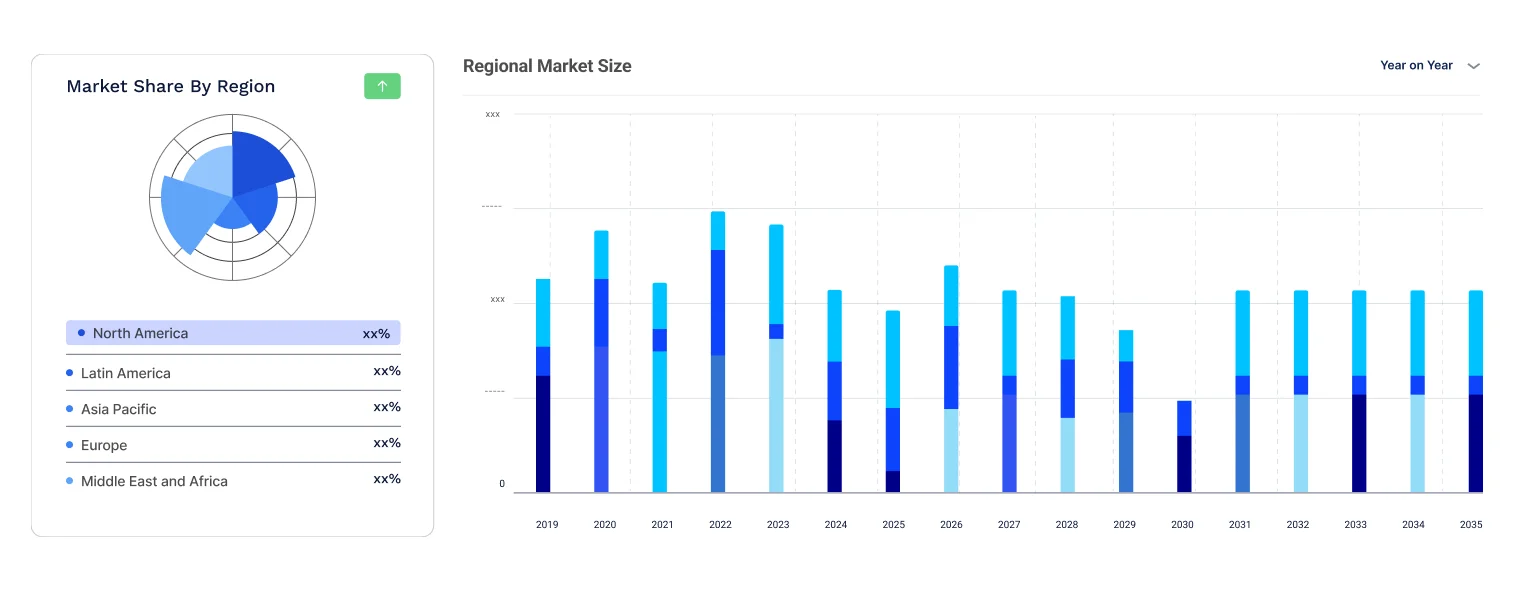
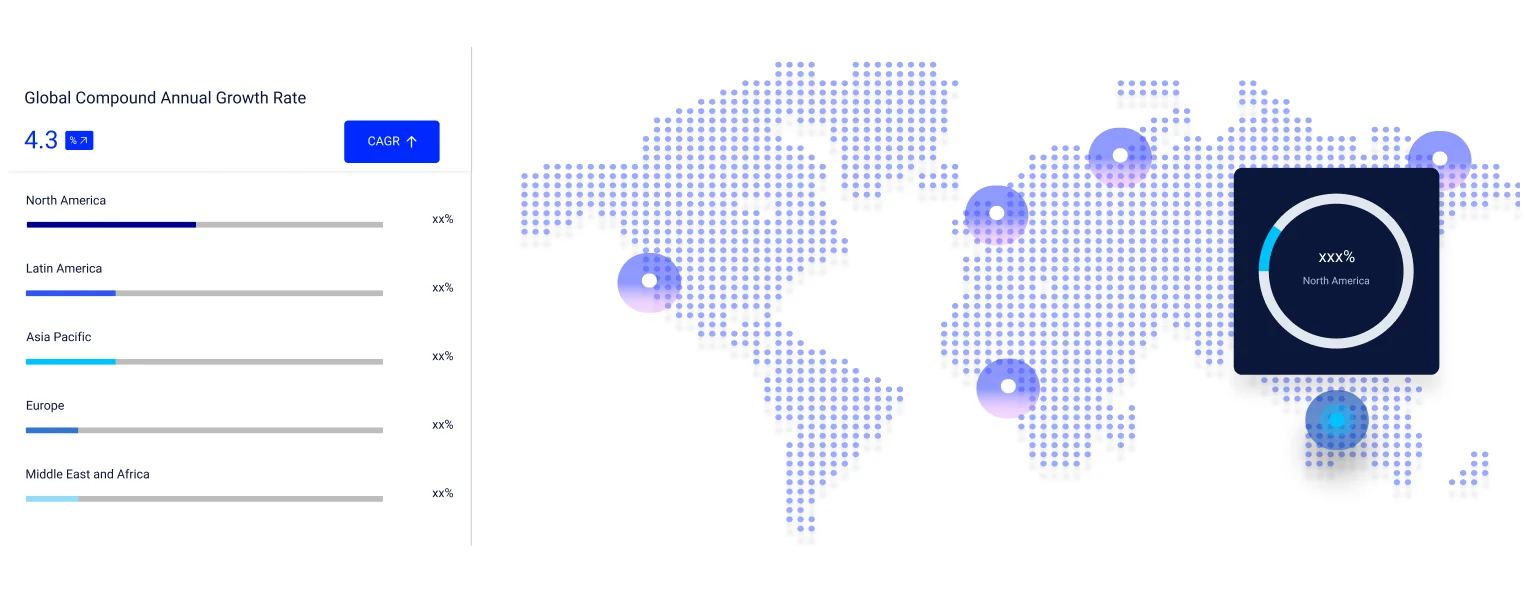
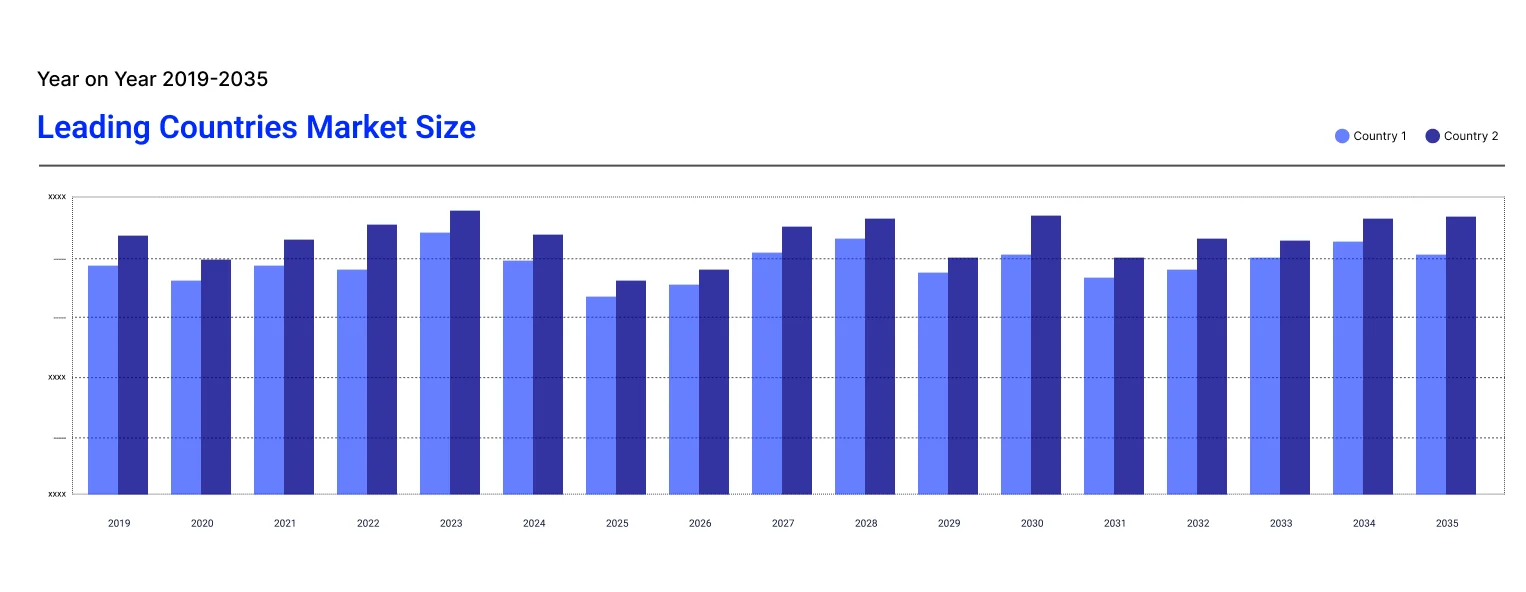
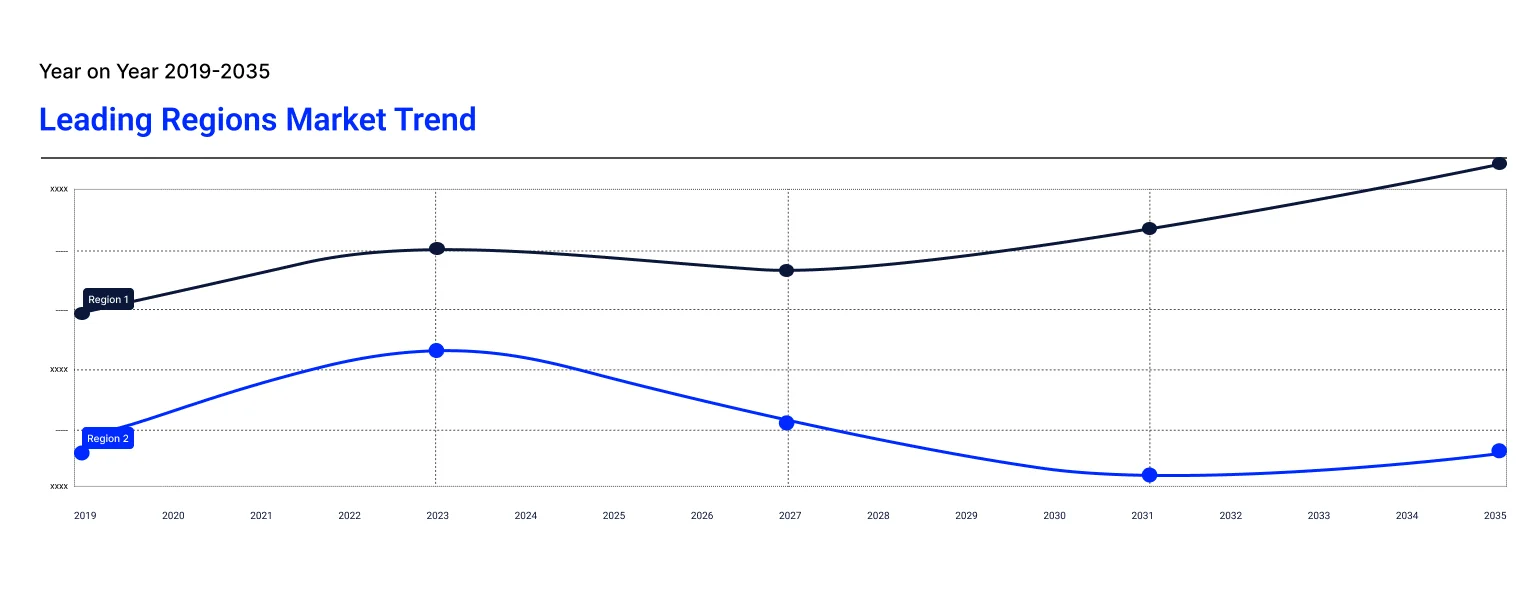
North America secures the leading market position because of heavy infrastructure spend and procurement
North America leads the market because of substantial public and private investments in broadband expansion, pipeline replacement, and urban utility upgrades. Large federal and state programs, including broadband grant schemes and pipeline safety initiatives, are creating consistent demand for HDD-capable fleets. OEMs and service providers maintain dense dealer networks and rapid field service, making procurement and warranty support attractive to contractors.
The horizontal directional drilling market in Asia Pacific is growing rapidly as urbanization, national broadband programs, and energy infrastructure expansions accelerate demand across the region. Governments are promoting domestic manufacturing and local content, prompting OEMs to establish regional assembly and service hubs. Dense urban centers encourage compact rigs and low-noise, low-emission powertrains tailored to strict permitting, while rural connectivity pushes demand for long-reach rigs that can cross varied terrain.
Leading horizontal directional drilling market players are heavily investing in telemetry-enabled rigs, recyclable drilling fluids, and compact urban fleets as municipalities tighten reinstatement and environmental rules. The shift toward multi-utility corridors, large-scale fiber programs, and renewable-related pipeline crossings is creating strong opportunities for vendors offering end-to-end solutions including rigs, fluids, guidance systems, and training under a unified contract.
Partnerships between horizontal directional drilling companies, GIS software providers, and fluid recyclers are also expanding because owners increasingly expect documented bore-path accuracy and reduced waste volumes. This environment favors companies capable of combining robust engineering with advanced data capture, automated steering, and rapid service support. Mid-tier contractors are upgrading older fleets, opening space for vendors delivering retrofit kits, predictive maintenance tools, and flexible financing models aligned with long-term framework contracts.
American Augers, Inc., established in 1970 and headquartered in West Salem, Ohio, provides large-rig HDD systems designed for long crossings, pipeline installations, and heavy civil programs. The company focuses on rugged rigs, advanced mud pump technology, and high-capacity cleaning systems that support high-torque drilling in complex geology.
Ellingson Companies, founded in 1970 and based in Minnesota, United States, operates as a full-service HDD contractor specializing in telecommunications, water, and energy infrastructure. The company combines geospatial modeling, subsurface risk analysis, and precision-guided drilling to deliver low-impact installations across environmentally sensitive corridors.
Herrenknecht AG, founded in 1975 and headquartered in Germany, offers premium HDD systems engineered for long-distance pipelines, shore crossings, and technically demanding bores. Known for its high-power rigs and automated drill-string handling, the company integrates advanced downhole tools, gyro-guided navigation, and condition-monitoring systems that enhance accuracy and reduce rework.
Ferguson Michiana Inc., established in 1979 and located in Michigan, United States, supplies HDD contractors with drilling tools, mud systems, cutters, and reamers engineered for durability and optimized bore efficiency. The company focuses on high-performance consumables tailored for telecom, municipal, and utility projects requiring frequent, shallow bores.
*Please note that this is only a partial list; the complete list of key players is available in the full report. Additionally, the list of key players can be customized to better suit your needs.*
Other key players in the market include Creighton Rock Drill Ltd., among others.
Unlock the latest insights with our horizontal directional drilling market trends 2026 report. Discover regional growth patterns, consumer preferences, and key industry players. Stay ahead of competition with trusted data and expert analysis. Download your free sample report today and drive informed decisions in the market.
Underground Utility Mapping And Detection Technologies
Digital Twin Adoption For Subsurface Infrastructure
Offshore Wind Cable Burial Solutions
Onshore Pipeline Construction Services
Horizontal Directional Drilling Growth And Trends For Utilities


Upto 15% Off
USD
$2499 $2249
$3999 $3599
$4999 $4249
$5999 $5099


*While we strive to always give you current and accurate information, the numbers depicted on the website are indicative and may differ from the actual numbers in the main report. At Expert Market Research, we aim to bring you the latest insights and trends in the market. Using our analyses and forecasts, stakeholders can understand the market dynamics, navigate challenges, and capitalize on opportunities to make data-driven strategic decisions.*
In 2025, the market reached an approximate value of USD 10.61 Billion.
The market is projected to grow at a CAGR of 6.80% between 2026 and 2035.
The market is estimated to witness a healthy growth in the forecast period of 2026-2035 to reach USD 20.48 Billion by 2035.
Key strategies driving the market include investing in telemetry, expanding training programs, developing compact rigs for urban work, strengthening fluid recycling partnerships, and co-engineering project-specific tooling solutions to meet evolving utility, telecom, and municipal performance expectations.
Key trends aiding market expansion include rising emphasis on the adoption of eco-friendly drilling mechanisms as well as the increasing research and innovations by the key industry players.
The major regions in the industry are North America, Latin America, the Middle East and Africa, Europe, and the Asia Pacific.
The significant technique types of horizontal directional drilling include conventional and rotary steerable system.
The significant components include rigs, pipes, bits, and reamers, among others.
The significant applications of HDD are onshore and offshore.
The key players in the market include American Augers, Inc., Ellingson Companies, Herrenknecht AG, Ferguson Michiana Inc., and Creighton Rock Drill Ltd., among others.
Equipment downtime, fluctuating drilling-fluid regulations, and increasing urban permitting delays pressure project efficiency and margins. Companies also face rising compliance costs, labor shortages, difficult geology risks, and higher expectations for bore-path documentation.
Explore our key highlights of the report and gain a concise overview of key findings, trends, and actionable insights that will empower your strategic decisions.
| REPORT FEATURES | DETAILS |
| Base Year | 2025 |
| Historical Period | 2019-2025 |
| Forecast Period | 2026-2035 |
| Scope of the Report |
Historical and Forecast Trends, Industry Drivers and Constraints, Historical and Forecast Market Analysis by Segment:
|
| Breakup by Technique Type |
|
| Breakup by Component |
|
| Breakup by Application |
|
| Breakup by End Use |
|
| Breakup by Region |
|
| Market Dynamics |
|
| Competitive Landscape |
|
| Companies Covered |
|
Datasheet
One User
USD 2,499
USD 2,249
tax inclusive*
Single User License
One User
USD 3,999
USD 3,599
tax inclusive*
Five User License
Five User
USD 4,999
USD 4,249
tax inclusive*
Corporate License
Unlimited Users
USD 5,999
USD 5,099
tax inclusive*
*Please note that the prices mentioned below are starting prices for each bundle type. Kindly contact our team for further details.*
Flash Bundle
Small Business Bundle
Growth Bundle
Enterprise Bundle
*Please note that the prices mentioned below are starting prices for each bundle type. Kindly contact our team for further details.*
Flash Bundle
Number of Reports: 3
20%
tax inclusive*
Small Business Bundle
Number of Reports: 5
25%
tax inclusive*
Growth Bundle
Number of Reports: 8
30%
tax inclusive*
Enterprise Bundle
Number of Reports: 10
35%
tax inclusive*
How To Order

Select License Type
Choose the right license for your needs and access rights.

Click on ‘Buy Now’
Add the report to your cart with one click and proceed to register.

Select Mode of Payment
Choose a payment option for a secure checkout. You will be redirected accordingly.
Strategic Solutions for Informed Decision-Making
Gain insights to stay ahead and seize opportunities.

Get insights & trends for a competitive edge.

Track prices with detailed trend reports.

Analyse trade data for supply chain insights.

Leverage cost reports for smart savings

Enhance supply chain with partnerships.

Connect For More Information
Our expert team of analysts will offer full support and resolve any queries regarding the report, before and after the purchase.
Our expert team of analysts will offer full support and resolve any queries regarding the report, before and after the purchase.
We employ meticulous research methods, blending advanced analytics and expert insights to deliver accurate, actionable industry intelligence, staying ahead of competitors.
Our skilled analysts offer unparalleled competitive advantage with detailed insights on current and emerging markets, ensuring your strategic edge.
We offer an in-depth yet simplified presentation of industry insights and analysis to meet your specific requirements effectively.




