

Consumer Insights
Uncover trends and behaviors shaping consumer choices today
Procurement Insights
Optimize your sourcing strategy with key market data
Industry Stats
Stay ahead with the latest trends and market analysis.
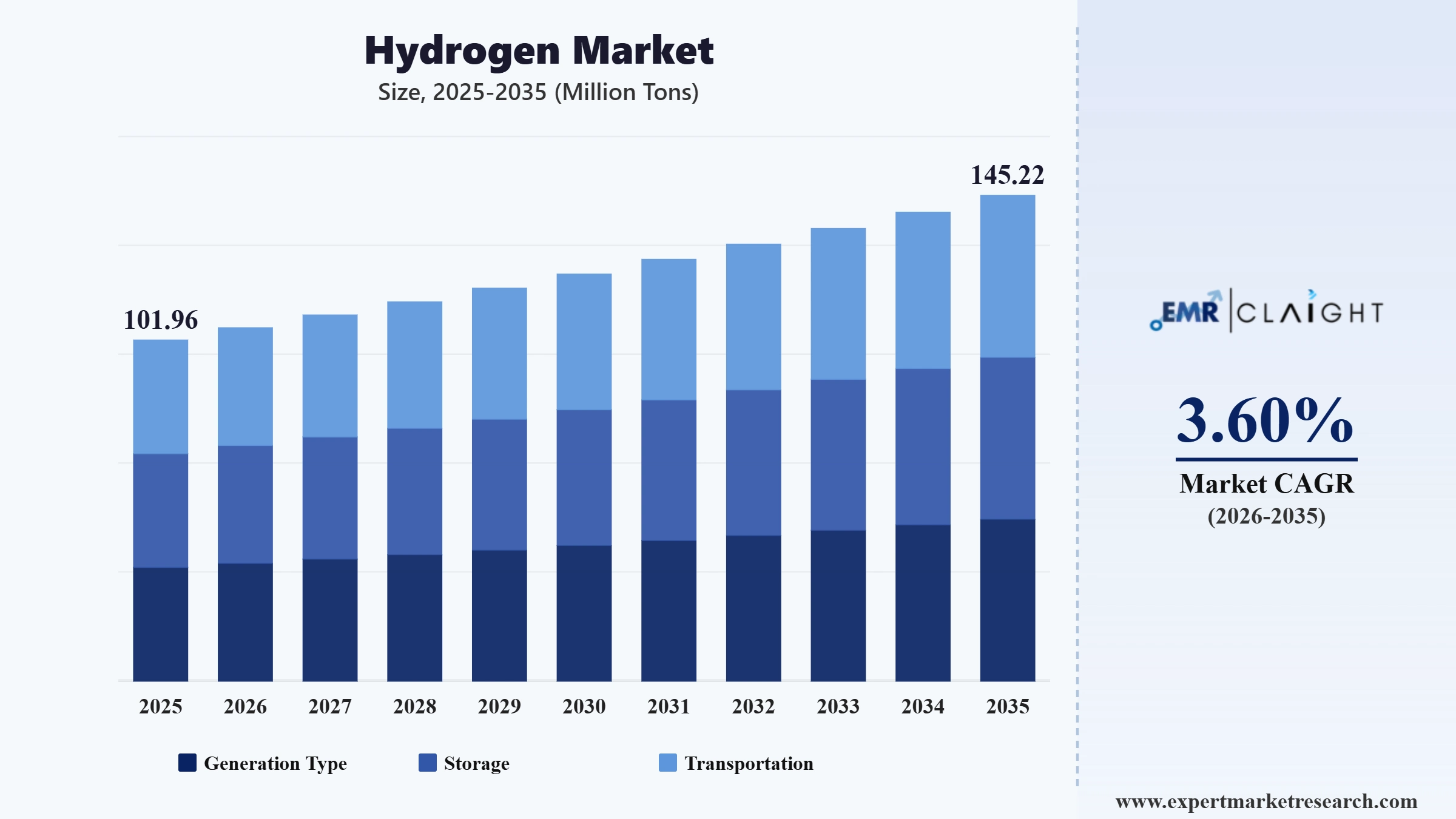
The hydrogen market attained a volume of 101.96 Million Tons in 2025 and is projected to expand at a CAGR of 3.60% through 2035. The market is further expected to achieve 145.22 Million Tons by 2035. Hydrogen is increasingly becoming an industrial resilience asset rather than solely a decarbonization fuel. Global low-emissions hydrogen production reached almost 1 million tons in 2025, while capital spending on low-emissions hydrogen projects approached USD 7 billion, creating commercial opportunities across electrolyzers, storage, pipelines, certification, and hydrogen-derived products.
The global hydrogen market is transitioning from a predominantly fossil-based industrial feedstock market toward a broader energy and decarbonization ecosystem spanning refining, chemicals, mobility, power, storage, and international trade. Global hydrogen demand surpassed 100 million tons in 2025, increasing by almost 3% year over year, while low-emissions hydrogen production rose by 20% to nearly 1 million tons. Although traditional industrial applications still account for almost all consumption, policy mechanisms, industrial decarbonization requirements, and energy-security considerations are expanding the addressable market for low-emissions hydrogen.
In 2026, installed electrolyzer capacity exceeded 4 GW, after doubling during 2025, while more than 2.5 GW was under construction for operation in 2026. These developments are strengthening demand for electrolysis equipment, storage systems, hydrogen pipelines, import terminals, and specialized engineering services. Europe, China, North America, India, and Japan are particularly important for project development because public funding and demand-side mechanisms are increasingly being linked to actual production and offtake, thereby boosting the hydrogen market value.
Integration of microwave heating with hydrogen-based direct reduced iron (H₂-DRI) is emerging as a niche innovation in hydrogen-enabled steelmaking. Unlike conventional DRI systems that rely on external furnace heating, microwave-assisted processes can transfer energy directly into iron-bearing materials, potentially improving heat-transfer efficiency and reaction control. Hydrogen serves as the reducing agent, producing water vapour instead of carbon dioxide during ore reduction. The approach is particularly relevant to steel producers seeking to reduce emissions while managing the energy intensity of hydrogen-based production. Pilot-scale research is examining how microwave energy can accelerate reduction kinetics and potentially lower thermal requirements. Commercial adoption could generate specialised opportunities for hydrogen suppliers, microwave heating-system manufacturers, electrolyser providers, and engineering companies developing integrated low-carbon steelmaking facilities, thereby boosting the hydrogen market developments.
Read more about this report - REQUEST FREE SAMPLE COPY IN PDF
Shell Global Solutions, Fraunhofer IKTS, and AVL announced a four-year collaboration in September 2026 to develop power-to-liquids technology using solid oxide co-electrolysis. The programme will be tested at Shell’s Energy Transition Campus Amsterdam and combines high-temperature electrolysis, membrane-based separation, Fischer-Tropsch synthesis, and off-gas utilisation. The process is designed to convert CO₂ and low-carbon electricity into synthetic aviation fuel. For the hydrogen market, the development demonstrates growing integration between hydrogen production technologies and downstream e-fuel applications, particularly aviation, where low-carbon fuel supply remains an important decarbonisation opportunity.
Linde signed six new renewable power purchase agreements covering operations across Europe, Africa, and India. The agreements are expected to provide approximately 0.63 TWh of renewable electricity annually from newly developed wind and solar assets. Linde stated that low-carbon power already represented around 50% of its global electricity consumption, while its renewable power purchasing had increased to 7.6 TWh in 2025 from 2.8 TWh in 2021. The development supports Linde’s broader strategy of securing lower-carbon energy for industrial-gas operations and hydrogen-related applications.
Air Products announced that it would not proceed with the Louisiana Clean Energy Complex (LCEC) after determining that expected financial returns did not meet its investment criteria. The company also announced the discontinuation of a zero-carbon liquid hydrogen facility in Casa Grande, Arizona, citing challenging commercial conditions and slower-than-expected development in some hydrogen mobility markets. Air Products said the portfolio actions could result in pre-tax charges of up to USD 2.9 billion. At the same time, it was finalising an agreement with Yara covering renewable ammonia from the NEOM Green Hydrogen Project.
Shell Catalysts & Technologies signed a technology licensing agreement with ENGIE for the KerEAUzen project in France, which aims to produce synthetic aviation fuel using captured biogenic CO₂ and renewable hydrogen. Shell will provide its XTL process technology, combining reverse water-gas shift, Fischer-Tropsch synthesis, and wax hydroconversion to produce synthetic kerosene. The project connects renewable hydrogen with an aviation-fuel application and is designed to meet ReFuelEU Aviation requirements. The agreement illustrates how hydrogen suppliers and technology companies are expanding into hydrogen-derived fuels rather than focusing solely on conventional industrial hydrogen applications.
Demand certainty is becoming a critical factor in moving hydrogen projects from announcements to investment decisions. The IEA reports that new low-emissions hydrogen offtake agreements reached 1.7 Mtpa in 2025, but only around one-fifth were firm commitments. These agreements were concentrated in power generation, industry, and refining. The limited share of firm contracts means developers continue to face uncertainty over future revenues, particularly for large electrolyser projects. Consequently, project developers are increasingly targeting established hydrogen-consuming industries where purchasing requirements can be defined through contracts. For equipment suppliers, this strengthens opportunities linked to projects with secured customers, defined production volumes, and clearer commissioning schedules.
Electrolyser production is likely to become consolidated, as producers face slow project development cycles and overcapacity. Installed capacity of electrolysis around the world almost doubled in 2025 to reach more than 4 GW, with China alone responsible for nearly three-quarters of new additions. According to the IEA, the presence of overcapacity and high levels of domestic competition in China is causing consolidation of the market, while electrolyser producers increasingly turn to international markets. This impacts the buying preferences of project developers, who have to consider performance, scale, execution abilities, guarantees and service besides the cost of equipment. More than 2.5 GW of additional electrolysis capacity was under construction at the end of 2025, creating opportunities for suppliers with proven large-project deployment capabilities.
Hydrogen infrastructure is increasingly being planned around connected production sites, industrial consumers, storage facilities, and transport networks. The IEA identifies more than 40,000 km of announced hydrogen pipeline projects through 2035, yet only 9% is operational or backed by committed investment. This gap highlights the difficulty of converting infrastructure announcements into bankable projects. Pipeline development is particularly relevant in industrial clusters where several hydrogen users can share transportation infrastructure. Maritime infrastructure is also gaining importance, with ammonia emerging as a major hydrogen carrier for international trade. For developers, integrating pipelines, storage, ports, and conversion facilities can improve connectivity between hydrogen production regions and industrial demand centres, thus boosting the hydrogen market dynamics and trends.
International hydrogen trade is increasingly being structured around hydrogen-derived products rather than direct transportation of pure hydrogen. The IEA estimates that international trade could underpin more than 40% of announced low-emissions hydrogen volumes by 2030 if all projects materialise. Long-term bilateral agreements currently dominate, particularly for ammonia and ammonia-derived fertilisers, while hydrogen-based hot-briquetted iron is also gaining attention. This creates opportunities across the wider supply chain, including hydrogen production, ammonia synthesis, shipping, port handling, storage, and industrial consumption. The commercial focus is therefore shifting toward integrated supply chains capable of connecting low-cost production regions with importing markets and established industrial users.
Investment is increasingly moving toward electrolysis-based hydrogen production as project development accelerates. According to the IEA, capital spending on low-emissions hydrogen projects reached nearly USD 7 billion in 2025, almost twice the 2024 level. Investment in electrolysis overtook spending on CCUS-based hydrogen and could account for approximately 70% of nearly USD 10 billion of hydrogen investment in 2026. China and Europe are leading committed electrolysis projects, although their investment profiles differ substantially. This expansion is creating opportunities for electrolyser manufacturers, renewable-power developers, engineering firms, compression providers, and storage companies. However, continued investment remains dependent on demand certainty, supportive policy frameworks, infrastructure availability, and project bankability.
The Expert Market Research’s report titled "Hydrogen Market Report and Forecast 2026-2035” offers a detailed analysis of the market based on the following segments:
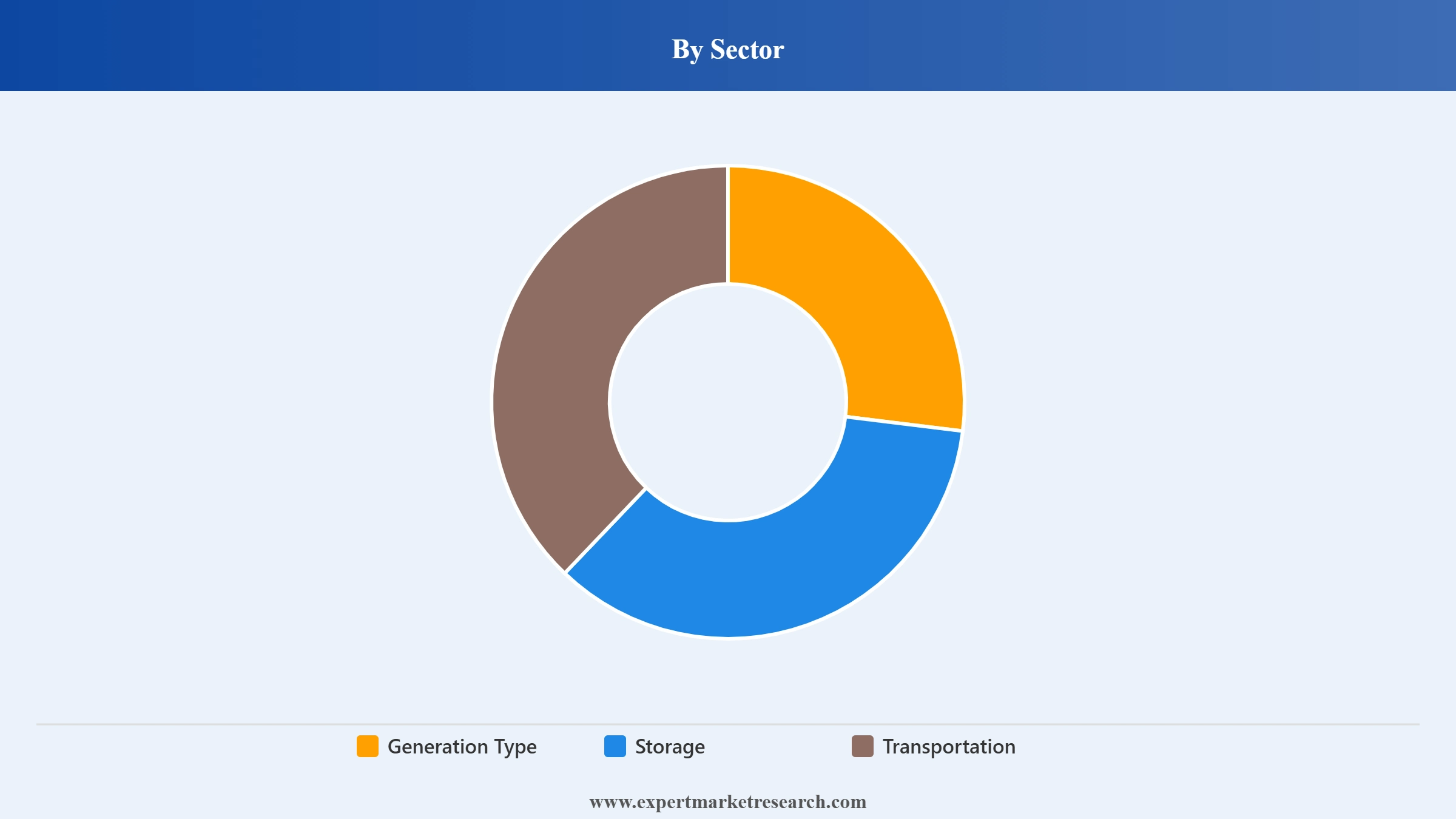
Market Breakup by Sector
Key Insight: Generation, storage, and transportation are gradually becoming an integrated hydrogen value chain rather than infrastructure categories that operate independently from each other. The fossil fuel-based generation technology is still responsible for meeting most of the present-day hydrogen demands. However, green hydrogen technology is starting to gain traction due to increasing adoption of electrolysis processes. Physical storage, based on technologies of compression and liquefaction of gases, is the currently commercially advanced type of storage, while material-based storage has become the focus of studies for applications that need higher volumetric energy density and alternative logistics solutions. Transportation is simultaneously shifting from captive, localized supply toward a combination of pipelines, tube trailers, liquid hydrogen logistics, and hydrogen carriers. This integrated development is important for project bankability because production assets require dependable storage and delivery routes before industrial customers can commit to long-term hydrogen purchases.
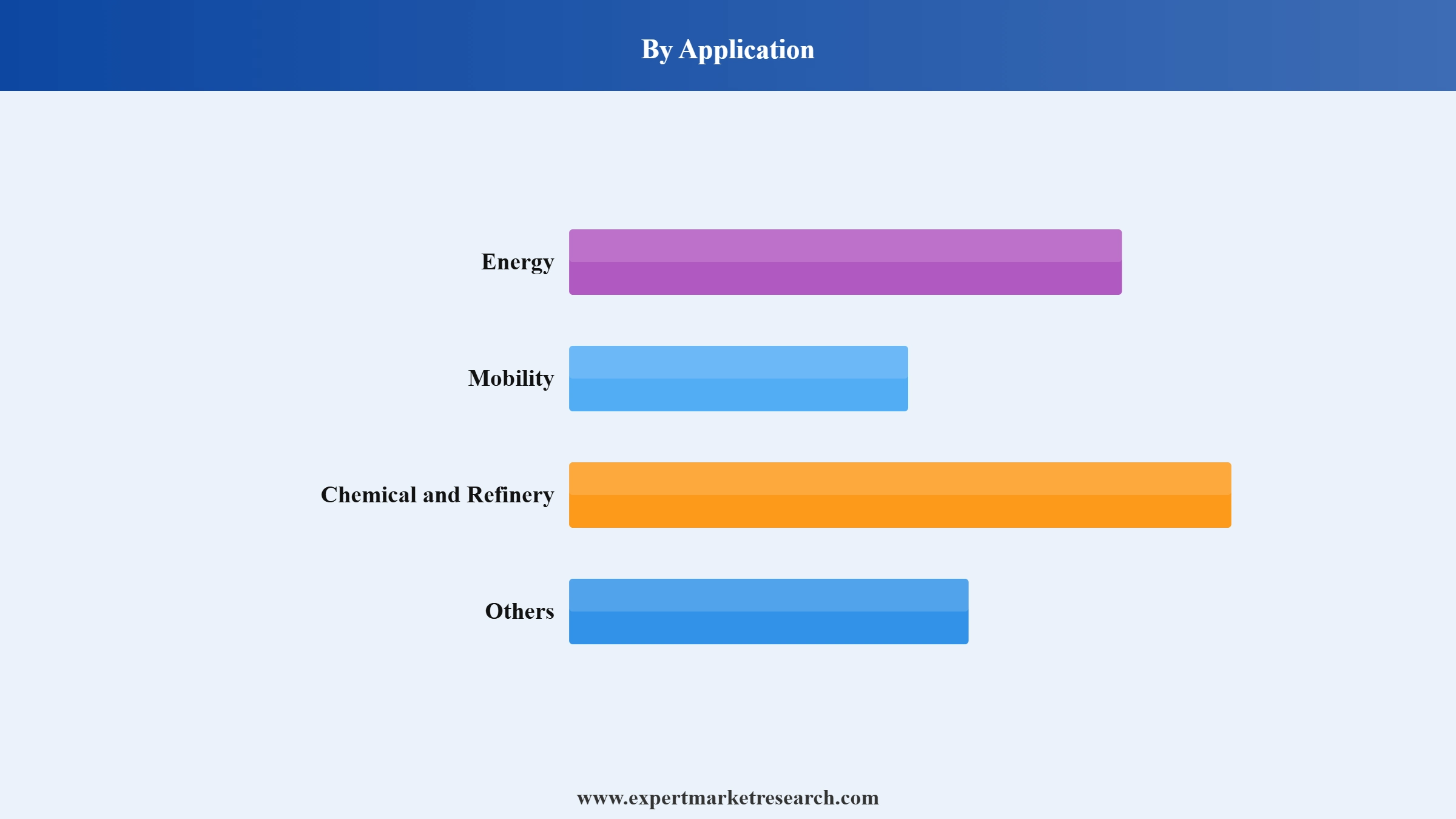
Market Breakup by Application
Key Insight: Chemical and refinery applications continue to anchor the hydrogen market because hydrogen is already embedded in established industrial processes. In contrast, mobility, energy, and other emerging applications are creating incremental demand from a smaller base. Global hydrogen demand exceeded 100 million tons in 2025, with industry and refining accounting for almost all consumption. Mobility is nevertheless developing rapidly in selected markets: the global fuel-cell electric vehicle stock increased by 20% in 2025 to nearly 130,000 vehicles, supported primarily by truck sales in China and stronger passenger-vehicle sales in Korea. This divergence means suppliers are likely to pursue a dual strategy: secure large industrial offtakers for base-load demand while developing mobility and power applications as higher-growth opportunities, thus driving the demand in the hydrogen market.
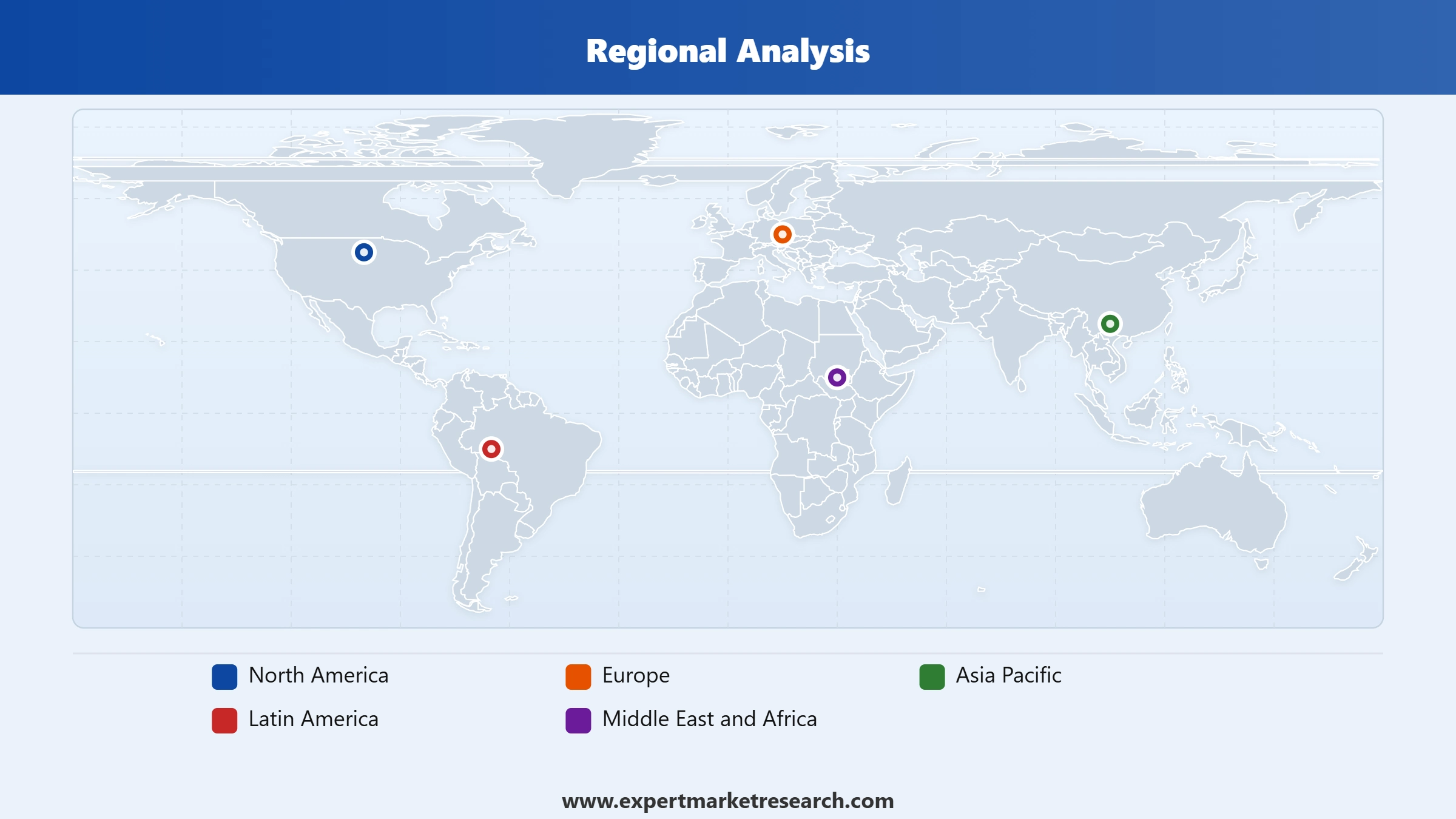
Market Breakup by Region
Key Insight: The development of regional hydrogen initiatives is also increasingly influenced by varying commercial models. Asia Pacific integrates a high level of existing hydrogen demand along with significant electrolyser manufacturing capacity. Meanwhile, Europe is developing regulation structures, infrastructure links across borders, and demand drivers. In North America, large-scale industrial and CCUS projects are being developed further, while Latin America is focusing on renewable energy sources and exports. The Middle East and Africa regions are developing export-oriented projects based on renewable power generation, ammonia, and industrial demand. Global investments in low emissions hydrogen initiatives have increased to approximately USD 7 billion in 2025, with China and Europe as leaders in installed electrolyser capacity. Consequently, suppliers are increasingly designing regional strategies around local manufacturing, infrastructure partnerships, offtake agreements, and access to low-cost renewable electricity rather than pursuing identical business models in every geography, thus boosting the demand of the hydrogen market.
Read more about this report - REQUEST FREE SAMPLE COPY IN PDF
By sector, gray hydrogen generation dominates while green hydrogen offers the strongest structural expansion opportunity
Green hydrogen is positioned for the fastest structural expansion as electrolysis deployment accelerates and renewable electricity becomes increasingly integrated into industrial hydrogen projects. Global installed electrolysis capacity exceeded 4 GW in 2025, having doubled during the year. More than 2.5 GW of additional capacity was under construction for 2026 operation. Europe, China, and North America are leading near-term deployment, while India, Japan, Australia, and the Middle East are developing additional project pipelines. The growth opportunity extends beyond hydrogen production itself into electrolyzer manufacturing, renewable PPAs, water treatment, compression, storage, certification, and industrial integration. Such developments will thus boost hydrogen market trends in the long run.
Read more about this report - REQUEST FREE SAMPLE COPY IN PDF
Green hydrogen is positioned for the fastest structural expansion as electrolysis deployment accelerates and renewable electricity becomes increasingly integrated into industrial hydrogen projects. Global installed electrolysis capacity exceeded 4 GW in 2025, having doubled during the year. More than 2.5 GW of additional capacity was under construction for 2026 operation. Europe, China, and North America are leading near-term deployment, while India, Japan, Australia, and the Middle East are developing additional project pipelines. The growth opportunity extends beyond hydrogen production itself into electrolyzer manufacturing, renewable PPAs, water treatment, compression, storage, certification, and industrial integration.
By application, chemical and refinery demand dominates, while mobility provides a faster-emerging end-use opportunity
Chemical and refinery applications remain the dominant hydrogen-use segment because hydrogen is already deeply embedded in established industrial processes. Global demand exceeded 100 million tons in 2025, with industry and refining accounting for almost all consumption. Low-emissions hydrogen adoption is also initially concentrating in these established applications because users already possess hydrogen-handling infrastructure and can substitute cleaner hydrogen without redesigning their entire production process. The IEA estimates that committed low-emissions projects could supply 2.5 million tons of hydrogen to refineries and industrial facilities by 2030. This provides equipment suppliers and project developers with a relatively identifiable initial customer base, thus boosting the hydrogen market revenues.
Read more about this report - REQUEST FREE SAMPLE COPY IN PDF
Mobility is evolving on a smaller installed base, but it is demonstrating higher structural growth in certain types of vehicles. The global inventory of fuel-cell electric vehicles grew by 20% in 2025 to nearly 130,000 vehicles. Heavy-duty vehicles are especially important due to hydrogen's potential for providing long operating range and fast refueling capabilities in comparison to some battery electric vehicles. China and Korea are key deployment regions, while Europe and other regions are creating hydrogen corridors for buses and trucks. Growth opportunities therefore extend beyond vehicles into high-throughput refueling stations, hydrogen compression, dispensing equipment, fleet fueling contracts, and regional production hubs serving transport corridors.
By region, Asia Pacific leads the global hydrogen market, driven by China, Japan, Korea, and India
Asia Pacific continues to anchor global hydrogen activity because China combines substantial industrial consumption with extensive electrolyzer manufacturing and deployment. Global installed electrolysis capacity exceeded 4 GW during 2025, with China responsible for nearly three-quarters of new installations. Japan and Korea are developing international hydrogen and ammonia supply chains, while India is strengthening domestic procurement and manufacturing capabilities. Europe represents another major center of activity, supported by EU funding mechanisms and renewable-hydrogen regulations. The European Hydrogen Bank's third auction awarded more than €1 billion to nine projects, expected to add nearly 1.1 GW of electrolyzer capacity across seven European Economic Area countries, thereby directly boosting the hydrogen market regional growth.
Read more about this report - REQUEST FREE SAMPLE COPY IN PDF
North America remains important for large-scale industrial and CCUS-based projects, although project economics increasingly depend on policy certainty and export markets. Latin America has substantial renewable-energy potential and an established pipeline of export-oriented projects. The Middle East and Africa offer significant long-term potential because renewable resources can be combined with existing ammonia, refining, and port infrastructure. Africa's 2030 project pipeline could increase low-emissions hydrogen production to around 1.2 million tons, although only one project had reached FID as of the IEA's 2026 assessment. Across all regions, project execution is increasingly dependent on bankable offtake, infrastructure readiness, financing conditions, and certification.
Hydrogen market players are primarily aiming to scale production capacity, lower production costs, and expand the availability of low-carbon hydrogen across industrial and energy applications. Companies are investing in green hydrogen projects powered by renewable energy, while also developing blue hydrogen pathways with carbon capture and storage. They are focusing on improving electrolyser efficiency, hydrogen liquefaction, storage, transportation, and refuelling infrastructure to address supply-chain limitations. Partnerships with energy companies, technology providers, industrial consumers, and governments are also being pursued to secure long-term hydrogen offtake and accelerate project development.
Hydrogen companies are targeting new end-use opportunities, particularly in refining, chemicals, steel, heavy-duty mobility, shipping, and power generation. Companies are developing integrated hydrogen ecosystems that connect production facilities with pipelines, storage terminals, distribution networks, and end users. They are also seeking to benefit from government incentives, emissions-reduction policies, and growing corporate demand for lower-carbon energy. These strategies are intended to strengthen commercial viability while supporting the broader transition toward cleaner industrial energy systems.
Linde plc, established in 1879, is headquartered in Woking, Surrey, United Kingdom, with major corporate operations in the United States. Its hydrogen portfolio covers the value chain from production to distribution and end use. Linde supplies conventional, blue and green hydrogen, develops hydrogen plants using steam methane reforming, ATR and electrolysis, and provides hydrogen liquefaction, storage, pipeline distribution and refuelling solutions. The company also operates hydrogen electrolysis plants and hydrogen refuelling stations globally.
Shell plc, established in 1907 through the merger of Shell Transport and Trading with Royal Dutch, is headquartered at Shell Centre, London, United Kingdom. Shell’s hydrogen offerings span renewable and low-carbon hydrogen production, storage, transportation, distribution and customer applications. Its projects include Holland Hydrogen 1, a 200 MW electrolyser project in the Netherlands, and REFHYNE 2, a 100 MW PEM electrolyser in Germany. Shell also operates hydrogen refuelling stations supporting heavy-duty transport applications.
Chevron Corporation traces its origins to 1879 and is headquartered in Houston, Texas, United States. Through Chevron New Energies, the company develops hydrogen production and infrastructure solutions focused on industrial and transportation applications. Its portfolio includes low-carbon electrolytic hydrogen projects, hydrogen refuelling infrastructure and technology collaborations. In 2024, Chevron announced a 5 MW solar-to-hydrogen project in California’s Central Valley designed to produce approximately two tonnes of hydrogen per day. The company has also pursued hydrogen fuelling networks for mobility.
Air Products and Chemicals, Inc., established in 1940, is headquartered in Allentown, Pennsylvania, United States. The company is a major hydrogen supplier and provides hydrogen production, processing, distribution, storage, fuelling and infrastructure solutions. Its portfolio serves refining, chemicals, mobility and other industrial applications, while its clean-hydrogen strategy includes developing, engineering, building, owning and operating large-scale projects. Air Products also supplies hydrogen-fuelling technologies and is expanding projects supporting low- and zero-carbon energy applications, particularly heavy-duty transportation and industry.
Other key players in the market include Air Liquide S.A., Saudi Arabian Oil Co., and Uniper SE, among others.
*Please note that this is only a partial list; the complete list of key players is available in the full report. Additionally, the list of key players can be customized to better suit your needs.*
Explore the latest hydrogen market trends 2026 and understand the opportunities shaping global hydrogen production, storage, transportation, and end-use demand. The hydrogen market forecast 2026-2035 provides detailed quantitative analysis, segment-level insights, regional assessment, competitive intelligence, and strategic developments to support business planning. Download the sample report to evaluate the hydrogen market size, emerging opportunities, investment landscape, and future growth prospects.


Upto 15% Off
USD
$2499 $2249
$3999 $3599
$4999 $4249
$5999 $5099


*While we strive to always give you current and accurate information, the numbers depicted on the website are indicative and may differ from the actual numbers in the main report. At Expert Market Research, we aim to bring you the latest insights and trends in the market. Using our analyses and forecasts, stakeholders can understand the market dynamics, navigate challenges, and capitalize on opportunities to make data-driven strategic decisions.*
In 2025, the market reached an approximate volume of 101.96 Million Tons.
The market is projected to grow at a CAGR of 3.60% between 2026 and 2035.
The market is assessed to witness a healthy growth in the forecast period to reach around 145.22 Million Tons in 2035.
The different applications of hydrogen include energy, mobility, and chemical and refinery, among others.
The major segments based on sector considered in the market report include generation type, storage, and transportation.
The different regions covered in the market report are North America, Europe, the Asia Pacific, Latin America, and the Middle East and Africa.
Key players in the market are Linde Plc, Shell Plc, Chevron Corporation, Air Products and Chemicals Inc., Air Liquide S.A., Saudi Arabian Oil Co., and Uniper SE, among others.
Key challenges in the hydrogen market include high production costs, limited infrastructure, transportation and storage constraints, lack of standardisation, regulatory uncertainty, limited renewable hydrogen supply, energy losses, and difficulties in establishing reliable demand and long-term offtake agreements.
Key strategies driving the hydrogen market include expanding green hydrogen production, developing dedicated infrastructure, securing long-term offtake agreements, integrating renewable energy, advancing electrolysis technologies, forming strategic partnerships, reducing production costs, and establishing supportive government policies and incentives.
Explore our key highlights of the report and gain a concise overview of key findings, trends, and actionable insights that will empower your strategic decisions.
| REPORT FEATURES | DETAILS |
| Base Year | 2025 |
| Historical Period | 2019-2025 |
| Forecast Period | 2026-2035 |
| Scope of the Report |
Historical and Forecast Trends, Industry Drivers and Constraints, Historical and Forecast Market Analysis by Segment:
|
| Breakup by Sector |
|
| Breakup by Application |
|
| Breakup by Region |
|
| Market Dynamics |
|
| Competitive Landscape |
|
| Companies Covered |
|
Datasheet
One User
USD 2,499
USD 2,249
tax inclusive*
Single User License
One User
USD 3,999
USD 3,599
tax inclusive*
Five User License
Five User
USD 4,999
USD 4,249
tax inclusive*
Corporate License
Unlimited Users
USD 5,999
USD 5,099
tax inclusive*
*Please note that the prices mentioned below are starting prices for each bundle type. Kindly contact our team for further details.*
Flash Bundle
Small Business Bundle
Growth Bundle
Enterprise Bundle
*Please note that the prices mentioned below are starting prices for each bundle type. Kindly contact our team for further details.*
Flash Bundle
Number of Reports: 3
20%
tax inclusive*
Small Business Bundle
Number of Reports: 5
25%
tax inclusive*
Growth Bundle
Number of Reports: 8
30%
tax inclusive*
Enterprise Bundle
Number of Reports: 10
35%
tax inclusive*
How To Order

Select License Type
Choose the right license for your needs and access rights.

Click on ‘Buy Now’
Add the report to your cart with one click and proceed to register.

Select Mode of Payment
Choose a payment option for a secure checkout. You will be redirected accordingly.
Strategic Solutions for Informed Decision-Making
Gain insights to stay ahead and seize opportunities.

Get insights & trends for a competitive edge.

Track prices with detailed trend reports.

Analyse trade data for supply chain insights.

Leverage cost reports for smart savings

Enhance supply chain with partnerships.

Connect For More Information
Our expert team of analysts will offer full support and resolve any queries regarding the report, before and after the purchase.
Our expert team of analysts will offer full support and resolve any queries regarding the report, before and after the purchase.
We employ meticulous research methods, blending advanced analytics and expert insights to deliver accurate, actionable industry intelligence, staying ahead of competitors.
Our skilled analysts offer unparalleled competitive advantage with detailed insights on current and emerging markets, ensuring your strategic edge.
We offer an in-depth yet simplified presentation of industry insights and analysis to meet your specific requirements effectively.




