

Consumer Insights
Uncover trends and behaviors shaping consumer choices today
Procurement Insights
Optimize your sourcing strategy with key market data
Industry Stats
Stay ahead with the latest trends and market analysis.
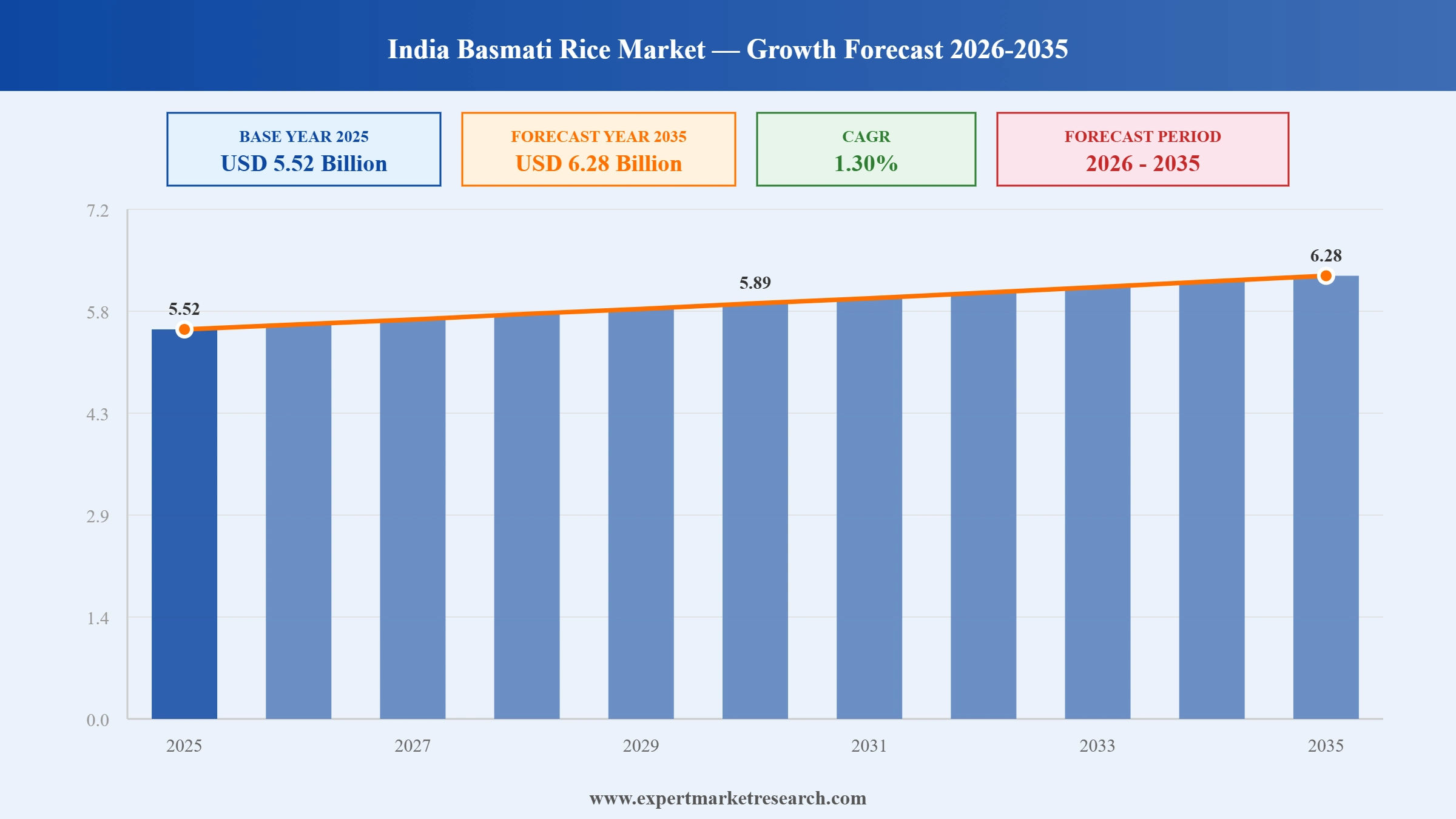
The India Basmati Rice Market reached a value of USD 5.52 Billion at 2025 and is projected to expand at a CAGR of around 1.30% during the forecast period of 2026-2035. With consistent domestic demand for premium basmati as a household staple, growing export volumes to Middle Eastern and international markets, rising consumer premiumisation toward branded packaged basmati, and innovation in herbicide-tolerant cultivation varieties improving productivity and sustainability, the market is expected to reach USD 6.28 Billion.
As the India basmati rice industry navigates rising food demand, climate pressures, and nutritional gaps, technology-led interventions are steering growth toward sustainability and inclusivity. For instance, in June 2025, Punjab-based Jindal Rice Mills launched Nourifyme, a fortified range of basmati rice and staples that blends traditional milling expertise with modern nutrition science. Supported by the Millers for Nutrition–Asia program, the initiative directly contributes to India’s mission to combat hidden hunger and enhance public health through fortified foods.
Around the same time, India’s agricultural innovation took a major leap forward. In May 2025, the Union Agriculture Minister announced the country’s first genome-edited rice varieties called DRR Rice 100 (Kamla) and Pusa DST Rice 1. These varieties were developed by ICAR using CRISPR-Cas technology. Additionally, these high-yield, drought-tolerant, and water-efficient varieties promise to boost productivity by 19% while reducing environmental stress.
Such advancements signify a shift, where nutrition and biotechnology converge to expand the India basmati rice market scope, ensuring the country’s leadership in sustainable agriculture and global food security.
Read more about this report - REQUEST FREE SAMPLE COPY IN PDF
|
India Basmati Rice Market Report Summary |
Description |
Value |
|
Base Year |
USD Billion |
2025 |
|
Historical Period |
USD Billion |
2019-2025 |
|
Forecast Period |
USD Billion |
2026-2035 |
|
Market Size 2025 |
USD Billion |
5.52 |
|
Market Size 2035 |
USD Billion |
6.28 |
|
CAGR 2019-2025 |
Percentage |
XX% |
|
CAGR 2026-2035 |
Percentage |
1.30% |
|
CAGR 2026-2035 - Market by Region |
South India |
1.4% |
|
CAGR 2026-2035 - Market by Region |
North India |
1.2% |
|
CAGR 2026-2035 - Market by Type |
Parboiled |
1.6% |
|
CAGR 2026-2035 - Market by Distribution Channel |
Supermarkets and Hypermarket |
1.7% |
|
2025 Market Share by Region |
South India |
35.6% |
In September 2025, BL Agro, a leading manufacturer of agri-branded FMCG products including rice, signed a Memorandum of Understanding with the Ministry of Food Processing Industries (MoFPI) to invest ₹1,660 crore in building an export-focused agro-processing hub in Uttar Pradesh over a five-year period. Uttar Pradesh is one of India's key basmati rice producing states, and this investment is expected to significantly enhance processing capacity, quality control infrastructure, and export readiness for basmati and other agri products. The investment signals strong private sector confidence in the long-term growth of India's premium food processing sector and the export potential of high-quality basmati rice.
In January 2025, KRBL Limited, India's largest basmati rice exporter, launched a comprehensively redesigned packaging suite for its India Gate Basmati Rice brand in collaboration with design firm Landor Associates. The new packaging incorporates QR codes enabling consumers to access grain quality information, farmer provenance details, and product certification data directly from their smartphones. The redesign was part of a broader 360-degree brand campaign using digital, retail, and cinema activations to build consumer trust in the premium segment. KRBL's goal is to grow its domestic market share from approximately 42% toward 60%, reinforcing India Gate as the definitively premium choice in the branded basmati rice category.
In November 2024, KRBL launched the "Swaad Samriddhi Ka" brand marketing campaign for India Gate Basmati Rice, targeting Maharashtra consumers with regionally relevant messaging. The campaign was part of the company's broader strategy to strengthen brand loyalty and deepen cultural connections with consumers across diverse Indian states beyond its traditionally strong northern India base. Maharashtra represents a significant and growing market for premium basmati rice, driven by urbanisation in Mumbai and Pune and changing household cooking preferences. The campaign demonstrates how leading basmati rice brands are investing in targeted regional marketing to build premium positioning and drive category growth across India.
In September 2024, the Government of India announced the removal of the Minimum Export Price restriction on basmati rice, a policy measure that significantly enhanced India's export competitiveness in the global rice trade. The removal of MEP allows Indian basmati exporters to negotiate market-driven pricing with international buyers, improving their commercial flexibility against Pakistan, the other major basmati producer. The policy change was welcomed by the India basmati rice industry, with major players like KRBL and LT Foods seeing their stock prices rally sharply on the announcement. The measure is expected to support volume growth in India's top export markets including Saudi Arabia, Iran, the UAE, and Kuwait.
In July 2024, India's Indian Council of Agricultural Research (ICAR) approved commercial cultivation of herbicide-tolerant Pusa Basmati varieties, specifically Pusa Basmati 1979 and 1985. These non-transgenic varieties are designed for Direct Seeded Rice cultivation, significantly reducing water consumption and methane emissions compared to traditional transplanting methods. The varieties allow farmers to manage weeds more efficiently using specific herbicides, boosting productivity while maintaining the grain quality and aromatic characteristics that define premium basmati. The adoption of these varieties is expected to improve cultivation efficiency, reduce production costs, and enhance the long-term sustainability of India's basmati rice production base.
The Indian government's decision to remove the Minimum Export Price restriction on basmati rice in September 2024 marked a pivotal policy shift that directly benefits the India Basmati Rice Market. MEP removal allows exporters to price their products competitively in the global market, improving India's ability to win contracts in price-sensitive markets across the Middle East, Africa, and Southeast Asia. According to APEDA data, India exported over 4.5 million tonnes of basmati rice in FY2024, and the MEP removal is expected to further accelerate export volumes. The India Basmati Rice Market growth outlook is directly tied to the sustained growth of export revenue as leading players like KRBL and LT Foods expand their international distribution networks.
Advances in basmati rice cultivation technology are transforming the production economics and environmental profile of India's rice industry. ICAR's July 2024 approval of herbicide-tolerant Pusa Basmati varieties for commercial cultivation introduced direct seeding as a viable alternative to water-intensive transplanting, significantly reducing both water consumption and greenhouse gas emissions per hectare of cultivation. For farmers, these varieties simplify weed management and reduce labour costs, making basmati cultivation more economically attractive. These innovations are particularly important as India faces growing pressure to improve agricultural water efficiency, and they position Indian basmati as a more sustainably produced premium product in global markets that increasingly value environmental credentials.
Branded basmati rice companies are investing heavily in packaging innovation, marketing campaigns, and consumer education to accelerate the transition of Indian households from loose or unbranded rice to premium packaged basmati. KRBL's January 2025 redesign of India Gate Basmati packaging with QR-code enabled grain quality information represents a growing trend of brands using technology to build trust and transparency. The premium packaging strategy is complemented by regional marketing campaigns and celebrity endorsements, with LT Foods announcing a partnership with Shah Rukh Khan for the Daawat brand in 2025. These investments signal a clear industry belief that India's domestic basmati rice market has significant headroom for brand-driven premiumisation, particularly among aspirational urban and semi-urban consumers.
Growing health consciousness among Indian consumers is creating meaningful demand for brown basmati rice, a whole grain variant that retains the bran layer and offers a richer fibre content and lower glycaemic index compared to white basmati. While white rice continues to dominate overall consumption, brown basmati is capturing attention among urban wellness-oriented households, diabetic consumers, and fitness-conscious millennials who seek nutritionally superior alternatives without abandoning the premium basmati experience. In May 2025, India's Oudh 1590 restaurant introduced a diabetic-friendly biryani crafted with specially selected low-GI basmati, signalling how food service operators are beginning to market health-oriented basmati applications to broaden the product's consumer appeal.
The EMR’s report titled “India Basmati Rice Market Report and Forecast 2026-2035” offers a detailed analysis of the market based on the following segments:
Market Breakup by Type
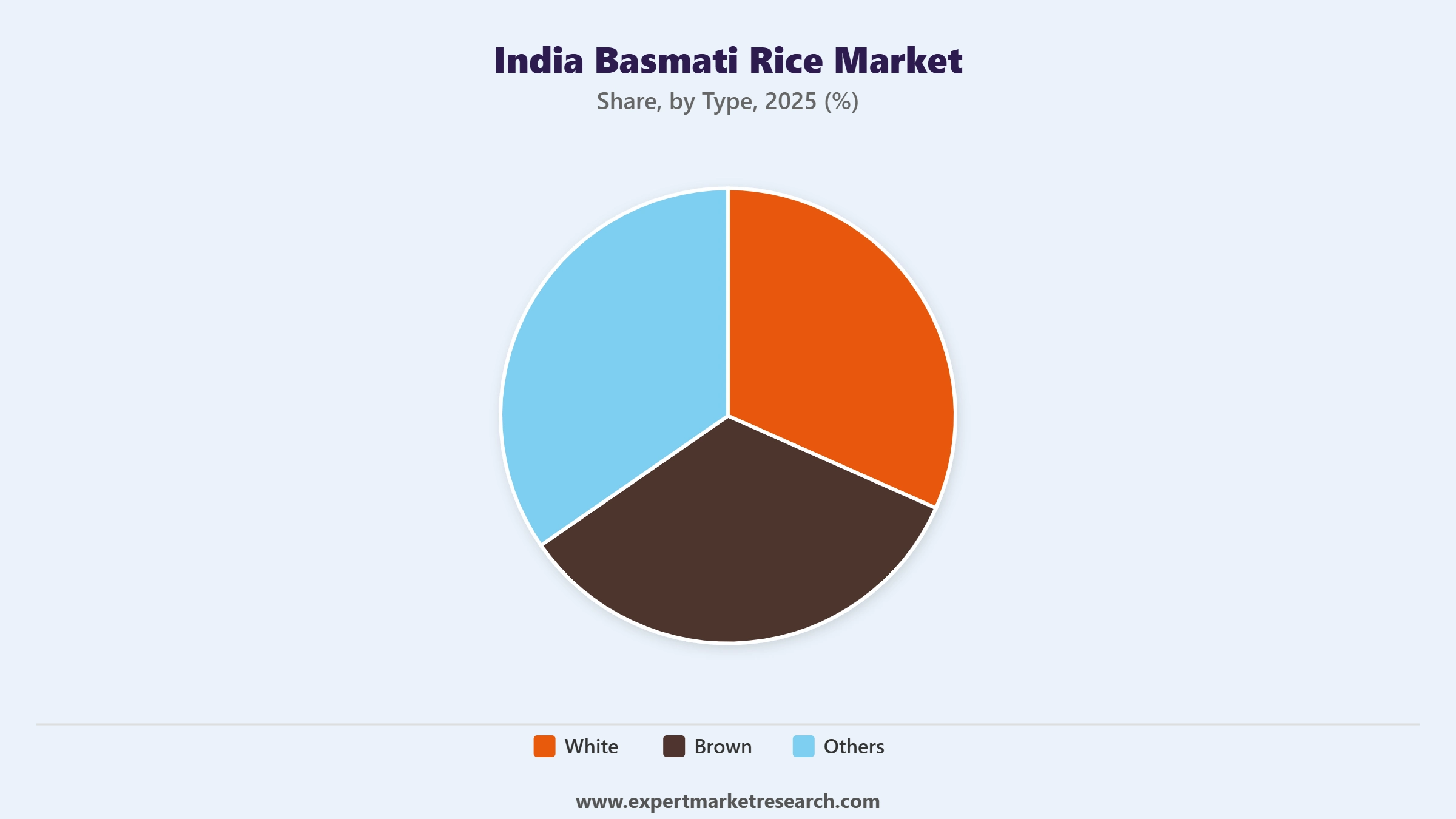
Key Insight: White basmati rice commands the dominant share of the India Basmati Rice Market by type, reflecting centuries of consumer familiarity, its refined appearance favoured in traditional Indian cooking, and its suitability for a wide range of dishes from biryani to pulao and everyday rice preparations. Brands like KRBL's India Gate and Shri Lal Mahal Group's Lal Qilla have built their market leadership primarily on premium white basmati offerings. Brown basmati is the fastest-growing type segment, driven by rising health awareness among urban consumers, endorsements from nutritionists, and increasing availability on e-commerce and health food retail platforms. The Others segment includes specialty varieties such as organic and aged basmati, which command premium pricing among discerning consumers and food service operators.
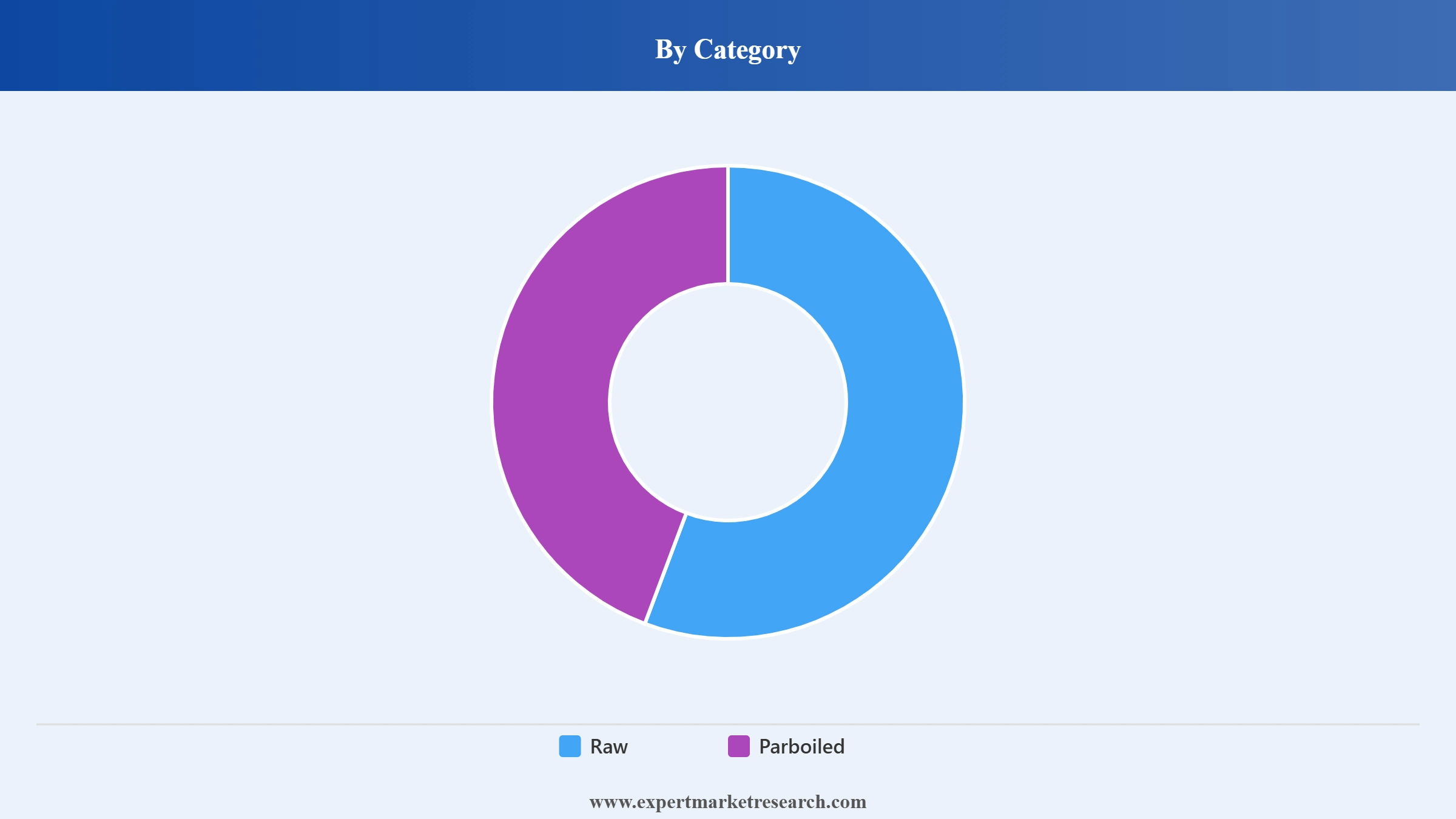
Market Breakup by Category
Key Insight: Raw basmati retains the largest share in the India Basmati Rice Market by category, preferred by households that value the traditional aroma, elongated grain texture, and authentic flavour profile that are best preserved in minimally processed rice. Raw basmati is the dominant format in the domestic Indian market, where traditional cooking methods and cultural meal preferences drive consistent high-volume demand. Parboiled basmati is the faster-growing category, expanding at a CAGR of 1.6% during the forecast period, valued for its superior nutritional retention, enhanced cooking yield, non-sticky texture, and longer shelf life that makes it particularly suited for food service, catering, and export markets, as well as urban households seeking convenience.
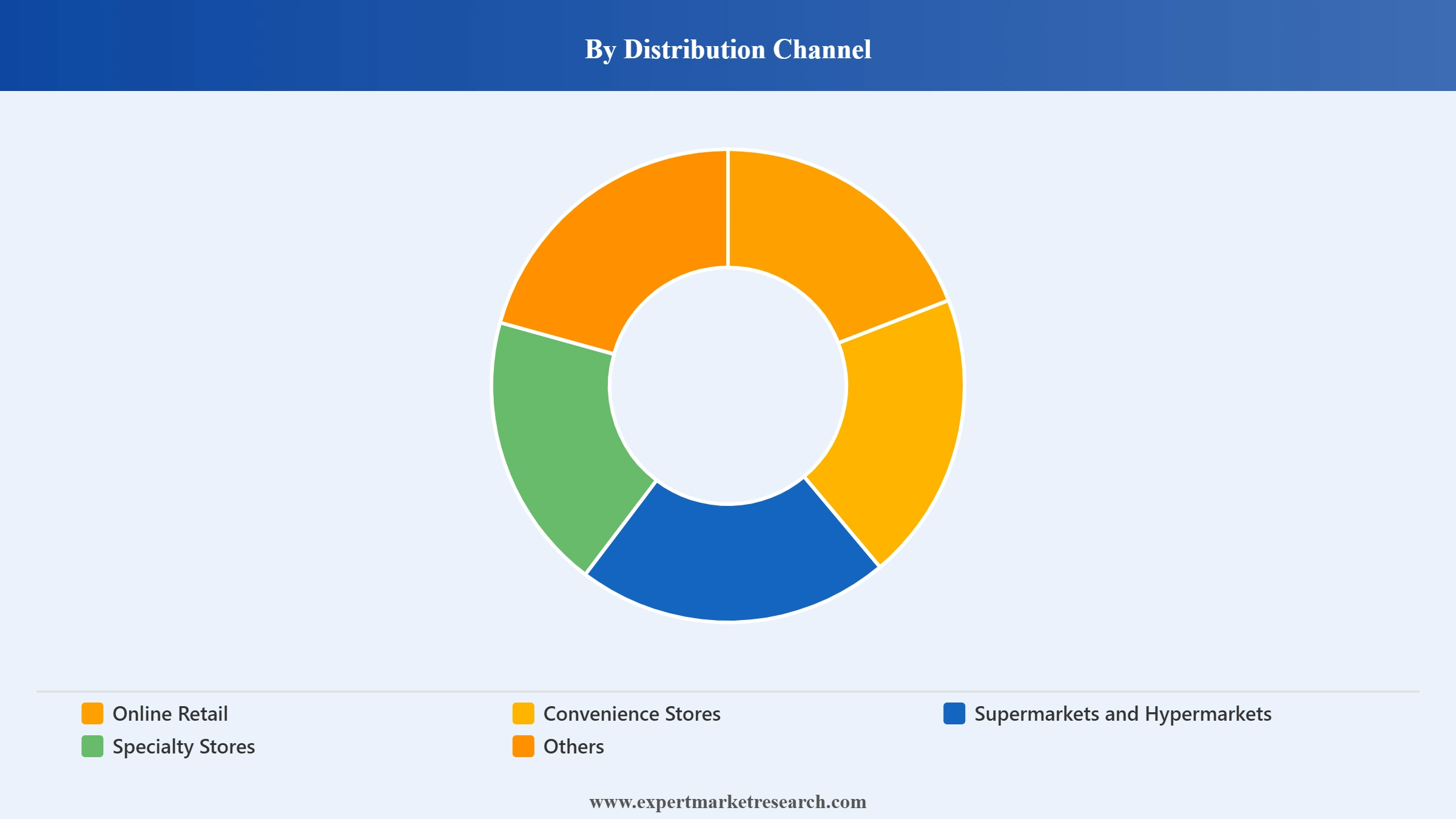
Market Breakup by Distribution Channel
Key Insight: Supermarkets and hypermarkets hold the dominant distribution channel position in the India Basmati Rice Market, providing premium basmati brands with large shelf presence, consumer trial opportunities, and the ability to merchandise premium variants with complementary products. Chains like DMart, Reliance Fresh, and Big Bazaar have become critical retail anchors for branded basmati manufacturers. Online retail is growing rapidly as platforms like Amazon Fresh, BigBasket, and brand direct-to-consumer websites enable consumers to access the full range of premium basmati varieties, including aged, organic, and specialty formats that may not be available in all physical stores. Convenience stores and specialty grain stores serve price-sensitive and traditional consumers in urban neighbourhoods and wholesale markets.
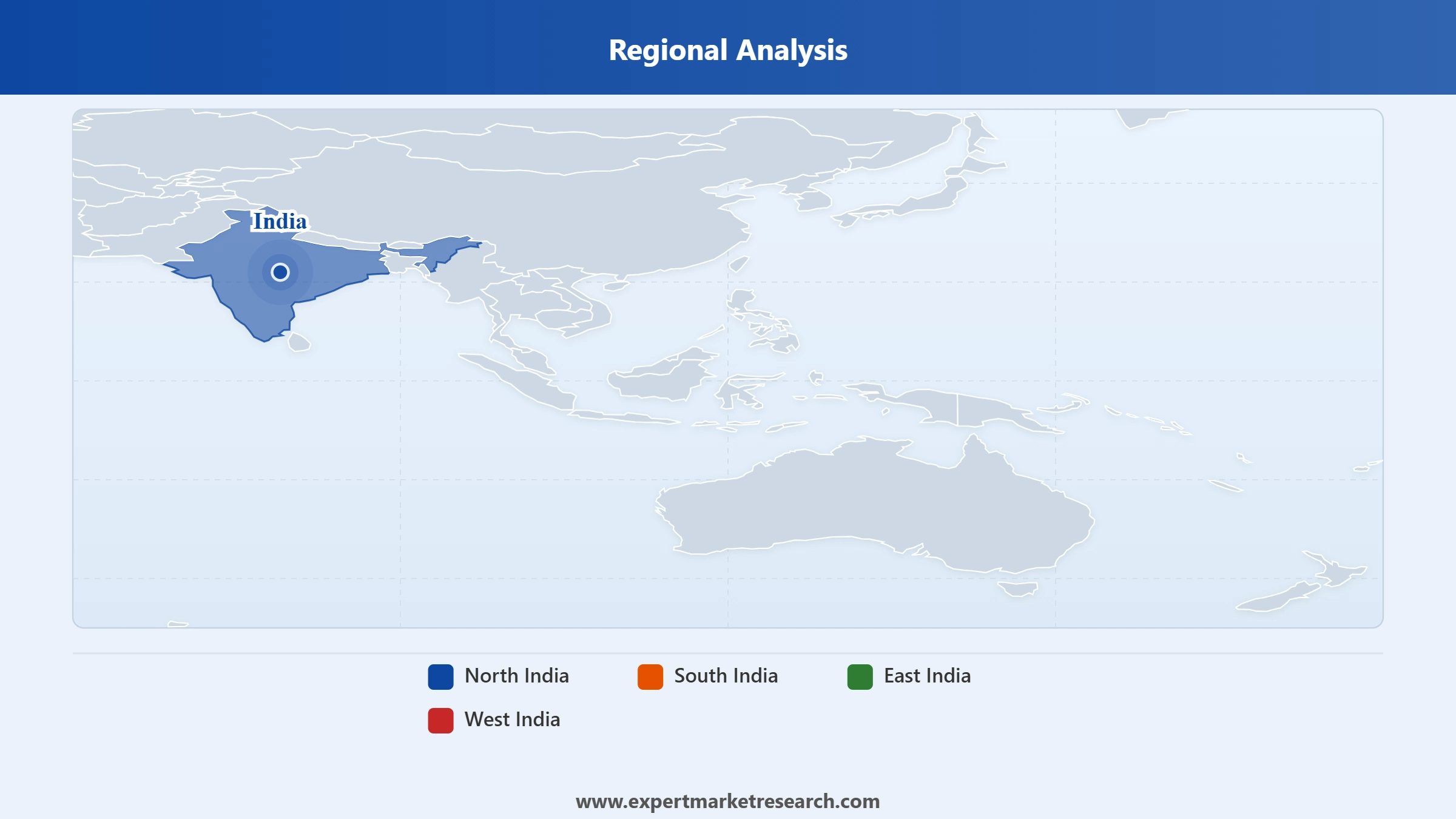
Market Breakup by Region
Key Insight: North India dominates the India Basmati Rice Market in terms of production and domestic consumption. The states of Punjab, Haryana, Uttar Pradesh, and Himachal Pradesh account for the vast majority of India's basmati rice cultivation, benefiting from ideal agro-climatic conditions, fertile alluvial soils, and well-developed irrigation infrastructure. North India is also home to the headquarters of India's leading basmati exporters, including KRBL, Shri Lal Mahal Group, and Veer Overseas Ltd. South India is the fastest-growing consumption region, with CAGR of 1.4% driven by urbanisation in major cities, rising household income, and the growing adoption of premium packaged basmati rice among South Indian consumers who traditionally prefer non-basmati varieties but are increasingly diversifying their rice consumption.
Read more about this report - REQUEST FREE SAMPLE COPY IN PDF
White basmati commands the overwhelming market share in the type segmentation of the India Basmati Rice Market. Its dominance reflects not just culinary tradition but also the extensive investment that major brands have made in positioning white basmati as synonymous with quality, aroma, and premium cooking experience. KRBL's India Gate brand, which holds approximately 42% market share in the branded segment, has built its identity almost entirely around premium white basmati offerings. Brown basmati, while growing strongly, accounts for a small but rising share that is expected to gain meaningful ground over the forecast period as health-oriented purchasing becomes more mainstream among India's expanding urban middle class.
Read more about this report - REQUEST FREE SAMPLE COPY IN PDF
Raw basmati holds the dominant share within the category segmentation, as the majority of domestic households and traditional food service operators continue to prefer the fresh aroma and textural characteristics of minimally processed raw rice. However, parboiled basmati is gaining ground at a measurably faster rate, driven by its practical advantages for catering, institutional food service, and the growing base of urban consumers who prioritise cooking convenience alongside quality. The shift toward parboiled formats is particularly evident in South India and among households that cook rice in automated rice cookers and pressure cookers where non-sticky, high-yield rice is preferred.
Read more about this report - REQUEST FREE SAMPLE COPY IN PDF
The supermarket and hypermarket channel holds the largest revenue share within distribution, reflecting the sustained shift of branded basmati consumption from unorganised loose rice markets toward organised modern trade. Brands have invested heavily in in-store visibility, premium shelf placement, and promotional activity within large-format retail to consolidate their positions. Online retail, while smaller in overall share, is the fastest-growing channel by CAGR, enabling brands to reach health-conscious and premium-seeking consumers across India who actively seek aged, organic, and specialty basmati formats that are difficult to find in physical stores.
Read more about this report - REQUEST FREE SAMPLE COPY IN PDF
North India is the clear anchor of the India Basmati Rice Market, combining the country's dominant production base with significant domestic consumption and export infrastructure. Punjab, Haryana, and Uttar Pradesh collectively produce the vast majority of India's premium basmati paddy, supported by the geographical indication protection that restricts the "basmati" designation to specific regions. The region's well-established milling infrastructure, cold storage facilities, and proximity to export ports at Kandla and Mundra position North Indian manufacturers as the backbone of India's USD 4.5 billion-plus annual basmati rice export program. Brands headquartered in Delhi NCR, Haryana, and Uttar Pradesh, including Shri Lal Mahal Group, KRBL, and Pansari Group, benefit directly from proximity to both the growing regions and the key domestic distribution hubs that serve markets across India.
Read more about this report - REQUEST FREE SAMPLE COPY IN PDF
South India represents the most commercially dynamic consumption market in the India Basmati Rice Market, with a CAGR of 1.4% during the forecast period. Bengaluru, Chennai, and Hyderabad are experiencing rapid growth in premium packaged basmati consumption as the urban professional population expands and food preferences diversify beyond traditional South Indian staples. Modern retail penetration is deepening across these cities, and e-commerce adoption is accelerating premiumisation trends as consumers in these cities actively seek branded and aged basmati formats. South India also offers meaningful white-space opportunity for basmati rice brands that have traditionally been North India-centric, with targeted regional campaigns and distribution investments increasingly being deployed to capture share in this growing market.
The India Basmati Rice Market is characterised by a fragmented competitive structure with a small number of nationally branded players, a larger tier of regional and export-focused manufacturers, and a substantial unorganised sector of loose rice traders. The branded segment is dominated by the large export houses such as KRBL and LT Foods that control significant market share through established brands, retail presence, and export networks. However, within the TOC's scope of key India players, the competitive landscape includes specialist millers and exporters including Shree Krishna Rice Mills, Shivshakti International, Veer Overseas, and Shri Lal Mahal Group.
Competition is intensifying as branded players invest in marketing, packaging innovation, and digital engagement to differentiate from commodity competitors, while mid-tier players build export credentials and domestic distribution to compete in the growing premium segment. The removal of MEP restrictions has further intensified competition by enabling all players to compete on price in global markets.
Shree Krishna Rice Mills is a Haryana-based basmati rice miller and exporter with established expertise in processing and exporting premium basmati varieties. The company focuses on quality-driven milling operations and serves both domestic and international markets through its branded and bulk rice business. Its geographic proximity to the Punjab-Haryana basmati belt provides access to high-quality paddy, while its export capabilities position it in the growing Middle Eastern and international retail trade.
Veer Overseas Ltd is a Delhi-based basmati rice company engaged in milling, processing, and exporting a wide range of premium basmati rice varieties to markets across the Middle East, North America, Europe, and Australia. The company operates with a strong emphasis on compliance with international food safety standards and quality specifications, enabling it to serve institutional and retail buyers across diverse regulatory environments. Veer Overseas's export orientation positions it as a beneficiary of India's growing basmati export volumes following MEP removal.
Founded in 1992 and headquartered in Haryana, Shivshakti International is a specialist basmati rice manufacturer that prides itself on a broad range of aromatic rice varieties processed using modern milling and sorting technology. The company serves both domestic and export markets, leveraging its quality-focused operations and product traceability to build credibility among international buyers. Shivshakti's operations reflect the growing emphasis on quality certification and food safety standards that are essential for competing in premium domestic and export channels.
The Shri Lal Mahal Group is a Delhi-based family enterprise that has been active in the basmati rice industry since 1975. The company is known for its flagship Lal Qilla brand, a premium heritage basmati label with strong brand recognition among household and HoReCa consumers in India and key export markets. The group's long operational history has enabled it to develop sophisticated milling technology, export compliance systems, and direct farming relationships that support consistent grain quality and traceability. Shri Lal Mahal Group represents the established generational brand tier in India's premium basmati rice landscape.
Other key players in the market are Jashn Foods, Pansari Group, Himalayan Queen Rice, Dosti Basmati Rice, SULSON OVERSEAS PVT. LTD., Mahavir Rice Mills, and Others.
*Please note that this is only a partial list; the complete list of key players is available in the full report. Additionally, the list of key players can be customized to better suit your needs.*
India's basmati rice sector stands at an intersection of export policy reform, agricultural innovation, and domestic premiumisation that is creating real commercial opportunities for brands, millers, and investors. Whether you are evaluating India's export market competitiveness, planning a basmati brand expansion, or assessing investment in rice processing infrastructure, our India Basmati Rice Market report for 2026-2035 delivers the evidence-based intelligence you need. Download your free sample today and discover the dynamics shaping India's iconic rice industry.


Upto 15% Off
USD
$2499 $2249
$3999 $3599
$4999 $4249
$5999 $5099


*While we strive to always give you current and accurate information, the numbers depicted on the website are indicative and may differ from the actual numbers in the main report. At Expert Market Research, we aim to bring you the latest insights and trends in the market. Using our analyses and forecasts, stakeholders can understand the market dynamics, navigate challenges, and capitalize on opportunities to make data-driven strategic decisions.*
In 2025, the INDIA BASMATI RICE market reached an approximate value of USD 5.52 Billion.
The market is projected to grow at a CAGR of 1.30% between 2026 and 2035.
The key players in the market include Shree Krishna Rice Mills, Shivshakti International, Veer Overseas Ltd, Shri Lal Mahal Group, Jashn Foods, Pansari Group, Himalayan Queen Rice, Dosti Basmati Rice, SULSON OVERSEAS PVT. LTD., Mahavir Rice Mills, and other notable companies.
Key strategies driving the market include product innovation (parboiled, brown, and specialty rice), premium and consumer-focused packaging, digital marketing and e-commerce expansion, export-oriented growth, adoption of sustainable and herbicide-tolerant rice varieties, and strategic celebrity endorsements to enhance brand visibility.
North India, particularly Punjab, Haryana, and Uttar Pradesh, holds the largest share due to favorable climate, fertile soils, well-established irrigation, and advanced post-harvest processing infrastructure.
Explore our key highlights of the report and gain a concise overview of key findings, trends, and actionable insights that will empower your strategic decisions.
| REPORT FEATURES | DETAILS |
| Base Year | 2025 |
| Historical Period | 2019-2025 |
| Forecast Period | 2026-2035 |
| Scope of the Report |
Historical and Forecast Trends, Industry Drivers and Constraints, Historical and Forecast Market Analysis by Segment:
|
| Breakup by Type |
|
| Breakup by Category |
|
| Breakup by Distribution Channel |
|
| Breakup by Region |
|
| Market Dynamics |
|
| Competitive Landscape |
|
| Companies Covered |
|
Datasheet
One User
USD 2,499
USD 2,249
tax inclusive*
Single User License
One User
USD 3,999
USD 3,599
tax inclusive*
Five User License
Five User
USD 4,999
USD 4,249
tax inclusive*
Corporate License
Unlimited Users
USD 5,999
USD 5,099
tax inclusive*
*Please note that the prices mentioned below are starting prices for each bundle type. Kindly contact our team for further details.*
Flash Bundle
Small Business Bundle
Growth Bundle
Enterprise Bundle
*Please note that the prices mentioned below are starting prices for each bundle type. Kindly contact our team for further details.*
Flash Bundle
Number of Reports: 3
20%
tax inclusive*
Small Business Bundle
Number of Reports: 5
25%
tax inclusive*
Growth Bundle
Number of Reports: 8
30%
tax inclusive*
Enterprise Bundle
Number of Reports: 10
35%
tax inclusive*
How To Order

Select License Type
Choose the right license for your needs and access rights.

Click on ‘Buy Now’
Add the report to your cart with one click and proceed to register.

Select Mode of Payment
Choose a payment option for a secure checkout. You will be redirected accordingly.
Strategic Solutions for Informed Decision-Making
Gain insights to stay ahead and seize opportunities.

Get insights & trends for a competitive edge.

Track prices with detailed trend reports.

Analyse trade data for supply chain insights.

Leverage cost reports for smart savings

Enhance supply chain with partnerships.

Connect For More Information
Our expert team of analysts will offer full support and resolve any queries regarding the report, before and after the purchase.
Our expert team of analysts will offer full support and resolve any queries regarding the report, before and after the purchase.
We employ meticulous research methods, blending advanced analytics and expert insights to deliver accurate, actionable industry intelligence, staying ahead of competitors.
Our skilled analysts offer unparalleled competitive advantage with detailed insights on current and emerging markets, ensuring your strategic edge.
We offer an in-depth yet simplified presentation of industry insights and analysis to meet your specific requirements effectively.




