

Consumer Insights
Uncover trends and behaviors shaping consumer choices today
Procurement Insights
Optimize your sourcing strategy with key market data
Industry Stats
Stay ahead with the latest trends and market analysis.
The India Biogas Market reached a value of USD 1.85 Billion at 2025 and is projected to expand at a CAGR of around 9.60% during the forecast period of 2026-2035. With India's legislated CBG blending obligations creating assured demand, government programs such as SATAT targeting 5,000 CBG plants, abundant organic feedstock from the country's agricultural sector, and rising capital inflows from oil and gas majors and cleantech investors, the market is expected to reach USD 4.63 Billion by 2035.
Compound Annual Growth Rate
9.6%
Value in USD Billion
2026-2035
Read more about this report - REQUEST FREE SAMPLE COPY IN PDF
| India Biogas Market Report Summary |
Description |
Value |
|
Base Year |
USD Billion |
2025 |
|
Historical Period |
USD Billion |
2019-2025 |
|
Forecast Period |
USD Billion |
2026-2035 |
|
Market Size 2025 |
USD Billion |
1.85 |
|
Market Size 2035 |
USD Billion |
4.63 |
|
CAGR 2019-2025 |
Percentage |
XX% |
|
CAGR 2026-2035 |
Percentage |
9.60% |
|
CAGR 2026-2035 - Market by Region |
South India |
10.6% |
|
CAGR 2026-2035 - Market by Region |
West India |
9.2% |
|
CAGR 2026-2035 - Market by Feedstock |
Organic Residue and Wastes |
10.9% |
|
CAGR 2026-2035 - Market by Application |
Electricity Generation |
10.8% |
|
2025 Market Share by Region |
East India |
17.2% |
India's biogas market is undergoing a structural shift from small-scale household digesters toward commercial-scale CBG production, shaped by mandatory blending obligations, large-scale public-private investments, municipal waste-to-energy programmes, and the entry of oil and gas majors into the bioenergy value chain.
In August 2025, CEF Group, an Indian cleantech company specialising in converting organic waste into compressed biogas, secured USD 44.5 million in combined loan and equity financing. The capital injection is intended to fund the expansion of CEF Group's CBG production network across India, accelerating the deployment of commercial-scale facilities that process agricultural residue, municipal waste, and industrial organic streams into renewable transport fuel. The funding round underscored growing institutional investor confidence in India's bioenergy sector.
In 2024, the Brihanmumbai Municipal Corporation (BMC) initiated a collaboration with Mahanagar Gas Limited (MGL) to establish a compressed biogas plant at Deonar, Mumbai. The facility is designed to process 1,000 tonnes of wet waste per day across two phases of 500 tonnes each, converting organic municipal waste into CBG and organic fertiliser. MGL is responsible for all capital and operational expenditure, while BMC provides segregated waste from markets and hotels, making this one of India's largest urban waste-to-energy initiatives.
In November 2024, GPS Renewables, a leading biogas engineering firm, entered into a strategic partnership with Oil India Limited to develop eight compressed biogas plants across India. The collaboration brings together GPS Renewables' specialised biogas plant engineering expertise with Oil India's infrastructure reach and capital strength, marking a significant joint effort to scale up commercial CBG production capacity in India's upstream energy ecosystem ahead of the mandatory CBG blending obligations taking effect from 2025.
In October 2024, the Renewable Energy India (REI) Expo held in Greater Noida attracted investment commitments worth approximately Rs 1,850 crore for India's biogas sector, according to the Indian Biogas Association. The event served as a showcase for compressed biogas projects, waste-to-energy technologies, and new market entrants, reflecting the increasing commercial confidence among private investors and project developers in India's rapidly expanding bioenergy landscape.
In June 2024, Hindustan Petroleum Corporation Limited (HPCL) announced a substantial investment of approximately USD 231 million (Rs 20 billion) to develop 24 compressed biogas plants across India over a two-to-three-year timeframe. Each facility is designed to generate between 10 and 15 metric tonnes of CBG per day, drawing on feedstocks including agricultural residue, cattle dung, and sewage. The initiative reflects the broader entry of India's state-owned oil companies into the bioenergy segment as a strategic complement to conventional fuel operations.
India's Compressed Biogas Blending Obligation, effective from the financial year 2025/26, mandates the blending of CBG into CNG for transport and PNG for domestic use, starting at 1% and escalating to 5% by financial year 2028/29. This regulatory mechanism creates a legislated demand base for CBG producers, removing offtake uncertainty and significantly improving project economics for investors. The SATAT scheme complements this by targeting 5,000 CBG plants with 15 million metric tonnes of annual output, embedding biogas into India's national transport fuel supply chain. By late 2025, 114 CBG plants had been commissioned with over 1,100 letters of intent demonstrating robust pipeline depth.
India's position as one of the world's largest agricultural economies gives its biogas sector an unmatched feedstock advantage. The Ministry of New and Renewable Energy has estimated that India generates over 700 million tonnes of crop and animal waste annually, representing a vast and largely untapped biogas potential. States such as Punjab, Haryana, Maharashtra, and Gujarat are emerging as centres of large-scale CBG plant development, supported by pilot co-digestion schemes that combine multiple organic streams. In 2024, feedstock availability and improving plant economics prompted state governments to commission additional biogas-to-electricity facilities, with Maharashtra and Uttar Pradesh collectively operating more than 200 plants under SATAT-linked programmes.
India's largest public sector energy companies are actively repositioning themselves as participants in the compressed biogas sector, recognising CBG as a strategic complement to their existing natural gas and fuel distribution networks. Hindustan Petroleum Corporation Limited committed USD 231 million to develop 24 CBG plants in 2024, while Bharat Petroleum Corporation Limited committed funds for a CBG facility in Bilaspur. This trend is significant because it brings institutional capital, distribution infrastructure, and regulatory relationships that independent biogas developers typically lack, accelerating the commercialisation trajectory of the India biogas market growth story.
India's urban municipalities are increasingly commissioning biogas plants as integrated waste management and energy generation solutions, driven by the dual pressure of rising landfill volumes and clean energy targets under India's net zero by 2070 commitment. The model established by the BMC and Mahanagar Gas collaboration at Deonar, processing 1,000 tonnes of wet waste daily, is being replicated across other major cities. In October 2025, the REI Expo in Greater Noida projected fresh biogas investment commitments exceeding Rs 1,800 crore for the upcoming financial year, reflecting broad market confidence in the waste-to-energy pathway as a commercially viable and scalable application for compressed biogas.
The Expert Market Research's report titled "India Biogas Market Report and Forecast 2026 to 2035" offers a detailed analysis of the market based on the following segments:
Market Breakup by Feedstock
Key Insight: Organic residue and waste is the dominant feedstock category in India's biogas market, driven by the country's enormous generation of crop residue, animal manure, and municipal organic waste. The Ministry of New and Renewable Energy reported in 2024 that over 700 million tonnes of crop and animal waste are generated annually, representing enormous untapped biogas potential. Within this segment, agricultural waste is the largest sub-category, accounting for over 45% of India's identified CBG potential, followed by animal manure at around 30% and biowaste including municipal and sewage streams at approximately 24%, according to the International Energy Agency. Energy crops such as Napier grass and maize silage are gaining traction in states like Punjab and Haryana through pilot co-digestion schemes, diversifying the feedstock base and improving biogas yields.
Market Breakup by Application
Key Insight: Electricity generation is the primary application in India's biogas market, supported by state government incentives, grid connectivity programmes, and the SATAT scheme's deployment of biogas-to-power plants across Maharashtra, Uttar Pradesh, and other high-agriculture states. More than 200 biogas-to-electricity facilities have been commissioned across these two states alone, underpinning the segment's market leadership. Transportation is the fastest-growing application, driven directly by India's CBG Blending Obligation requiring 1% CBG blending in CNG for transport from 2025 and rising to 5% by 2028/29. The IEA's 2026 India Bioenergy Report projects CBG production to increase more than seven-fold through 2030 under its main-case scenario, with growth led by transport sector demand. Heating maintains a stable share as rural household digesters and commercial installations use biogas for cooking and industrial process heat.
Market Breakup by Region
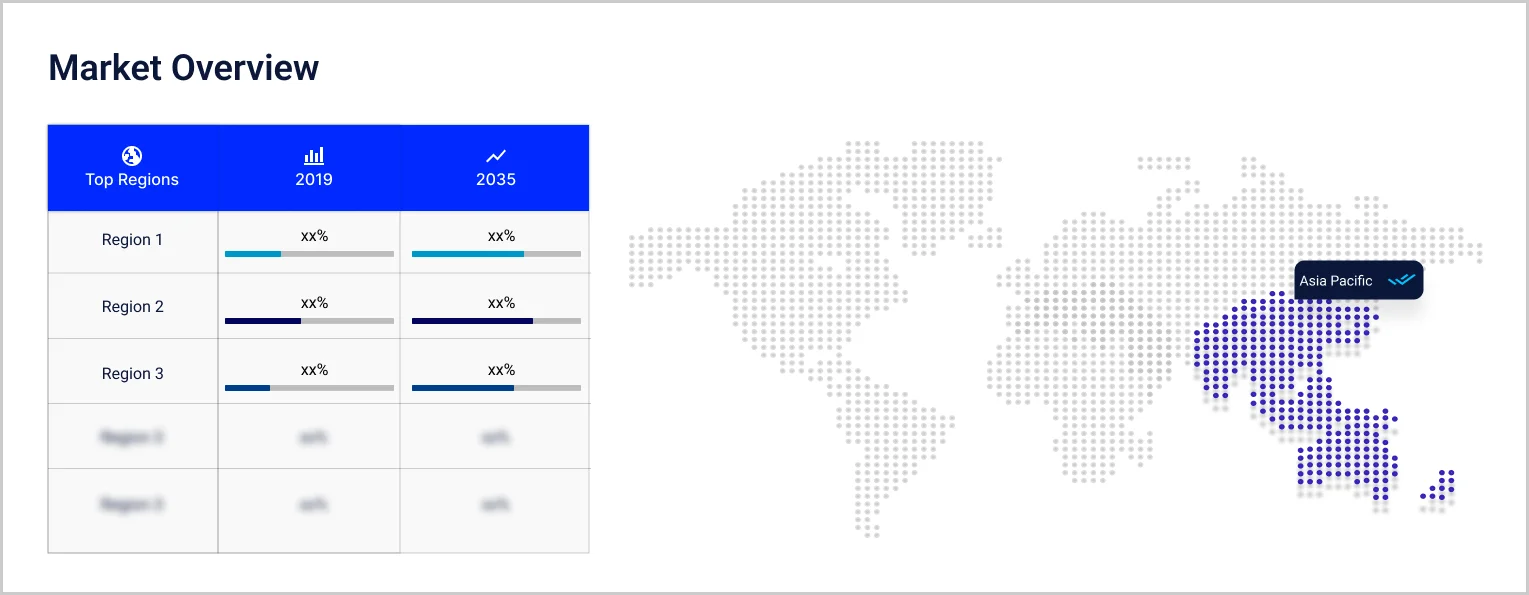
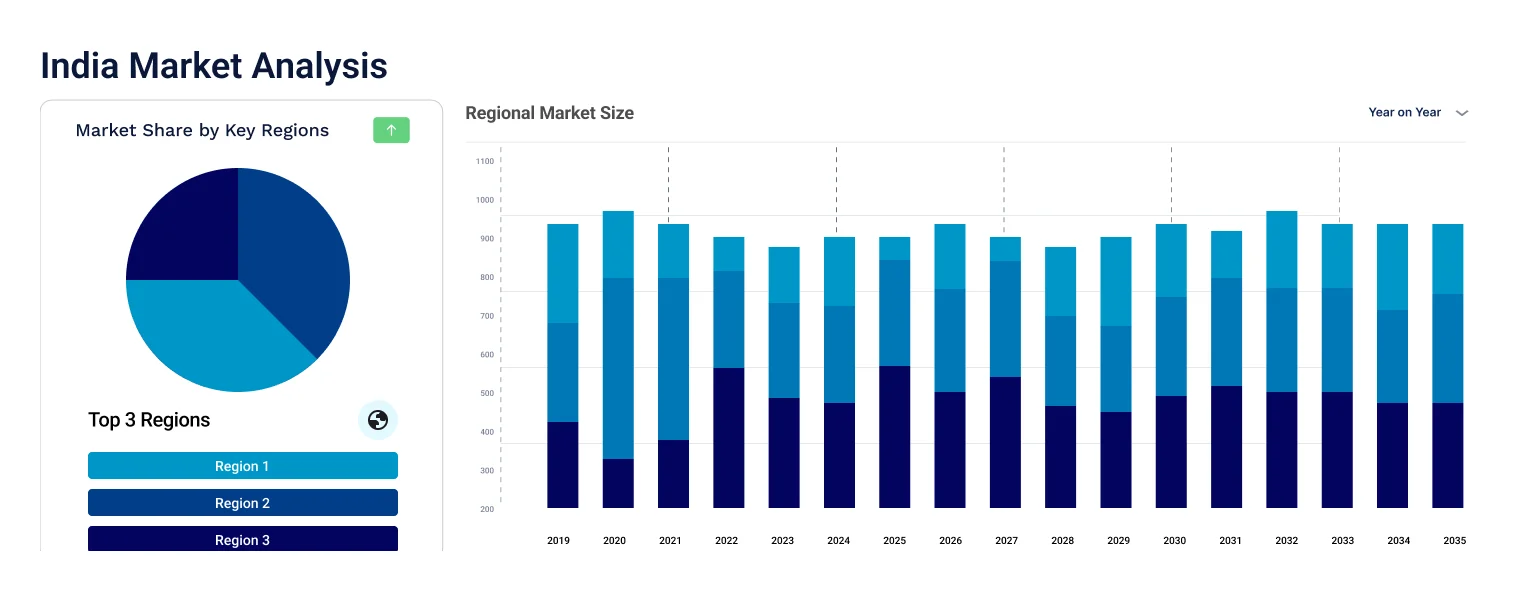
Key Insight: North India leads India's biogas market, supported by the states of Punjab, Haryana, and Uttar Pradesh, which have the country's densest concentration of large-scale CBG plant development and the highest volumes of agricultural residue and cattle-based feedstock. The region benefits from the SATAT scheme and the CBG-City Gas Distribution synchronisation programme, which integrates CBG producers directly into gas distribution networks. West India, anchored by Maharashtra and Gujarat, is the second-largest region, driven by Mumbai's urban waste-to-energy initiatives and a high density of established biogas plants. As of March 2023, Maharashtra alone had 935,000 operational biogas plants. South India and East India are growing regions, with state governments in Andhra Pradesh, Karnataka, Odisha, and West Bengal establishing new CBG facilities supported by National Bioenergy Programme funding.
Read more about this report - REQUEST FREE SAMPLE COPY IN PDF
Within the feedstock segmentation, Organic Residue and Wastes holds the dominant share of India's biogas market, reflecting the country's structural advantage in agricultural and organic waste generation. Animal waste is a particularly important sub-feedstock, with India's livestock population of approximately 535 million animals, including 302 million bovines, providing a consistent and geographically distributed manure supply. Municipal and sewage streams are growing rapidly as urban waste management systems improve and city gas distribution networks expand into major metros. The BMC and Mahanagar Gas Deonar project in Mumbai exemplifies how municipal organic waste is transitioning from a disposal challenge into a commercially valuable biogas feedstock. Energy crops remain a smaller but growing segment, piloted in states where crop residue co-digestion schemes are yielding higher biogas output per tonne of processed material.
Within the application segmentation, Electricity Generation leads as the primary end use, supported by guaranteed offtake mechanisms, grid integration policies, and a well-established base of state government-funded biogas-to-power plants. The heating application holds a stable base, particularly through rural household digesters that supply cooking gas to millions of rural households, representing a legacy of India's decades-long household biogas programme. Transportation is the fastest-growing application segment, directly catalysed by the legislated Compressed Biogas Blending Obligation. The 94 CBG plants operational under SATAT sold over 31,400 tonnes during financial year 2024/25 according to government data, demonstrating tangible market adoption and affirming the commercial viability of biogas as a transport fuel substitute for CNG.
Within the regional segmentation, North India and West India are the two dominant markets. North India benefits from abundant agricultural waste, particularly rice and wheat straw, and an established policy framework enabling large-scale CBG plant commissioning. West India, led by Maharashtra, combines India's largest concentration of traditional biogas digesters with an active urban waste-to-energy agenda, including collaborations between state utilities and city gas distribution companies. The CBG-CGD Synchronisation Scheme had 74 CBG producers and 31 city gas distribution entities operational as of September 2024, enabling direct injection of compressed biogas into pipeline networks and strengthening the commercial case for regional biogas scale-up.
Read more about this report - REQUEST FREE SAMPLE COPY IN PDF
North India is the leading region in India's biogas market, driven by the agricultural heartland states of Punjab, Haryana, and Uttar Pradesh, where large volumes of crop residue including paddy straw, wheat straw, and sugarcane press mud provide readily available anaerobic digestion feedstock. The region has attracted disproportionate investment under the SATAT scheme, with companies such as GPS Renewables and Bharat Biogas Energy establishing CBG plants to convert agricultural waste into transport fuel. GPS Renewables' partnership with Oil India Limited in November 2024 to set up eight CBG plants reflects the region's investment momentum. The CBG-CGD Synchronisation Scheme's integration of North Indian CBG plants into city gas networks further enhances offtake certainty, improving project economics and attracting fresh capital to the region.
West India, anchored by Maharashtra and Gujarat, is the second-largest regional biogas market and is growing rapidly through urban waste-to-energy initiatives and large-scale industrial biogas projects. Maharashtra holds India's highest concentration of traditional biogas plants, with 935,000 operational facilities recorded as of March 2023. The state is now transitioning toward commercial-scale CBG, exemplified by the Deonar project where Brihanmumbai Municipal Corporation and Mahanagar Gas Limited are processing 1,000 tonnes of wet waste daily. Gujarat is emerging as a hub for multi-feedstock CBG development, with companies leveraging the state's industrial organic waste streams alongside agricultural residues. HPCL's USD 231 million commitment to 24 CBG plants, many of which are expected to be located in West India's agricultural and urban corridors, further reinforces the region's outlook through the forecast period.
Short Description: India's biogas market features a mix of global engineering firms, domestic clean-energy specialists, and state-backed energy companies, with competition intensifying as the CBG blending mandate creates a defined commercial opportunity. International players such as Wärtsilä and Clarke Energy bring established anaerobic digestion and energy conversion technology, while domestic firms including GPS Renewables and Bharat Biogas Energy offer strong local engineering capabilities and regulatory familiarity. The market remains fragmented at the project level but is consolidating at the partnership and investment level as oil and gas majors, institutional funders, and state utilities formalise long-term offtake and development arrangements.
The competitive dynamics are being shaped by the race to commission CBG plants ahead of escalating blending obligations. Companies with established SATAT relationships, multi-feedstock processing capability, and city gas distribution connectivity are gaining a structural edge. Public-private partnerships, where municipalities provide waste streams and private operators manage capital and operations, are emerging as a dominant commercial model.
Founded in 1834 and headquartered in Helsinki, Finland, Wärtsilä is a global leader in energy and marine technologies. In India's biogas sector, Wärtsilä provides integrated gas engine solutions for biogas-to-power plants, including combined heat and power systems designed to maximise energy recovery from anaerobic digestion processes. The company's deep expertise in combustion systems, grid connectivity, and operational management for gas-fuelled power generation makes it a preferred technology partner for large-scale biogas electricity generation projects across India.
Founded in 2013 and headquartered in Bengaluru, India, GPS Renewables is one of India's leading biogas engineering firms, specialising in the design, construction, and commissioning of commercial-scale biogas and compressed biogas plants. The company has established itself as a prominent player under the SATAT scheme and gained further visibility through its November 2024 partnership with Oil India Limited to develop eight CBG plants. GPS Renewables' technical focus on modular plant architecture and multi-feedstock processing positions it well for the expanding CBG blending obligation market.
Clarke Energy is a global specialist in the engineering, installation, and maintenance of high-efficiency gas engine-based power plants, including those running on biogas and biomethane. With operations across multiple continents, Clarke Energy brings significant international deployment experience to India's biogas sector, providing packaged power generation solutions for biogas facilities. The company's expertise in integrating biogas engines with grid infrastructure and its established service network make it a key technical partner for large electricity-generation biogas projects in India.
Bharat Biogas Energy Limited is an India-based company focused on the development, construction, and operation of compressed biogas plants, with a particular emphasis on agricultural waste-based feedstock streams in North and West India. The company operates under the SATAT framework and has developed direct relationships with city gas distribution entities for CBG offtake. Its domestic operational experience, local supply chain integration, and growing project portfolio position it as a representative of India's emerging class of indigenous CBG developers serving the transport fuel segment.
Other key players in the market are Primove Engineering Pvt. Ltd., Green Elephant Group, Spectrum Renewable Energy Limited, and Others.
*Please note that this is only a partial list; the complete list of key players is available in the full report. Additionally, the list of key players can be customized to better suit your needs.*
Unlock detailed intelligence on the India Biogas Market with our comprehensive 2026 report, covering feedstock dynamics, CBG plant economics, regional investment trends, and the competitive strategies of leading players. Whether you are a project developer assessing site viability, an investor evaluating the CBG sector's growth runway, or a technology provider mapping commercial opportunities, this report provides the clarity your decisions demand. Download a free sample today and explore the data driving India's compressed biogas expansion.


Upto 15% Off
USD
$2499 $2249
$3999 $3599
$4999 $4249
$5999 $5099


*While we strive to always give you current and accurate information, the numbers depicted on the website are indicative and may differ from the actual numbers in the main report. At Expert Market Research, we aim to bring you the latest insights and trends in the market. Using our analyses and forecasts, stakeholders can understand the market dynamics, navigate challenges, and capitalize on opportunities to make data-driven strategic decisions.*
In 2025, the India biogas market reached an approximate value of USD 1.85 Billion.
The market is projected to grow at a CAGR of 9.60% between 2026 and 2035.
The key players in the market include Wärtsilä Corporation, Primove Engineering Pvt. Ltd., GPS Renewables Pvt. Ltd, Clarke Energy, Green Elephant Group, Bharat Biogas Energy Limited, and Spectrum Renewable Energy Limited, among others.
Key strategies driving the market include creating integrated biogas value chains, introducing smart monitoring, and establishing public-private partnerships for urban waste-to-energy projects.
The major applications considered in the market report are electricity generation, heating, and transportation.
Explore our key highlights of the report and gain a concise overview of key findings, trends, and actionable insights that will empower your strategic decisions.
| REPORT FEATURES | DETAILS |
| Base Year | 2025 |
| Historical Period | 2019-2025 |
| Forecast Period | 2026-2035 |
| Scope of the Report |
Historical and Forecast Trends, Industry Drivers and Constraints, Historical and Forecast Market Analysis by Segment:
|
| Breakup by Feedstock |
|
| Breakup by Application |
|
| Breakup by Region |
|
| Market Dynamics |
|
| Competitive Landscape |
|
| Companies Covered |
|
Datasheet
One User
USD 2,499
USD 2,249
tax inclusive*
Single User License
One User
USD 3,999
USD 3,599
tax inclusive*
Five User License
Five User
USD 4,999
USD 4,249
tax inclusive*
Corporate License
Unlimited Users
USD 5,999
USD 5,099
tax inclusive*
*Please note that the prices mentioned below are starting prices for each bundle type. Kindly contact our team for further details.*
Flash Bundle
Small Business Bundle
Growth Bundle
Enterprise Bundle
*Please note that the prices mentioned below are starting prices for each bundle type. Kindly contact our team for further details.*
Flash Bundle
Number of Reports: 3
20%
tax inclusive*
Small Business Bundle
Number of Reports: 5
25%
tax inclusive*
Growth Bundle
Number of Reports: 8
30%
tax inclusive*
Enterprise Bundle
Number of Reports: 10
35%
tax inclusive*
How To Order

Select License Type
Choose the right license for your needs and access rights.

Click on ‘Buy Now’
Add the report to your cart with one click and proceed to register.

Select Mode of Payment
Choose a payment option for a secure checkout. You will be redirected accordingly.
Strategic Solutions for Informed Decision-Making
Gain insights to stay ahead and seize opportunities.

Get insights & trends for a competitive edge.

Track prices with detailed trend reports.

Analyse trade data for supply chain insights.

Leverage cost reports for smart savings

Enhance supply chain with partnerships.

Connect For More Information
Our expert team of analysts will offer full support and resolve any queries regarding the report, before and after the purchase.
Our expert team of analysts will offer full support and resolve any queries regarding the report, before and after the purchase.
We employ meticulous research methods, blending advanced analytics and expert insights to deliver accurate, actionable industry intelligence, staying ahead of competitors.
Our skilled analysts offer unparalleled competitive advantage with detailed insights on current and emerging markets, ensuring your strategic edge.
We offer an in-depth yet simplified presentation of industry insights and analysis to meet your specific requirements effectively.




