

Consumer Insights
Uncover trends and behaviors shaping consumer choices today
Procurement Insights
Optimize your sourcing strategy with key market data
Industry Stats
Stay ahead with the latest trends and market analysis.
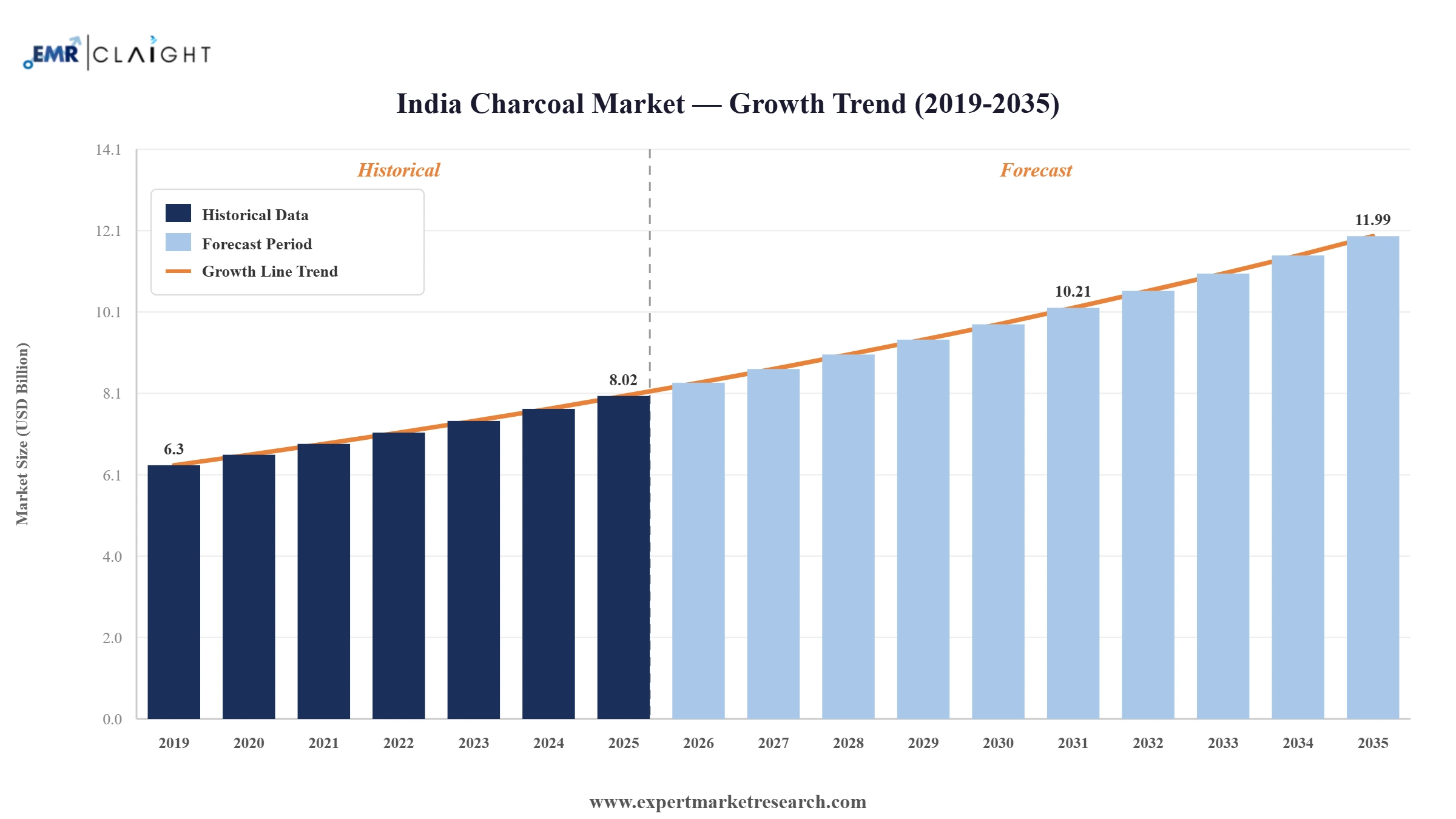
The India Charcoal Market reached a value of USD 8.02 Billion at 2025 and is projected to expand at a CAGR of around 4.10% during the forecast period of 2026-2035. With the expanding role of charcoal in metallurgical decarbonization, a growing export market for high-grade coconut shell and activated charcoal products, increasing use of activated charcoal in cosmetics and personal care formulations, and the adoption of waste-to-charcoal conversion technology supporting circular economy objectives, the market is expected to reach USD 11.99 Billion by 2035.
Green Carbon Inc. announced on April 17 that its Kapadvanj industrial biochar facility in Gujarat had cleared the pre-screening audit by international registry Isometric, paving the way for credit issuance by August 2026. According to the company's press release, the plant will convert surplus cotton stalks and peanut shells into 4,320 tonnes of stable biochar annually, signalling rising industrial-scale demand for charcoal in India's carbon removal economy.
Writing in The Hindu on March 18, agricultural scientist Arkalgud N. Ganeshamurthy unpacked the confusion around the Union Budget's Rs 20,000 crore Carbon Credit allocation, distinguishing industrial CCUS from soil-based pathways like biochar and agroforestry. The opinion piece highlighted biochar's growing relevance for farmer income and soil restoration, reinforcing prospects for agro-residue based charcoal output across the Indian market.
Read more about this report - REQUEST FREE SAMPLE COPY IN PDF
|
India Charcoal Market Report Summary |
Description |
Value |
|
Base Year |
USD Billion |
2025 |
|
Historical Period |
USD Billion |
2019-2025 |
|
Forecast Period |
USD Billion |
2026-2035 |
|
Market Size 2025 |
USD Billion |
8.02 |
|
Market Size 2035 |
USD Billion |
11.99 |
|
CAGR 2019-2025 |
Percentage |
XX% |
|
CAGR 2026-2035 |
Percentage |
4.10% |
|
CAGR 2026-2035 - Market by Region |
North India |
4.6% |
|
CAGR 2026-2035 - Market by Region |
East and Central India |
4.2% |
|
CAGR 2026-2035 - Market by Type |
Coconut Shell |
4.5% |
|
CAGR 2026-2035 - Market by End Use |
Cosmetics and Personal Care |
5.4% |
|
2025 Market Share by Region |
East and Central India |
22.7% |
India's charcoal market is navigating a meaningful shift from a commodity primarily associated with traditional cooking fuel toward a diversified industrial and specialty product with expanding applications across metallurgy, health, cosmetics, and environmental infrastructure. Four trends are shaping this evolution.
In April 2025, NTPC, India's largest power generation company, commissioned the country's first Waste-to-Green Charcoal plant in Varanasi, Uttar Pradesh, capable of converting municipal solid waste into eco-friendly, clean-burning charcoal. The facility advances India's circular economy objectives by diverting urban waste from landfills and transforming it into a commercially viable fuel product. The plant's commissioning marks a significant milestone for India's charcoal market, signaling that large public sector enterprises are now investing in technologically advanced, low-emission charcoal production methods that can serve both industrial and household fuel markets while contributing to the country's sustainability and urban waste management targets.
In the fourth quarter of 2024, the Indian government launched its Green Steel initiative, a policy framework designed to incentivize carbon-neutral production methods in the steel and iron sector, including the substitution of coal-based coke with biochar and charcoal-based alternatives. States including Odisha and Chhattisgarh, which host significant concentrations of small and medium steel and ferroalloy manufacturers, have already reported increased procurement of charcoal briquettes following the initiative's launch. The Indian Institute of Metals has further highlighted coconut shell charcoal as a viable input for ferroalloy manufacturing, providing technical credibility to a shift that could significantly expand the metallurgical end use segment of India's charcoal market over the forecast period.
In 2024, Tata Steel became the first Indian steelmaker to integrate biochar into its production process as a direct substitute for fossil-fuel-derived carbon, aligning the move with the company's broader decarbonization strategy. By using renewable carbon sources to partially replace coke in its operations, Tata Steel demonstrated the technical feasibility of biochar adoption at industrial scale within India's steel sector. This initiative carries significant market implications: it provides a replicable model for other large steelmakers and reduces the perception risk that has historically slowed biochar and charcoal adoption in metallurgical applications, potentially catalyzing faster sector-wide uptake of alternative carbon inputs under India's Green Steel framework.
In 2024, urban infrastructure projects under AMRUT 2.0, the Atal Mission for Rejuvenation and Urban Transformation, began deploying activated charcoal filter systems in water treatment and air purification infrastructure across Tier II Indian cities. The integration of activated charcoal into public water supply and air quality management systems at the municipal level represents a meaningful structural demand driver that is distinct from both the cooking fuel and export-driven segments. As India's urban water quality standards are tightened and awareness of indoor air pollution grows, municipal procurement of activated charcoal for filtration applications is expected to grow steadily through the forecast period, particularly in cities covered by AMRUT 2.0's expanded scope.
In 2024, India recorded a strong performance in its activated carbon export market, with export volumes rising 10.7% year-on-year from 106,051 metric tonnes in 2023 to 117,368 metric tonnes, while export values surged 22.5% from USD 184.3 million to USD 225.7 million. Key export growth markets included the United States and South Africa, with the former registering a 36% increase in value and the latter an 81% increase. The performance highlights India's growing competitiveness as a global supplier of coconut shell-derived activated carbon, benefiting from abundant raw material supply in Tamil Nadu, Kerala, and Karnataka and from higher global prices driven by supply constraints in competing producers including Sri Lanka and Indonesia.
The commissioning of NTPC's Waste-to-Green Charcoal plant in Varanasi in April 2025 marks the beginning of a technologically upgraded phase for India's charcoal production sector. Waste-to-charcoal conversion systems, which process municipal solid waste, agro-residue, and biomass into high-quality clean-burning fuel, address two pressing national priorities simultaneously: urban waste management and the provision of affordable, low-emission energy alternatives. For India's charcoal market growth, these facilities represent a new source of supply that is not constrained by forest biomass availability or deforestation concerns, making production more scalable and regulatorily defensible. Private equity investors and government agencies are showing growing interest in commercial-scale waste-to-charcoal facilities, particularly as India's smart city program creates centralized municipal solid waste streams that can serve as consistent feedstocks.
India's Green Steel initiative, launched in 2024, has opened a meaningful growth pathway for charcoal within the country's industrial ecosystem. By providing policy incentives for carbon-neutral steel production methods, the initiative is encouraging small and medium steel manufacturers in Odisha, Chhattisgarh, and Jharkhand to substitute coal-derived coke with charcoal briquettes and biochar. The Indian Institute of Metals has endorsed coconut shell charcoal as technically suitable for ferroalloy manufacturing, and Tata Steel's 2024 biochar adoption provides a large-enterprise precedent that reduces adoption risk for smaller operators. With India targeting significant reductions in its steel sector's carbon intensity under its climate commitments, metallurgical charcoal represents one of the most structurally supported growth segments in the country's charcoal market over the forecast period.
Activated charcoal has graduated from niche wellness ingredient to mainstream formulation component in India's fast-growing cosmetics and personal care industry. The material's oil-absorbing and impurity-cleansing properties make it particularly effective in deep-cleansing face masks, anti-pollution cleansers, and detox-oriented skincare products that are gaining strong traction among urban Indian consumers. This category is the fastest-growing end use in India's charcoal market with a projected CAGR of 5.4%, driven by rising disposable incomes, growing health and beauty awareness, and the influence of social media in mainstreaming activated charcoal-based skincare routines. South Indian manufacturers with access to high-grade coconut shell-derived activated charcoal are best positioned to serve this demand, as cosmetics-grade activated charcoal requires consistent purity standards that coconut shell production processes reliably deliver.
India is emerging as one of the world's most competitive exporters of coconut shell-derived activated carbon, with 2024 export volumes growing 10.7% year-on-year to 117,368 metric tonnes and export values surging 22.5% to USD 225.7 million. The country is benefiting from abundant coconut shell feedstock in Tamil Nadu, Kerala, and Karnataka, established export infrastructure through the ports of Mangalore, Tuticorin, and Kochi, and growing global demand for high-grade, food-safe, and pharmaceutical-grade activated charcoal in air purification, water treatment, and industrial applications. India's coconut shell charcoal prices rose from USD 329 per metric tonne in January 2024 to USD 536 per metric tonne by November 2024, reflecting tight supply in competing producing nations and growing recognition of Indian material quality among international buyers in the United States, Europe, and the Gulf.
The Expert Market Research's report titled "India Charcoal Market Report and Forecast 2026 to 2035" offers a detailed analysis of the market based on the following segments:
Market Breakup by Type
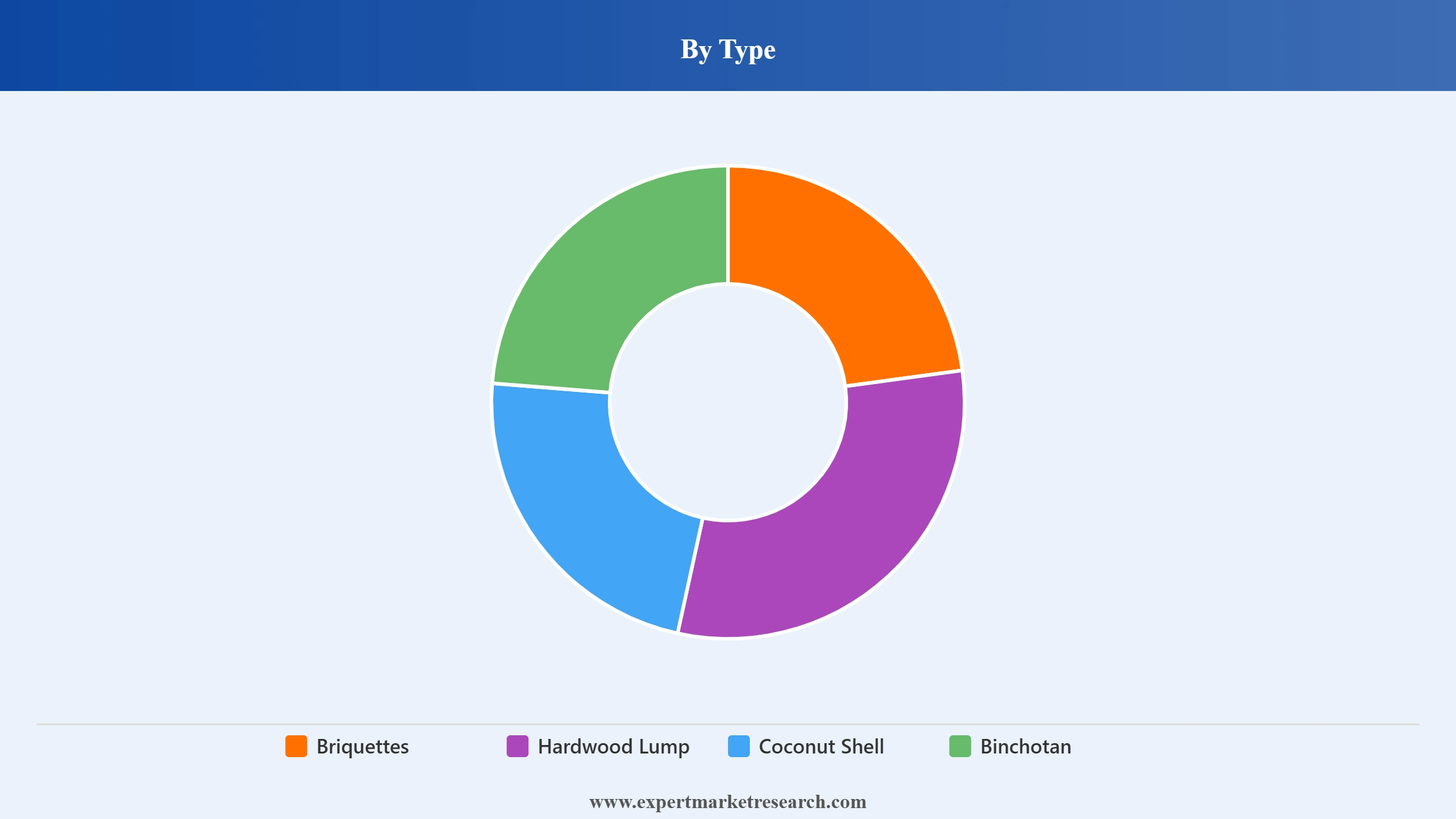
Key Insight: Hardwood Lump charcoal dominates India's charcoal market by volume, reflecting its deep penetration as a cooking and metallurgical fuel, particularly in East India where sal and teak wood are abundant and traditional kiln-based production methods remain widely practiced. Briquettes are rapidly gaining ground in both rural and semi-urban markets as a more standardized, affordable, and lower-smoke alternative to firewood and LPG for household cooking. The Coconut Shell segment is the fastest-growing type at a projected CAGR of 4.5%, driven by the intersection of strong export demand for activated charcoal and rapidly expanding domestic applications in cosmetics, water treatment, and industrial filtration. Binchotan, the premium Japanese-style white charcoal, is a niche but growing segment in India's upscale hospitality and wellness market, with restaurants and premium barbecue chains driving demand in metro cities.
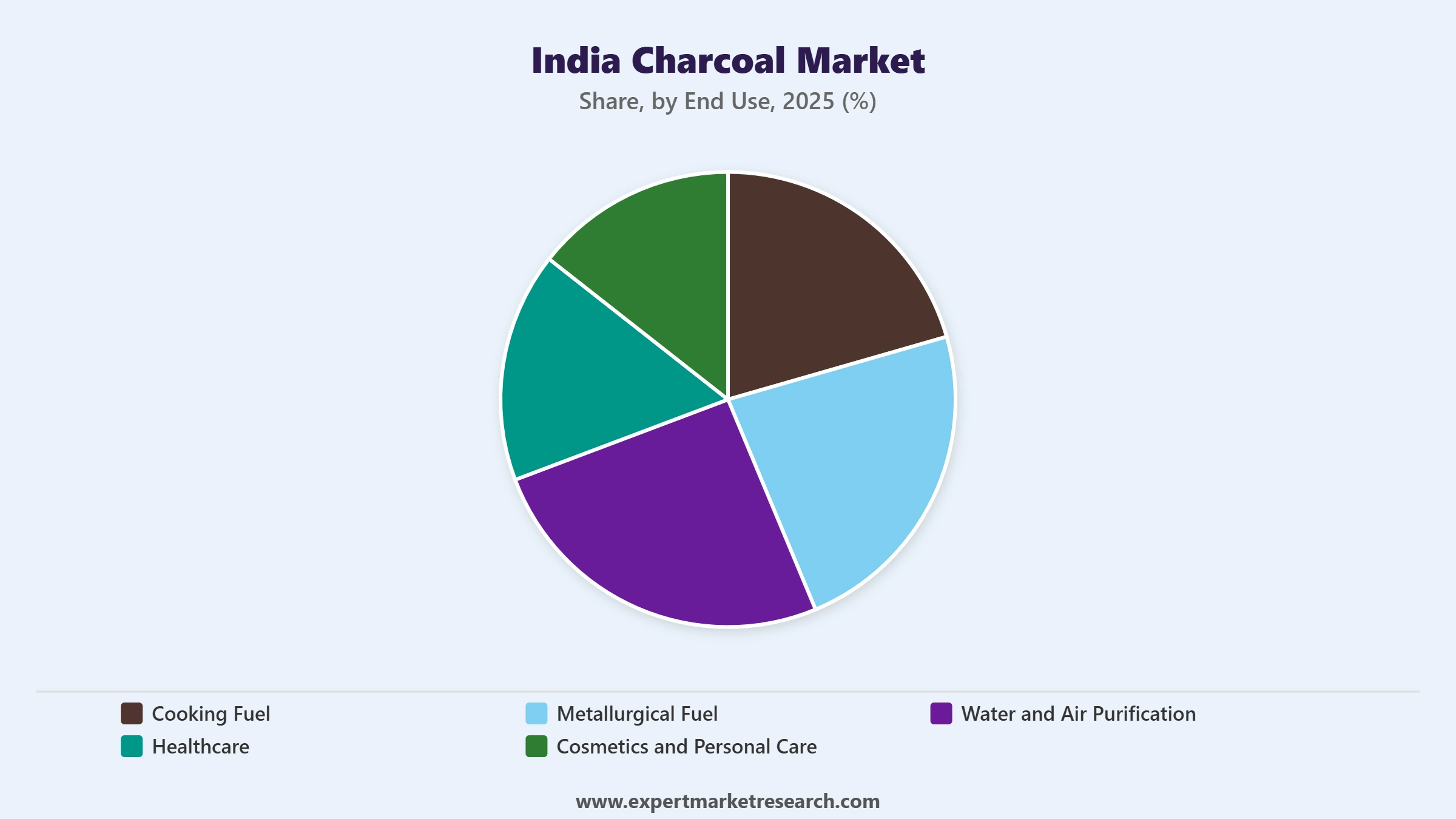
Market Breakup by End Use
Key Insight: Cooking Fuel remains the largest end use in India's charcoal market, anchored by the substantial rural household population that relies on charcoal as a primary cooking fuel and by the growing urban restaurant and hospitality sector's demand for premium charcoal grades for tandoor ovens, barbecue grills, and shisha applications. Metallurgical Fuel is experiencing renewed growth momentum as the Green Steel initiative and rising coke prices push small and medium steel and ferroalloy manufacturers to explore charcoal-based alternatives. Water and Air Purification is a structurally growing segment as AMRUT 2.0 and rising environmental awareness drive municipal and industrial activated charcoal filter procurement. Cosmetics and Personal Care is the fastest-growing end use at 5.4% CAGR, with activated charcoal becoming a standard ingredient in mass-market and premium skincare formulations across India's rapidly expanding beauty sector.
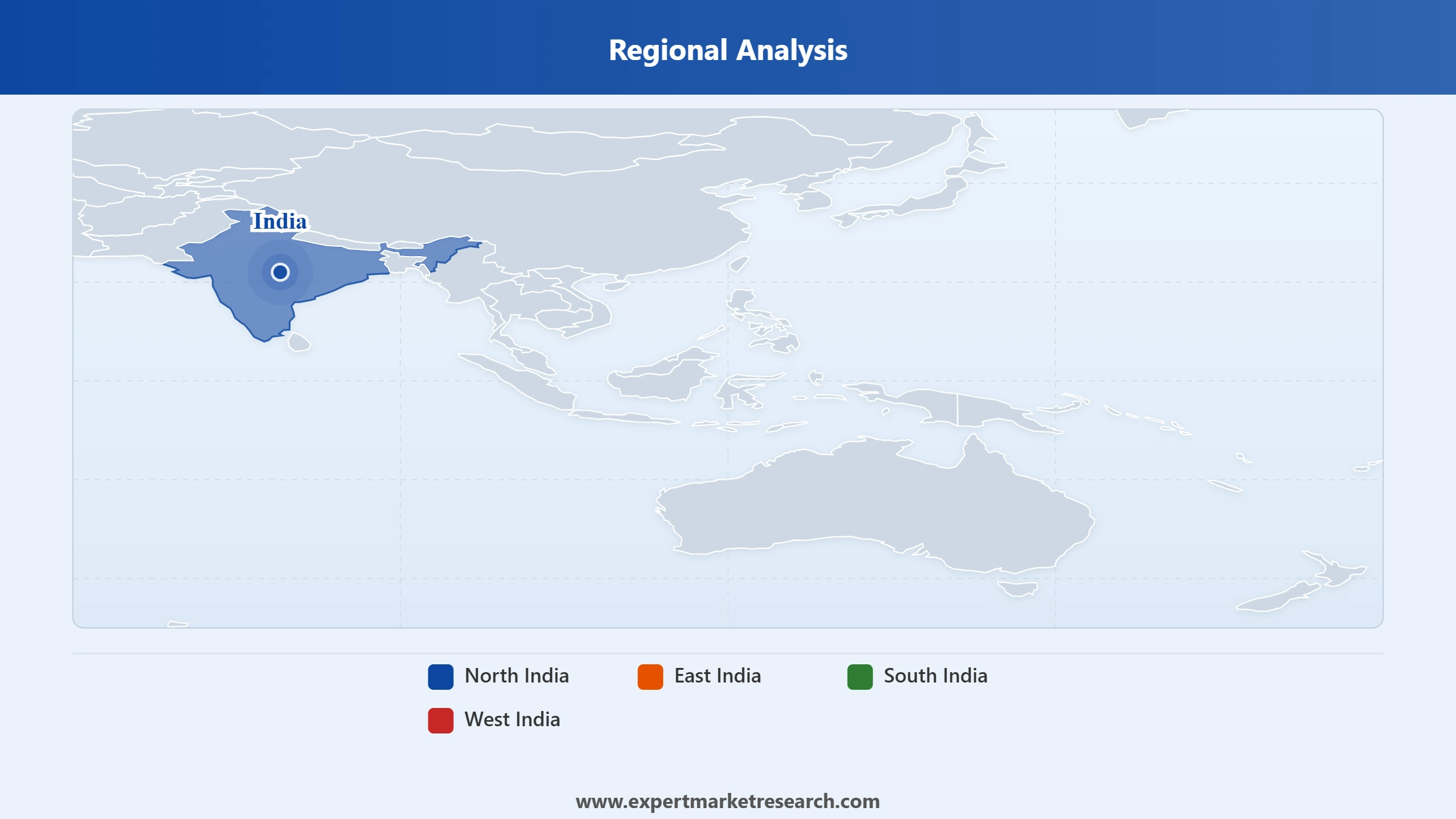
Market Breakup by Region
Key Insight: East India and Central India collectively hold the dominant production and consumption share of India's charcoal market, anchored by the forest-dense tribal districts of Jharkhand and Chhattisgarh where traditional hardwood lump charcoal is produced at large scale from sal and teak wood. North India is the fastest-growing demand region at a projected CAGR of 4.6%, driven by industrial growth in the NCR corridor and increasing urban consumption of premium charcoal grades in restaurants and barbecue establishments. South India is the fastest-developing production region, centered on large-scale coconut shell charcoal manufacturing in Pollachi, Madurai, Alappuzha, and Mangalore, with export-focused processing units benefiting from port proximity and consistent coconut supply. West India is an important consumption market for briquettes and activated charcoal in the cosmetics and pharmaceutical manufacturing corridors of Maharashtra and Gujarat.
Read more about this report - REQUEST FREE SAMPLE COPY IN PDF
In the type segmentation, Hardwood Lump and Briquettes collectively hold the dominant market share in India's charcoal market. Hardwood Lump's dominance reflects its deep integration into both rural cooking economies and the metallurgical supply chains of East India's small steel sector, with tribal and forest communities in Jharkhand and Chhattisgarh supplying substantial volumes through traditional production networks. Briquettes are gaining share at the expense of firewood and LPG in rural cooking markets due to their lower cost, consistent burn quality, and cleaner combustion, with the government's clean cooking initiatives and IIFM-supported community charcoal ventures in Madhya Pradesh further formalizing this transition.
Read more about this report - REQUEST FREE SAMPLE COPY IN PDF
In the end use segmentation, Cooking Fuel currently holds the largest share by a significant margin, reflecting the scale of India's household and commercial food service demand for charcoal-based cooking energy. However, the growth trajectory is most compelling in Cosmetics and Personal Care, where activated charcoal's integration into mainstream skincare and personal hygiene products is creating a new consumer goods-driven demand channel that is less cyclical and more brand-driven than traditional fuel applications. The metallurgical end use is regaining momentum as the Green Steel initiative and rising coke prices make charcoal-based carbon inputs increasingly cost-competitive, with India's steel sector's environmental commitments further reinforcing this shift.
Read more about this report - REQUEST FREE SAMPLE COPY IN PDF
East India and Central India
East India and Central India constitute the production heartland of India's charcoal industry, accounting for a combined 22.7% of total market value and representing the country's most established and voluminous charcoal supply base. The tribal and forest-dense districts of Jharkhand, particularly Simdega and Gumla, and Chhattisgarh's Bastar region are the epicenters of hardwood lump charcoal production, where sal and teak wood are converted into charcoal through traditional earth kiln methods practiced by local communities for generations. This region's charcoal flows through interstate supply chains to support small-scale metallurgical industries in neighbouring Bihar and Odisha, which are now receiving additional momentum from the Green Steel initiative's incentives for coke substitution. The IIFM has facilitated community-led charcoal ventures in Madhya Pradesh from early 2024, introducing more organized production practices that are beginning to improve the quality consistency and market access of central Indian suppliers.
South India
South India is the fastest-developing region in India's charcoal market, driven by a distinct competitive advantage: the country's highest concentration of coconut shell charcoal and activated carbon manufacturing capacity. The districts of Pollachi and Madurai in Tamil Nadu and Alappuzha in Kerala are home to mechanized processing units that manufacture high-grade activated charcoal for both export and domestic cosmetics and filtration markets. Port cities including Mangalore and Tuticorin provide direct export access, enabling South Indian producers to serve international buyers in the United States, Europe, the Gulf, and East Asia with competitive lead times and pricing. Demand from South Korean and Middle Eastern buyers specifically for low-ash, non-wood charcoal is accelerating capacity expansion in this region. The region is also the primary beneficiary of India's growing cosmetics and personal care activated charcoal demand, as domestic beauty manufacturers in Bengaluru, Chennai, and Coimbatore source from nearby Tamil Nadu and Kerala producers.
Read more about this report - REQUEST FREE SAMPLE COPY IN PDF
India's charcoal market is served by a diverse mix of organized manufacturers, regional kiln operators, and export-focused processing companies that collectively serve the full spectrum of the market from traditional cooking fuel to high-grade activated charcoal for pharmaceutical and cosmetics applications. The competitive landscape varies significantly by product type: the hardwood lump segment is dominated by regionally entrenched operators with access to forest biomass in East and Central India, while the coconut shell and activated charcoal segment is led by organized manufacturers in South India with mechanized processing capabilities and established export relationships. Briquette manufacturers are distributed across multiple regions, with newer entrants increasingly adopting mechanized production and waste-biomass inputs as feedstock alternatives to traditional wood sources.
Competition in the premium activated charcoal segment, serving cosmetics, water treatment, and pharmaceutical applications, is intensifying as domestic and international demand grows. Companies with certified production processes, consistent purity standards, and established export documentation capabilities are commanding premium pricing and securing long-term supply agreements with global buyers. Government policies promoting Green Steel and waste-to-charcoal technologies are opening new market opportunities for organized players capable of scaling production to industrial requirements.
Kalpaka Chemicals is a South India-based manufacturer and exporter of activated charcoal and related products, with a strong focus on coconut shell-derived activated carbon for industrial, water treatment, and pharmaceutical applications. The company has built a reputation for consistent product quality and reliable export fulfilment across international markets, particularly in water purification and environmental treatment segments. Kalpaka's location in South India provides competitive feedstock access and port proximity, making it a well-positioned supplier in India's growing activated carbon export corridor.
MICBAC India is a specialized producer of activated charcoal and carbon products, with a product portfolio covering multiple grades serving industrial, agricultural, and specialty applications. The company serves domestic customers in water treatment, food processing, and pharmaceutical sectors alongside international buyers seeking reliable Indian-origin activated charcoal supply. MICBAC's technical depth and multi-grade product range allow it to serve both commodity-scale buyers and specialty purchasers requiring precise specification compliance for sensitive applications.
Coconut Products Impex is a leading exporter of coconut shell charcoal and activated carbon products from India, with established trade relationships in export markets including the Gulf, Europe, and Asia. The company operates within the coconut-rich production zones of South India and focuses on delivering high-grade charcoal briquettes and activated carbon that meet international quality and purity standards. Its export orientation positions it well to benefit from India's growing global activated carbon market share as competing producers in Sri Lanka and Indonesia face supply constraints.
Kasturi Coconut Processing is a South India-based manufacturer specializing in coconut shell charcoal and related value-added products for domestic and international markets. The company operates within the coconut-dense processing ecosystem of Kerala and Tamil Nadu, processing agricultural by-products from the coconut oil and desiccated coconut industries into high-quality charcoal and activated carbon outputs. Kasturi's circular supply chain, which converts what would otherwise be agricultural waste into commercial charcoal products, aligns well with growing buyer interest in traceable, sustainable sourcing.
Other key players in the market are Sagar Charcoal and Firewood Depot, Prithvi Chemical Manufacturing Company Pvt. Ltd., Suneeta Carbons, and Others.
*Please note that this is only a partial list; the complete list of key players is available in the full report. Additionally, the list of key players can be customized to better suit your needs.*
India's charcoal market is evolving quickly, shifting from a traditional fuel commodity into a multi-use industrial and specialty ingredient with growing global relevance. Whether you are a procurement professional evaluating supply sources, an investor assessing the clean charcoal technology opportunity, or a manufacturer planning an export market entry, our 2026 India Charcoal Market report delivers the detailed forecasts, trade data, and competitive intelligence you need to act with confidence. Download your free sample today and explore the full scope of India's dynamic charcoal market.


Upto 15% Off
USD
$2499 $2249
$3999 $3599
$4999 $4249
$5999 $5099


*While we strive to always give you current and accurate information, the numbers depicted on the website are indicative and may differ from the actual numbers in the main report. At Expert Market Research, we aim to bring you the latest insights and trends in the market. Using our analyses and forecasts, stakeholders can understand the market dynamics, navigate challenges, and capitalize on opportunities to make data-driven strategic decisions.*
In 2025, the India charcoal market reached an approximate value of USD 8.02 Billion.
The market is projected to grow at a CAGR of 4.10% between 2026 and 2035.
The key players in the market includes Sagar Charcoal and Firewood Depot, Kalpaka Chemicals, MICBAC India, Coconut Products Impex, Prithvi Chemical Manufacturing Company Pvt. Ltd., Kasturi Coconut Processing, and Suneeta Carbons, among others.
The coconut shell type is gaining traction and anticipated to expand with a 4.5% CAGR through 2035.
Key strategies include expanding mechanized production, leveraging agro-waste for briquettes, targeting export markets, promoting activated charcoal in cosmetics and filtration, and tapping rural demand through low-cost, locally sourced fuel alternatives.
Explore our key highlights of the report and gain a concise overview of key findings, trends, and actionable insights that will empower your strategic decisions.
| REPORT FEATURES | DETAILS |
| Base Year | 2025 |
| Historical Period | 2019-2025 |
| Forecast Period | 2026-2035 |
| Scope of the Report |
Historical and Forecast Trends, Industry Drivers and Constraints, Historical and Forecast Market Analysis by Segment:
|
| Breakup by Type |
|
| Breakup by End Use |
|
| Breakup by Region |
|
| Market Dynamics |
|
| Competitive Landscape |
|
| Companies Covered |
|
Datasheet
One User
USD 2,499
USD 2,249
tax inclusive*
Single User License
One User
USD 3,999
USD 3,599
tax inclusive*
Five User License
Five User
USD 4,999
USD 4,249
tax inclusive*
Corporate License
Unlimited Users
USD 5,999
USD 5,099
tax inclusive*
*Please note that the prices mentioned below are starting prices for each bundle type. Kindly contact our team for further details.*
Flash Bundle
Small Business Bundle
Growth Bundle
Enterprise Bundle
*Please note that the prices mentioned below are starting prices for each bundle type. Kindly contact our team for further details.*
Flash Bundle
Number of Reports: 3
20%
tax inclusive*
Small Business Bundle
Number of Reports: 5
25%
tax inclusive*
Growth Bundle
Number of Reports: 8
30%
tax inclusive*
Enterprise Bundle
Number of Reports: 10
35%
tax inclusive*
How To Order

Select License Type
Choose the right license for your needs and access rights.

Click on ‘Buy Now’
Add the report to your cart with one click and proceed to register.

Select Mode of Payment
Choose a payment option for a secure checkout. You will be redirected accordingly.
Strategic Solutions for Informed Decision-Making
Gain insights to stay ahead and seize opportunities.

Get insights & trends for a competitive edge.

Track prices with detailed trend reports.

Analyse trade data for supply chain insights.

Leverage cost reports for smart savings

Enhance supply chain with partnerships.

Connect For More Information
Our expert team of analysts will offer full support and resolve any queries regarding the report, before and after the purchase.
Our expert team of analysts will offer full support and resolve any queries regarding the report, before and after the purchase.
We employ meticulous research methods, blending advanced analytics and expert insights to deliver accurate, actionable industry intelligence, staying ahead of competitors.
Our skilled analysts offer unparalleled competitive advantage with detailed insights on current and emerging markets, ensuring your strategic edge.
We offer an in-depth yet simplified presentation of industry insights and analysis to meet your specific requirements effectively.




