

Consumer Insights
Uncover trends and behaviors shaping consumer choices today
Procurement Insights
Optimize your sourcing strategy with key market data
Industry Stats
Stay ahead with the latest trends and market analysis.
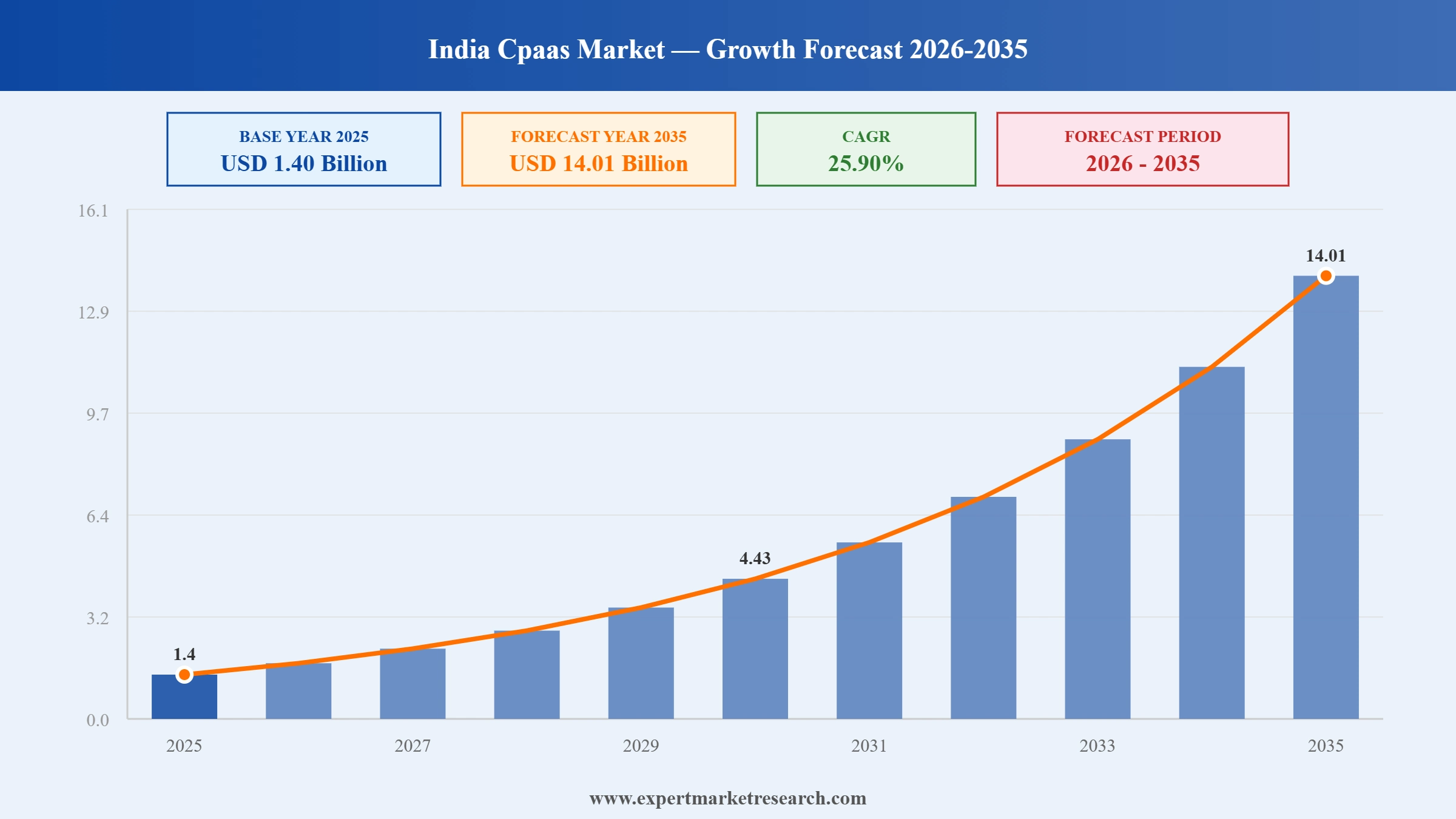
The India CPaaS Market reached a value of USD 1.40 Billion at 2025 and is projected to expand at a CAGR of around 25.90% during the forecast period of 2026-2035. With rising adoption of AI-driven messaging APIs, expanding 5G network infrastructure, growing BFSI and retail sector demand for omnichannel engagement, and increased uptake of pay-per-use CPaaS models among small and medium enterprises, the market is expected to reach USD 14.01 Billion by 2035.
Read more about this report - REQUEST FREE SAMPLE COPY IN PDF
| India CPaaS Market Report Summary |
Description |
Value |
|
Base Year |
USD Billion |
2025 |
|
Historical Period |
USD Billion |
2019-2025 |
|
Forecast Period |
USD Billion |
2026-2035 |
|
Market Size 2025 |
USD Billion |
1.40 |
|
Market Size 2035 |
USD Billion |
14.01 |
|
CAGR 2019-2025 |
Percentage |
XX% |
|
CAGR 2026-2035 |
Percentage |
25.90% |
|
CAGR 2026-2035 - Market by Region |
South India |
28.3% |
|
CAGR 2026-2035 - Market by End Use |
BFSI |
29.3% |
|
CAGR 2026-2035 - Market by Enterprise Size |
Large Enterprise |
29.0% |
The India CPaaS market is evolving rapidly, shaped by the convergence of AI, 5G, regulatory push for secure messaging, and deep sectoral digitisation. From banks deploying real-time transactional alerts to healthcare platforms enabling teleconsultation at scale, CPaaS has moved from a nice-to-have tool to a core infrastructure layer for Indian enterprises.
Bharti Airtel confirmed a renewed partnership with Google to roll out Rich Communication Services (RCS) messaging on its network, making it the final major Indian telecom operator to adopt the next-generation messaging standard. Under the commercial arrangement, Airtel will charge enterprises INR 0.11 per RCS message under an 80:20 revenue share model with Google. A critical condition of the deal requires all RCS traffic to pass through Airtel’s AI-powered spam detection system before delivery. With Airtel’s entry, all three of India’s largest telcos now support RCS, establishing a unified enterprise messaging ecosystem that directly challenges WhatsApp’s dominance in business communication.
Following its 2024 acquisition of Route Mobile, Proximus Group announced the establishment of a Global Capability Centre (GCC) in Bengaluru to leverage India’s deep technology talent base and strengthen its global CPaaS operations. The GCC is intended to support product development, engineering, and operational functions across Proximus’s combined Route Mobile and Telesign entities. The move reflects a broader industry trend of global technology companies anchoring India-centric capability hubs to drive CPaaS innovation, compliance engineering, and AI-powered communication development. This Bengaluru centre is expected to serve as a critical node for Proximus’s ambition of leading the global CPaaS market.
Tanla Platforms Limited, one of India’s foremost CPaaS providers, unveiled Registration.ai, a new AI-powered module integrated into its flagship blockchain platform, Trubloq, at the Global Fintech Festival in Mumbai. The launch was a direct response to directives issued by India’s Telecom Regulatory Authority (TRAI) on 20 August 2024, targeting the misuse of messaging services. Registration.ai makes Tanla the first CPaaS player in India to release a TRAI-compliant automated registration solution, helping enterprises register messaging headers and templates significantly faster while reducing compliance risk.
Belgium-based Proximus Group completed the acquisition of approximately 82.70% of Route Mobile Limited, an Indian CPaaS provider listed on the NSE and BSE, marking one of the most significant consolidation deals in India’s CPaaS sector. The total transaction value stood at around EUR 643 million. The combined entity of Route Mobile and Proximus’s US-based affiliate Telesign positions Proximus as the third-largest CPaaS player globally by messaging volume. The acquisition strengthens Route Mobile’s access to mature markets in the US and Europe while adding substantial scale for omnichannel enterprise communication services in India, the Middle East, Africa, and Asia.
Tanla Platforms released Trubloq.ai, a generative AI upgrade to its Trubloq distributed ledger technology (DLT) platform, designed to overhaul how enterprises register messaging headers, templates, and campaigns in India. The solution reduces header and template registration time by 80 to 90% through AI-driven content recommendations and automatic approvals. It also cuts enterprise SMS costs by 10 to 15% through intelligent template optimisation while generating 10 to 20% higher click-through rates on promotional campaigns. Trubloq processes approximately 63% of India’s A2P SMS traffic, and the Trubloq.ai upgrade positions Tanla at the intersection of regulatory compliance and AI-led communication innovation.
Artificial intelligence has become central to how CPaaS platforms in India operate, not just as a feature but as core infrastructure. Platforms are embedding AI for intelligent spam detection, template optimisation, automated compliance checking, and personalised campaign management. The integration of machine learning into messaging workflows allows enterprises to target customers with context-specific communication, raise click-through rates, and dramatically cut registration timelines. For the India CPaaS market growth, AI-driven tools are proving especially impactful in BFSI and e-commerce, where precision and timing of communication directly affect customer satisfaction and revenue. In August 2024, Tanla Platforms launched Registration.ai under its Trubloq platform at the Global Fintech Festival, becoming the first CPaaS provider in India to deliver a TRAI-compliant, AI-automated messaging registration solution.
The adoption of generative AI within enterprise messaging platforms is fundamentally changing the economics and speed of CPaaS deployment in India. GenAI tools are enabling automated content creation, campaign management, and regulatory compliance checks that previously required manual intervention. This is particularly relevant for India’s distributed ledger technology ecosystem, where TRAI mandates require every enterprise to register messaging headers and templates before sending. Platforms that can automate this compliance layer through AI gain a significant competitive edge. In February 2024, Tanla Platforms launched Trubloq.ai, a GenAI-powered upgrade to its DLT platform, reducing template registration time by 80 to 90% and cutting enterprise SMS costs by up to 15% through intelligent optimisation.
Rich Communication Services (RCS) has shifted from a niche protocol to a commercially viable enterprise messaging channel in India, following the adoption by all three major telecom operators. RCS offers enterprises branded, interactive, and media-rich messaging capabilities natively within Android’s messaging app, without requiring users to install a third-party application. This positions it as a strong alternative to WhatsApp Business for customer engagement and promotional messaging. The ability to include interactive buttons, verified sender identities, read receipts, and high-resolution media is attracting attention from BFSI, retail, and logistics companies. In December 2025, Bharti Airtel partnered with Google to roll out RCS messaging across its network under an 80:20 revenue-share model, completing India’s unified RCS ecosystem across all major operators
The India CPaaS sector is witnessing a meaningful consolidation cycle as global players pursue scale through acquisitions of domestic providers, while Indian CPaaS companies expand internationally through the backing of global parent entities. This trend is reshaping the competitive map, giving combined entities stronger carrier relationships, broader geographic footprints, and larger API portfolios. Enterprises benefit from consolidated platforms that bundle domestic DLT compliance, omnichannel messaging, digital identity verification, and AI features under a single provider. In May 2024, Belgium’s Proximus Group completed its acquisition of approximately 82.70% of Route Mobile, India’s prominent CPaaS provider, for around EUR 643 million, positioning the combined group as the third-largest CPaaS player globally by messaging volume.
The report of the Expert Market Research report titled “India CPaaS Market Report and Forecast 2026 to 2035" offers a detailed analysis of the market based on the following segments:
Market Breakup by Enterprise Size
Key Insight: Small and medium enterprises are rapidly emerging as the most dynamic growth segment within India’s CPaaS market. Historically dominated by large corporates, the market is opening up to SMEs as pay-per-use pricing models eliminate the need for upfront infrastructure investment. Retail, logistics, and healthcare SMEs in India’s Tier-2 and Tier-3 cities are deploying CPaaS tools for WhatsApp notifications, SMS alerts, and automated customer support. Platforms like Tanla’s ValueFirst and Gupshup’s conversational AI suite have specifically expanded their offerings to serve mid-market accounts. Large enterprises, however, continue to command the lion’s share of revenue, given their high-volume transactional messaging needs particularly in the BFSI and IT and Telecom sectors.
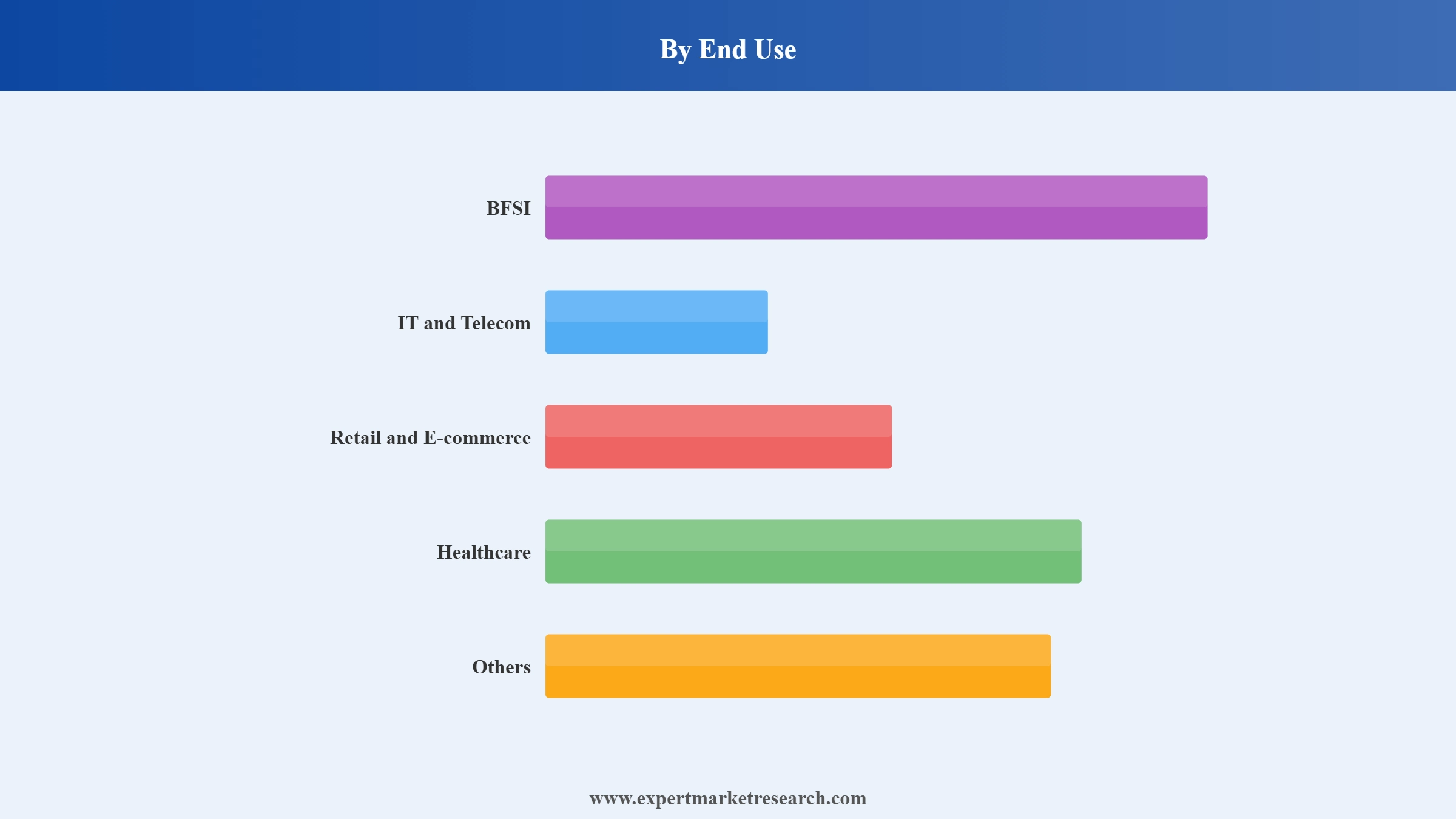
Market Breakup by End Use
Key Insight: The BFSI sector is the most established end-use segment for CPaaS in India, accounting for a significant revenue share driven by regulatory mandates for OTP delivery, transaction alerts, fraud notifications, and KYC verification messaging. The Reserve Bank of India’s push for real-time digital payments has resulted in billions of OTP and alert messages being processed monthly. Retail and e-commerce represent the second major adopter category, with brands deploying CPaaS for flash sale notifications, cart recovery messages, and conversational commerce on WhatsApp. Healthcare has gained momentum post-pandemic through teleconsultation notifications and appointment reminders. IT and Telecom, as both a consumer and enabler of CPaaS, continues to drive strong and sustained demand for API-based communication services..
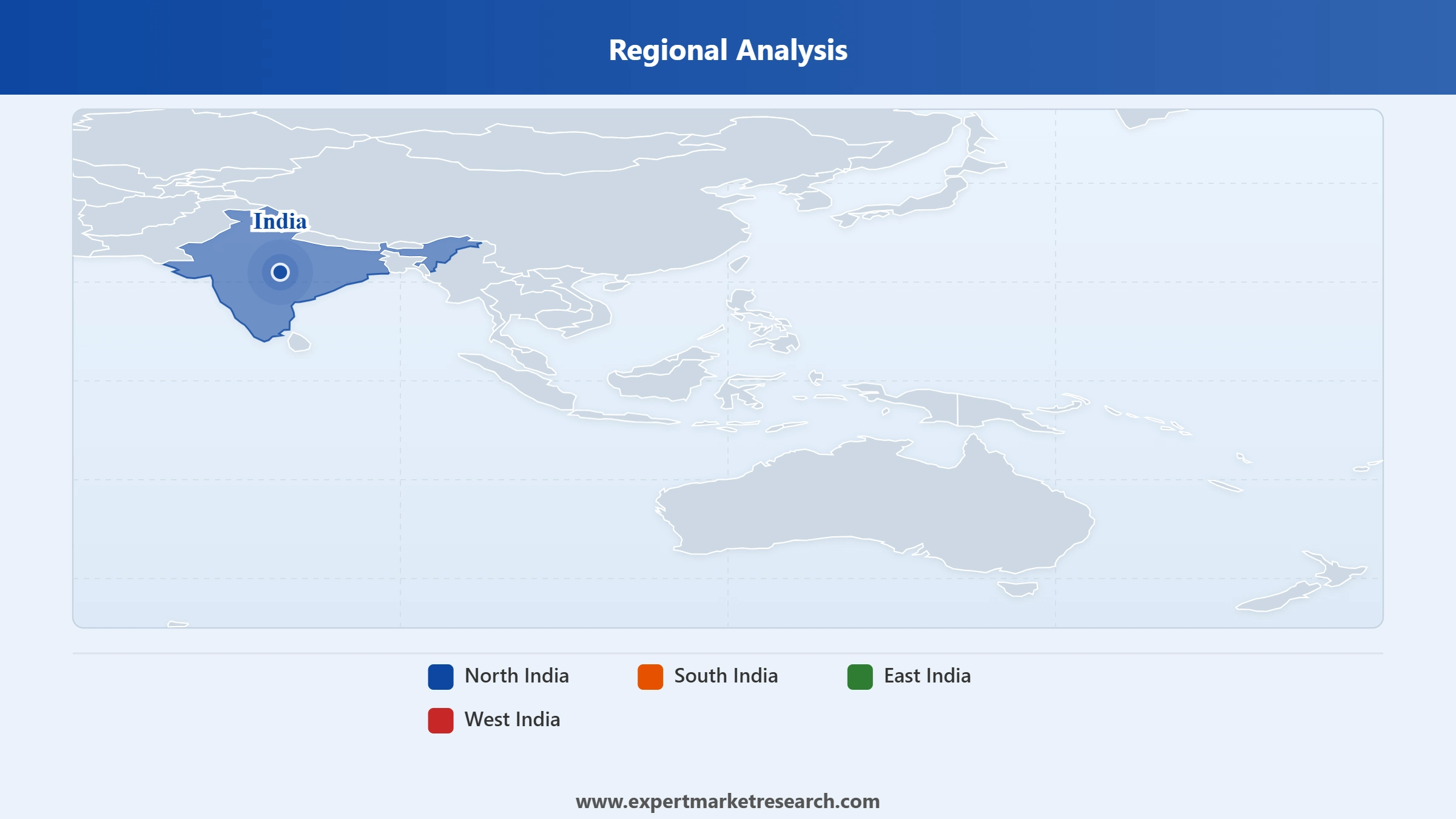
Market Breakup by Region
Key Insight: South India currently commands the largest share of India’s CPaaS market, anchored by the technology hubs of Bengaluru, Hyderabad, and Chennai, which house a disproportionate concentration of IT companies, startups, and global capability centres. These cities are home to some of India’s leading CPaaS providers, including Tanla Platforms in Hyderabad, and have a high density of digitally native enterprises that are early adopters of API-first communication tools. North India is the fastest-growing region, powered by Delhi NCR’s financial services cluster, the rapidly expanding FinTech ecosystem in Noida and Gurugram, and the massive population base of states like Uttar Pradesh where digital adoption is accelerating sharply. West India, particularly Mumbai and Gujarat, benefits from the concentration of banking headquarters and a growing health-tech ecosystem, while East India is an emerging market driven by expansion of e-commerce logistics and government digital inclusion initiatives.
Read more about this report - REQUEST FREE SAMPLE COPY IN PDF
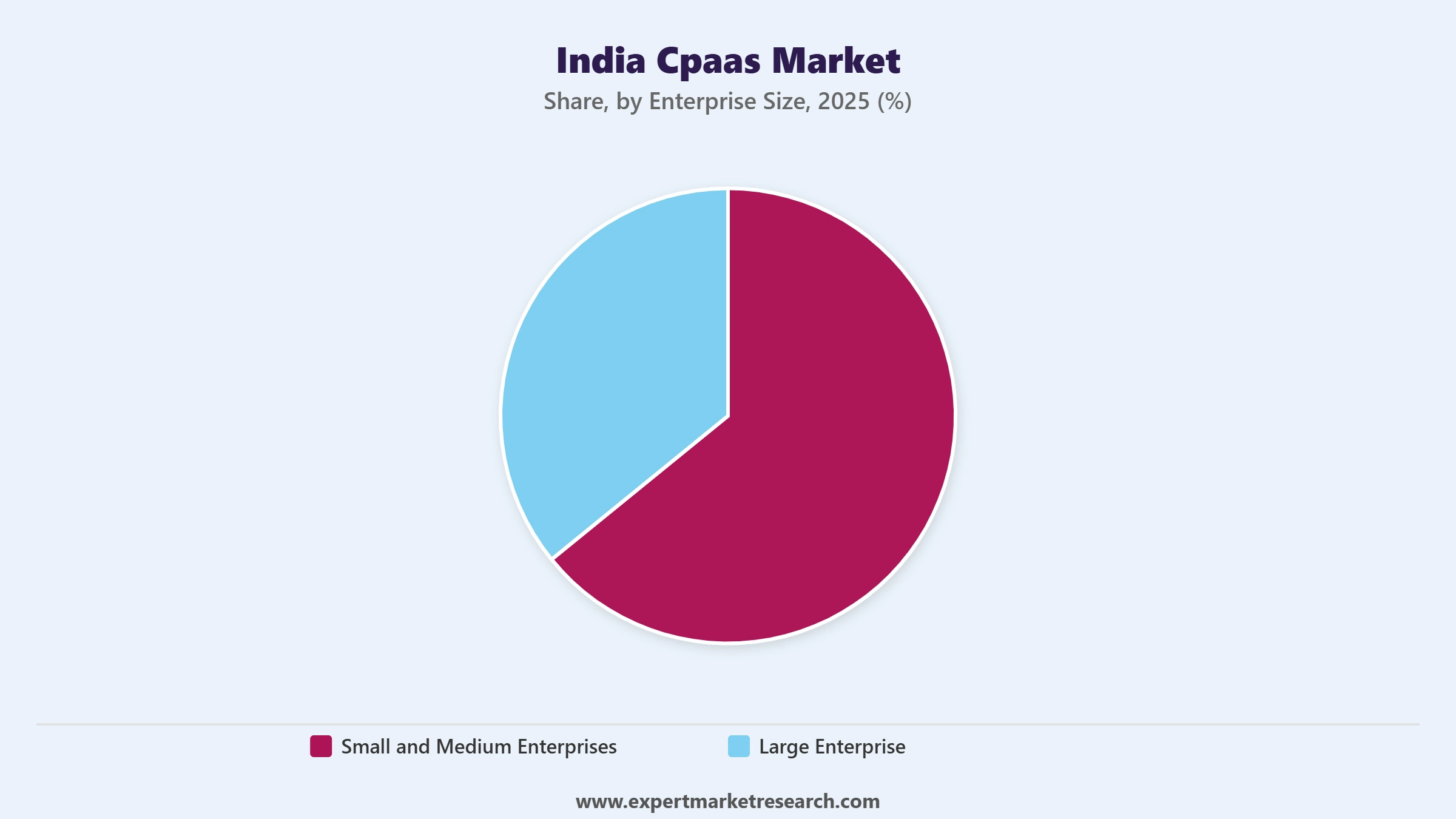
By Enterprise Size: Large enterprises continue to dominate revenue in India’s CPaaS market, retaining approximately 67% of total spending in 2024, according to available market intelligence. Their dominance reflects the sheer volume of transactional messaging generated by banks, insurance companies, large retailers, and telecom service providers who handle billions of OTPs, fraud alerts, and promotional campaigns each month. These organisations also have the IT governance frameworks and procurement budgets needed to integrate enterprise-grade CPaaS platforms. That said, the SME segment is gaining fast, particularly in sectors like retail, logistics, and healthcare in Tier-2 cities, where affordable pay-per-use plans and plug-and-play integration with platforms like Shopify and WhatsApp Business are making CPaaS accessible without dedicated IT teams.
Read more about this report - REQUEST FREE SAMPLE COPY IN PDF
By End Use: BFSI is the dominant end-use segment, accounting for approximately 28% of India’s CPaaS revenue, according to available research. The segment’s prominence is driven almost entirely by regulatory compulsion and digital payment volumes. India processed over 131 billion UPI transactions in fiscal year 2024-2025, each of which potentially generates one or more CPaaS-delivered notifications. Retail and e-commerce represents the second largest segment and is one of the fastest-growing categories as brands increasingly rely on WhatsApp and RCS-based conversational commerce to engage and retain customers. The healthcare segment, while smaller in absolute terms, is growing consistently as teleconsultation adoption, appointment management, and diagnostic report delivery all shift to mobile-first, API-driven communication flows.
Read more about this report - REQUEST FREE SAMPLE COPY IN PDF
By Region: South India holds the leading regional share, anchored by Bengaluru and Hyderabad’s dense IT and technology ecosystems and the high smartphone penetration and digital literacy of their populations. Significant investment in enterprise CPaaS by software companies and global multinationals operating in these cities sustains strong ongoing demand. North India, while currently a smaller market, is growing at the fastest clip and has the potential to overtake other regions over the medium term given the scale of its population base, the financial services density of Delhi NCR, and aggressive government-backed digital push in states like Uttar Pradesh and Rajasthan.
South India is the most mature regional market for CPaaS in India and continues to lead in both absolute market value and technology adoption. Bengaluru, widely regarded as India’s Silicon Valley, is home to CPaaS providers like Tanla Platforms and serves as a hub for global tech companies that are among the heaviest consumers of enterprise communication APIs. Hyderabad’s proximity to major pharmaceutical and healthcare enterprises has also driven CPaaS adoption for patient communication and clinical workflows. High smartphone penetration across major South Indian cities, combined with a large pool of tech-savvy professionals and enterprises, creates a self-reinforcing demand cycle. The region also benefits from a relatively mature FinTech ecosystem in cities like Chennai, where digital banking penetration is among the highest in the country. South India accounts for the bulk of India’s A2P SMS traffic, much of which flows through Tanla’s Trubloq platform.
Read more about this report - REQUEST FREE SAMPLE COPY IN PDF
North India stands out as the fastest-growing regional market, reflecting the massive economic and demographic weight of states like Uttar Pradesh, Delhi NCR, and Rajasthan. Delhi NCR hosts the Indian headquarters of most major private sector banks, insurance companies, and FinTech startups, generating enormous volumes of transactional communication. The National Capital Region’s emergence as a major IT and startup hub, particularly in Noida and Gurugram, has added a new layer of enterprise CPaaS demand beyond traditional BFSI. Government digital initiatives targeting North India’s large rural population, including PM-Kisan’s AI chatbot service and financial inclusion drives, have extended CPaaS adoption beyond tier-1 cities. The breadth of industries and the sheer population scale of the region make North India a critical growth market for CPaaS providers over the forecast period.
The India CPaaS market has a moderately fragmented competitive structure, where global platforms compete alongside homegrown providers with deep carrier relationships and regulatory expertise. Domestic players such as Tanla Platforms and Route Mobile have built substantial moats through TRAI-compliant DLT infrastructure and long-standing telecom operator partnerships, giving them structural advantages in India-specific use cases like A2P SMS, OTP delivery, and bulk messaging. Global players like Twilio, Sinch, and Infobip bring sophisticated API suites and AI capabilities, competing effectively in the enterprise segment by appealing to technology-forward buyers seeking feature breadth and global reach.
Competitive differentiation in this market has moved beyond pricing and now includes the quality of AI integration, breadth of channel support (SMS, RCS, WhatsApp, voice, video), compliance automation, and developer experience. Acquisitions are reshaping market structure, most notably Proximus’s absorption of Route Mobile, which repositioned it as a globally scaled entity. Providers that combine strong domestic carrier relationships with AI-enhanced communication suites are best placed to capture growth across both the enterprise and SME segments over the forecast period.
Twilio Inc. was founded in 2008 and is headquartered in San Francisco, California, United States. The company operates one of the world’s most widely used cloud communications platforms, offering APIs for voice, messaging, video, email, and authentication. In India, Twilio serves enterprises across BFSI, healthcare, retail, and technology sectors. Its Segment customer data platform and AI-driven communications tools have strengthened its enterprise value proposition. Twilio continues to hold the leading market share position globally among CPaaS providers and has invested significantly in developer-centric onboarding and localised compliance support for India’s regulatory environment.
Tanla Platforms Ltd. was founded in 1999 and is headquartered in Hyderabad, India. The company is one of India's largest CPaaS providers, processing over 800 billion interactions annually. It operates Trubloq, the world's largest blockchain-based DLT platform for enterprise messaging compliance, through which approximately 63% of India's A2P SMS traffic flows. Tanla was recognised as a Visionary in the 2024 Magic Quadrant for CPaaS. Through its subsidiary ValueFirst, the company serves a broad base of mid-market and enterprise accounts with omnichannel communication tools spanning SMS, WhatsApp, RCS, and email.
Route Mobile Ltd. was founded in 2004 and is headquartered in Mumbai, India. The company became a part of Belgium’s Proximus Group in May 2024, following the completion of Proximus’s acquisition of approximately 82.70% of the company for around EUR 643 million. Route Mobile processes over 10.5 billion monthly transactions and holds strong market positions across India, the Middle East, Africa, and Southeast Asia. The combination with Proximus’s Telesign and BICS entities has created a globally scaled CPaaS and digital identity group. The company’s A2P firewall capabilities and operator-level partnerships, including with Vodafone Idea, remain key competitive assets in the India market.
AMD Telecom S.A. was founded in 2007 and is headquartered in Thessaloniki, Greece. The company delivers mobile messaging and connectivity solutions, including A2P SMS, voice APIs, and data services, to enterprises and telecom operators worldwide. AMD Telecom operates through a global network spanning over 160 countries and focuses on providing scalable, secure, and carrier-grade communication infrastructure. In India, the company serves clients in BFSI, telecom, and retail seeking reliable cross-border and domestic messaging capabilities. Its Routee platform provides a developer-friendly suite of APIs for SMS, voice, email, and verification services.
Other key players in the market are Telnyx LLC, Sendbird, Inc., Gupshup Inc., Plivo Inc., Infobip Ltd., Sinch AB, and Others.
*Please note that this is only a partial list; the complete list of key players is available in the full report. Additionally, the list of key players can be customized to better suit your needs.*
Ready to understand where the India CPaaS market is heading through 2026 and beyond? Our comprehensive report gives you verified data on enterprise adoption trends, BFSI and retail-driven growth, regional opportunity maps, and the competitive strategies of leading players from Twilio to Tanla. Whether you are a CPaaS vendor mapping your expansion, an enterprise evaluating providers, or an investor assessing the sector, this report delivers the clarity you need. Download your free sample now and explore the key opportunities within India’s fast-growing communications platform space.


Upto 15% Off
USD
$2499 $2249
$3999 $3599
$4999 $4249
$5999 $5099


*While we strive to always give you current and accurate information, the numbers depicted on the website are indicative and may differ from the actual numbers in the main report. At Expert Market Research, we aim to bring you the latest insights and trends in the market. Using our analyses and forecasts, stakeholders can understand the market dynamics, navigate challenges, and capitalize on opportunities to make data-driven strategic decisions.*
At 2025, the market reached an approximate value of USD 1.40 Billion.
The market is projected to grow at a CAGR of 25.90% between 2026 and 2035.
The market is projected to grow significantly during the forecast period 2026 to 2035 to reach USD 14.01 Billion by 2035.
The India CPaaS market is expanding on the back of several converging forces. The rapid digitisation of India’s economy, over 40% of all payments were digital as of 2023, has created enormous demand for real-time communication APIs across the BFSI sector. The Government of India’s Digital India initiative has further accelerated cloud adoption across public services and enterprises alike. Rising smartphone penetration, with India’s internet user base expected to surpass 900 million, has made mobile-first, API-driven customer communication essential. The growing 5G rollout is enabling low-latency voice and video communication applications in healthcare, retail, and financial services. Additionally, SMEs are embracing pay-per-use CPaaS models to build enterprise-grade communication capabilities without capital investment. AI integration in messaging platforms, including chatbots, intelligent spam filters, and generative AI tools for template creation, is accelerating both adoption and productivity gains.
The India CPaaS market is segmented by enterprise size into Small and Medium Enterprises (SMEs) and Large Enterprises. Large enterprises currently dominate, holding approximately 67% of revenue, primarily through high-volume BFSI and IT sector messaging requirements. However, SMEs represent the fastest-growing subsegment, advancing at an estimated CAGR of 24.1%, as affordable pay-per-use pricing and low-code integration tools bring CPaaS capabilities within reach of smaller businesses in retail, logistics, and healthcare.
The India CPaaS market is shaped by four major trends. First, AI and machine learning integration is transforming how platforms operate, from automated TRAI-compliant registration to intelligent personalisation of customer messaging. Second, generative AI is being embedded into DLT and messaging platforms to cut compliance costs and improve campaign performance. Third, Rich Communication Services (RCS) is emerging as a competitive enterprise messaging channel following adoption by all three major Indian telecom operators, directly challenging WhatsApp’s dominance. Fourth, consolidation through M&A activity, notably Proximus’s acquisition of Route Mobile, is reshaping the competitive structure toward larger, globally scaled CPaaS entities with deeper India-specific capabilities.
The key players in the market include Twilio Inc., Tanla Platforms Ltd., Route Mobile Ltd., AMD Telecom S.A., Telnyx LLC, Sendbird, Inc., Gupshup Inc., Plivo Inc., Infobip Ltd., Sinch AB, and others.
Explore our key highlights of the report and gain a concise overview of key findings, trends, and actionable insights that will empower your strategic decisions.
| REPORT FEATURES | DETAILS |
| Base Year | 2025 |
| Historical Period | 2019-2025 |
| Forecast Period | 2026-2035 |
| Scope of the Report |
Historical and Forecast Trends, Industry Drivers and Constraints, Historical and Forecast Market Analysis by Segment:
|
| Breakup by Enterprise Size |
|
| Breakup by End Use |
|
| Breakup by Region |
|
| Market Dynamics |
|
| Competitive Landscape |
|
| Companies Covered |
|
Datasheet
One User
USD 2,499
USD 2,249
tax inclusive*
Single User License
One User
USD 3,999
USD 3,599
tax inclusive*
Five User License
Five User
USD 4,999
USD 4,249
tax inclusive*
Corporate License
Unlimited Users
USD 5,999
USD 5,099
tax inclusive*
*Please note that the prices mentioned below are starting prices for each bundle type. Kindly contact our team for further details.*
Flash Bundle
Small Business Bundle
Growth Bundle
Enterprise Bundle
*Please note that the prices mentioned below are starting prices for each bundle type. Kindly contact our team for further details.*
Flash Bundle
Number of Reports: 3
20%
tax inclusive*
Small Business Bundle
Number of Reports: 5
25%
tax inclusive*
Growth Bundle
Number of Reports: 8
30%
tax inclusive*
Enterprise Bundle
Number of Reports: 10
35%
tax inclusive*
How To Order

Select License Type
Choose the right license for your needs and access rights.

Click on ‘Buy Now’
Add the report to your cart with one click and proceed to register.

Select Mode of Payment
Choose a payment option for a secure checkout. You will be redirected accordingly.
Strategic Solutions for Informed Decision-Making
Gain insights to stay ahead and seize opportunities.

Get insights & trends for a competitive edge.

Track prices with detailed trend reports.

Analyse trade data for supply chain insights.

Leverage cost reports for smart savings

Enhance supply chain with partnerships.

Connect For More Information
Our expert team of analysts will offer full support and resolve any queries regarding the report, before and after the purchase.
Our expert team of analysts will offer full support and resolve any queries regarding the report, before and after the purchase.
We employ meticulous research methods, blending advanced analytics and expert insights to deliver accurate, actionable industry intelligence, staying ahead of competitors.
Our skilled analysts offer unparalleled competitive advantage with detailed insights on current and emerging markets, ensuring your strategic edge.
We offer an in-depth yet simplified presentation of industry insights and analysis to meet your specific requirements effectively.




