

Consumer Insights
Uncover trends and behaviors shaping consumer choices today
Procurement Insights
Optimize your sourcing strategy with key market data
Industry Stats
Stay ahead with the latest trends and market analysis.
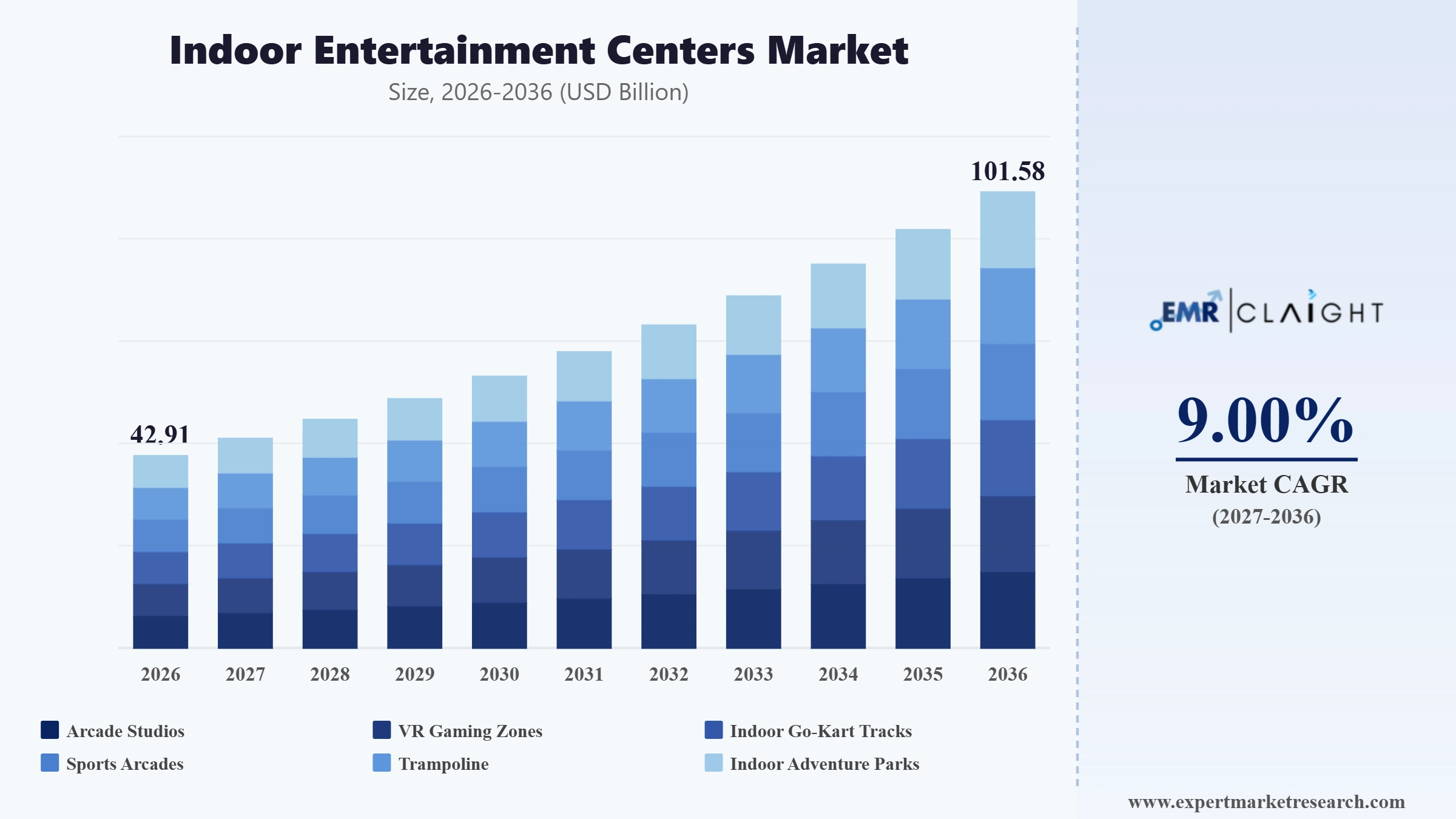
The global indoor entertainment centers market attained a value of USD 39.37 Billion in 2025 and is projected to expand at a CAGR of 9.00% through 2035. The market is further expected to achieve USD 93.20 Billion by 2035. Factors like immersive attractions and foodservice offerings which optimize asset utilization and encourage repeat visits, are creating profit margins for operators, developers and equipment manufacturers.
Operators are combining attractions in order to maximize the duration of stay and minimize reliance on one attraction, widening the indoor entertainment centers market scope. Extended spending in terms of foodservice, party packages, merchandise and so on are making it possible for operators to go beyond just an admission fee. Modular rides are another way of keeping the attraction fresh without having to renovate an entire venue. This becomes significant in case of urban areas where space and throughput are expensive.
One major trend in the indoor entertainment centers market is the increased consideration of space productivity in planning the layout of attractions. Currently, indoor entertainment centers integrate arcade games, virtual reality experiences, trampolines, climbing, bowling, catering services and party rooms into one center that caters to several generations within the same visit to the center. For instance, CAVU Designwerks specializes in designing modular attractions, trackless dark rides, motion simulators, and interactive VR systems, according to the available space and throughput requirements of operators. Quest attraction developed by CAVU Designwerks is modular by nature. Similarly, in June 2025, Chuck E. Cheese launched Chuck’s Arcade, blending modern games, VR and racing simulators with retro arcade classics across multiple locations.
As family entertainment operators broaden their attraction portfolios, branded experiences are emerging as a key strategy to increase visitor engagement and spending. For instance, in March 2026, LEGOLAND California is set to open LEGO Galaxy, which includes Galacticoaster. It is LEGOLAND's first indoor space coaster, where the operator will focus on personalized family experiences in a 30,000-square-foot building, complete with 1,500 feet of track. This development in the indoor entertainment centers market reflects the trend of entertainment operators looking to diversify from their conventional arcade floor to smaller but more branded attractions, involving physical rides, digital storytelling and thematic food and beverages. Currently, the LEGOLAND Discovery Centers run 29 attractions worldwide, covering 9 countries, while overall LEGOLAND family parks attract more than 16 million visitors every year.
Read more about this report - REQUEST FREE SAMPLE COPY IN PDF
Four new attractions, which included laser tag and indoor sports, were introduced at the Urban Air Bloomingdale park to offer additional year-round entertainment. There is a possibility for indoor entertainment center operators to diversify their range of attractions through play activity and memberships.
Playaza Entertainment announced plans of developing six entertainment centers within 18 months, indicating the potential of expansion through mall-based centers for operators. Companies may develop through the route of franchising and urban entertainment centers, widening the indoor entertainment centers market scope.
Imagicaa acquired the franchise for Hello Park and was to build four to five venues per year, using interactive technology and indoor entertainment facilities. Venue operators can incorporate the tech-based format in smaller footprints inside the malls in order to attract customers on an ongoing basis and protect themselves from weather issues.
Masti Zone launched its venue inside the Curo High Street Mall offering arcade games, VR, trampolines, bumper cars and various other indoor activities. Businesses can create multiple attractions centers with gaming and physical activities, boosting growth in the indoor entertainment centers market.
Immersive virtual reality and motion attractions are changing the market scenario, shifting to attractions that can be refreshed through software or media. CAVU Designwerks provides interactive virtual reality motion-based attraction solutions that merge virtual reality and ride movement synchronization. It also provides Battle for Eire which integrates virtual reality technology into a huge motion simulator to deal with capacity and hygiene challenges, boosting the overall indoor entertainment centers market value. LEGOLAND Discovery Centers incorporate virtual reality into their attractions that include The Great LEGO Race attraction. Similarly, in September 2026, Sandbox VR Las Vegas launched a new zombie-themed virtual reality adventure, expanding immersive entertainment offerings for visitors.
Branded and story-led attractions provide indoor operators with an option to differentiate themselves from others through arcade equipment. LEGOLAND Discovery Centers provide a combination of millions of LEGO bricks with rides, 4D cinema, master builder classes, and themed play. This combination creates a product ecosystem rather than an attraction. Aligning with this trend in the indoor entertainment centers market, in April 2025, LEGOLAND New York developed a 13,000 square foot LEGO DUPLO PEPPA PIG playground which demonstrates integration of licensed characters into attractions. LEGOLAND California replicates this approach in developing LEGO Galaxy attraction and indoor Galacticoaster, supported by a USD 90 million investment across California and Florida, in the United States.
Modular attraction engineering is becoming significant in the light of faster upgrading and the efficient use of available space, redefining the entire indoor entertainment centers market dynamics. CAVU Designwerks provides trackless dark ride vehicles, multi-axis dark rides, interactive walk-through and quest systems that can be customized based on the theme of the project, its footprints, throughput rate, and budget. The business model is pertinent to indoor centers since attractions can be modified or expanded without altering the entire layout of each guest zone. In addition, developers have an opportunity to experiment with various attractions on a small scale and add new ones in future depending on the emerging interests of guests. For example, in September 2026, KYDA launched modular active gaming room solutions, enabling flexible, space-efficient installations for modern indoor entertainment venues.
Inclusive attraction design is becoming a priority when developing products as operators create venues for wider family attendance, accelerating growth in the indoor entertainment centers market. The Access Board regulations include the requirement to provide accessible route to amusement rides and cover wheelchair spaces, transfer seats, load areas, and companion seats. It should be noted that unique attractions such as virtual reality rides also require an accessible route. In November 2025, Imagicaaworld and Hello Park launched India’s first immersive phygital playground, combining physical play with interactive digital experiences.
The use of digital tools is currently becoming part of the competition as the entertainment centers are coordinating their staffing, ticketing, capacity of their attractions, and customer information in different zones. The 2025 Entertainment Center Benchmark Report from IAAPA focuses on admission, staffing, guest behavior, revenue generation, and cost management, showing the importance of operational performance that is measurable. IAAPA also highlighted in 2025 that operators of attractions were exploring the application of AI in communications and operations in the facilities, broadening the indoor entertainment centers market scope. In July 2025, Neon Panda announced a new Indian family entertainment center, expanding immersive attractions and strengthening the country’s growing indoor entertainment ecosystem.
The Expert Market Research's report titled “Indoor Entertainment Centers Market Report and Forecast 2026-2035” offers a detailed analysis of the market based on the following segments:
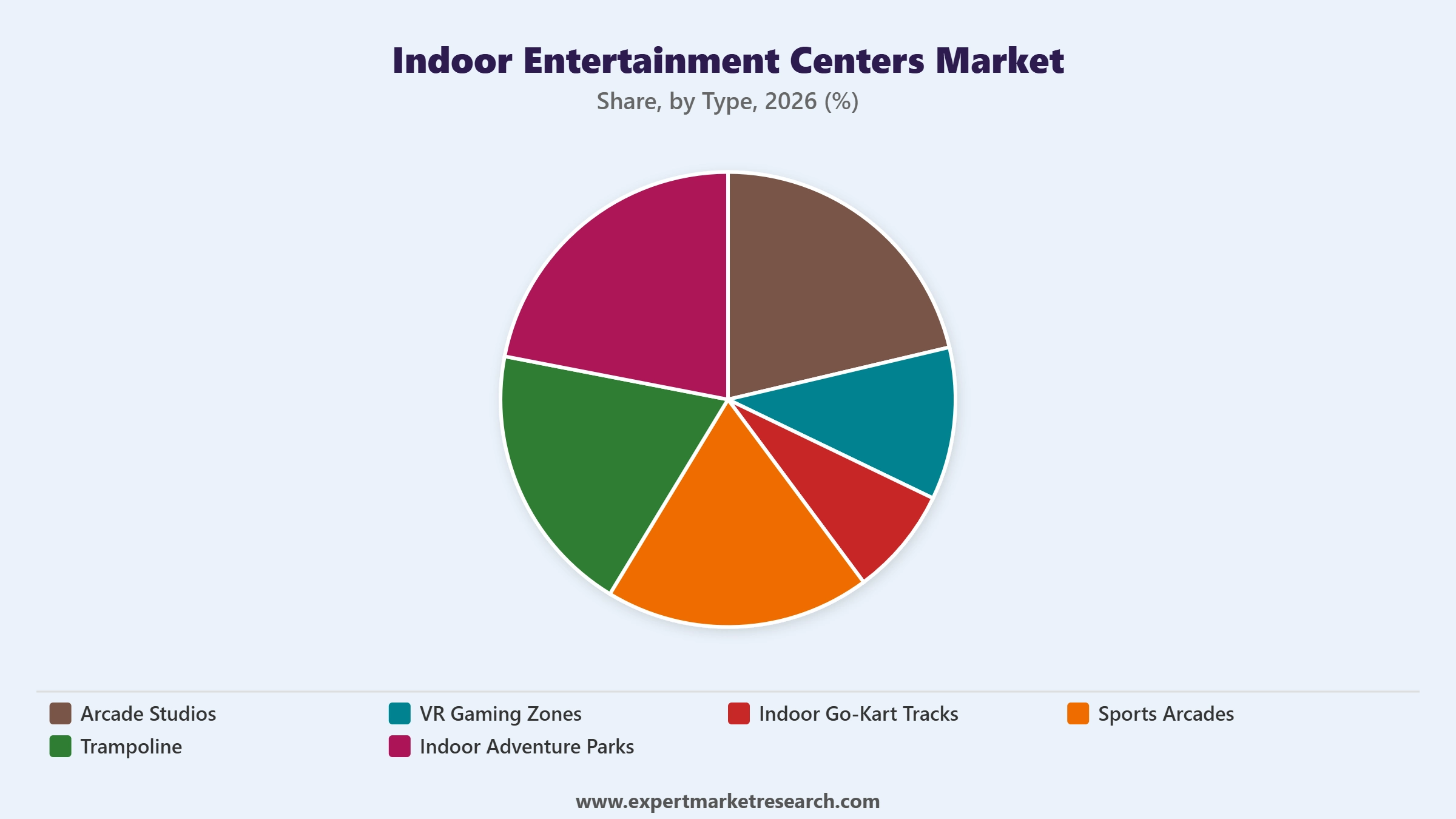
Market Breakup by Type
Key Insight: Arcade studios focus on equipment density, replay, and rotation of games, accelerating the indoor entertainment centers market value. VR gaming zones concentrate more on immersive content and software-controlled refresh cycles. Indoor go-kart tracks focus on efficiency, safety, and competition games. Sports arcades have started to utilize simulations to expand the number of participants without having to build sports facilities. Trampoline facilities are focused on physical activity, time-based sessions, and parties. Indoor adventure parks involve climbing and obstacles, among other activities. Operators of these parks can accommodate various age groups through physical and technology-based activities.
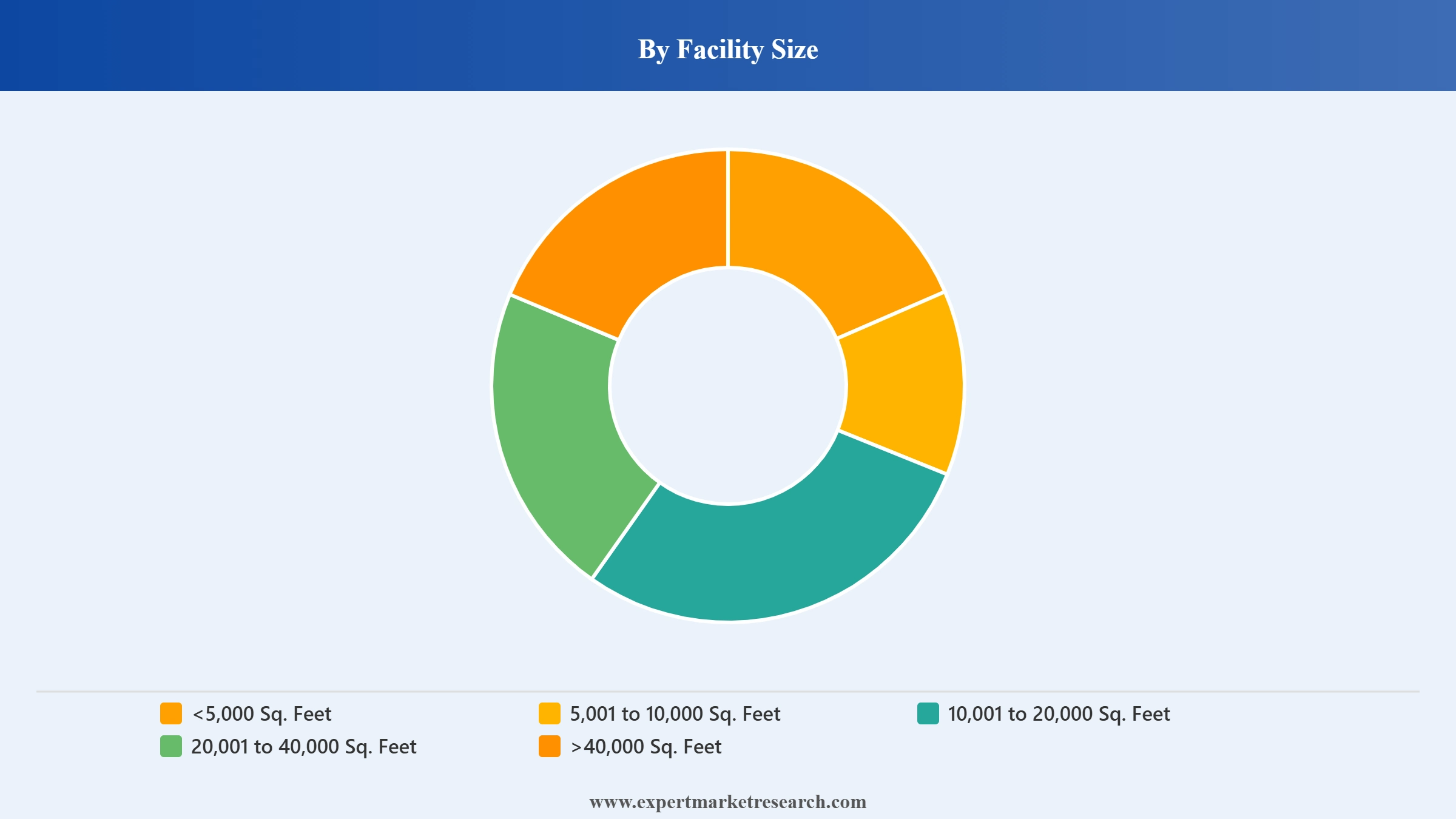
Market Breakup by Facility Size
Key Insight: Centers below 5,000 sq. ft feature arcades, soft play areas, and party spaces, where the lower need for space favors neighborhood sites, creating new indoor entertainment centers market opportunities. Centers from 5,001 sq. ft to 10,000 sq. ft include additional space for virtual reality zones, sports arcade games, and foodservices. Centers from 10,001 sq. ft to 20,000 sq. ft combine a wide range of attractions with the issues of occupancy and investment. Centers from 20,001 to 40,000 sq. ft may have attractions such as trampolines, bowling or karting. In September 2026, Elevate Trampoline Park launched a 31,000 sq. ft entertainment complex in Pensacola, expanding activity-based recreation options for families. Larger centers, over 40,000 sq. ft, have destination centers that include multiple zones, foodservice facilities, event spaces, and branded immersive entertainment.
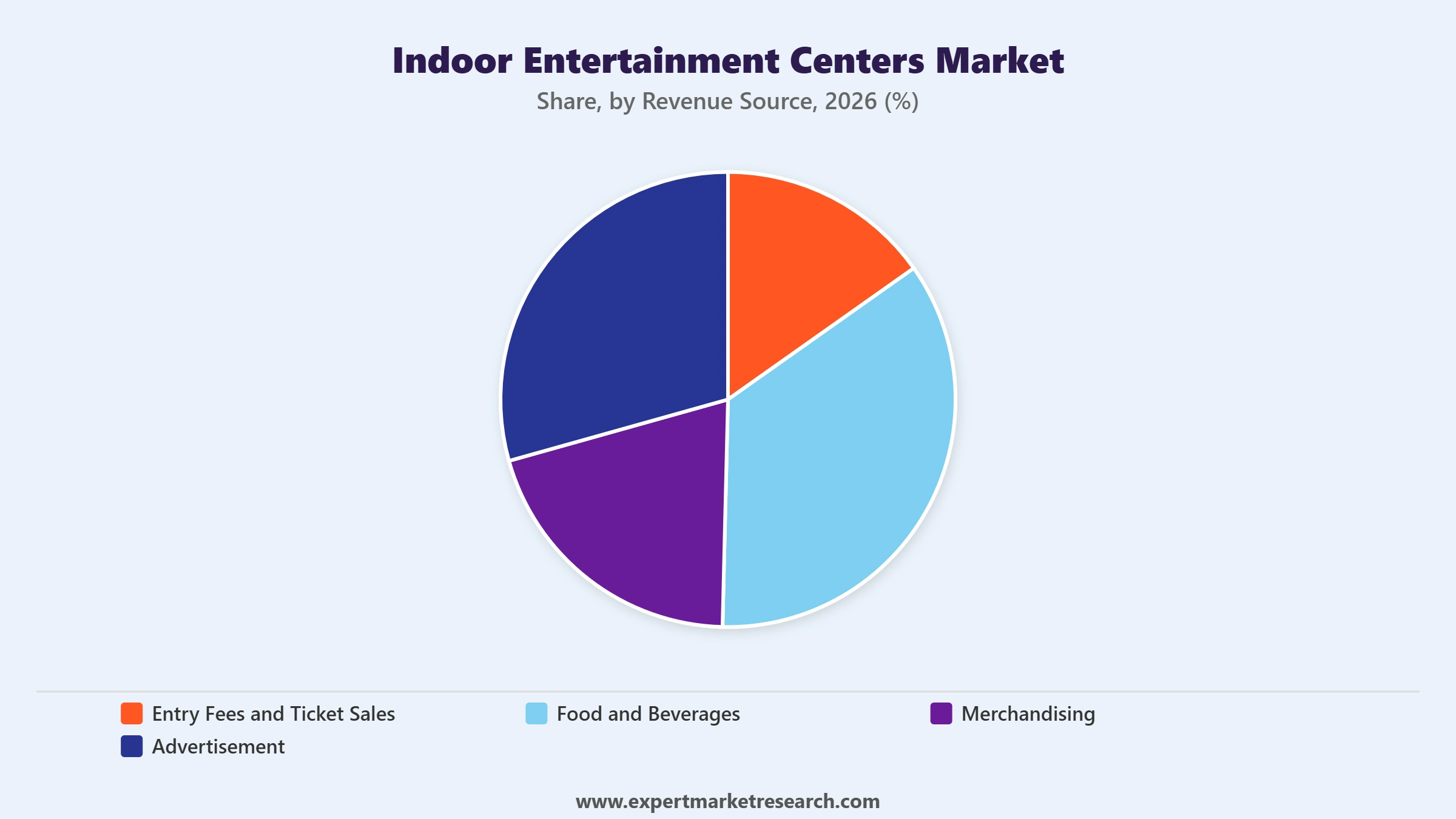
Market Breakup by Revenue Source
Key Insight: Admission fees and ticket sales generate revenue via admissions, package deals, timed access, and premium access. Food and beverages increase spending in case of longer stays and cater to parties and group functions. The merchandising category is expanding its share in the indoor entertainment centers market where there are strong brands, mascots or theme licenses which can be converted into merchandise. Advertisement serves as an additional source of revenue through screen advertisement, branded areas, sponsorships, and digital marketing. Others include memberships, birthday packages, lockers, photos, and corporate packages. This combination of sources allows the operators to combine guaranteed revenue from admissions and higher margin activities.
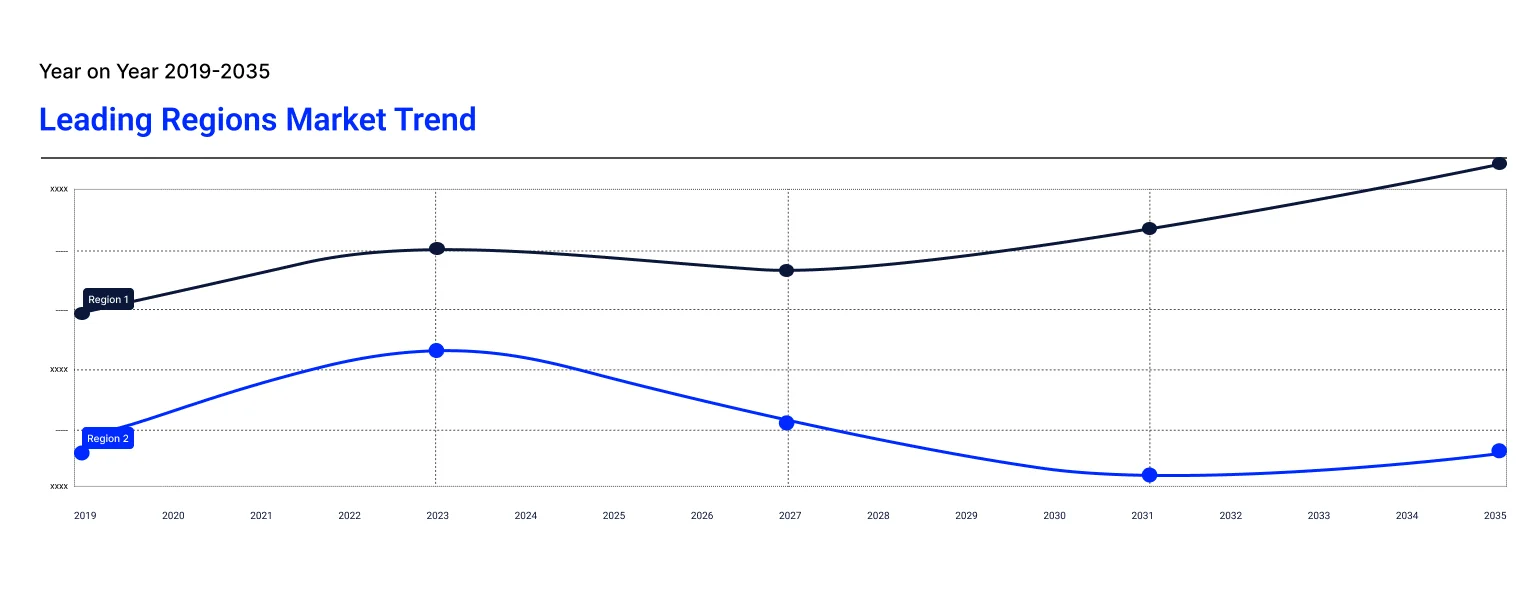
Market Breakup by Region
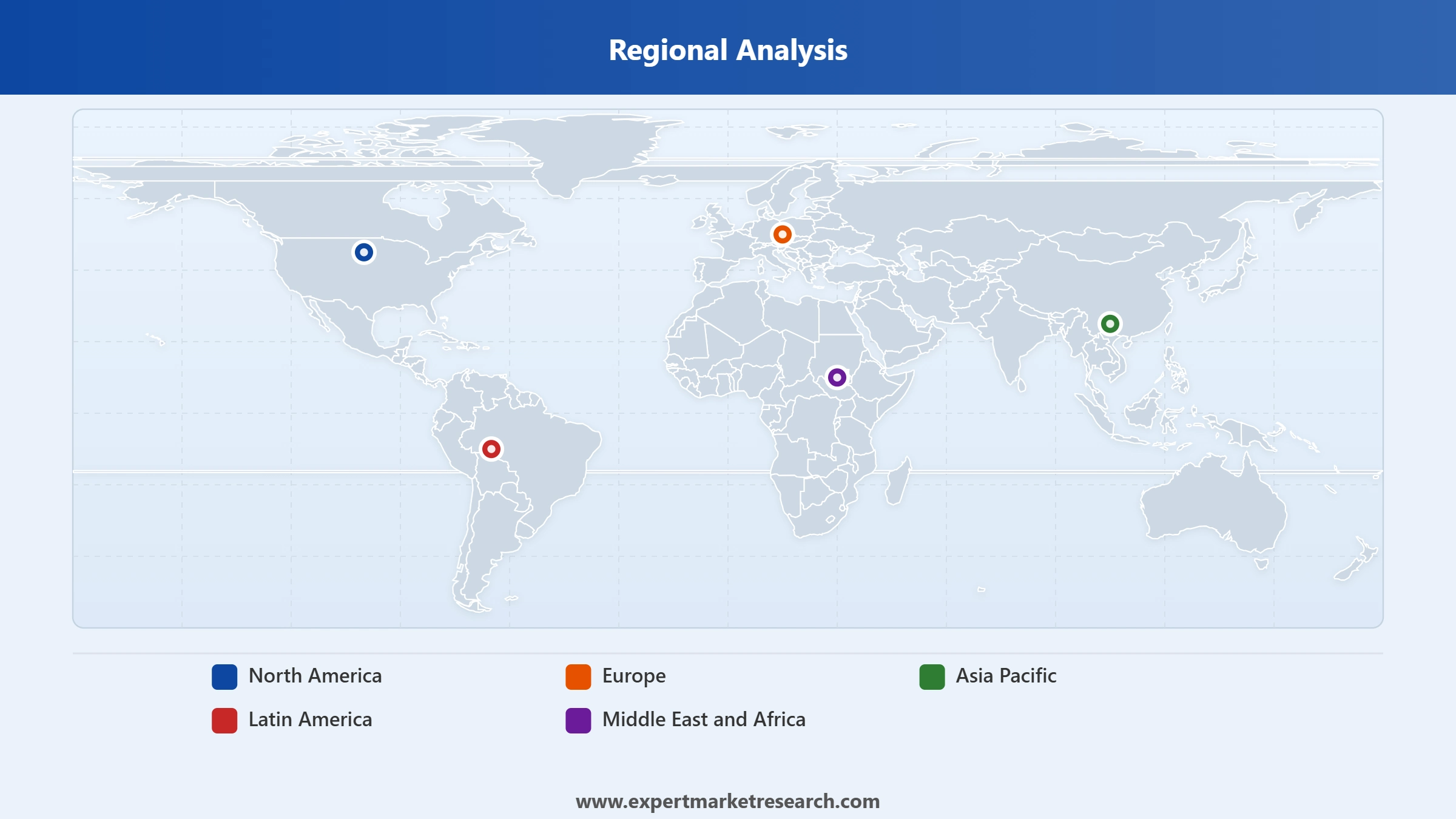
Key Insight: The North America indoor entertainment centers market has mature chain systems, branded concepts, and good mixed-use real estate development options. Europe is concentrating on compact and immersive attractions and cultural themed experiences as well as retail destinations with experiences. Asia Pacific is building integrated venues within malls, tourist attractions, and commercial real estate developments, using VR and activity-based attractions to help speed up concept development. Latin America is using arcade, trampoline, and food-focused venues that suit urban entertainment needs in a family-oriented environment. Middle East and Africa players are building destination entertainment venues where premium attractions and themed environments as well as large format venues that can be integrated into tourism and mixed-use projects.
By type, arcade studios lead the market growth as portfolios support repeat visits and flexibility
Arcade studio operators are dominant in the indoor entertainment centers market due to the ability of installing different game portfolios, refreshing titles, and earning repeat customers via digital cards and passes. Contemporary studios utilize racing simulators, redemption games, competitive kiosks, and prizes connected to the system. This type of facility works well both as a standalone center and for combination venue, as equipment may be rearranged according to the preference. In July 2026, Pinplay launched a gaming café in Kolkata, India, combining gaming, social interaction and entertainment for customers across age groups.
Read more about this report - REQUEST FREE SAMPLE COPY IN PDF
VR gaming zones are becoming popular across the indoor entertainment centers market scope as developers look for immersive attractions with a smaller footprint than traditional rides. CAVU offers a VR motion-based system by combining virtual reality with synchronized motion, while Battle for Eire has shown how VR can be integrated into motion simulation. Operators are creating different experiences using headsets for racing, flying, and story-based entertainment. In May 2025, Funxtreme debuted in Kolkata, India, with gaming zones and family dining areas, combining entertainment and foodservice under one roof.
By facility size, mid-sized centers dominate the market as balanced footprints support diverse attraction portfolios
Centers of 10,001 to 20,000 sq. ft allow enough space for more than one attraction, without being as capital-intensive as bigger centers. Operators have the option of combining an arcade studio, party rooms, food service, and attractions in one place. Such a center is ideal for use in shopping centers looking for tenants that will create ongoing traffic. Operators can partition spaces into active and passive zones to better control noise, waiting lines, and different ages, strengthening demand in the indoor entertainment centers market. This concept allows for phased expansion in future to incorporate VR attractions, redemption games, and themed play without moving the location. In November 2024, Imagicaa launched an indoor trampoline park, expanding its theme-park portfolio with active entertainment experiences for visitors.
Read more about this report - REQUEST FREE SAMPLE COPY IN PDF
More than 40,000 sq. ft centers are drawing the interest of developers of destination-style venues with attraction portfolios. These centers have enough space for adventure parks, trampolines, go-karts, bowling, arcades, restaurants, and party rooms. This format caters for visits and bookings because families can move from one activity to another without stepping outside the premises.
By revenue source, entry fees lead the market as admissions provide cash flow and control
Entry fees and ticket sales are prioritized by most of the indoor entertainment centers market players since these are an important source of revenue. Operators are trying to improve the ticket strategy to facilitate broader packages of experiences. Ticket sales facilitate prebooking, capacity planning, and marketing. Centers can introduce premium access, while venues are able to adopt activity-based pricing. The model is important since it links attraction investments to the number of visitors and allows suppliers to design equipment based on capacity and utilization.
Read more about this report - REQUEST FREE SAMPLE COPY IN PDF
The food and beverage category is another growing source that is boosting the indoor entertainment centers market revenue since operators recognize that longer visitor stays create more opportunities for food service consumption. Centers are integrating cafes, restaurants, snack bars, and menus into the attraction layout. LEGOLAND Discovery Centers combine play with cafes and retail stores that enable guests to stay longer after visiting attractions. Food service enables the development of packages of services including birthday packages, corporate events, and group sales. In June 2026, Dave & Buster’s opened its third Indian outlet in Delhi NCR, expanding its arcade-led indoor entertainment footprint.
Read more about this report - REQUEST FREE SAMPLE COPY IN PDF
North America dominates the market through mature operators, branded venues, and infrastructure
North America continues to be the leading indoor entertainment centers market since the region boasts of mature operators of family entertainment, mall-based venues and need for multiple attraction offerings. Operators are making significant investments in branded experiences, improved arcades, bowling, VR technology, and food-led entertainment to create a greater need for return visits. CEC Entertainment has more than 675 venues in 47 states in the United States and 17 countries through its brand names Chuck E. Cheese and Peter Piper Pizza. Main Event Entertainment has more than 20 million visitors annually at more than 64 venues in support of investments in multi-format entertainment venues. In July 2026, Next Round Social opened a retro-inspired amusement center in North Charleston, offering social gaming and competitive entertainment for groups.
The indoor entertainment centers market in Asia Pacific is growing with projects that are developed as destinations in the form of malls, tourist attractions or developments. Destinations are integrating VR, trampoline parks, go-kart, bowling and arcade technologies into one venue. Operators like CAVU are engaging in developing immersive attractions in China that included motion simulators and flying theater.
Competition revolves around attraction refresh cycles, footprint productivity, branded content, and technology. Indoor entertainment centers market players seek equipment capable of handling throughput in an easily configurable manner. Equipment manufacturers are responding by producing modular ride equipment, immersive virtual reality, interactive media, and connected arcade platforms that can be upgraded without having to rip and replace the system. Alliances with property owners, shopping malls, hospitality companies, and brands in the entertainment industry provide expansion options.
Leading indoor entertainment center companies are also concentrating on food service, party packages, memberships, and merchandise to bring variety to the revenue streams. Accessibility, safety engineering, and maintenance performance continue to differentiate among the operators as they bring attractions into their venues. There are also opportunities for companies that are able to provide turnkey design, engineering, installation, software, and lifecycle management services. Operators are using data to run their operations through ticketing, digital queuing, loyalty programs, and equipment utilization for better labor and capacity planning. There is also an opportunity for regional developers to tailor the attraction offerings based on property sizes and family demographics.
CEC Entertainment was formed in 1977, and its headquarters is located in Irving, Texas, United States. CEC Entertainment includes Chuck E. Cheese and Peter Piper Pizza featuring arcade games, restaurants, birthday celebrations and play. This organization is known for providing scalable family entertainment facilities around the world.
CAVU Designwerks was formed in 2015, and its headquarters is based in Canada. CAVU Designwerks provides engineering and design services for attractions featuring VR motion bases, trackless dark rides, interactive rides, and flying theatres. The modular design systems of the company support the indoor entertainment centers market, while matching attraction capacities, area needs, narrative, and technology.
Main Event Entertainment was founded in 1998 and has its corporate offices in Texas, United States. This company is currently a part of Dave & Buster's, and runs family entertainment centers that integrate bowling, video gaming, laser tag, virtual reality, dining, and group activities.
LEGOLAND Discovery Center US, LLC was formed to be the United States-based company running LEGOLAND Discovery Centers and is incorporated in Wilmington, Delaware, founded in 2012. The indoor amusement parks run by this company feature LEGO play, rides, 4D movies, VR experiences, workshops, cafes, and shopping venues. This network of parks is part of the Discovery Center chain.
Other key players in the market include Scene 75 Entertainment Centers, among others.
*Please note that this is only a partial list; the complete list of key players is available in the full report. Additionally, the list of key players can be customized to better suit your needs.*
Unlock the latest insights with our indoor entertainment centers market trends 2026 report. Discover regional growth patterns, consumer preferences, and key industry players. Stay ahead of competition with trusted data and expert analysis. Download your free sample report today and drive informed decisions in the market.


Upto 15% Off
USD
$2499 $2249
$3999 $3599
$4999 $4249
$5999 $5099


*While we strive to always give you current and accurate information, the numbers depicted on the website are indicative and may differ from the actual numbers in the main report. At Expert Market Research, we aim to bring you the latest insights and trends in the market. Using our analyses and forecasts, stakeholders can understand the market dynamics, navigate challenges, and capitalize on opportunities to make data-driven strategic decisions.*
The market is projected to grow at a CAGR of 9.00% between 2026 and 2035.
Stakeholders are expanding modular attractions, integrating digital ticketing, improving accessibility, refreshing content, strengthening foodservice, and using customer data to optimize capacity, staffing, and promotions while partnering with brands. technology strategically.
The increasing availability of diversified gaming and entertainment options and the favourable demographic trends among young people are the key trends guiding the growth of the industry.
The major regions in the industry are North America, Latin America, the Middle East and Africa, Europe, and the Asia Pacific, with North America accounting for the largest share in the market.
Arcade studios, VR gaming zones, indoor go-kart tracks, sports arcades, trampoline, and indoor adventure parks are the major types of the product in the market.
<5,000sq. feet, 5,001 to 10,000 sq. feet, 10,001 to 20,000 sq. feet, 20,001 to 40,000 sq. feet and >40,000 sq. feet are the different sizes of facility in the market.
Entry fees and ticket sales, food and beverage, merchandising, and advertisement, among others are the significant revenue sources of the product in the market.
The key players in the market include CEC Entertainment, Inc., CAVU Designwerks Inc, Main Event Entertainment, Legoland Discovery Centers US LLC, and Scene 75 Entertainment Centers, among others.
In 2025, the market reached an approximate value of USD 39.37 Billion.
The market is estimated to witness a healthy growth in the forecast period of 2026-2035 to reach about USD 93.20 Billion by 2035.
Operators face high build costs, equipment maintenance, staffing shortages, safety requirements, changing consumer preferences, seasonal traffic swings, and pressure to keep attractions refreshed while meeting landlord expectations and protecting experience.
Explore our key highlights of the report and gain a concise overview of key findings, trends, and actionable insights that will empower your strategic decisions.
| REPORT FEATURES | DETAILS |
| Base Year | 2025 |
| Historical Period | 2019-2025 |
| Forecast Period | 2026-2035 |
| Scope of the Report |
Historical and Forecast Trends, Industry Drivers and Constraints, Historical and Forecast Market Analysis by Segment:
|
| Breakup by Type |
|
| Breakup by Facility Size |
|
| Breakup by Revenue Source |
|
| Breakup by Region |
|
| Market Dynamics |
|
| Competitive Landscape |
|
| Companies Covered |
|
| Report Price and Purchase Option | Explore our purchase options that are best suited to your resources and industry needs. |
| Delivery Format | Delivered as an attached PDF and Excel through email, with an option of receiving an editable PPT, according to the purchase option. |
Datasheet
One User
USD 2,499
USD 2,249
tax inclusive*
Single User License
One User
USD 3,999
USD 3,599
tax inclusive*
Five User License
Five User
USD 4,999
USD 4,249
tax inclusive*
Corporate License
Unlimited Users
USD 5,999
USD 5,099
tax inclusive*
*Please note that the prices mentioned below are starting prices for each bundle type. Kindly contact our team for further details.*
Flash Bundle
Small Business Bundle
Growth Bundle
Enterprise Bundle
*Please note that the prices mentioned below are starting prices for each bundle type. Kindly contact our team for further details.*
Flash Bundle
Number of Reports: 3
20%
tax inclusive*
Small Business Bundle
Number of Reports: 5
25%
tax inclusive*
Growth Bundle
Number of Reports: 8
30%
tax inclusive*
Enterprise Bundle
Number of Reports: 10
35%
tax inclusive*
How To Order

Select License Type
Choose the right license for your needs and access rights.

Click on ‘Buy Now’
Add the report to your cart with one click and proceed to register.

Select Mode of Payment
Choose a payment option for a secure checkout. You will be redirected accordingly.
Strategic Solutions for Informed Decision-Making
Gain insights to stay ahead and seize opportunities.

Get insights & trends for a competitive edge.

Track prices with detailed trend reports.

Analyse trade data for supply chain insights.

Leverage cost reports for smart savings

Enhance supply chain with partnerships.

Connect For More Information
Our expert team of analysts will offer full support and resolve any queries regarding the report, before and after the purchase.
Our expert team of analysts will offer full support and resolve any queries regarding the report, before and after the purchase.
We employ meticulous research methods, blending advanced analytics and expert insights to deliver accurate, actionable industry intelligence, staying ahead of competitors.
Our skilled analysts offer unparalleled competitive advantage with detailed insights on current and emerging markets, ensuring your strategic edge.
We offer an in-depth yet simplified presentation of industry insights and analysis to meet your specific requirements effectively.




