

Consumer Insights
Uncover trends and behaviors shaping consumer choices today
Procurement Insights
Optimize your sourcing strategy with key market data
Industry Stats
Stay ahead with the latest trends and market analysis.

The global injection molding machine market attained a value of USD 17.06 Billion in 2025 and is projected to expand at a CAGR of 3.70% through 2035. The market is further expected to achieve USD 24.53 Billion by 2035. Increasing demand for precise and energy-efficient manufacturing systems in the electric vehicle and medical industries is significantly driving the demand for fully electric injection molding machines with automation and real-time monitoring capabilities.
Increasing demand for lightweight materials in the automotive industry and the demand for high-volume production of medical disposables are some of the key factors driving the demand in the injection molding machine market. The increasing use of lightweight materials in the manufacture of cars is a key factor driving demand for injection molding machines globally. This is because most of the components of cars are being replaced by lightweight materials such as plastics. Simultaneously, the demand for injection molding machines is also increasing in the medical sector for the production of syringes and implants.
In May 2024, Husky Technologies developed its next-generation PET injection molding platform with the incorporation of AI-based process optimization and predictive maintenance tools. It was capable of achieving significant reduction in cycle time during its pilot project deployment in beverage packaging companies in North America. This is one example of how the injection molding machine market leaders are focusing on incorporating artificial intelligence into the machines directly, as opposed to using other tools. This is enabling the industry to achieve greater machine efficiency with precision, especially in high-volume applications.
Change in the structure of the supply chain is impacting the injection molding machine market dynamics. Manufacturers are focusing on machines with the capability to process different materials and achieve rapid mold changeover, enabling them to address the challenge posed by the short product life cycle. Moreover, the demand for medical devices and electric vehicles is compelling the industry to design machines with greater precision control and ensure the production environment is contaminant-free. For instance, in August 2025, Japan Steel Works launched a 40,000 kN all-electric injection molding machine, improving productivity, reducing energy consumption, and supporting large-scale lightweight component manufacturing.
Base Year
Historical Period
Forecast Period
Compound Annual Growth Rate
3.7%
Value in USD Billion
2026-2035
*this image is indicative*
Fully electric injection molding machines are becoming more popular due to their high efficiency in saving power. Companies such as Sumitomo (SHI) Demag have introduced machines that save more power compared to hydraulic injection molding machines. Such machines are being used in industries such as the medical sector and electronic device manufacturing. European companies are also adopting electric injection molding machines for cleanroom production. The initiative has been supported by the European Union, which has introduced several sustainability initiatives to reduce industrial emissions. Aligning with this trend in the injection molding machine market, Milacron launched eQ180 all-electric injection molding machine with monosandwich technology in October 2024. This enables multi-layer parts using recyclable materials while improving energy efficiency and production precision.
Manufacturers in the injection molding machine market are integrating artificial intelligence technology into the control system of these machines for better efficiency. For example, ENGEL offers artificial intelligence-based iQ process observers that can adjust the machine parameters in real-time. Such technology can benefit industries such as the automotive sector and packaging industries. Governments in Germany and Japan are offering subsidies for the adoption of Industry 4.0 technology, indirectly accelerating demand for advanced injection molding machines. In March 2026, SIMCON launched AI-powered Cadmould Solver, enabling injection molding simulations up to 1000 times faster, allowing engineers to explore thousands of design variations efficiently.
Due to the growing demand for complex and miniaturized components, there is an increased adoption of multi-component and micro-molding machines. These machines help companies manufacture complex components used in the production of electronics, medical devices, and wearable technology. Companies like Arburg are developing micro-injection units to manufacture components with weights less than 0.1 grams. These developments in the injection molding machine market are in line with the growing investments in the semiconductor and healthcare industries, especially in Asia, where the government is supporting domestic production to reduce dependence on imports. In May 2025, Wirthwein Medical expanded capacity with a fully electric 2K injection molding machine, enabling high-precision micro components, automation integration, and improved production efficiency.
Injection molding machines play a vital role in the production of electric vehicles, especially for lightweight components such as battery cases and interior parts. Tesla suppliers and other EV manufacturers are increasingly using high-tonnage machines to manufacture large structural components. In China, the government is providing incentives to EV manufacturers, which has resulted in the adoption of advanced injection molding machines in the automotive sector. This is motivating suppliers to design machines with high clamping force and material handling capacity to suit the evolving needs of the automotive sector. Aligning with this trend in the injection molding machine market, in September 2024, ENGEL showcased advanced injection molding innovations including polyurethane in-mold coating, large-scale machines, and digital process optimization technologies.
Sustainability is becoming a key factor in the formulation of product development strategies in the industry. Companies are developing machines that can work efficiently on recycled and bio-based materials. They are adopting sustainable machines to reduce carbon footprints, redefining the entire injection molding machine market dynamics. Sustainability has helped in meeting environmental objectives without compromising efficiency. For example, in December 2024, NUREL launched Injection Solutions division using biodegradable and compostable plastics, enabling sustainable component manufacturing across packaging, agriculture, and outdoor applications with reduced environmental impact.
Read more about this report - REQUEST FREE SAMPLE COPY IN PDF
The EMR’s report titled “Global Injection Molding Machine Market Report and Forecast 2026-2035” offers a detailed analysis of the market based on the following segments:
Market Breakup by Type
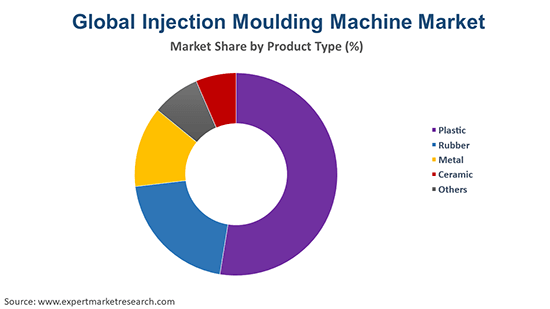
Key Insight: Plastic, rubber, metal, ceramic, and other materials represent different machine configurations based on their thermal behavior, precision requirements, and overall performance characteristics. Plastic emerges to be the dominant in the injection molding machine market, while rubber is gradually picking up pace in terms of its usage in seals and medical devices. Metal and ceramic molding are important in terms of high-strength component development, especially industrial tools.
Market Breakup by Machine Type
Key Insight: As per the injection molding machine market report, hydraulic, hybrid, and all-electric machines embody different working benefits derived from cost, precision, and application factors. Hydraulic machines dominate the heavy-duty production arena because of their power and cost-effectiveness. Hybrid machines are increasingly being favored to achieve the balance between efficiency and performance, especially in the medium-duty segment. All-electric machines are gaining traction in precision-driven applications where efficiency and clean environments matter.
Market Breakup by Clamping Force
Key Insight: Clamping force segmentation reflects how machine manufacturers match machine capacity with component sizes, complexities, and production volumes. Low tonnage machines serve precision components in the electronics and medical industries, widening the injection molding machine market scope. Medium tonnage machines are becoming predominant due to their versatility in various industries requiring medium-sized components. High tonnage machines are becoming popular in structural component production in the automotive and industrial sectors. For instance, in August 2025, KraussMaffei launched new all-electric PX series at K 2025, featuring compact design, improved energy efficiency, modular configuration, and advanced MC7 control system.
Market Breakup by Sales
Key Insight: New sales and aftermarket segments together mirror how companies balance capital investment with ongoing operational efficiency and lifecycle value optimization. New equipment purchases are driven by technology and expansion strategies. Aftermarket services are led by cost optimization, resulting in an increased injection molding machine market penetration. Currently, companies are increasingly using hybrid strategies to invest in new equipment for core operations and existing equipment for secondary operations.
Market Breakup by End Use
Key Insight: The automotive, consumer goods, electrical and electronics, and other segments are all accelerating demand in the injection molding machine market with unique manufacturing needs. Automotive parts are lightweight and durable, consumer goods require design flexibility with high-speed manufacturing, electrical and electronics manufacturing emphasizes precision with miniaturization capabilities, and packaging is dominant due to scalability, while healthcare is growing with precision needs driven by regulatory requirements. In December 2025, Vance Street Capital acquired Injectech, expanding precision injection molding capabilities and strengthening its medical device, life science, and bioprocessing solutions portfolio globally.
Market Breakup by Region
Key Insight: Europe, Latin America, and the Middle East and Africa regions show different growth trends, which can be attributed to the level of industrialization and investments. Europe is focusing on sustainable growth and the adoption of advanced technology in the industry, while Latin America is gradually growing its industrial base with the adoption of cost-effective technology. The Middle East and Africa show steady growth with the demand for infrastructure and packaging. Asia Pacific continues to be the largest injection molding machine market powered by cost advantages, while the North American market is growing with technology innovations.
By type, the plastic segment accounts for dominant share of the market driven by lightweight applications demand
Plastic injection molding remains the most dominant type due to its unmatched versatility in meeting the demands of the packaging, automotive, and electronics industries. The prominent manufacturers are improving the capabilities of these machines to achieve high speeds in thin-wall packaging applications, boosting demand in the injection molding machine market. Moreover, these machines can handle multi-cavity molds, helping manufacturers increase production without compromising precision. The manufacturers are also improving the capabilities of these machines to work with recycled plastics, helping companies meet sustainability demands from international brands. The introduction of electric vehicle technology has increased the use of plastics in battery casings.
Rubber injection molding is also gaining traction within the injection molding machine market scope as a niche category with immense growth potential in the coming years. The major machine manufacturers are improving the capabilities of these machines by incorporating temperature control technology. Moreover, these machines can achieve vacuum capabilities, helping manufacturers achieve precision in producing complex rubber parts. The demand for high-quality seals in electric vehicle battery casings is pushing manufacturers to use precision rubber molding technology. For example, in May 2024, Yizumi launched A3 series rubber injection molding machine integrating advanced injection, energy-efficient servo systems, and modular design.
Hydraulic machines register a substantial share of the market due to cost efficiency advantages
The hydraulic injection molding machines continue to boost demand in the injection molding machine market due to their cost-effectiveness and their capability to work on high-tonnage applications. Such machines are used in automotive and industrial applications where heavy-duty parts are needed. Manufacturers are upgrading their hydraulic machines with servo-drive pumps, which help in energy savings while retaining high clamping forces. Such a hybridization of hydraulic machines is contributing to their relevance in the industry. In August 2025, Shibaura launched all-electric and hydraulic molding machines with integrated auxiliary equipment, enabling turnkey automation, improved efficiency, and enhanced production control.
The all-electric machine category is witnessing noble growth in the injection molding machine market, and this is due to their accuracy, energy efficiency, and cleanroom capabilities. Such machines are used in medical, electronic, and automotive applications where precision is required. Manufacturers are upgrading these machines with advanced motion control systems and artificial intelligence-based optimization tools, which allow real-time control during the molding process. There are no hydraulic oils in these machines, which makes them suitable for cleanroom environments.
By clamping force, the 201–500 ton-force segment accounts for the dominant share of the market due to versatile industrial application range
The segment of 201-500 ton-force machines leads the injection molding machine market growth due to the versatility of these machines in automobile, packaging, and consumer goods industries. The machines in this range have the capability of producing medium to large-sized parts with precision. The manufacturers of these machines are incorporating a modular design. This allows for quick mold changes, thus improving the flexibility of the machine. The 201–500 ton-force injection molding range is preferred by Tier 1 and Tier 2 suppliers, balancing performance and cost without requiring high-end investments.
The above 500 ton-force machines represent the fastest-growing segment within the injection molding machine market dynamics. The growth of these machines can be attributed to the need for large parts in the automobile and industrial sectors. This range is being used for structural parts such as EV battery enclosures and large containers. Manufacturers are improving these machines by reducing power consumption. For example, in October 2024, Engel unveiled new e-mac 500 with “High” clamping drive and encapsulated toggle-lever mechanism.
The new sales category occupies a significant market share driven by continuous technological upgrades demand
New sales are dominating the injection molding machine market due to the increasing investment by companies in machines that are technologically advanced and efficient for better productivity and low operational costs. Companies are investing in machines that are integrated with automation systems and artificial intelligence-based monitoring systems for better productivity and low operational costs. In line with this trend, in October 2025, Arburg launched Allrounder Trend machines featuring all-electric drive systems, energy-efficient operations, quick setup, and low-cost production for standard industrial molding applications globally.
The aftermarket is growing significantly due to the increasing demand for machine longevity and better productivity. Service providers are offering retrofit solutions for machines that are old and not efficient for meeting the production requirements of the companies. The increasing demand for predictive maintenance solutions based on IoT is also growing significantly for better machine productivity. The availability of spares is also becoming a major factor for companies that are based in remote locations and developing countries.
By end use, the packaging segment registers the largest share of the market driven by high-volume production demand
The packaging segment continues to be the largest end-use segment because of its need for ultra-fast, high-volume production of standardized parts such as caps, containers, and thin wall packaging. Manufacturers are designing machines to achieve ultra-fast cycle times and multiple cavity mold configurations to cater to the growing demand of the FMCG and beverage industry. There is also a growing trend towards sustainable practices, and manufacturers are designing machines to handle recycled materials at ultra-high speeds. In addition, advances in light-weighting packaging materials are driving precision molding technologies. In September 2023, PulPac introduced Scala platform combining injection molding with fiber technology, enabling scalable, cost-efficient production of sustainable packaging alternatives replacing single-use plastics.
As per the injection molding machine market report, the healthcare industry is growing at a faster rate than other segments because of the growing need for precision parts and regulatory compliance. Injection molding machines for the healthcare industry are being designed to operate in a clean room environment to ensure contamination-free parts. There is a growing need for precision micro-molding technologies to produce parts such as syringes, diagnostic parts, and implants.
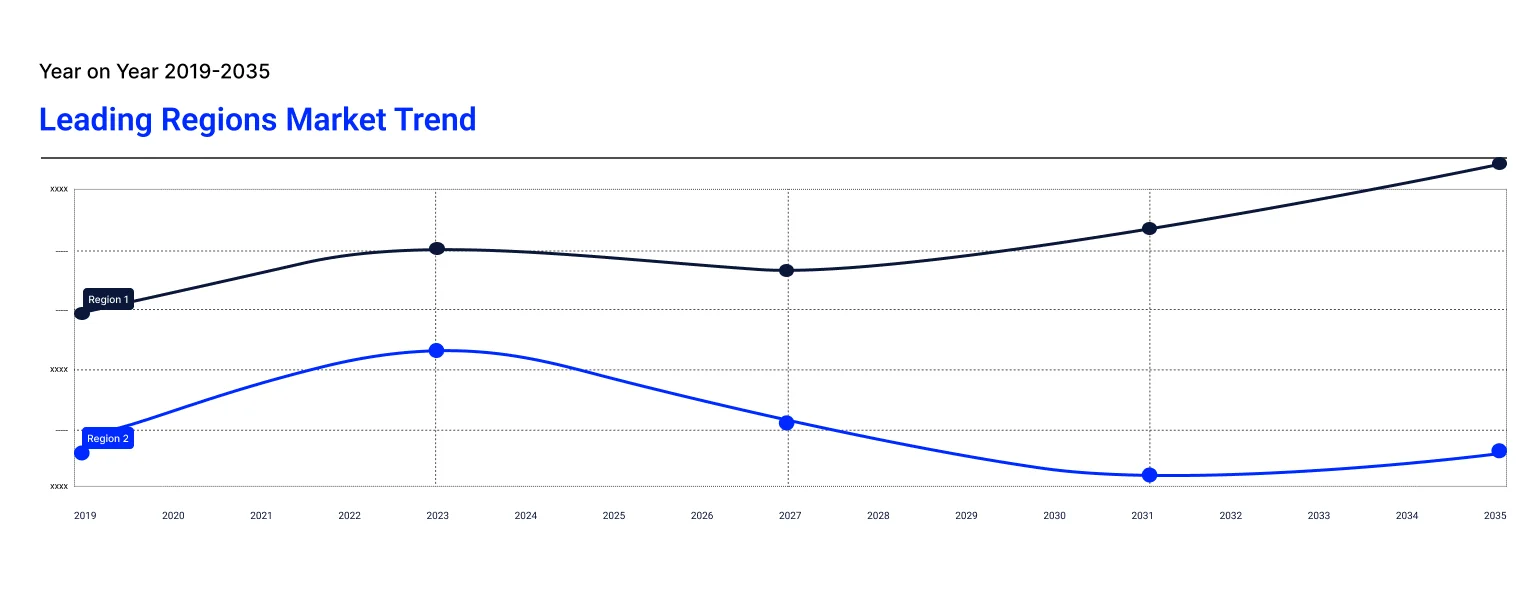
Asia Pacific secures the leading market position driven by manufacturing hub expansion
The injection molding machine market is dominated by the Asia Pacific region due to its strong industrial base and high rate of industrialization. Countries such as China, India, and Japan are investing heavily in automotive, electronic devices, and packaging material industries. The focus of manufacturers in the Asia Pacific is also on cost-effective production, which is why both hydraulic and hybrid injection molding machines are being adopted. Government initiatives are also supporting the development of the domestic manufacturing and export sectors.
North America represents the fastest-growing injection molding machine market, strengthened by technological developments and the increasing use of automation in the manufacturing process. For example, in February 2024, Milacron launched M-Series injection molding machines with the largest clamp stroke in mid-tonnage range, improving versatility, reducing cycle time, and enabling compact, high-performance manufacturing. Manufacturers in the region are investing in electric and hybrid injection molding machines for better energy efficiency and to achieve sustainable development. The increasing demand for injection molding machines from industries such as the healthcare and automotive sectors is also contributing to the growth of the market. Reshoring is also a major factor that is encouraging manufacturers to set up production facilities in the region.
The global market is becoming more competitive, with injection molding machine companies directing their focus to more intelligent, energy-efficient, and application-centric injection molding machines. New market opportunities are arising in the electric vehicle parts, medical micro-molding, and green packaging industries. Companies are also moving forward with localized production strategies by establishing assembly centers for these machines.
Strategic partnerships are being made with automation and robotics companies to ensure the integration of smart manufacturing solutions. Moreover, retrofitted injection molding machines are also becoming a new market opportunity for players in the industry. Leading injection molding machine market players that can balance cost competitiveness with technological advancement are achieving more traction in the market, both in developed and developing countries.
Established in 1907, Japan Steel Works is a Tokyo-based company in Japan. The company specializes in high-performance injection molding machines for engineering plastics. The company has been emphasizing precision and durability in its products, mainly targeting the automotive and electronics industries. The company is investing in advanced screw technology and high-speed machines for improving the efficiency of processing materials.
Chen Hsong Holdings Limited, incorporated in 1958, has its base located in Hong Kong. The company provides a wide range of cost-effective injection molding machines. They are also targeting emerging markets by offering energy-saving hydraulic/hybrid injection molding machines. The company is strengthening its foothold in these markets by establishing localized manufacturing capabilities.
Nissei Plastic Industrial, established in 1942 with its headquarters in Nagano-ken, Japan, is a company that specializes in the design and manufacture of all-electric as well as hybrid injection molding machines. The company is focusing on the advancement of various multi-material molding technologies as well as precision molding.
Established in 1966 with its headquarters in Hong Kong, Haitian International is one of the largest injection molding machine manufacturers in the world. The company offers various injection molding machines, including hydraulic, hybrid, as well as electric types. The company is focusing on cost leadership while incorporating smart manufacturing technologies.
*Please note that this is only a partial list; the complete list of key players is available in the full report. Additionally, the list of key players can be customized to better suit your needs.*
Other key players in the market include ENGEL AUSTRIA GmbH, and Sumitomo Heavy Industries, Ltd, among others.
Unlock the latest insights with our injection molding machine market trends 2026 report. Discover regional growth patterns, consumer preferences, and key industry players. Stay ahead of competition with trusted data and expert analysis. Download your free sample report today and drive informed decisions in the market.


Upto 15% Off
USD
$2499 $2249
$3999 $3599
$4999 $4249
$5999 $5099


*While we strive to always give you current and accurate information, the numbers depicted on the website are indicative and may differ from the actual numbers in the main report. At Expert Market Research, we aim to bring you the latest insights and trends in the market. Using our analyses and forecasts, stakeholders can understand the market dynamics, navigate challenges, and capitalize on opportunities to make data-driven strategic decisions.*
Get in touch with us for a customized solution tailored to your unique requirements and save upto 35%!
In 2025, the market reached an approximate value of USD 17.06 Billion.
The market is projected to grow at a CAGR of 3.70% between 2026 and 2035.
The market is estimated to witness a healthy growth in the forecast period of 2026-2035 to reach USD 24.53 Billion by 2035.
Investing in smart machine upgrades, expanding regional manufacturing hubs, forming automation partnerships, focusing on sustainable material compatibility, and enhancing aftersales services are strengthening long-term competitiveness and operational efficiency.
Key trends aiding injection molding market expansion include the robust growth of the automotive sector, increasing R&D expenditure to develop new technologies by key players, and the surging usage of injection molding machines to manufacture shipment containers.
The major regions in the market are North America, Latin America, the Middle East and Africa, Europe, and the Asia Pacific.
The different types of materials manufactured through injection molding machines are plastic, metal, rubber, and ceramic, among others.
The different machine types in the market are hydraulic, hybrid, and all-electric.
Injection molding machines can be divided by clamping force into 0–200 ton-force, 201–500 ton-force, and above 500 ton-force.
The different end uses of injection molding machine include automotive, consumer goods, packaging, electrical and electronics, and healthcare, among others.
The key players in the market include Japan Steel Works, Ltd., Chen Hsong Holdings Limited, Nissei Plastic Industrial Co., Ltd., Haitian International Holdings Limited, ENGEL AUSTRIA GmbH, and Sumitomo Heavy Industries, Ltd, among others.
High initial investment costs, integration complexities of smart technologies, skilled labor shortages, and maintaining consistent performance across diverse materials remain critical challenges for manufacturers globally.
Explore our key highlights of the report and gain a concise overview of key findings, trends, and actionable insights that will empower your strategic decisions.
| REPORT FEATURES | DETAILS |
| Base Year | 2025 |
| Historical Period | 2019-2025 |
| Forecast Period | 2026-2035 |
| Scope of the Report |
Historical and Forecast Trends, Industry Drivers and Constraints, Historical and Forecast Market Analysis by Segment:
|
| Breakup by Type |
|
| Breakup by Machine Type |
|
| Breakup by Clamping Force |
|
| Breakup by Sales |
|
| Breakup by End Use |
|
| Breakup by Region |
|
| Market Dynamics |
|
| Competitive Landscape |
|
| Companies Covered |
|
Datasheet
One User
USD 2,499
USD 2,249
tax inclusive*
Single User License
One User
USD 3,999
USD 3,599
tax inclusive*
Five User License
Five User
USD 4,999
USD 4,249
tax inclusive*
Corporate License
Unlimited Users
USD 5,999
USD 5,099
tax inclusive*
*Please note that the prices mentioned below are starting prices for each bundle type. Kindly contact our team for further details.*
Flash Bundle
Small Business Bundle
Growth Bundle
Enterprise Bundle
*Please note that the prices mentioned below are starting prices for each bundle type. Kindly contact our team for further details.*
Flash Bundle
Number of Reports: 3
20%
tax inclusive*
Small Business Bundle
Number of Reports: 5
25%
tax inclusive*
Growth Bundle
Number of Reports: 8
30%
tax inclusive*
Enterprise Bundle
Number of Reports: 10
35%
tax inclusive*
How To Order

Select License Type
Choose the right license for your needs and access rights.

Click on ‘Buy Now’
Add the report to your cart with one click and proceed to register.

Select Mode of Payment
Choose a payment option for a secure checkout. You will be redirected accordingly.
Strategic Solutions for Informed Decision-Making
Gain insights to stay ahead and seize opportunities.

Get insights & trends for a competitive edge.

Track prices with detailed trend reports.

Analyse trade data for supply chain insights.

Leverage cost reports for smart savings

Enhance supply chain with partnerships.

Connect For More Information
Our expert team of analysts will offer full support and resolve any queries regarding the report, before and after the purchase.
Our expert team of analysts will offer full support and resolve any queries regarding the report, before and after the purchase.
We employ meticulous research methods, blending advanced analytics and expert insights to deliver accurate, actionable industry intelligence, staying ahead of competitors.
Our skilled analysts offer unparalleled competitive advantage with detailed insights on current and emerging markets, ensuring your strategic edge.
We offer an in-depth yet simplified presentation of industry insights and analysis to meet your specific requirements effectively.





Share