

Consumer Insights
Uncover trends and behaviors shaping consumer choices today
Procurement Insights
Optimize your sourcing strategy with key market data
Industry Stats
Stay ahead with the latest trends and market analysis.
The Japan backup power systems market was valued at USD 1552.76 Million in 2025. The market is expected to grow at a CAGR of 5.20% during the forecast period of 2026-2035 to reach a value of USD 2577.87 Million by 2035. Rising hyperscale data center construction across Tokyo and Osaka is accelerating demand for hybrid gas and battery backup platforms that ensure grid independence while complying with Japan’s tightening emissions and seismic resilience regulations.
Semiconductor expansion projects supported by Japan’s economic security strategy are increasing demand for uninterrupted power redundancy. Moreover, corporate ESG mandates are pressuring operators to swap old diesel-only gensets with low emission gas or hybrid configurations. Instead of making purchasing decisions based on product features, buyers are evaluating the lifecycle efficiency, rotational fuel capability, and digital monitoring integration capacity of the units prior to granting multi-year supply contracts.
The Japan backup power systems market is shifting towards hydrogen and grid interactive power platforms. In July 2025, Mitsubishi Heavy Industries Engine & Turbocharger introduced a 450-kW gas cogeneration system capable of up to 15% hydrogen co-firing, improving resilience and reducing CO₂ emissions. Such a step is in line with the country’s national goal of carbon neutrality by 2050, as industrial electricity demand makes up more than 30% of the total consumption.
Heavy manufacturers are positioning modular backup plants that can transition from diesel to gas and eventually hydrogen. This flexibility is becoming a procurement priority for factories and data infrastructure operators. Meanwhile, earthquake-resistant building codes are becoming stricter. After a series of grid stress incidents and typhoon-induced outages, companies are moving from standard diesel-powered standby units to advanced hybrid systems that integrate battery and gas, boosting the overall Japan backup power systems market value. In December 2025, Pacifico Energy’s Koganai Battery Energy Storage System, a 2 MW grid-scale project boosting Japan’s grid stability, was opened.
Leading companies like Yanmar Holdings have launched remote monitoring microgrid solutions that incorporate CHP systems with lithium-ion battery storage. The focus is drifting away from solely emergency backup towards the capability of holding baseline power, widening the scope for Japan backup power systems market expansion. Vendors are coming up with pre-fabricated solutions that cut down installation lead times and enhance maintenance visibility.
Compound Annual Growth Rate
5.2%
Value in USD Million
2026-2035
|
Japan Backup Power Systems Market Report Summary |
Description |
Value |
|
Base Year |
USD Million |
2025 |
|
Historical Period |
USD Million |
2019-2025 |
|
Forecast Period |
USD Million |
2026-2035 |
|
Market Size 2025 |
USD Million |
1552.76 |
|
Market Size 2035 |
USD Million |
2577.87 |
|
CAGR 2019-2025 |
Percentage |
XX% |
|
CAGR 2026-2035 |
Percentage |
5.20% |
|
CAGR 2026-2035 - Market by Technology |
Uninterruptible Power Supply (UPS) |
5.6% |
|
CAGR 2026-2035 - Market by End User |
Commercial |
5.8% |
A major Japanese utility initiated a residential battery demand response pilot, aggregating home storage systems to stabilize grid fluctuations and manage peak electricity demand. Other backup power providers can also develop aggregator platforms and smart inverters to participate in virtual power plant programs, leveraging such developments in the Japan backup power systems market.
BSLBATT launched its Japan subsidiary to supply lithium battery storage solutions tailored for residential and commercial backup power applications. Energy solution companies can localize assembly and build distribution alliances to capture growing demand for compact, high efficiency storage systems.
Honda unveiled next generation portable power packs and battery sharing systems designed for disaster resilience and mobile electricity access. Backup system manufacturers can integrate swappable battery ecosystems into emergency power kits targeting municipalities and commercial facilities.
Hitachi introduced enhanced energy management platforms combining storage control, renewable integration, and predictive grid stabilization technologies. Power solution firms can embed intelligent control software into backup generators and batteries to offer hybrid resilience packages for critical infrastructure, leveraging such developments in the Japan backup power systems market.
The Green Growth Strategy of Japan is encouraging industrial sectors to use low-carbon backup configurations. Kawasaki Heavy Industries, for example, is helping the development of a hydrogen supply chain, thereby indirectly supporting the manufacturing of standby generators that are compatible with hydrogen. Most of the backup system manufacturers are reorienting their product lines to match these trends. Rather than selling fixed-fuel gensets, they are introducing dual-fuel and hydrogen-blend capable turbines for factories and municipal facilities, reshaping the entire Japan backup power systems market dynamics. In October 2025, Toshiba introduced a new 24 V SCiB battery pack for automotive and industrial use, enhancing durability, fast charging, and sustainability in electric mobility.
Tokyo remains one of Asia’s largest data center hubs. NTT Communications has continued expanding resilient infrastructure facilities, reinforcing demand for tier IV grade backup ecosystems. Modern installations now combine gas engines, UPS systems, and battery storage within integrated microgrid architecture. Backup providers are integrating predictive maintenance software and real time load balancing features, accelerating demand in the Japan backup power systems market. In August 2025, Honda and Mitsubishi started repurposing hydrogen fuel cells to supply clean, resilient backup power for a data center in Japan.
Japan’s building codes require rigorous earthquake compliance. Backup system manufacturers are redesigning enclosures and mounting frameworks to meet updated seismic performance benchmarks. Companies like Hitachi Energy are promoting modular power solutions engineered for high vibration tolerance across industrial and transport facilities. Containerized units reduce onsite construction risk and compress commissioning timelines, expanding the Japan backup power systems market scope. In May 2025, NTT Anode Energy opened 3 high-voltage battery storage systems in Japan, boosting renewables, grid stability, and carbon neutrality progress.
Standalone diesel is gradually losing preference in metropolitan zones as urban emission controls become increasingly strict. Manufacturers are responding with hybrid platforms that combine gas generators and lithium-ion storage. Firms like Panasonic Corporation are expanding industrial battery deployments that integrate with distributed energy systems, leveraging this Japan backup power systems market trend. These configurations reduce runtime emissions and improve fuel efficiency. Corporate campuses and hospitals have become early adopters of this trend as they value silent operation and lower maintenance cycles. In December 2025, GridBeyond and PORT deployed Japan’s first Frequency Containment Reserve operation, using distributed energy assets to balance grid frequency in real time.
Backup power vendors are embedding IoT sensors and cloud dashboards to track performance in real time. Toshiba Energy Systems & Solutions has been enhancing remote supervisory control across distributed energy assets in Japan. Initiatives by the government to facilitate modernization of smart infrastructure further intensify this trend. Facility managers are progressively leaning towards demanding predictive diagnostics over reactive servicing. This trend in the Japan backup power systems market helps in minimizing unplanned downtime and also in prolonging the life span of the equipment. In December 2025, SINEXCEL finished installing Japan’s first utility-scale energy storage system, supporting grid flexibility and renewable integration with large-format batteries.
The EMR’s report titled “Japan Backup Power Systems Market Report and Forecast 2026-2035” offers a detailed analysis of the market based on the following segments:
Market Breakup by Technology
Key Insight: The evolving Japan backup power systems market dynamics are shaped by complementary technologies. Backup generators lead due to long duration resilience needs across industrial operations. UPS systems are expanding at a comparatively faster pace because digital and data intensive facilities require instant voltage stabilization. Generators ensure operational continuity during prolonged outages. UPS platforms protect sensitive electronics from short-term disruptions. Hybrid configurations are becoming increasingly common, combining both technologies into layered defense strategies. Procurement decisions are being influenced by uptime guarantees, emission compliance, and integration with smart monitoring tools. In October 2025, Toshiba began shipping advanced UPS systems tailored for edge computing and enterprise facilities, enhancing reliability and power continuity across distributed infrastructure.
Market Breakup by End Use
Key Insight: As per the Japan backup power systems market report, industrial users account for the dominant market share because their production processes cannot pause without heavy losses. Commercial users are growing their shares rapidly due to digital infrastructure expansion and stricter continuity planning requirements. Residential demand exists but remains comparatively smaller and focused on compact inverter-based systems. Industrial buyers focus on high capacity, rugged, and fuel flexible installations. Commercial operators emphasize modularity, emission compliance, and easy integration with building management systems.
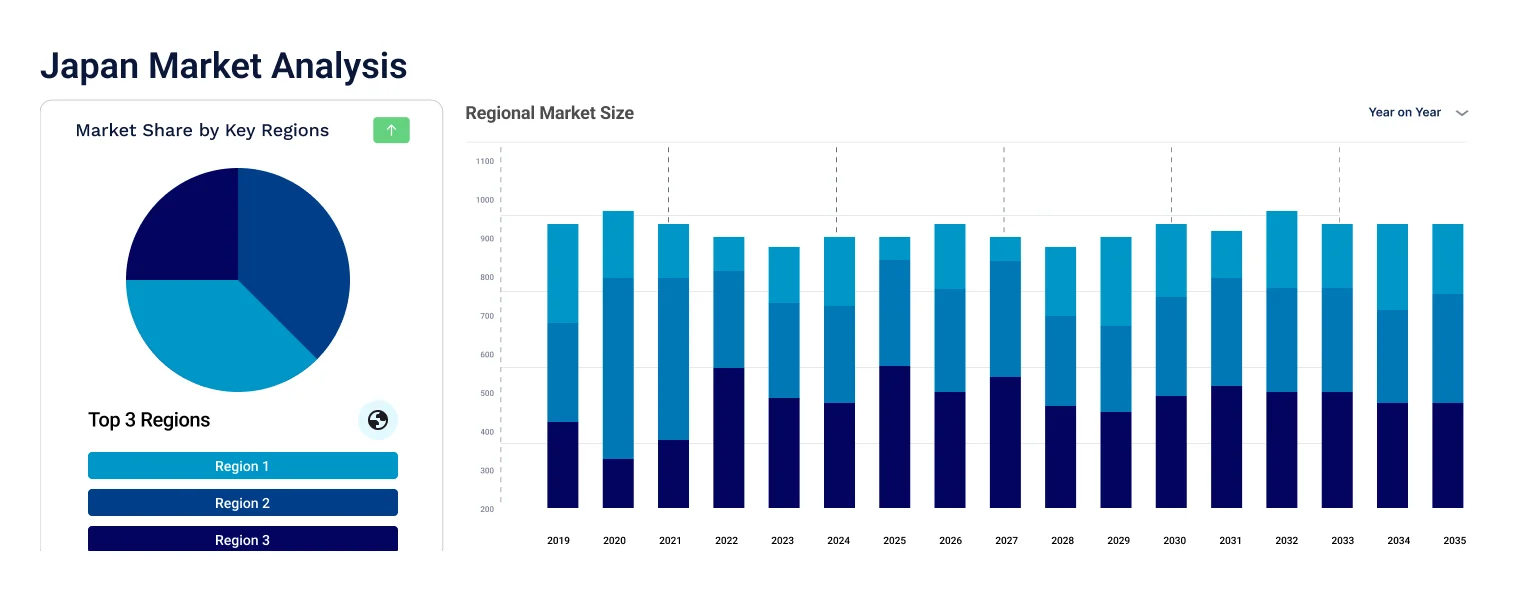
By technology, the backup generator category secures the dominant share of the market due to industrial resilience demand
Backup generators remain the dominant technology across Japan’s industrial and commercial facilities. Large-scale factories, semiconductor fabrication plants, and logistics parks prefer high-capacity gas or dual fuel generators that ensure long duration of power continuity. Diesel continues to be relevant, but buyers are gradually shifting toward gas-based systems to meet emission standards. Seismic resistant mounting structures have now become standard in procurement documents. In October 2025, MHI-ESA introduced the MGS2500R containerized standby power system for critical infrastructure, enabling flexible deployment and Tier III/IV continuous uptime.
Uninterruptable power supply systems are largely contributing to the Japan backup power systems market revenue, especially across data centers and advanced manufacturing lines. Japan’s digital infrastructure growth is driving demand for lithium-ion-based UPS platforms that provide compact footprint and faster recharge cycles. Unlike traditional lead acid systems, new generation UPS units support modular scalability. This is critical for hyperscale facilities in Tokyo and Osaka. Vendors are integrating AI-driven diagnostics that alert operators before component failure. Hospitals and telecom towers are also upgrading to online double conversion UPS architectures.
By end user, the industrial sector leads the market due to critical process continuity requirements
Industrial facilities anchor majority of the demand in the Japan backup power systems market. Semiconductor plants, automotive assembly lines, and chemical manufacturing units operate with zero tolerance for interruption. Even minor voltage dips can disrupt precision equipment. As a result, industrial buyers invest in high-capacity gas generators combined with UPS and battery storage. Many industrial plants are located in regions exposed to earthquakes and typhoons, which has increased demand for ruggedized, vibration resistant systems. Operators also seek fuel flexibility to align with decarbonization goals.
Commercial facilities are exhibiting the fastest growth in the Japan backup power systems market, largely driven by data centers, retail complexes, and mixed-use developments. Tokyo and Osaka are witnessing steady hyperscale data center expansion. These facilities require layered backup combining UPS, battery banks, and gas generators. Shopping malls and office towers are also upgrading systems to comply with stricter business continuity norms. Property developers are marketing resilient infrastructure as a premium feature. Hospitals and financial institutions are investing in compact modular systems that can be installed without major structural changes. In December 2025, Toshiba teamed with Next Kraftwerke to introduce a virtual power plant, aggregating distributed generation and storage for grid reliability and demand response.
Competition in the market is centered on fuel flexibility, digital monitoring, and seismic compliance. Global players are collaborating with Japanese EPC firms to localize engineering standards. Japan backup power systems market players are leveraging strong service networks to secure long-term maintenance contracts. Hydrogen compatibility and hybrid integration are becoming key differentiators in the market. Companies are also focusing on subscription-based monitoring services that create recurring revenue streams.
Opportunities are available in the expansion projects of semiconductors and the clusters of data centers. Urban redevelopment also presents a key opportunity for growth, especially where the old diesel units need to be replaced. Japan backup power system companies capable of providing containerized systems with shorter installation cycles are gaining traction. Collaborations with battery suppliers and hydrogen infrastructure providers are helping to shape the market outlook over the forecast period.
ABB Ltd. was founded in 1988 with its head office in Zurich, Switzerland. The company supplies advanced UPS systems and grid integration solutions in Japan. They are concentrating on modular UPS platforms with digital monitoring capabilities. ABB applies its automation knowledge to integrate backup systems into industrial control environments.
Delta Electronics, Inc. was founded in 1971 and has its main office in Taipei, Taiwan. It supplies energy-efficient UPS and power management systems to the Japanese market. Delta emphasizes compact lithium-ion-based UPS units specially designed for data centers and telecom sites. The company embeds smart energy management software, which enables customers to monitor the performance in real time and raise the level of operational reliability.
EATON Corporation PLC is a company that was established in 1911 and is based in Dublin, Ireland. It is one of the Japanese providers of backup generators along with UPS systems specially designed for commercial and industrial users. The company is focused on complete power management solutions rather than individual products. To comply with emission and reliability standards, Eaton advocates hybrid systems that combine battery storage and gas generators, creating new Japan backup power systems market opportunities.
Founded in 1923 and headquartered in Tokyo, Japan, Fuji Electric Co. Ltd offers generators, UPS platforms, and power electronics solutions. The company has strong domestic relationships with industrial clients. Fuji Electric emphasizes high efficiency gas turbines and robust maintenance services. Its local engineering expertise supports compliance with Japan’s seismic and environmental regulations.
*Please note that this is only a partial list; the complete list of key players is available in the full report. Additionally, the list of key players can be customized to better suit your needs.*
Other key players in the market include Hitachi Ltd., Mitsubishi Corporation, Sanyo Denki Co. Ltd., and Toshiba Corporation, among others.
Explore the latest trends shaping the Japan backup power systems market 2026-2035 with our in-depth report. Gain strategic insights, future forecasts, and key market developments that can help you stay competitive. Download a free sample report or contact our team for customized consultation on Japan backup power systems market trends 2026.


Upto 15% Off
USD
$2499 $2249
$3999 $3599
$4999 $4249
$5999 $5099


*While we strive to always give you current and accurate information, the numbers depicted on the website are indicative and may differ from the actual numbers in the main report. At Expert Market Research, we aim to bring you the latest insights and trends in the market. Using our analyses and forecasts, stakeholders can understand the market dynamics, navigate challenges, and capitalize on opportunities to make data-driven strategic decisions.*
In 2025, the Japan backup power systems market reached an approximate value of USD 1552.76 Million.
The market is projected to grow at a CAGR of 5.20% between 2026 and 2035.
The key players in the market include ABB Ltd., Delta Electronics Inc., EATON Corporation PLC, Fuji Electric Co. Ltd., Hitachi Ltd., Mitsubishi Corporation, Sanyo Denki Co. Ltd., and Toshiba Corporation, among others.
Meeting strict emission rules, managing high installation costs, ensuring hydrogen readiness, navigating seismic compliance standards, and competing against low-cost imports are persistent challenges for backup power suppliers in Japan.
Expanding hydrogen compatible portfolios, strengthening EPC partnerships, integrating predictive analytics, localizing manufacturing components, and building long term service contracts are positioning stakeholders for sustained growth in the market.
Explore our key highlights of the report and gain a concise overview of key findings, trends, and actionable insights that will empower your strategic decisions.
| REPORT FEATURES | DETAILS |
| Base Year | 2025 |
| Historical Period | 2019-2025 |
| Forecast Period | 2026-2035 |
| Scope of the Report |
Historical and Forecast Trends, Industry Drivers and Constraints, Historical and Forecast Market Analysis by Segment:
|
| Breakup by Technology |
|
| Breakup by End User |
|
| Market Dynamics |
|
| Competitive Landscape |
|
| Companies Covered |
|
Datasheet
One User
USD 2,499
USD 2,249
tax inclusive*
Single User License
One User
USD 3,999
USD 3,599
tax inclusive*
Five User License
Five User
USD 4,999
USD 4,249
tax inclusive*
Corporate License
Unlimited Users
USD 5,999
USD 5,099
tax inclusive*
*Please note that the prices mentioned below are starting prices for each bundle type. Kindly contact our team for further details.*
Flash Bundle
Small Business Bundle
Growth Bundle
Enterprise Bundle
*Please note that the prices mentioned below are starting prices for each bundle type. Kindly contact our team for further details.*
Flash Bundle
Number of Reports: 3
20%
tax inclusive*
Small Business Bundle
Number of Reports: 5
25%
tax inclusive*
Growth Bundle
Number of Reports: 8
30%
tax inclusive*
Enterprise Bundle
Number of Reports: 10
35%
tax inclusive*
How To Order

Select License Type
Choose the right license for your needs and access rights.

Click on ‘Buy Now’
Add the report to your cart with one click and proceed to register.

Select Mode of Payment
Choose a payment option for a secure checkout. You will be redirected accordingly.
Strategic Solutions for Informed Decision-Making
Gain insights to stay ahead and seize opportunities.

Get insights & trends for a competitive edge.

Track prices with detailed trend reports.

Analyse trade data for supply chain insights.

Leverage cost reports for smart savings

Enhance supply chain with partnerships.

Connect For More Information
Our expert team of analysts will offer full support and resolve any queries regarding the report, before and after the purchase.
Our expert team of analysts will offer full support and resolve any queries regarding the report, before and after the purchase.
We employ meticulous research methods, blending advanced analytics and expert insights to deliver accurate, actionable industry intelligence, staying ahead of competitors.
Our skilled analysts offer unparalleled competitive advantage with detailed insights on current and emerging markets, ensuring your strategic edge.
We offer an in-depth yet simplified presentation of industry insights and analysis to meet your specific requirements effectively.




