

Consumer Insights
Uncover trends and behaviors shaping consumer choices today
Procurement Insights
Optimize your sourcing strategy with key market data
Industry Stats
Stay ahead with the latest trends and market analysis.
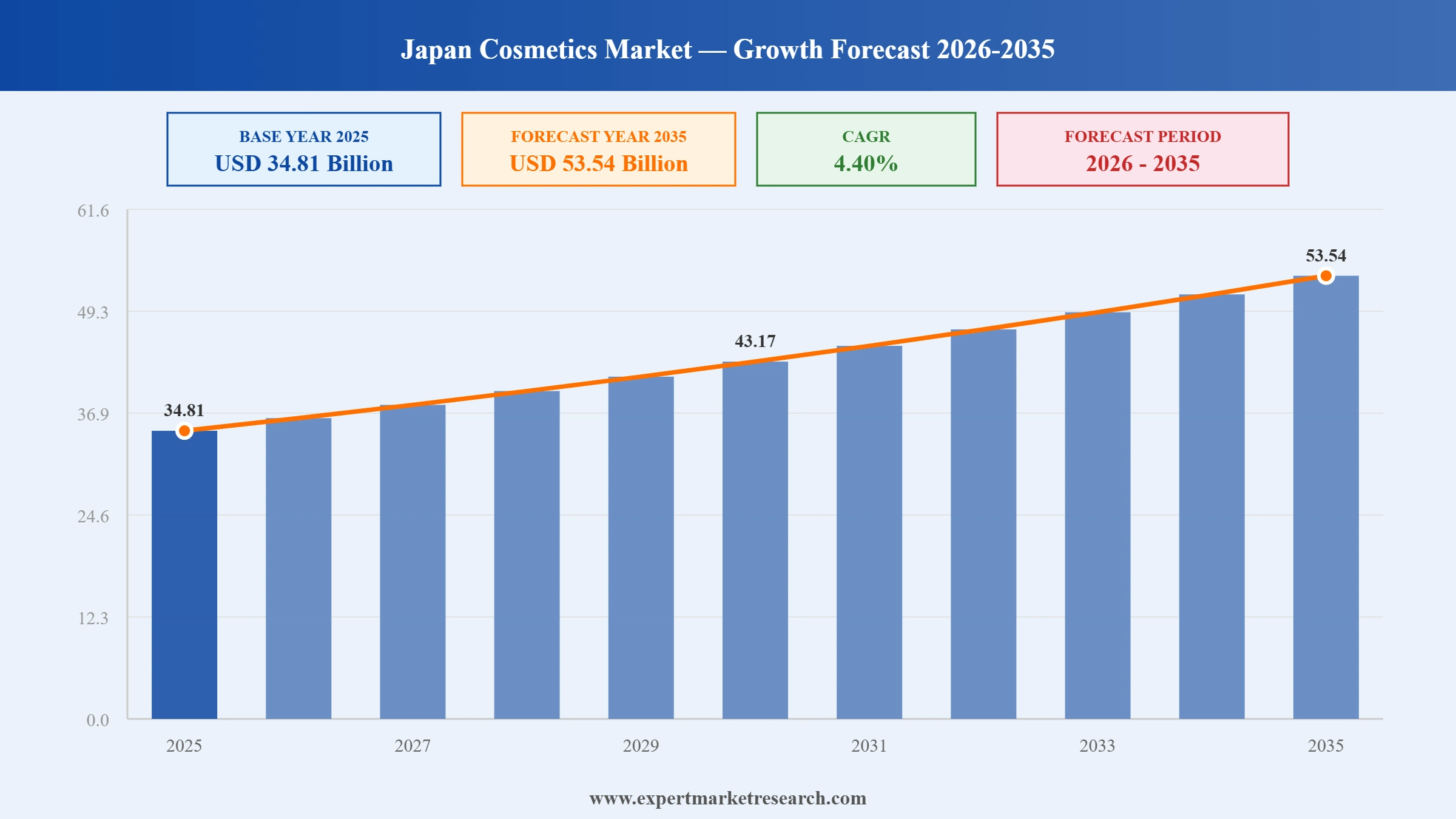
The Japan cosmetics market attained a value of USD 34.81 Billion in 2025 and is projected to grow at a CAGR of 4.40% through 2035, reaching USD 53.54 Billion by 2035, driven by sustained skincare innovation, rising premiumisation, and strong domestic brand loyalty across Japan's cosmetics sector.
Sustained skincare innovation and strong domestic brand loyalty continue to anchor steady demand across the Japan cosmetics market. Shiseido announced its d program Skin Repair Cream EX for sensitive skin, scheduled for launch in October 2026, featuring a double moisture-barrier design combining moisturising ingredients with active compounds aimed at preventing skin irritation.
The Japan cosmetics market is witnessing further developments as domestic manufacturers increasingly apply biotechnology and cellular research to differentiate skincare formulations. Kao reported in June 2026 that it had developed Water Capturing Skin technology, which attracts surrounding water and increases moisture levels in the stratum corneum through a mechanism distinct from conventional moisturising approaches.
In addition, global beauty conglomerates continue reporting resilient financial performance even amid broader macroeconomic uncertainty affecting the wider luxury and beauty sector. The Estee Lauder Companies raised its full-year fiscal 2026 outlook in May 2026 following strong fragrance growth and margin expansion, projecting continued net sales growth and improving operating margins into fiscal 2027.
Read more about this report - REQUEST FREE SAMPLE COPY IN PDF
Established Japanese skincare manufacturers continue introducing double moisture-barrier formulations targeting sensitive skin consumers seeking irritation-prevention benefits alongside conventional hydration. Shiseido announced its program Skin Repair Cream EX, scheduled for launch in October 2026, combining moisturising ingredients with active compounds within a double moisture-barrier design specifically formulated to prevent skin irritation among sensitive-skin consumers nationwide. Companies can develop double-barrier formulation technology to differentiate sensitive-skin skincare products from conventional moisturising alternatives.
Domestic cosmetics manufacturers continue applying advanced biological research to develop differentiated hydration mechanisms beyond conventional moisturising approaches. Kao reported in June 2026 that it had developed Water Capturing Skin technology, which attracts surrounding water and increases moisture levels in the stratum corneum through a mechanism distinct from conventional approaches, supporting formulations designed to maintain hydration for longer periods. Companies can invest in differentiated biological hydration mechanisms to distinguish skincare formulations from conventional moisturising competitors.
Global beauty conglomerates with strong fragrance portfolios continue demonstrating resilient financial performance even amid broader macroeconomic uncertainty affecting the wider luxury sector. The Estee Lauder Companies raised its full-year fiscal 2026 outlook in May 2026 following strong fragrance growth and margin expansion, projecting fiscal 2027 net sales growth of 3 to 5 percent and operating margins approaching 13 percent as its ongoing transformation strategy continues delivering results. Companies can leverage strong-performing fragrance portfolios to offset softer performance elsewhere and support improving margin trajectories.
Leading global beauty conglomerates continue outperforming broader industry growth rates even as competitors report mixed or declining quarterly results across the sector. L'Oreal reported strong first-quarter 2026 growth that outperformed the global beauty market overall, contrasting with mixed results reported by several competitors during the same reporting period amid uneven macroeconomic conditions across major beauty markets. Companies can maintain diversified brand portfolios and geographic exposure to sustain growth outperformance even amid uneven broader market conditions.
Japanese cosmetics manufacturers continue applying cellular and molecular research to identify new biological mechanisms supporting differentiated skincare formulation science. Kao reported in February 2026 that it had identified a mechanism in human skin linking improved blood circulation with increased mitochondrial metabolic activity in epidermal cells, reinforcing the company's continued application of cellular research to develop scientifically differentiated skincare propositions. Companies can apply cellular and molecular research to identify novel biological mechanisms supporting differentiated skincare formulation platforms.
Established Japanese beauty conglomerates continue navigating competitive pressure as faster product cycles and rising South Korean and Chinese rivals reshape the global cosmetics landscape. Shiseido faced a challenging turnaround process reported in January 2026, as social trends, accelerating product development cycles, and intensifying competition from South Korean and Chinese beauty brands continued reshaping the competitive dynamics of the global cosmetics market. Companies can accelerate product development cycles and competitive repositioning to defend market position against faster-moving regional rivals.
Global beauty conglomerates continue committing to structured turnaround programmes to restore growth at underperforming mass-market skincare brands. Beiersdorf launched an 18-month turnaround plan for its NIVEA brand in August 2026, focused on strengthening competitiveness across categories, markets, and consumer segments, even as its Derma brands Eucerin and Aquaphor continued outperforming the broader skin care market. Companies can commit to structured, time-bound turnaround programmes to restore growth momentum at underperforming mass-market brands.
Cross-border digital retail platforms continue capturing a growing share of Japan cosmetics purchases as Chinese and international consumers increasingly favour Japanese beauty products. Industry data published in July 2026 confirmed the online distribution channel growing at a projected 9.40 percent CAGR, faster than the overall market, with cross-border e-commerce continuing to expand as Japanese cosmetics products rank among the top categories purchased by Chinese consumers. Companies can expand cross-border e-commerce infrastructure to capture accelerating international demand for Japanese beauty products.
This Expert Market Research Report titled "Japan Cosmetics Market Report and Forecast 2026-2035" offers a detailed analysis of the market based on the following segments:
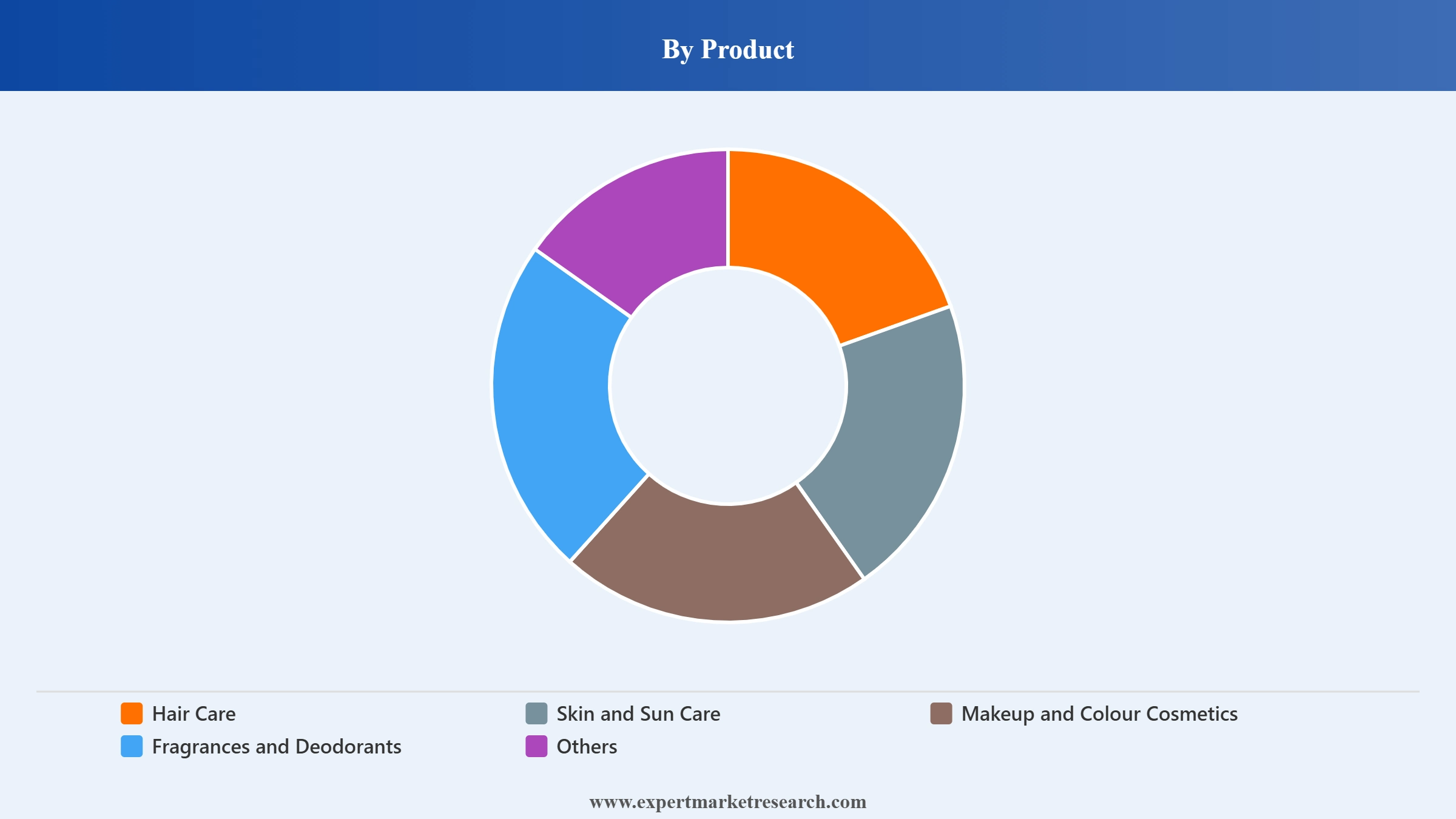
Market Breakup by Product
Key Insight: Skin and Sun Care accounts for the largest share of the market, reflecting Japan's deep cultural emphasis on skincare routines and sun protection nationwide. Hair Care and Makeup and Colour Cosmetics continue to represent substantial demand tied to daily grooming and beauty routines, while Fragrances and Deodorants and Others address distinct niche categories. Skin and Sun Care is also growing fastest at a projected 8.20 percent CAGR, illustrated by Kao's June 2026 development of its Water Capturing Skin hydration technology and Shiseido's October 2026 d program Skin Repair Cream EX launch.
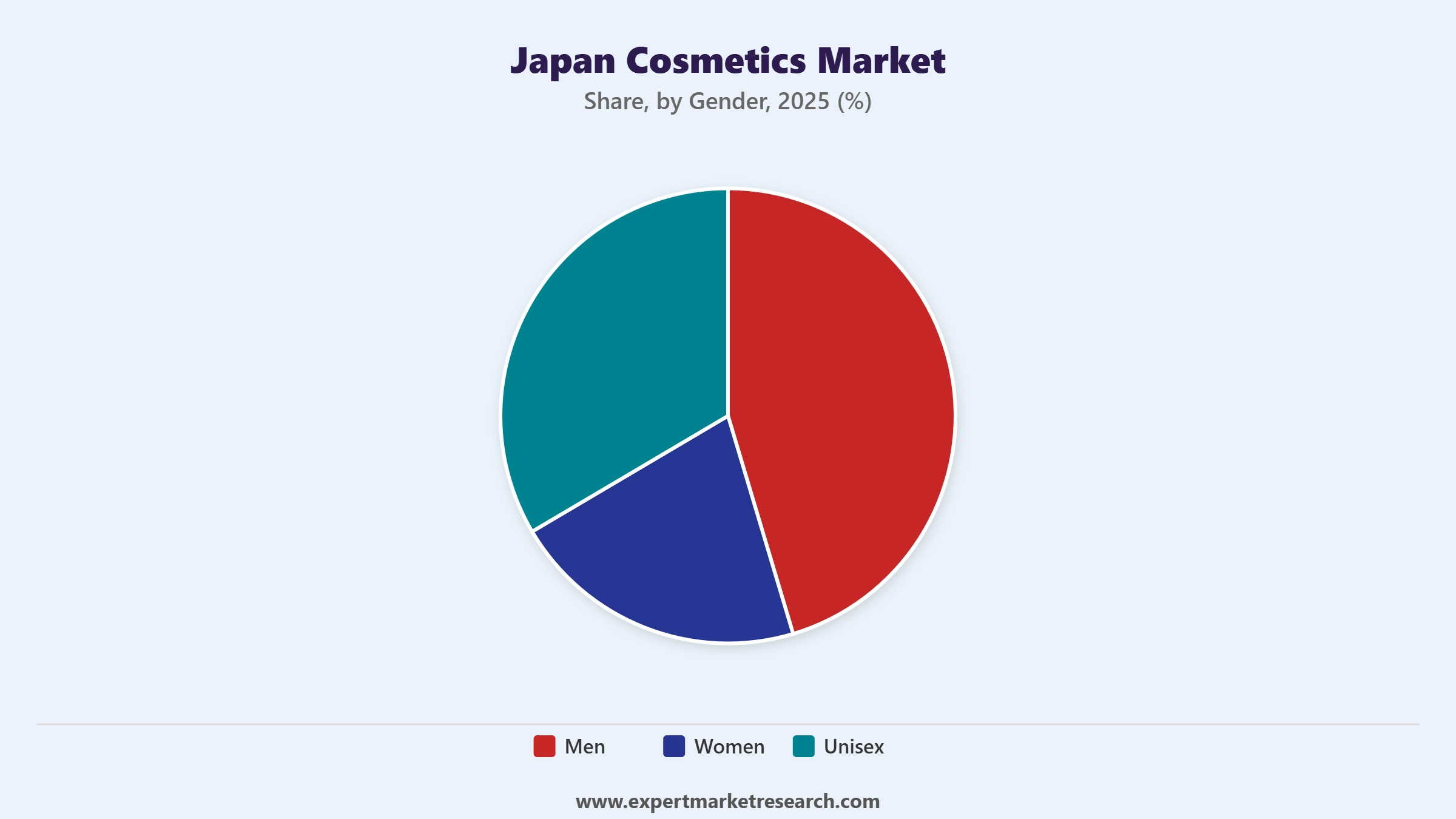
Market Breakup by Gender
Key Insight: Women accounts for the largest share of the market, reflecting the broadest historical product range and highest cumulative marketing investment across decades of brand development nationwide. Unisex continues to represent a distinct and growing category as gender-neutral skincare gains acceptance. Men is growing as manufacturers introduce dedicated grooming lines, with reporting published in January 2026 highlighting a cultural shift as older Japanese professional men increasingly adopt skincare and cosmetics amid heightened workplace appearance consciousness.
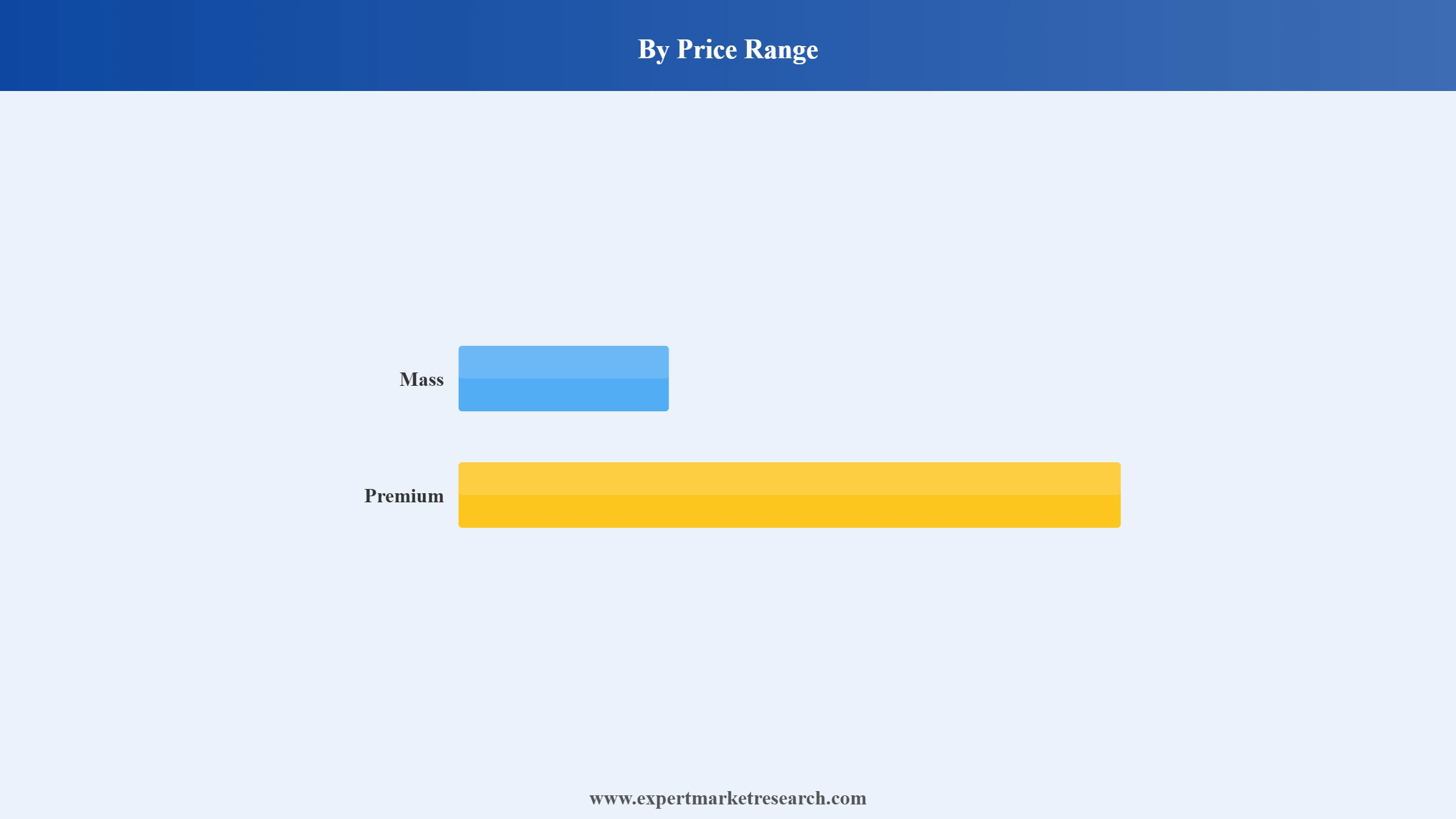
Market Breakup by Price Range
Key Insight: Mass accounts for the largest share of the market, remaining the default choice for Japan's broad consumer base across everyday cosmetics and personal care purchases nationwide. Premium is growing fastest at a projected 7.50 percent CAGR as consumers increasingly indulge in higher-priced skincare and colour cosmetics, illustrated by The Estee Lauder Companies' May 2026 upgraded fiscal 2026 outlook driven by strong fragrance growth and margin expansion.
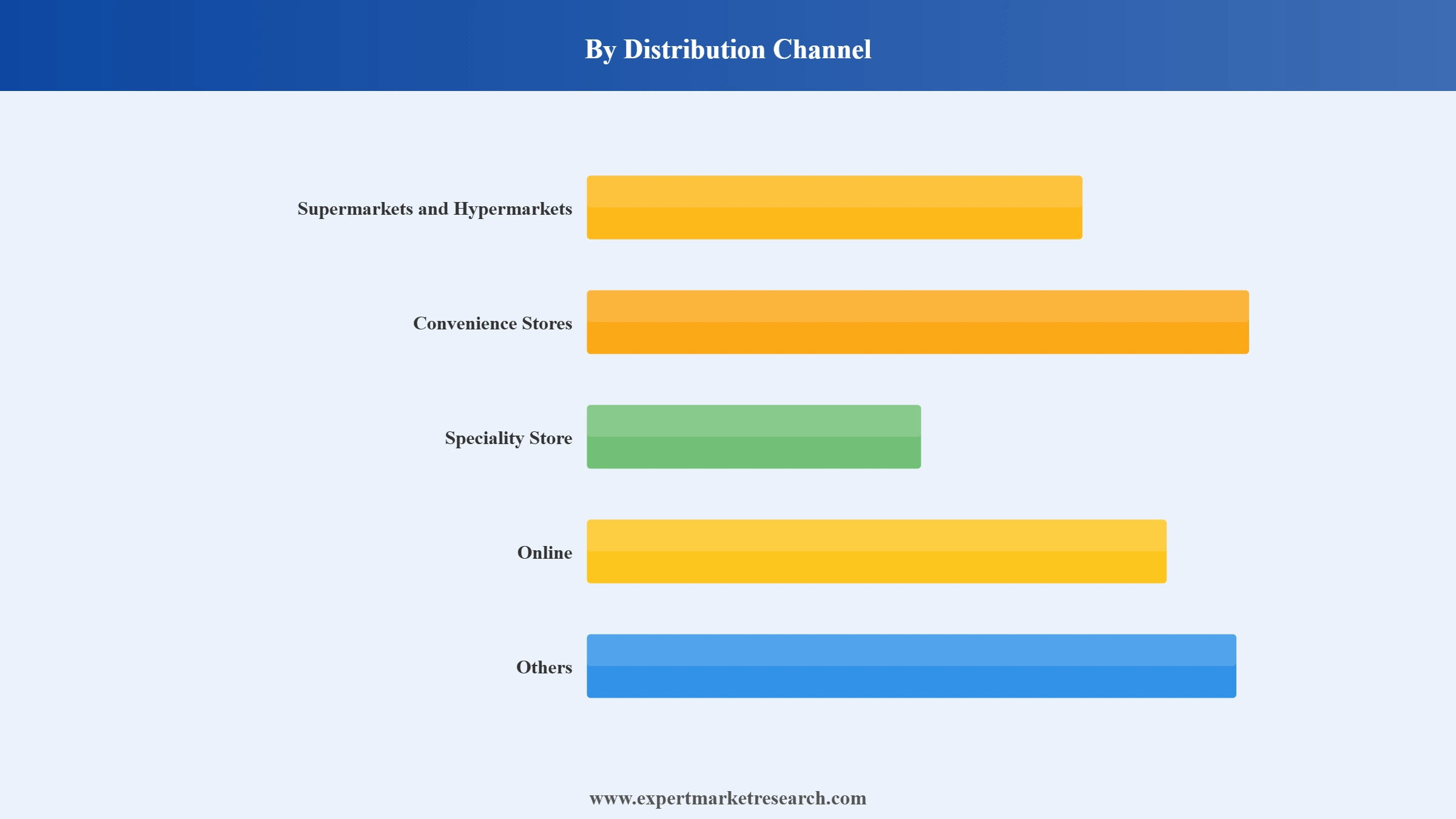
Market Breakup by Distribution Channel
Key Insight: Speciality Store accounts for the largest share of the market, reflecting Japan's established drugstore and cosmetics specialty retail infrastructure nationwide. Supermarkets and Hypermarkets and Convenience Stores continue to serve everyday purchase occasions across dense urban retail networks, while Others captures department store and duty-free channels. Online is growing fastest at a projected 9.40 percent CAGR as cross-border e-commerce with China continues expanding, with industry data published in July 2026 confirming Japanese cosmetics products ranking among the top categories purchased by Chinese consumers through cross-border platforms.
Read more about this report - REQUEST FREE SAMPLE COPY IN PDF
Skin and Sun Care continues to account for the largest share of the market, reflecting Japan's deep cultural emphasis on skincare routines and sun protection nationwide. Beiersdorf's Derma brands, including Eucerin and Aquaphor, delivered organic sales growth of 7.8 percent in the first half of 2026, reinforcing continued global innovation investment anchoring the dominant skin and sun care category.
Read more about this report - REQUEST FREE SAMPLE COPY IN PDF
Skin and Sun Care is also the fastest-growing product category at a projected 8.20 percent CAGR. Kao's February 2026 identification of a skin mechanism linking blood circulation to mitochondrial metabolic activity reinforced accelerating biotechnology-driven innovation within Japan's largest and fastest-growing cosmetics category.
Women continues to account for the largest share of the market, reflecting the broadest historical product range and highest cumulative marketing investment across decades of brand development nationwide. Established manufacturers continue anchoring the dominant women's category through extensive product portfolios spanning skincare, makeup, and fragrance.
Read more about this report - REQUEST FREE SAMPLE COPY IN PDF
Men continues to grow as manufacturers introduce dedicated grooming lines addressing skincare and grooming needs specific to male consumers. L'Oreal's April 2026 strong first-quarter growth, outperforming the broader global beauty market, reinforced continued category-wide investment spanning both women's and men's product development nationwide.
Mass continues to account for the largest share of the market, remaining the default choice for Japan's broad consumer base across everyday cosmetics and personal care purchases nationwide. Kao's mass-market haircare and daily-use skincare lines continue anchoring substantial volume within the dominant mass price tier.
Read more about this report - REQUEST FREE SAMPLE COPY IN PDF
Premium is the fastest-growing price range at a projected 7.50 percent CAGR. Beiersdorf's luxury La Prairie brand returned to growth in the second quarter of 2026 following a challenging first quarter, reinforcing accelerating consumer willingness to pay for premium skincare and colour cosmetics nationwide.
Speciality Store continues to account for the largest share of the market, reflecting Japan's established drugstore and cosmetics specialty retail infrastructure nationwide. Domestic manufacturers continue leveraging extensive specialty retail relationships to anchor the dominant distribution channel across the country.
Read more about this report - REQUEST FREE SAMPLE COPY IN PDF
Online is the fastest-growing distribution channel at a projected 9.40 percent CAGR. Direct-to-consumer and subscription-based digital channels continue expanding among both domestic and international buyers, with Japanese cosmetics brands increasingly investing in dedicated e-commerce storefronts to serve overseas demand nationwide.
The industry is fragmented, with Japan cosmetics market companies ranging from global beauty conglomerates to established domestic manufacturers competing across product, gender, price range, and distribution channel segments nationwide.
Competitive dynamics among Japan cosmetics players are increasingly shaped by the depth of biotechnology and fermentation science research, the strength of domestic brand loyalty, and the pace of premium formulation innovation. Manufacturers are investing in cellular research, double-barrier formulation technology, and cross-border e-commerce infrastructure to secure long-term relationships with both domestic and international beauty consumers.
Founded in 1872 and headquartered in Tokyo, Japan, Shiseido is one of Japan's leading domestic cosmetics manufacturers, commanding the highest brand recall in the country's skincare and colour cosmetics categories. The company announced its d program Skin Repair Cream EX, scheduled for launch in October 2026, featuring a double moisture-barrier design for sensitive-skin consumers, while continuing to navigate competitive turnaround pressure amid rising South Korean and Chinese rivals. Shiseido's domestic manufacturing footprint and pharmacy shelf dominance differentiate its offering from international competitors reliant on imported product lines.
Founded in 1887 and headquartered in Tokyo, Japan, Kao is a diversified consumer goods conglomerate anchoring substantial volume through mass-market haircare and daily-use skincare lines. The company reported developing Water Capturing Skin hydration technology in June 2026 and identifying a mitochondrial metabolic activity skin mechanism in February 2026, reinforcing continued cellular research investment across its skincare portfolio. Kao's diversified conglomerate structure and mass-market volume anchoring differentiate its offering from premium-focused competitors reliant on narrower product portfolios.
Founded in 1909 and headquartered in Clichy, France, L'Oreal is the world's largest cosmetics company, offering a diversified portfolio spanning skincare, makeup, hair care, and fragrance across Japan and global markets. The company reported strong first-quarter 2026 growth that outperformed the broader global beauty market, contrasting with mixed results reported by several competitors during the same period amid uneven macroeconomic conditions. L'Oreal's diversified global brand portfolio and geographic exposure differentiate its offering from more narrowly focused domestic Japanese competitors.
Founded in 1946 and headquartered in New York, United States, Estee Lauder is a global prestige beauty conglomerate offering skincare, makeup, and fragrance brands across premium retail channels. The company raised its full-year fiscal 2026 outlook in May 2026 following strong fragrance growth and margin expansion, projecting continued net sales growth and improving operating margins into fiscal 2027. Estee Lauder's prestige fragrance portfolio strength and margin recovery trajectory differentiate its offering from mass-market competitors focused primarily on volume-driven categories.
Other key players in the Japan cosmetics market include Procter & Gamble Co., Beiersdorf AG, Lion Corp., Unilever Plc, Revlon Inc., and Groupe Clarins, among others.
*Please note that this is only a partial list; the complete list of key players is available in the full report. Additionally, the list of key players can be customized to better suit your needs.*
Unlock the latest insights with our Japan cosmetics market trends 2026 report. Discover product category growth patterns, distribution channel adoption trends, and key industry players. Stay ahead of competition with trusted data and expert analysis. Download your free sample report today and drive informed decisions in the market.


Upto 15% Off
USD
$2499 $2249
$3999 $3599
$4999 $4249
$5999 $5099


*While we strive to always give you current and accurate information, the numbers depicted on the website are indicative and may differ from the actual numbers in the main report. At Expert Market Research, we aim to bring you the latest insights and trends in the market. Using our analyses and forecasts, stakeholders can understand the market dynamics, navigate challenges, and capitalize on opportunities to make data-driven strategic decisions.*
In 2025, the market reached an approximate value of USD 34.81 Billion.
The market is projected to grow at a CAGR of 4.40% between 2026 and 2035.
The market is assessed to witness a healthy growth in the forecast period of 2026-2035 to reach around USD 53.54 Billion in 2035.
The different products in the market include hair care, skin and sun care, makeup and colour cosmetics, and fragrances and deodorants, among others.
The different price range of products include mass and premium.
The different segments based on gender are men, women, and unisex.
The major distribution channels include supermarkets and hypermarkets, convenience stores, speciality store, and online, among others.
The key players in the market include Shiseido Co. Ltd., Kao Corp., L'oreal S.A., The Estée Lauder Companies Inc., Procter & Gamble Co., Beiersdorf AG, Lion Corp., Unilever Plc, Revlon Inc., and Groupe Clarins.
Manufacturers face intensifying competition from faster-moving South Korean and Chinese rivals, lengthy quasi-drug regulatory approval timelines under Japan's Pharmaceutical and Medical Device Act, and the need for continuous formulation innovation to sustain domestic brand loyalty.
Investing in biotechnology and cellular research to differentiate skincare formulations, expanding cross-border e-commerce infrastructure, developing premium and double-barrier formulation technology, and accelerating product development cycles to compete with regional rivals.
Explore our key highlights of the report and gain a concise overview of key findings, trends, and actionable insights that will empower your strategic decisions.
| REPORT FEATURES | DETAILS |
| Base Year | 2025 |
| Historical Period | 2019-2025 |
| Forecast Period | 2026-2035 |
| Scope of the Report |
Historical and Forecast Trends, Industry Drivers and Constraints, Historical and Forecast Market Analysis by Segment:
|
| Breakup by Product |
|
| Breakup by Gender |
|
| Breakup by Price Range |
|
| Breakup by Distribution Channel |
|
| Market Dynamics |
|
| Competitive Landscape |
|
| Companies Covered |
|
Datasheet
One User
USD 2,499
USD 2,249
tax inclusive*
Single User License
One User
USD 3,999
USD 3,599
tax inclusive*
Five User License
Five User
USD 4,999
USD 4,249
tax inclusive*
Corporate License
Unlimited Users
USD 5,999
USD 5,099
tax inclusive*
*Please note that the prices mentioned below are starting prices for each bundle type. Kindly contact our team for further details.*
Flash Bundle
Small Business Bundle
Growth Bundle
Enterprise Bundle
*Please note that the prices mentioned below are starting prices for each bundle type. Kindly contact our team for further details.*
Flash Bundle
Number of Reports: 3
20%
tax inclusive*
Small Business Bundle
Number of Reports: 5
25%
tax inclusive*
Growth Bundle
Number of Reports: 8
30%
tax inclusive*
Enterprise Bundle
Number of Reports: 10
35%
tax inclusive*
How To Order

Select License Type
Choose the right license for your needs and access rights.

Click on ‘Buy Now’
Add the report to your cart with one click and proceed to register.

Select Mode of Payment
Choose a payment option for a secure checkout. You will be redirected accordingly.
Strategic Solutions for Informed Decision-Making
Gain insights to stay ahead and seize opportunities.

Get insights & trends for a competitive edge.

Track prices with detailed trend reports.

Analyse trade data for supply chain insights.

Leverage cost reports for smart savings

Enhance supply chain with partnerships.

Connect For More Information
Our expert team of analysts will offer full support and resolve any queries regarding the report, before and after the purchase.
Our expert team of analysts will offer full support and resolve any queries regarding the report, before and after the purchase.
We employ meticulous research methods, blending advanced analytics and expert insights to deliver accurate, actionable industry intelligence, staying ahead of competitors.
Our skilled analysts offer unparalleled competitive advantage with detailed insights on current and emerging markets, ensuring your strategic edge.
We offer an in-depth yet simplified presentation of industry insights and analysis to meet your specific requirements effectively.




