

Consumer Insights
Uncover trends and behaviors shaping consumer choices today
Procurement Insights
Optimize your sourcing strategy with key market data
Industry Stats
Stay ahead with the latest trends and market analysis.
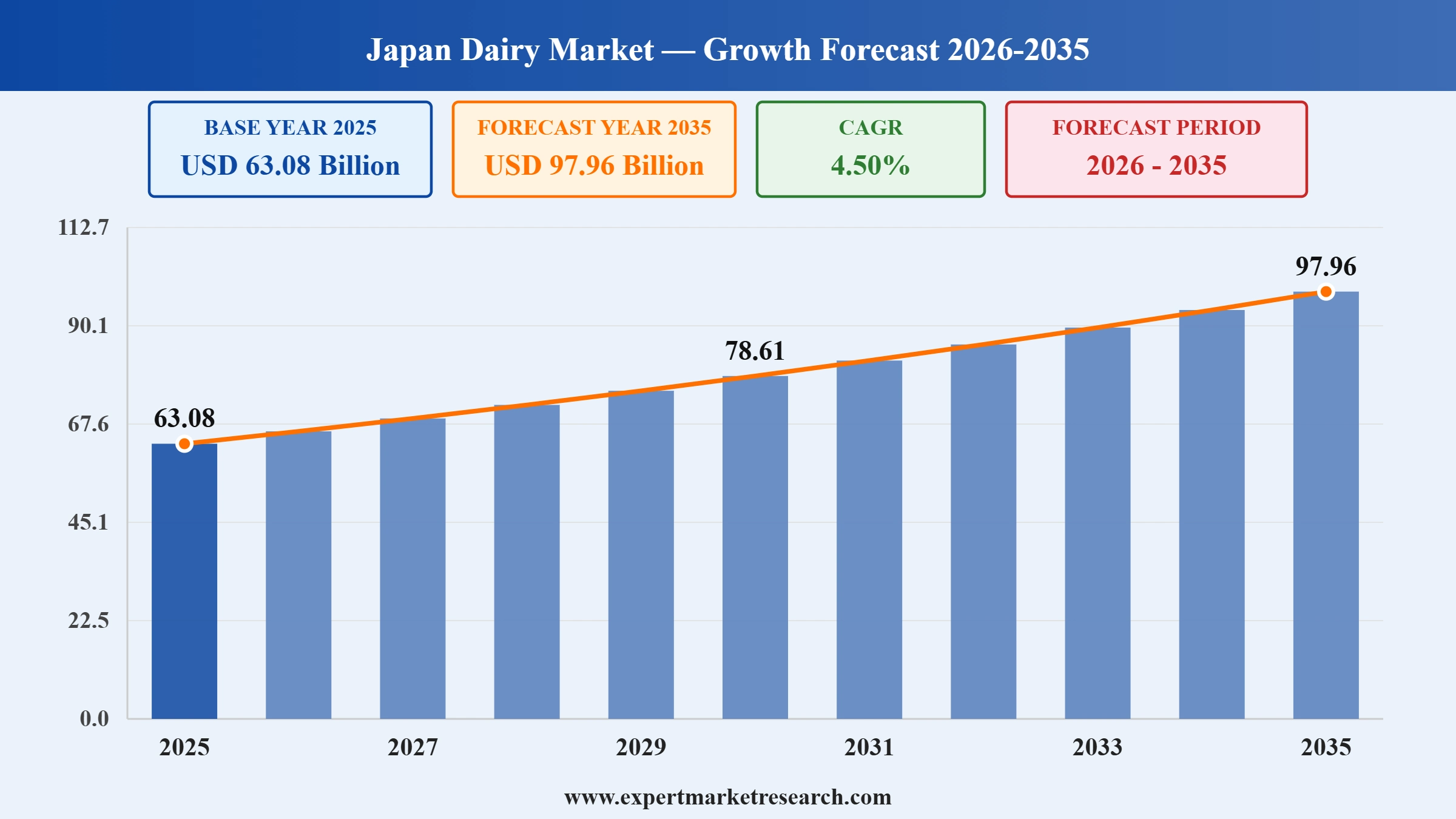
The Japan dairy market size was estimated at USD 63.08 Billion in 2025 and is projected to grow at a CAGR of around 4.50% through 2035. A key driver of the Japan dairy market is the government's initiative to modernize the dairy sector through a comprehensive five-year policy launched in 2025. This policy focuses on enhancing supply chain resilience, upgrading ageing processing facilities, and promoting the use of domestic feed to reduce reliance on imports, which currently account for 40–60% of dairy farming costs. These measures aim to stabilize production, improve food self-sufficiency, and support rural economies, thereby driving the market to reach USD 97.96 Billion by 2035.
Japan's dairy sector is transforming rapidly owing to government-supported programs and local production trends. The Ministry of Agriculture, Forestry and Fisheries (MAFF) reported that Japan produced about 7.4 million tonnes of raw milk in FY2023. Government subsidies and feed cost support to dairy farmers have assisted in maintaining production levels despite decreasing herd numbers. Consumer demand is also changing toward more value-added dairy products like cheese and yogurt, especially among the young and urban communities, thereby bolstering the growth of the Japan dairy market.
Product innovation and sustainability initiatives are also visible. For example, in March 2024, Kaneka Corporation introduced "Pur Natur™," a JAS-certified organic milk, as part of its organic dairy business line following the success of its yogurt product lines. Furthermore, the practice of methane-capturing technologies and feed compositions optimized by producers seeks to minimize carbon footprints, consistent with consumer pressure for environmentally friendly products. These advancements show the commitment of the industry to innovation and sustainability, setting up Japan's dairy market for ongoing growth and evolution along with changing consumer values.
Read more about this report - REQUEST FREE SAMPLE COPY IN PDF
| Japan Dairy Market Report Summary |
Description |
Value |
|
Base Year |
USD Billion |
2025 |
|
Historical Period |
USD Billion |
2019-2025 |
|
Forecast Period |
USD Billion |
2026-2035 |
|
Market Size 2025 |
USD Billion |
63.08 |
|
Market Size 2035 |
USD Billion |
97.96 |
|
CAGR 2019-2025 |
Percentage |
XX% |
|
CAGR 2026-2035 |
Percentage |
4.50% |
|
CAGR 2026-2035- Market by Product Type |
Yoghurt |
6.2% |
|
CAGR 2026-2035 - Market by Distribution Channel |
Online |
9.7% |
Chiba Prefecture announced plans to expand into India. Akiba Bokujo Holdings formed a cooperation with an Indian information technology startup to boost dairy production, acquire feed, and assist small-scale farmers.
Beston Global Food Company (BFC) in Australia revealed that Megmilk Snow Brand Co. of Japan has made an approach to buy some of the company's core dairy assets. The corporation operates extensively not only in Japan, but also in Taiwan, Indonesia, China, Hong Kong, Malaysia, and the United States.
Kaneka Corporation launched Pur Natur, a JAS-certified*1 organic milk made from organic raw milk. Pur Natur brand introduced its second organic dairy product, following yogurt. The new product was made available at LIFE Corporation, a large supermarket, through its subsidiary company Kaneka Foods.
Sojitz Corporation, a Japanese multi-sector company, and its subsidiaries Sojitz Asia Pte. Ltd. and Sojitz Vietnam Company Ltd. acquired full ownership of Dai Tan Viet JSC (New Viet Dairy), a prominent Vietnamese food wholesaler.
Consumers have drastically changed their eating habits, reshaping the entire Japan dairy market dynamics. Consumption of dairy products rich in calcium and protein, particularly among the younger consumers, has significantly increased. Food items that include cheese and yogurt are being gradually incorporated into daily meals and recipes in Japanese households. Moreover, government initiatives concerning balanced diets and nutritional benefits has encouraged consumers to opt for these products.
The growing popularity of Western food has resulted in an increased consumption of dairy products such as cheese, butter, and yogurt. These dairy products have become increasingly visible in Japanese cuisine, including sushi rolls and dessert, merging culinary traditions. Furthermore, government policies such as Shokuiku, promoting diverse diets and traditional recipes with dairy ingredients have also encouraged the emergence of this particular trend.
Technological advancements in dairy processing and packaging are improving product quality and convenience, propelling further demand in the Japan dairy market. For example, milk with long shelf-life, ready-to-eat snacks and fortified dairy products, have grown alarmingly popular. Besides meeting the needs of busy lifestyles, these innovations fit most of the health-conscious trends. Dairy producers are leveraging these advancements to bring products that meet contemporary consumer needs.
The Japan dairy market experiences growth with the rising need for specialty and premium dairy products. Consumers have become willing to pay premium for high-quality dairy products that taste better and are healthier. This tendency is evident in the increasing popularity of artisanal cheese, organic milk, and exotic-flavoured yogurt. The promotion of local and organic farming practices by the Japanese government fuels this premiumization drive.
Sustainable practices have been widely adopted by the Japan dairy industry due to growing environmental concerns. Modern consumers are now seeking eco-friendly packaging such as biodegradable cartons and recyclable materials. Strict regulatory frameworks by the Japanese government have resulted in reduced plastic usage and growth of sustainable packaging solutions. Dairy producers have invested in innovations for green packaging as part of meeting consumer preferences and regulatory requirements.
The EMR’s report titled “Japan Dairy Market Report and Forecast 2026-2035” offers a detailed analysis of the market based on the following segments:
Market Breakup by Product Type
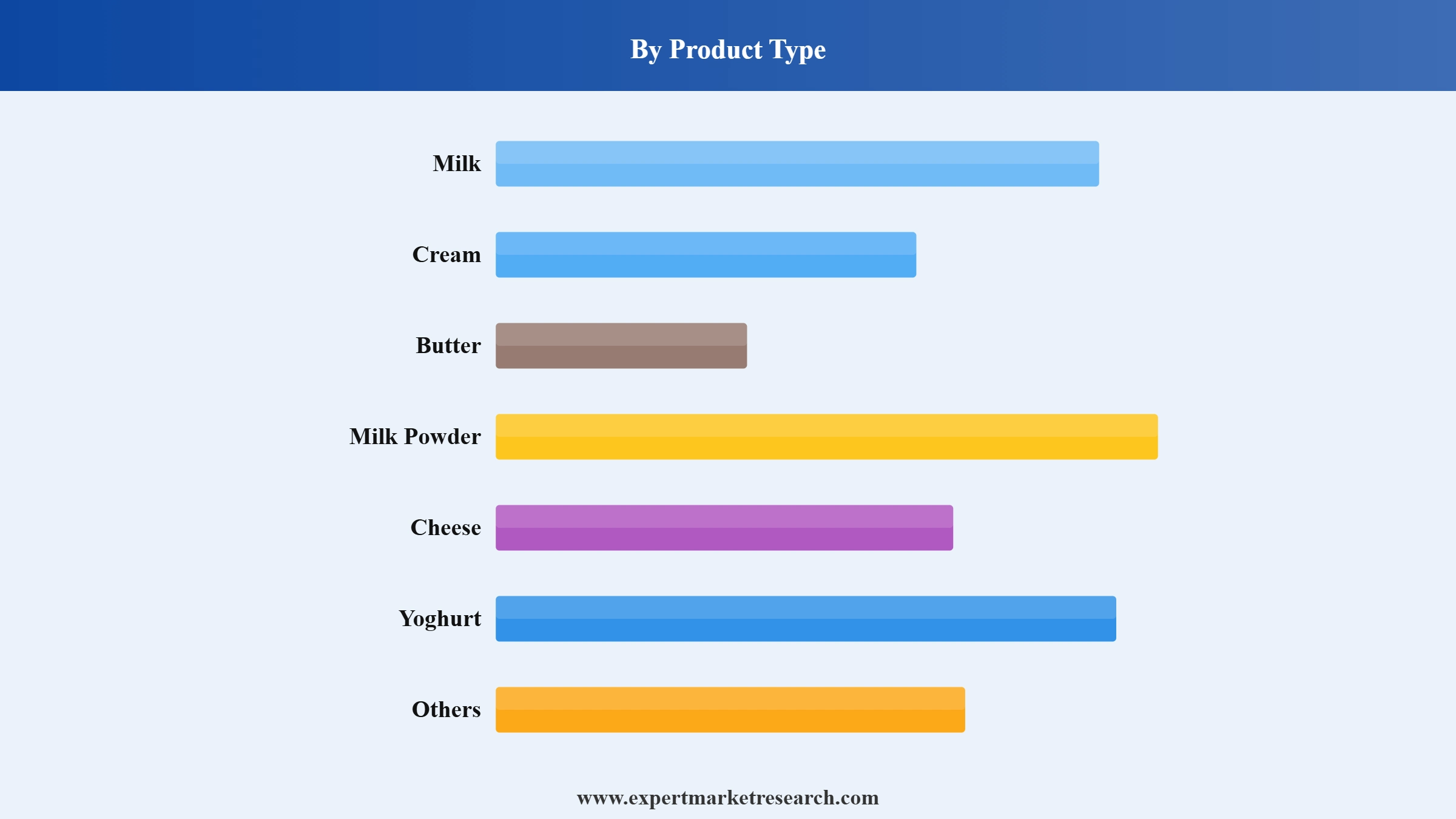
Key Insight: Milk products account for the dominant share in the Japan dairy market. The introduction of lactose-free, functional milk with additional collagen or probiotics addresses elderly and health-oriented consumers. Premium bottled milk with clean labelling, such as Hokkaido-origin milk, drives consumer confidence. Single-serve packaging formats cater to urban households in Japan.
Market Breakup by Distribution Channel
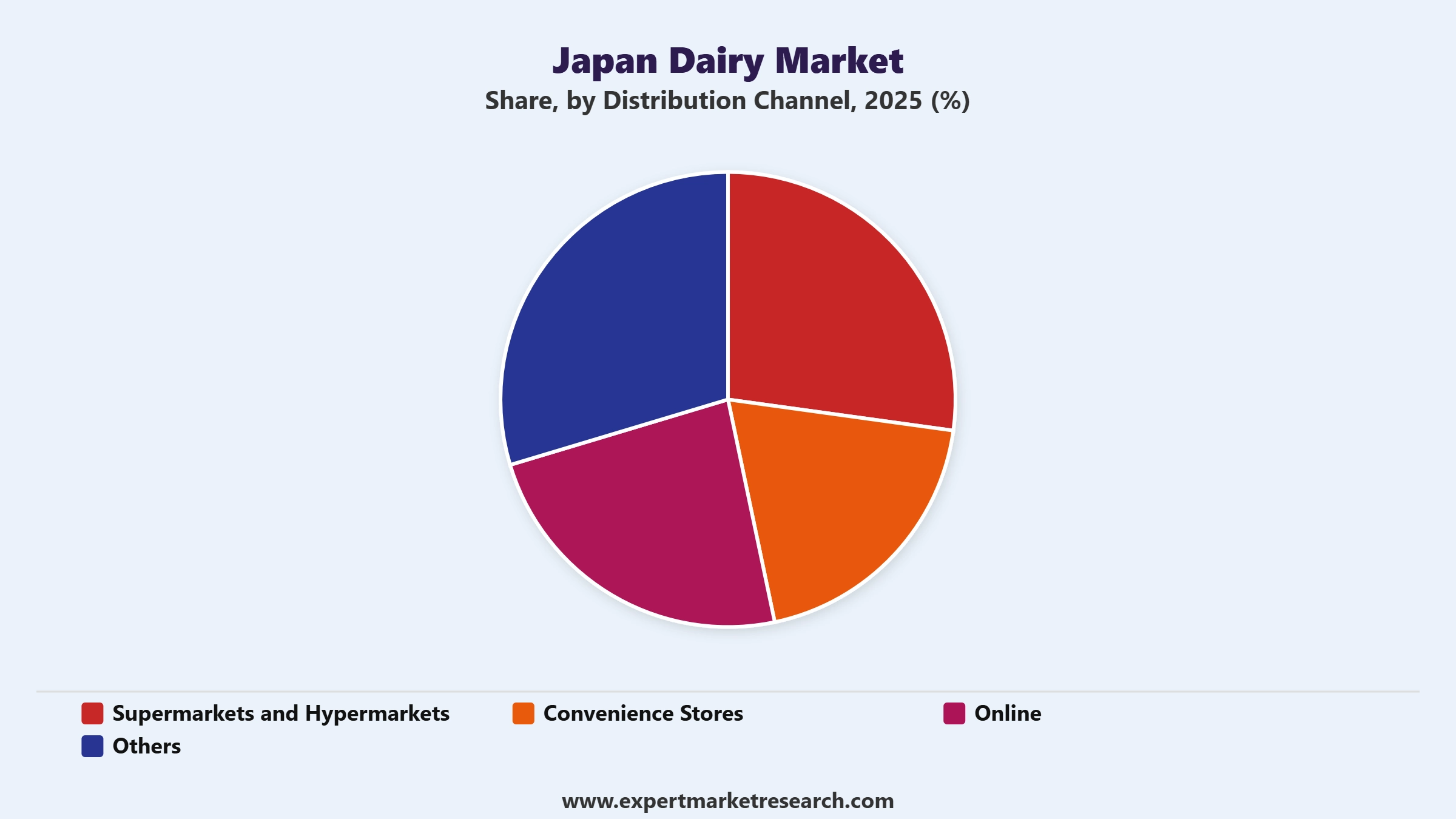
Key Insight: Hypermarkets and supermarkets dominate the dairy market in Japan owing to convenience. These outlets offer private-label Hokkaido cream or seasonal yogurt flavours to provide product variety. Retailers spend on maintaining cold-chain integrity and in-store tasting kiosks to create brand loyalty. Interactive digital shelf tags assist consumers in comparing nutritional values. This helps appeal to health-conscious shoppers.
Read more about this report - REQUEST FREE SAMPLE COPY IN PDF
By Product Type, Milk Registers the Largest Share in the Market
Milk continues to be the most popular dairy product in Japan, supported by ongoing innovation in packaging and processing. Developments like ultra-high temperature (UHT) processing and aseptic packaging have increased shelf life, while ready-to-drink packaging appeals to health-conscious, busy consumers. Government efforts also support milk's popularity by highlighting its nutritional value, such as calcium and protein, through school education and public campaigns.
Read more about this report - REQUEST FREE SAMPLE COPY IN PDF
Yogurt is gaining increased momentum in the Japan dairy market. Growing number of consumers seeking probiotic and functional foods has driven yogurt consumption. Innovations such as functional yogurt beverages and plant-based alternatives have quickly been adopted. Producers are increasing their yogurt-based product offerings to cater to changes in shifting consumer preferences.
By Distribution Channel, Supermarkets and Hypermarkets Lead to Increased Market Revenue
Hypermarkets and supermarkets are key drivers of the overall Japan dairy market value. These stores provide a vast range of dairy products to suit the different tastes and needs of consumers. The one-stop shopping convenience enables customers to compare products with ease, making these stores more attractive. The shopping experience has also been enhanced by digital payment systems and loyalty schemes. Their extensive availability and high degree of consumer affinity make them a central distribution channel in both urban and rural regions.
Read more about this report - REQUEST FREE SAMPLE COPY IN PDF
The fastest growing sub segment in the Japan dairy milk market is online retail. With the advent of e-commerce platforms, subscription-based delivery services for dairy, and mobile grocery apps, consumer purchasing behaviour has gradually reshaped. Busy urban consumers prefer the online purchase for home delivery of dairy products, particularly value-added ones such as flavoured milk and probiotic yogurt. To respond to this, Japanese retailers like Rakuten and Amazon Japan have made further investments in cold chain logistics.
The Japan dairy milk market players are mainly focused on health-oriented innovation, sustainable packaging, and premiumization. Participants leverage niche opportunities such as lactose-free milk, collagen-infused dairy, and A2 protein-rich variants to attract health-conscious consumers. Japan dairy companies are further investing in smart farming technologies and AI-based supply chain management for better operational efficiency. In 2024, Japanese dairy firms advanced sustainability using tech. Meiji Holdings partnered with DSM-Firmenich to introduce Bovaer, a feed additive cutting cattle methane emission by up to 30%, aligning with Japan’s climate goals. Meanwhile, Farmnote deployed AI-powered sensors to monitor cow health and productivity, aiding participation in Japan’s J-Credit program. Tokyo University of Science also developed a multi-camera system tracking cows with 90% accuracy for early disease detection. These innovations reflect Japan’s push for eco-friendly, tech-driven dairy practices.
Headquartered in Tokyo, Bel Japon KK is focused on expanding processed cheese and dairy snacks with their own technology for taste enhancement. The company mainly targets health-conscious millennials through micro-campaigns on social media.
Founded in 1925 in Tokyo, Megmilk Snow emphasizes cutting-edge research and development activities to develop flavored milk powders and functional dairy drinks. The company has developed collagen-and-lactoferrin-fortified milk, targeting elderly consumers concerned about wellness.
Founded in 1917 and located in Tokyo, Morinaga invests in developing low-sugar, probiotic-rich yogurts. The company employs AI to improve dairy fermentation processes that aid in flavor development and operational efficiencies.
Established in 1919 and based in Paris, Danone mainly focuses on nutrition and sustainability. The company has introduced QR-coded packs to educate consumers on product origin and benefits.
*Please note that this is only a partial list; the complete list of key players is available in the full report. Additionally, the list of key players can be customized to better suit your needs.*
Other key players in the market are Meiji Holdings Co., Ltd., NH Foods Ltd., Takanashi Milk Products Co., Ltd., Rokko Butter Co., Ltd., Yotsuba Milk Products Co., Ltd., and Yakult Honsha Co. Ltd., among others.
Unlock strategic insights with our expertly curated report on the Japan dairy market trends 2026. Download your free sample today to explore the Japan dairy market forecast 2026 and 2035, key growth drivers, and competitive landscape. Stay ahead with data-driven insights from a trusted source. Ideal for investors, policymakers, and manufacturers eyeing Southeast Asia’s rising electronics hub.


Upto 15% Off
USD
$2499 $2249
$3999 $3599
$4999 $4249
$5999 $5099


*While we strive to always give you current and accurate information, the numbers depicted on the website are indicative and may differ from the actual numbers in the main report. At Expert Market Research, we aim to bring you the latest insights and trends in the market. Using our analyses and forecasts, stakeholders can understand the market dynamics, navigate challenges, and capitalize on opportunities to make data-driven strategic decisions.*
In 2025, the Japan dairy market reached an approximate value of USD 63.08 Billion.
The market is projected to grow at a CAGR of 4.50% between 2026 and 2035.
The key players in the market include Bel Japon KK, Megmilk Snow Brand Co. Ltd., Morinaga Milk Industry Co., Ltd., Danone SA, Meiji Holdings Co., Ltd., NH Foods Ltd., Takanashi Milk Products Co., Ltd., Rokko Butter Co., Ltd., Yotsuba Milk Products Co., Ltd., and Yakult Honsha Co. Ltd., among others.
Key strategies driving the market include innovating with functional dairy, while locally sourced, AI-driven production, and environmentally friendly packaging are expanding their digital retail partnerships to attract the younger demographic and enhance the transparency of the supply chain across Japan.
The major product types considered in the market report are milk, cream, butter, milk powder, cheese, yoghurt, and others.
Explore our key highlights of the report and gain a concise overview of key findings, trends, and actionable insights that will empower your strategic decisions.
| REPORT FEATURES | DETAILS |
| Base Year | 2025 |
| Historical Period | 2019-2025 |
| Forecast Period | 2026-2035 |
| Scope of the Report |
Historical and Forecast Trends, Industry Drivers and Constraints, Historical and Forecast Market Analysis by Segment:
|
| Breakup by Product Type |
|
| Breakup by Distribution Channel |
|
| Market Dynamics |
|
| Competitive Landscape |
|
| Companies Covered |
|
Datasheet
One User
USD 2,499
USD 2,249
tax inclusive*
Single User License
One User
USD 3,999
USD 3,599
tax inclusive*
Five User License
Five User
USD 4,999
USD 4,249
tax inclusive*
Corporate License
Unlimited Users
USD 5,999
USD 5,099
tax inclusive*
*Please note that the prices mentioned below are starting prices for each bundle type. Kindly contact our team for further details.*
Flash Bundle
Small Business Bundle
Growth Bundle
Enterprise Bundle
*Please note that the prices mentioned below are starting prices for each bundle type. Kindly contact our team for further details.*
Flash Bundle
Number of Reports: 3
20%
tax inclusive*
Small Business Bundle
Number of Reports: 5
25%
tax inclusive*
Growth Bundle
Number of Reports: 8
30%
tax inclusive*
Enterprise Bundle
Number of Reports: 10
35%
tax inclusive*
How To Order

Select License Type
Choose the right license for your needs and access rights.

Click on ‘Buy Now’
Add the report to your cart with one click and proceed to register.

Select Mode of Payment
Choose a payment option for a secure checkout. You will be redirected accordingly.
Strategic Solutions for Informed Decision-Making
Gain insights to stay ahead and seize opportunities.

Get insights & trends for a competitive edge.

Track prices with detailed trend reports.

Analyse trade data for supply chain insights.

Leverage cost reports for smart savings

Enhance supply chain with partnerships.

Connect For More Information
Our expert team of analysts will offer full support and resolve any queries regarding the report, before and after the purchase.
Our expert team of analysts will offer full support and resolve any queries regarding the report, before and after the purchase.
We employ meticulous research methods, blending advanced analytics and expert insights to deliver accurate, actionable industry intelligence, staying ahead of competitors.
Our skilled analysts offer unparalleled competitive advantage with detailed insights on current and emerging markets, ensuring your strategic edge.
We offer an in-depth yet simplified presentation of industry insights and analysis to meet your specific requirements effectively.




