

Consumer Insights
Uncover trends and behaviors shaping consumer choices today
Procurement Insights
Optimize your sourcing strategy with key market data
Industry Stats
Stay ahead with the latest trends and market analysis.
The Latin America corporate gift card market was valued at USD 7.37 Billion in 2025. The market is expected to grow at a CAGR of 12.30% during the forecast period of 2026-2035 to reach a value of USD 23.51 Billion by 2035.
The corporate gift card market in Latin America is evolving rapidly, shifting from its traditional use as a year-end reward to becoming a versatile tool for ongoing employee engagement and customer loyalty throughout the year. With shifting workplace cultures and growing digital adoption, businesses now use gift cards to drive employee engagement, reward channel partners, and streamline disbursements. Companies are also redesigning reward systems to align with hybrid work models and cross-border collaboration. According to the Q4 survey, consumers spent more than 54.5% of their holiday shopping budget on corporate gift cards in Mexico.
Brazil, the regional leader, introduced tax incentives for non-cash employee benefits under the "Vale-Cultura" framework, sparking significant interest in digitised gift card ecosystems. Meanwhile, Mexico’s SAT authority has updated regulations to include gift card benefits as deductible business expenses, pushing SMEs to opt for formalised digital rewards. Government-backed digital payment programs like Colombia’s Ingreso Solidario have indirectly accelerated the Latin America corporate gift card market development, as fintech rails now reach underserved communities and micro-merchants.
Furthermore, enterprises now request branded gift card suites integrated with HRMS tools, boosting the Latin America corporate gift card market dynamics and trends. This includes real-time load tracking, expiry-based fund recycling, and ESG-aligned merchant restrictions. A growing number of platforms now offer APIs for companies to embed disbursement controls into procurement and employee portals. B2B buyers are also requesting region-specific merchant networks and compliance support, creating opportunities for local fintech partnerships.
Compound Annual Growth Rate
12.3%
Value in USD Billion
2026-2035
Read more about this report - REQUEST FREE SAMPLE COPY IN PDF
|
Latin America Corporate Gift Card Market Report Summary |
Description |
Value |
|
Base Year |
USD Billion |
2025 |
|
Historical Period |
USD Billion |
2019-2025 |
|
Forecast Period |
USD Billion |
2026-2035 |
|
Market Size 2025 |
USD Billion |
7.37 |
|
Market Size 2035 |
USD Billion |
23.51 |
|
CAGR 2019-2025 |
Percentage |
XX% |
|
CAGR 2026-2035 |
Percentage |
12.30% |
|
CAGR 2026-2035 - Market by Country |
Mexico |
13.6% |
|
CAGR 2026-2035 - Market by Form |
Virtual |
14.6% |
|
CAGR 2026-2035 - Market by End Users |
Small and Medium Businesses |
13.8% |
|
Market Share by Country 2025 |
Mexico |
23.1% |
Raise, a worldwide gift market leader and pioneer in blockchain-powered payments and loyalty, announced the successful completion of a USD 63 million fundraising round. This latest round raises Raise's total capital to more than USD 220 million, adding to previous investments from Accel, Paypal, and New Enterprise Associates. The funding supports Raise’s potential expansion into Latin America, advancing innovation in blockchain-based corporate gifting and loyalty solutions.
Blackhawk Network (BHN), a leading branded payments provider, announced the launch of Roblox digital gift cards in Mexican pesos (MXN). Roblox is a virtual platform that provides millions of immersive activities for people to enjoy together. The Mexico Peso (MXN) Roblox digital gift cards were made available to purchase on Roblox.com/giftcards, providing a seamless eCommerce experience for Mexican consumers. This launch reflects rising demand for localized digital gift cards, expanding branded corporate gifting in Latin America's growing youth market.
Visa, a global leader in digital payments, announced the launch of its new pilot solution in Latin America and the Caribbean, an innovative technology that allows consumers to pay for online purchases by simply tapping their Visa debit, prepaid, or credit cards on their own NFC-enabled Android cell phones, making the payment process even more convenient, simple, fast, and secure. This technology enhances prepaid card usage, promoting mobile-based gift and incentive card integration in the region’s corporate rewards market.
Givex Information Technology Group Ltd. stated that it would launch a gift card marketplace within Cittamobi's digital wallet. The first project of the new cooperation is the sale of iFood gift cards, the biggest Latin American online meal delivery service, which are processed by Givex and sent to dozens of partners via the GivexHub within the Cittamobi digital wallet. This partnership exemplifies the growing digitization of corporate gifting platforms in Latin America, with food delivery incentives gaining popularity.
Latin American corporates are now embedding gift card platforms directly into enterprise resource planning (ERP) and human capital management (HCM) systems. Startups like Vexi and Promobit offer API-integrated corporate suites that enable payroll-linked gift card distribution with expense control triggers, accelerating further demand in the Latin America corporate gift card market. Multinationals in Colombia and Argentina are increasingly choosing ERP-compatible solutions for audit ease. Integration with SAP SuccessFactors or Oracle HRMS has become a key competitive edge for vendors, as finance and HR teams demand automated issuance, budgeting, and compliance-friendly tracking without relying on third-party dashboards.
Companies across Chile and Brazil are prioritising corporate gift card providers that enable carbon-conscious merchant selections. Brands like Bonusly LATAM are piloting tools that allow users to filter redemption options based on sustainability ratings. Major telecom giants like Claro Brasil have integrated a “green gift card” feature in March 2025, restricting redemptions to eco-certified vendors. ESG-conscious procurement heads demand LCA (life cycle assessment) integrations and real-time CO2 dashboards as part of bulk gift card tools. This aligns with B2B ESG reporting mandates set by public companies listed under B3 and Bolsa Mexicana de Valores.
Latin American government is recognising gift cards as tools for formalising grey economy transactions. In Colombia, platforms like Minka are working with banks and regulators to modernize payment infrastructure and formalize grey-market transactions. Similarly, Mach in Chile has expanded its digital wallet services, onboarding corporate clients seeking compliant and auditable employee reward systems. In Argentina, SMEs are shifting toward digital gift cards to simplify payroll-related incentives and reduce regulatory uncertainties tied to informal cash-based bonuses.
Moving away from physical gift cards and replacing them with digital formats is an emerging trend in the Latin America corporate gift card market. With increased mobile penetration across Latin America, businesses are taking up app-based or SMS/email delivery gift cards more often, improving the speed, personalization, and security of the gift. For example, Edenred offers app-based vouchers with which companies tend to reward their employees, while start-ups like Bonusly associate with Latin American companies to instantly offer e-gifts even in remote areas, making them more accessible and engaging.
Real-time payments through new systems such as Pix in Brazil and CoDi in Mexico have made it easier to conduct transactions using corporate gift cards. Gift card offerings complemented by such payment integration have increased redemption swiftness and security, thereby boosting the overall Latin America corporate gift card market dynamics. For instance, InComm Payments allows companies to offer and accept gift cards instantly through its TheGiftCardShop.com platform. rendering them more appealing for time-sensitive campaigns, performance bonuses, and employee recognition programs across multiple regions.
The EMR’s report titled “Latin America Corporate Gift Card Market Report and Forecast 2026-2035” offers a detailed analysis of the market based on the following segments:
Market Breakup by Type
Key Insight: Both open and closed loop gift cards, as considered in the Latin America corporate gift card market, are evolving to match enterprise-grade needs. Closed loop systems offer superior fund control and suit companies wanting to lock redemptions within vetted ecosystems. Open loop cards are being chosen for their scale, flexibility, and compatibility with international operations. While closed loop remains the dominant format due to cost-efficiency and compliance simplicity, open loop is gaining traction among large MNCs seeking high customisation and borderless distribution capabilities.
Market Breakup by Form
Key Insight: As per the Latin America corporate gift card market report, both physical and virtual gift cards serve distinct business needs. Physical cards remain relevant for on-ground, blue-collar staff due to access constraints and cultural habits. They also help firms drive in-person recognition initiatives. However, virtual cards are rapidly growing their share in their market due to cost-efficiency, speed of delivery, and integration with HR and procurement platforms. As companies embrace hybrid work models and pan-regional teams, virtual cards are becoming the default choice in many white-collar enterprises. A leading e‑commerce and marketplace powerhouse in Brazil, MercadoLibre offers both physical and digital gift cards each catering to different business needs.
Market Breakup by Merchant Type
Key Insight: Merchant preferences in corporate gift cards vary based on company objectives. Consumer goods remain the largest segment in the Latin America corporate gift card market due to their versatility and everyday relevance. The segment of health and wellness is rising fast, driven by HR-led wellbeing mandates and changing employee expectations. Other segments like travel, food & beverage, and apparel are used for occasion-based incentives or team-specific initiatives. Cards linked to media and entertainment are often deployed for morale-building in creative industries.
Market Breakup by End User
Key Insight: Corporate gift card adoption in Latin America is gaining traction across business of varying sizes. Large enterprises lead in volume and strategic depth, using cards as tools for engagement, analytics, and compliance. SMBs, though smaller in volume, are growing swiftly, due to tech-enabled access and simplified pricing models. While big firms look for scalability, multi-country issuance, and compliance features, SMBs focus on ease, flexibility, and merchant diversity.
Market Breakup by Country
Key Insight: Currently, Brazil dominates the Latin America corporate gift card market, due to benefit programmes and fintech maturity. Mexico represents the fastest-growing region owing to favourable tax policies and SME digitisation. Colombia and Chile are seeing strong growth in virtual card formats driven by fintech partnerships. Argentina, despite macroeconomic challenges, is leveraging gift cards as stable compensation tools amidst inflation. Other countries in the region are gradually embracing digital gifting through localised platforms.
Read more about this report - REQUEST FREE SAMPLE COPY IN PDF
By Type, Closed Loop Accounts for the Dominant Share of the Market
Closed loop gift cards dominate the overall Latin American corporate gift card industry as businesses prefer restricted spending ecosystems to prevent fund misuse. Employers find value in customising card usage to specific merchant alliances like fuel stations, workwear stores, or regional grocery chains. Such cards offer data visibility and better tax handling. In countries like Colombia, partnerships between FMCG brands and large corporates also use closed loop systems to stimulate in-network sales.
Open loop gift cards, usually powered by Mastercard or Visa, are growing at a fast pace in the Latin America corporate gift card market, due to their flexibility and cross-border usability. Large enterprises with pan-regional operations prefer them as they work across merchant categories and national borders. Mexico and Chile have seen a surge in adoption after payment processors introduced open loop cards that allow programmable restrictions. Fintechs like Prex and Pomelo are enabling businesses to auto-expire unspent balances and enable dynamic merchant category controls.
By Form, Physical Gift Cards Register the Dominant Share in the Market
Despite the digital boom, physical gift cards continue to hold dominance in the Latin America corporate gift card market due to infrastructural limitations in rural regions and among blue-collar recipients. In sectors like manufacturing or retail, where employee access to smartphones or emails may be limited, tangible cards carry psychological impact and ease-of-use. Distributors like Sodexo and Alelo continue offering bulk fulfilment and doorstep delivery.
Virtual gift cards are scaling quickly as Latin American companies digitalise reward workflows. HR platforms are integrating APIs to auto-generate gift cards for milestones, birthdays, or KPI-linked bonuses. Virtual cards are preferred in white-collar industries, where remote and hybrid work has become the norm. Providers like Gifty and Tango Card LATAM now enable instant issuance, expiry controls, and multi-language support, boosting the Latin America corporate gift card market scope. SMEs in Mexico and Argentina are especially drawn to the model due to reduced logistics and fraud risks. These cards are often delivered via email or SMS and now come with encryption and real-time deactivation features.
By Merchant Type, Consumer Goods Occupy the Maximum Share of the Market Revenue
Consumer goods command the dominant position in the corporate gift card industry in Latin America as employers seek to offer everyday utility value to employees and partners. Cards tied to supermarkets, electronics, and personal care outlets are widely issued. Major CPG brands are also co-launching corporate gifting suites with card vendors. For instance, in Argentina, a notable joint venture between Carrefour Argentina and Blackhawk Network led to the launch of co-branded prepaid gift cards aimed at cross-promotional campaigns in January 2022 These cards ensure regular redemption and high perceived value, while also serving as data feedback tools for consumption pattern tracking.
The health and wellness segment is fast gaining momentum in the Latin America corporate gift card market as companies prioritise employee wellbeing. Cards linked to gyms, mental health services, dental clinics, and organic food stores are being integrated into wellness budgets. Chile and Colombia are witnessing strong uptake due to government incentives around preventive health coverage. These cards now include hybrid redemptions including physical consultations and virtual therapy sessions, appealing to remote teams.
By End User, Large Enterprises Secure the Majority of the Market Share
Large enterprises represent the dominant segment in the Latin American corporate gift card market due to their massive workforce sizes and structured HR budgets. These organisations use gift cards to drive internal engagement, procurement-based rewards, and even customer loyalty among B2B clients. Vendors now offer enterprise dashboards with geo-tagged redemption tracking, expiry analytics, and ESG integration. Enterprise clients also demand compliance features, audit trails, and cross-border issuance support.
Small and Medium Businesses (SMBs) are emerging as the fastest-growing end-user segment, driving the Latin America corporate gift card market value, as fintech democratises access to gifting platforms. In countries like Mexico and Colombia, SMBs are leveraging subscription-based gift card SaaS models to engage teams without heavy IT investment. Virtual cards with low setup costs, regional merchant tie-ins, and pay-as-you-go models appeal strongly to cost-sensitive SMBs. Platforms like Cencosud’s corporate sector now offer easy onboarding and plug-and-play APIs for small teams.
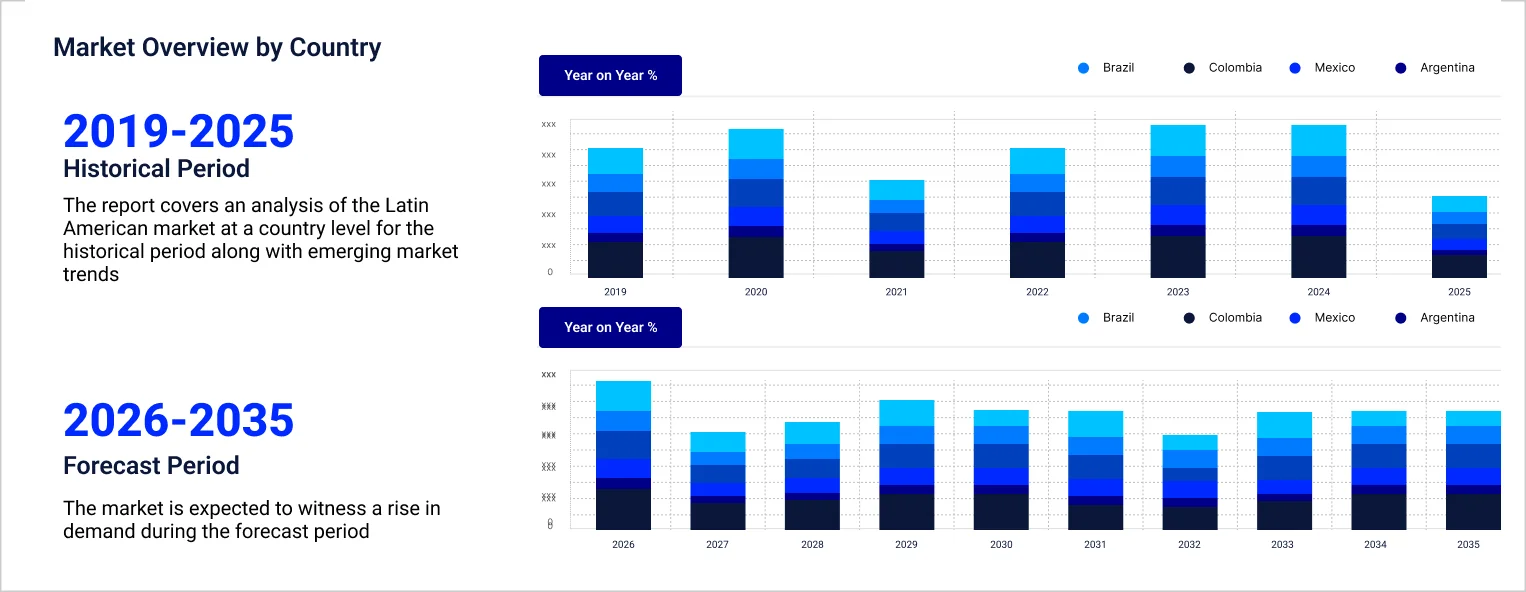
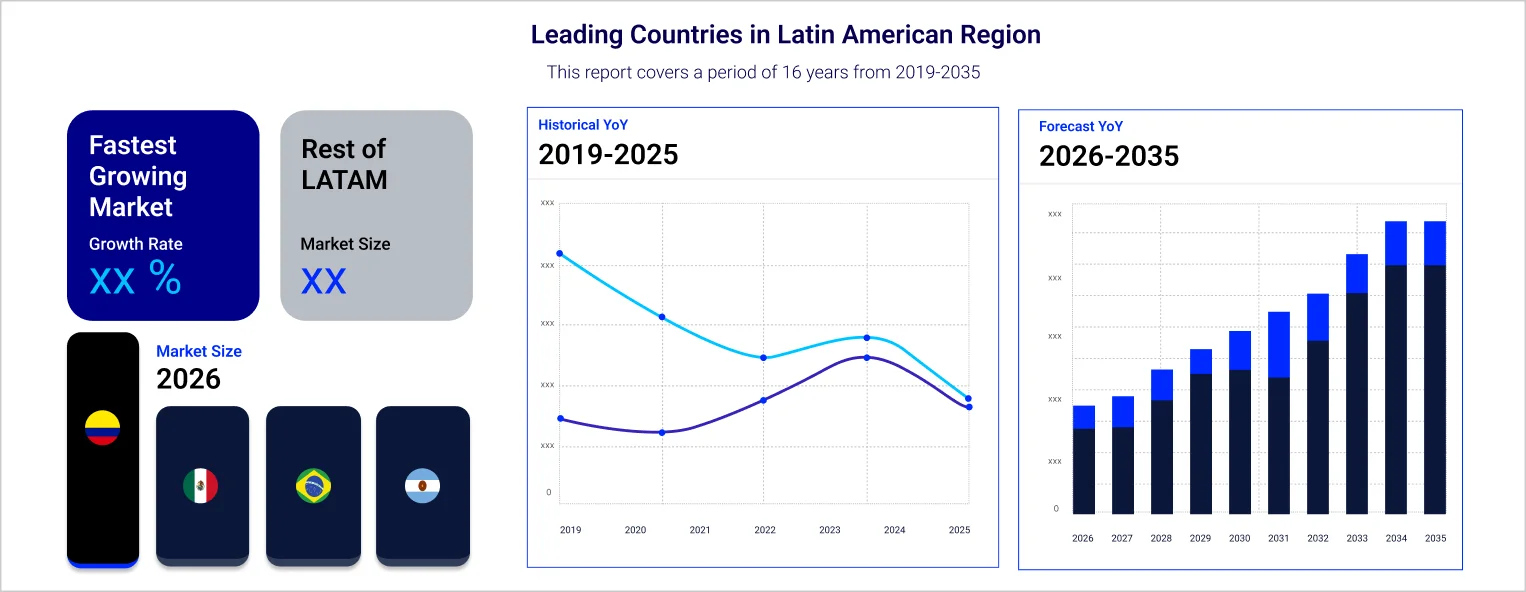
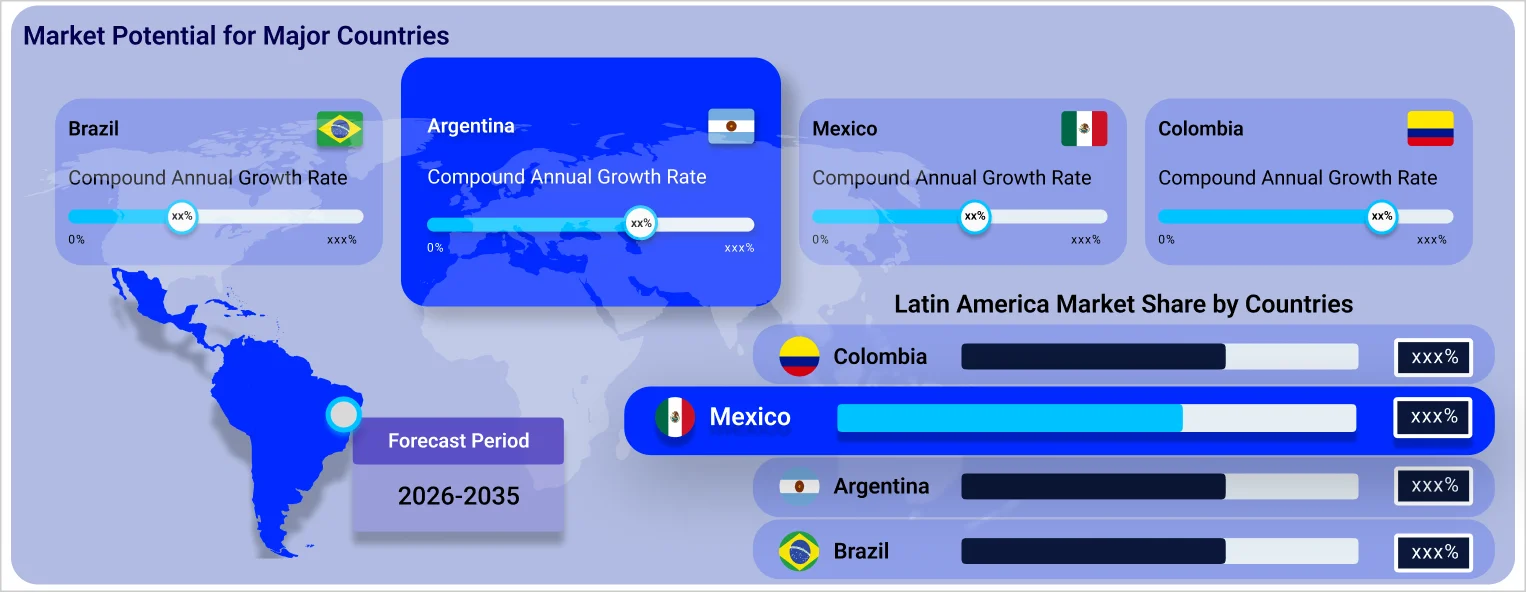
Read more about this report - REQUEST FREE SAMPLE COPY IN PDF
By Country, Brazil Holds the Leading Position in the Market
The corporate gift card market in Brazil is flourishing because of the mature fintech ecosystem and government-backed employee benefit schemes. The "Vale-Cultura" and "Ticket Alimentação" programmes have laid out strong foundations for the widespread acceptance of prepaid value systems. Corporate gift cards are increasingly being used in formal payroll supplements and vendor incentives. Major retailers, banks, and HR tech firms are partnering to deliver integrated card solutions.
|
CAGR 2026-2035 - Market by |
Country |
|
Mexico |
13.6% |
|
Brazil |
12.6% |
|
Argentina |
XX% |
|
Colombia |
XX% |
|
Chile |
XX% |
|
Others |
XX% |
Mexico is emerging as the fastest-growing corporate gift card market, fuelled by regulatory formalisation and SME digitisation. The market is expected to grow at a CAGR of 13.6% over the forecast period. Firms integrate gift cards into employee benefits and promotions owing to their flexibility and ease of administration. With SAT recognising digital gift cards as tax-deductible, uptake among businesses, particularly in Tier-2 cities, is surging. Fintechs like Broxel and Dapp are rolling out gift card APIs for SMBs and mid-market enterprises, offering rapid setup and payroll integration. Demand is high in sectors like manufacturing, logistics, and contact centres. Local partnerships with retail chains are also expanding merchant networks, making cards more appealing.
The Latin America corporate gift card market players like Sodexo and Edenred are now competing with fintech challengers such as Cuponstar, Pomelo, and Bonusly LATAM. These newer entrants are offering modular APIs, real-time tracking, and ESG-linked merchant filters. These capabilities are highly demanded by procurement and HR teams. Players co-developing country-specific products with local retailers, fintech processors, and ERP vendors are well-positioned for growth during the forecast period. Multi-country capabilities are emerging as a critical competitive factor. Latin America corporate gift card companies operating across Brazil, Mexico, and Chile prefer unified platforms with localised compliance, merchant networks, and analytics dashboards. Players are also exploring partnerships with health tech firms, allowing hybrid gift cards usable for wellness consultations and products.
Founded in 2001, in Pleasanton, California, Blackhawk Network Holdings, Inc. Has become a leader in digital and physical gift card solutions. They offer a large product array, working with major retailers in corporate gifting and loyalty programs in Latin America.
Founded in 2002 in Minnesota, TDS Gift Cards is engaged in offering corporate gifting options through prepaid cards. Specializes in corporate rewards programs tailored to companies in Latin America, thereby enhancing customer loyalty and employee engagement.
Established in 1966, with its headquarters in Issy-les-Moulineaux, France, Sodexo is a worldwide employee benefits leader, encompassing gift cards and vouchers. Corporate rewards for Latin America are tailored solutions that maximize employee satisfaction and engagement throughout the region.
Founded in 1992, InComm Payments is a leading international provider of prepaid card solutions. Their gift cards for business, digital payments, and loyalty solutions are widespread in Latin America, making flexible reward systems for corporations feasible.
*Please note that this is only a partial list; the complete list of key players is available in the full report. Additionally, the list of key players can be customized to better suit your needs.*
Other key players in the market are Cencosud S.A., Alelo Instituição De Pagamento SA, Amazon.co.Inc., and GoGift A/S, among others.
Explore the latest trends shaping the Latin America corporate gift card market 2026-2035 with our in-depth report. Gain strategic insights, future forecasts, and key market developments that can help you stay competitive. Download a free sample report or contact our team for customized consultation on Latin America corporate gift card market trends 2026.


Upto 15% Off
USD
$3999 $3599
$2499 $2249
$4999 $4249
$5999 $5099


*While we strive to always give you current and accurate information, the numbers depicted on the website are indicative and may differ from the actual numbers in the main report. At Expert Market Research, we aim to bring you the latest insights and trends in the market. Using our analyses and forecasts, stakeholders can understand the market dynamics, navigate challenges, and capitalize on opportunities to make data-driven strategic decisions.*
In 2025, the Latin America corporate gift card market reached an approximate value of USD 7.37 Billion.
The market is projected to grow at a CAGR of 12.30% between 2026 and 2035.
The market is estimated to witness healthy growth in the forecast period of 2026-2035 to reach a value of around USD 23.51 Billion by 2035.
Key strategies driving the market include localising merchant networks, embedding ESG features, forging fintech partnerships, simplifying SMB onboarding, and integrating with enterprise software to deepen B2B loyalty and reward ecosystem penetration across Latin America.
The key challenges are lack of cross-country regulatory consistency, low fintech penetration in rural zones, and merchant onboarding.
The major countries in the market are Brazil, Argentina, Mexico, Colombia, Chile, and others.
The various types considered in the market report are open loop and closed loop.
The various forms considered in the market report are physical and virtual.
The end users considered in the Latin America corporate gift cards market report are small and medium businesses, and large enterprises.
The major players in the market are Blackhawk Network Holdings, Inc., TDS Gift Cards, Sodexo, InComm Payments, Cencosud S.A., Alelo Instituição De Pagamento SA, Amazon.co.Inc., and GoGift A/S, among others.
Explore our key highlights of the report and gain a concise overview of key findings, trends, and actionable insights that will empower your strategic decisions.
| REPORT FEATURES | DETAILS |
| Base Year | 2025 |
| Historical Period | 2019-2025 |
| Forecast Period | 2026-2035 |
| Scope of the Report |
Historical and Forecast Trends, Industry Drivers and Constraints, Historical and Forecast Market Analysis by Segment:
|
| Breakup by Type |
|
| Breakup by Form |
|
| Breakup by Merchant Type |
|
| Breakup by End User |
|
| Breakup by Region |
|
| Market Dynamics |
|
| Competitive Landscape |
|
| Companies Covered |
|
Single User License
One User
USD 3,999
USD 3,599
tax inclusive*
Datasheet
One User
USD 2,499
USD 2,249
tax inclusive*
Five User License
Five User
USD 4,999
USD 4,249
tax inclusive*
Corporate License
Unlimited Users
USD 5,999
USD 5,099
tax inclusive*
*Please note that the prices mentioned below are starting prices for each bundle type. Kindly contact our team for further details.*
Flash Bundle
Small Business Bundle
Growth Bundle
Enterprise Bundle
*Please note that the prices mentioned below are starting prices for each bundle type. Kindly contact our team for further details.*
Flash Bundle
Number of Reports: 3
20%
tax inclusive*
Small Business Bundle
Number of Reports: 5
25%
tax inclusive*
Growth Bundle
Number of Reports: 8
30%
tax inclusive*
Enterprise Bundle
Number of Reports: 10
35%
tax inclusive*
How To Order

Select License Type
Choose the right license for your needs and access rights.

Click on ‘Buy Now’
Add the report to your cart with one click and proceed to register.

Select Mode of Payment
Choose a payment option for a secure checkout. You will be redirected accordingly.
Strategic Solutions for Informed Decision-Making
Gain insights to stay ahead and seize opportunities.

Get insights & trends for a competitive edge.

Track prices with detailed trend reports.

Analyse trade data for supply chain insights.

Leverage cost reports for smart savings

Enhance supply chain with partnerships.

Connect For More Information
Our expert team of analysts will offer full support and resolve any queries regarding the report, before and after the purchase.
Our expert team of analysts will offer full support and resolve any queries regarding the report, before and after the purchase.
We employ meticulous research methods, blending advanced analytics and expert insights to deliver accurate, actionable industry intelligence, staying ahead of competitors.
Our skilled analysts offer unparalleled competitive advantage with detailed insights on current and emerging markets, ensuring your strategic edge.
We offer an in-depth yet simplified presentation of industry insights and analysis to meet your specific requirements effectively.




