

Consumer Insights
Uncover trends and behaviors shaping consumer choices today
Procurement Insights
Optimize your sourcing strategy with key market data
Industry Stats
Stay ahead with the latest trends and market analysis.
The Latin America veterinary vaccines market attained a value of USD 426.82 Million in 2025 and is projected to expand at a CAGR of 6.50% through 2035. The market is further expected to achieve USD 801.20 Million by 2035. Growing adoption of farm-level diagnostics and real-time disease monitoring tools is enabling manufacturers to develop faster, strain-specific vaccines, creating strong demand for agile biologics production and customized immunization programs across the region.
The market growth is also supported by a rising push toward advanced immunization platforms and localized biologics manufacturing. In January 2021, Boehringer Ingelheim expanded its biologics footprint in Mexico with a production upgrade centered on recombinant antigen technologies. This move aligns with the firm’s strategy to enhance responsiveness to regional livestock diseases, particularly those affecting cattle and poultry. According to the Latin America veterinary vaccines market analysis, livestock losses tied to preventable diseases cost economies nearly USD 1 billion annually, underscoring the urgent need for modern vaccination programs that reduce mortality while strengthening export competitiveness.
Manufacturers are shifting toward differentiated, high-performance vaccine platforms such as thermostable formulations for remote farming zones, mRNA-based prototypes for swine viruses, and rapid-deployment autogenous vaccines tailored for farm clusters. In June 2025, international experts visited the Argentine pharmaceutical company Sinergium Biotech to support the development of the messenger RNA (mRNA)-based vaccine against influenza A(H5N1). Companies like Zoetis and Ceva are working closely with national regulators to accelerate approval pathways for multi-strain solutions that address the region’s diverse disease ecosystems. This Latin America veterinary vaccines market trend is becoming more crucial as climate-linked disease migration continues to reshape risk patterns for farmers.
Compound Annual Growth Rate
6.5%
Value in USD Million
2026-2035
Bioveta and Seprogan officially introduced new vaccine lines for dogs (Biocan) and cats (Biofel) in Venezuela. This development expands product availability in Venezuela, stimulating stronger regional demand for veterinary immunization.
Ceva Animal Health (Ceva) announced its newest investment in European vaccine production with the establishment of a new site in Hungary, enhancing the capacity of Ceva Phylaxia. Such a facility boosts global supply capacity, ensuring more reliable vaccine access for growing Latin America veterinary vaccines market.
Merck Animal Health revealed the broadened USDA-approved NOBIVAC NXT vaccine platform to incorporate a top-tier solution for safeguarding cats against one of the most prevalent feline infectious illnesses, feline leukemia virus (FeLV). This improves feline disease protection, supporting higher vaccination adoption and long-term market expansion in Latin America.
HIPRA held the introduction of HIPRABOVIS SOMNI/Lkt (vaccine for pneumonia from Histophilus somni and Mannheimia haemolytica leukotoxoid) and HIPRABOVIS BALANCE (vaccine for PI3, BVD, and BRS viruses) in Medellín, Colombia. Such a development enhances livestock disease prevention, driving greater vaccine uptake across Latin America’s animal health sector.
Regional vaccine production upgrades such as new fill-finish lines, recombinant antigen capacity and pilot biologics plants are shortening lead times for outbreak response. Local manufacturing lets firms supply autogenous and multi-strain vaccines faster than relying on distant plants, which is critical for livestock exporters that need certified, traceable lots, influencing the overall Latin America veterinary vaccines market dynamics. For example, MSD Animal Health offers a vaccine AQUAVAC Strep Sa-Si, to protect against streptococcosis in fish in Latin America. Governments are increasingly funding local capacity as part of national animal-health resilience programs, reducing dependence on imports during crisis windows.
Thermostable formulations and lyophilized presentations are gaining traction because many Latin American production systems operate in regions with intermittent refrigeration. New thermostable vaccine platforms reduce wastage, simplify logistics for smallholder farms, and enable mass vaccination drives in remote zones. In May 2025, AmacaThera announced it has signed a binding evaluation and option agreement with Merck Animal Health to develop long-acting formulations, for use in animal health, catering to the surging demand in the Latin America veterinary vaccines market. This technical shift is attractive to national veterinary services and agribusiness integrators who run centralized campaigns across vast geographies.
Demand for companion animal vaccines is accelerating in urban Latin America as pet ownership and veterinary service spend increase. Owners are paying for advanced canine and feline immunizations including multivalent, recombinant medications and boosters tied to wellness subscriptions. For instance, a new filling line has been installed in Carros in December 2023, by Virbac Corporate. This trend in the Latin America veterinary vaccines market is encouraging animal health companies to launch region-targeted companion portfolios, forge clinic-level partnerships, and offer bundled preventive-care programs.
Adoption of herd-level diagnostics, sensor telemetry, and national disease-reporting systems is enabling precision vaccination strategies. Digital surveillance tools help veterinary services identify hot-spots, tailor vaccine mixes, and schedule booster campaigns for maximum impact. In August 2024, the Ministry of Agriculture and Rural Development of Mexico launched a new Veterinary Pharmacovigilance System to enhance the safety, quality, and efficacy of animal medications. This analytics-driven procurement is resulting in more strategic, outbreak-aligned procurement, increasing demand for flexible, smaller-batch vaccines and autogenous solutions, creating new Latin America veterinary vaccines market opportunities.
Regulators in several Latin American countries are moving toward harmonized dossiers and conditional approvals for veterinary biologics, especially during epizootics. Streamlined approval pathways for well-characterized platforms and emergency authorizations are encouraging manufacturers to localize trials and regulatory submissions. In June 2024, MSD Animal Health announced the USDA approval of NOBIVAC NXT Canine Flu H3N2, a next-level solution to help safeguard dogs against the ongoing threat of canine influenza, widening the chances of Latin America veterinary vaccines market expansion. This regulatory modernization reduces commercialization friction for multiplex vaccines and novel modalities (recombinant, vectored, mRNA prototypes), allowing suppliers to deploy targeted products more rapidly and support large-scale animal-health programs.
Read more about this report - REQUEST FREE SAMPLE COPY IN PDF
The EMR’s report titled “Latin America Veterinary Vaccines Market Report and Forecast 2026-2035” offers a detailed analysis of the market based on the following segments:
Market Breakup by Vaccine Type
Key Insight: Currently, livestock vaccines account for the largest share of the Latin America veterinary vaccines market revenue, powered by export importance. Companion animal vaccines are preimmunizing and growing popular in urban markets, while aquaculture and equine remain niche but technical. Each product category requires different regulatory dossiers, cold-chain logistics, and supporting services, all mass vaccination rigs for poultry, clinic-based boosters for pets, and farm-level autogenous solutions for localized outbreaks.
Market Breakup by Route of Administration
Key Insight: Routes as considered in the Latin America veterinary vaccines market report include parenteral, oral and other delivery routes (aerosol, intranasal). Parenteral dominates for precise dosing across species. Oral vaccines are becoming more popular for mass administration and remote coverage, while aerosol/intranasal are niche for respiratory pathogens and wildlife control. Each route demands different formulation stability, delivery devices, and user training. Suppliers pairing vaccines with compatible administration hardware and field training packages are reducing adoption friction and gaining preferential procurement positioning with farm integrators and veterinary networks.
Market Breakup by Distribution Channels
Key Insight: Distribution channels include veterinary hospitals and clinics, pharmacies, online platforms and specialized distributors. Clinics dominate in terms of the Latin America veterinary vaccines market share because of professional administration and cold-chain control, while pharmacies support retail access in urban areas. Online channels are expanding fast for both clinic resupply and direct farm orders.
Market Breakup by Region
Key Insight: Regions covered in the market report include Brazil, Mexico, Argentina, Peru, Colombia, Uruguay, Chile, Ecuador, Costa Rica, Dominican Republic and others. Brazil boosts overall veterinary vaccines demand in Latin America and leads for scale and agribusiness integration. Growth in the Mexican market is powered by regulatory modernization and capacity investments. Argentina and Chile are important for specific livestock sectors. Colombia, Peru and Central American markets are expanding with targeted government programs. Each country imposes different regulatory, logistical and surveillance requirements, so suppliers are tailoring registration strategies, packaging formats, and cold-chain partnerships to local conditions.

Read more about this report - REQUEST FREE SAMPLE COPY IN PDF
By vaccine type, livestock vaccines account for the largest share of the market because of scale, export value, and herd economics
Livestock vaccines (cattle, swine, poultry) dominate the market because they protect high-value production systems and support export certifications. Production flocks and feedlot operations demand multi-strain, high-volume presentations, often parenteral or mass-spray formulations, backed by robust QA and traceability. In October 2023, Kemin Biologics partnered with Ilender to launch the MEFLUVAC H5 PLUS 8 vaccine to empower the Peruvian poultry industry. Vaccine makers are prioritizing bivalent and polyvalent options that reduce handling and improve compliance during mass campaigns. Agribusiness integrators and export processors prefer suppliers that can deliver validated cold-chain documentation and batch-level traceability, enabling fast regulatory inspections at ports.
Companion animal vaccines register accelerated growth in the Latin America veterinary vaccines market owing to rising pet ownership, urban veterinary services growth, and premium wellness programs. Pet owners are increasingly purchasing advanced recombinant and subunit vaccines that promise improved safety and fewer adverse events. Veterinary clinics and chains are bundling vaccines into subscription wellness plans, stabilizing demand and enabling predictable procurement cycles for manufacturers.
By route of administration, parenteral vaccines significantly boost the market given established efficacy and broad species use
Parenteral vaccines including injectables secure the dominant share of the market because they provide reliable immunogenicity and are widely accepted across species. Injectable presentations allow precise dosing and are preferred for high-value livestock and individual companion animals. Manufacturers are formulating parenteral vaccines with improved adjuvants and lower reactogenicity to suit regulatory and welfare standards. For example, in September 2022, Boehringer Ingelheim Animal Health introduced Fencovis, a new calf sour vaccine with a prevention claim. For herd use, parenteral multivalent injections reduce handling events versus multiple monovalent shots.
Oral vaccines are growing fast because they simplify mass administration, especially for extensive poultry flocks and wildlife reservoirs, and reduce labor costs for large farms, accelerating demand in the Latin America veterinary vaccines market. Thermostable oral baits and drinking-water formulations are gaining traction in regions with limited veterinary coverage. Developers are focusing on microencapsulation, taste masking, and adjuvant systems that preserve antigenicity through the gut.
By distribution channel, veterinary hospitals and clinics secure majority of the market share due to professional administration and cold storage
Veterinary hospitals and clinics dominate distribution because they provide professional administration, maintain cold-chain integrity, and offer client education. Clinics are primary launch partners for novel companion animal vaccines, supporting post-vaccine surveillance and compliance. Chain clinics and large ambulatory services also bulk-procure livestock and equine products for clinical services, bridging commercial manufacturers to end users, boosting the Latin America veterinary vaccines market expansion.
Online channels are the fastest-growing distribution route, particularly for companion animal vaccine orders, farm-level ordering and clinic resupply logistics. E-commerce platforms and B2B portals are streamlining procurement, standardizing cold-chain pickup windows, and enabling subscription reorders. For rural producers, online ordering coupled with scheduled clinic delivery fills service gaps and optimizes inventory.
By region, Brazil dominates the market for its large scalability
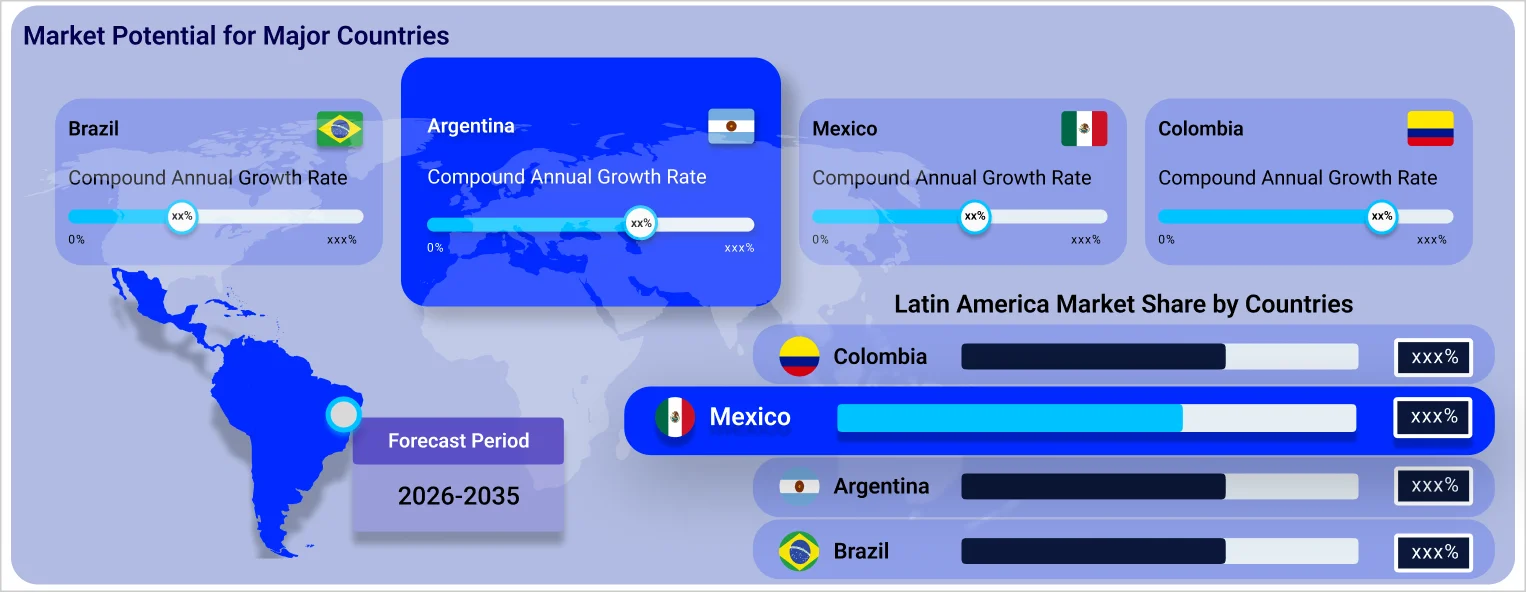
Brazil dominates due to its enormous livestock sector which includes beef, poultry, pork, integrated agribusiness supply chains and strong local biologics capacity. Large domestic vaccine needs combined with export sensitivity push manufacturers to maintain local inventory and robust traceability systems. Brazil’s federative structure also funds state-level vaccination drives and surveillance programs, creating predictable procurement lanes for major suppliers.
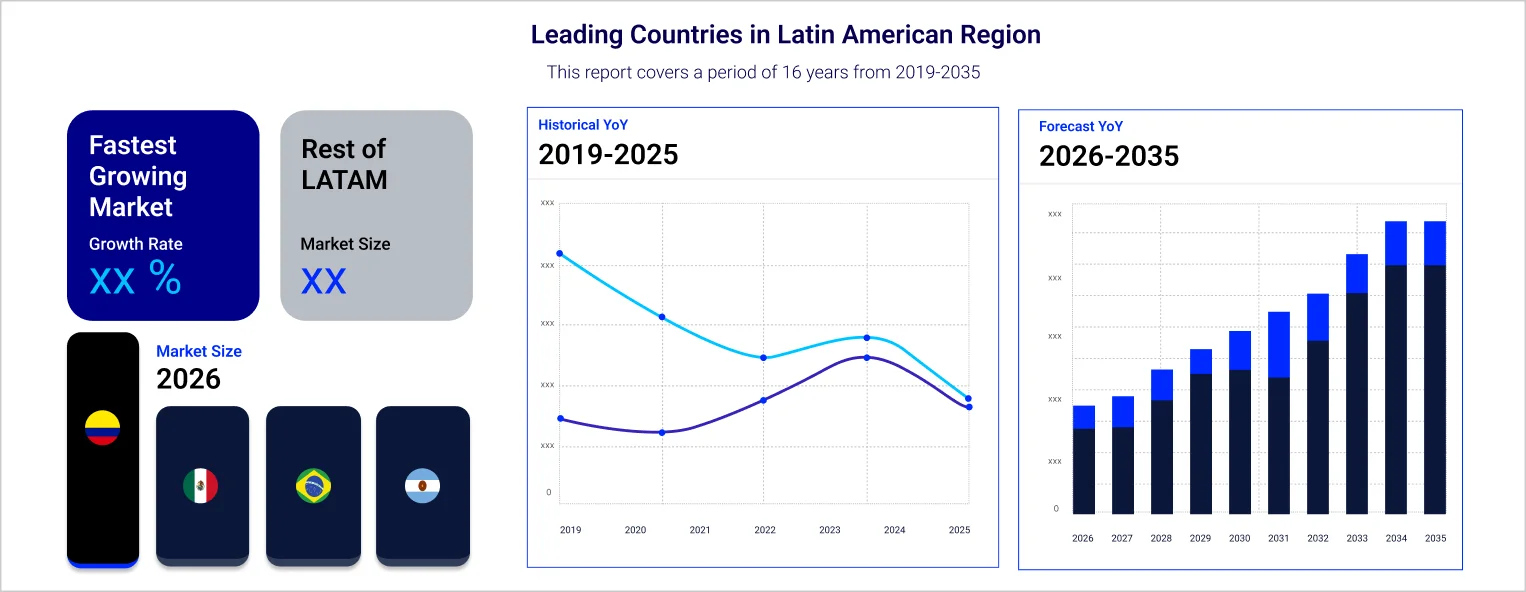
Mexico represents the fastest-growing Latin America veterinary vaccines market thanks to capacity expansions, government investment in animal-health infrastructure, and rising companion-animal veterinary services. The country’s strategic position and trade ties make it a target for manufacturers seeking export-ready production close to North American markets. Mexico’s authorities have been modernizing regulatory pathways and boosting cold-chain logistics, facilitating faster product registrations and rollouts.
Growth in the market is being underpinned by rising livestock biosecurity needs, companion-animal premiumization, and governments funding surveillance and mass-vaccination campaigns. Boehringer Ingelheim and other Latin America veterinary vaccines market players are expanding regional partnerships and tech transfer to shorten lead times for outbreak response, while diagnostics and digital herd-health platforms are creating recurring service revenues for vaccine suppliers.
Latin America veterinary vaccine companies are finding opportunities in thermostable formulations for remote farms, autogenous and small-batch biologics for cluster outbreaks, and bundled vaccine-plus-surveillance contracts. The competitive edge goes to firms combining local manufacturing, expedited regulatory know-how, and field analytics that de-risk supply for large agribusiness buyers. Market momentum is supported by steady demand projections and rising investment across the animal-health value chain.
Boehringer Ingelheim International GmbH, established in 1885 and headquartered in Ingelheim, Germany, is strengthening animal-health capabilities across Latin America through local partnerships, tech transfers, and expanded manufacturing investments. The company is focusing on recombinant and thermostable platforms for livestock and companion animals, plus integrated disease-surveillance services that increase product stickiness.
Elanco Animal Health Inc., founded in 1954 and headquartered in the United States, is prioritizing strategic alliances and commercial partnerships across Latin America to accelerate access to novel vaccines and parasite controls. Elanco is engaging with biotech partners to commercialize targeted vaccines and is expanding veterinary-service offerings that bundle vaccination with herd-health diagnostics.
Zoetis Services LLC, established in 1952 and headquartered in Parsippany, New Jersey, is a leading provider of veterinary vaccines and diagnostics, investing in manufacturing resilience and digital tools. Zoetis is expanding distribution and diagnostics capabilities to support traceable, high-quality vaccine supply across Latin America.
Biogénesis Bagó SA, founded in 1934 and headquartered in Buenos Aires, Argentina, is the region’s largest native vaccine producer with new manufacturing capacity in Brazil and multiple R&D collaborations. The company focuses on autogenous vaccines, polyvalent livestock products and regional disease portfolios, offering tight cold-chain logistics and local regulatory expertise.
*Please note that this is only a partial list; the complete list of key players is available in the full report. Additionally, the list of key players can be customized to better suit your needs.*
Other key players in the market report include Benten Biotech SRL, Ourofino Animal Health, VETANCO S.A., SANPHAR, Compañía Cibeles SA, König S.A, Laboratorios Andoci, S.A., and others.
Unlock the latest insights with our Latin America veterinary vaccines market trends 2026 report. Discover regional growth patterns, consumer preferences, and key industry players. Stay ahead of competition with trusted data and expert analysis. Download your free sample report today and drive informed decisions in the market.
Latin America Veterinary Cold Chain Infrastructure
Latin America Aquaculture Health Solutions
Latin America Pet Preventive Care Opportunities


Upto 15% Off
USD
$2499 $2249
$3999 $3599
$4999 $4249
$5999 $5099


*While we strive to always give you current and accurate information, the numbers depicted on the website are indicative and may differ from the actual numbers in the main report. At Expert Market Research, we aim to bring you the latest insights and trends in the market. Using our analyses and forecasts, stakeholders can understand the market dynamics, navigate challenges, and capitalize on opportunities to make data-driven strategic decisions.*
In 2025, the market reached an approximate value of USD 426.82 Million.
The market is projected to grow at a CAGR of 6.50% between 2026 and 2035.
Manufacturers are localizing production, are launching thermostable formulations, are bundling vaccines with diagnostics, are building clinic partnerships, and are pursuing regulatory harmonization to secure long-term institutional contracts.
The market size for veterinary vaccines in Latin America is expected to reach a value of more than USD 801.20 Million in 2035.
The key trends of the market are technological advancements, increasing awareness regarding importance of veterinary vaccines, and development of recombinant vaccines.
The key players in the market include Boehringer Ingelheim International GmbH, Elanco Animal Health Inc., Zoetis Services LLC, Biogenesis Bago SA, Benten Biotech SRL, Ourofino Animal Health, VETANCO S.A., SANPHAR, Compañía Cibeles SA, König S.A, Laboratorios Andoci, S.A., and several other regional brands.
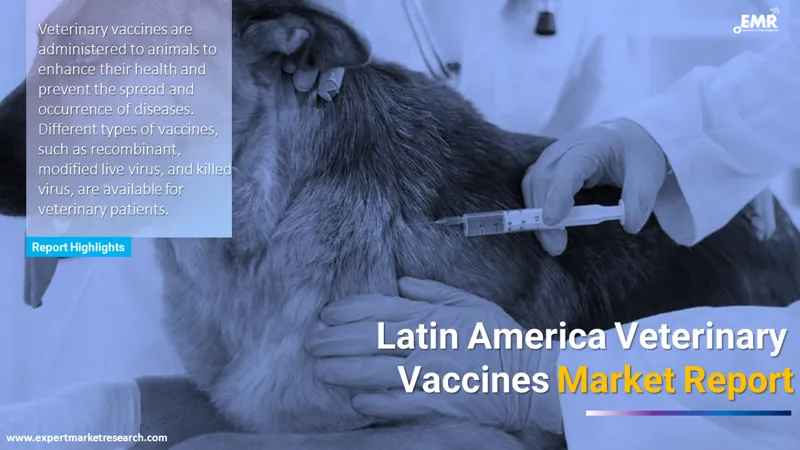
Veterinary vaccines are prescribed and given to animals to prevent the occurrence and transmission of diseases.
The different types of vaccines available for veterinary patients are recombinant, modified live virus, and killed virus.
Latin America veterinary vaccines market is segmented based on vaccine type, route of administration, distribution channel, and country.
Vaccination to animals can also be administered through an injection or given through their food.
Cold-chain weaknesses, fragmented procurement, regulatory variability, price sensitivity among smallholders, and the need for quicker local approvals are constraining scale and timely vaccine deployment across the region.
Explore our key highlights of the report and gain a concise overview of key findings, trends, and actionable insights that will empower your strategic decisions.
| REPORT FEATURES | DETAILS |
| Base Year | 2025 |
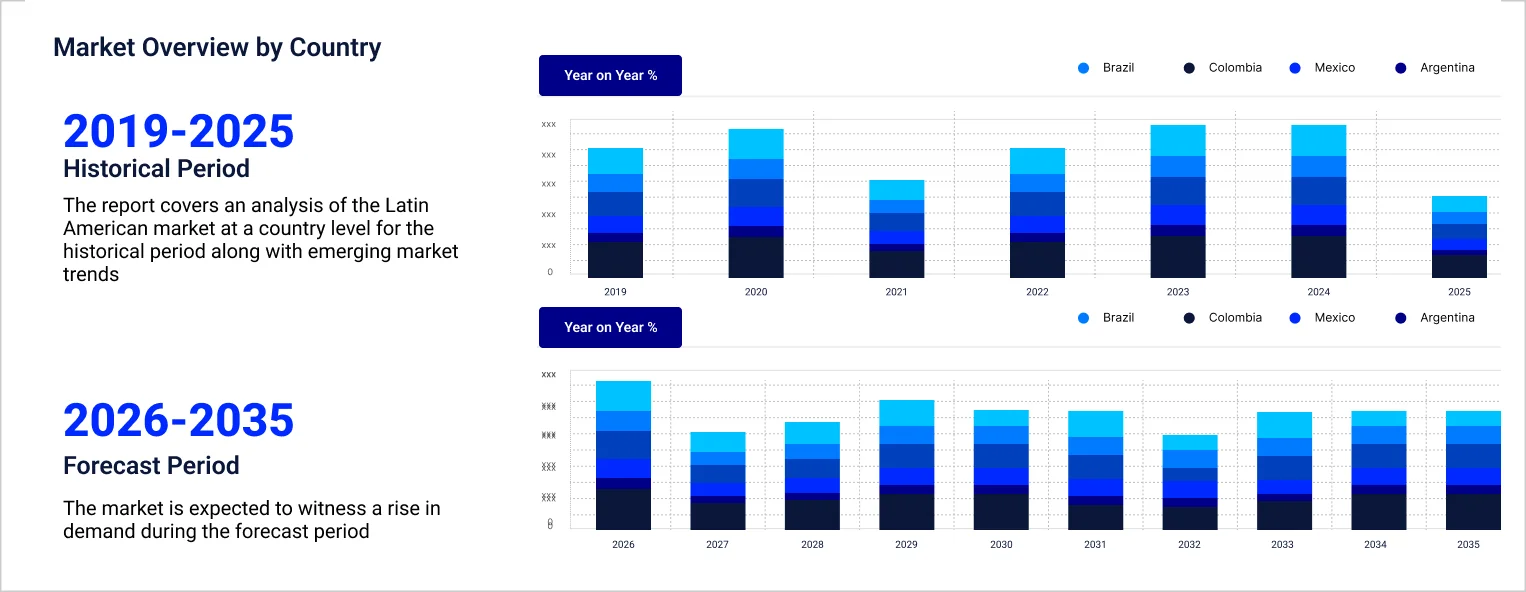
| Historical Period | 2019-2025 |
| Forecast Period | 2026-2035 |
| Scope of the Report |
Historical and Forecast Trends, Industry Drivers and Constraints, Historical and Forecast Market Analysis by Segment:
|
| Breakup by Vaccine Type |
|
| Breakup by Route of Administration |
|
| Breakup by Distribution Channels |
|
| Breakup by Region |
|
| Market Dynamics |
|
| Competitive Landscape |
|
| Companies Covered |
|
Datasheet
One User
USD 2,499
USD 2,249
tax inclusive*
Single User License
One User
USD 3,999
USD 3,599
tax inclusive*
Five User License
Five User
USD 4,999
USD 4,249
tax inclusive*
Corporate License
Unlimited Users
USD 5,999
USD 5,099
tax inclusive*
*Please note that the prices mentioned below are starting prices for each bundle type. Kindly contact our team for further details.*
Flash Bundle
Small Business Bundle
Growth Bundle
Enterprise Bundle
*Please note that the prices mentioned below are starting prices for each bundle type. Kindly contact our team for further details.*
Flash Bundle
Number of Reports: 3
20%
tax inclusive*
Small Business Bundle
Number of Reports: 5
25%
tax inclusive*
Growth Bundle
Number of Reports: 8
30%
tax inclusive*
Enterprise Bundle
Number of Reports: 10
35%
tax inclusive*
How To Order

Select License Type
Choose the right license for your needs and access rights.

Click on ‘Buy Now’
Add the report to your cart with one click and proceed to register.

Select Mode of Payment
Choose a payment option for a secure checkout. You will be redirected accordingly.
Strategic Solutions for Informed Decision-Making
Gain insights to stay ahead and seize opportunities.

Get insights & trends for a competitive edge.

Track prices with detailed trend reports.

Analyse trade data for supply chain insights.

Leverage cost reports for smart savings

Enhance supply chain with partnerships.

Connect For More Information
Our expert team of analysts will offer full support and resolve any queries regarding the report, before and after the purchase.
Our expert team of analysts will offer full support and resolve any queries regarding the report, before and after the purchase.
We employ meticulous research methods, blending advanced analytics and expert insights to deliver accurate, actionable industry intelligence, staying ahead of competitors.
Our skilled analysts offer unparalleled competitive advantage with detailed insights on current and emerging markets, ensuring your strategic edge.
We offer an in-depth yet simplified presentation of industry insights and analysis to meet your specific requirements effectively.




