

Consumer Insights
Uncover trends and behaviors shaping consumer choices today
Procurement Insights
Optimize your sourcing strategy with key market data
Industry Stats
Stay ahead with the latest trends and market analysis.
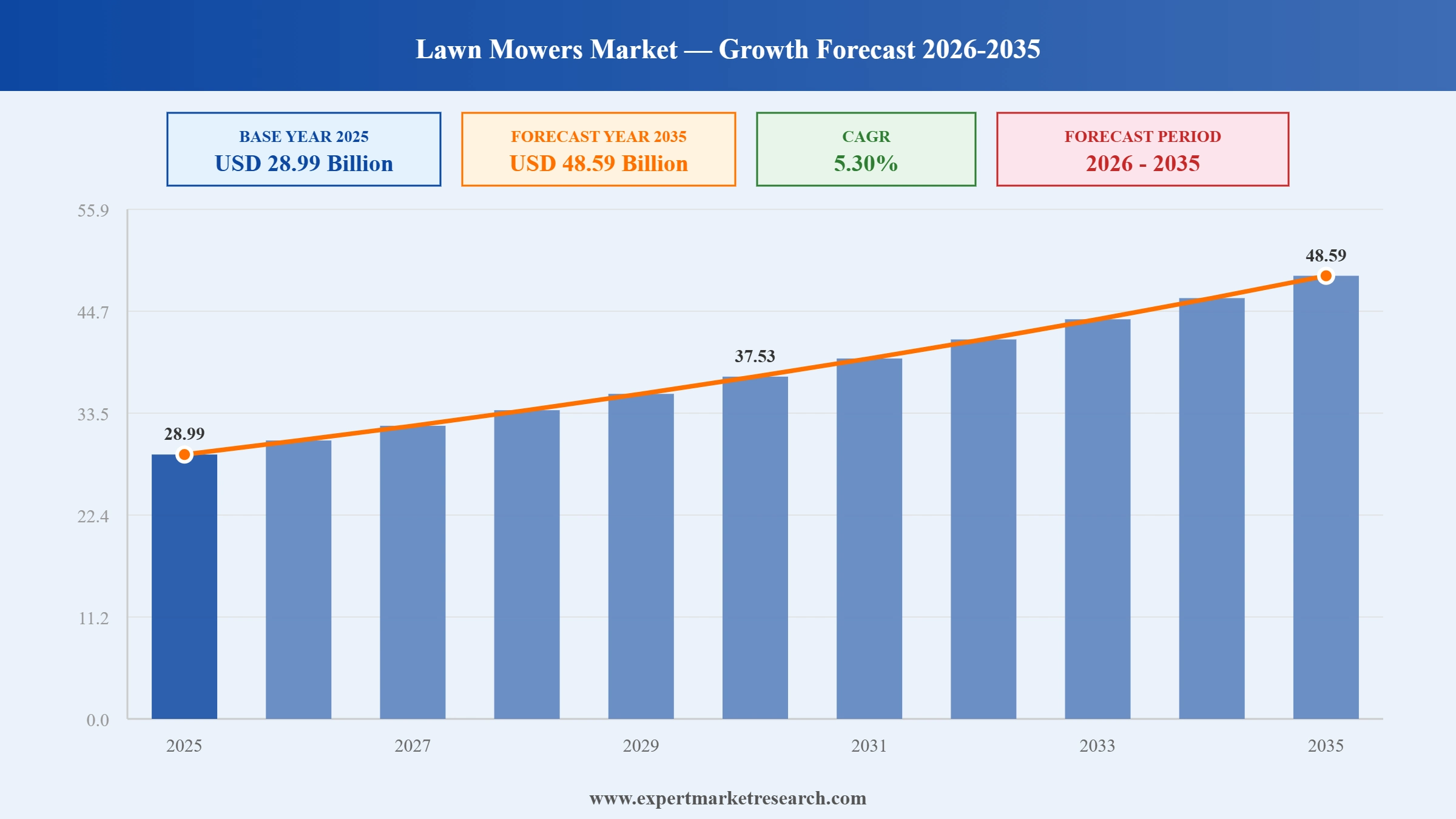
The global lawn mowers market attained a value of USD 28.99 Billion in 2025 and is projected to grow at a CAGR of 5.30% during the forecast period of 2026-2035, reaching USD 48.59 Billion by 2035. This sustained growth reflects the enduring demand for lawn maintenance across residential, commercial, and institutional settings, combined with accelerating product innovation in robotic mowing, battery-electric power systems, and GPS-guided autonomous platforms. The market is undergoing a structural transition as buyers shift from traditional petrol-powered mowers toward low-emission, low-noise, and technology-integrated alternatives aligned with evolving environmental regulations and consumer lifestyle preferences.
A lawn mower is a mechanical device used to cut grass and maintain lawns, gardens, sports fields, parks, golf courses, and agricultural land to a uniform and desired height. Products range from compact hand-pushed rotary mowers for residential use to large-scale ride-on, zero-turn, and robotic systems deployed in commercial landscaping, municipal grounds management, and agricultural operations. The diversity of product types, power sources, and operating scales makes the lawn mowers market one of the most product-varied segments within the global outdoor power equipment industry, with significant differentiation between consumer and professional-grade equipment. North America is the dominant regional market for lawn mowers, supported by high residential lawn ownership rates, a deeply embedded landscaping culture, widespread commercial services, and strong brand presence from leading manufacturers including Deere and Company, The Toro Company, and Husqvarna AB. Europe is the second-largest market, with growing adoption of battery-electric and robotic technologies driven by environmental regulations and urban noise ordinances. Asia Pacific is the fastest-growing region, with rising disposable incomes, expanding residential construction, and growing lawn care awareness driving demand in China, India, Australia, and Japan.
Read more about this report - REQUEST FREE SAMPLE COPY IN PDF
The lawn mowers market encompasses the global commercial ecosystem of manufacturers, distributors, retailers, and service providers involved in the design, production, sale, and maintenance of lawn mowing equipment across residential, commercial, institutional, and agricultural end-user segments. It spans a broad product spectrum from manual reel mowers and handheld trimmers to self-propelled walk-behind mowers, riding mowers, zero-turn mowers, and fully autonomous robotic systems.
The market is closely linked to adjacent outdoor power equipment segments including leaf blowers, hedge trimmers, string trimmers, and pressure washers, with leading manufacturers offering integrated product ecosystems sharing battery platforms and retail distribution channels. Key performance metrics include cutting width, engine power or battery capacity, cutting height range, drive system type, mulching capability, grass collection volume, noise level, and battery run time. Technological innovation across robotics, GPS navigation, AI, and battery energy density is rapidly reshaping the competitive landscape, with product differentiation increasingly driven by software and connectivity rather than purely mechanical performance.
The sustained expansion of professional landscaping services, driven by rising commercial property development, growing hospitality infrastructure, and an increasing share of residential households outsourcing lawn care, is a foundational market driver. According to the US Bureau of Labor Statistics, the landscaping services industry in the United States employs over 1 million workers and continues to grow, generating sustained demand for commercial-grade walk-behind, riding, and zero-turn equipment. Growing aesthetic consciousness among residential homeowners, amplified by social media gardening content, sustains replacement and upgrade demand across the residential segment.
Robotic lawn mowers are the fastest-growing product category, expanding at a CAGR of 13.10% through 2035. These autonomous, GPS or wire-guided devices operate without operator attendance, reducing labour input and delivering consistent cutting quality across residential gardens, commercial campuses, and sports facilities. Rapid improvement in navigation technology, battery energy density, and mobile app integration has reduced the price premium of robotic mowers while simultaneously expanding the addressable commercial application range. Leading manufacturers including Husqvarna (Automower), Honda, and Bosch are investing significantly in robotic platform development.
Read more about this report - REQUEST FREE SAMPLE COPY IN PDF
Environmental regulations targeting outdoor power equipment emissions are creating structural demand for battery-electric lawn mower alternatives. The California Air Resources Board (CARB) ban on new gas-powered small off-road engine sales, effective January 2024, is the most significant near-term regulatory driver, with similar measures under consideration across multiple US states and European jurisdictions. Leading brands including Greenworks, EGO, and Ryobi offer battery-powered mowers that increasingly match the run-time, power, and cutting performance of equivalent petrol models.
Commercial end-users including sports clubs, golf courses, municipal parks, educational campuses, and corporate facilities represent a high-value and growing demand segment for professional-grade riding, zero-turn, and autonomous mowing systems. The global expansion of golf course infrastructure, particularly in Asia Pacific and the Middle East, creates sustained demand for premium turf management equipment. Growing investment in public green spaces across European and Asian cities and professional sports infrastructure development further expands the addressable commercial market.
The structural shift to hybrid and remote working has increased time spent at home and created a sustained uplift in residential gardening and DIY home improvement activity, driving both initial mower purchases from first-time homeowners and trading-up behaviour among existing owners seeking more capable or convenient models. The rise of gardening content on social media platforms amplifies consumer aspiration for well-maintained outdoor spaces, sustaining demand across income brackets.
The market is experiencing a fundamental shift toward autonomous operation, with robotic mowers progressing from a premium niche to a mainstream product category. Advanced models incorporate cellular connectivity, AI-powered lawn mapping, obstacle recognition, and over-the-air software updates. Commercial robotic mowing platforms are emerging for large-scale sports fields, commercial campuses, and road verges, reducing labour costs and improving mowing frequency in commercial settings.
The transition from petrol to battery-electric is the most significant near-term structural trend. Improvements in lithium-ion energy density, charging speed, and platform compatibility are removing the performance barriers that limited battery-electric adoption to small residential gardens. Major battery platform alliances including Husqvarna BLi and the STIGA System enable cross-product battery compatibility that reduces the total cost of transitioning an entire outdoor power equipment fleet to battery operation.
Digital connectivity is being integrated into consumer and commercial mower products, enabling GPS-guided boundary mapping without physical wire, real-time monitoring via mobile apps, theft detection, predictive maintenance alerts, and fleet management dashboards for commercial operators. Connected features represent a growing source of value differentiation and recurring software revenue for manufacturers, while enabling service-based business models where commercial customers subscribe to automated mowing services.
Growing environmental awareness is driving adoption of mulching mowers that return finely chopped grass clippings as natural slow-release fertilizer. Mulching reduces green waste while improving soil health and reducing synthetic fertiliser dependence. Manufacturers are increasingly offering mulching capability as standard across product ranges, and both residential and commercial buyers in European markets are factoring sustainability characteristics into purchasing decisions.
The agricultural mower segment is experiencing innovation in autonomous and semi-autonomous systems for orchard management, vineyard row maintenance, road verge mowing, and grassland management. Agricultural robotic mowers are being adapted for precision vegetation management applications, creating a growing adjacent market to the traditional consumer and commercial segments. GPS-guided precision mowing combined with vegetation sensing technology enables more targeted and resource-efficient grass management in agricultural and infrastructure settings.
The global lawn mowers market faces operational and structural challenges reshaping competitive dynamics across consumer and professional segments. Supply chain disruptions affecting steel, aluminium, lithium-ion battery cells, and semiconductor components have elevated production costs and extended lead times, compressing margins across the supply chain and creating periodic inventory shortfalls at retail level. The seasonal concentration of demand particularly in North American and European residential markets where the majority of purchases occur in spring and early summer creates significant working capital and logistics challenges for manufacturers, distributors, and retailers. Safety regulatory compliance requirements, particularly blade-brake and rollover protection standards imposed by the CPSC and European safety bodies, are adding product engineering costs that disproportionately affect smaller manufacturers with limited R&D investment capacity.
Read more about this report - REQUEST FREE SAMPLE COPY IN PDF
Structural restraints moderate the pace of market expansion. The high upfront cost of robotic and battery-electric mowers relative to comparable petrol models creates an adoption barrier for price-sensitive consumer segments, limiting the near-term addressable market for the highest-growth product categories despite their lower total cost of ownership. Urbanisation trends, while driving professional landscaping demand, simultaneously reduce the average residential plot size in densely developed urban markets, limiting demand for larger riding and zero-turn mowers. In emerging markets across Asia, Latin America, and Africa, low awareness of autonomous and precision mowing solutions combined with limited after-sales service infrastructure constrains adoption of premium products. Market maturity in North America and Western Europe means a significant proportion of unit sales represents replacement demand, moderating volume growth despite sustained revenue growth from premiumisation.
Despite these headwinds, the global lawn mowers market presents compelling growth opportunities across product, technology, and geography. Robotic lawn mowers, growing at 13.10% CAGR, represent the most significant opportunity, with autonomous mowing transitioning from a residential novelty to a commercial services platform enabling landscaping companies to manage larger portfolios with reduced labour intensity. Battery-electric adoption will accelerate through regulatory tailwinds as California-style restrictions expand to additional US states and European jurisdictions, creating mandatory upgrade demand driving both volume and revenue growth. Emerging markets across Asia Pacific and Latin America including India, China, Australia, and Brazil represent structurally underpenetrated geographies where rising middle-class incomes, expanding residential construction, and growing commercial landscaping services create conditions for sustained development through the forecast period. The full Expert Market Research Lawn Mowers Market Report and Forecast 2025-2035 provides granular analysis across product type, power source, application, size, and region to support strategic decisions for manufacturers, investors, distributors, and market entrants.
The EMR’s report titled “Lawn Mowers Market Report and Forecast 2026-2035” offers a detailed analysis of the market based on the following segments:
Market Breakup by Product
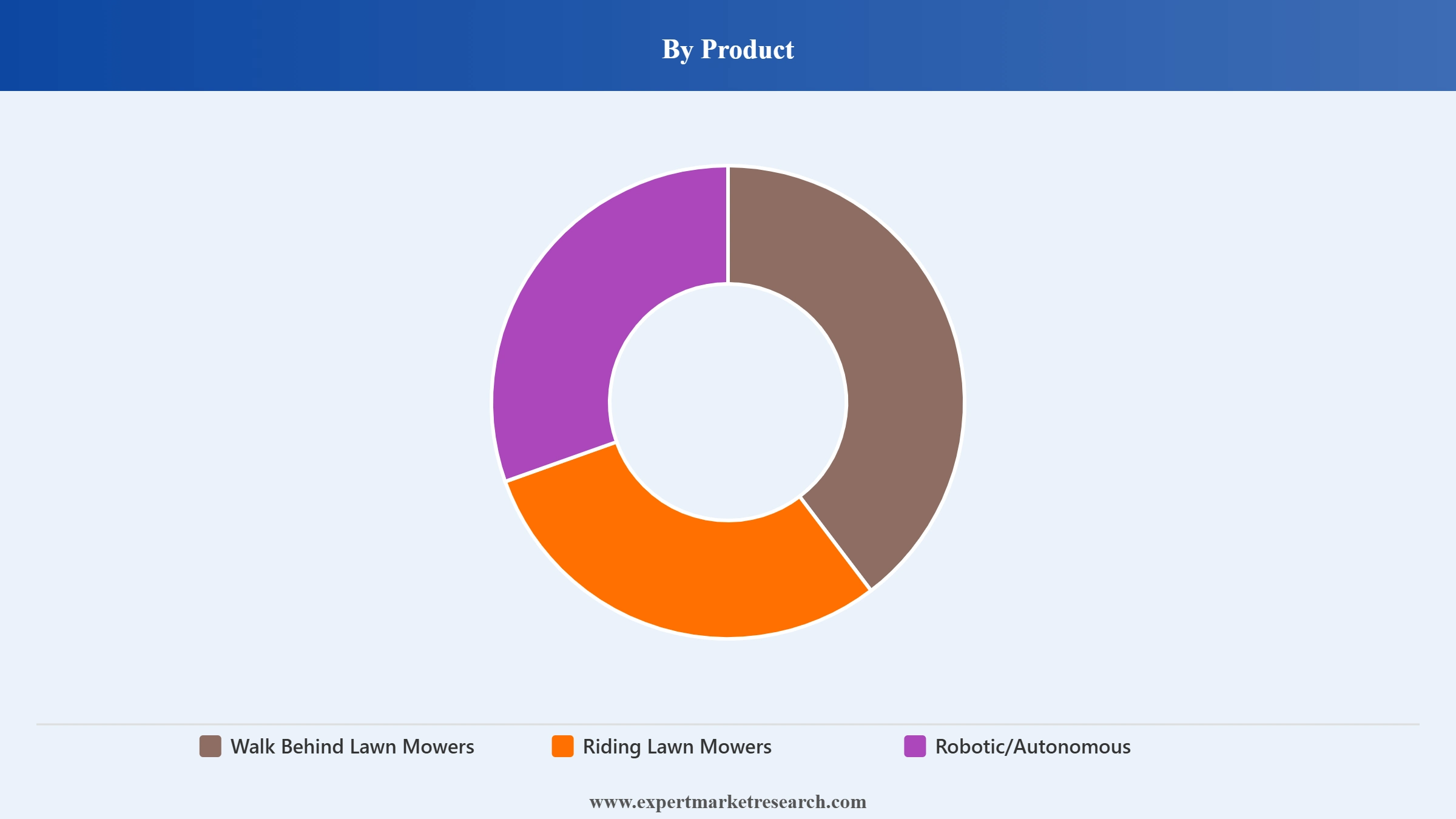
Key Insights: The lawn mowers market is segmented by product into walk behind lawn mowers, riding lawn mowers, and robotic/autonomous lawn mowers. Walk behind lawn mowers represent the largest segment by volume, widely used across residential properties for their affordability, ease of operation, and suitability for small to medium-sized lawns. Riding lawn mowers are the dominant segment by value, preferred for large residential properties, commercial landscaping, and sports turf management where operator comfort and cutting efficiency across wide areas are paramount. Robotic and autonomous lawn mowers are the fastest-growing product segment, growing at a CAGR of 13.10%, driven by advances in GPS navigation, battery technology, and AI-powered obstacle detection that are enabling adoption across both residential and commercial mowing applications.
Market Breakup by Size
Key Insights: The lawn mowers market is categorised by size into small, medium, and large. Small lawn mowers, including compact walk behind and entry-level robotic models, dominate the residential segment, offering ease of storage and manoeuvrability for urban gardens and smaller properties. Medium-sized mowers serve the broadest application range, covering standard residential lawns and small commercial properties through self-propelled walk behind and compact ride-on models. Large lawn mowers, including commercial ride-on, zero-turn, and flail mower configurations, are preferred across golf courses, sports fields, municipal parks, and large commercial estates where high cutting capacity and operational efficiency are essential.
Market Breakup by End-Use
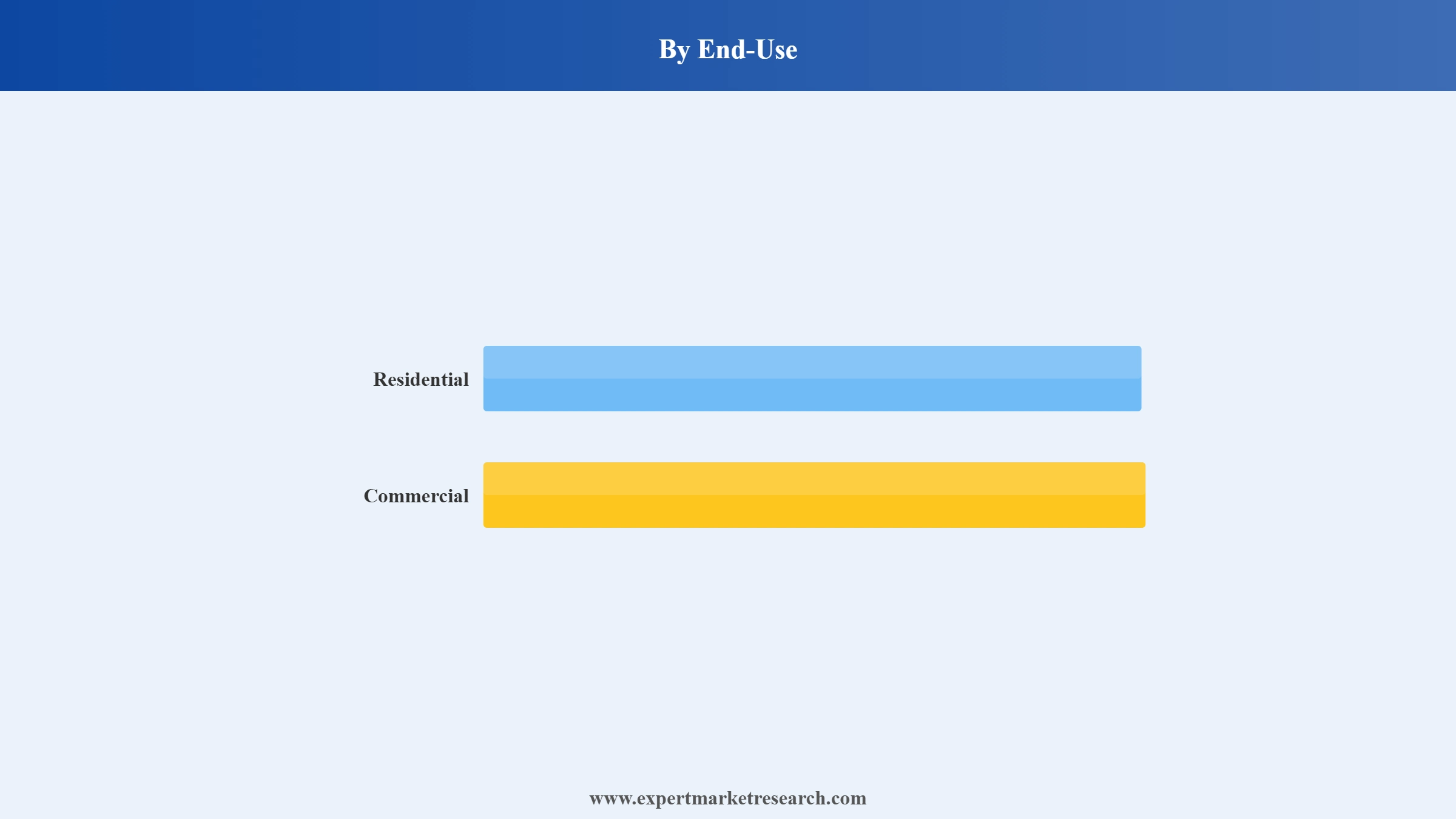
Key Insights: The lawn mowers market is segmented by end-use into residential and commercial. The residential segment accounts for the largest share of unit volume, driven by high lawn ownership rates in North America and Europe, growing DIY gardening culture, and the sustained tailwind from remote working trends that have increased time spent at home. The commercial segment represents the largest share of market revenue, supported by professional landscaping services, sports facility and golf course management, municipal grounds maintenance, and corporate campus care, where higher-capacity and longer-run-time equipment commands premium average selling prices and generates recurring replacement and service demand.
Market Breakup by Region
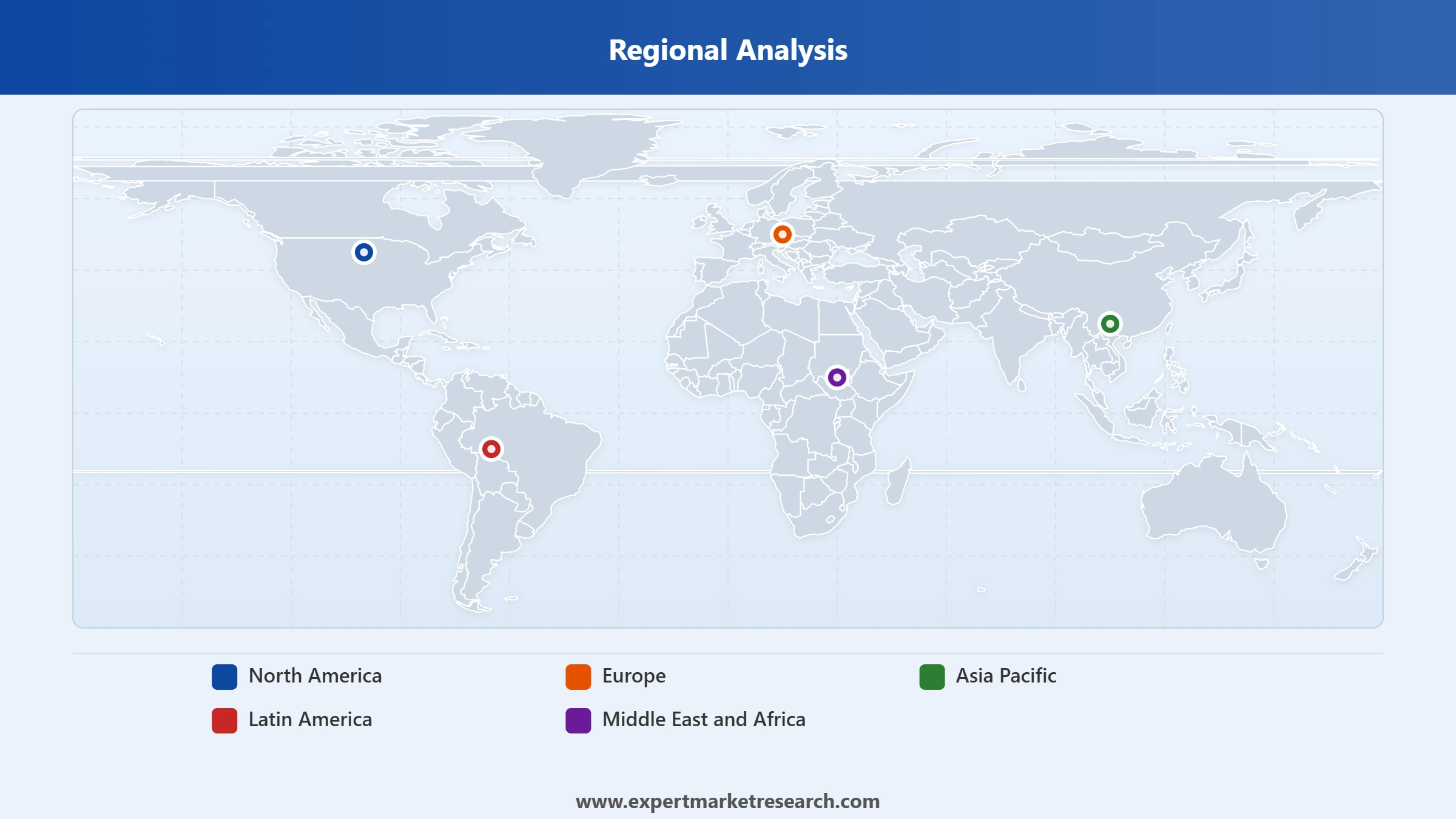
North America is the largest regional market for lawn mowers, with the United States accounting for the dominant share of regional revenue and unit volume. The United States benefits from a deeply embedded lawn culture, a large installed base of residential properties requiring regular maintenance, a competitive professional landscaping services industry employing over 1 million workers, and strong consumer purchasing power for premium mowing equipment across all product categories. Canada is the second-largest national market, with similar residential lawn culture and commercial landscaping demand. The battery-electric transition is most advanced in North America due to California CARB regulations and the active presence of leading battery-electric outdoor power equipment brands.
Europe is the second-largest regional lawn mowers market, characterised by advanced adoption of robotic and battery-electric technologies, stringent noise and emission regulations accelerating the transition away from petrol equipment, and high consumer willingness to pay for autonomous and connected mowing solutions. Germany is the largest national market within Europe and one of the most technologically advanced globally for robotic mower adoption, with Husqvarna and Bosch maintaining strong brand presence. The United Kingdom, France, Sweden, and the Netherlands represent significant secondary markets with progressive environmental regulation and strong residential gardening cultures.
Read more about this report - REQUEST FREE SAMPLE COPY IN PDF
Asia Pacific is the fastest-growing regional market, driven by expanding residential construction in China, India, and Southeast Asia, rising consumer disposable incomes driving home improvement expenditure, growing commercial landscaping services in major urban centres, and rapid golf course and sports facility infrastructure development. Australia is the most developed national market within Asia Pacific, with a well-established residential lawn mowing culture comparable to North American and European markets. China and India represent long-term growth opportunities as rising middle-class populations and increasing residential lawn ownership expand the addressable consumer base.
Latin America is a growing regional market, with Brazil as the dominant national market supported by a large and expanding residential construction sector, a growing professional landscaping industry, and significant commercial and recreational facility development. Mexico is the second-largest national market, benefiting from proximity to North American supply chains and growing urban commercial development. Rising disposable incomes and increasing awareness of lawn aesthetics across major urban centres in Brazil, Colombia, and Chile are supporting long-term market development across the region.
The Middle East and Africa represent a developing lawn mowers market, with demand primarily concentrated in GCC countries where significant investment in golf courses, luxury residential developments, and commercial landscaping is driving demand for professional-grade equipment. Saudi Arabia, UAE, and Qatar are the largest national markets, supported by large-scale infrastructure and hospitality projects under Vision 2030. South Africa is the largest African national market, with an established residential lawn culture and a growing professional landscaping services sector.
The comprehensive Expert Market Research report provides an in-depth assessment of the market based on the Porter's five forces model along with giving a SWOT analysis. The report gives a detailed analysis of the following key players in the lawn mowers market, covering their competitive landscape and latest developments like mergers, acquisitions, investments, and expansion plans.
Deere and Company, founded in 1837 and based in Illinois, the United States, is an agricultural company. The company is known for manufacturing farm equipment and machinery and industrial equipment.
Honda Motor Co., Ltd., a prominent motorcycle manufacturer, was established in 1948 and has its headquarters in Tokyo, Japan. The company produces passenger cars, lawn mowers, robotic mowers, and generators, among others.
Husqvarna AB, originally founded in 1689 and based in Stockholm, Sweden, is an industrial equipment company. The company manufactures outdoor power products for construction, gardening, and forest-related activities.
The global lawn mowers market is served by a combination of large multinational outdoor power equipment groups, specialist turf management manufacturers, and emerging battery-electric and robotic mowing companies, with the competitive landscape shaped by product breadth, battery platform development, and investment in autonomous mowing technologies.
Robert Bosch GmbH leads the robotic and battery-electric segment through its Bosch and Indego product lines across European and global markets. Stanley Black and Decker serves the North American residential mass market through its CRAFTSMAN and BLACK+DECKER brands with an extensive retail distribution network. Ariens Company manufactures walk behind, riding, and zero-turn mowers for residential and commercial applications across North America. ANDREAS STIHL AG and Co. KG offers battery-electric and petrol-powered mowers for consumer and professional users through its global dealer network. Fiskars Finland Oy Ab serves European consumers through manual and battery-powered mowers, while The Toro Company supplies professional turf management equipment across golf courses, sports fields, and commercial landscaping operations globally. Greenworks Tools is an emerging leader in cordless battery-electric mowers with growing presence across North America, Europe, and Asia Pacific.
*Please note that this is only a partial list; the complete list of key players is available in the full report. Additionally, the list of key players can be customized to better suit your needs.*


Upto 15% Off
USD
$2499 $2249
$3999 $3599
$4999 $4249
$5999 $5099


*While we strive to always give you current and accurate information, the numbers depicted on the website are indicative and may differ from the actual numbers in the main report. At Expert Market Research, we aim to bring you the latest insights and trends in the market. Using our analyses and forecasts, stakeholders can understand the market dynamics, navigate challenges, and capitalize on opportunities to make data-driven strategic decisions.*
The global lawn mowers market attained USD 28.99 Billion in 2025 and is projected to reach USD 48.59 Billion by 2035, growing at a CAGR of 5.30% during 2026-2035.
The global lawn mowers market is projected to grow at a CAGR of 5.30% during 2026-2035.
North America leads the global lawn mowers market, with the United States accounting for the dominant share of regional revenue and unit volume.
Robotic lawn mowers are the fastest-growing product segment at 5.30% CAGR through 2035, driven by autonomous navigation technology, battery improvements, and growing commercial labour-saving demand.
Key drivers include growing demand for lawn maintenance and landscaping services, rising robotic and autonomous mower adoption, battery-electric transition driven by CARB and EPA regulations, expanding commercial and sports turf management, and sustained DIY gardening culture.
Key players include Deere and Company, Husqvarna AB, Honda Motor Co., The Toro Company, Stanley Black and Decker, Robert Bosch GmbH, STIHL, Ariens Company, Greenworks Tools, and Fiskars Finland Oy Ab.
The United States is the largest national lawn mowers market, supported by high residential lawn ownership, a mature professional landscaping services industry, and strong demand for consumer and commercial-grade mowing equipment across all product categories.
The lawn mowers market is segmented by product type, power source, application, size, and region, with walk behind, riding, and robotic mowers as the primary product categories and residential and commercial as the dominant end-use segments.
Explore our key highlights of the report and gain a concise overview of key findings, trends, and actionable insights that will empower your strategic decisions.
| REPORT FEATURES | DETAILS |
| Base Year | 2025 |
| Historical Period | 2019-2025 |
| Forecast Period | 2026-2035 |
| Scope of the Report |
Historical and Forecast Trends, Industry Drivers and Constraints, Historical and Forecast Market Analysis by Segment:
|
| Breakup by Product |
|
| Breakup by Size |
|
| Breakup by End-Use |
|
| Breakup by Region |
|
| Market Dynamics |
|
| Competitive Landscape |
|
| Companies Covered |
|
Datasheet
One User
USD 2,499
USD 2,249
tax inclusive*
Single User License
One User
USD 3,999
USD 3,599
tax inclusive*
Five User License
Five User
USD 4,999
USD 4,249
tax inclusive*
Corporate License
Unlimited Users
USD 5,999
USD 5,099
tax inclusive*
*Please note that the prices mentioned below are starting prices for each bundle type. Kindly contact our team for further details.*
Flash Bundle
Small Business Bundle
Growth Bundle
Enterprise Bundle
*Please note that the prices mentioned below are starting prices for each bundle type. Kindly contact our team for further details.*
Flash Bundle
Number of Reports: 3
20%
tax inclusive*
Small Business Bundle
Number of Reports: 5
25%
tax inclusive*
Growth Bundle
Number of Reports: 8
30%
tax inclusive*
Enterprise Bundle
Number of Reports: 10
35%
tax inclusive*
How To Order

Select License Type
Choose the right license for your needs and access rights.

Click on ‘Buy Now’
Add the report to your cart with one click and proceed to register.

Select Mode of Payment
Choose a payment option for a secure checkout. You will be redirected accordingly.
Strategic Solutions for Informed Decision-Making
Gain insights to stay ahead and seize opportunities.

Get insights & trends for a competitive edge.

Track prices with detailed trend reports.

Analyse trade data for supply chain insights.

Leverage cost reports for smart savings

Enhance supply chain with partnerships.

Connect For More Information
Our expert team of analysts will offer full support and resolve any queries regarding the report, before and after the purchase.
Our expert team of analysts will offer full support and resolve any queries regarding the report, before and after the purchase.
We employ meticulous research methods, blending advanced analytics and expert insights to deliver accurate, actionable industry intelligence, staying ahead of competitors.
Our skilled analysts offer unparalleled competitive advantage with detailed insights on current and emerging markets, ensuring your strategic edge.
We offer an in-depth yet simplified presentation of industry insights and analysis to meet your specific requirements effectively.




