

Consumer Insights
Uncover trends and behaviors shaping consumer choices today
Procurement Insights
Optimize your sourcing strategy with key market data
Industry Stats
Stay ahead with the latest trends and market analysis.
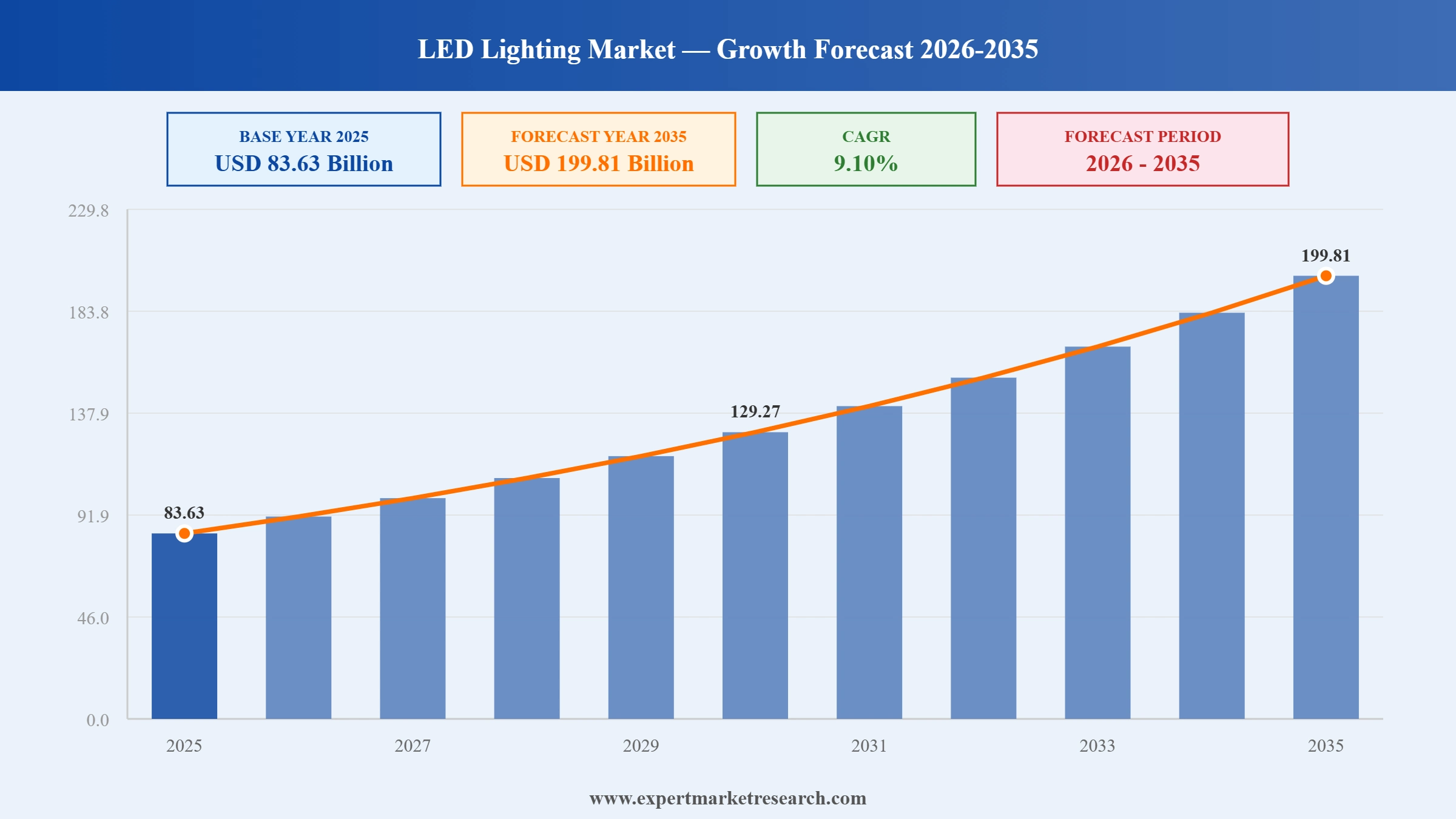
The global LED lighting market attained a value of USD 83.63 Billion in 2025 and is projected to expand at a CAGR of 9.10% through 2035. The market is further expected to achieve USD 199.81 Billion by 2035. As more connected technology solutions get adopted in buildings, manufacturers anticipate an increased requirement for intelligent LED lighting products, which incorporate functionality such as energy saving, occupancy detection, predictive maintenance, and centralized lighting control.
Developments in the LED lighting market can be attributed to the fast growth in the number of smart city infrastructure projects and modernization efforts of factories. Governments around the world are increasingly installing connected streetlights with sensors capable of monitoring and adjusting their illumination for improved performance and greater safety. At the same time, producers are integrating intelligent LED lighting solutions in their plants in order to facilitate automation processes and lower costs of maintenance.
Innovations in the LED lighting market continue to be driven by the need for energy efficiency, connectivity, and application-oriented performance. Signify was one of the companies at the forefront of innovation, having developed a new range of its Ultra Efficient LED lighting in April 2024. This product line caters to both the commercial and industrial segments and addresses a growing need among businesses to meet their carbon footprint reduction goals and reduce electricity costs in the manufacturing and warehousing sectors.
Modern lighting systems are going beyond individual fixtures to focus on ecosystems that enable the delivery of intelligent solutions. Modern LED lights now include sensors, wireless connectivity, analytics, and monitoring tools, thus enabling the company behind the technology to generate revenue from software-based subscriptions. Smart factories, hospitals, and offices are further expected to drive growth in the LED lighting market. In December 2025, EarthTronics introduced a color- and wattage-selectable LED strip fixture with integrated sensors, enabling smarter energy savings, occupancy-based control, and flexible commercial lighting applications.
Read more about this report - REQUEST FREE SAMPLE COPY IN PDF
Cree LED introduced XLamp XE-B LEDs with their ultra-compact design, highly intense light output, and improved directional lighting characteristics. These types of advancements indicate the need for more compact high-performing lighting elements that would allow for increased design opportunities in the LED lighting market. Companies can therefore design highly efficient miniature LED lights suitable for precision and limited space installations.
Panasonic released the EcoVent fan which featured energy-efficient LED lighting and efficient ventilation technology. This shows how there is a preference in the market for more advanced building technologies that can perform multiple tasks and be used efficiently for the benefit of the environment and occupants.
Itron and Current Lighting provided end-to-end smart city infrastructure, bringing together connected lights and intelligent networks. These kinds of moves show the increasing convergence of LED lighting, IoT, and city digitalization trends. Aligning with these developments in the LED lighting market, companies can invest in connected light ecosystems with sensor integration and smart city platform applications.
Signify expanded its professional lighting portfolio with the launch of Signify branded products emphasizing performance, efficiency, and application flexibility. This is indicative of increased focus on special lighting designed for commercial and industrial settings. Other companies can also expand their professional LED product lines by focusing on efficiency and intelligent lighting applications.
The growth of the LED lighting market is being driven by the adoption of intelligent lighting solutions that are integrated with automation systems by building owners. Modern LED luminaires now serve as sources of data for occupancy detection, harvesting of daylight, and energy efficiency. Real estate developers are focusing on building intelligent lighting networks to cut costs and achieve sustainability objectives. For example, the Interact solution by Signify, launched in November 2025, allows managers to control lighting in commercial buildings and increase energy efficiency.
The LED lighting market observes an increased focus on building LED-based infrastructure projects by governments to lower electricity consumption and carbon footprints. Municipalities around the world are installing new LED lights in place of old streetlights, which can control light output levels and be maintained remotely. The Street Lighting National Programme by the Indian government, launched in May 2022, helped install millions of LED streetlights and save a lot of energy resources. In November 2025, Signify opened its 323rd Philips Smart Light Hub in India, expanding smart lighting access, customer experience, and innovation.
Human-centric lighting represents another important trend in the LED lighting market due to the rising interest of enterprises in improving employees' health and productivity. This technology makes it possible to modify the color temperature and intensity of lighting according to the body's circadian rhythm owing to advanced LED lighting systems. Nowadays, such lighting is implemented in healthcare organizations, schools, universities, and office spaces. A number of hospitals in Europe and North America are installing LED lighting systems that enable tuning the level of lighting and its color temperatures to ensure patients' comfort and facilitate their recovery. Government agencies and certification programs also support healthy indoor environments and encourage lighting producers to create new products with enhanced performance features while ensuring energy efficiency. For example, in June 2026, BenQ showcased AI-powered collaboration, education, and smart-life solutions at COMPUTEX 2026, advancing human-centric innovation.
To achieve sustainability objectives, LED lighting market players strive to introduce products based on circular economy principles. Companies are implementing modular fixtures with interchangeable elements to reduce electronic waste and allow easier upgrading. At the same time, leading companies like Signify are increasing investments in circular lighting programs focusing on refurbishment, recycling, and reuse of products. European governments are also intensifying regulation of product durability, repairability, and materials recovery. To cater to such a surging demand, in June 2026, Tivoli Lighting introduced TRACE Pro, a high-performance linear lighting platform featuring advanced controls, compact design, and universal mounting flexibility.
The LED lighting market hosts significant opportunities with the growing trend of smart cities for the adoption of next-generation LED lighting technology. The next generation LED streetlights are being viewed as comprehensive urban platforms that can be equipped with sensors, traffic control systems, wireless communication systems, and surveillance systems. Connected lighting systems are increasingly being used by cities around the world as an efficient means of managing their urban infrastructure. Several smart cities projects in Singapore, United Arab Emirates, and Europe are adopting LED lighting technology. For example, in May 2026, Crompton Greaves launched new LED lighting products for homes, enhancing energy efficiency, aesthetics, durability, and smart illumination experiences.
The EMR’s report titled “Global LED Lighting Market Report and Forecast 2026-2035” offers a detailed analysis of the market based on the following segments:
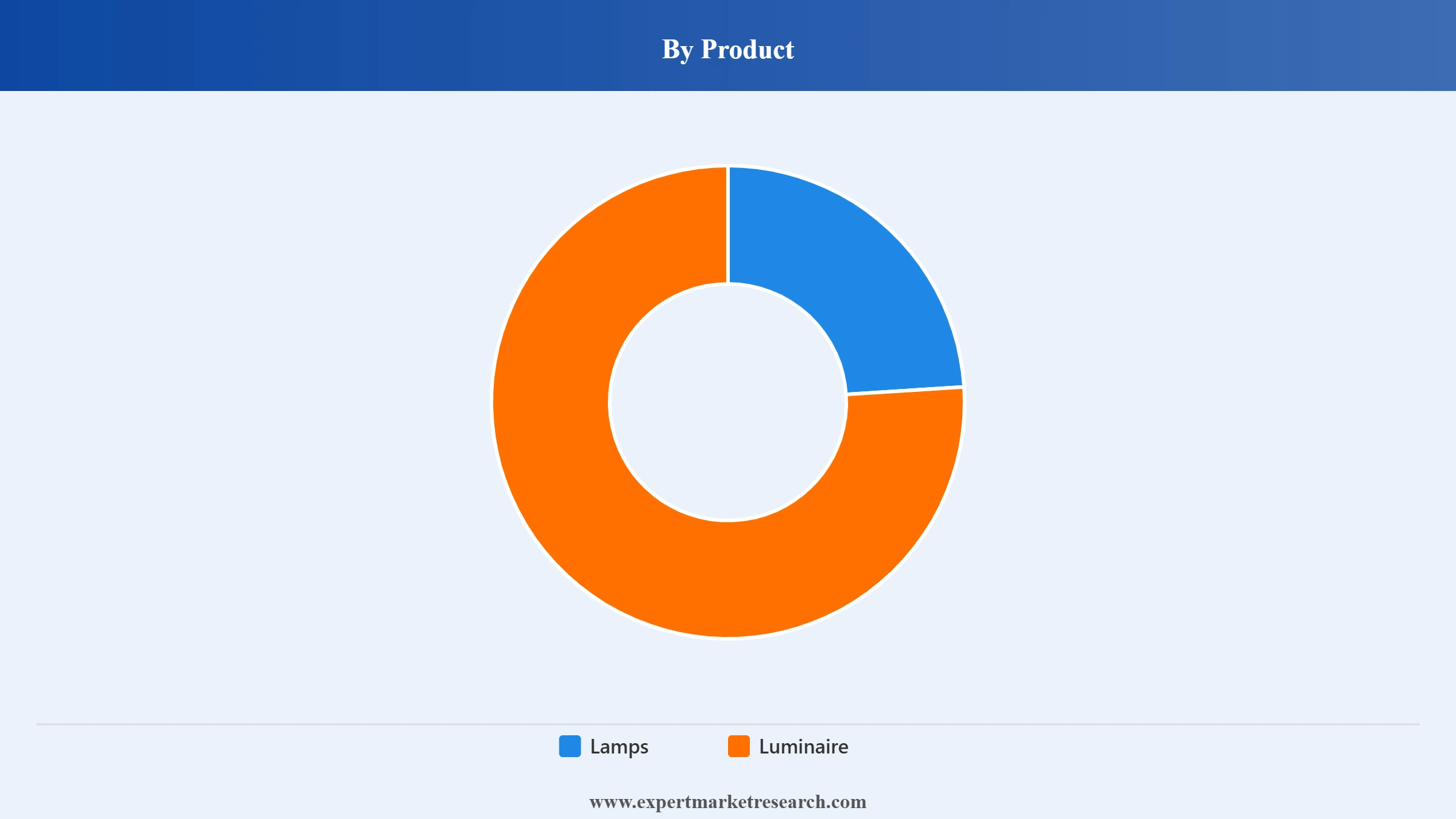
Market Breakup by Product
Key Insight: Product offering in the LED lighting market is influenced by a wide array of lighting considerations depending on their intended applications. The A-lamps continue to dominate as replacement lamps because of the simple installation process. The T-lamps find utility in the uniformity needed by commercial establishments through the provision of lighting. The remaining types of lamps provide solutions where lighting solutions are application-specific in different retail stores or industries. Luminaires, including streetlights, play a vital role in modern urban infrastructure by enhancing public safety, visibility, and energy-efficient city operations. Downlights provide solutions for top-quality interiors, while troffers play significant roles in offices and institutions.
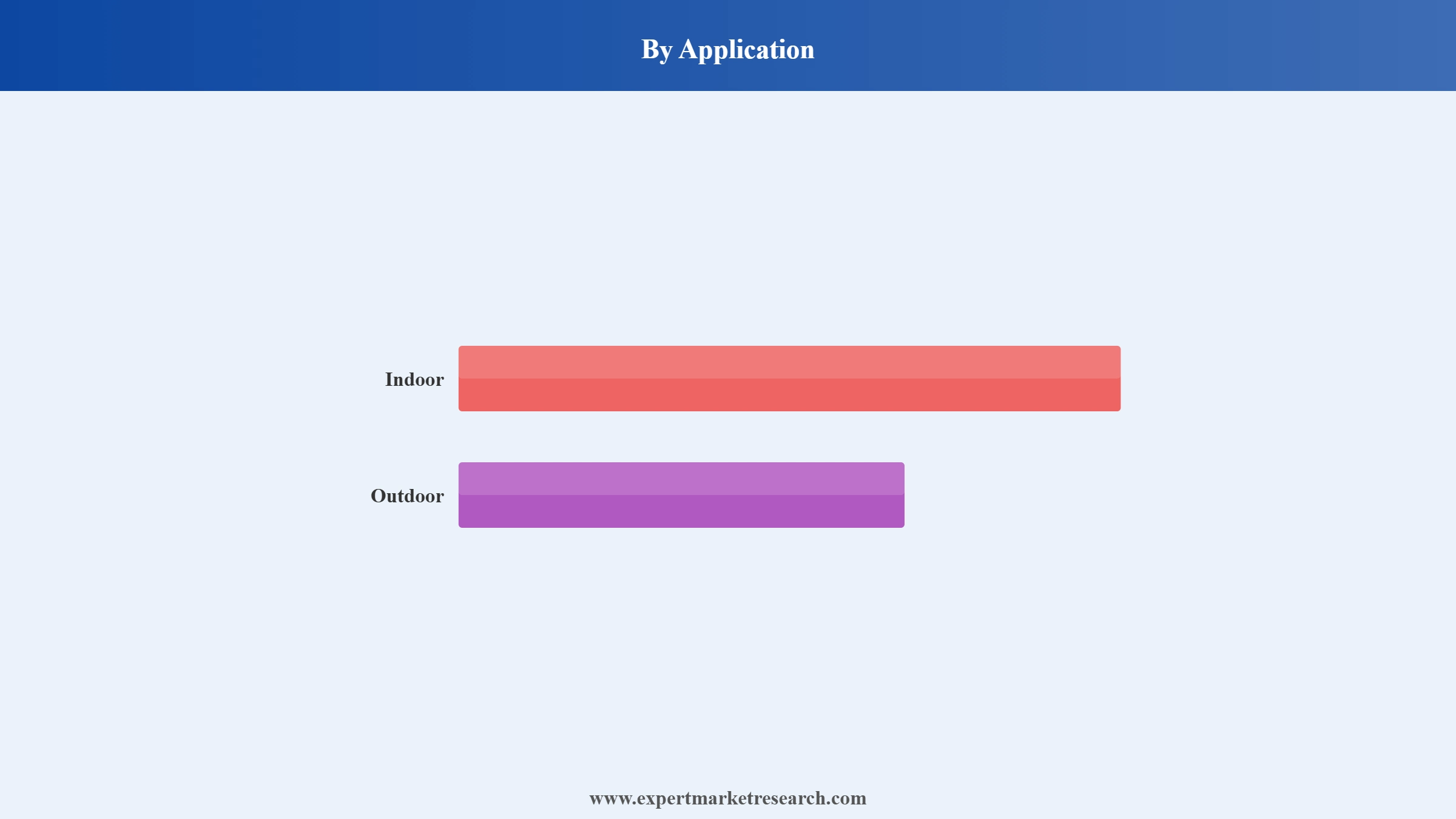
Market Breakup by Application
Key Insight: Lighting is critical in terms of office modernization, home efficiency, health care, and retail. As per the LED lighting market report, businesses are becoming more interested in systems that promote wellness and productivity in their offices. They are seeking systems that are capable of managing buildings intelligently. The growth of outdoor lighting is expected to be fueled by infrastructure development, security, transportation, and smart cities. As opposed to indoor applications that concentrate on the aesthetics and functionality of the room, outdoor applications emphasize resilience and connectivity.
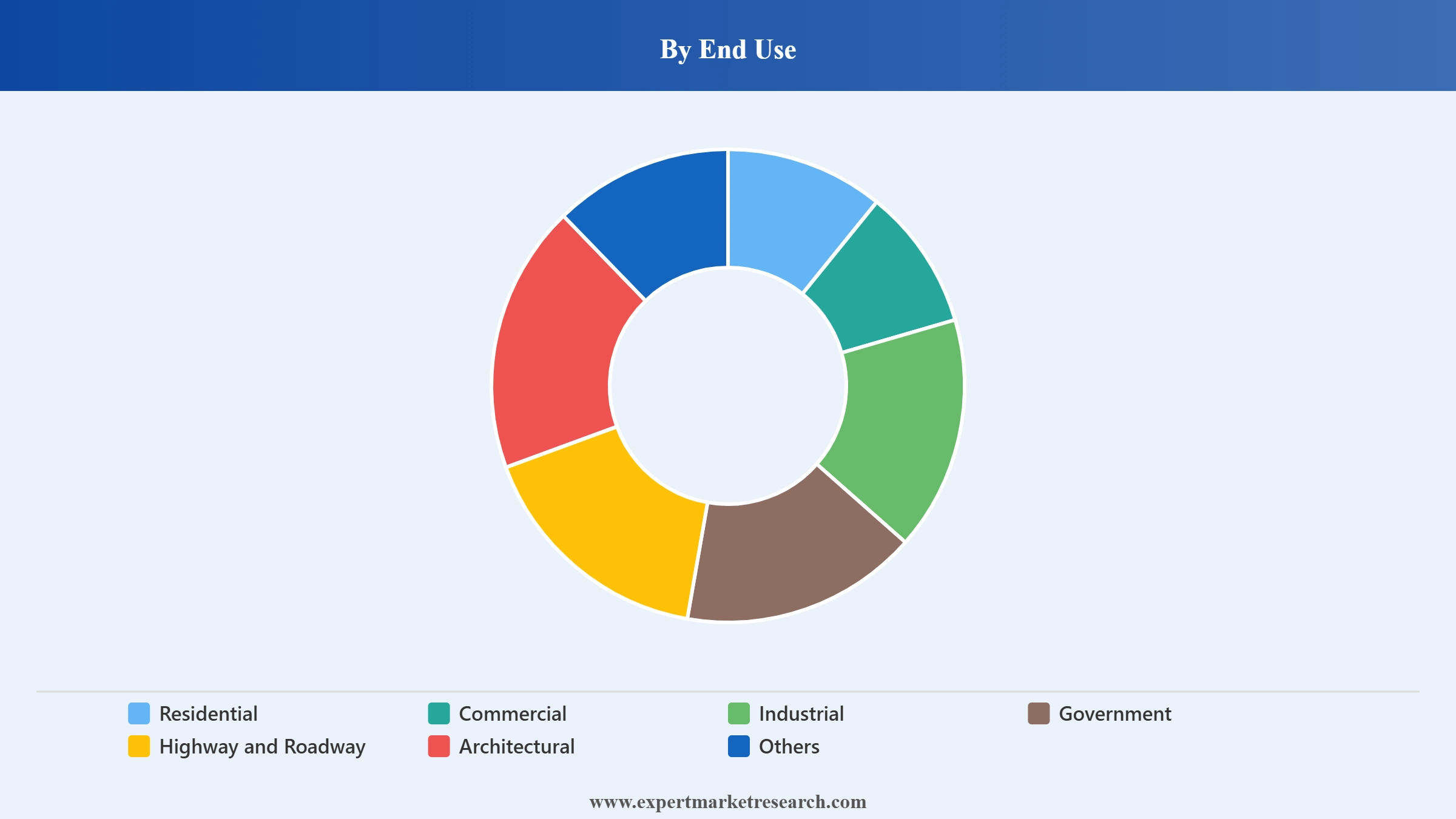
Market Breakup by End Use
Key Insight: Residential use is being encouraged through the demand from energy-aware consumers that have a desire to improve lighting and reduce costs. Commercial entities are concerned with efficiency, integration into smart buildings, and improving the occupants' experience, propelling growth in the LED lighting market. In terms of industrial usage, dependability, longevity, and optimal lighting for factory use is paramount. The government continues to invest in sustainable infrastructure projects in order to update its structures. Roadway and highway lighting needs include increased visibility and maintenance, among others. Architectural lighting benefits from the demand for increased aesthetics and façade lighting, among other uses.
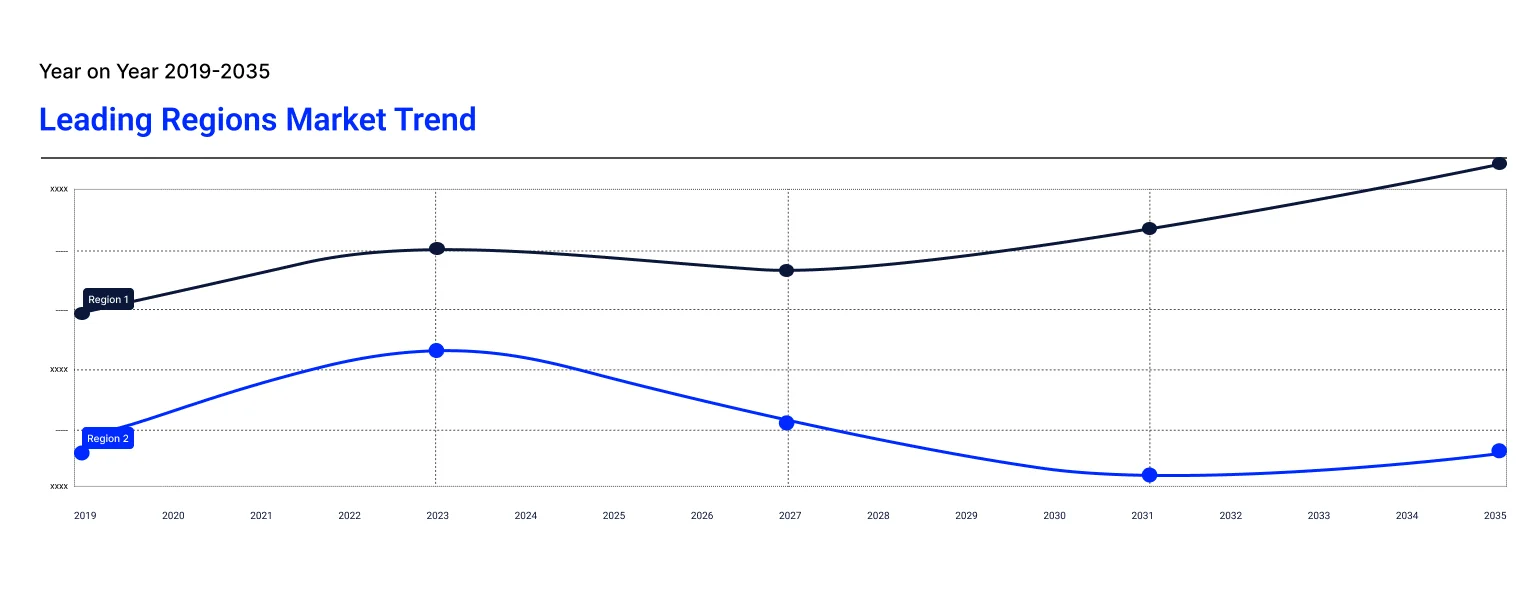
Market Breakup by Region
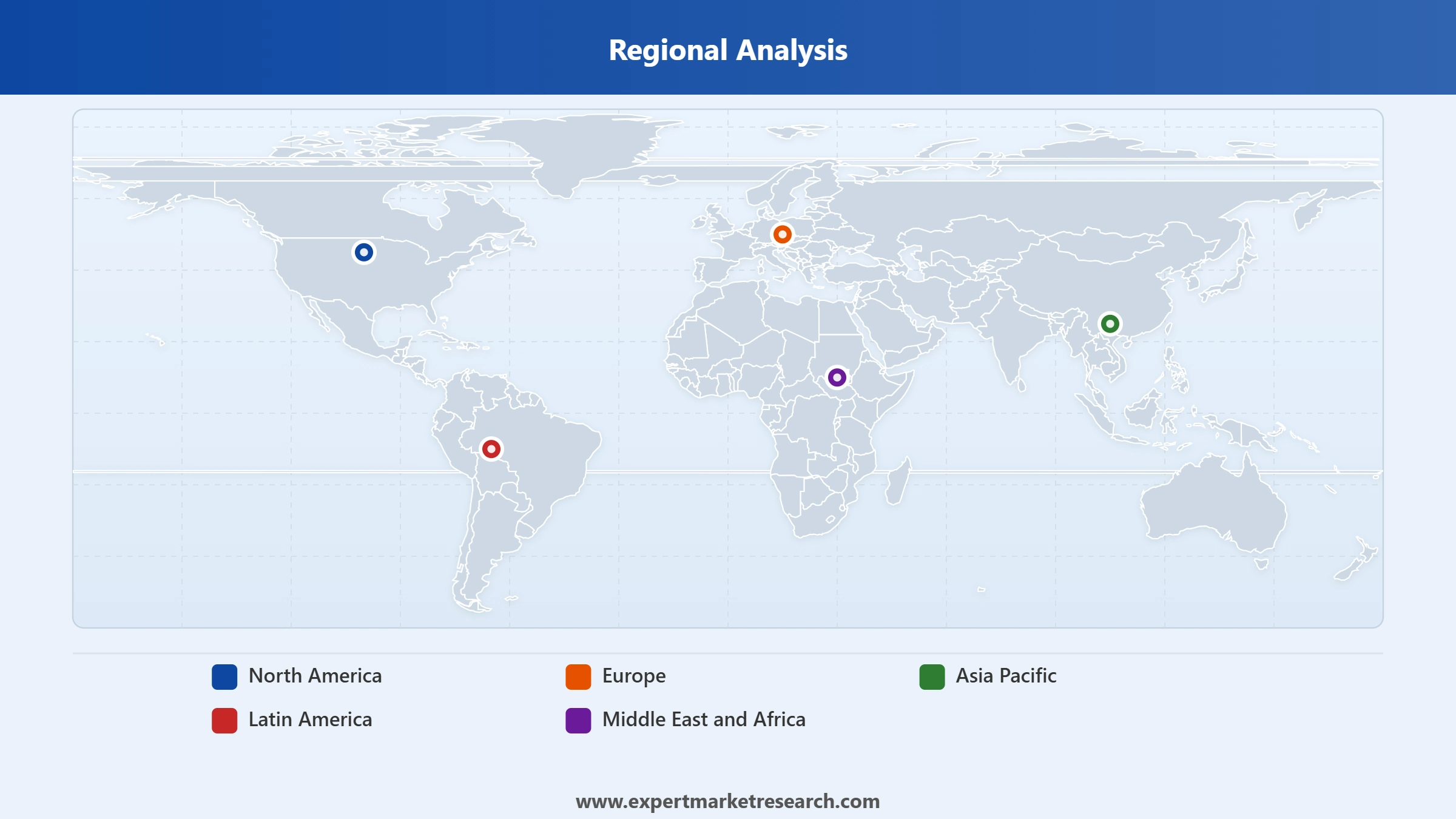
Key Insight: North America takes advantage of the sophisticated implementation of smart buildings, renovation works, and high demands for lighting solutions. The LED lighting market in Europe continues to be motivated by sustainable policies, efforts in the circular economy, and efficient energy solutions. Asia Pacific leads the market with huge urban development, industrial development, and infrastructure construction. Latin America benefits from modernization projects of its public infrastructure and growing consciousness about saving energy in the long term. The Middle East & Africa region is boosted by smart cities and tourism developments as well as by diversification efforts made by local governments.
Read more about this report - REQUEST FREE SAMPLE COPY IN PDF
By product, the luminaire category registers the largest share of the market due to commercial infrastructure modernization
Luminaire emerges as the leading category of products, given that companies now favor lighting solutions offering both functionality and sustainability aspects. There is an increasing need from commercial buildings, industrial complexes, educational facilities, and healthcare institutions where lighting quality matters. Luminaires allow more design freedom and integration with intelligent lighting controls. Products like downlights, troffers, high bays, pendant lights, and streetlights can be used not only for retrofits but also for construction purposes. In December 2025, Eureka launched the Orelia luminaire, featuring sculptural design, customizable finishes, versatile mounting, and atmospheric interior illumination.
Read more about this report - REQUEST FREE SAMPLE COPY IN PDF
The streetlight segment is expected to witness robust growth in the LED lighting market. This trend is attributed to the fact that there is a growing number of investments in smart city initiatives, which require the installation of smart LED-based streetlighting. Such products can be monitored remotely, and they offer improved efficiency in energy use and maintenance operations. Street lighting systems are now being equipped with different types of sensors and communication technology. In March 2026, Mayor Bass launched a solar streetlight initiative, repairing and replacing 60,000 lights, enhancing safety and sustainability.
Indoor application dominates the market owing to commercial and residential upgrades
Applications in indoor environments contribute significantly to the LED lighting market revenue owing to widespread use in office spaces, retail centers, schools and universities, hospitals, storage facilities, and residential buildings. The need for energy-efficient LED lights which can also increase occupant satisfaction, is gaining popularity among building owners. Moreover, there is an increasing demand for the installation of LED lighting during renovations, as it helps in decreasing costs and supports sustainability efforts. For example, in May 2026, Philips Smart Lighting introduced immersive, personalized home lighting experiences, integrating smart controls, automation, and entertainment synchronization.
Read more about this report - REQUEST FREE SAMPLE COPY IN PDF
The segment of outdoor lighting is one of the most rapidly growing segments owing to the significant investment made towards improving urban infrastructure, transportation system, and ensuring public safety through the implementation of advanced LED lighting. Cities have started installing intelligent LED street lighting and smart tunnel lights to increase visibility and lower the electricity consumed. Connectivity-enabled LEDs, where users can monitor their performance remotely, are being used more commonly.
The commercial sector leads the overallmarket growth due to extensive lighting modernization
Commercial remains the key end use segment in the LED lighting market since companies keep improving their lighting facilities by focusing on energy efficiency, quality of work environment and performance enhancement. An increasing number of offices, retail establishments, hotels, health-care providers, and schools adopt LED lighting systems controlled by smart devices and linked with building management systems. Solutions minimizing costs of maintenance and enhancing sustainability objectives are particularly in demand.
Read more about this report - REQUEST FREE SAMPLE COPY IN PDF
The fastest adoption rate belongs to highway and roadway end uses since there is a high interest in modernizing transportation and enhancing its safety levels. Roadway LED lighting systems are being installed because they offer better visibility, energy efficiency, and durability when compared with other traditional solutions. Advanced technologies used for roads and highways often incorporate features related to adaptive control and remote monitoring capabilities, reshaping the LED lighting market dynamics. In June 2025, Evluma and LED Roadway Lighting joined forces, combining technologies, expertise, and products to advance smarter, sustainable outdoor LED lighting innovation.
Asia Pacific accounts for the leading market position through urbanization and manufacturing expansion
Asia Pacific commands the position of the leading LED lighting market owing to high urbanization rates, rapid infrastructure development, and robust manufacturing operations. Continued investment towards smart cities, transport links, commercial buildings, and industrial plants within these economies is fueling the demand for energy-saving lighting solutions. The presence of large-scale electronics manufacturing facilities is another significant factor which is playing an instrumental role behind this trend. Increased construction activities along with growing concerns towards energy conservation are leading to an increased uptake of these products within residential, commercial, and public areas.
Read more about this report - REQUEST FREE SAMPLE COPY IN PDF
Middle East & Africa represents one of the fastest-growing LED lighting markets driven by large-scale investment in infrastructure, smart city initiatives, and efforts aimed at diversifying economies. Efforts towards developing energy-saving technologies are resulting in increased adoption of LED lighting solutions to help save energy in difficult climatic conditions. Modernization and expansion of existing infrastructure facilities are providing plenty of opportunities for manufacturers based both within and outside of this region. In February 2025, Fluxwerx expanded into the Middle East, bringing award-winning architectural lighting solutions, regional partnerships, and design innovation.
With an emphasis on intelligent lighting ecosystems, semiconductor technology advancements, and product design based on sustainability principles, the competition among leading LED lighting market players is intensifying rapidly. Leading players in the sector are making significant investments in research and development related to mini-LEDs, micro-LEDs, connected lighting systems, human-centric lighting, and a circular economy. Through strategic partnerships with developers of smart buildings, city administrators, and industry automation companies, additional income streams can be tapped. Other trends include specialization in niche segments like horticulture lighting, UV-C disinfection devices, automotive lighting, and adaptive street lighting.
Advanced lighting systems incorporate cutting-edge sensor technology, wireless connectivity solutions, and software for centralized control via cloud platforms. Several LED lighting companies are developing high-efficiency and low-maintenance LEDs with extended lifespans. With more projects involving the implementation of smart cities and automated buildings underway, new market opportunities await those that can offer lighting systems integrated with advanced services and digital intelligence.
Founded in 1956 and located in Anan, Japan, Nichia Corporation specializes in the invention of new LED chip designs and innovative phosphors. The company concentrates on producing high-efficiency LEDs to support automotive lighting, industrial, commercial, and display lighting requirements. Nichia continues to invest in innovations in mini-LED and micro-LED technology and improvements in color rendering and energy consumption rates to assist clients in achieving better lighting results under harsh environmental conditions.
Founded in 1919 and located in Munich, Germany, OSRAM Licht AG is a manufacturer of LED lighting products, semiconductors, automotive lighting solutions, and smart infrastructures. The company increasingly emphasizes connected lighting solutions, optical sensors, and smart city applications. These solutions assist customers in optimizing their energy use and implementing advanced digital functions using lighting systems.
Samsung Electronics Co Ltd. was founded in 1969 and is based in Suwon, South Korea. Samsung provides innovative LED packages, modules, and displays, supporting the LED lighting market growth. The company is currently working on mini-LEDs and micro-LED technology for future commercial display lighting applications. Samsung's strength in semiconductors and electronics integration makes it able to provide advanced lighting systems that contribute to smart building construction.
Founded in 1983 and based in New Taipei City, Taiwan, Everlight Electronics Co. Ltd. offers a wide range of LED components that are used for general lighting, automotive lighting, and signage lighting. The main priorities of the company include improving luminous efficacy, thermal management, and reliability of LED components.
Other key players in the market include Acuity Brands, Inc., Koninklijke Philips N.V., Epistar Corporation, Seoul Semiconductor Co. Ltd., Panasonic Corporation, Cree LED, Inc., and Lumileds Holding B.V., among others.
*Please note that this is only a partial list; the complete list of key players is available in the full report. Additionally, the list of key players can be customized to better suit your needs.*
Unlock the latest insights with our LED lighting market trends 2026 report. Discover regional growth patterns, consumer preferences, and key industry players. Stay ahead of competition with trusted data and expert analysis. Download your free sample report today and drive informed decisions in the market.


Upto 15% Off
USD
$2499 $2249
$3999 $3599
$4999 $4249
$5999 $5099


*While we strive to always give you current and accurate information, the numbers depicted on the website are indicative and may differ from the actual numbers in the main report. At Expert Market Research, we aim to bring you the latest insights and trends in the market. Using our analyses and forecasts, stakeholders can understand the market dynamics, navigate challenges, and capitalize on opportunities to make data-driven strategic decisions.*
In 2025, the global LED lighting market attained a value of nearly USD 83.63 Billion.
The market is projected to grow at a CAGR of 9.10% between 2026 and 2035.
The major drivers of the industry, such as improved requirements for energy efficiency, lower operating costs, and lower heat losses, are expected to aid the market growth.
The key market trend guiding the industry growth include the growing technological advancements in the forecast period.
The major regions in the industry are North America, Latin America, the Middle East and Africa, Europe, and the Asia Pacific.
Lamp and luminaire are the leading products in the industry.
Indoor and outdoor are the significant applications of the product in the market.
Residential, commercial, industrial, government, highway and roadway, and architectural, are the major end uses of the product in the industry.
The major players in the industry are Nichia Corporation, OSRAM Licht AG, Samsung Electronics Co Ltd., Everlight Electronics Co. Ltd., Acuity Brands, Inc., Koninklijke Philips N.V., Epistar Corp., Seoul Semiconductor Co. Ltd., Cree, Lumileds Holding B.V., and Panasonic Corporation, among others.
Explore our key highlights of the report and gain a concise overview of key findings, trends, and actionable insights that will empower your strategic decisions.
| REPORT FEATURES | DETAILS |
| Base Year | 2025 |
| Historical Period | 2019-2025 |
| Forecast Period | 2026-2035 |
| Scope of the Report |
Historical and Forecast Trends, Industry Drivers and Constraints, Historical and Forecast Market Analysis by Segment:
|
| Breakup by Product |
|
| Breakup by Application |
|
| Breakup by End Use |
|
| Breakup by Region |
|
| Market Dynamics |
|
| Competitive Landscape |
|
| Companies Covered |
|
| Report Price and Purchase Option | Explore our purchase options that are best suited to your resources and industry needs. |
| Delivery Format | Delivered as an attached PDF and Excel through email, with an option of receiving an editable PPT, according to the purchase option. |
Datasheet
One User
USD 2,499
USD 2,249
tax inclusive*
Single User License
One User
USD 3,999
USD 3,599
tax inclusive*
Five User License
Five User
USD 4,999
USD 4,249
tax inclusive*
Corporate License
Unlimited Users
USD 5,999
USD 5,099
tax inclusive*
*Please note that the prices mentioned below are starting prices for each bundle type. Kindly contact our team for further details.*
Flash Bundle
Small Business Bundle
Growth Bundle
Enterprise Bundle
*Please note that the prices mentioned below are starting prices for each bundle type. Kindly contact our team for further details.*
Flash Bundle
Number of Reports: 3
20%
tax inclusive*
Small Business Bundle
Number of Reports: 5
25%
tax inclusive*
Growth Bundle
Number of Reports: 8
30%
tax inclusive*
Enterprise Bundle
Number of Reports: 10
35%
tax inclusive*
How To Order

Select License Type
Choose the right license for your needs and access rights.

Click on ‘Buy Now’
Add the report to your cart with one click and proceed to register.

Select Mode of Payment
Choose a payment option for a secure checkout. You will be redirected accordingly.
Strategic Solutions for Informed Decision-Making
Gain insights to stay ahead and seize opportunities.

Get insights & trends for a competitive edge.

Track prices with detailed trend reports.

Analyse trade data for supply chain insights.

Leverage cost reports for smart savings

Enhance supply chain with partnerships.

Connect For More Information
Our expert team of analysts will offer full support and resolve any queries regarding the report, before and after the purchase.
Our expert team of analysts will offer full support and resolve any queries regarding the report, before and after the purchase.
We employ meticulous research methods, blending advanced analytics and expert insights to deliver accurate, actionable industry intelligence, staying ahead of competitors.
Our skilled analysts offer unparalleled competitive advantage with detailed insights on current and emerging markets, ensuring your strategic edge.
We offer an in-depth yet simplified presentation of industry insights and analysis to meet your specific requirements effectively.




