

Consumer Insights
Uncover trends and behaviors shaping consumer choices today
Procurement Insights
Optimize your sourcing strategy with key market data
Industry Stats
Stay ahead with the latest trends and market analysis.
The global Linux operating system market attained a value of USD 12.49 Billion in 2025 and is projected to expand at a CAGR of 14.20% through 2035. The market is further expected to achieve USD 47.12 Billion by 2035. Rising adoption of Linux-based embedded systems in EVs, factory automation, and smart medical devices is pushing vendors to develop ultra-light, real-time kernels optimized for high reliability and long-term hardware support.
About 47% of professional developers make use of Linux-based operating systems.
Linux supports multiple architectures like x86, ARM, PowerPC, and more.
Globally, about 85% of smartphones are Linux-powered.
The market is experiencing a strong shift toward hardened, enterprise-grade distributions as cybersecurity risks accelerate and critical infrastructure owners look for higher control over software stacks. A major recent development shaping the landscape is Red Hat’s rollout of RHEL 9.4 Edge Management Enhancements, in May 2024, which introduced automated fleet-wide patching, zero-trust remote provisioning, and real-time compliance telemetry for industrial and telco customers. This move aligns directly with rising demand for secure edge computing, boosting the Linux operating system market growth.
Enterprises are now prioritizing OS platforms that offer deterministic performance, lifecycle governance, and hardened kernels capable of supporting high-density containers, embedded workloads, and hybrid cloud movements. Vendors like SUSE, Canonical, and Oracle Linux are responding to this trend by investing heavily in real-time kernels, automated CIS/STIG security benchmarks, confidential-computing support, and lightweight builds optimized for ARM-based architectures. In September 2024, Wind River introduced Debian-based open source eLxr project, to help organizations manage critical workloads across distributed environments with new levels of efficiency and scalability, shaping the Linux operating system market trends. This innovation cycle is also being powered by rising demand from automotive systems, network function virtualization, and robotics, where Linux provides the modularity and licensing flexibility proprietary systems cannot match.
Compound Annual Growth Rate
14.2%
Value in USD Billion
2026-2035
Read more about this report - REQUEST FREE SAMPLE COPY IN PDF
CloudLinux Software Inc. revealed a strategic investment in Seahawk Global LLC. Seahawk is a top provider of expert WordPress services relied on by leading web hosts and global digital brands. This expands optimized hosting ecosystems, strengthening Linux OS adoption across web infrastructure.
The AlmaLinux OS Foundation declared the official release of AlmaLinux OS 9.7, codenamed “Moss Jungle Cat”! Installation ISOs that can be found on the mirrors for all four architectures including Intel/AMD (x86_64), ARM64 (aarch64), IBM PowerPC (ppc64le), and IBM Z (s390x). This Linux operating system market development enhances multi-architecture compatibility, reinforcing Linux’s position in scalable enterprise deployments.
The Linux Foundation, a nonprofit group that fosters widespread innovation via open source, disclosed its plan to establish the React Foundation. The new foundation will be the base for React, React Native, and additional related projects, aiding in boosting React’s progress as one of the globe’s most commonly used open-source technologies for front-end development. This launch boosts open-source collaboration, accelerating Linux-centered development workflows for global builders.
Kerala Infrastructure and Technology for Education (KITE) unveiled the new free and open-source software-based (FOSS) operating system (OS) suite KITE GNU Linux 22.04 during the inauguration of a two-day State-level camp for Little Kites. This Linux operating system market development broadens grassroot FOSS adoption, supporting long-term expansion.
The global industry is being pushed forward by rising adoption across critical infrastructure such as energy grids, transportation control systems, and public health networks, where reliability and transparent source code are now strategic priorities. Governments are actively promoting open architectures to reduce dependency on proprietary vendors. For instance, the United States Cybersecurity and Infrastructure Security Agency (CISA) has repeatedly advised federal partners to strengthen open-source stack governance due to rising supply-chain threats, boosting the overall Linux operating system market value. In response, in November 2025, Action1 announced the expansion of its platform to include Linux patch management and AEM. Vendors like Red Hat and SUSE are expanding hardened Linux distributions with long-term support, FIPS-validated modules, and automated compliance tooling for regulated industries, accelerating enterprise migration momentum.
The shift toward autonomous mobility and intelligent robotics is creating a large new opportunity for Linux-based embedded computing. Automotive players are relying on real-time Linux builds for advanced driver-assistance systems (ADAS), digital cockpits, and over-the-air update frameworks. The Automotive Grade Linux (AGL) project, backed by Toyota, Suzuki, and Subaru, continues expanding its code base to support next-gen infotainment and vehicle-edge analytics, redefining the Linux operating system market trends. In June 2025, Red Hat’s In-Vehicle Operating System achieved functional safety certification as a Safety Element out-of-Context (SEooC) against the ISO 26262 Edition 2, 2018- Level ASIL-B standard, due for full release by the end of 2025. In robotics, ROS 2, built primarily on Linux, has become the default middleware for industrial and service robots.
Major cloud platforms are intensifying investments in managed Linux offerings to streamline enterprise modernization and hybrid cloud adoption. In November 2024, AWS expanded its Bottlerocket OS footprint for container workloads, while Google Cloud offers deeper OS-level telemetry for its Container-Optimized OS to support high-density Kubernetes clusters. In April 2021, Microsoft Corp. bought Kinvolk GmbH, the Berlin-based startup behind a specialized Linux distribution used to power software container environments on Azure and other public clouds, impacting the overall Linux operating system market trends and dynamics.
Linux vendors are rolling out advanced security capabilities to align with global zero-trust mandates and heightened scrutiny around software supply chains. Governments are tightening requirements such as the United States Executive Order 14028 calling for verifiable SBOMs and secure build pipelines which benefit Linux’s transparent development model. In October 2025, Siemens launched SINEC Secure Connect, the first Zero Trust security platform designed specifically for operational technology (OT) networks. Commercial distributions now integrate automated vulnerability scanning, kernel live-patching, SELinux or AppArmor enforcement, and reproducible builds.
AI and machine learning investments are strengthening Linux’s dominance as enterprises shift from experimentation to production-scale pipelines. Most AI frameworks including TensorFlow, PyTorch, MXNet are optimized for Linux GPUs, prompting cloud providers and OEMs to design Linux-powered AI stacks. Nvidia’s DGX platform, which runs on Linux, has become standard infrastructure for model training across research institutions and hyperscalers, driving demand in the Linux operating system market. Meanwhile, enterprise developers prefer Linux for MLOps workflows due to its container compatibility, flexible resource management, and security primitives. Moreover, in November 2025, Red Hat Enterprise Linux became validated operating system distributor for software from AMD, Intel and NVIDIA to fast-track AI deployments.
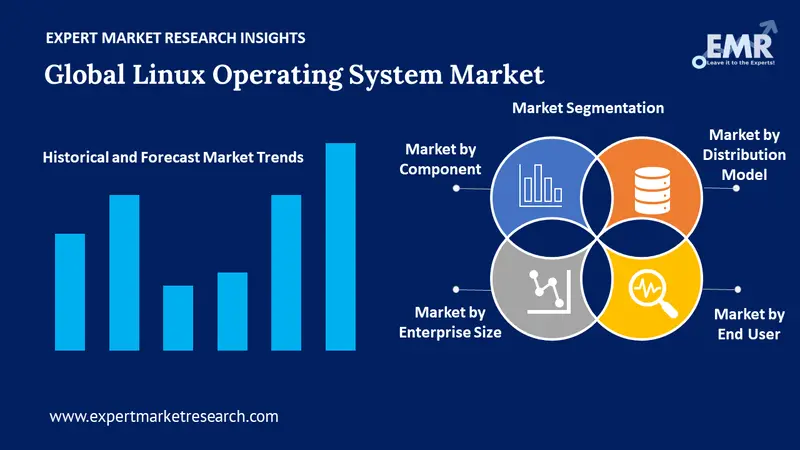
The EMR’s report titled “Global Linux Operating System Market Report and Forecast 2026-2035” offers a detailed analysis of the market based on the following segments:
Market Breakup by Component
Key Insight: Both software and services play critical roles in advancing Linux operating system adoption across enterprise workloads. Software remains central because organizations need customizable, open-source foundations optimized for performance, security, and application portability. At the same time, services are gaining traction as businesses shift toward managed environments requiring lifecycle support, compliance alignment, and secure configuration.
Market Breakup by Distribution Model
Key Insight: Servers remain fundamental in the market because organizations trust Linux for mission-critical workloads that demand stability and robust security. On the other hand, application-development deployments grow rapidly as DevOps teams increasingly standardize toolchains on Linux to streamline containerization and automation processes, creating new Linux operating system market opportunities. Desktops continue finding niche relevance among engineering, cybersecurity, and academic users who benefit from open-source flexibility.
Market Breakup by Enterprise Size
Key Insight: Enterprise size influences Linux operating systems demand patterns across large enterprise and small and medium enterprises. Large organizations lead the market due to infrastructure modernization efforts that demand high-security operating systems and transparent development models. SMEs are discovering Linux’s flexibility and performance advantages, especially as user-friendly distributions continue evolving. These organizations benefit from the OS’s minimal licensing costs and its adaptability across cloud-native, embedded, and desktop applications.
Market Breakup by Region
Key Insight: The Linux operating system market in North America remains dominant due to mature enterprise IT ecosystems and strict compliance requirements that favor secure, transparent operating systems. Europe, Middle East, and Africa adopt Linux for digital sovereignty and cost-efficiency, while Asia Pacific accelerates usage as industries digitize and embedded systems expand. Latin America continues steady adoption driven by open-source affordability and government-backed digital reforms.
Read more about this report - REQUEST FREE SAMPLE COPY IN PDF
By component, software dominates the market owing to Its flexibility and open-source customization advantages
Software holds the dominant share of the market because enterprises prefer Linux distributions that can be deeply customized for security, performance, orchestration, and workload optimization. The flexibility of kernel-level configurations, container-native compatibility, and enterprise-grade distributions enables organizations to tailor deployments to their internal architectures, accelerating the Linux operating system market revenue. Vendors like Red Hat, SUSE, and Canonical continue enhancing automation, reproducibility, and long-term support, making software the core component for digital infrastructure modernization.
Services represent the fastest-growing component as companies rely on professional support for secure integration, patch orchestration, and hybrid-cloud deployments. In May 2025, Microsoft unveiled a new Linux distribution service as part of its Azure cloud offering. Enterprise Linux users increasingly expect lifecycle management, migration assistance, and managed services that guarantee uptime and regulatory compliance. With rising cybersecurity audits and complex multi-cluster setups, organizations depend on vendor-backed engineering teams to maintain operational resilience.
By distribution model, servers lead the market due to stability and high-performance capabilities
Servers dominate the industry by a large margin as Linux has become the pillar of modern data centers, cloud environments, and mission-critical applications. Enterprises prefer Linux for its predictable performance, strong security architecture, container-native foundation, and high scalability for multi-tenant workloads. Major cloud platforms rely on hardened Linux builds for Kubernetes, virtualization, and AI/ML pipelines. In October 2025, SUSE released SUSE Linux Enterprise Server (SLES) 16, calling it AI-ready and built for long-term use.
Application development is the distribution model that is observing the fastest growth in the Linux operating system market as developers rely heavily on Linux environments for building, testing, and deploying cloud-native applications. The OS powers most container platforms, CI/CD pipelines, and microservices architectures. Enterprises adopt Linux-based toolchains to accelerate product cycles, reduce licensing costs, and maintain consistent environments across cloud and on-prem systems. Developers prefer Linux for its scripting flexibility, low overhead, and broad compatibility with open-source frameworks and AI stacks.
Large enterprises account for the dominant share of the market due to large-scale deployment needs
Large enterprises currently lead the Linux operating system market because they require high-performance computing environments with advanced security, multi-node automation, and strong vendor-backed support. Linux’s compatibility with cloud, edge, and data-intensive workflows makes it the preferred OS for industries undergoing modernization. In July 2025, Red Hat launched no-cost Enterprise Linux for Business Developers, offering teams up to 25 instances for reliable app development. Large organizations rely on Linux distributions offering hardened kernels, reproducible builds, and long-term lifecycle management.
Usage across small and medium enterprises boosts the Linux operating system market expansion as consumers adopt Linux desktops for cost efficiency, privacy, and customization. Lightweight distributions are becoming popular for programming, cybersecurity training, creative workloads, and refurbished systems. The rise of Linux gaming support and user-friendly interfaces further accelerates adoption.
Read more about this report - REQUEST FREE SAMPLE COPY IN PDF
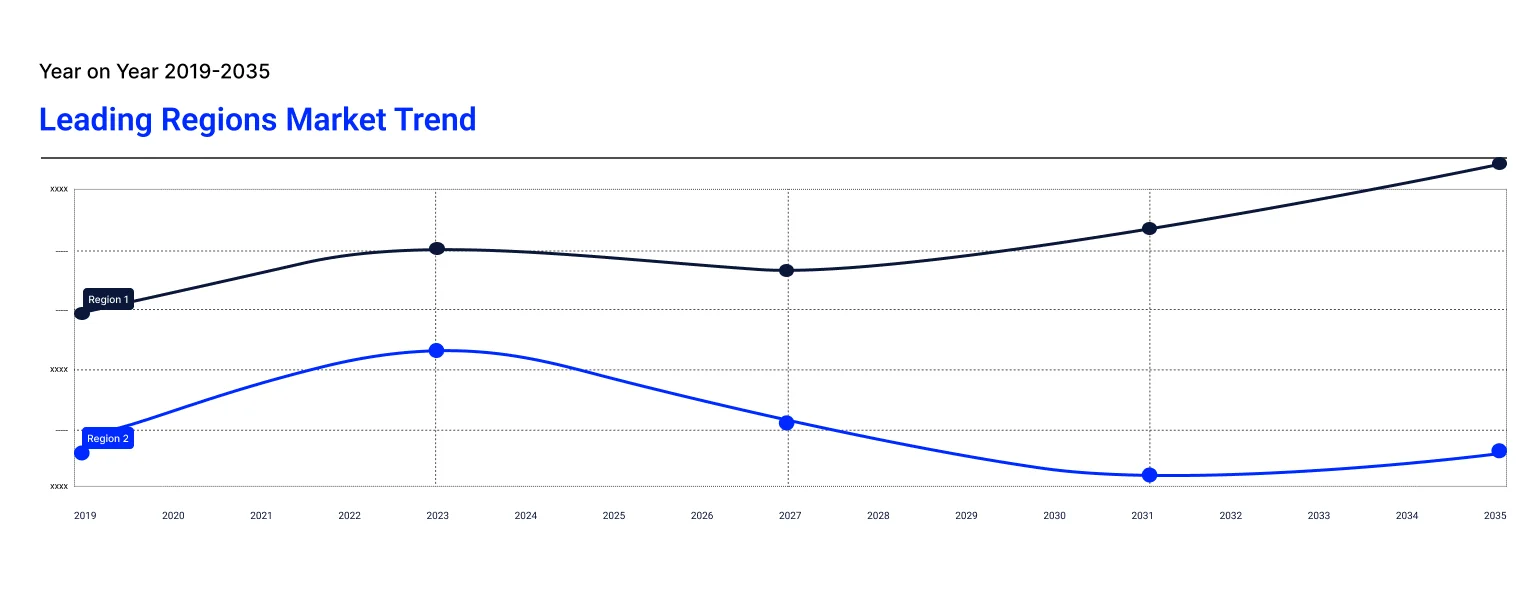
North America secures the largest share of the market due to high enterprise digitization and cloud investments
North America holds the dominant position in the market due to widespread enterprise cloud adoption, strong cybersecurity regulations, and heavy investments in digital infrastructure modernization. Leading tech companies and hyperscalers shape Linux adoption trends, pushing advanced kernel development and hardened security frameworks.
Asia Pacific is the fastest-growing regional Linux operating system market as manufacturing, telecom, and e-commerce sectors scale their infrastructure. In August 2025, China Electronics’s subsidiary Kylin Software released KylinOS V11 at the 2025 China Operating System Industry Conference, marking the launch of the first commercial operating system in China built on Linux Kernel 6.6. Governments support open-source adoption to reduce software licensing dependency, while local OEMs integrate Linux into automotive, robotics, and IoT products.
The industry is becoming more competitive as vendors push deeper into cloud-native services, secure infrastructure automation, and enterprise-grade open-source ecosystems. Most Linux operating system market players are prioritizing hardened distributions, confidential computing, and zero-trust configurations as organizations deal with rising cybersecurity pressure. Hybrid and multi-cloud deployments create another strong opportunity, compelling vendors to offer Linux builds optimized for Kubernetes, AI workloads, and high-performance computing clusters.
Linux operating system companies are also focusing on long-term support models, curated package repositories, and reproducible builds to meet compliance expectations in regulated sectors like finance and healthcare. Another major concern area is embedded and edge deployments, where vendors see growing revenue potential as automotive, robotics, and industrial devices increasingly adopt Linux-based platforms.
Amazon Web Services, established in 2006 and headquartered in Seattle, United States, plays a major role in shaping the Linux operating system ecosystem. The company offers Amazon Linux, a secure, optimized distribution designed for cloud-native workloads running across EC2, container services, and HPC clusters.
Founded in 1977 and headquartered in Austin, United States, Oracle Corporation supports the Linux market through Oracle Linux, a distribution engineered for enterprise reliability, autonomous patching, and mission-critical application workloads. The company positions its OS as a foundation for Oracle Cloud and Exadata systems, ensuring consistent performance across on-prem and cloud environments.
International Business Machines Corporation, established in 1911 and headquartered in Armonk, United States, contributes to the Linux market through IBM LinuxONE, Red Hat collaboration, and secure workloads running on hybrid and multi-cloud setups. IBM emphasizes confidential computing, encryption-by-default, and automation capabilities built around Red Hat Enterprise Linux, OpenShift, and Ansible.
SUSE S.A., founded in 1992 and headquartered in Germany, is a major open-source vendor delivering SUSE Linux Enterprise, Rancher Kubernetes, and edge-optimized operating systems. The company focuses on secure supply-chain compliance, lightweight edge deployments, and enterprise container management. SUSE’s open-source strategy allows organizations to customize infrastructure while relying on long-term support and hardened security baselines.
*Please note that this is only a partial list; the complete list of key players is available in the full report. Additionally, the list of key players can be customized to better suit your needs.*
Other key players in the market report include Zorin OS Technologies Limited and Canonical Ltd., among others.
Unlock the latest insights with our Linux operating system market trends 2026 report. Discover regional growth patterns, consumer preferences, and key industry players. Stay ahead of competition with trusted data and expert analysis. Download your free sample report today and drive informed decisions in the market.


Upto 15% Off
USD
$2499 $2249
$3999 $3599
$4999 $4249
$5999 $5099


*While we strive to always give you current and accurate information, the numbers depicted on the website are indicative and may differ from the actual numbers in the main report. At Expert Market Research, we aim to bring you the latest insights and trends in the market. Using our analyses and forecasts, stakeholders can understand the market dynamics, navigate challenges, and capitalize on opportunities to make data-driven strategic decisions.*
In 2025, the market reached an approximate value of USD 12.49 Billion.
The market is projected to grow at a CAGR of 14.20% between 2026 and 2035.
The market is estimated to witness a healthy growth in the forecast period of 2026-2035 to reach a value of USD 47.12 Billion by 2035.
Key strategies driving the market include strengthening security baselines, optimizing kernels for AI workloads, expanding managed services, enhancing edge-ready builds, and deepening multi-cloud integrations to support faster deployments and scalable, enterprise-grade Linux environments.
The key regional markets for Linux operating system are North America, EMEA, Asia Pacific, and Latin America.
The market components include software and services.
The various distribution models include application development, servers, and desktops.
The key players in the market include Amazon Web Services, Inc., Oracle Corporation, International Business Machines Corporation, SUSE S.A., Zorin OS Technologies Limited, and Canonical Ltd., among others.
Companies face challenges like maintaining secure supply chains, addressing escalating cyber threats, delivering consistent updates across global infrastructures, retaining open-source contributors, and balancing customization demands with enterprise-grade stability expectations.
Explore our key highlights of the report and gain a concise overview of key findings, trends, and actionable insights that will empower your strategic decisions.
| REPORT FEATURES | DETAILS |
| Base Year | 2025 |
| Historical Period | 2019-2025 |
| Forecast Period | 2026-2035 |
| Scope of the Report |
Historical and Forecast Trends, Industry Drivers and Constraints, Historical and Forecast Market Analysis by Segment:
|
| Breakup by Component |
|
| Breakup by Distribution Model |
|
| Breakup by Enterprise Size |
|
| Breakup by Region |
|
| Market Dynamics |
|
| Competitive Landscape |
|
| Companies Covered |
|
Datasheet
One User
USD 2,499
USD 2,249
tax inclusive*
Single User License
One User
USD 3,999
USD 3,599
tax inclusive*
Five User License
Five User
USD 4,999
USD 4,249
tax inclusive*
Corporate License
Unlimited Users
USD 5,999
USD 5,099
tax inclusive*
*Please note that the prices mentioned below are starting prices for each bundle type. Kindly contact our team for further details.*
Flash Bundle
Small Business Bundle
Growth Bundle
Enterprise Bundle
*Please note that the prices mentioned below are starting prices for each bundle type. Kindly contact our team for further details.*
Flash Bundle
Number of Reports: 3
20%
tax inclusive*
Small Business Bundle
Number of Reports: 5
25%
tax inclusive*
Growth Bundle
Number of Reports: 8
30%
tax inclusive*
Enterprise Bundle
Number of Reports: 10
35%
tax inclusive*
How To Order

Select License Type
Choose the right license for your needs and access rights.

Click on ‘Buy Now’
Add the report to your cart with one click and proceed to register.

Select Mode of Payment
Choose a payment option for a secure checkout. You will be redirected accordingly.
Strategic Solutions for Informed Decision-Making
Gain insights to stay ahead and seize opportunities.

Get insights & trends for a competitive edge.

Track prices with detailed trend reports.

Analyse trade data for supply chain insights.

Leverage cost reports for smart savings

Enhance supply chain with partnerships.

Connect For More Information
Our expert team of analysts will offer full support and resolve any queries regarding the report, before and after the purchase.
Our expert team of analysts will offer full support and resolve any queries regarding the report, before and after the purchase.
We employ meticulous research methods, blending advanced analytics and expert insights to deliver accurate, actionable industry intelligence, staying ahead of competitors.
Our skilled analysts offer unparalleled competitive advantage with detailed insights on current and emerging markets, ensuring your strategic edge.
We offer an in-depth yet simplified presentation of industry insights and analysis to meet your specific requirements effectively.




