

Consumer Insights
Uncover trends and behaviors shaping consumer choices today
Procurement Insights
Optimize your sourcing strategy with key market data
Industry Stats
Stay ahead with the latest trends and market analysis.
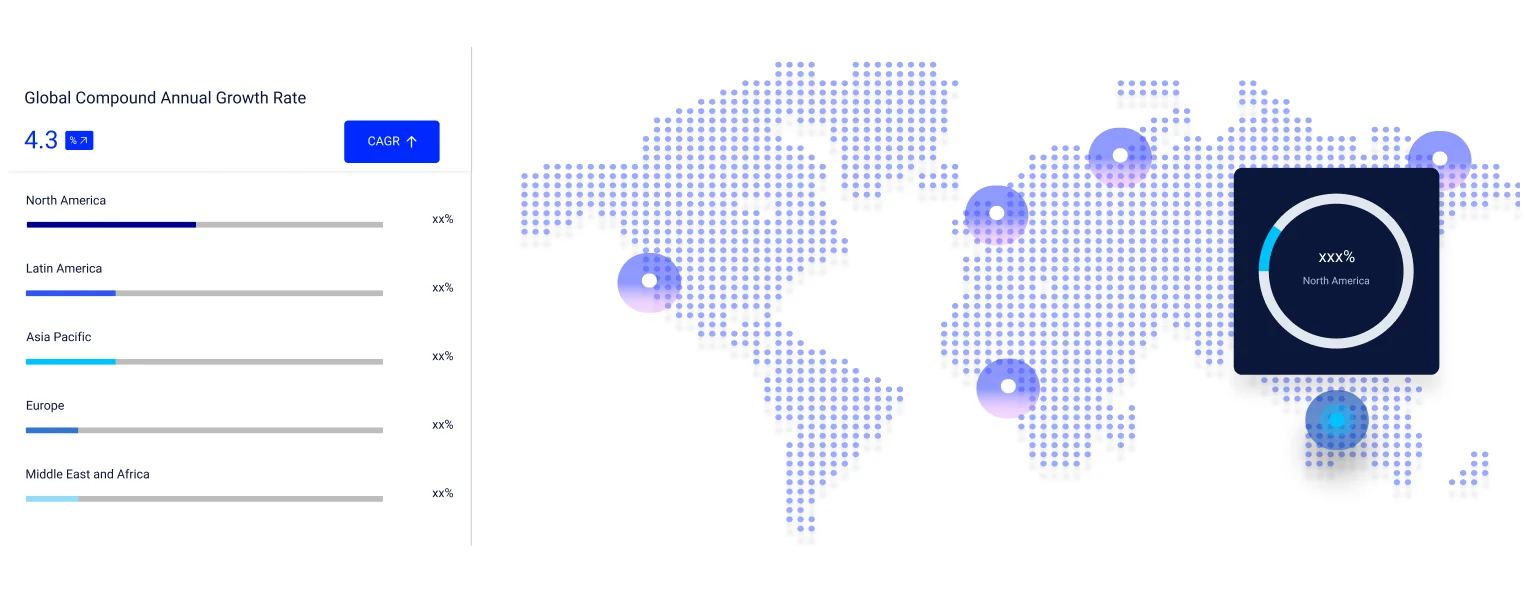
The global low-code development platform market size was valued at USD 41.71 Billion in 2025. The industry is expected to grow at a CAGR of 25.00% during the forecast period of 2026-2035 to reach a value of USD 388.45 Billion by 2035. The market growth is mainly driven by the increase in strategic partnerships, which leads to greater integration of platforms and utility for enterprises and cloud-native artificial intelligence services.
The scale of this expansion becomes clearer when viewed against the talent crisis driving it. The U.S. Bureau of Labor Statistics projects close to 200,000 unfilled software developer positions annually by 2030-and that shortage is equally acute across Europe and Asia-Pacific. Low-code development platforms are the pragmatic response, enabling organisations to build and deploy applications in days rather than months, at a fraction of traditional development costs.
Geographically, North America currently leads-accounting for roughly one-third of global revenue-but Asia-Pacific is the fastest-growing region, forecast to expand at a CAGR exceeding 29% through 2035. Government-backed programmes such as India's "Digital India" initiative and China's "Digital Silk Road" strategy are accelerating public-sector adoption at scale, while private enterprise demand surges across Japan, South Korea, and Southeast Asia.
To help organizations rapidly and intelligently build applications, alliances between vendors and top cloud and AI companies expand the capabilities of low-code development platforms, drawing large businesses to them. For instance, in February 2025, Salesforce and Google announced an extension of their partnership to incorporate the Google Gemini AI models with Salesforce’s Agentforce platform, helping to create multi-modal AI agents that can handle both images, audio, and texts, along with using the power of Google Cloud for scalability and analytics. Under this extended partnership, Salesforce applications will also utilize all of Gmail and Drive’s functionalities, offering end-to-end workflows that will fascinate large businesses looking for seamless intelligence and productivity.
Moreover, in October 2025, Salesforce continued to expand this joint strategy by enhancing Google Cloud's integration with AI in the Agentforce 360 product along with Gemini Enterprise. This exemplifies the continued trend of integrating low-code solutions with robust cloud-based artificial intelligence capabilities to facilitate enterprise digital transformation.
Compound Annual Growth Rate
25%
Value in USD Billion
2026-2035
Read more about this report - REQUEST FREE SAMPLE COPY IN PDF
At Google I/O 2025, Google introduced Stitch, an AI powered app development and frontend solution that generates UI designs and code from natural language descriptions and image prompts. By lowering technical barriers and accelerating prototyping cycles, such tools reinforce demand for low code platforms as organizations seek faster and more efficient application development.
Adalo announced a strategic partnership with DreamFactory to enable simplified backend integration and expand enterprise-grade application capabilities. This collaboration enhances reliability and integration flexibility, supporting the growing use of low-code platforms for complex and large-scale business applications.
Kissflow integrated generative AI features into its low code and no code platform, enabling app creation through AI driven workflows, natural language inputs, and automated asset generation. These capabilities streamline development processes and enhance ease of use, supporting faster enterprise adoption of low code development platforms.
FlutterFlow, a low code visual application development platform for mobile and web apps, raised USD 25.5 million in a Series A funding round led by GV, Gradient Ventures, and Xoogler Ventures. The funding will be directed toward building AI driven enterprise solutions, which is expected to improve platform scalability and automation, thereby encouraging wider enterprise adoption of low code development platforms.
Funding from investors helps low-code platform providers scale their businesses and upgrade their offerings, which consequently propels market growth. For instance, Retool announced that it raised USD 45 million in its Series C round in July 2022 from Sequoia Capital, Thrive Capital, and GV with a value of USD 3.2 billion. The purpose of the fundraiser is to hasten product development and enhance its capabilities and operations across the entire world. The low-code market has received considerable investment from various financial parties, thereby boosting the overall global low-code development platform market development.
The investment thesis behind these funding rounds is grounded in hard adoption data. Microsoft estimates that roughly 450 million of the 500 million applications expected to be developed in the coming years will rely on these platforms.
The banking and financial services sector alone commands approximately 27% of total low-code platform market share, with institutions leveraging platforms for loan origination, fraud detection workflows, and regulatory compliance automation. That level of enterprise validation gives investors a clear signal: the growth ahead is structural, not cyclical.
Acquisitions enable low-code players to add new functionalities to their offering. An acquisition worth highlighting is Wix’s acquisition of Base44 in June 2025 for approximately USD 80 million. Base44 employs natural language processing and AI to develop applications. Adding Base44 to its offering enables Wix to add conversational applications to its list of low-code development tools. This highlights how acquisitions enable platform players to add strength to their offerings and facilitate their broader adoption
The Base44 deal is part of a broader consolidation wave. Established vendors are acquiring AI-native startups to close capability gaps that would otherwise take years to build organically-and to defend against fast-moving challengers like Bubble, Appsmith, and Retool, which are gaining traction through open and freemium models.
For enterprise buyers, this consolidation is actually a positive development. It accelerates the concentration of AI, integration, and governance capabilities within platforms that also carry the enterprise-grade security and compliance required in regulated sectors like BFSI, healthcare, and government.
Upgrades in products enhance and enlarge aided platforms by simplifying intricate development processes and incorporating intelligence. Oracle, for instance, announced the general availability of Oracle APEX 24.2 in June of 2025; it improves assisted app development with features of development by gen-AI for building complex apps efficiently. Such technologies make assisted platforms more efficient and alluring for enterprises that aim to expand innovative application development with artificial intelligence.
Oracle's APEX updates reflect a market-wide shift toward what analysts call "application generation platforms"-environments where AI doesn't just assist developers but actively drafts logic, data schemas, and UI components from natural language prompts.
Healthcare is among the highest-impact sectors for these capabilities. Organisations in the sector report up to 75% reduction in development time using low-code tools compared to custom-built solutions, enabling faster deployment of patient portals, telehealth apps, and compliance reporting systems. When a compliance officer can build a reporting workflow without writing a single line of code, the ROI extends well beyond IT into organisation-wide value creation.
The addition of AI and automated components to low-code platforms can enhance adoption as a result of increased productivity and reduced barriers to development. For example, the recent release of Appian’s latest platform in the last quarter of 2024 introduced Appian Autoscale and improved AI insights. This enables enterprises to scale high-volume automated processes and make faster decisions in their applications. This kind of enhancement in low-code platforms is a measure of the evolution of low-code platforms towards being more data-driven and process-centric.
The productivity gains from these enhancements are well-quantified. A 2024 Reveal survey of 585 developers found that 90.4% reported productivity improvements using low-code tools, with 43.5% saving up to 50% of their working time.
More significantly, these platforms are empowering non-technical employees to close the gap left by developer shortages.
Vendors of low-code platforms are increasing their presence in new geographies and target audiences with a focus on innovation, as well as strategic expansion efforts. One prominent example here could be the ongoing improvements offered by Oracle to their Oracle APEX solution with the launch of Oracle APEX 24.1 back in June 2024, with features that include their AI Assistant, which allows developers to build their applications using natural language processing, apart from creating SQL commands.
Oracle's rapid APEX release cadence reflects a wider vendor urgency to capture enterprise share in emerging markets before consolidation sets in. In the Middle East, the May 2024 Low-Code No-Code Summit in Dubai drew over 300 technology executives and government officials-with vendors such as OutSystems and Mendix in attendance-signalling that Gulf governments view these platforms as a strategic path to scalable digital public services.
In Latin America, the low-code development platform market generated approximately USD 1.95 billion in 2025 and continues to grow as SMEs narrow the capability gap with larger enterprises through platform adoption. Across all these geographies, the core dynamic is identical: more software needs to be built, faster, with fewer specialist resources-and that reality is what sustains the global market's exceptional long-term growth outlook.
Read more about this report - REQUEST FREE SAMPLE COPY IN PDF
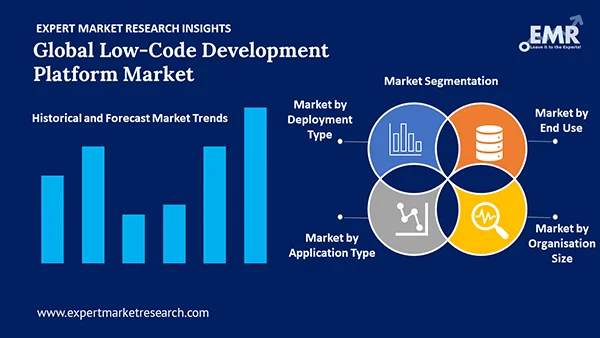
The EMR’s report titled “Global Low-Code Development Platform Market Report and Forecast 2026-2035” offers a detailed analysis of the market based on the following segments:
Market Breakup by Application
Key Insights: The global low code app development platform market scope also covers web applications, mobile applications, and desktop/server applications. The web applications offer low code solutions like Zoho Creator and Retool to help build portals and dashboards quickly. The mobile apps offer solutions like AppyPie's AI App Generator. The desktop/server applications offer complex solutions like Jitterbit's integration platform. The launch of its AI app builder in 2025 by Figma represents developments in design and app development convergence.
Market Breakup by Deployment Type
Key Insights: Low-code platforms are offered in both on-premises and cloud models. The on-premise models, such as Mendix and DronaHQ, help enterprises where there are concerns regarding data sovereignty. Some of the cloud-native platforms that offer low-code technology coupled with characteristics of AI and workflow automation are offered through Microsoft Power Platform, OutSystems Agent Workbench, and Appian AI Copilot. For instance, OutSystems Agent Workbench was introduced in 2025, which indicates cloud-first innovations in enterprise transformation.
Market Breakup by Organization Size
Key Insights: Low Code is being used in small and medium-sized enterprises and large enterprises. Small and medium-sized enterprises use platforms such as AppyPie and Zoho Creator to develop cost-effective mobile and web applications through drag and drop builders. Large enterprises use full-fledged platforms like Appian and ServiceNow for automating business processes and integrating different applications at an enterprise scale. For instance, R Systems’ purchase of Novigo Solutions in August 2025 enhances intelligent low-code automated services for BFSI and manufacturing customers at an enterprise scale.
Market Breakup by End Use
Key Insights: Use cases for low code platforms include BFSI, Retail & E commerce, Government & Defence, Healthcare, IT, Energy & Utilities, Manufacturing, and Others. BFSI, using Appian, enables quick customer onboarding and risk processes, and Zoho Creator, catering to retail and e-commerce, develops personalized order and CRM apps. Gov & Def, using Microsoft Power Apps, secures citizen services. Healthcare organizations, using Retool, implement operation dashboards, and Energy & Utilities, with Jitterbit, automate integration. Startups like StackAI, founded in 2025, depict the concept of AI agents expanding the application of low code in back-office automation.
Market Breakup by Region
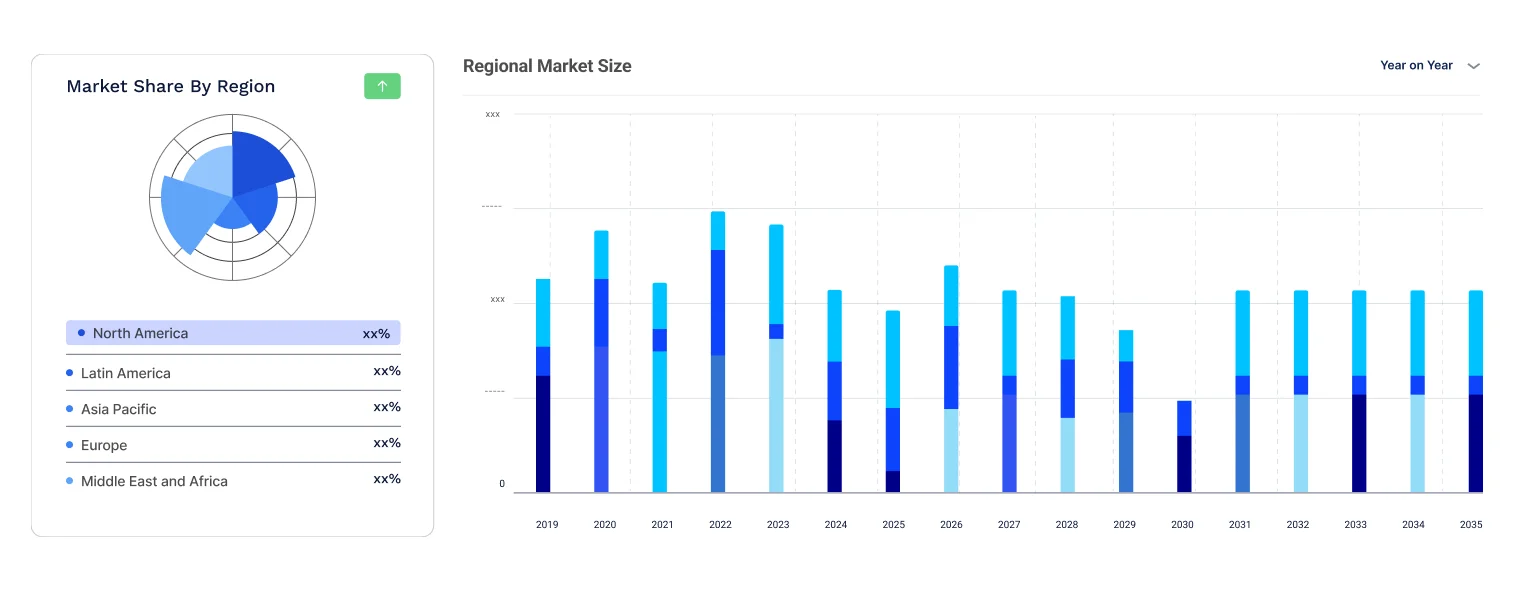
Key Insights: In region-specific details, North America, Europe, Asia Pacific, Latin America, and the Middle East & Africa have adopted low-code. North America leads due to cloud native innovation and development by Microsoft Power Platform and OutSystems. Europe is experiencing rapid development of digital services on platforms offered by Mendix and Retool. Asia Pacific is increasingly adopting low-code via solutions provided by AppyPie and Zoho Creator for small and large businesses. Latin America & Middle East & Africa is a new market experiencing a surge in demand for economically viable development solutions provided by global players.
By application, WebBased category record notable growth
Web based low code platforms are increasingly important for providing browser-enabled enterprise application and portal development, which leads to enhanced customer engagement and employee processes. Nonetheless, they are increasingly being valued for more sophisticated capabilities based on complex mission-critical development. For instance, in August 2025, OutSystems was recognized as a Leader in the IDC MarketScape for Low Code and No Code Developer Technologies 2025, thereby reflecting the efficacy of web based low code solutions. The above example strongly indicates the growing acceptance by organizations of web based low code solutions.
Desktop and server-based low code software remains an attractive investment for the enterprises as the scalability of the back end and governance call for more and more investments. Solutions such as the Mendix and Joget DX offer comprehensive automation and back-end processing capabilities that meet complex requirements. One such notable event that came into play was the collaboration of Mendix and Capgemini in the early part of 2025 for the development of scalable low code solutions for global enterprises for legacy modernization.
By deployment type, cloud deployment show significant uptake
The deployment of low code in the cloud is on the rise, with companies being attracted to scalable and team-friendly development platforms. Today, top platforms offer integrated AI and automation functionalities. For example, in September 2025, OutSystems released the Agent Workbench GA, allowing companies to develop and manage agentic AI systems on the cloud, thus fueling the deployment of low code in the cloud.
On premise deployment continues to be crucial for sectors that have heavy compliance needs, such as banking and government. Vendors with solutions for secure and locally built applications include Appian and Mendix. In August 2025, Hexaware announced that it would be partnering with Replit to provide secure “vibe coding” spaces that assist corporations with compliant on-premise low code solutions.
By organization size, SME demonstrate robust growth
Small and Medium enterprises are increasingly adopting low code solutions to automate their business and help enhance customer-facing apps even with fewer IT staff. Investments in supporting ecosystems help extend the reach and functionality of these tools. For example, SuperOffice has extended its CRM offerings by acquiring Swedish software provider i Centrum AB in August 2025 to help low code-enhanced enterprise application offerings reach more small and medium enterprises in Europe.
Large corporations remain invested in low-code platforms for upgrading existing infrastructure and supporting digital transformation initiatives. ServiceNow, OutSystems, and Appian platforms remain an indispensable part of the technology strategy for most corporations. In August 2025, OutSystems’s IDC MarketScape leadership recognition emphasized the platform’s enterprise-class capabilities for mission-critical applications, which underscored how large corporations utilize enhanced low-code platforms for developing complex scalable applications.
By end-use, retail and e Commerce sector amass substantial revenue
Retailers and e-commerce businesses are embracing low-code platforms to develop customer engagement applications, loyalty platforms, and omnichannel services rapidly. Vendors that offer rapid application development services include Salesforce, Shopware, Zoho Creator, among others. Of particular note in this regard is the evolution of Salesforce’s ecosystem signaled in the IDC MarketScape 2025 for Low Code and No Code because it indicates their focus on building personalized solutions for the retail industry using their platforms.
Low-code platforms are being used by manufacturing companies to digitalize shop floor operations, orchestration of the value chain, and operational dashboards without requiring extensive customization. There are platforms such as Siemens’s Mendix and ThingWorx by PTC, which offer industry-focused workflow processes and integrations for IIoT. In March 2025, Mendix collaborated with Capgemini to offer scalable solutions for digital factory transformation and legacy system revitalization in the manufacturing domain.
Read more about this report - REQUEST FREE SAMPLE COPY IN PDF
By region, North America leads the market growth
North America constitutes a key market as organizations have started investing in sophisticated, AI-based low code platforms capable of promoting innovation. Companies like OutSystems, Appian, and Salesforce have started upgrading cloud native as well as AI-augmented features of their solutions aimed towards mitigating enterprise complexity. For example, OutSystems was recognized as a Leader in the IDC MarketScape 2025 evaluation, symbolizing a high adoption rate of AI-augmented low code solutions in the North America market.
The trend of low code adoption across Europe is increasing as regional players enhance their offerings with acquisition strategies to meet their respective enterprise needs. For instance, there was the acquisition of i-Centrum AB by SuperOffice in August 2025 to offer CRM module and workflow automation to its platform to improve enterprises’ development of business applications.
Industry players within the low code development platform market are concentrating on AI integration, workflow automation, and cloud scalability to enable digital transformation for businesses. Players within the low code development platform market are also enhancing their solutions to provide Design-to-Delivery applications much faster than before, while collaboration and integration solutions enable seamless integration of solutions with existing IT systems.
Software vendors are also focusing on industry-specific solutions, ecosystem enrichment, and deployment agility. Their strategies include enhancing platform usability, supporting on-cloud and on-premises deployment, and enabling advanced analytics and automation capabilities. These measures would help industry leaders achieve faster adoption, increased efficiency, and a leadership position in the rapidly evolving low-code development platform ecosystem.
SalesForce.com Inc., founded in the year 1999 and based in San Francisco, California, is a major worldwide cloud-based CRM and enterprise software solutions provider. The company concentrates on delivering scalable low-code platforms, AI-powered automation, and business workflow optimization to enable businesses to improve customer engagement and operational efficiencies.
It was founded in 1975 and is based in Redmond, Washington. The company develops various software, cloud solutions, and low-code platforms. Its Power Platform provides businesses with an opportunity to build apps, automate processes, and implement AI technology.
Oracle Corporation is an international software and cloud services firm founded in 1977 and headquartered in Austin, Texas. This company has diverse offerings of low-code and database-driven development platforms for business automation, analytics, and scalable applications for deployment.
Appian Corporation is a low-code automation and business process management software firm founded in 1999 and headquartered in McLean, Virginia. The platforms developed by this firm aid in rapid application development and business workflow automation.
*Please note that this is only a partial list; the complete list of key players is available in the full report. Additionally, the list of key players can be customized to better suit your needs.*
Other competing companies in this market include Zoho Corporation, among others.
Explore the latest trends shaping the Global Low-Code Development Platform Market 2026-2035 with our in-depth report. Gain strategic insights, future forecasts, and key market developments that can help you stay competitive. Download a free sample report or contact our team for customized consultation on Global low-code development platform market trends 2026.
Low-Code Workflow Process Digitisation
AI-Augmented Low-Code Development Tools
Cloud Low-Code API Development Outlook


Upto 15% Off
USD
$2499 $2249
$3999 $3599
$4999 $4249
$5999 $5099


*While we strive to always give you current and accurate information, the numbers depicted on the website are indicative and may differ from the actual numbers in the main report. At Expert Market Research, we aim to bring you the latest insights and trends in the market. Using our analyses and forecasts, stakeholders can understand the market dynamics, navigate challenges, and capitalize on opportunities to make data-driven strategic decisions.*
In 2025, the global low-code development platform market reached an approximate value of USD 41.71 Billion.
The market is projected to grow at a CAGR of 25.00% between 2026 and 2035.
The market is estimated to witness healthy growth in the forecast period of 2026-2035 to reach about USD 388.45 Billion by 2035.
Key strategies driving the market include AI and automation integration, cloud and on-premises deployment flexibility, industry-specific solutions, platform enhancements, strategic partnerships, and ecosystem expansion to accelerate adoption and support enterprise digital transformation.
Reduced operational costs of low-code development platforms, rising awareness regarding low-code development platforms, and deployment of low-code development platform in the healthcare sector, owing to the requirement of managing a large patient database, are the key trends of the market.
The major regional markets for low-code development platform are North America, Latin America, the Asia Pacific, Europe, and the Middle East and Africa.
The significant application types of low-code development platform are web-based, mobile-based, and desktop and server-based.
The leading deployment types include on-premise and cloud.
The major organisation sizes of low-code development platform include small and medium enterprises, and large enterprises.
The significant end uses of low-code development platform are BFSI, retail and e-commerce, government and defence, healthcare, information technology, energy and utilities, and manufacturing, among others.
The key players in the market include Salesforce.com Inc., Microsoft Corporation, Oracle Corporationl, Appian Corporation, Zoho Corporation, among others.
The global low-code development platform market faces security and compliance concerns, integration complexities with legacy systems, limited customization for complex applications, shortage of skilled developers, and high initial platform costs in some regions.
Explore our key highlights of the report and gain a concise overview of key findings, trends, and actionable insights that will empower your strategic decisions.
| REPORT FEATURES | DETAILS |
| Base Year | 2025 |
| Historical Period | 2019-2025 |
| Forecast Period | 2026-2035 |
| Scope of the Report |
Historical and Forecast Trends, Industry Drivers and Constraints, Historical and Forecast Market Analysis by Segment:
|
| Breakup by Application Type |
|
| Breakup by Deployment Type |
|
| Breakup by Organisation Size |
|
| Breakup by End Use |
|
| Breakup by Region |
|
| Market Dynamics |
|
| Competitive Landscape |
|
| Companies Covered |
|
| Report Price and Purchase Option | Explore our purchase options that are best suited to your resources and industry needs. |
| Delivery Format | Delivered as an attached PDF and Excel through email, with an option of receiving an editable PPT, according to the purchase option. |
Datasheet
One User
USD 2,499
USD 2,249
tax inclusive*
Single User License
One User
USD 3,999
USD 3,599
tax inclusive*
Five User License
Five User
USD 4,999
USD 4,249
tax inclusive*
Corporate License
Unlimited Users
USD 5,999
USD 5,099
tax inclusive*
*Please note that the prices mentioned below are starting prices for each bundle type. Kindly contact our team for further details.*
Flash Bundle
Small Business Bundle
Growth Bundle
Enterprise Bundle
*Please note that the prices mentioned below are starting prices for each bundle type. Kindly contact our team for further details.*
Flash Bundle
Number of Reports: 3
20%
tax inclusive*
Small Business Bundle
Number of Reports: 5
25%
tax inclusive*
Growth Bundle
Number of Reports: 8
30%
tax inclusive*
Enterprise Bundle
Number of Reports: 10
35%
tax inclusive*
How To Order

Select License Type
Choose the right license for your needs and access rights.

Click on ‘Buy Now’
Add the report to your cart with one click and proceed to register.

Select Mode of Payment
Choose a payment option for a secure checkout. You will be redirected accordingly.
Strategic Solutions for Informed Decision-Making
Gain insights to stay ahead and seize opportunities.

Get insights & trends for a competitive edge.

Track prices with detailed trend reports.

Analyse trade data for supply chain insights.

Leverage cost reports for smart savings

Enhance supply chain with partnerships.

Connect For More Information
Our expert team of analysts will offer full support and resolve any queries regarding the report, before and after the purchase.
Our expert team of analysts will offer full support and resolve any queries regarding the report, before and after the purchase.
We employ meticulous research methods, blending advanced analytics and expert insights to deliver accurate, actionable industry intelligence, staying ahead of competitors.
Our skilled analysts offer unparalleled competitive advantage with detailed insights on current and emerging markets, ensuring your strategic edge.
We offer an in-depth yet simplified presentation of industry insights and analysis to meet your specific requirements effectively.




