

Consumer Insights
Uncover trends and behaviors shaping consumer choices today
Procurement Insights
Optimize your sourcing strategy with key market data
Industry Stats
Stay ahead with the latest trends and market analysis.


The Middle East and Africa infectious disease immunoassay testing market was valued at USD 710.00 Million in 2025 and is expected to grow at a CAGR of 2.90%, reaching USD 944.96 Million by 2035. The market growth is driven by increasing infectious disease surveillance, expanding laboratory automation, rising adoption of advanced immunoassay technologies, supportive public health initiatives, and continuous investments in high-throughput diagnostic infrastructure across Middle East and Africa.
Compound Annual Growth Rate
2.9%
Value in USD Million
2026-2035
Read more about this report - Request a Free Sample
Infectious disease immunoassay testing is evolving with continuous advancements in diagnostic technologies that enable rapid, accurate, and reliable detection of infectious pathogens. These innovations are strengthening disease diagnosis, supporting timely clinical decision-making, and improving patient outcomes across healthcare settings. The market was valued at USD 710.00 Million in 2025, driven by the rising prevalence of infectious diseases, increasing healthcare expenditure, and expanding diagnostic infrastructure across the region. The growing awareness of early disease detection and increasing adoption of advanced immunoassay testing technologies are also expanding the market.
|
Analysis Type |
Factors |
Example |
|
Market Growth Drivers |
The market is supported by rising HIV and malaria screening needs, expanding domestic diagnostic manufacturing, reduced import dependence, and wider access to rapid testing. |
In April 2026, Uganda launched locally manufactured rapid test kits for HIV and malaria alongside a national HIV testing algorithm. |
|
Market Restraints |
Market development is limited by product quality concerns, unreliable test results, stricter supplier scrutiny, procurement disruptions, and rising validation requirements. |
In July 2026, Mozambique’s ANARME suspended malaria, HIV, and HIV-syphilis rapid tests manufactured by Meril Diagnostics following quality-management concerns. |
|
Market Opportunities |
Opportunities are increasing through technology transfer, local manufacturing partnerships, workforce development, affordable test production, and improved diagnostic access in underserved communities. |
In May 2025, WHO and the Medicines Patent Pool enabled Nigeria’s Codix Bio to manufacture rapid tests using SD Biosensor technology. |
This section analyzes factors influencing the market, including infectious disease prevalence, healthcare infrastructure expansion, laboratory modernization, regulatory frameworks, government initiatives, diagnostic technology adoption, healthcare investments, and improving access to immunoassay testing services.
Local Manufacturing Initiatives to Accelerate Regional Market Adoption Rates
Rising HIV and malaria screening needs and expanding domestic manufacturing are strengthening diagnostic access across African healthcare systems. For instance, in April 2026, Uganda launched locally manufactured rapid test kits for HIV and malaria, alongside a national HIV testing algorithm. This initiative may support market growth by reducing import dependence, improving supply continuity, shortening procurement timelines, and expanding availability of affordable immunoassay tools across public clinics, community programs, and regional laboratories throughout the country more widely.
Product Quality Concerns Increase Compliance Pressure Across Regional Diagnostic Systems
High disease burdens and heavy reliance on rapid testing make product quality and reliable clinical performance essential across African health programs. For instance, in July 2026, Mozambique’s ANARME suspended malaria, HIV, and HIV-syphilis rapid diagnostic tests manufactured by Meril Diagnostics. These market restraints may increase supplier scrutiny, interrupt procurement, require replacement inventories, and raise validation costs for governments, laboratories, distributors, and healthcare providers operating across the country’s diagnostic system.
Technology Transfer Agreements Advancing Regional Market Expansion and Commercial Access
Limited regional production and recurring supply disruptions are encouraging technology transfer and investment in locally manufactured diagnostics. For instance, in May 2025, WHO and the Medicines Patent Pool announced a sublicense enabling Nigeria’s Codix Bio to develop and manufacture rapid tests using SD Biosensor technology. This agreement may create market opportunities by expanding African production capacity, reducing import reliance, supporting workforce development and improving access to affordable HIV and other infectious disease tests.
Domestic Production Partnerships to Support Regional Diagnostic Market Expansion
Government procurement priorities and regional supply resilience are shifting diagnostic strategies toward domestic manufacturing and technology partnerships. For instance, in July 2025, Tanzania announced plans to establish local production of rapid tests for HIV, syphilis, and hepatitis, with manufacturing targeted to begin in 2026. These market trends may encourage additional public-private agreements, strengthen local technical capabilities, reduce testing delays, and broaden access across hospitals, clinics, laboratories, and maternal healthcare programs.
Laboratory Testing Likely to Dominate the Market Segment by Type of Testing
Growing laboratory modernization, expanding centralized diagnostic networks, and increasing demand for accurate infectious disease detection continue supporting advanced testing capabilities throughout the Middle East and Africa. Central laboratories remain essential for managing high testing volumes efficiently. Laboratory testing held about 69% market share in the historical period and is likely to dominate the market during the forecast period, supported by automation investments, healthcare expansion, and rising diagnostic requirements.
Read more about this report - Request a Free Sample
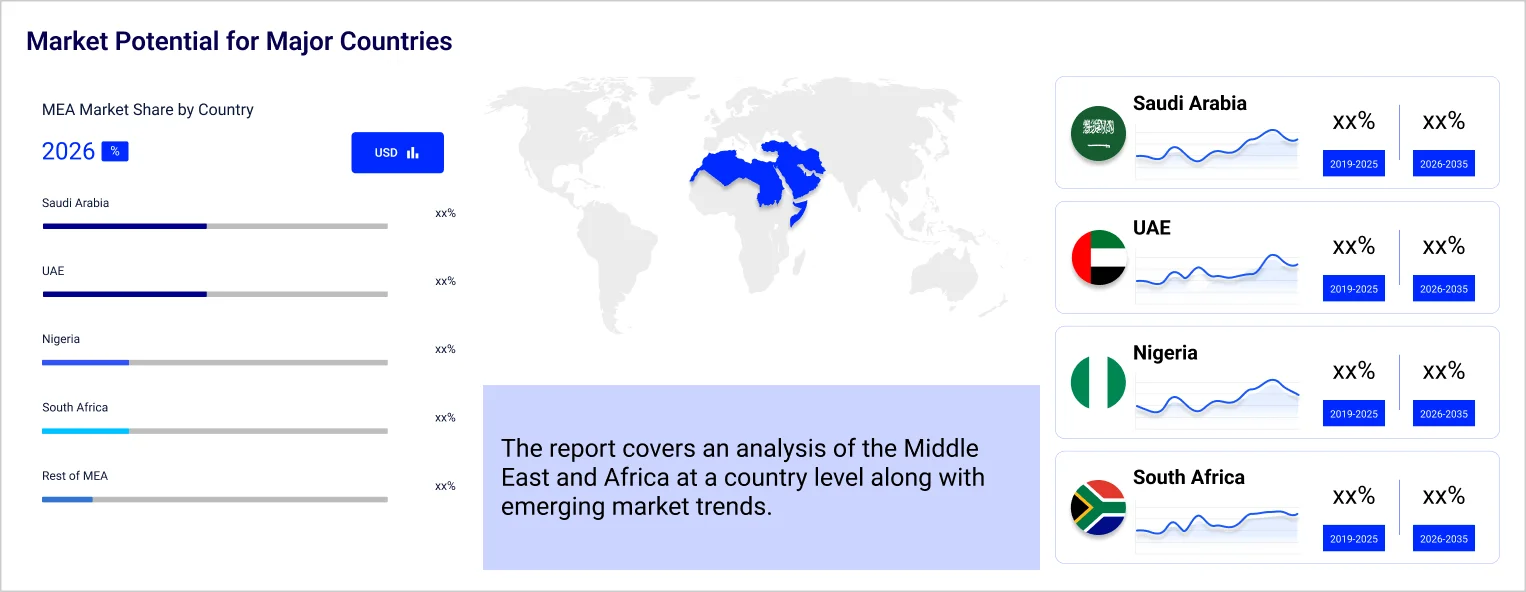
Saudi Arabia maintains a strong position within the Middle East and Africa infectious disease immunoassay testing market through expanding healthcare infrastructure, national disease surveillance initiatives, and investments in laboratory modernization. These efforts continue strengthening regional diagnostic capabilities. Saudi Arabia held about 31% market share in the historical period and is likely to dominate the market during the forecast period, supported by healthcare transformation programs and increasing diagnostic investments.
The key features of the market report comprise strategic initiatives by the leading players. The major companies in the market are as follows:
F. Hoffmann-La Roche Ltd., headquartered in Basel, Switzerland, was founded in 1896. The company offers immunoassay analyzers, diagnostic reagents, molecular diagnostics, and infectious disease testing solutions supporting laboratories, hospitals, and public health programs worldwide.
Abbott Laboratories, headquartered in Abbott Park, Illinois, USA, was established in 1888. Its portfolio includes immunoassay platforms, rapid diagnostic tests, laboratory analyzers, and infectious disease screening solutions serving hospitals, laboratories, and point-of-care settings.
Danaher Corporation, headquartered in Washington, D.C., USA, was founded in 1984. Through its diagnostics businesses, the company provides immunoassay instruments, laboratory automation, molecular diagnostics, and infectious disease testing technologies for clinical laboratories globally.
bioMérieux, headquartered in Marcy-l'Étoile, France, was established in 1963. The company develops infectious disease diagnostics, immunoassay systems, microbiology solutions, laboratory instruments, and reagents supporting clinical laboratories, hospitals, and public health surveillance worldwide.
Other key players in the market include Thermo Fisher Scientific Inc., Hologic, Inc., Becton, Dickinson and Company, Revvity, Inc., QIAGEN N.V., and Siemens Healthineers AG.
*Please note that this is only a partial list; the complete list of key players is available in the full report. Additionally, the list of key players can be customized to better suit your needs.*
The market report offers a detailed analysis of the market based on the following segments:
Market Breakup by Product and Service
This segmentation categorizes the market by essential testing products and supporting services required for infectious disease immunoassay workflows. It reflects procurement priorities, laboratory efficiency requirements, recurring consumable demand, and integrated diagnostic solution adoption.
Market Breakup by Type of Testing
This segmentation evaluates infectious disease immunoassay testing based on clinical testing settings, reflecting differences in diagnostic workflows, turnaround requirements, healthcare accessibility, and deployment strategies across centralized laboratories and decentralized healthcare environments.
Market Breakup by Sample Type
This segmentation classifies immunoassay testing according to biological specimens utilized for infectious disease detection. Sample selection influences diagnostic accuracy, workflow efficiency, assay compatibility, and clinical applicability across diverse healthcare settings.
Market Breakup by Disease Type
This segmentation assesses immunoassay testing demand across major infectious disease categories, reflecting evolving diagnostic priorities, pathogen-specific testing requirements, surveillance programs, and healthcare efforts supporting timely disease identification and clinical management.
Market Breakup by Technology
This segmentation classifies immunoassay testing according to analytical technologies supporting infectious disease detection. Diverse testing platforms enable varying performance characteristics, laboratory integration capabilities, automation levels, and diagnostic applications across healthcare environments.
Market Breakup by Application
This segmentation examines immunoassay utilization across diagnostic and preventive healthcare activities. Applications support disease confirmation, population surveillance, early detection initiatives, and clinical decision-making, strengthening infectious disease management throughout Middle East and Africa.
Market Breakup by End User
This segmentation analyzes healthcare institutions utilizing infectious disease immunoassay testing for routine diagnostics, research, surveillance, and patient management. End-user diversity reflects broad adoption across clinical, academic, and specialized diagnostic environments.
Market Breakup by Region
This segmentation evaluates market performance across key Middle East and Africa countries, reflecting differences in healthcare infrastructure, diagnostic capabilities, infectious disease burden, regulatory environments, and investments supporting immunoassay testing adoption and commercialization.
This report is developed through a robust mixed-methods research design combining:


Upto 15% Off
USD
$4299 $3869
$2699 $2429
$5799 $4949
$6999 $5949


*While we strive to always give you current and accurate information, the numbers depicted on the website are indicative and may differ from the actual numbers in the main report. At Expert Market Research, we aim to bring you the latest insights and trends in the market. Using our analyses and forecasts, stakeholders can understand the market dynamics, navigate challenges, and capitalize on opportunities to make data-driven strategic decisions.*
Explore our key highlights of the report and gain a concise overview of key findings, trends, and actionable insights that will empower your strategic decisions.
| REPORT FEATURES | DETAILS |
| Base Year | 2025 |
| Historical Period | 2019-2025 |
| Forecast Period | 2026-2035 |
| Scope of the Report |
Historical and Forecast Trends, Industry Drivers and Constraints, Historical and Forecast Market Analysis by Segment:
|
| Breakup by Product and Service |
|
| Breakup by Type of Testing |
|
| Breakup by Sample Type |
|
| Breakup by Disease Type |
|
| Breakup by Technology |
|
| Breakup by Application |
|
| Breakup by End User |
|
| Breakup by Region |
|
| Market Dynamics |
|
| Supplier Landscape |
|
| Companies Covered |
|
Single User License
One User
USD 4,299
USD 3,869
tax inclusive*
Datasheet
One User
USD 2,699
USD 2,429
tax inclusive*
Five User License
Five User
USD 5,799
USD 4,949
tax inclusive*
Corporate License
Unlimited Users
USD 6,999
USD 5,949
tax inclusive*
*Please note that the prices mentioned below are starting prices for each bundle type. Kindly contact our team for further details.*
Flash Bundle
Small Business Bundle
Growth Bundle
Enterprise Bundle
*Please note that the prices mentioned below are starting prices for each bundle type. Kindly contact our team for further details.*
Flash Bundle
Number of Reports: 3
20%
tax inclusive*
Small Business Bundle
Number of Reports: 5
25%
tax inclusive*
Growth Bundle
Number of Reports: 8
30%
tax inclusive*
Enterprise Bundle
Number of Reports: 10
35%
tax inclusive*
How To Order

Select License Type
Choose the right license for your needs and access rights.

Click on ‘Buy Now’
Add the report to your cart with one click and proceed to register.

Select Mode of Payment
Choose a payment option for a secure checkout. You will be redirected accordingly.
Strategic Solutions for Informed Decision-Making
Gain insights to stay ahead and seize opportunities.

Get insights & trends for a competitive edge.

Track prices with detailed trend reports.

Analyse trade data for supply chain insights.

Leverage cost reports for smart savings

Enhance supply chain with partnerships.

Connect For More Information
Our expert team of analysts will offer full support and resolve any queries regarding the report, before and after the purchase.
Our expert team of analysts will offer full support and resolve any queries regarding the report, before and after the purchase.
We employ meticulous research methods, blending advanced analytics and expert insights to deliver accurate, actionable industry intelligence, staying ahead of competitors.
Our skilled analysts offer unparalleled competitive advantage with detailed insights on current and emerging markets, ensuring your strategic edge.
We offer an in-depth yet simplified presentation of industry insights and analysis to meet your specific requirements effectively.




