

Consumer Insights
Uncover trends and behaviors shaping consumer choices today
Procurement Insights
Optimize your sourcing strategy with key market data
Industry Stats
Stay ahead with the latest trends and market analysis.
The robotic wing assembly systems market was valued at USD 0.57 Billion in 2025. The market is expected to grow at a CAGR of 7.70% during the forecast period of 2026-2035 to reach a value of USD 1.20 Billion by 2035. Rising commercial aircraft production rates, growing adoption of composite wing structures, and increasing demand for precision and repeatability in aerospace manufacturing are collectively driving market growth.
The Robotic Wing Assembly Systems market is shaped by escalating commercial aircraft production rates and the growing complexity of modern wing structures. North America holds the largest share of the market, valued at approximately 39.8% in 2025, supported by the presence of major aircraft OEMs, advanced aerospace manufacturing ecosystems, and strong defense spending. Articulated robots account for approximately 47.5% of the market, valued at roughly USD 289.4 million, reflecting their multi-axis reach and programmable dexterity for drilling, countersinking, and fastener installation along complex wing spar and rib geometries.
Established aerospace automation suppliers are reinforcing their market presence through continued investment in precision robotics, composite handling capabilities, and aerospace-certified system integration rather than relying on a single growth lever. In April 2026, for example, FANUC Corporation debuted its CRX-3iA cobot alongside new capabilities for its CRX collaborative robot lineup, expanding automation options for manufacturers across a range of payload and precision requirements. This continued pace of product development is helping leading suppliers maintain reliable delivery of precision robotic systems to aircraft OEMs and Tier-1 suppliers even as aerospace production rates and composite material adoption continue to evolve.
The competitive landscape remains moderately consolidated, with supply concentrated among specialized aerospace automation integrators such as Electroimpact, JH Robotics, and Broetje-Automation alongside major industrial robot manufacturers including KUKA, ABB, and FANUC that maintain deep robotics engineering expertise and established relationships with aircraft OEMs. Participation requires sustained investment in precision drilling and fastening technology, composite handling capabilities, and aerospace certification, creating meaningful entry barriers and reinforcing the position of long-established players across commercial, military, and UAV wing assembly programs.
Compound Annual Growth Rate
7.7%
Value in USD Billion
2026-2035
Read more about this report - REQUEST FREE SAMPLE COPY IN PDF
|
Robotic Wing Assembly Systems Market Report Summary |
Description |
Value |
|
Base Year |
USD Billion |
2025 |
|
Historical Period |
USD Billion |
2019-2025 |
|
Forecast Period |
USD Billion |
2026-2035 |
|
Market Size 2025 |
USD Billion |
0.57 |
|
Market Size 2035 |
USD Billion |
1.20 |
|
CAGR 2019-2025 |
Percentage |
XX% |
|
CAGR 2026-2035 |
Percentage |
7.70% |
|
CAGR 2026-2035 - Market by Region |
Asia Pacific |
10.5% |
|
CAGR 2026-2035 - Market by Robot Type |
Collaborative Robots (Cobots) |
9.6% |
|
CAGR 2026-2035 - Market by Aircraft Type |
Unmanned Aerial Vehicles (UAVs) |
9.8% |
|
2025 Market Share by Region |
North America |
39.8% |
The robotic wing assembly systems market is being reshaped by rising commercial aircraft production rates, growing adoption of collaborative robots for confined wing-box environments, and increasing use of composite wing structures requiring specialized robotic handling. Expanding investment in UAV and eVTOL production programs is further reshaping the competitive landscape.
At MACH 2026, FANUC UK demonstrated a live automated drilling cell built by Airbus incorporating FANUC robot technology, employing an M-800iA/60 six-axis robot paired with a CNC-controlled drilling effector and a mobile platform, both designed and built by Airbus. The system delivered improved drilling accuracy and increased productivity on aerospace components while freeing technicians for higher-value tasks. The collaboration illustrates how OEMs like Airbus are partnering directly with robotics suppliers to co-develop precision drilling systems for wing and airframe assembly.
ABB Robotics launched its PoWa cobot family, designed to deliver industrial-grade performance in collaborative robotics across manufacturing sectors including aerospace. The launch strengthened ABB's position in the growing collaborative robotics segment. Other manufacturers can pursue similarly industrial-grade cobot platforms to compete for sealant application and inspection tasks previously reserved for fixed-axis systems.
KUKA launched mosaixx, an open, collaborative cloud platform giving system integrators access to solutions for digitalizing and automating factory floors regardless of manufacturer. The platform positioned KUKA to serve the broader automation software ecosystem beyond its own hardware. Other companies can develop similarly open, manufacturer-agnostic platforms to capture value as digitalization spreads across aerospace production.
Broetje-Automation and Spirit AeroSystems completed a CCPS project automating aircraft preform production, expanding robotic handling capability for early-stage composite wing component manufacturing. The completion strengthened Broetje-Automation's position in composite-specific aerospace automation. Other companies can pursue similar joint completion projects with aerostructure suppliers to demonstrate capability ahead of broader program adoption.
The increasing use of carbon fiber reinforced polymer (CFRP) wings in modern aircraft is creating new opportunities for robotic assembly systems, as composite wing structures require specialized robotic handling, precision drilling, and automated inspection distinct from traditional aluminum airframes. New aircraft programs focused on fuel efficiency and lightweight design are expected to drive further investment in robotic composite wing assembly. For example, in October 2024, India and the United States signed a contract for 31 MQ-9B Predator drones, a large-volume order expected to increase wing structure production requirements and support continued investment in automated composite wing assembly capacity.
Collaborative robots are increasingly being deployed to operate alongside human technicians in confined wing-box environments without requiring full safety guarding, addressing a longstanding limitation of traditional fixed-axis and heavy-payload articulated systems. This shift is broadening automation access for tasks such as sealant application and inspection that were previously performed manually. In December 2025, for instance, Comau unveiled a collaborative remote inspection robot for non-invasive aircraft wing inspection, illustrating how cobots are expanding into confined-space, human-collaborative aerospace tasks previously reserved for manual work.
Aerospace manufacturers are increasingly emphasizing phased adoption strategies for next-generation automation upgrades rather than wholesale system replacement, reflecting cost challenges associated with integrating advanced robotics into existing production lines. This gradual approach is allowing manufacturers to balance capital investment against production continuity. In July 2026, for example, the U.S. Federal Aviation Administration allowed Boeing to resume issuing airworthiness certificates for its 737 MAX and 787 programs following months of safety review, while confirming it will continue rigorous oversight of production quality trends and critical assembly activities, sustaining pressure on manufacturers to invest in automated, traceable wing assembly lines that can demonstrate consistent process control.
Rising defense, commercial drone, and eVTOL production programs are expanding the addressable applications for robotic wing assembly systems beyond traditional commercial and military fixed-wing aircraft. Unmanned platforms often require different tolerances, smaller production batches, and more flexible tooling than high-volume commercial aircraft programs. Vertical Aerospace, for example, reported progress toward full-scale piloted wingborne flight with its all-electric eVTOL prototype in 2025, alongside a long-term partnership with Honeywell to certify critical flight control and aircraft management systems.
Manufacturers are increasingly prioritizing multi-axis robotic flexibility to handle drilling, countersinking, and fastener installation along complex wing spar and rib geometries that fixed-axis systems cannot adapt to. Programmable dexterity is becoming a key differentiator as wing designs incorporate more variable panel curvature to improve aerodynamic efficiency. KUKA's expansive assembly robot series, for example, is designed to handle applications of varying shapes and sizes with precision across industries, reflecting this broader shift toward flexible, reconfigurable automation.
The Expert Market Research's report titled "Robotic Wing Assembly Systems Market Report and Forecast 2026-2035" offers a detailed analysis of the market based on the following segments:
Market Breakup by Robot Type
Key Insight: Articulated robots account for approximately 47.5% of the market by robot type, reflecting their multi-axis reach and programmable dexterity for drilling, countersinking, and fastener installation along complex wing spar and rib geometries where fixed-axis systems cannot adapt to variable panel curvature. Electroimpact deploys articulated robotic systems extensively across Boeing 777X wing assembly lines, where six-axis configurations enable continuous path drilling with positional tolerances below plus or minus 0.1 millimeters. SCARA robots serve component placement and adhesive application tasks requiring fast, precise horizontal motion. Collaborative robots (cobots) are the fastest-growing robot type, valued for their ability to operate alongside human technicians in confined wing-box environments without full safety guarding; in June 2026, for example, an aerospace supplier deployed a dual-gripper cobot to automate avionics loading and unloading for a two-hour test cycle used on Airbus A350 XWB computer units, illustrating how cobots are extending into precision testing and handling tasks once performed manually. Others, including gantry and fixed-axis systems, continue to serve high-volume, repetitive drilling applications.
Market Breakup by Automation Level
Key Insight: Fully automated systems hold the largest share of the market by automation level, driven by demand for precision, scalability, and reduced human intervention in aerospace manufacturing; KUKA AG has deployed fully automated robotic drilling solutions in aerospace manufacturing facilities to support advanced wing assembly. Fully automated systems are also the fastest-growing segment, forecast to record a CAGR of 8.1% as smart factory initiatives accelerate. Semi-automated systems continue to serve manufacturers balancing automation investment against production flexibility, particularly for lower-volume or highly customized wing programs. Others, including hybrid manual-assisted configurations, support legacy production lines during phased automation upgrades.
Market Breakup by Aircraft Type
Key Insight: Commercial aircraft represent the largest aircraft type segment, accounting for approximately 56.2% of the market, as high-rate narrow-body production programs such as the Airbus A320neo family and Boeing 737 MAX generate sustained demand for robotic wing assembly capacity. Military aircraft continue to provide steady, specification-driven demand tied to defense procurement cycles and long-service-life production programs. Unmanned aerial vehicles (UAVs) are the fastest-growing aircraft type, driven by increasing defense, commercial drone, and eVTOL production; in August 2026, for example, Archer Aviation announced a manufacturing partnership with a legacy aerospace leader to scale production of its Midnight eVTOL aircraft, aiming to bridge the gap between prototype-level output and mass-market fleet production. Others, including experimental and general aviation aircraft, continue to represent a smaller, specialized share of overall demand.
Market Breakup by Region
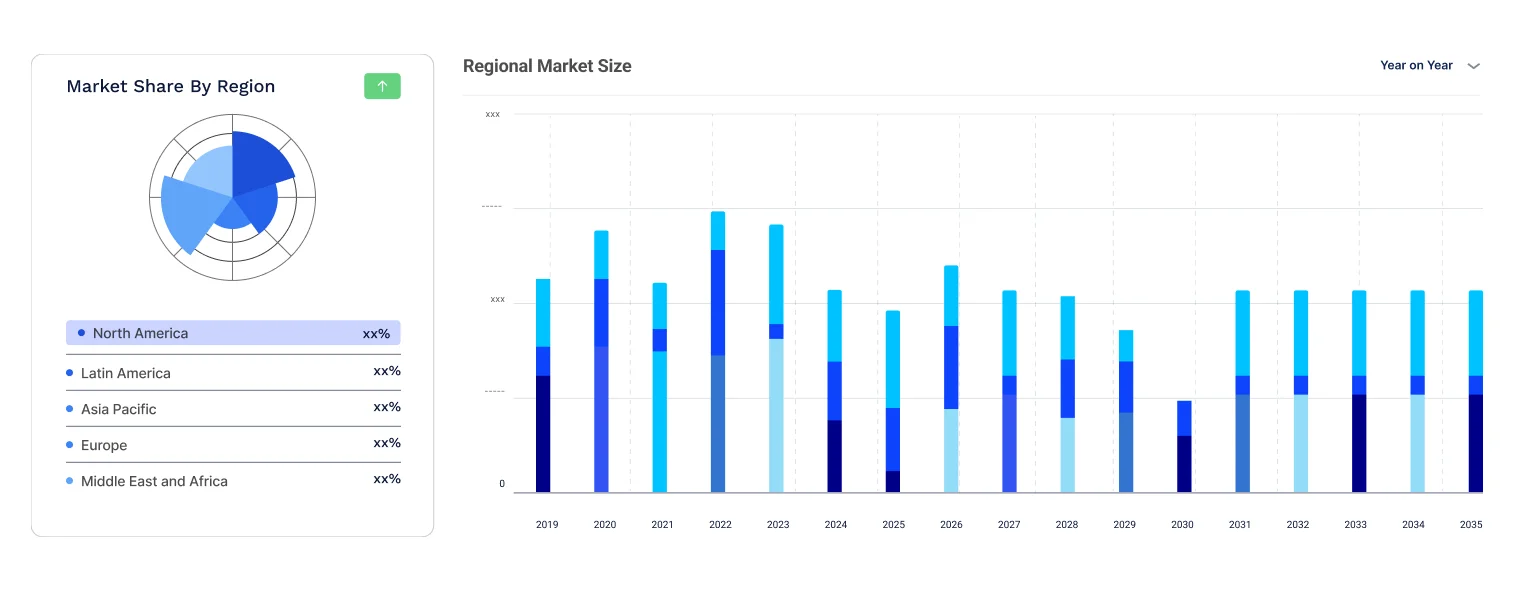
Key Insight: North America dominates the robotic wing assembly systems market, holding approximately 39.8% share, supported by the presence of major aircraft OEMs, advanced aerospace manufacturing ecosystems, and strong defense spending. Europe remains a significant market anchored by long-established aerospace manufacturing clusters and suppliers including Broetje-Automation and Comau. Asia Pacific is emerging as a fast-growing region as regional aircraft production and Tier-1 supplier investment expand across the commercial aviation supply chain, in October 2024, for example, Tata Advanced Systems inaugurated India's first private-sector Final Assembly Line for the Airbus C295 military transport aircraft in Vadodara, Gujarat, illustrating the region's growing aircraft manufacturing capability and corresponding demand for wing assembly automation. Latin America and the Middle East and Africa continue to see steadier growth tied to expanding regional aerospace manufacturing and maintenance capacity.

Read more about this report - REQUEST FREE SAMPLE COPY IN PDF
By robot type, articulated robots dominate the market due to their multi-axis reach and precision for complex wing geometries
Articulated robots account for approximately 47.5% of the market by robot type, reflecting their multi-axis reach and programmable dexterity for drilling, countersinking, and fastener installation along complex wing spar and rib geometries. Electroimpact deploys articulated robotic systems extensively across Boeing 777X wing assembly lines, where six-axis configurations enable continuous path drilling across upper and lower wing skin panels with positional tolerances below plus or minus 0.1 millimeters.
Collaborative robots (cobots) are the fastest-growing robot type as manufacturers value their ability to operate alongside human technicians in confined wing-box environments without full safety guarding. In April 2026, for example, researchers published a peer-reviewed study in the International Journal of Advanced Manufacturing Technology detailing an environment-adaptive human-robot collaboration solution for pneumatic percussive riveting in aircraft assembly, demonstrating how collaborative robots can now handle vibration-intensive fastening tasks alongside human technicians. The research reflects growing academic and industrial validation of cobots for increasingly demanding structural assembly operations beyond drilling and material handling, reinforcing the segment's expanding role across aerospace production lines.
By automation level, fully automated systems lead the market due to demand for precision, scalability, and reduced human intervention
Fully automated systems hold the largest share of the market by automation level, driven by demand for precision, scalability, and reduced human intervention in aerospace manufacturing. In July 2026, for example, KUKA successfully deployed its Automation Management Platform (AMP) at a major North American manufacturing facility, an open orchestration system that connects existing automation infrastructure with AI-powered technologies to increase operational flexibility and productivity, reflecting the broader industry shift toward fully automated, data-connected production cells that is also reshaping high-volume aerospace wing assembly lines.
Fully automated systems are also the fastest-growing automation level, forecast to record a CAGR of 8.1% as smart factory initiatives accelerate across the aerospace manufacturing sector. Semi-automated systems continue to serve manufacturers balancing automation investment against production flexibility, particularly for lower-volume or highly customized wing programs where full automation is not yet cost-justified. Rising adoption of digital twin and predictive maintenance tools is further supporting the shift toward fully automated production cells.
By aircraft type, commercial aircraft lead the market due to high-rate narrow-body production programs
Commercial aircraft account for approximately 56.2% of the market by aircraft type, as high-rate narrow-body production programs such as the Airbus A320neo family and Boeing 737 MAX generate sustained, high-volume demand for robotic wing assembly capacity across major aircraft OEMs and their Tier-1 suppliers. Continued backlog growth across both manufacturers is expected to sustain elevated production rates and corresponding automation investment through the forecast period, reinforcing commercial aircraft as the largest and most stable demand base for wing assembly robotics.
Growing investment in defense procurement, commercial drone platforms, and eVTOL production programs is widening the range of applications for robotic wing assembly systems beyond conventional commercial and military fixed-wing aircraft. Unmanned platforms often require different tolerances, smaller production batches, and more flexible tooling than high-volume commercial aircraft programs. In June 2026, for example, Joby Aviation and Toyota Motor Corporation formed a joint venture focused on preparing Joby's eVTOL aircraft for commercial production, with the partnership centered on optimizing manufacturing processes, production quality, and cost control ahead of scaled output.
North America dominates the market due to the presence of major aircraft OEMs and advanced aerospace manufacturing ecosystems
North America dominates the robotic wing assembly systems market, holding approximately 39.8% share, supported by the presence of major aircraft OEMs, advanced aerospace manufacturing ecosystems, and strong defense spending. The region benefits from early adoption of Industry 4.0 technologies, robotic drilling systems, and fully automated fastening platforms integrated into high-volume aircraft production lines. In February 2026, for example, the U.S. Federal Trade Commission finalized its consent order for Boeing's acquisition of Spirit AeroSystems, a major wing and aerostructures supplier, requiring Boeing to continue supplying aerostructures and aerostructure services to competing aircraft programs, a consolidation that brings a significant share of North American wing manufacturing capacity under direct OEM control. Strategic partnerships and long-term supply agreements between OEMs and Tier-1 automation integrators continue to reinforce this leadership position.
Europe remains a critical hub for the robotic wing assembly systems market, anchored by long-established wing manufacturing clusters such as Airbus's Broughton and Belfast facilities in the United Kingdom, which together account for a significant share of global commercial aircraft wing production. In August 2026, for example, Airbus began construction on a 6,221 square metre extension to its Belfast wing facility, adding a third autoclave along with specialised wing tooling and cranage to support A220 wing production ramping up to 13 aircraft per month by 2028.
|
CAGR 2026-2035 - Market by |
Region |
|
North America |
6.8% |
|
Europe |
6.5% |
|
Asia Pacific |
10.5% |
|
Latin America |
8.5% |
|
Middle East and Africa |
9.0% |
The global market features a moderately consolidated competitive structure led by specialized aerospace automation integrators alongside major industrial robot manufacturers with aerospace-certified product lines. Robotic wing assembly systems companies like Electroimpact, JH Robotics, and FANUC are competing primarily through precision drilling and fastening technology, while ABB and other manufacturers are focusing on collaborative robotics for confined wing-box assembly tasks.
Leading robotic wing assembly systems market players are focusing on collaborative robotics, composite wing handling capabilities, and aerospace-certified system integration to strengthen their competitive position. Increasing emphasis on UAV and eVTOL production programs, alongside multi-axis flexibility for complex wing geometries, is also enabling manufacturers to diversify their customer base while supporting long-term market growth.
Electroimpact, headquartered in Mukilteo, Washington, United States, and founded in 1986, is a world-leading robotic system integrator for aerospace assembly and fabrication, with more than 130 systems deployed in production across five continents. The company deploys articulated robotic systems extensively across Boeing 777X wing assembly lines, where six-axis configurations enable continuous path drilling across upper and lower wing skin panels.
JH Robotics, headquartered in Johnson, New York, United States, and founded in 1983, is a long-standing East Coast FANUC Authorized System Integrator specializing in machine tending robotics and manufacturing automation for the aerospace, automotive, and healthcare industries. The company designs, builds, and performance-tests complete turnkey robotic system solutions within its own facilities.
ABB, headquartered in Zurich, Switzerland, and founded in 1988, is a global leader in industrial robotics and automation, with a strong presence across automotive, electronics, and aerospace and metals manufacturing where its systems are preferred for heavy-payload operations such as riveting and composite machining. In 2026, the company signed an agreement to divest its Robotics division to SoftBank Group in a deal valued at approximately USD 5.4 billion, a move expected to bring continued investment and expanded capabilities in physical AI and autonomous robotics to ABB's existing product lines, including its aerospace-focused systems.
FANUC, headquartered in Oshino, Yamanashi, Japan, and founded in 1972, is one of the world's largest industrial robot manufacturers, offering a broad payload range from 5 kilograms to 1,300 kilograms across CNC automation, heavy-duty material handling, and aerospace manufacturing applications. In March 2026, the company announced a USD 90 million investment to expand its robot manufacturing footprint in the United States with a new 840,000 square foot facility in Michigan, adding production capacity to support growing demand for robotics across manufacturing sectors including aerospace.
Other key players in the market report include KUKA AG, Comau S.p.A., Broetje-Automation GmbH, MTorres Disenos Industriales, S.A.U., and Advanced Integration Technology, LP, among others.
*Please note that this is only a partial list; the complete list of key players is available in the full report. Additionally, the list of key players can be customized to better suit your needs.*
Explore the latest trends shaping the Robotic wing assembly systems market 2026-2035 with our in-depth report. Gain strategic insights, future forecasts, and key market developments that can help you stay competitive. Download a free sample report or contact our team for customized consultation on the market trends 2026.


Upto 15% Off
USD
$2499 $2249
$3999 $3599
$4999 $4249
$5999 $5099


*While we strive to always give you current and accurate information, the numbers depicted on the website are indicative and may differ from the actual numbers in the main report. At Expert Market Research, we aim to bring you the latest insights and trends in the market. Using our analyses and forecasts, stakeholders can understand the market dynamics, navigate challenges, and capitalize on opportunities to make data-driven strategic decisions.*
In 2025, the Robotic Wing Assembly Systems market reached an approximate value of USD 0.57 Billion.
The market is projected to grow at a CAGR of 7.70% between 2026 and 2035.
The key players in the market include Electroimpact, Inc., JH Robotics, Inc., KUKA AG, ABB Ltd., FANUC Corporation, Comau S.p.A., Broetje-Automation GmbH, MTorres Disenos Industriales, S.A.U., and Advanced Integration Technology, LP, among others.
Leading manufacturers are pursuing collaborative robotics development, composite wing handling capabilities, and aerospace certification to strengthen market position.
Key challenges include high upfront system costs, complex integration requirements, and the phased pace at which aerospace manufacturers adopt next-generation automation.
Explore our key highlights of the report and gain a concise overview of key findings, trends, and actionable insights that will empower your strategic decisions.
|
Report Features |
Details |
|
Base Year |
2025 |
|
Historical Period |
2019-2025 |
|
Forecast Period |
2026-2035 |
|
Scope of the Report |
Historical and Forecast Trends, Industry Drivers and Constraints, Historical and Forecast Market Analysis by Segment:
|
|
Breakup by Robot Type |
|
|
Breakup by Automation Level |
|
|
Breakup by Aircraft Type |
|
|
Breakup by Region |
|
|
Market Dynamics |
|
|
Competitive Landscape |
|
|
Companies Covered |
|
Datasheet
One User
USD 2,499
USD 2,249
tax inclusive*
Single User License
One User
USD 3,999
USD 3,599
tax inclusive*
Five User License
Five User
USD 4,999
USD 4,249
tax inclusive*
Corporate License
Unlimited Users
USD 5,999
USD 5,099
tax inclusive*
*Please note that the prices mentioned below are starting prices for each bundle type. Kindly contact our team for further details.*
Flash Bundle
Small Business Bundle
Growth Bundle
Enterprise Bundle
*Please note that the prices mentioned below are starting prices for each bundle type. Kindly contact our team for further details.*
Flash Bundle
Number of Reports: 3
20%
tax inclusive*
Small Business Bundle
Number of Reports: 5
25%
tax inclusive*
Growth Bundle
Number of Reports: 8
30%
tax inclusive*
Enterprise Bundle
Number of Reports: 10
35%
tax inclusive*
How To Order

Select License Type
Choose the right license for your needs and access rights.

Click on ‘Buy Now’
Add the report to your cart with one click and proceed to register.

Select Mode of Payment
Choose a payment option for a secure checkout. You will be redirected accordingly.
Strategic Solutions for Informed Decision-Making
Gain insights to stay ahead and seize opportunities.

Get insights & trends for a competitive edge.

Track prices with detailed trend reports.

Analyse trade data for supply chain insights.

Leverage cost reports for smart savings

Enhance supply chain with partnerships.

Connect For More Information
Our expert team of analysts will offer full support and resolve any queries regarding the report, before and after the purchase.
Our expert team of analysts will offer full support and resolve any queries regarding the report, before and after the purchase.
We employ meticulous research methods, blending advanced analytics and expert insights to deliver accurate, actionable industry intelligence, staying ahead of competitors.
Our skilled analysts offer unparalleled competitive advantage with detailed insights on current and emerging markets, ensuring your strategic edge.
We offer an in-depth yet simplified presentation of industry insights and analysis to meet your specific requirements effectively.




