

Consumer Insights
Uncover trends and behaviors shaping consumer choices today
Procurement Insights
Optimize your sourcing strategy with key market data
Industry Stats
Stay ahead with the latest trends and market analysis.
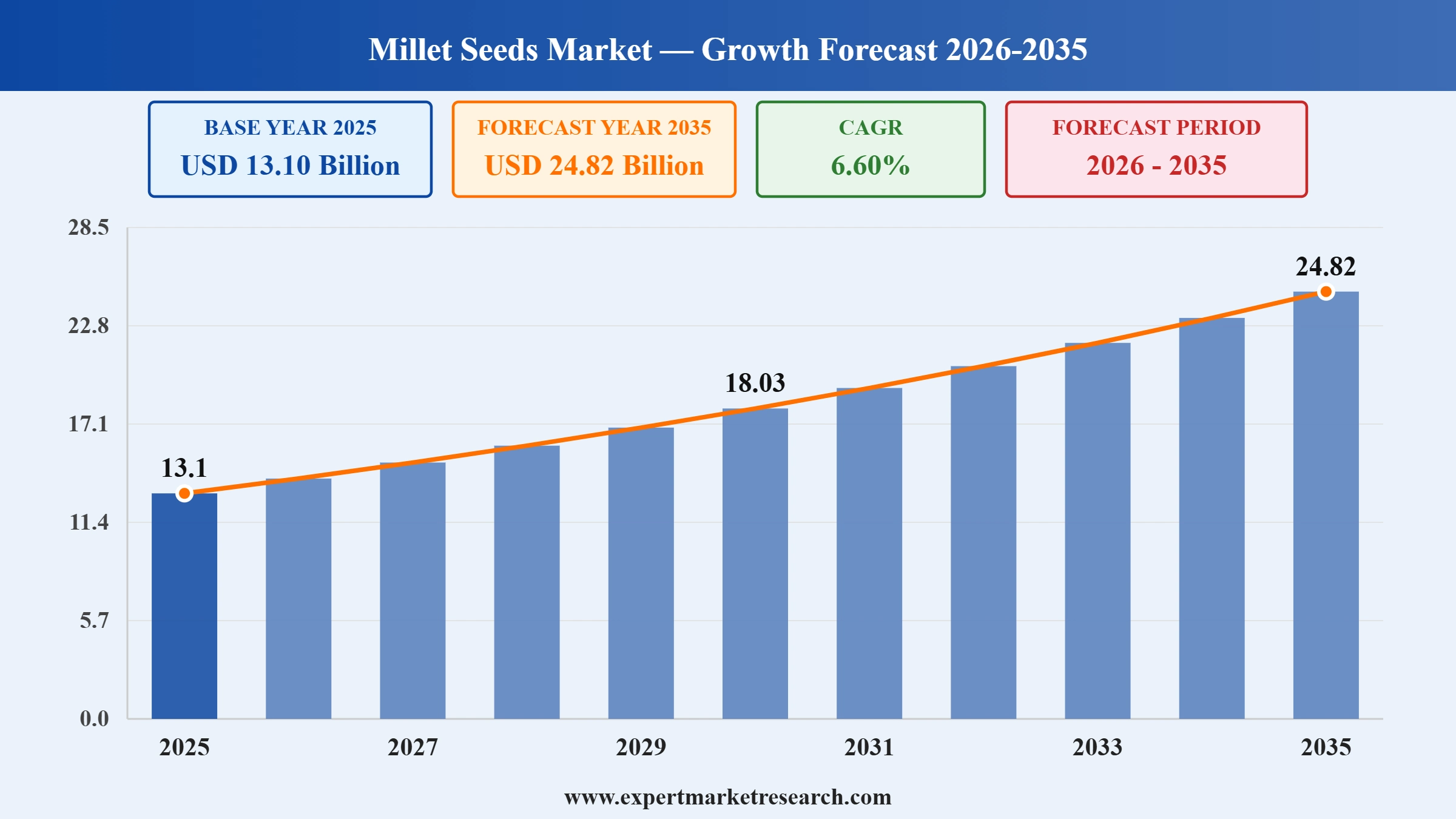
The global millet seeds market attained a value of USD 13.10 Billion in 2025 and is projected to expand at a CAGR of 6.60% through 2035. The market is further expected to achieve USD 24.82 Billion by 2035. Rising government support for millet cultivation, growing adoption of drought tolerant hybrid varieties, and increasing demand for nutrient dense, climate resilient crops are prompting seed developers to expand their pearl millet, finger millet, and foxtail millet seed portfolios.
Rising global recognition of millets as climate resilient, nutrient dense crops is encouraging governments, research institutions, and seed companies to expand breeding programs and commercial seed availability across pearl millet, finger millet, proso millet, and foxtail millet varieties. Seed developers are prioritizing drought tolerance, disease resistance, and higher grain yield in new hybrid releases to support smallholder farmers across arid and semi-arid growing regions. Governments across Asia Pacific and Africa continue to expand incentive programs supporting millet cultivation, processing, and export to strengthen food security and farmer incomes.
The market is witnessing further momentum as research institutions and seed developers accelerate the release of higher yielding, climate resilient hybrid varieties. An example of such innovation was the release of RHB 273, the world's first three-way pearl millet hybrid, by ICRISAT and ICAR in January 2026, achieving a grain yield advantage of approximately 13 to 27 percent over regional varieties across dryland growing zones in Rajasthan, Gujarat, and Haryana. This development helps address yield gaps and climate resilience needs among smallholder farmers in hyper arid regions.
In addition, millet seeds market players are allocating greater investment toward hybrid breeding programs, biofortification, and government backed processing incentives within the broader organic food market in order to build differentiated portfolios amid rising demand for climate resilient grains. For instance, companies like Bayer AG, Corteva Agriscience, and Hancock Seed & Company are strengthening their pearl millet and hybrid seed portfolios to serve growing farmer demand across dryland regions. Similarly, in March 2026, the Government of India approved Rs. 793.27 crore under its Production Linked Incentive Scheme for Millet Based Products, supporting 29 approved applicants and strengthening the domestic millet processing and seed value chain.
Read more about this report - REQUEST FREE SAMPLE COPY IN PDF
| Global Millet Seeds Market Report Summary | Description | Value |
| Base Year | USD Billion | 2025 |
| Historical Period | USD Billion | 2019-2025 |
| Forecast Period | USD Billion | 2026-2035 |
| Market Size 2025 | USD Billion | 13.10 |
| Market Size 2035 | USD Billion | 24.82 |
| CAGR 2019-2025 | Percentage | XX% |
| CAGR 2026-2035 | Percentage | 6.60% |
| CAGR 2026-2035 - Market by Region | Asia Pacific | 7.2% |
| CAGR 2026-2035 - Market by Country | China | 6.9% |
| CAGR 2026-2035 - Market by Country | Mexico | 6.7% |
| CAGR 2026-2035 - Market by Nature | Organic | 7.8% |
| CAGR 2026-2035 - Market by Distribution Channel | Online Stores | 11.4% |
| Market Share by Country 2025 | Online Stores | 5.4% |
The Government of India approved Rs. 793.27 crore to incentivize 29 applicants under its Production Linked Incentive Scheme for Millet Based Products, supporting both large enterprises and small and medium millet processing units. Governments can expand production linked incentive programs to strengthen domestic millet seed and processing value chains.
Corteva Agriscience reported full year 2025 seed segment net sales of 9.90 billion US dollars, up 4 percent, driven by demand for its latest breeding technology and licensing growth. Seed companies can continue investing in advanced breeding technology to strengthen their competitive position in the millet seeds market.
ICRISAT introduced two biofortified pearl millet varieties, Iniadi Composite 1501 and ICMP 177003, offering naturally high iron and zinc content along with strong drought tolerance for Zimbabwe's drylands. Research institutions can develop nutrient enriched hybrid varieties to address both climate resilience and micronutrient deficiency challenges in the millet seeds market.
ICRISAT introduced Rapid-Ragi, the first speed breeding protocol developed for small millets, compressing finger millet’s growth cycle from 100 to 135 days down to 68 to 85 days and enabling four to five breeding generations per year using natural light supplemented with short bursts of artificial light. Seed developers can adopt speed breeding protocols to accelerate finger millet variety development and reduce breeding costs in the millet seeds market.
Grassroots seed sovereignty initiatives are giving women farmers a central role in selecting and multiplying climate resilient millet landraces across smallholder growing regions. Participatory varietal trials are increasingly documenting how community-led seed selection criteria differ from conventional breeding priorities, emphasizing drought tolerance, processing ease, and storage quality. In April 2026, a review of Odisha's Shree Anna Abhiyan program found that millet cultivation expanded from around 1.62 million hectares in 2018-19 to 2.64 million hectares by 2023-24, aided by women-led community seed centers and participatory varietal trials conducted by WASSAN across 30 districts. This grassroots seed selection model is expected to inform broader seed sovereignty initiatives across India's millet growing states and shape variety development priorities within the wider millet seeds market.
Government and international development agencies are expanding support for certified pearl millet seed systems in import dependent markets to improve yields and strengthen food security. Programs are prioritizing seed grower training and coordination among farmers, millers, and processors to shift subsistence cultivation toward commercially viable seed value chains. In May 2026, the Food and Agriculture Organization and Namibia's Ministry of Agriculture, Fisheries, Water and Land Reform launched a 250,000 US dollar technical cooperation project to improve pearl millet (mahangu) productivity and train more than 800 certified seed growers through August 2027. Continued government backed seed system investment is expected to expand certified pearl millet seed availability across similarly import dependent segments of the millet seeds market.
Export promotion agencies are opening new international trade channels for value-added millet based foods as global demand for functional, climate resilient grain products continues to expand. Growing overseas interest is encouraging processors and exporters to diversify millet product offerings beyond traditional bulk grain shipments. In June 2026, the Agricultural and Processed Food Products Export Development Authority facilitated India's first ocean shipment of millet-based ready-to-cook functional foods, exporting one metric tonne from Karnataka to New Zealand through Bengaluru based exporter Infini Agrotek LLP. This export milestone is expected to encourage further diversification of millet based value-added product exports from India to new international markets.
Regional agricultural universities and research institutions are advancing dedicated millet seed development programs to expand locally adapted variety availability and strengthen farmer training infrastructure. Programs are combining breeding trials with community owned seed production to broaden farmer access to improved planting material. In June 2026, the Bihar Centre of Excellence for the Millet Value Chain reported identifying 37 promising breeding lines across seven millet crops currently under All India Coordinated Research Project testing, alongside production of more than 2,700 kilograms of quality millet seed and training of over 1,000 farmers since the project's 2023 launch. Continued state level investment in dedicated millet seed development centers is expected to expand locally adapted variety availability across additional growing regions within the millet seeds market.
The EMR's report titled "Global Millet Seeds Market Report and Forecast 2026-2035" offers a detailed analysis of the market based on the following segments:
Market Breakup by Type
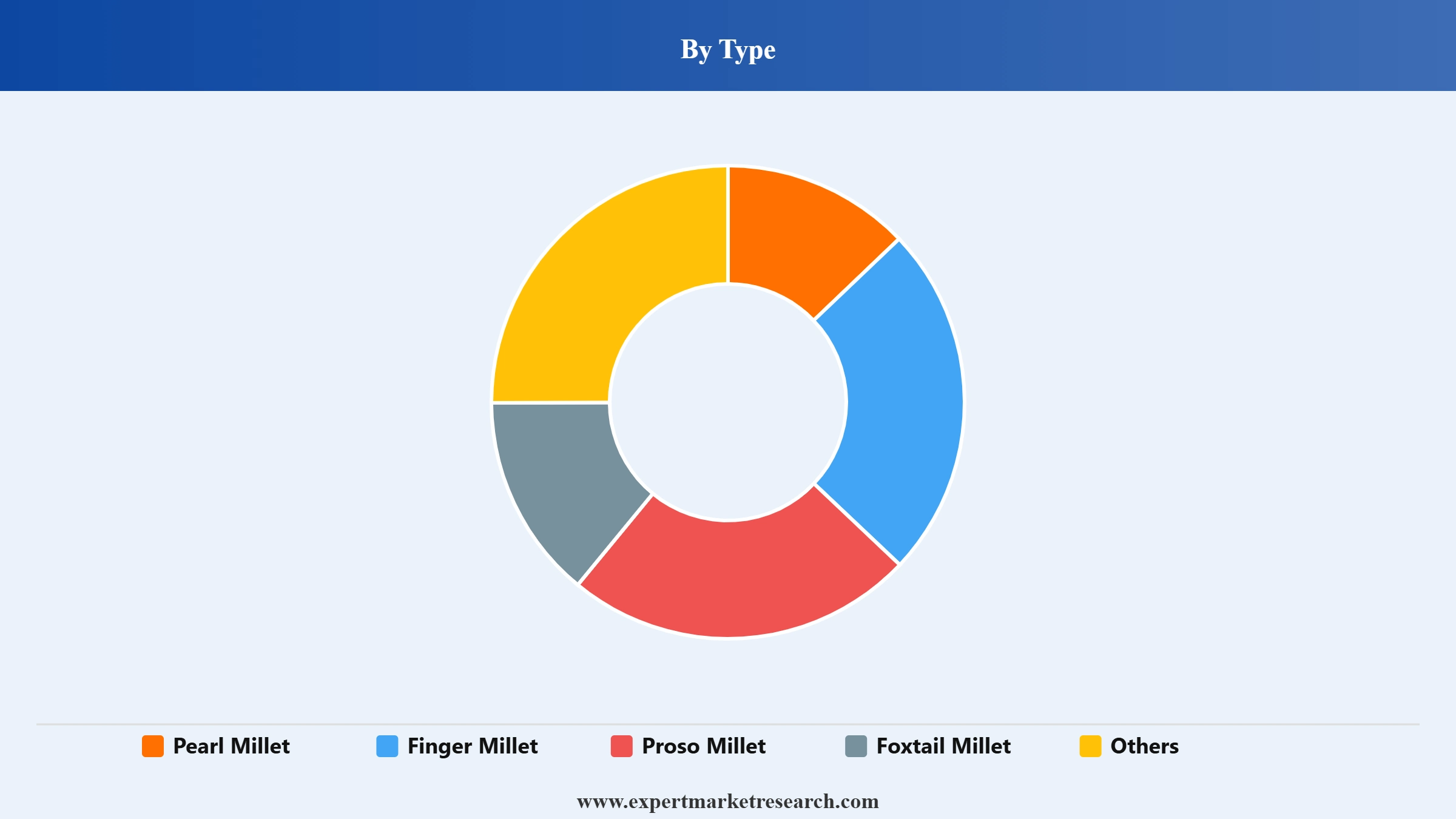
Key Insight: Pearl millet holds a significant share of the millet seeds market owing to its strong drought tolerance and wide cultivation across arid and semi-arid growing regions in Asia and Africa. Finger millet continues to gain traction for its high calcium and nutrient content, while proso millet and foxtail millet are recording steady demand supported by their short growing cycles and adaptability to marginal soils. Seed developers continue to expand hybrid variety availability across all major millet types to meet rising farmer demand.
Market Breakup by Nature
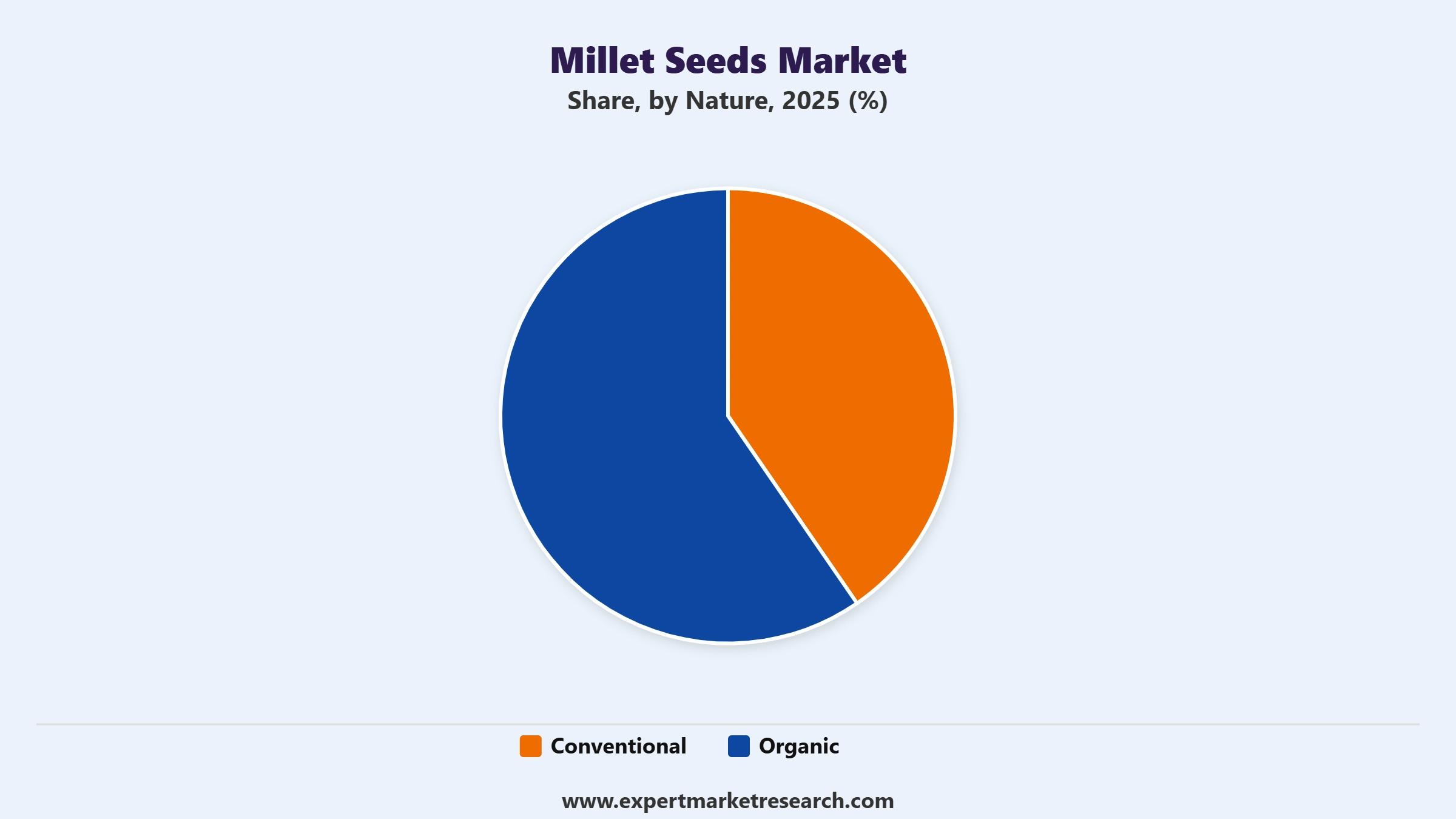
Key Insight: Conventional millet seeds continue to account for the larger share of the millet seeds market due to their wider price accessibility and established distribution among smallholder and commercial farmers. Organic millet seeds are recording faster growth as health conscious consumers and export oriented farmers increasingly seek pesticide free and sustainably cultivated grain varieties. Seed companies are expanding certified organic seed lines to capture premium positioning within export markets. According to APEDA data reported in December 2025, India’s organic food exports reached USD 665.97 million in 2024-25, with the government targeting USD 2 billion in organic exports by 2030, reinforcing incentives for seed companies to expand certified organic millet seed offerings.
Market Breakup by Distribution Channel
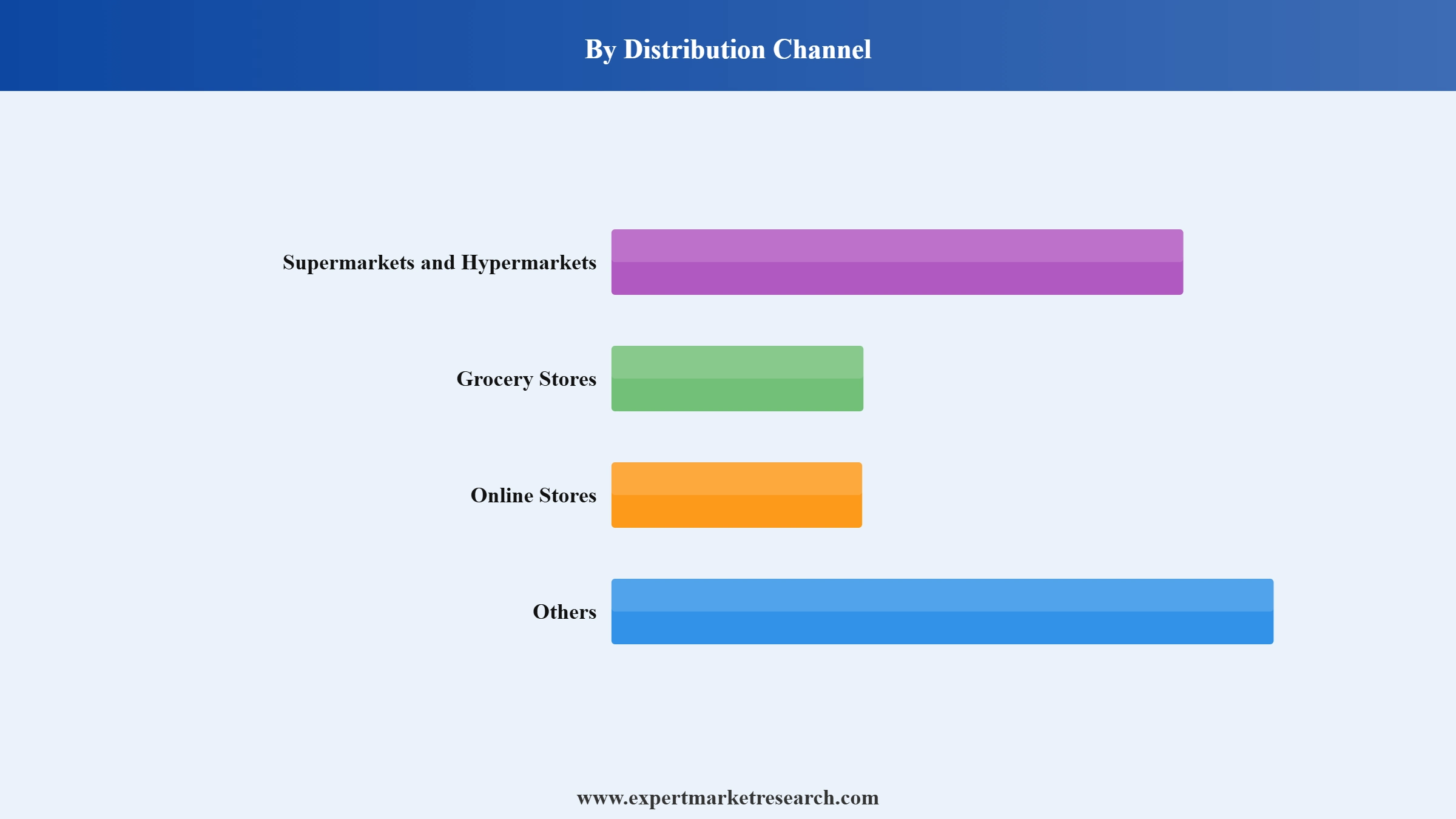
Key Insight: Supermarkets and hypermarkets lead millet seeds market distribution owing to their wide product assortment and established presence across both developed and emerging retail markets. Grocery stores support consistent farmer and household access to millet seed varieties, while online stores are recording the fastest growth as digital agricultural input platforms make it easier for farmers to access improved hybrid seed varieties directly.
Market Breakup by Region
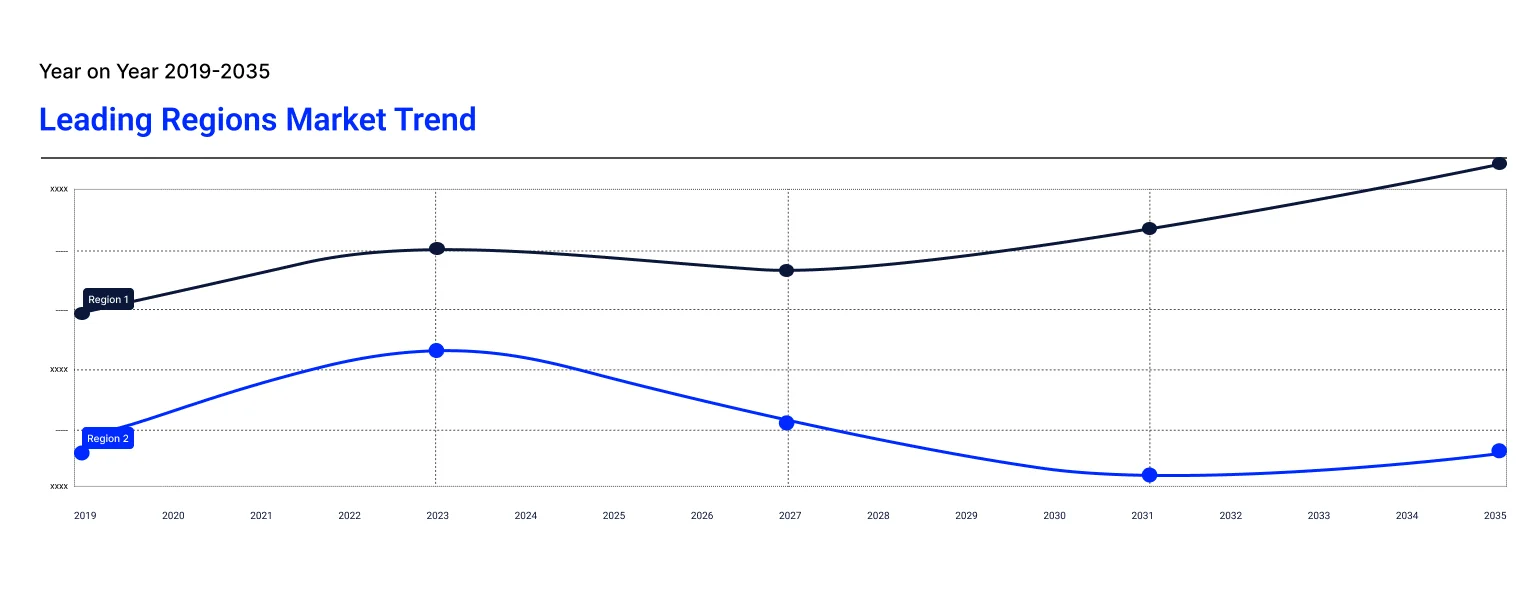
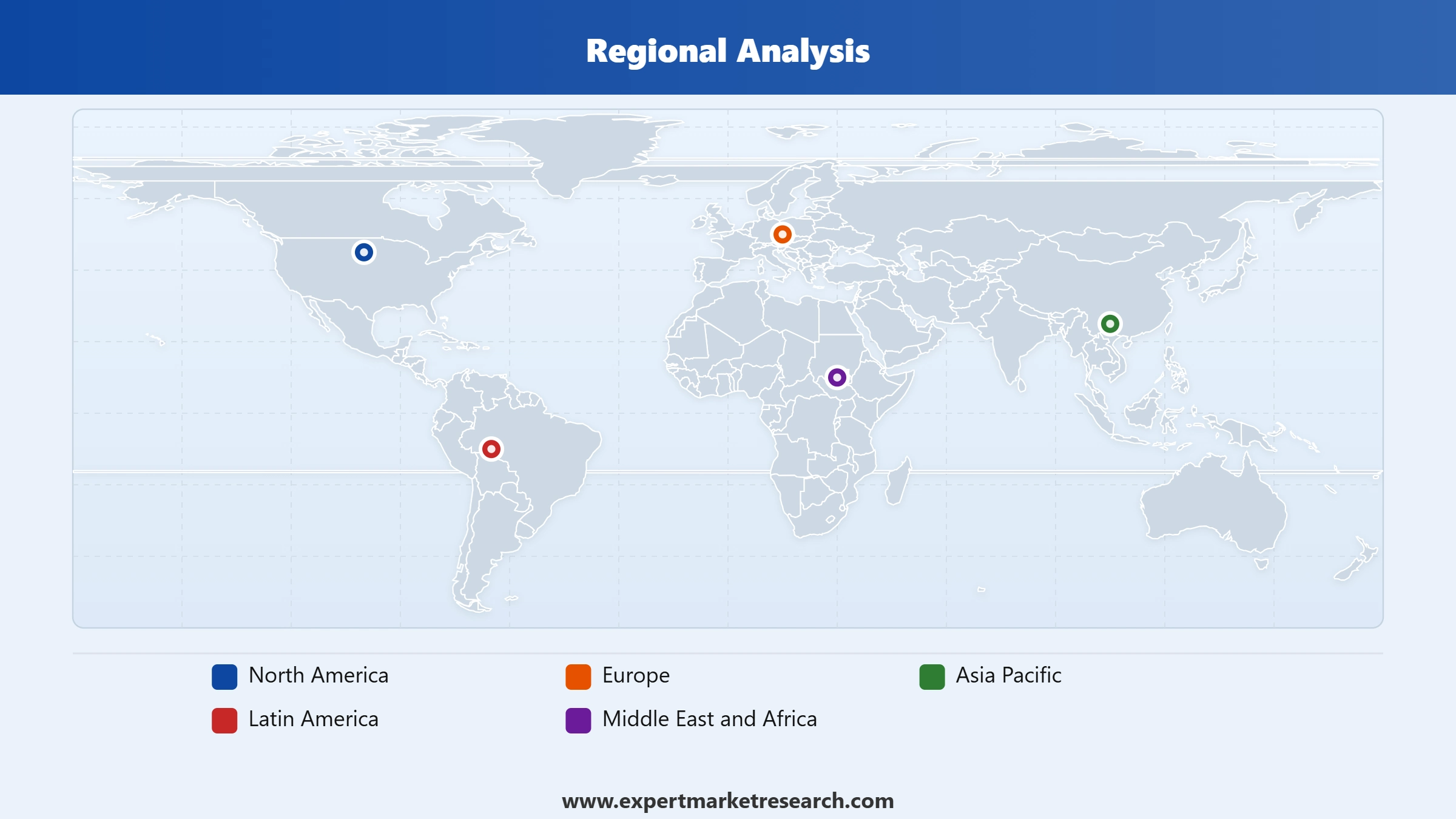
Key Insight: Regional dynamics in the millet seeds market continue to shape breeding priorities and distribution strategies. North America maintains a strong commercial seed market supported by established seed companies and modern agricultural input distribution networks. Europe represents a smaller but steady market, supported by cover crop mandates and sustainable farming practices that encourage wider use of pearl millet and proso millet in forage and crop rotation systems. Asia Pacific is registering the fastest growth, driven by rising government support for millet cultivation, expanding hybrid variety adoption, and growing food security initiatives across India and Southeast Asia. Latin America is gradually expanding millet seed adoption as Brazilian and Argentine livestock producers increasingly integrate pearl millet into forage and no-till cover cropping systems ahead of soybean and corn rotations. Middle East and Africa continue to rely on drought tolerant pearl millet and finger millet varieties, supported by government and research institution backed breeding programs strengthening smallholder food security across arid growing regions.
Read more about this report - REQUEST FREE SAMPLE COPY IN PDF
By type, pearl millet dominates the market through strong drought tolerance and wide cultivation across arid regions
Pearl millet holds the largest share of the millet seeds market as its strong drought tolerance and adaptability to arid and semi-arid conditions make it the preferred choice across major growing regions in Asia and Africa. Research institutions continue to expand pearl millet hybrid breeding programs to strengthen yield and climate resilience.
Read more about this report - REQUEST FREE SAMPLE COPY IN PDF
Finger millet is the fastest growing type of segment within the millet seeds market, with projection of a CAGR of 6.6 percent through the forecast period, ahead of the overall market's 6.2 percent growth rate. Rising demand for calcium rich, gluten free grain varieties among health-conscious consumers is prompting seed developers to expand finger millet hybrid breeding and distribution across major growing regions.
By nature, conventional millet seeds account for the largest share of the market through wider price accessibility
Conventional millet seeds lead the millet seeds market owing to their broader price accessibility and established distribution networks among smallholder and commercial farmers across major growing regions. Companies such as Bayer AG and Corteva Agriscience continue to expand conventional hybrid variety availability through their pearl millet seed portfolios to serve mainstream farmer demand.
Read more about this report - REQUEST FREE SAMPLE COPY IN PDF
Organic millet seeds represent the fastest growing nature segment as government backed organic certification and export promotion initiatives continue to expand. In February 2026, the Press Information Bureau, Government of India, reported that India was named Country of the Year at BIOFACH Germany 2026, showcasing millets among its key organic export products through a 1,074 square metre pavilion with 67 co-exhibitors, while pursuing amendments to its National Programme for Organic Production and a proposed India-EU mutual recognition agreement on organics. Rising demand from health-conscious consumers and export-oriented farmers is encouraging seed companies to expand certified organic seed availability.
By distribution channel, supermarkets and hypermarkets lead the market through wide product assortment and retail presence
Supermarkets and hypermarkets account for the largest share of the millet seeds market distribution channel segment owing to their extensive product assortment and established presence across both developed and emerging agricultural retail markets. Companies such as Hancock Seed & Company continue to expand supermarket and specialty retail placement of their millet seed products to reach a broader base of home garden and small acreage buyers.
Read more about this report - REQUEST FREE SAMPLE COPY IN PDF
Online stores represent the fastest growing distribution channel in the millet seeds market, with direct to consumer online sales expanding at a CAGR of 6.87 percent, outpacing the traditional retail channel that held an 85.9 percent revenue share in 2023. Growing farmer adoption of digital agricultural input platforms is making it easier to access improved hybrid seed varieties directly.
North America registers the largest share of the market through established seed companies and modern agricultural input distribution
North America leads the millet seeds market owing to its established seed companies, modern agricultural input distribution networks, and strong commercial demand for improved hybrid varieties across forage, cover crop, and food plot applications. Companies including Corteva Agriscience and Hancock Seed & Company continue to expand their hybrid and improved variety portfolios to serve growing regional demand.
Read more about this report - REQUEST FREE SAMPLE COPY IN PDF
Asia Pacific is the fastest growing regional market, powered by rising government support for millet cultivation, expanding hybrid variety adoption, and growing food security initiatives across India and Southeast Asia. Research institutions and seed companies are expanding breeding programs and distribution networks to capture rising demand for drought tolerant and biofortified millet varieties across the region. In July 2026, India’s Ministry of Agriculture and Farmers Welfare reported that the country’s seed sector includes 229 Seed Hubs and 384 Breeder Seed Production Centres alongside a newly established Global R&D Hub for Millets, reinforcing regional seed production capacity, according to the Press Information Bureau, Government of India.
The global industry is becoming increasingly innovation driven as major millet seeds companies compete through hybrid breeding advancements, biofortification research, and expanded distribution networks. Companies are strengthening research partnerships, broadening improved variety portfolios, and pursuing government backed incentive programs to capture rising demand for climate resilient grains.
Major millet seeds market players are focusing on drought tolerant hybrid development, organic certification, and digital distribution channels to differentiate their offerings. Companies that combine breeding innovation, broad regional distribution, and strong research partnerships are expected to gain a competitive advantage as demand for climate resilient and nutrient dense grains continues to expand globally.
Founded in 1863 and headquartered in Leverkusen, Germany, Bayer AG supports the millet seeds market through its Crop Science division, which provides seeds, crop protection products, and digital farming solutions for global agriculture. The company continues to strengthen its agricultural seed portfolio through research investment and strategic partnerships.
Founded in 2019 following its spin-off from DowDuPont and headquartered in Indianapolis, Indiana, United States, Corteva Agriscience advances the millet seeds market through its Pioneer brand seed portfolio, which supports farmers with improved hybrid varieties across global growing regions. The company continues to expand its breeding technology investment to strengthen seed segment performance.
Founded in 1978 and headquartered in Dade City, Florida, United States, Hancock Seed & Company supports the millet seeds market through its millet seed offerings for food plot, forage, pasture, and cover crop applications. The fourth generation family owned company continues to source and distribute seed varieties through a network of family farmers worldwide.
Launched in August 2000 and headquartered in Nampa, Idaho, United States, with additional production facilities in Worland, Wyoming and Albany, Oregon, Allied Seed, L.L.C. supports the millet seeds market through its forage seed portfolio, which includes pearl millet varieties alongside turfgrass and cover crop seed offerings. Owned by GROWMARK, the company manages more than 25,000 acres of seed production and provides private label and branded seed conditioning, treating, and packaging services to customers across North America.
Other key players in the market include Mamta Hygiene Products Pvt Ltd, Eastern Colorado Seeds, LLC, Seedway, LLC, Roundstone Native Seed Company, and Crystal Crop Protection Ltd., among others.
*Please note that this is only a partial list; the complete list of key players is available in the full report. Additionally, the list of key players can be customized to better suit your needs.*
Unlock the latest insights with our millet seeds market trends 2026 report. Discover regional growth patterns, breeding innovations, and key industry players. Stay ahead of competition with trusted data and expert analysis. Download your free sample report today and drive informed decisions in the market.


Upto 15% Off
USD
$2499 $2249
$3999 $3599
$4999 $4249
$5999 $5099


*While we strive to always give you current and accurate information, the numbers depicted on the website are indicative and may differ from the actual numbers in the main report. At Expert Market Research, we aim to bring you the latest insights and trends in the market. Using our analyses and forecasts, stakeholders can understand the market dynamics, navigate challenges, and capitalize on opportunities to make data-driven strategic decisions.*
In 2025, the market reached an approximate value of USD 13.10 Billion.
The market is projected to grow at a CAGR of 6.60% between 2026 and 2035.
The market is estimated to witness healthy growth in the forecast period of 2026-2035 to reach a value of around USD 24.82 Billion by 2035.
Investing in drought tolerant and biofortified hybrid breeding, expanding government backed incentive program participation, strengthening organic certified seed portfolios, and growing digital distribution channels to reach smallholder farmers.
The market is driven by the expanding e-commerce sector and increasing demand for nutritional and organic foods.
The major regional markets are North America, Europe, the Asia Pacific, Latin America, and the Middle East and Africa.
The different natures of millet seeds are conventional and organic.
The key players in the market include Bayer AG, Corteva Agriscience, Hancock Seed & Company, Allied Seed, L.L.C., Mamta Hygiene Products Pvt Ltd, Eastern Colorado Seeds, LLC, Seedway, LLC, Roundstone Native Seed Company, and Crystal Crop Protection Ltd., among others.
Companies face limited farmer awareness of improved hybrid varieties, fragmented smallholder distribution networks, climate variability affecting seed multiplication, and the need to balance yield gains with drought and disease resilience traits.
Explore our key highlights of the report and gain a concise overview of key findings, trends, and actionable insights that will empower your strategic decisions.
| REPORT FEATURES | DETAILS |
| Base Year | 2025 |
| Historical Period | 2019-2025 |
| Forecast Period | 2026-2035 |
| Scope of the Report |
Historical and Forecast Trends, Industry Drivers and Constraints, Historical and Forecast Market Analysis by Segment:
|
| Breakup by Type |
|
| Breakup by Nature |
|
| Breakup by Distribution Channel |
|
| Breakup by Region |
|
| Market Dynamics |
|
| Competitive Landscape |
|
| Companies Covered |
|
Datasheet
One User
USD 2,499
USD 2,249
tax inclusive*
Single User License
One User
USD 3,999
USD 3,599
tax inclusive*
Five User License
Five User
USD 4,999
USD 4,249
tax inclusive*
Corporate License
Unlimited Users
USD 5,999
USD 5,099
tax inclusive*
*Please note that the prices mentioned below are starting prices for each bundle type. Kindly contact our team for further details.*
Flash Bundle
Small Business Bundle
Growth Bundle
Enterprise Bundle
*Please note that the prices mentioned below are starting prices for each bundle type. Kindly contact our team for further details.*
Flash Bundle
Number of Reports: 3
20%
tax inclusive*
Small Business Bundle
Number of Reports: 5
25%
tax inclusive*
Growth Bundle
Number of Reports: 8
30%
tax inclusive*
Enterprise Bundle
Number of Reports: 10
35%
tax inclusive*
How To Order

Select License Type
Choose the right license for your needs and access rights.

Click on ‘Buy Now’
Add the report to your cart with one click and proceed to register.

Select Mode of Payment
Choose a payment option for a secure checkout. You will be redirected accordingly.
Strategic Solutions for Informed Decision-Making
Gain insights to stay ahead and seize opportunities.

Get insights & trends for a competitive edge.

Track prices with detailed trend reports.

Analyse trade data for supply chain insights.

Leverage cost reports for smart savings

Enhance supply chain with partnerships.

Connect For More Information
Our expert team of analysts will offer full support and resolve any queries regarding the report, before and after the purchase.
Our expert team of analysts will offer full support and resolve any queries regarding the report, before and after the purchase.
We employ meticulous research methods, blending advanced analytics and expert insights to deliver accurate, actionable industry intelligence, staying ahead of competitors.
Our skilled analysts offer unparalleled competitive advantage with detailed insights on current and emerging markets, ensuring your strategic edge.
We offer an in-depth yet simplified presentation of industry insights and analysis to meet your specific requirements effectively.




