

Consumer Insights
Uncover trends and behaviors shaping consumer choices today
Procurement Insights
Optimize your sourcing strategy with key market data
Industry Stats
Stay ahead with the latest trends and market analysis.
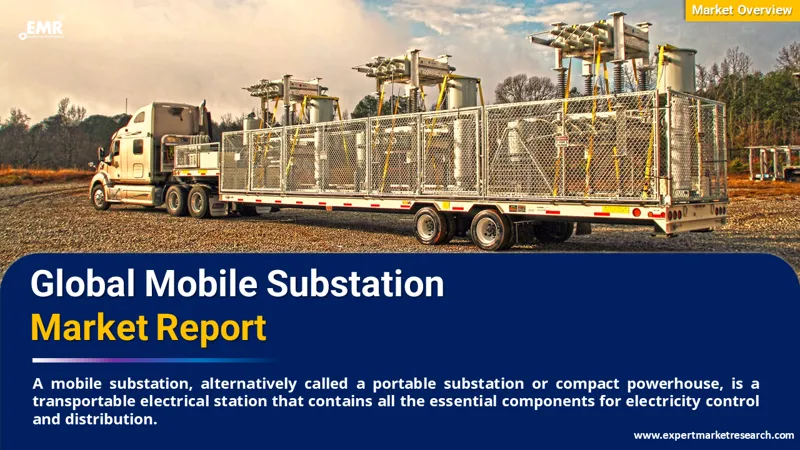
The global mobile substation market attained a value of USD 1.25 Billion in 2025 and is projected to expand at a CAGR of 4.45% through 2035. The market is further expected to achieve USD 1.93 Billion by 2035. Enabling rapid grid restoration in disaster zones and supporting utilities’ maintenance strategies is a major driving factor that is boosting global demand.
Growing demand for space-efficient and fast-deployable grid assets is reshaping procurement priorities in India’s transmission sector. In October 2025, India’s Power Grid Corporation and Toshiba Transmission & Distribution Systems launched the country’s first indigenous 220 kV mobile GIS substation. This move reflects a broader industry pivot toward compact, high-voltage mobile solutions that combine rapid deployment with robust reliability. Utilities increasingly demand systems that reduce outage times and support renewable grid connections, boosting the overall mobile substation market growth.
Moreover, mobile substations are now being positioned as strategic assets as B2B buyers in utilities and industrial sectors are prioritizing modular designs that integrate advanced monitoring, faster commissioning, and real-time diagnostics. These improvements are helping reduce operational risk, lower lifecycle costs, and support distributed energy transition goals. In April 2022, TP Southern Odisha Distribution Limited (TPSODL), a joint venture between Tata Power and the Government of Odisha, introduced a mobile substation in its area of operation. OEMs and solution providers are also tailoring offerings for high-voltage applications and harsher climates, expanding applicability in both developed markets and emerging regions, thereby accelerating demand in the mobile substation market.
Compound Annual Growth Rate
4.45%
Value in USD Billion
2026-2035
Versant Power tailored a mobile system to be utilized in nearly all of their distribution substation uses. This highlights rising demand for mobile-ready systems that fit diverse substation layouts, supporting utilities seeking standardization and faster deployment across combined distribution networks.
Minnesota cooperative utilities announced the use of mobile substations and temporary transformers to enhance system reliability and assist customers. This mobile substation market development demonstrates how shared mobile assets reduce downtime and cost, signaling wider utility interest in pooled fleets to boost grid reliability and customer response.
Tata Power Southern Odisha Distribution Limited (TPSODL) implemented mobile sub-stations in all six of its circles to ensure emergency power supply during the summer months. This reflects strong market pull for rapid-response units in high-load climates, reinforcing demand for mobile capacity to handle seasonal surges and emergency outages.
Siemens Energy revealed the effective installation of four mobile substations for the Egyptian Electricity Transmission Company, aimed at rapidly and temporarily enhancing transmission and connectivity in crucial projects in isolated regions. This proves the market value of high-voltage mobile fleets for remote regions, underscoring how fast deployment strengthens transmission resilience and accelerates project timelines.
Utilities and industries are increasingly turning to mobile substations to maintain reliability during rapid grid capacity upgrades and routine maintenance. With aging infrastructure needing frequent servicing, mobile units provide interim power without costly downtime. These units serve as movable high-voltage transformation assets, enabling utilities to reallocate capacity efficiently during peak load seasons. In October 2025, Infrastructure giant Larsen & Toubro (L&T) announced that its Power Transmission & Distribution (PT&D) business has secured several large orders in the Middle East for developing key power grid infrastructure. This reliability and flexibility advantage is becoming a core procurement criterion for power planners and industrial energy managers globally, impacting the overall demand in the mobile substation market.
The shift toward renewable power assets like solar parks and wind farms is elevating demand for mobile substations. Renewables require temporary grid connections and voltage regulation solutions in developing regions where permanent infrastructure is not yet in place. In May 2025, POWINS announced its latest project in collaboration with switchgear technology leader NOJA Power. They are developing a state-of-the-art 22/6.6 kV portable substation product, scalable from 3.6 kV to 38kV, contributing to the mobile substation market value. These substations allow clean energy projects to connect and dispatch energy quickly, reducing lead times and improving modular project economics.
Extreme weather events and natural disasters are stressing conventional energy delivery systems, prompting rapid adoption of mobile substations as emergency response tools. When hurricanes, floods, or equipment failures disrupt the grid, mobile units can restore critical power within hours rather than weeks. Their quick deployment is vital for disaster-prone regions seeking to meet regulatory uptime and resiliency standards. For example, Hitachi ABB Power Grids offers disaster recovery solutions based on modular mobile substations. This trend in the mobile substation market is gaining traction, especially in North America and Asia Pacific, where utilities are formalizing mobile fleet investments tied to regulatory resilience mandates.
Rapid urban growth and heavy industrialization across Asia Pacific and Middle East and North Africa are opening up new opportunities for expansion. Mobile substations serve temporary load centers in construction zones, industrial expansions, and event sites without waiting for fixed station commissioning. In October 2024, FGN Power Company, in collaboration with Siemens Energy, commissioned two 63MVA, 132/33KV Mobile Substations at the University of Ibadan, Oyo State, and Saapade, Ogun State as part of efforts to stabilize the electricity grid system. Industrial sectors such as oil & gas, mining, and manufacturing increasingly demand uninterrupted power for continuous operations, making these substations a go-to solution, thus widening the mobile substation market scope. These installations help companies avoid costly production losses tied to grid constraints.
Innovations in modular design, compact high-voltage transformers, and real-time controls are currently trending in the market. Modern units increasingly integrate advanced SCADA systems, remote monitoring, and predictive diagnostics that mirror the capabilities of permanent substations while preserving mobility, creating new mobile substation market opportunities. In February 2022, Zest WEG custom designed and manufactured one of the largest mobile substations ever built in South Africa. Furthermore, modular cart and container formats cut logistical time, making them attractive for rapid deployment scenarios.
Read more about this report - REQUEST FREE SAMPLE COPY IN PDF
The EMR’s report titled “Global Mobile Substation Market Report and Forecast 2026-2035” offers a detailed analysis of the market based on the following segments:
Market Breakup by Voltage
Key Insight: High voltage systems capture the largest share in the market because transmission planners prioritize coverage, fast energization, and compatibility, contributing to the current mobile substation market dynamics. Medium voltage expands rapidly as distribution networks modernize and demand clusters multiply across cities and industrial sites. Both categories reward mobile, factory-tested packages that reduce outage exposure and project delays. Utilities seeking resilience view high voltage units as strategic grid shields, while contractors and municipal buyers rely on medium voltage models for temporary service during buildouts.
Market Breakup by Power Rating
Key Insight: The 25 MVA–100 MVA range leads the industry because utilities and industrial users prioritize capacity that feels familiar to sub-transmission yards and feeds high power processes reliably. Up to 10 MVA units expand at the fastest pace, driven by cost efficiency and urban distribution needs, accelerating growth in the mobile substation market. Other power rating ranges such as 11–25 MVA and above 100 MVA remain relevant, matching mid-scale feeder roles and bulk transmission jobs.
Market Breakup by Mobile Transformer
Key Insight: Power transformers hold the leading market position, underpinning high-voltage reliability during outages and transmission changeovers. Distribution transformers observe fast expansion in the mobile substation industry since cities need agile feeder support while upgrading networks. Both types reduce risk during planned maintenance schedules, relieve capacity bottlenecks, and offer relocation benefits across mixed environments. Buyers benchmark thermal performance, footprint, and switching compatibility against permanent gear. Regardless of rating, mobile transformer platforms simplify connection work and align with programs focused on pressure-tested uptime.
Market Breakup by Application
Key Insight: Utilities dominate the market as they utilize mobile substations to stabilize networks, reduce outage metrics, and streamline maintenance. Industrial applications expand its shares quickly because continuous operations demand power certainty during site changes, retrofits, and electrification phases, boosting demand in the mobile substation market. Infrastructure, commercial, and other applications also engage mobile units for construction staging, public events, and resilience planning. Across all the use cases, common driving factors include speed, mobility, safety, and commissioning efficiency.
Market Breakup by Region
Key Insight: According to the mobile substation market report, North America sustains its dominance owing to resilience commitments and advanced procurement maturity. Asia Pacific expands at the fastest pace due to network buildouts, renewable momentum, and urban-industrial surges. Europe sustains steady traction through grid modernization and flexible sub-transmission strategies. Latin America’s growth depends on construction staging, distributed networks, and industrial diversification. Middle East and Africa progress with large-area grids, temporary peak support, and remote installations.
Read more about this report - REQUEST FREE SAMPLE COPY IN PDF
High voltage mobile substations lead the market due to faster utility outage restoration needs
High voltage mobile substations lead the market because utilities depend on them to restore transmission-level power quickly after failures, planned maintenance, or storm disruptions. These units carry higher kV ratings, allowing them to operate across various grids without compromising reliability or safety. In June 2025, Tata Power Delhi Distribution (Tata Power-DDL), in collaboration with Japan-based Nissin Electric commissioned India’s first micro substation equipped with a power voltage transformer (PVT), designed to deliver low-cost and reliable power directly to residential consumers. Their compact switchgear, integrated protection relays, and automated controls give grid operators flexibility that fixed yards simply cannot match. In many environments, speed and voltage reach trump footprint size, making high voltage units central to procurement strategies.
The medium voltage category is expanding its share in the mobile substation market as cities, campuses, and industrial parks electrify new loads at distribution levels. These units slot easily into feeder lines during switchgear upgrades and construction phases, keeping operations stable without large capital tied to permanent yards. Their mobility and reduced clearance needs make them especially suitable for dense urban zones, where temporary installations are a routine part of project planning.
By power rating, 25–100 MVA units currently dominate the market due to scalable transmission and industrial demand
The 25 MVA–100 MVA class dominates the market because it balances transmission capacity with manageable mobility. Utilities prefer this range for sub-transmission corridors, high-load industrial customers, and construction bypass projects. These ratings ensure enough thermal headroom to serve mission-critical loads without oversizing trailers or switchgear. In November 2024, Delhi Transco (DTL) issued a tender to commission 100 MVA power transformers across multiple 220 kV substations, in India. For energy-intensive operations in manufacturing, mining, or processing, this rating yields reliable temporary supply during grid expansions and equipment retrofits.
The up to 10 MVA category is experiencing fast growth in the mobile substation market as distributed energy and urban load projects scale. These compact units support maintenance shutdowns, residential feeder upgrades, and commercial node development. Contractors value small trailer footprints, light axle loads, and easy permitting. Municipal buyers use this class to electrify event spaces, transit sites, and mixed-use projects that need service continuity before permanent yards are commissioned.
By mobile transformer, power transformers secure the largest share of the market owing to utility transmission requirements and higher voltage exposure
Power transformers dominate the market because grid operators depend on them to bridge outages in high-voltage corridors where downtime escalates quickly. OEMs now offer compact cores and on-load tap changers that mirror permanent yard precision, while trailers, bushings, and arrestors are engineered for seamless switching under live grid constraints. In May 2025, Adani Electricity inaugurated a 220kV digital substation in the Bandra Kurla Complex (BKC) to address the escalating power demands of BKC in Mumbai, India. Utilities build dedicated fleets around these transformers to strengthen resilience strategies, replacing aging assets or accommodating new renewable injections, contributing to the mobile substation market revenue.
Distribution transformers are also gaining momentum as urban grids densify, and feeder circuits shift under variable loads. These mobile units provide a safety net during upgrades, supporting smart metering rollouts and network reconfiguration programs. Developers and municipalities prefer distribution models that energize mixed-use zones before permanent feeders are ready.
Utilities dominate the market owing to rapid outage recovery and grid reliability improvement needs
Utilities form the largest application within the mobile substation market dynamics because these substations reduce outage durations during upgrades and fault events to a great extent. For transmission and distribution planners, mobility translates to fewer customer interruptions and improved regulatory performance. Utilities deploy these units to maintain service during transformer replacements, switchgear retrofits, and disaster recovery tasks. Many teams store mobile fleets strategically to cover multiple substations within their service territory, enabling consistent response times.
Industrial users are adopting mobile substations quickly because electrification is expanding energy intensity in manufacturing, mining, data processing, and heavy transport. Facilities cannot tolerate production outages, so mobile units become essential during feeder upgrades and equipment rebuilds. They also help plants diversify power sources and handle load shifts caused by automation and electrified fleets.
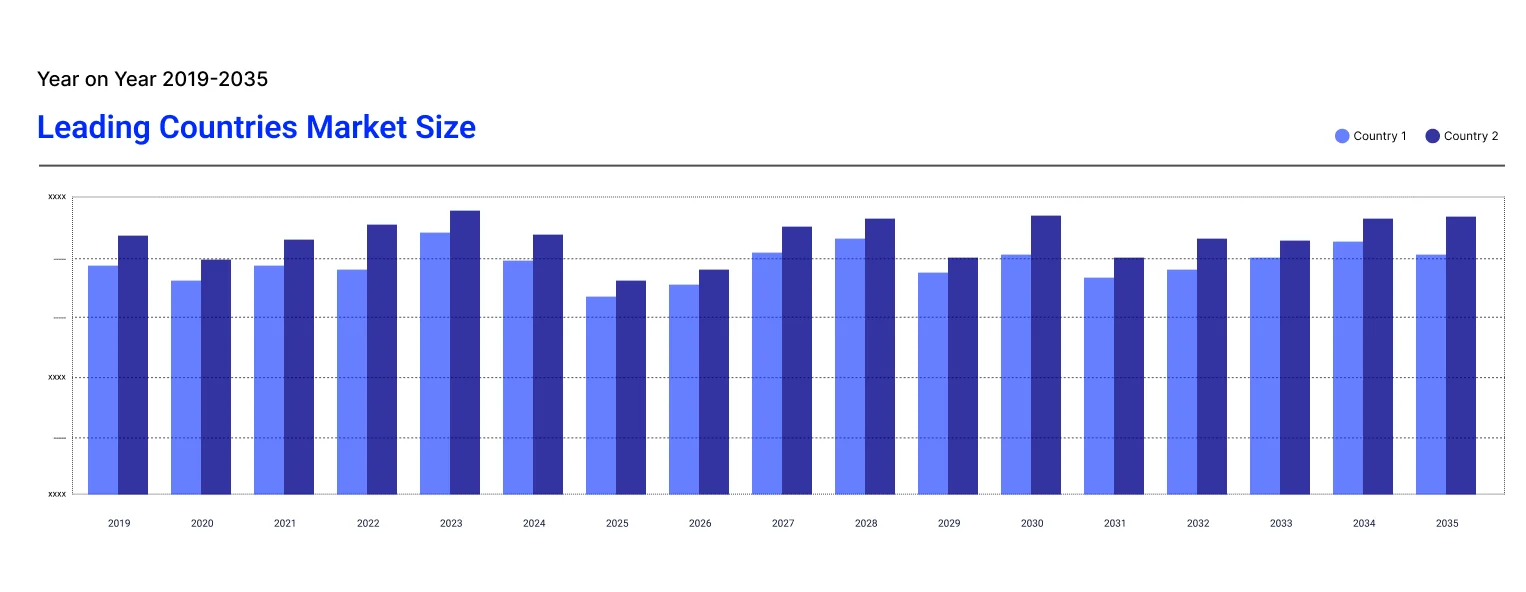
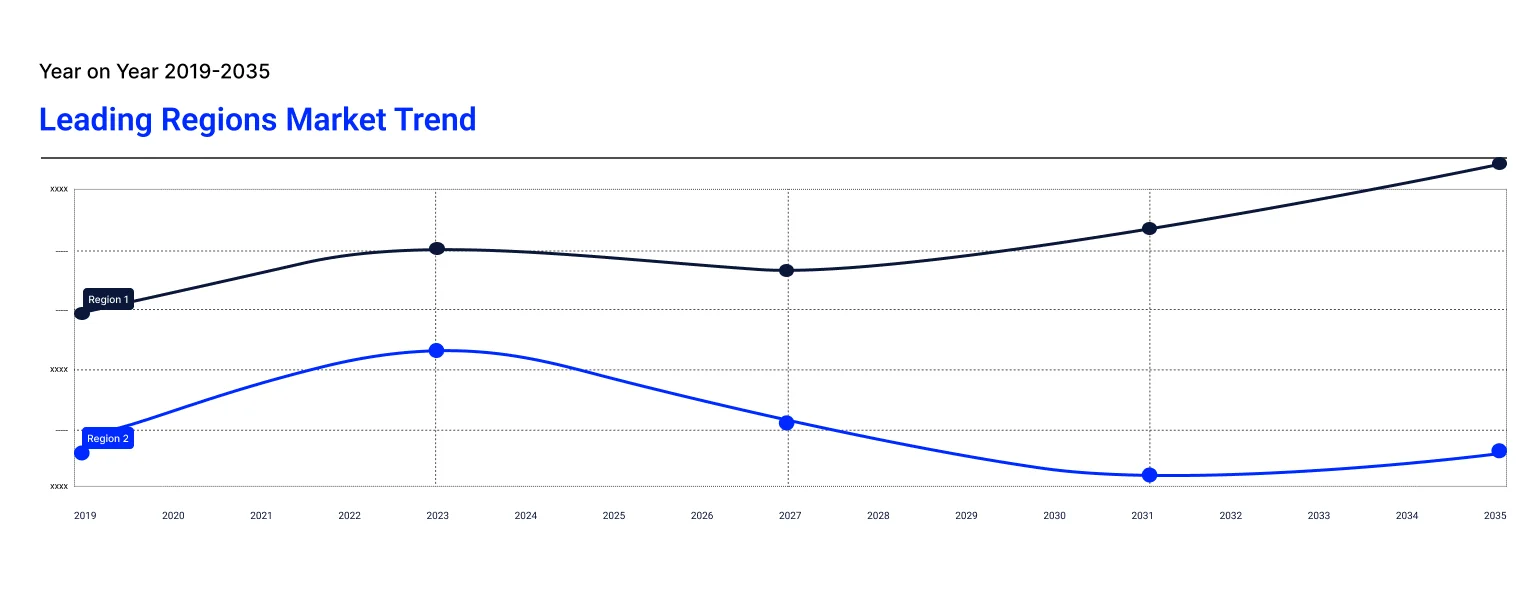
North America clocks in the largest share of the market revenue due to reliability mandates and resilient grid investments
North America leads the market because utilities emphasize resilience, storm readiness, and capital efficiency. Regulatory incentives push reliability performance, and mobile units give planners flexible tools to defer permanent builds or accelerate grid recovery. Transmission owners maintain dedicated fleets, particularly in storm-prone states and provinces, to shield uptime metrics. The region also benefits from strong OEM presence and robust trailer, transformer, and protection system supply chains.
Asia Pacific observes fast growth in terms of mobile substation market expansion because urbanization, industrialization, and renewable capacity additions strain networks. Mobile substations fill gaps in expanding transmission corridors and sub-transmission nodes. Contractors and utilities use them to energize new developments before fixed infrastructure arrives. Diverse climates and terrain heighten the value of compact, rugged designs.
The market is shaped by rapid electrification, rising outage risks, and utility pressure to shorten project timelines. The majority of the mobile substation market players are doubling down on voltage flexibility, factory-tested modular designs, and shorter commissioning windows to secure multi-year fleet deals. Digital monitoring platforms, advanced relay schemes, and compact GIS layouts are emerging as strong differentiators because B2B buyers want safer, quieter, and faster deployments. Grid planners are also demanding lightweight trailers and improved cable management to handle dense urban sites.
Opportunities are expanding in renewable integration, industrial uptime protection, and storm recovery contracts where response speed and mobility create measurable value. Mobile substation companies that combine engineering support with financing and service packages gain a strategic edge, especially in regions with budget constraints. The landscape is growing more collaborative as utilities co-engineer layouts, shaping a market less about hardware alone and more about flexible grid solutions.
Founded in 2020 and headquartered in Munich, Germany, Siemens Energy supports the mobile substation market with high-voltage trailers and integrated GIS switchgear platforms. The company’s focus on compact insulation systems, safer earthing solutions, and intelligent monitoring gives utilities faster energization and better outage recovery capability.
ABB Ltd., established in 1988 and based in Zurich, Switzerland, delivers mobile substations integrating advanced protection relays, robust transformers, and digital automation systems. Its strength comes from modular architectures that fit complex voltage profiles and enable shorter delivery cycles. ABB works closely with utilities to design multi-purpose fleets that support planned maintenance, emergency restoration, and industrial expansions.
Eaton Corporation, founded in 1911 and headquartered in Dublin, Ireland, addresses the mobile substation market with compact medium-voltage configurations emphasizing safety, user access, and speed. Its focus on arc-flash mitigation, load-break switching, and trailer-mounted switchgear systems provides industrial and utility buyers more flexibility during upgrades or feeder rerouting. Eaton’s solutions highlight rugged protection schemes, reduced installation footprints, and simplified maintenance pathways.
General Electric Company, founded in 1892 and headquartered in Boston, United States, delivers mobile substations through GE Grid Solutions with an emphasis on high-reliability transformers, advanced relays, and GIS integration. GE targets high-voltage corridors and sub-transmission bottlenecks, giving transmission operators fast deployment tools for restoration and maintenance.
*Please note that this is only a partial list; the complete list of key players is available in the full report. Additionally, the list of key players can be customized to better suit your needs.*
Other key players in the market include Delta Star Inc., and WEG Equipamentos Elétricos S.A., among others.
Unlock the latest insights with our mobile substation market trends 2026 report. Discover regional growth patterns, consumer preferences, and key industry players. Stay ahead of competition with trusted data and expert analysis. Download your free sample report today and drive informed decisions in the market.


Upto 15% Off
USD
$2499 $2249
$3999 $3599
$4999 $4249
$5999 $5099


*While we strive to always give you current and accurate information, the numbers depicted on the website are indicative and may differ from the actual numbers in the main report. At Expert Market Research, we aim to bring you the latest insights and trends in the market. Using our analyses and forecasts, stakeholders can understand the market dynamics, navigate challenges, and capitalize on opportunities to make data-driven strategic decisions.*
The market is projected to grow at a CAGR of 4.45% between 2026 and 2035.
The market is estimated to witness a healthy growth in the forecast period of 2026-2035, reaching a value of USD 1.93 Billion by 2035.
Strengthening regional assembly, expanding service packages, co-engineering flexible designs, integrating smarter diagnostics, and optimizing logistics are helping companies win bids and deliver faster mobile substation deployment cycles.
The key trends in the market include the favourable policies of various governments, technological advancements, and increasing proactive measures for emergency power outages.
High voltage and medium voltage are the primary voltages for mobile substations in the market.
The different power ratings of mobile substations are 10 MVA, 11 MVA-25 MVA, 25 MVA-100 MVA, and above 100 MVA.
Industrial, infrastructure, and utilities, among others, are the major applications of mobile substations in the market.
The key players in the market include Siemens Energy, ABB Ltd., Eaton Corporation, General Electric Company, Delta Star Inc., and WEG Equipamentos Elétricos S.A., among others.
In 2025, the market reached an approximate value of USD 1.25 Billion.
Rising equipment costs, multi-voltage design complexity, permitting barriers, and tight delivery schedules pressure OEMs, while utilities demand faster commissioning, broader service coverage, and stronger transformer and relay performance.
Explore our key highlights of the report and gain a concise overview of key findings, trends, and actionable insights that will empower your strategic decisions.
| REPORT FEATURES | DETAILS |
| Base Year | 2025 |
| Historical Period | 2019-2025 |
| Forecast Period | 2026-2035 |
| Scope of the Report |
Historical and Forecast Trends, Industry Drivers and Constraints, Historical and Forecast Market Analysis by Segment:
|
| Breakup by Voltage |
|
| Breakup by Power Rating |
|
| Breakup by Mobile Transformer |
|
| Breakup by Application |
|
| Breakup by Region |
|
| Market Dynamics |
|
| Competitive Landscape |
|
| Companies Covered |
|
Datasheet
One User
USD 2,499
USD 2,249
tax inclusive*
Single User License
One User
USD 3,999
USD 3,599
tax inclusive*
Five User License
Five User
USD 4,999
USD 4,249
tax inclusive*
Corporate License
Unlimited Users
USD 5,999
USD 5,099
tax inclusive*
*Please note that the prices mentioned below are starting prices for each bundle type. Kindly contact our team for further details.*
Flash Bundle
Small Business Bundle
Growth Bundle
Enterprise Bundle
*Please note that the prices mentioned below are starting prices for each bundle type. Kindly contact our team for further details.*
Flash Bundle
Number of Reports: 3
20%
tax inclusive*
Small Business Bundle
Number of Reports: 5
25%
tax inclusive*
Growth Bundle
Number of Reports: 8
30%
tax inclusive*
Enterprise Bundle
Number of Reports: 10
35%
tax inclusive*
How To Order

Select License Type
Choose the right license for your needs and access rights.

Click on ‘Buy Now’
Add the report to your cart with one click and proceed to register.

Select Mode of Payment
Choose a payment option for a secure checkout. You will be redirected accordingly.
Strategic Solutions for Informed Decision-Making
Gain insights to stay ahead and seize opportunities.

Get insights & trends for a competitive edge.

Track prices with detailed trend reports.

Analyse trade data for supply chain insights.

Leverage cost reports for smart savings

Enhance supply chain with partnerships.

Connect For More Information
Our expert team of analysts will offer full support and resolve any queries regarding the report, before and after the purchase.
Our expert team of analysts will offer full support and resolve any queries regarding the report, before and after the purchase.
We employ meticulous research methods, blending advanced analytics and expert insights to deliver accurate, actionable industry intelligence, staying ahead of competitors.
Our skilled analysts offer unparalleled competitive advantage with detailed insights on current and emerging markets, ensuring your strategic edge.
We offer an in-depth yet simplified presentation of industry insights and analysis to meet your specific requirements effectively.




