

Consumer Insights
Uncover trends and behaviors shaping consumer choices today
Procurement Insights
Optimize your sourcing strategy with key market data
Industry Stats
Stay ahead with the latest trends and market analysis.
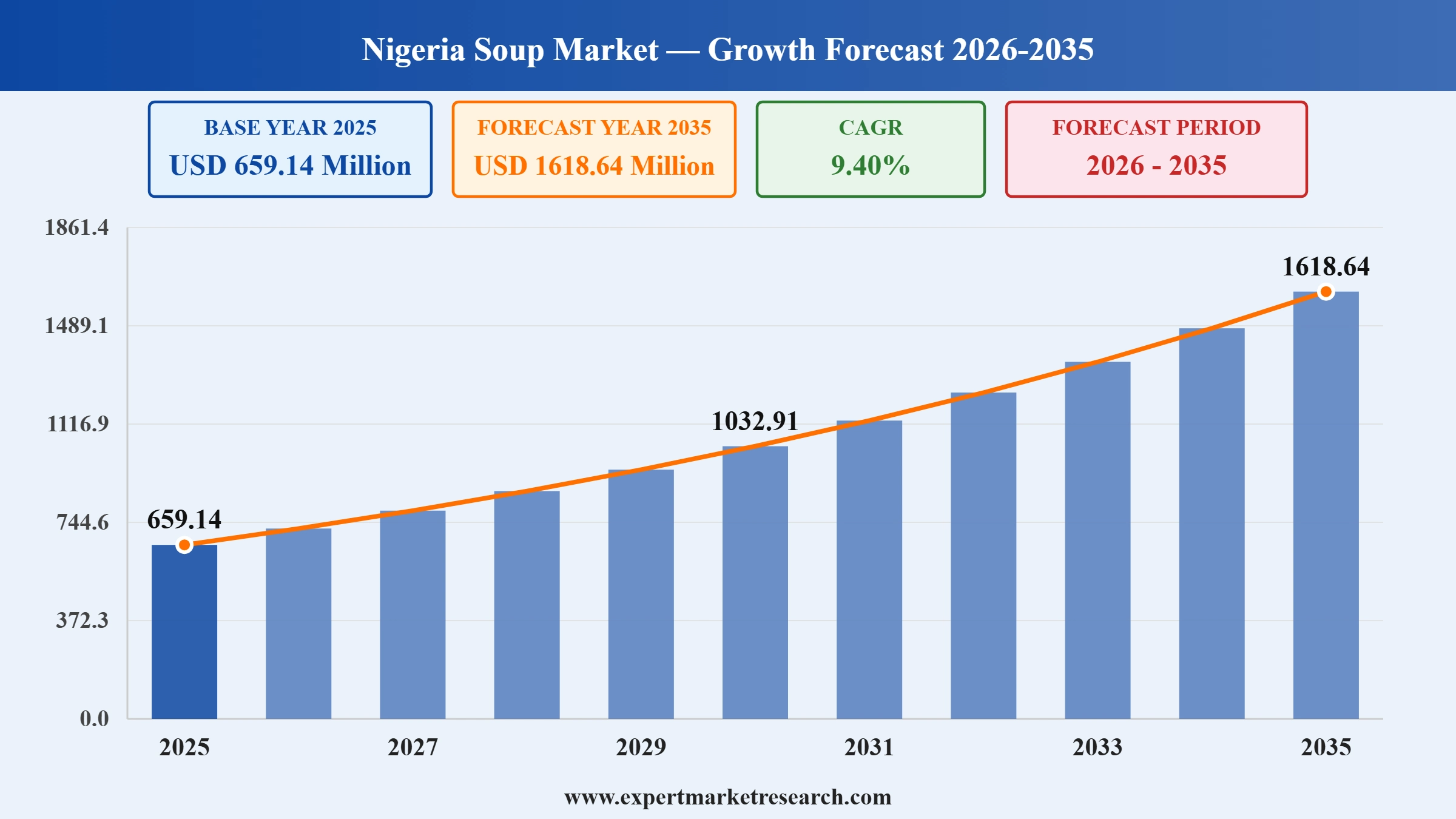
The Nigeria soup market was estimated to attain a value of USD 659.14 Million in 2025 and is projected to expand at a CAGR of around 9.40% through 2035. Increased urbanisation and busy lifestyles in Nigeria are driving demand for easy-to-prepare, convenient ready-to-eat soup or soupy foods, prompting consumers to invest in easy and quick preparation technologies and culturally relevant soup variations to meet changing consumer demands. This in turn is greatly contributing to the Nigeria soup market growth, thus propelling the market to attain USD 1618.64 Million by 2035.
Read more about this report - REQUEST FREE SAMPLE COPY IN PDF
| Nigeria Soup Market Report Summary |
Description |
Value |
|
Base Year |
USD Million |
2025 |
|
Historical Period |
USD Million |
2019-2025 |
|
Forecast Period |
USD Million |
2026-2035 |
|
Market Size 2025 |
USD Million |
659.14 |
|
Market Size 2035 |
USD Million |
1618.64 |
|
CAGR 2019-2025 |
Percentage |
XX% |
|
CAGR 2026-2035 |
Percentage |
9.40% |
|
CAGR 2026-2035 - Market by Type |
Instant |
10.7% |
|
CAGR 2026-2035 - Market by Type |
Frozen |
10.1% |
|
CAGR 2026-2035 - Market by Category |
Vegetarian Soup |
10.3% |
The Nigerian soup industry is experiencing dynamic evolution as manufacturers combine traditional flavors with modern convenience. Firms are launching ready-to-cook traditional recipes, nutritionally fortified soups for health-conscious consumers, and locally grown ingredients to satisfy cultural tastes. Furthermore, investment in cold chain infrastructure and technology-enabled distribution is facilitating greater availability of premium and chilled soup varieties, thus boosting the Nigeria soup market growth. The rise in e-commerce websites is also transforming supply chains so that B2B customers such as supermarkets and wholesalers can handle procurement and restocking more easily.
Nutritional Positioning of Traditional Soups Gains Momentum
Brands are enhancing soups with enriched nutrients to attract health-focused consumers. For instance, TGI Group's "Tasty Tom Jollof Mix" contains iron and vitamin A-rich mixes, where taste and wellness are blended. This technology has worked well in B2B food service and institutional applications like schools and hospitals, where nutritional density matters. It also assists food service operators in serving culturally appropriate but health-compatible dishes, thus promoting the Nigeria soup market expansion.
Cold Chain Development Spurs Frozen Soup Category Expansion
Cold storage networks in cities such as Lagos and Abuja have enabled companies to launch chilled and frozen soups. Chi Farms, for example, currently supplies restaurants and caterers with bulk packs of frozen okra and egusi soup bases. These soups maintain traditional flavor while providing extended shelf life and convenience of preparation, thus growing more appealing to B2B buyers catering to high-volume customers.
Surging Demand for Indigenous Flavors in Commercial Kitchens
Hotels, restaurants, and institutional caterers are increasingly sourcing soups with regional Nigerian flavors. Soups such as ogbono, edikaikong, and bitter leaf soups are becoming popular in ready-to-cook packs. Local-flavor soup sales increased by 18% during 2024 according to industry estimates. This trend reflects the increasing role of culinary heritage in B2B food purchasing decisions, with vendors tailoring regional offerings for mass consumption, thus shaping new trends in the Nigeria soup market.
Digital Procurement Platforms Reshaping B2B Soup Supply Chain
E-commerce B2B marketplaces like TradeDepot and Omnibiz are assisting wholesalers, retailers, and restaurants in procuring soup products more effectively. Such marketplaces now account for more than 22% of foodservice supply sales in urban Nigeria. Through real-time inventory updates, credit financing, and tracking of deliveries, such platforms are enhancing access to local and global soup products as well as reducing procurement friction for bulk purchasers.
The EMR’s report titled “Nigeria Soup Market Report and Forecast 2026-2035” offers a detailed analysis of the market based on the following segments:
Market Breakup by Category
Market Breakup by Type
Market Breakup by Packaging
Market Breakup by Sales Channel
Read more about this report - REQUEST FREE SAMPLE COPY IN PDF
Non-Vegetarian Soups Lead the Market
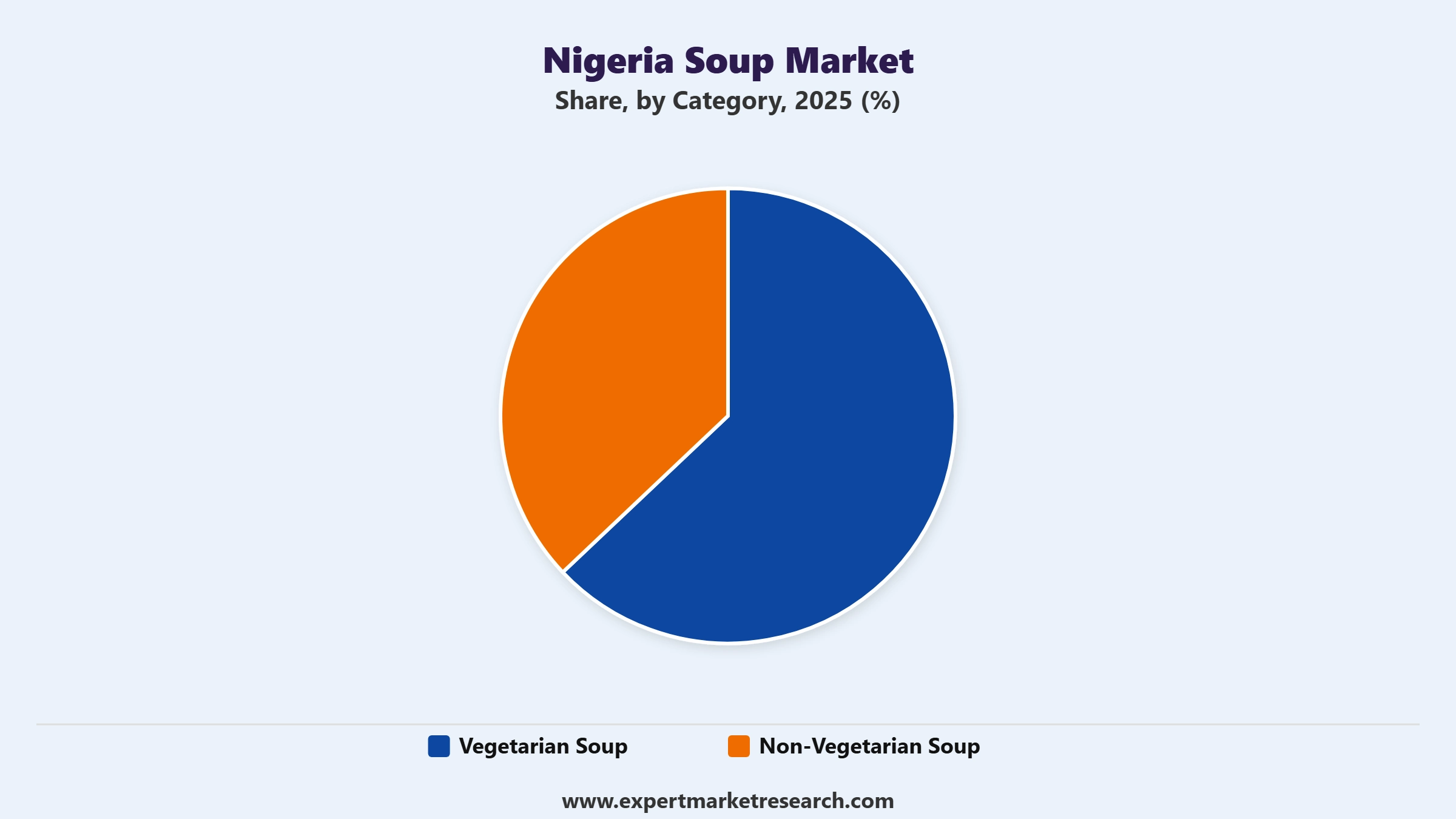
The soups market in Nigeria is led by non-vegetarian soups, particularly those prepared with beef, fish, and chicken, because of the high-protein content relating to the Nigerian food culture. While vegetarian soups are also prominent, they exist mainly for specialist segments like diet-conscious, vegan or religion-based food communities. Non-vegetarian variants of soups continue to push volume sales of soups through foodservice as well as off-trade B2B channels.
Read more about this report - REQUEST FREE SAMPLE COPY IN PDF
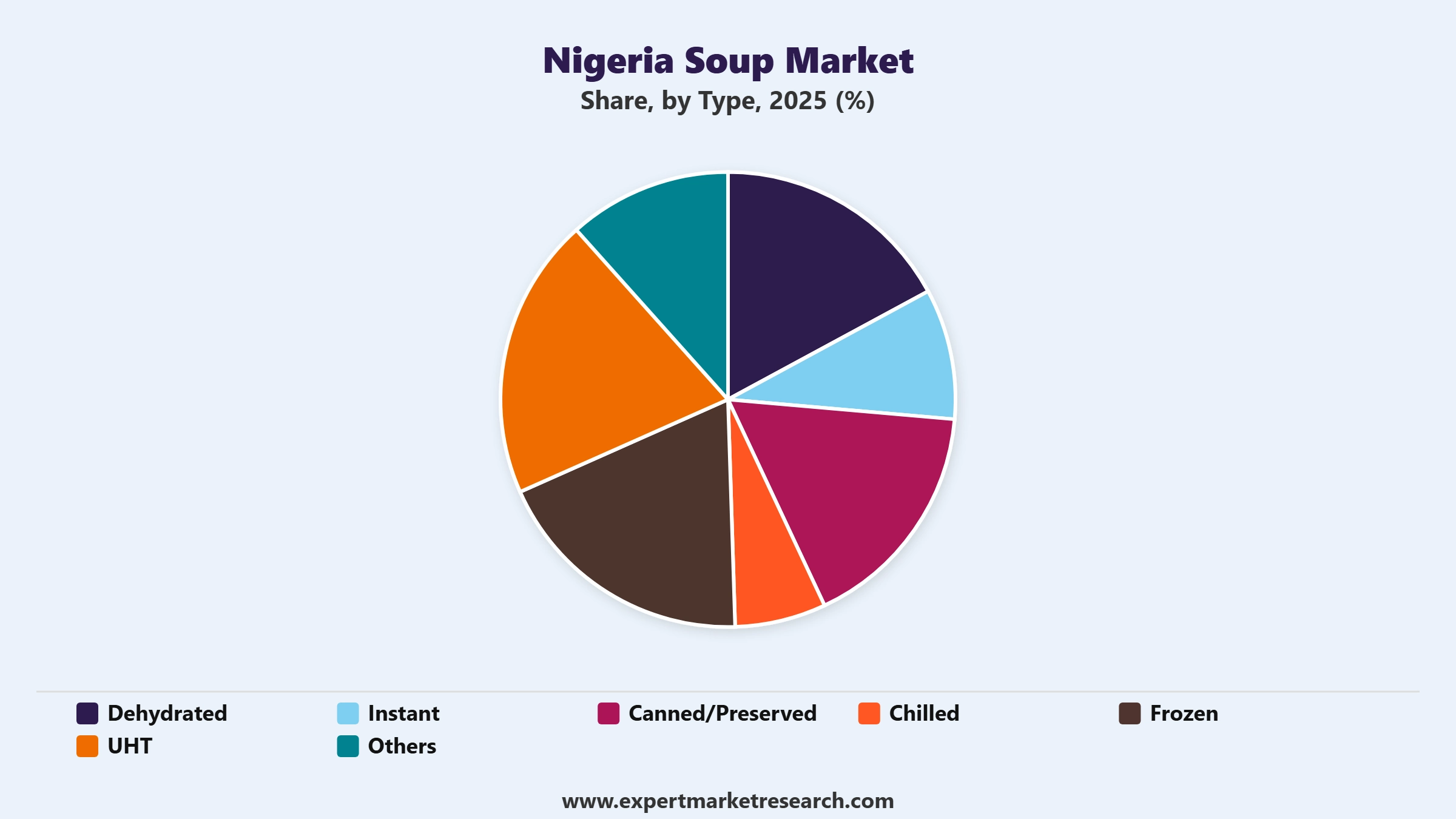
Instant and Dehydrated Soups Are Gaining Popularity
Instant and dehydrated soup types are augmenting the sales because of their longer shelf life and convenience of preparation, which makes them suitable for institutions and convenience stores. As per Nigeria soup market analysis, canned and chilled soups are gradually increasing, particularly in premium segments, while UHT and frozen formats are growing in urban markets. These formats facilitate mass distribution and provide extended usability through supply chains.
Read more about this report - REQUEST FREE SAMPLE COPY IN PDF
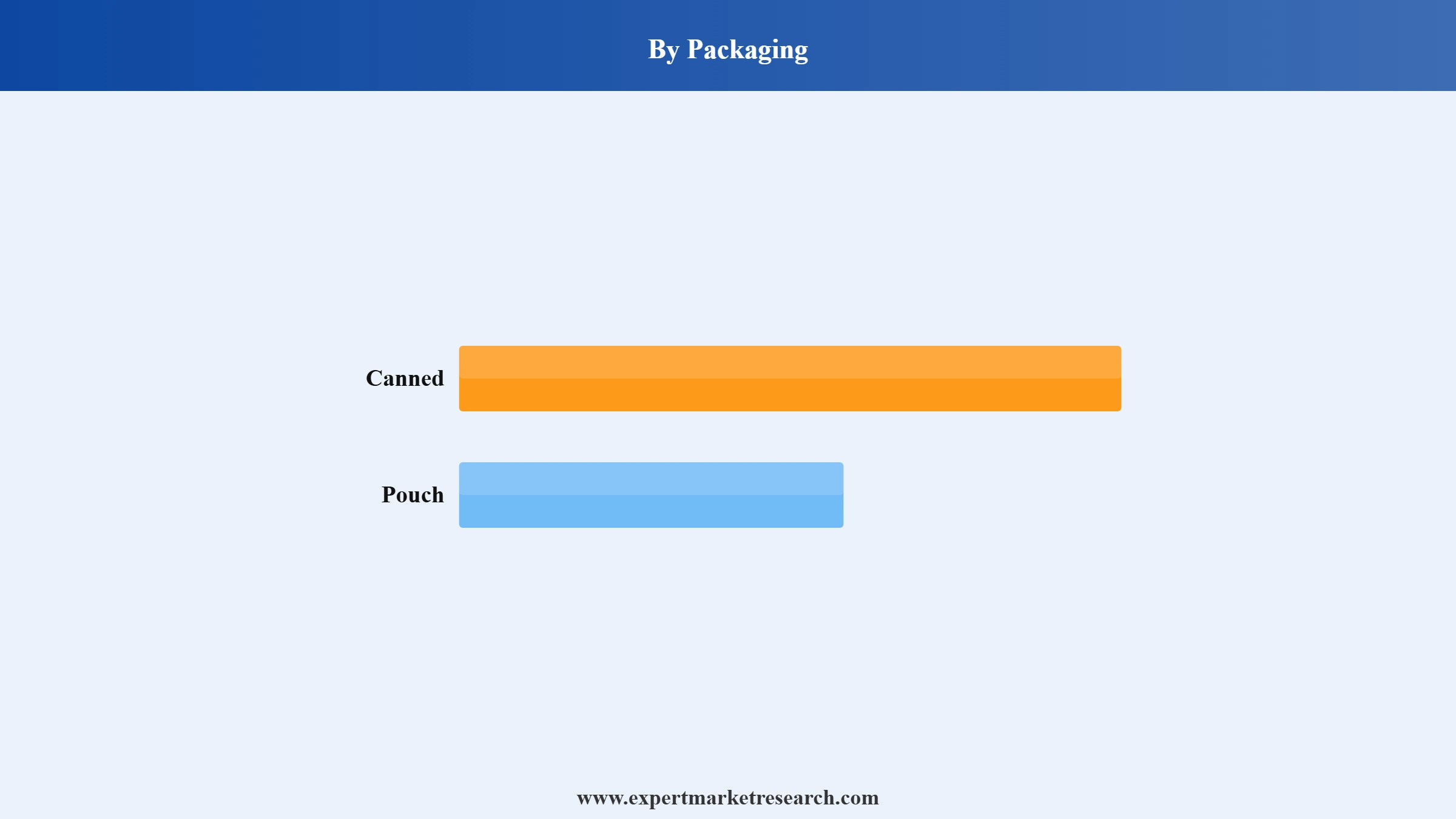
Pouch Format Emerging as Preferred Choice in Terms of Packaging
Pouch packaging is experiencing aggressive adoption because it is cost-effective, saves space, and is portable. It finds appeal among B2B bulk purchasers such as restaurants and caterers who favor variable sizes. Canned packaging, although important, is largely employed for export and top-end domestic markets where shelf impact and ruggedness are more important.
Read more about this report - REQUEST FREE SAMPLE COPY IN PDF
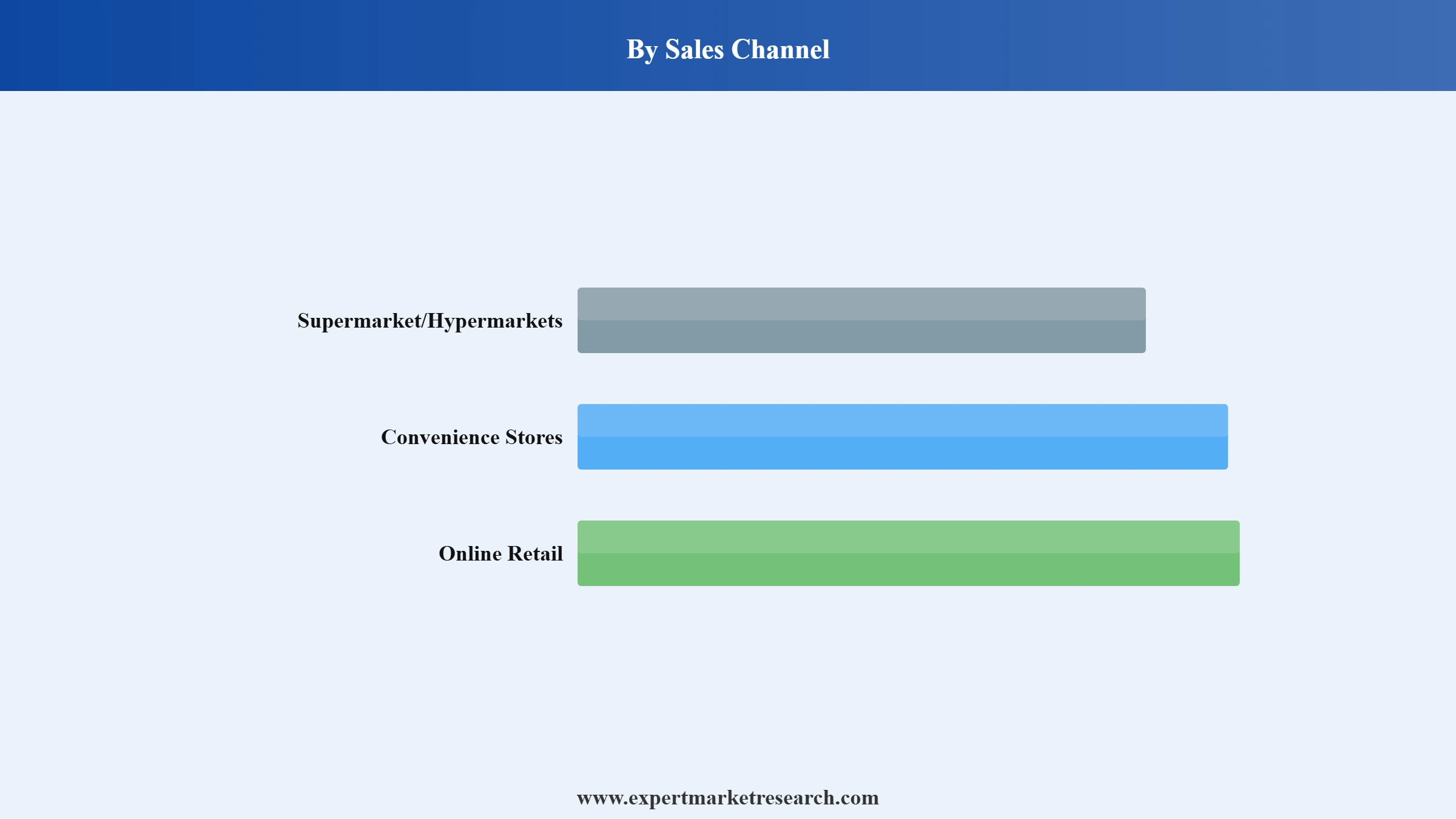
Supermarkets and Hypermarkets Dominate Sales
Supermarkets and hypermarkets command the largest distribution share of soups, with extensive product exposure and volume packaging for B2B buyers, thus pushing the Nigeria soup market revenues. Convenience stores account primarily for impulse buying, with online retail gaining rapidly as a result of digitalization, particularly in urban locations where rapid replenishment and diversity of range are crucial for foodservice businesses.
Read more about this report - REQUEST FREE SAMPLE COPY IN PDF
Nigeria Soup market players are concentrating on building product portfolios with nutrient-dense and region-specific soup offerings. They are looking to enhance cold chain logistics, increase digital B2B collaborations, and localize flavor profiles to serve institutional and foodservice customers. Investments are also being made in sustainable packaging and export-friendly formats to increase market penetration both locally and globally.
Nestle SA, founded in 1866 and based in Switzerland, offers seasoning cubes and ready-to-cook soup mix under the Maggi brand in Nigeria. Its products appeal to traditional Nigerian palates with health-oriented formulations and extensive distribution.
Unilever PLC, which was established in 1929 and is headquartered in the United Kingdom, markets soup bases and bouillon cubes under its Knorr brand in Nigeria. It focuses on convenience, high-quality flavor, and nutritional boost to satisfy changing consumer needs in domestic food.
Kraft Heinz Company, founded in 2015 and based in the United States, exports canned soups and soup concentrates to Nigeria. Its products appeal to urban customers looking for foreign tastes and convenience foods.
The Campbell Soup Company, which was founded in 1869 and is based in the United States, exports specific condensed and ready-to-eat soups to Nigeria. It targets top-quality soups with world appeal to supermarkets and high-income consumers.
*Please note that this is only a partial list; the complete list of key players is available in the full report. Additionally, the list of key players can be customized to better suit your needs.*
Other key players in the report include Conagra Brands Inc., Zaika Foods Limited, Egunsi Foods, and Golden Penny Foods, among others.
February 2025
Nestlé announced the launch of a dairy demonstration farm in Nigeria to enhance local milk sourcing. The initiative aims to improve dairy production, support sustainable farming practices, and supply high-quality ingredients for local food products.
February 2024
PEFA Foods launched its Fast Soup range in Nigeria, targeting busy consumers with quick-to-prepare, locally flavored soups. The move aims to blend convenience with tradition, offering affordable, ready-to-eat options tailored to urban Nigerian tastes.
January 2023
Unilever highlighted its fast-growing business in Nigeria, focusing on localizing product offerings to meet Nigerian consumer needs. The company emphasized its commitment to sustainable business practices and expanding its presence through diverse product lines, including food and beverages.
July 2021
Golden Penny introduced a new noodle flavor incorporating classic Nigerian goat meat pepper soup. This innovation combines traditional Nigerian cuisine with convenient instant noodles, aiming to appeal to local tastes and provide a quick, flavorful meal option.
The market for Soup in Nigeria is expected to attain USD 1618.64 Million by 2035. The market is poised to grow steadily as convenience, health-consciousness, and cultural authenticity fuel innovation. With more investments in digital procurement, cold chain growth, and nutrient fortification, retailer, caterer, and institutional kitchen B2B demand will power market development over the next few years.
The Nigeria Soup Market Report and Forecast 2026-2035 offers a comprehensive analysis, delivering crucial insights into:
This report equips food companies, policymakers, retailers, and entrepreneurs with strategic intelligence to tap new growth opportunities, address consumer needs, and build a competitive, resilient soup market in Nigeria.


Upto 15% Off
USD
$2499 $2249
$3999 $3599
$4999 $4249
$5999 $5099


*While we strive to always give you current and accurate information, the numbers depicted on the website are indicative and may differ from the actual numbers in the main report. At Expert Market Research, we aim to bring you the latest insights and trends in the market. Using our analyses and forecasts, stakeholders can understand the market dynamics, navigate challenges, and capitalize on opportunities to make data-driven strategic decisions.*
In 2025, the Nigeria Soup market reached an approximate value of USD 659.14 Million.
The market is projected to grow at a CAGR of 9.40% between 2026 and 2035.
The key players in the market includes Nestle SA, Unilever PLC, The Kraft Heinz Company, The Campbell Soup Company, Conagra Brands Inc., Zaika Foods Limited, Egunsi Foods, and Golden Penny Foods, among others.
The lithium iron phosphate battery type is gaining traction and anticipated to expand with a 15.1% CAGR through 2035.
Some of the key strategies include product localization, affordable packaging, expanding retail coverage, investment in ready-to-eat forms, health-oriented formulations, intense marketing drives, and the use of digital channels to appeal to younger, convenience-oriented Nigerian consumers.
Explore our key highlights of the report and gain a concise overview of key findings, trends, and actionable insights that will empower your strategic decisions.
| REPORT FEATURES | DETAILS |
| Base Year | 2025 |
| Historical Period | 2019-2025 |
| Forecast Period | 2026-2035 |
| Scope of the Report |
Historical and Forecast Trends, Industry Drivers and Constraints, Historical and Forecast Market Analysis by Segment:
|
| Breakup by Category |
|
| Breakup by Type |
|
| Breakup by Packaging |
|
| Breakup by Sales Channel |
|
| Market Dynamics |
|
| Competitive Landscape |
|
| Companies Covered |
|
Datasheet
One User
USD 2,499
USD 2,249
tax inclusive*
Single User License
One User
USD 3,999
USD 3,599
tax inclusive*
Five User License
Five User
USD 4,999
USD 4,249
tax inclusive*
Corporate License
Unlimited Users
USD 5,999
USD 5,099
tax inclusive*
*Please note that the prices mentioned below are starting prices for each bundle type. Kindly contact our team for further details.*
Flash Bundle
Small Business Bundle
Growth Bundle
Enterprise Bundle
*Please note that the prices mentioned below are starting prices for each bundle type. Kindly contact our team for further details.*
Flash Bundle
Number of Reports: 3
20%
tax inclusive*
Small Business Bundle
Number of Reports: 5
25%
tax inclusive*
Growth Bundle
Number of Reports: 8
30%
tax inclusive*
Enterprise Bundle
Number of Reports: 10
35%
tax inclusive*
How To Order

Select License Type
Choose the right license for your needs and access rights.

Click on ‘Buy Now’
Add the report to your cart with one click and proceed to register.

Select Mode of Payment
Choose a payment option for a secure checkout. You will be redirected accordingly.
Strategic Solutions for Informed Decision-Making
Gain insights to stay ahead and seize opportunities.

Get insights & trends for a competitive edge.

Track prices with detailed trend reports.

Analyse trade data for supply chain insights.

Leverage cost reports for smart savings

Enhance supply chain with partnerships.

Connect For More Information
Our expert team of analysts will offer full support and resolve any queries regarding the report, before and after the purchase.
Our expert team of analysts will offer full support and resolve any queries regarding the report, before and after the purchase.
We employ meticulous research methods, blending advanced analytics and expert insights to deliver accurate, actionable industry intelligence, staying ahead of competitors.
Our skilled analysts offer unparalleled competitive advantage with detailed insights on current and emerging markets, ensuring your strategic edge.
We offer an in-depth yet simplified presentation of industry insights and analysis to meet your specific requirements effectively.




