

Consumer Insights
Uncover trends and behaviors shaping consumer choices today
Procurement Insights
Optimize your sourcing strategy with key market data
Industry Stats
Stay ahead with the latest trends and market analysis.
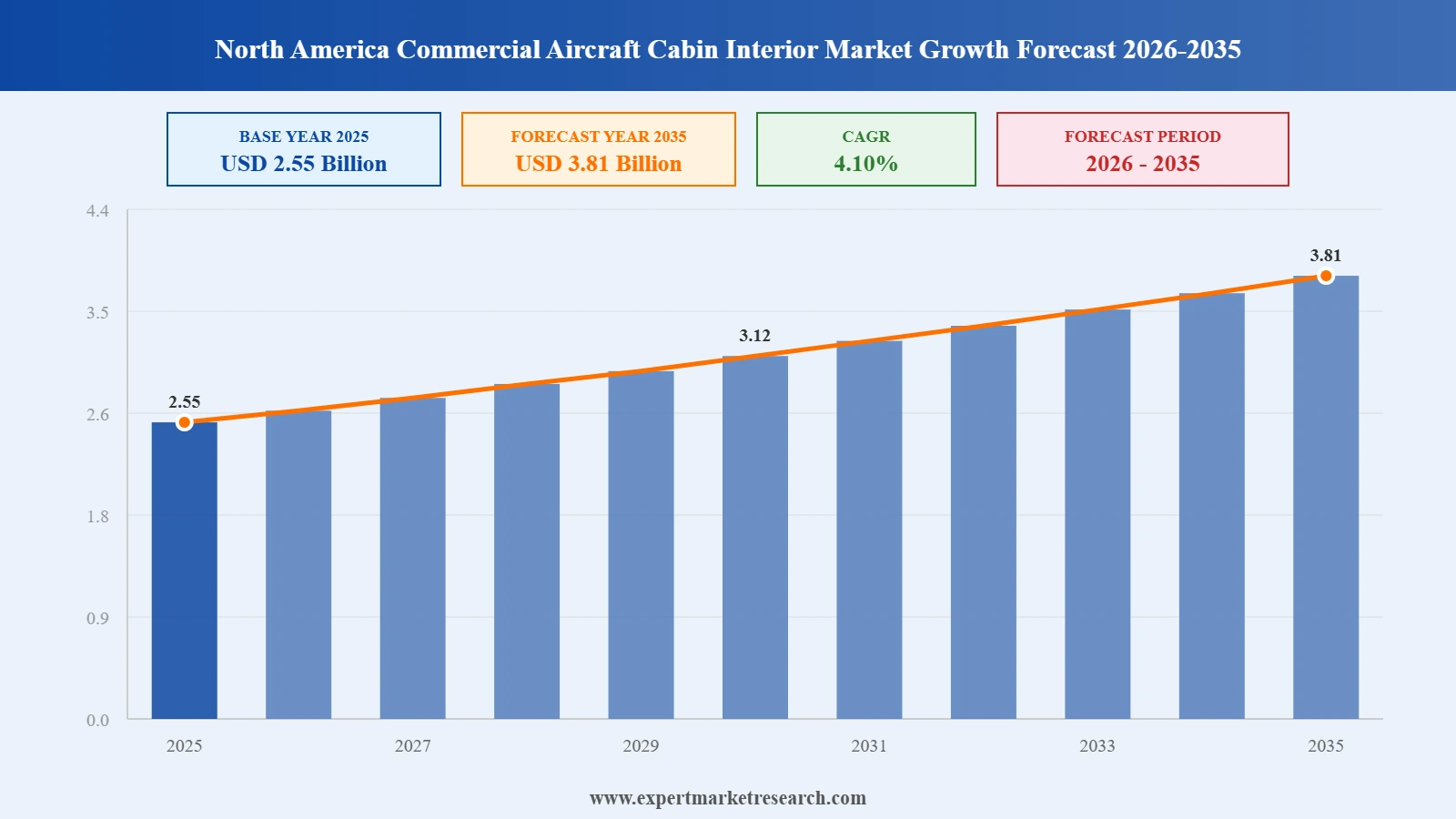
The North America commercial aircraft cabin interior market attained a value of USD 2.55 Billion in 2025 and is projected to expand at a CAGR of 4.10% through 2035. The market is further expected to achieve USD 3.81 Billion by 2035. Connectivity drives demand for cabin equipment that supports predictive maintenance, remote monitoring, faster troubleshooting, and measurement of aircraft availability, while minimizing maintenance incidents in the cabin.
Renewal of fleets and refurbishment of cabins drive demand in the North America commercial aircraft cabin interior market as airlines try to strike a balance between new deliveries and upgrading their aging fleet, creating an ongoing need for modular seating, monuments, lavatories, and galleys. At the same time, the drive by airlines to cut turnaround time creates demand for pre-assembled cabin interiors and digital components. Aerospace companies capable of integrating engineering certification with retrofit kits can help cut down modification projects and connected cabin equipment can help airlines gauge the condition of components.
Against the backdrop of growing demand for connected, data-driven cabin maintenance solutions, Safran boosted the North America commercial aircraft cabin interior market growth by developing Safran Connected Interiors in April 2026. It is a digital maintenance system for tracking cabin equipment in real-time as well as predictive servicing. Safran Connected Interiors is currently being introduced in Safran Cabin, Safran Seats, and Safran Electronics & Defense divisions and gathers information from galley inserts, seat electronics, passenger service units, and cabin lights using CAN bus and ARINC protocols. In April 2025, Safran’s Connected Interiors won the 2025 Crystal Cabin Award for IFEC & Digital Services, showing the industry’s interest in connected cabin assets and predictive maintenance.
There are some firms in the North America commercial aircraft cabin interior market that are modernizing cabins by applying the principles of retrofitting, modularity of products and connected cabin concepts. Diehl Aviation is concentrating on modularity of cabin systems such as galleys, lavatories, lighting and overhead bins that would allow airlines to upgrade individual cabin products without having the need for extended down times of the aircraft. Collins Aerospace is ensuring the longevity of the cabin assets that have been installed through the seat upgrade programs and digital galleys. Similarly, Panasonic Avionics offers connected inflight entertainment and digital cabin products that help in providing personalized services to passengers and insight to airlines. In June 2026, American Airlines unveiled retrofitted A319 and A320 cabins, adding premium seats and enhanced passenger experience features.
Read more about this report - Request a Free Sample
OneCabin Initiative Rolled Out by American Airlines to Ensure Cleanliness of Cabins and Address Any Problem with Interior and Entertainment Systems within the Cabin at Six Hubs. Vendors in the North America commercial aircraft cabin interior market can supply quick-fix components, sturdy upholstery, replacement IFE components, and refurbishment facilities to facilitate maintenance activities by airlines.
Jamco Interiors inaugurated a Center of Excellence in India, which would undertake cabin engineering, certification, product development, and configuration control for aircraft around the world. North American suppliers can cooperate in the areas of engineering, certification, modular cabin systems, and components.
Latitude Interiors Group entered into a long-term contract with a leading North American regional airline for the refurbishment of seats, sidewall panels, galleys, lavatories, overhead bins, and other cabin components. Competitors can offer refurbishment packages comprising more than one cabin component, thereby simplifying the process of vendor management for the airlines while extending the life of existing cabin interiors.
Collins Aerospace won three airline customers for its Helix main cabin seat, for about 200 Airbus A320 and Boeing 737 aircraft. Competitors can look to develop seats that are lightweight, have selectable passenger amenities, are less complex and retrofittable, boosting growth in the North America commercial aircraft cabin interior market.
Connected cabin technology is shifting focus from demonstration programs to commercially viable maintenance operations where suppliers aim to transform interior components into sources of valuable data. Sensors within seat, galley, lavatory, and overhead systems enable airlines to detect faults early, track usage trends, optimize maintenance, and minimize aircraft down time, providing new North America commercial aircraft cabin interior market opportunities. In April 2026, Air Canada unveiled next-generation Glowing Hearted cabins with lie-flat seats, 4K OLED screens, Bluetooth audio, and upgraded connectivity.
Both airlines and plane makers are focusing on cabin components that offer both weight-saving and fast turnaround potential, redefining the North America commercial aircraft cabin interior market dynamics. In April 2025, Airbus launched the A220 Airspace cabin with Air Canada, featuring larger bins, improved lighting, and enhanced passenger comfort. The upgraded overhead storage offers 15% more luggage space, which corresponds to as much as 19 additional passenger luggage on the A220-300 model while decreasing cabin structural weight by about 300 pounds. Air Canada has 65 firm orders for the A220-300 model, which will start deliveries featuring the new bins expected from early 2026.
Interior manufacturers are targeting the modernization of galleys where carriers are looking for concrete improvement in crew workload, water consumption, hygiene levels, and cabin space management. An example of how this North America commercial aircraft cabin interior market trend is shaping up is illustrated by Safran’s CUBE galley waste-disposal system, which secured awards in May 2024. The system uses UV technology to deal with issues of odor and bacteria growth, along with saving up to 30 percent of water use when compared with other waste-disposal units.
The North America commercial aircraft cabin interior market observes an increasing emphasis on retrofit engineering for airlines that are looking to modernize their existing fleet without having to wait for their entire fleet to undergo replacement. In this regard, Safran Cabin provides retrofitting services and solutions for cabin integration that include seats, galleys, lavatories, overhead bins, and cabin system, while the company’s ECOS integrated cabin is comprised of high-capacity overhead bins, DMS lavatories, and MaxFlex galleys. In August 2026, ST Engineering secured FAA-approved cabin STCs, enabling certified interior modifications and expanding aircraft retrofit opportunities.
Increased regulatory scrutiny is dictating the future of next generation seat designs, materials, monuments and cabin layout, thus certification capability becoming an important competitive advantage. The discipline of Advanced Cabin Safety at the FAA deals with the new furniture, seating, materials, other configurations, emergency evacuation, flammability and fire protection, crash dynamics, smoke and fume protection, and security threats. The FAA also introduced in June 2026 proposed amendments to its Transport Airplane Cabin Interiors Crashworthiness Handbook, including guidance related to the new cabin interior regulation requirements and passenger seat size and spacing. Aligning with this trend in the North America commercial aircraft cabin interior market, in April 2026, Polyvantis introduced lightweight polycarbonate sheet options designed to reduce aircraft cabin weight while maintaining interior performance requirements.
The Expert Market Research's report titled “North America Commercial Aircraft Cabin Interior Market Report and Forecast 2026-2035” offers a detailed analysis of the market based on the following segments:
Market Breakup by Product Type
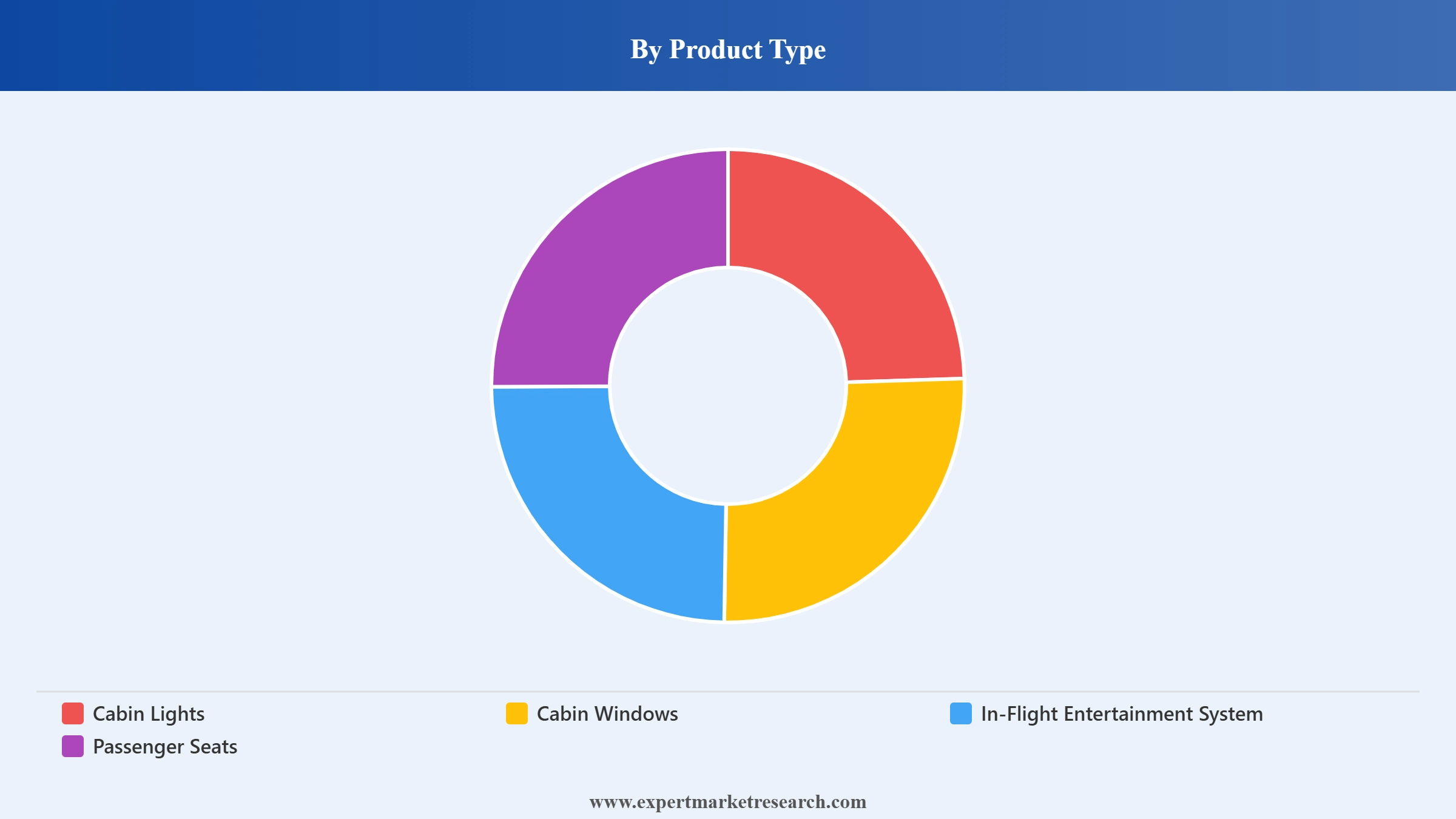
Key Insight: Comfort upgrades, light weight, modules, and density of passengers drive growth of the passenger seats category across the North America commercial aircraft cabin interior market scope. In-flight entertainment systems are propelled forward through connection, wireless capabilities, personalization, and additional revenue possibilities. LEDs, programming, and lower maintenance needs drive growth of the cabin lighting category. Durability, acoustics, bigger windows, and new aircraft fuselage designs are the key factors propelling the cabin windows category forward. The other interior parts such as galley, lavatory, bin, and partitions will be driven forward through light weight, hygiene, and quick turnover.
Market Breakup by Aircraft Type
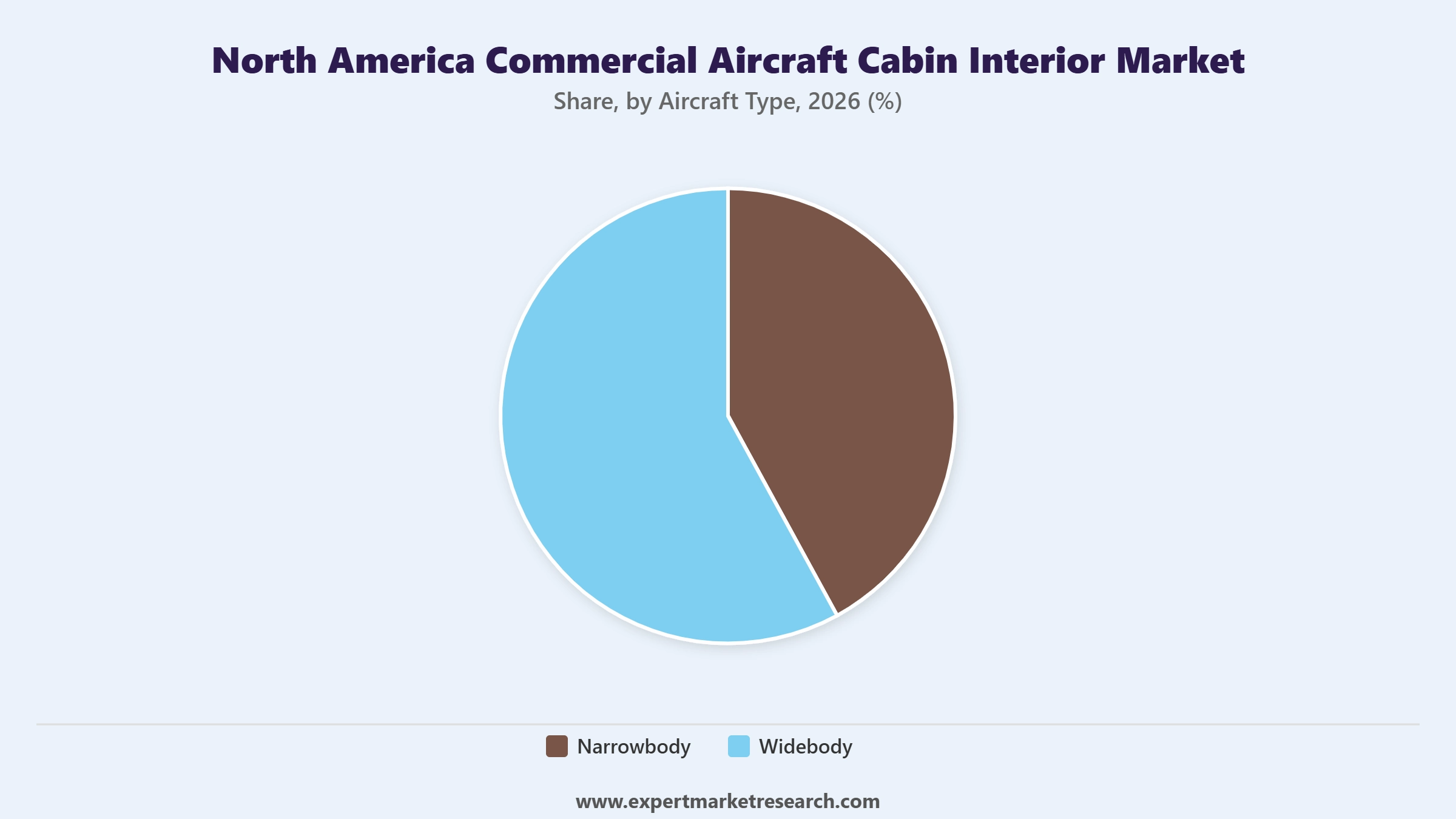
Key Insight: The interiors of narrowbody aircraft are driven by utilization rates, fleet standardization, quick turn times, and light-weight parts, contributing to the North America commercial aircraft cabin interior market value. The interiors of widebody aircraft are driven by differences in long-haul operations, premium seating, privacy, connectivity, and extended flight comfort. As a result, narrowbody development programs place more importance on retrofit programs, durable products, and compact equipment for easy maintenance. In September 2025, Airbus prepared an enhanced A220 Airspace cabin with lighter bins, improved lighting, connectivity, and greater passenger comfort.
Market Breakup by Cabin Class
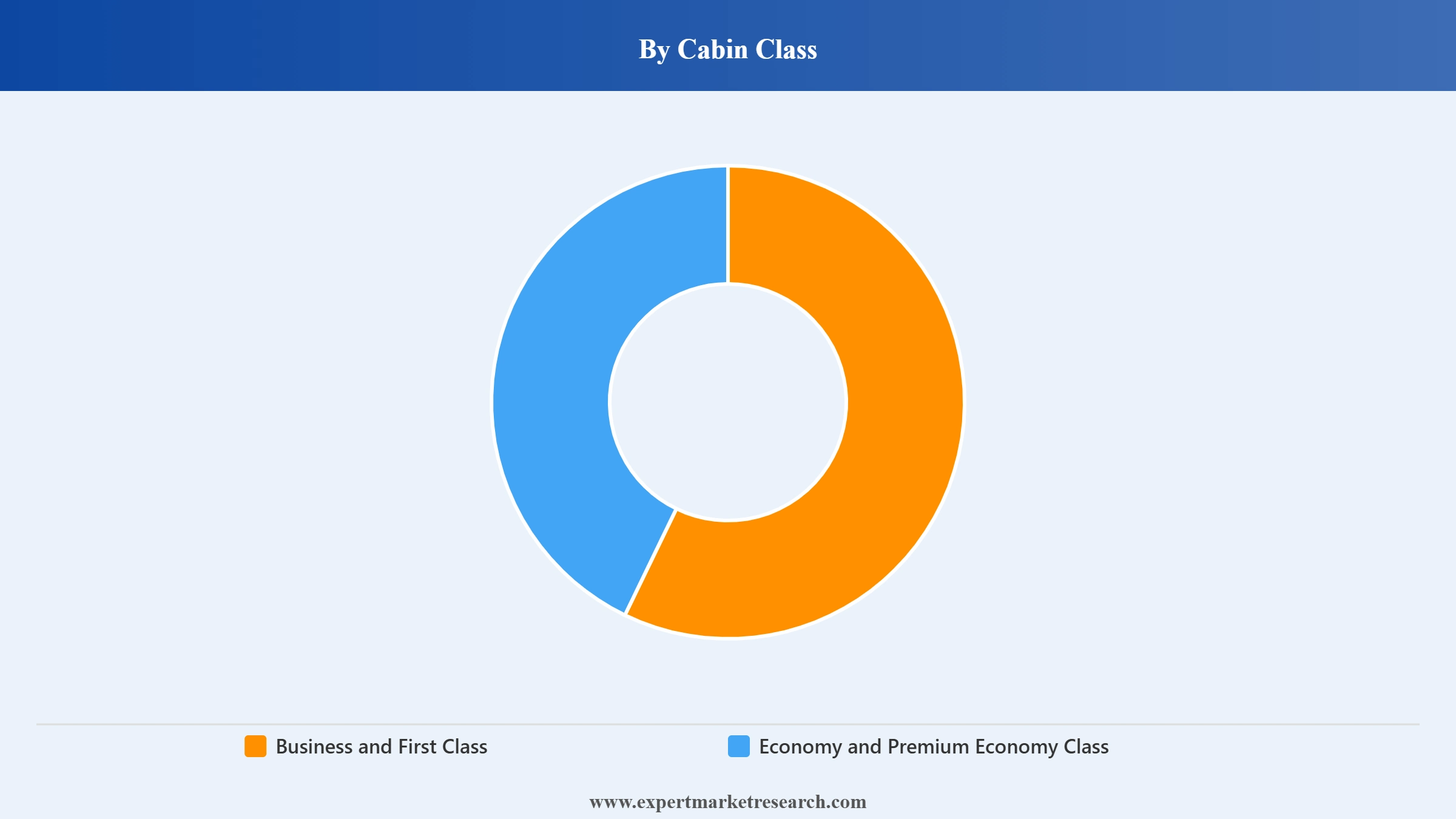
Key Insight: Capacity management, comfort, seat-density optimization, and refurbishment define economy and premium economy classes, driving the overall North America commercial aircraft cabin interior market revenue. Growth of the business and first-class category is determined by premium revenue approach, privacy, lie-flat capability, aisle accessibility, and personalization. In April 2024, American Airlines launched redesigned onboard amenities, elevated dining, and future cabin upgrades including Flagship Suite seats and enhanced connectivity. Suppliers catering to economy class place focus on lightweight seating, robust fabrics, built-in power outlets, and durable hardware, which can handle intensive use.
Market Breakup by Country
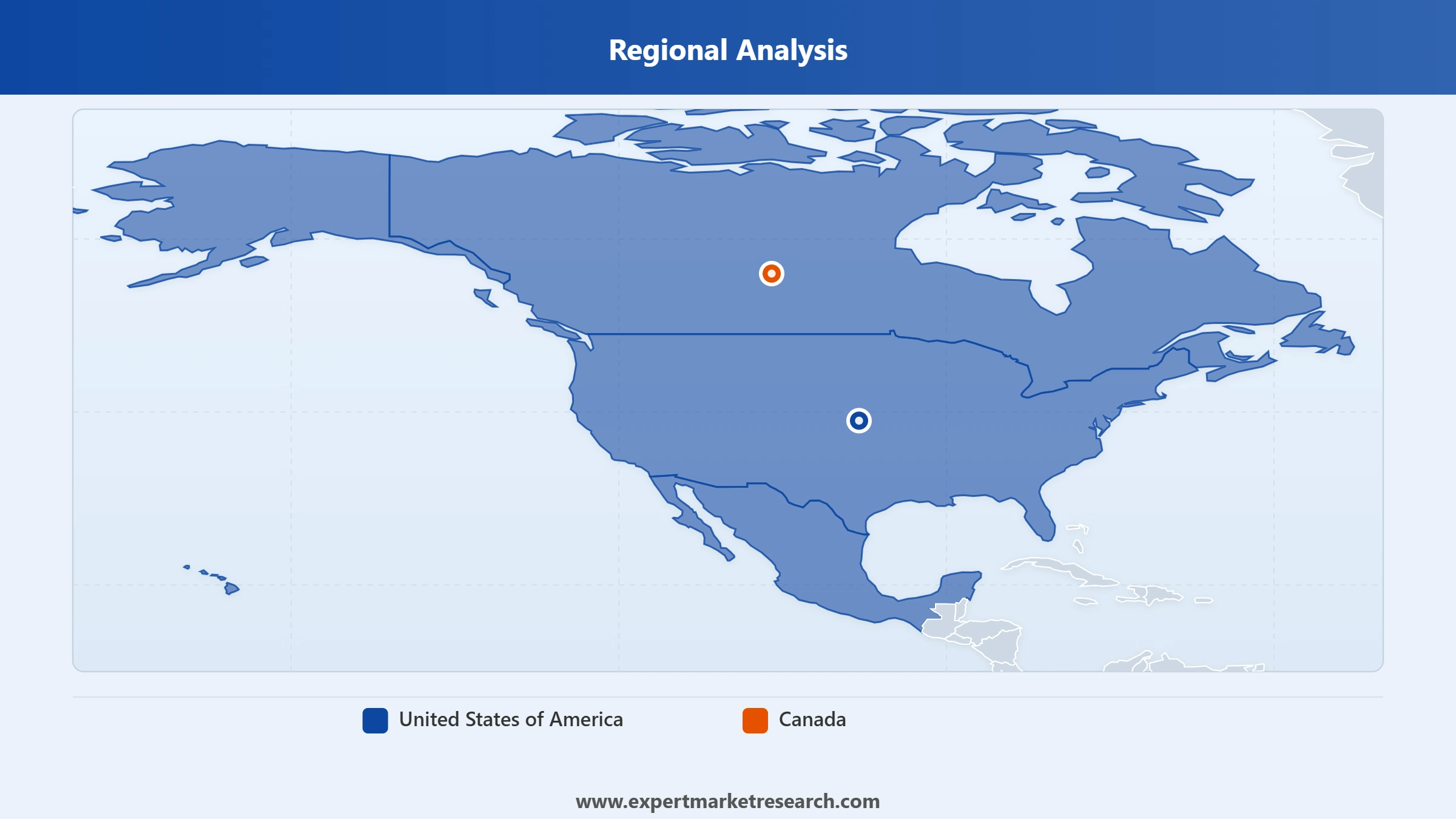
Key Insight: United States’ leadership across the North America commercial aircraft cabin interior market scope rests on the size of the fleet, procurement of airlines, maintenance facilities, and constant requirements for retrofit. The Canadian market is motivated by the need to update the fleet, perform long-distance flights, develop the business class, and upgrade the interiors efficiently. United States customers pay attention to standardization of the product, service in the aftermarket, certification, and large-scale installations, while the needs of the Canadian market include adaptability to changing networks and fleet. Certified modular solutions reducing the downtime of the aircraft are highly valued by both markets.
By product type, passenger seats lead demand growth due to comfort, density, and retrofit requirements
The passenger seating category observes rapid growth in the North America commercial aircraft cabin interior market owing to comfort advancements, weight savings, modularity of refurbishment, and density requirements of the cabin. Thinner seat structures, better cushioning, adjustable headrests, power integration, USB-C capability, and modular seat covers that simplify maintenance and refurbishment are key factors driving growth. Seat platforms also provide options to create distinctions between economy, premium economy, and business classes without a full interior redesign. In April 2026, Collins Aerospace and Air Canada unveiled Aurora suites and Meridian+ economy seats for A321XLR aircraft, enhancing comfort, privacy, and cabin efficiency.
Read more about this report - Request a Free Sample
In-flight entertainment is one of the fastest-growing sectors due to the increasing demand of airlines to introduce personalized digital experience and connected services, accelerating development in the North America commercial aircraft cabin interior market. In-flight entertainment systems incorporate high-resolution displays, Bluetooth audio, content delivery via wireless technology, USB-C charging, and passenger-device pairing. Suppliers are also designing software-based architectures that will give airlines the ability to update content and applications without a need to replace whole hardware systems. Integration with on-board connectivity gives even more options for applications in targeted advertising, retail, loyalty programs, and operational communications.
Narrowbody aircraft dominates the market due to high utilization and extensive domestic networks
The narrowbody continues to dominate the North America commercial aircraft cabin interior market due to the wide network coverage of domestic, regional, and short-haul international flights run by airlines. Suppliers gain advantages from requirements for light weight seats, galleys, bins, lavatories, and passenger service equipment. High usage rate of the aircraft is making the interiors of the plane more favorable for easy cleaning, easier replacement of parts, and lesser maintenance downtime. In May 2025, Airbus announced plans of launching A220 cabin redesign, introducing Airspace features to enhance passenger comfort, storage, lighting, connectivity, and accessibility
Read more about this report - Request a Free Sample
The widebody category is growing at the fastest pace as the airlines continue to develop the cabin interiors of long-haul flights based on experience, privacy, connectivity, and passenger movement. Suppliers in the North America commercial aircraft cabin interior market are designing the interiors with suites, lie-flat seats, large screens, mood lighting, enhanced lavatories, and flexible monuments. The refits of the widebodies allow for the use of modular components that can be easily replaced without any structural changes. Airlines are currently evaluating the interior systems based on passenger yields and efficiency, making the suppliers design for lighter structures and better manageability.
By cabin class, the economy and premium economy category dominates the market through capacity optimization and comfort upgrades
Economy and premium economy classes are becoming predominant types of cabin class due to continuous seat-density optimization by aircraft manufacturers and additional comfort upgrades by suppliers. Premium economy cabin class serves as an upgrade option from economy to business, driving modular seating and monument installation in the framework of refurbishment, driving demand in the North America commercial aircraft cabin interior market. Cabin products are valued by airlines that provide the best passenger experience with no substantial reduction in cabin capacity. In May 2025, United Airlines unveiled new 787-9 Dreamliner interiors featuring premium suites, larger 4K OLED screens, wireless charging, and Bluetooth connectivity.
Read more about this report - Request a Free Sample
The fastest-growing cabin class is business and first class due to North American airlines' investments into premium-heavy cabin configurations to enhance long-haul yields and brands. Suites, lie-flat seats, privacy doors, direct aisle access, storage, wireless charging, and personalized lighting are developed by suppliers. Modular monuments and standardized seat platforms become more common in architectures as they help to facilitate certification and installation processes.
Read more about this report - Request a Free Sample
United States clocks in the largest market share through fleet scale and extensive refurbishment activity
United States dominates the North America commercial aircraft cabin interior market due to the high volume of purchases of interior components for commercial planes, high number of airline companies, and frequent cabin refurbishment programs. The need to address diverse requirements across seats, galleys, lavatories, lighting, bins, windows, and entertainment systems is driving demand for scalable solutions. Supplier capabilities include support for certification, retrofit engineering, fleet standardization, and availability in the aftermarket. High usage rate of airplanes also leads to higher demand for durable parts and fast replacement processes. In September 2026, Etihad Airways unveiled Beyond Borders cabins, introducing enhanced First, Business, and Economy interiors with greater privacy, connectivity, charging, and comfort.
Read more about this report - Request a Free Sample
Canada is the fastest growing regional market with growth coming from increased long-haul connectivity and upgrade of cabins for narrowbody and widebody fleets. The North America commercial aircraft cabin interior market observes notable demand for lightweight seats, entertainment, connectivity, premium cabins, and modular monuments. Canadian airlines need interior systems to be designed taking into account high utilization rate, durable material, and easy access for maintenance procedures. Relationship with United States aerospace manufacturers provides an opportunity to offer standardized components and retrofit programs with certification services.
The market is becoming increasingly competitive, where North America commercial aircraft cabin interior market players are focusing on light-weight structures, connected cabin interiors, premium seats, modular retrofit solutions, and certification-driven engineering for commercial aircraft cabin interiors. Companies are broadening their offerings across seating, lighting, connectivity, galleys, lavatories, and cabin management systems.
Opportunities are shifting towards retrofit-enabled interiors, predictive maintenance, smart galleys, connectivity-enabled cabin components, and customized passenger experience. North America commercial aircraft cabin interior companies are also offering modular products that require minimum downtime during installation to help airlines prolong cabin life cycles while incorporating new technology as well.
Adient Aerospace LLC was founded in 2018 and is based in United States. The Boeing-Adient Joint Venture manufactures aircraft seats for commercial airlines and aircraft leasing companies. This company is involved in manufacturing seating in line-fit and retrofit applications. The development areas include lie-flat seats in business class, comfort architecture seats, and flexible seats.
Astronics Corporation was founded in 1968 and is headquartered in New York, United States. The firm focuses on cabin lighting systems, passenger service units, power generation, connectivity, and in-flight entertainment equipment and seat actuation systems. The portfolio provides an opportunity to integrate lighting systems, electronic systems, connectivity, and cabin systems.
RTX Corporation was formed in 1922, and it operates from its headquarters located in the United States. Through its subsidiary, Collins Aerospace, RTX addresses the cabin needs of commercial aircraft concerning seating, galleys, lighting, interior, and digital cabin systems. Collins is more concerned with upgradeable cabin systems, seating reconfigurations, connectivity products, and technologies enabling airlines to retrofit their older aircraft at reasonable cost.
Founded in 1902, Diehl Stiftung & Co. KG operates from its headquarters located in Germany. Diehl Aviation is the subsidiary of Diehl Stiftung & Co. KG and provides cabin interiors, galleys, lavatories, storage, dividers, lighting, and cabin management technologies. It has an emphasis on lightweight construction and life cycle optimization.
Other key players in the market include Expliseat, FACG AG, Luminator Aerospace, Panasonic Holdings Corp., Safran SA, and Thompson Aero Seating, among others.
*Please note that this is only a partial list; the complete list of key players is available in the full report. Additionally, the list of key players can be customized to better suit your needs.*
Unlock the latest insights with our North America commercial aircraft cabin interior market trends 2026 report. Discover regional growth patterns, consumer preferences, and key industry players. Stay ahead of competition with trusted data and expert analysis. Download your free sample report today and drive informed decisions in the market.


Upto 15% Off
USD
$2499 $2249
$3999 $3599
$4999 $4249
$5999 $5099


*While we strive to always give you current and accurate information, the numbers depicted on the website are indicative and may differ from the actual numbers in the main report. At Expert Market Research, we aim to bring you the latest insights and trends in the market. Using our analyses and forecasts, stakeholders can understand the market dynamics, navigate challenges, and capitalize on opportunities to make data-driven strategic decisions.*
In 2025, the market reached an approximate value of USD 2.55 Billion.
The market is projected to grow at a CAGR of 4.10% between 2026 and 2035.
The market is estimated to witness healthy growth in the forecast period of 2026-2035 to reach USD 3.81 Billion by 2035.
The aircraft cabin interior includes window dressings, seat fabric, lighting, screen placement, and wiring.
The aeroplane interior is called an aircraft cabin. It is the section of an aircraft in which passengers travel.
Stakeholders are developing modular retrofit kits, integrating predictive diagnostics, expanding certification capabilities, improving lightweight materials, strengthening aftermarket networks, and creating configurable premium cabin solutions.
Key trends aiding market expansion include technological advancement in in-flight entertainment systems, a rising number of international travels, and the growing use of sustainable interior materials for interior design.
Major countries in the market are the United States of America and Canada.
The common product types of commercial aircraft cabin interior are cabin lights, cabin windows, in-flight entertainment systems, passenger seats, and others.
The key players in the market include Adient Aerospace LLC, Astronics Corporation, RTX Corporation, Diehl Stiftung & Co. KG, Expliseat, FACG AG, Luminator Aerospace, Panasonic Holdings Corp., Safran SA, and Thompson Aero Seating, among others.
Companies face lengthy certification cycles, supply-chain constraints, aircraft delivery delays, complex retrofit integration, high engineering costs, weight limitations, and demanding airline requirements for reliability.
Explore our key highlights of the report and gain a concise overview of key findings, trends, and actionable insights that will empower your strategic decisions.
| REPORT FEATURES | DETAILS |
| Base Year | 2025 |
| Historical Period | 2019-2025 |
| Forecast Period | 2026-2035 |
| Scope of the Report |
Historical and Forecast Trends, Industry Drivers and Constraints, Historical and Forecast Market Analysis by Segment:
|
| Breakup by Product Type |
|
| Breakup by Aircraft Type |
|
| Breakup by Cabin Class |
|
| Breakup by Region |
|
| Market Dynamics |
|
| Competitive Landscape |
|
| Companies Covered |
|
Datasheet
One User
USD 2,499
USD 2,249
tax inclusive*
Single User License
One User
USD 3,999
USD 3,599
tax inclusive*
Five User License
Five User
USD 4,999
USD 4,249
tax inclusive*
Corporate License
Unlimited Users
USD 5,999
USD 5,099
tax inclusive*
*Please note that the prices mentioned below are starting prices for each bundle type. Kindly contact our team for further details.*
Flash Bundle
Small Business Bundle
Growth Bundle
Enterprise Bundle
*Please note that the prices mentioned below are starting prices for each bundle type. Kindly contact our team for further details.*
Flash Bundle
Number of Reports: 3
20%
tax inclusive*
Small Business Bundle
Number of Reports: 5
25%
tax inclusive*
Growth Bundle
Number of Reports: 8
30%
tax inclusive*
Enterprise Bundle
Number of Reports: 10
35%
tax inclusive*
How To Order

Select License Type
Choose the right license for your needs and access rights.

Click on ‘Buy Now’
Add the report to your cart with one click and proceed to register.

Select Mode of Payment
Choose a payment option for a secure checkout. You will be redirected accordingly.
Strategic Solutions for Informed Decision-Making
Gain insights to stay ahead and seize opportunities.

Get insights & trends for a competitive edge.

Track prices with detailed trend reports.

Analyse trade data for supply chain insights.

Leverage cost reports for smart savings

Enhance supply chain with partnerships.

Connect For More Information
Our expert team of analysts will offer full support and resolve any queries regarding the report, before and after the purchase.
Our expert team of analysts will offer full support and resolve any queries regarding the report, before and after the purchase.
We employ meticulous research methods, blending advanced analytics and expert insights to deliver accurate, actionable industry intelligence, staying ahead of competitors.
Our skilled analysts offer unparalleled competitive advantage with detailed insights on current and emerging markets, ensuring your strategic edge.
We offer an in-depth yet simplified presentation of industry insights and analysis to meet your specific requirements effectively.




