

Consumer Insights
Uncover trends and behaviors shaping consumer choices today
Procurement Insights
Optimize your sourcing strategy with key market data
Industry Stats
Stay ahead with the latest trends and market analysis.
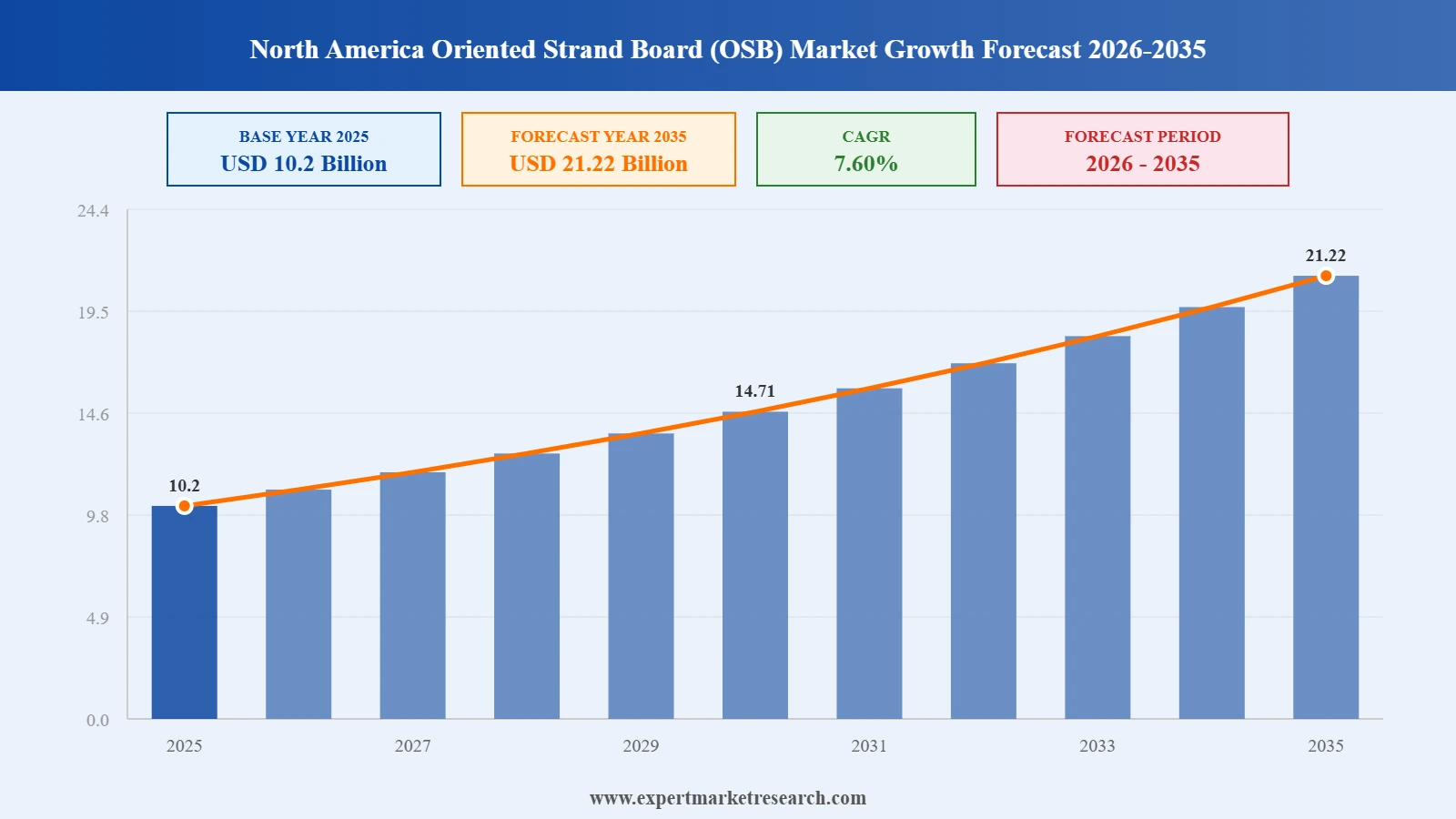
The North America oriented strand board (OSB) market size was valued at USD 10.20 Billion in 2025. The industry is expected to grow at a CAGR of 7.60% during the forecast period of 2026-2035 to reach a value of USD 21.22 Billion by 2035. Expansion and modernization of OSB manufacturing capacity across North America are driving market growth by strengthening supply reliability, improving operational efficiency, and supporting rising construction-led demand.
The North America oriented strand board (OSB) market expansion is being pushed by the increased residential constructions and the transition to using more sustainable building materials. The strong demand for housing is the main factor that leads to more volume consumption, especially in the case of single- and multi-family units, whereby the green building standards result in the increased use of engineered wood panels for low-carbon, energy-efficient buildings. Altogether, these factors contribute to the increased use of OSB for both structural and interior applications. Thus, manufacturers can create new product lines that can satisfy the needs of performance, environmental, and regulatory requirements.
Leading companies of the North America oriented strand board (OSB) market are investing heavily to increase their footprints and upgrade their facilities so that they can provide higher volumes more reliably and efficiently. For example, Kronospan made a statement in April 2023 that it would be building a new state-of-the-art OSB manufacturing plant in Oxford, Alabama, with a USD 350 million investment and additional storage and logistics infrastructure, highlighting the strategic capacity build-out to serve U.S. builders and panel distributors. Likewise, in July 2025, Georgia-Pacific announced a massive USD 140 million (CAD 191 million) capital investment at its Englehart, Ontario, OSB mill, which will be used to install a new log processing system and increase goods warehousing to support operational efficiency and production capacity.
Read more about this report - REQUEST FREE SAMPLE COPY IN PDF
|
North America Oriented Strand Board (OSB) Market Report Summary |
Description |
Value |
|
Base Year |
USD Billion |
2025 |
|
Historical Period |
USD Billion |
2019-2025 |
|
Forecast Period |
USD Billion |
2026-2035 |
|
Market Size 2025 |
USD Billion |
10.20 |
|
Market Size 2035 |
USD Billion |
21.22 |
|
CAGR 2019-2025 |
Percentage |
XX% |
|
CAGR 2026-2035 |
Percentage |
7.60% |
|
CAGR 2026-2035 - Market by Region |
Canada |
8.7% |
|
CAGR 2026-2035 - Market by Grade |
OSB/3 |
8.4% |
|
CAGR 2026-2035 - Market by End-user Industry |
Construction |
8.6% |
|
2025 Market Share by Region |
United States of America |
70.6% |
OneSavings Bank (OSB), in cooperation with Publicis Sapient, stripped and relaunched a digital savings platform on October 7, 2024. The initiative reflected the digitalization trend in the North America oriented strand board (OSB) market, through which companies digitally procured and managed supply chains and integrated production digitally. By streamlining their operations, manufacturers were able to increase efficiency, cut lead times, and improve their competitiveness in the residential, commercial, and industrial construction sectors.
RoyOMartin celebrated the grand opening of the expanded Corrigan, Texas, OSB mill. Production capacity was increased by 75% to 1,400 MMSF per year, and 300 jobs were created. The expanded facility allowed the company to offer a broader product portfolio of OSB/3 and OSB/4 grades. Hence, a more consistent supply in residential and commercial construction projects. RoyOMartins expansion aligned with the rising housing needs and strengthened the company's position in the North America oriented strand board (OSB) market landscape.
LP Building Solutions declared the purchase of an OSB plant in Wawa, Canada, thus increasing its manufacturing capacity and gaining full operational control of the northern and export markets. The decision enhanced the logistical effectiveness and the supply of the products and allowed LP to meet the increasing demand in residential construction, furniture, and industrial packaging applications all over North America, as well as to consolidate its strong position in the OSB market.
LP Building Solutions unveiled its LP NovaCore Thermal Insulated Sheathing, which marries extruded polystyrene (XPS) insulation with an OSB panel to improve the thermal performance. By broadening the LP Structural Solutions range with LP TechShield and LP WeatherLogic, the company elevated its value-added OSB product offerings. These products helped builders comply with tighter regulations while also contributing to the growth in demand for high-performance products in the North America oriented strand board (OSB) market.
OSB manufacturers are establishing new production facilities at strategic places to be able to meet expanding regional demand all over the United States and to have better logistical access. By spreading the manufacturing footprint, transit times can be cut down, supply can be made more reliable, and it can also improve collaborations across regional construction markets. For instance, in April 2023, Kronospan unveiled a USD 350 million plan to set up a new OSB manufacturing factory in Oxford, Alabama, which will also include numerous storage facilities, rail spurs, and loading docks to offer a better service to the United States-based customers and to be able to accommodate future growth.
Acquisitions make it possible for manufacturers in the North America oriented strand board (OSB) market to rapidly increase their production capacity and combine assets that go well together in their North American portfolios. When a company gets with established factories and capabilities, it can streamline the supply chain and offer a wider range of products. One of the major changes in December 2023 was the acquisition by Kronospan of the particleboard plant in Simsboro, Louisiana, which expanded its wood panel business and put the company in a strong position for the growth of the structural panel markets, including OSB and other engineered wood products.
Strategic capacity expansions that make regional supply more reliable and support a variety of construction applications are the main drivers for growth in the North America oriented strand board (OSB) market. The companies Godfrey Forest Products, West Fraser, and Kronospan are increasing their product ranges to include OSB/3 and OSB/4 grades, thus allowing builders to have access to high-performance panels for use in residential, commercial, and industrial works. These expansions also facilitate faster project turnarounds, better logistics, and regional market agility. The Godfrey OSB factory in Maine is a recent instance of such an investment, which has added about 700,000 m of OSB capacity.
Rising green building standards in the region have surged the demand in the North America oriented strand board (OSB) market for products with low carbon and favorable life cycle environmental footprints. For market players, the green standards represent an opportunity as they raise the demand for certified, high-performance materials. The Canadian Wood Council (CWC) announced in December 2025 that it allocated USD 8.5 million towards the promotion of sustainable wood construction, which would include OSB panels. In efforts to capitalize on the trend, companies like LP Building Solutions and West Fraser Timber are advertising the use of low-emission OSB/3 and OSB/4 boards in construction and modular housing, thus facilitating the market growth and adoption of the products.
Apart from the new housing, the steady amount of renovation and repair work throughout North America is spurring demand in North America oriented strand board (OSB) market. Its price competence and the fact that it is easy to work with are among the reasons this material is commonly chosen for sheathing, subflooring, and other structural changes in the case of existing homes. When homeowners put money into remodeling and improvement projects, it is the producers who have a high chance of profiting through the continued supply of a stable volume that goes hand in hand with the demand for new construction, and thus the OSB market growth is kept at a stable level.
The EMR’s report titled “North America Oriented Strand Board (OSB) Market Report and Forecast 2026-2035” offers a detailed analysis of the market based on the following segments:
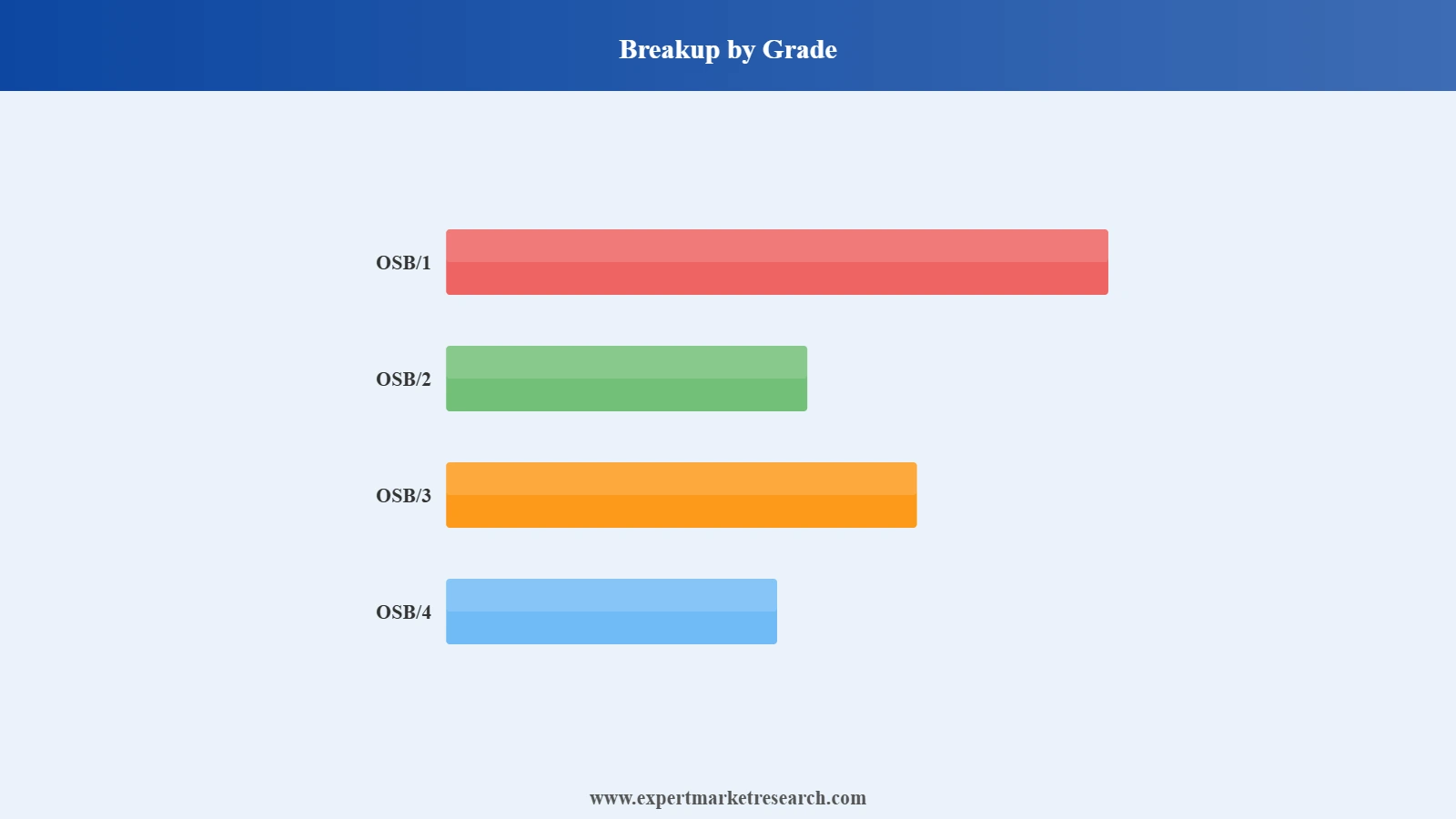
Market Breakup by Grade
Key Insight: The North America oriented strand board (OSB) market scope comprises grades such as OSB/1, OSB/2, OSB/3, and OSB/4, fulfilling the needs of the construction and industrial sectors. LP Building Solutions, through its LP OSB/1 and OSB/2 panels, is directing its offerings towards interior applications such as furniture backings and cabinetry. Arauco North America is the leader in the exterior building segment with its OSB/3 boards, which provide excellent moisture resistance for walls and roofing. Norbord, by means of its OSB/4 products, is facilitating the move towards high-performance and disaster-resilient constructions. Aligning board types with structural requirements and performance expectations, these businesses are opening opportunities for North America oriented strand board (OSB) market players across residential, commercial, and specialty sectors for greater OSB usage.
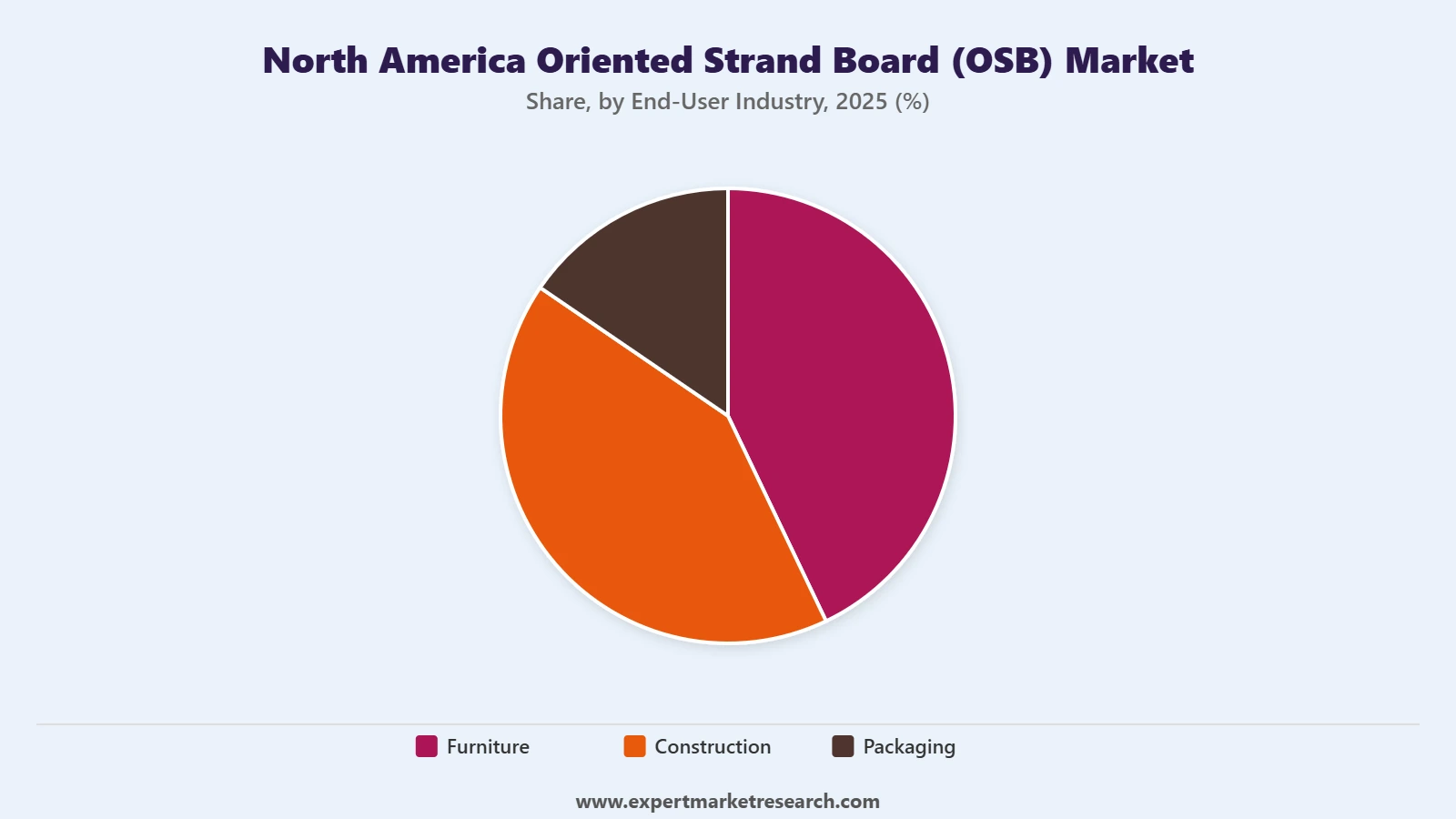
Market Breakup by End-User Industry
Key Insight: Construction still accounts for the major share of the North America oriented strand board (OSB) market, supported by housing growth and the implementation of more stringent building codes. Roseburg Forest Products, equipped with OSB/3 and OSB/4 grades, is among the suppliers for high-demand construction projects, whereas Martco Ltd. is able to fulfill modular furniture and sustainable interior needs through OSB/1 and OSB/2 products. Packaging applications, which entail industrial and export crating, are made more robust by Tembec's lightweight OSB panels. By expanding their product lines across the construction, furniture, and packaging areas, these businesses are not only reinforcing the market growth but also extending the reach of OSB into various industries.
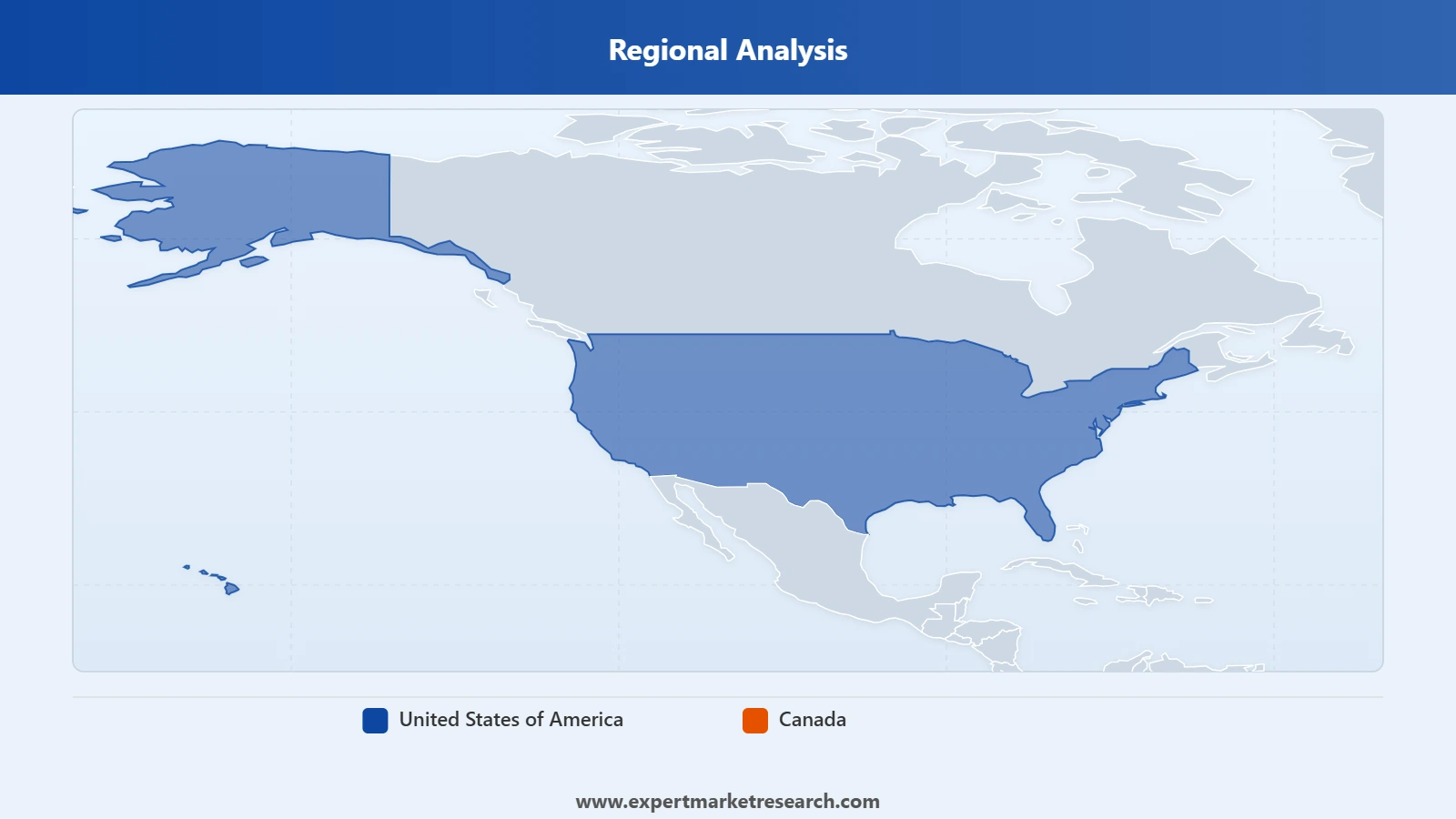
Market Breakup by Country
Key Insight: Country-wise, the United States and Canada are major contributors to the North America oriented strand board (OSB) market revenue. In the United States, when it comes to high-volume residential construction and prefab buildings, Kronospan and Georgia Pacific, the manufacturers of OSB/3 and OSB/4 products, are two of the leading suppliers. On the other hand, in Canada, West Fraser Timber and Arauco are using OSB/2 and OSB/3 boards to promote green building practices and the use of wood for structural purposes at a large scale. By aligning their product offerings with local building codes, sustainability requirements, and structural needs, these firms are not only growing their business in the two countries, but they are also making OSB, with its fire and moisture-resistant properties, a preferred substitute for traditional plywood.
Read more about this report - REQUEST FREE SAMPLE COPY IN PDF
By grade, innovation in OSB/3 boosts demand from structural and moisture-resistant applications
The OSB/3 grade contributes substantially to the North America oriented strand board (OSB) market revenue, which dominates in structural and exterior applications mainly because of its higher moisture-resistance and load-bearing capabilities, and is now receiving a push from product innovation that enhances both its performance and code compliance. Leading product manufacturers like Louisiana-Pacific and Weyerhaeuser are continuously upgrading their OSB/3 boards with installation-friendly, value-added features that align well with the changing expectations of builders.
Read more about this report - REQUEST FREE SAMPLE COPY IN PDF
Meanwhile, the OSB/4 grade is picking up pace in the North America oriented strand board (OSB) market growth trajectory, as it is being increasingly used, especially for heavy-load floors, roof decking, and industrial applications that require higher density and structural strength. Producers are broadening their OSB/4 product lines with Georgia-Pacific panels to attract demand from multifamily and commercial construction projects. Manufacturer partners like Huber Engineered Woods and GeorgiaPacific have been focusing on creating tough OSB/4 models with excellent mechanical properties, which not only make it easier for specifiers to select engineered wood panels over conventional materials but also strengthen the role of OSB in high-performance building.
By end-user industry, the construction sector fuels the adoption of advanced OSB sheathing solutions
The construction sector contributes significantly to the North America oriented strand board (OSB) market revenue, as it is used extensively in wall, floor, and roof sheathing. OSB is more price competitive than plywood, and its performance capabilities are continuously being improved, which makes it widely adopted in both residential and commercial buildings. Players such as LP Building Products are coming up with innovative structural solutions through customized products. LP, for instance, has developed LP LongLength XL OSB Sheathing for windzone walls that not only helps in faster construction but also results in stronger panel joints in areas prone to high winds.
Read more about this report - REQUEST FREE SAMPLE COPY IN PDF
The furniture segment is rapidly becoming one of the most distinguished niches in the North America oriented strand board (OSB) market dynamics, with the entry of designers and manufacturers who are in search of cost-effective and sustainable panel solutions. OSB's engineered strength, dimensional stability, and low price are great assets that make it very fitting for shelving, cabinetry, and modular interiors. Besides traditional usages, companies such as Boise Cascade and Tolko Industries are venturing into the extension of decorative and performance-enhanced OSB product lines that fulfill both interior aesthetic and structural requirements, thus facilitating the wider adoption of OSB in furniture applications and at the same time diversifying OSB demand.
By country, United States records notable growth driven by rising demand, boosted by product innovation and construction practices
In the United States of America, the continuous construction work and the renovation needs are propelling the demand of the North America oriented strand board (OSB) market. Besides, builders are shifting more towards advanced engineered wood solutions that offer a good balance of cost, structural strength, and convenience. Louisiana-Pacific and Weyerhaeuser, two North American manufacturers, are riding this wave by developing more value-added OSB products that not only meet but also anticipate U.S. building codes and performance standards. The innovative eucalyptus-based OSB panel from Strandply OSB is an example of how product innovation increases the use of OSB in the American construction industry.
Read more about this report - REQUEST FREE SAMPLE COPY IN PDF
Canada leads the North America oriented strand board (OSB) market growth, driven by the presence of a robust forestry base and the increasing export opportunities. With the global preference for sustainable materials, the market for Canadian OSB producers such as Tolko Industries and Huber Engineered Woods is growing as they are increasing their range of OSB panels that are not only compliant with the local building codes but also suitable for international markets. By using engineered OSB technologies, Canada is demonstrating its dedication to sustainable wood consumption. Additionally, by becoming export competitive, the country's market is becoming more visible abroad, expanding its reach beyond local demand.
Major North America oriented strand board (OSB) market players are exploring smart strand alignment technologies and eco-certified adhesives as a way to improve the board's performance and environmental compliance. There is potential for the development of fire-acoustic-production and humidity-resistant OSB variants, which are intended especially for modular and mid-rise urban constructions. Several of the North America oriented strand board companies are also considering circular product design by making the products more recyclable and by investing in carbon-negative OSB production lines.
B2B customers are now looking for panels that allow faster installation, less waste, and are resistant to disasters. Besides, oriented strand board (OSB) companies in North America are joining forces with the green building councils and the digital construction platforms to have a say in material specification. Given that public procurement is moving towards certified wood products, suppliers with cradle-to-gate traceability and EPD (Environmental Product Declaration) documentation are likely to support the North America oriented strand board (OSB) market development.
Established in 1955 and based in Canada, West Fraser is among the biggest OSB producers in North America. West Fraser supplies residential and commercial builders with performance-based OSB, such as fire-rated and radiant barrier panels. The company is also innovating with AI-based production lines to minimize strand waste and enhance panel uniformity.
LP Building Solutions, established in 1973 and located in Nashville, United States of America, concentrates on value-added OSB panels for disaster-resilient and energy-efficient homes. LP TechShield and FlameBlock are the company's two product lines to which the fire-prone and hot climate regions extensively resort. The company is presently working with the prefab housing sector and thus can provide panels that are compatible with robotic framing systems.
Established since 1927, Georgia-Pacific, a company headquartered in Atlanta, United States of America, has provided a wide range of OSB products suitable for roof decking, wall sheathing, and flooring systems. Alongside laser tagging their products with RFID for smart tracking through supply chains, the company is also investing in recycling partnerships and green certifications to remain aligned with both the federal green procurement and private-sector sustainability initiatives, thus boosting the growth of the North America oriented strand board (OSB) market.
Weyerhaeuser was established in 1900 and is still headquartered in Seattle, United States of America. It is well known for its engineered wood products that enable energy-efficient and disaster-resilient building practices. Its OSB panel range incorporates value-engineered boards for multifamily housing and climate-adapted buildings.
*Please note that this is only a partial list; the complete list of key players is available in the full report. Additionally, the list of key players can be customized to better suit your needs.*
Other key players in the market are J M Huber Corp., EGGER Group, Swiss Krono Group, and Innova Panel, among others.
Explore the latest trends shaping the North America Oriented Strand Board (OSB) Market 2026-2035 with our in-depth report. Gain strategic insights, future forecasts, and key market developments that can help you stay competitive. Download a free sample report or contact our team for customized consultation on North America Oriented Strand Board (OSB) Market trends 2026.


Upto 15% Off
USD
$2499 $2249
$3999 $3599
$4999 $4249
$5999 $5099


*While we strive to always give you current and accurate information, the numbers depicted on the website are indicative and may differ from the actual numbers in the main report. At Expert Market Research, we aim to bring you the latest insights and trends in the market. Using our analyses and forecasts, stakeholders can understand the market dynamics, navigate challenges, and capitalize on opportunities to make data-driven strategic decisions.*
In 2025, the North America oriented strand board (OSB) market reached an approximate value of USD 10.20 Billion.
The market is projected to grow at a CAGR of 7.60% between 2026 and 2035.
The key players in the market include West Fraser Timber Co., Louisiana-Pacific Corporation, Georgia-Pacific LLC, Weyerhaeuser Co., J M Huber Corp., EGGER Group, Swiss Krono Group, and Innova Panel, among others.
Companies are developing certified, code-compliant OSB panels, forming partnerships with prefab builders, integrating digital tracking, and investing in sustainability technology to meet evolving procurement demands and outperform traditional wood alternatives.
Volatile raw material prices, compliance with evolving codes, and demand for high-performance customisation are the key challenges hindering the North America oriented strand board (OSB) market growth.
Explore our key highlights of the report and gain a concise overview of key findings, trends, and actionable insights that will empower your strategic decisions.
| REPORT FEATURES | DETAILS |
| Base Year | 2025 |
| Historical Period | 2019-2025 |
| Forecast Period | 2026-2035 |
| Scope of the Report |
Historical and Forecast Trends, Industry Drivers and Constraints, Historical and Forecast Market Analysis by Segment:
|
| Breakup by Grade |
|
| Breakup by End-User Industry |
|
| Breakup by Region |
|
| Market Dynamics |
|
| Competitive Landscape |
|
| Companies Covered |
|
Datasheet
One User
USD 2,499
USD 2,249
tax inclusive*
Single User License
One User
USD 3,999
USD 3,599
tax inclusive*
Five User License
Five User
USD 4,999
USD 4,249
tax inclusive*
Corporate License
Unlimited Users
USD 5,999
USD 5,099
tax inclusive*
*Please note that the prices mentioned below are starting prices for each bundle type. Kindly contact our team for further details.*
Flash Bundle
Small Business Bundle
Growth Bundle
Enterprise Bundle
*Please note that the prices mentioned below are starting prices for each bundle type. Kindly contact our team for further details.*
Flash Bundle
Number of Reports: 3
20%
tax inclusive*
Small Business Bundle
Number of Reports: 5
25%
tax inclusive*
Growth Bundle
Number of Reports: 8
30%
tax inclusive*
Enterprise Bundle
Number of Reports: 10
35%
tax inclusive*
How To Order

Select License Type
Choose the right license for your needs and access rights.

Click on ‘Buy Now’
Add the report to your cart with one click and proceed to register.

Select Mode of Payment
Choose a payment option for a secure checkout. You will be redirected accordingly.
Strategic Solutions for Informed Decision-Making
Gain insights to stay ahead and seize opportunities.

Get insights & trends for a competitive edge.

Track prices with detailed trend reports.

Analyse trade data for supply chain insights.

Leverage cost reports for smart savings

Enhance supply chain with partnerships.

Connect For More Information
Our expert team of analysts will offer full support and resolve any queries regarding the report, before and after the purchase.
Our expert team of analysts will offer full support and resolve any queries regarding the report, before and after the purchase.
We employ meticulous research methods, blending advanced analytics and expert insights to deliver accurate, actionable industry intelligence, staying ahead of competitors.
Our skilled analysts offer unparalleled competitive advantage with detailed insights on current and emerging markets, ensuring your strategic edge.
We offer an in-depth yet simplified presentation of industry insights and analysis to meet your specific requirements effectively.




