

Consumer Insights
Uncover trends and behaviors shaping consumer choices today
Procurement Insights
Optimize your sourcing strategy with key market data
Industry Stats
Stay ahead with the latest trends and market analysis.
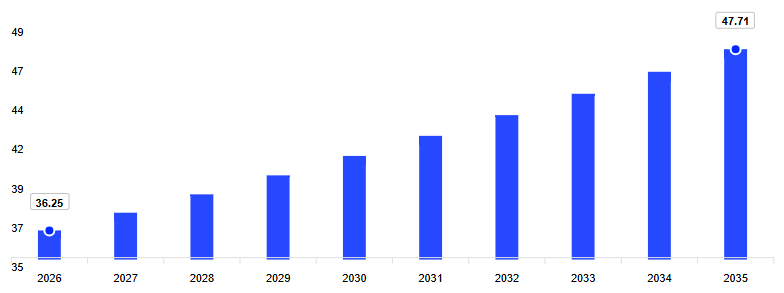
The North America processed meat market attained a value of USD 35.16 Billion in 2025 and is projected to expand at a CAGR of 3.10% through 2035. The market is further expected to achieve USD 47.71 Billion by 2035, supported by rising purchasing power, busy consumer lifestyles, and growing demand for convenient, ready-to-eat protein. Growth spans poultry, beef, and pork meat types across frozen, chilled, and canned product formats, with processors across the United States and Canada competing on production capacity, plant modernisation, and convenience-focused product innovation.
Rising disposable incomes and busy consumer lifestyles continue to anchor steady demand across the North America processed meat market, as households increasingly favour ready-to-eat and easy-to-prepare protein options over from-scratch cooking. Processors are also investing in facility conversions and capacity expansion, reflecting the industry's pursuit of further-processing capability rather than raw slaughter volume alone.
The North America processed meat market is witnessing further developments as major processors reallocate manufacturing assets to expand further-processing capacity. Tyson Foods acquired the former Cargill turkey plant in Springdale, Arkansas, in December 2025 for approximately USD 23 million, with plans to invest up to USD 127 million converting the facility into a chicken portioning and further-processing operation. This shift toward converting existing facilities for further-processing use is concentrated among large integrated processors with capital access, while smaller regional players instead compete on niche product specialisation.
In addition, established processors are increasingly launching convenience-focused, globally inspired product lines requiring minimal preparation, reflecting the industry's recognition that time-pressed consumers increasingly value speed alongside flavour variety. Smithfield Foods launched its Meal Ready Cuts line in April 2026, featuring Korean BBQ Pork Loin Strips, Carne Asada Pork Loin Strips, and Sweet and Smoky BBQ Pork Belly Bites designed for quick stovetop cooking or air frying. Such convenience-led product innovation is reshaping competitive positioning across the wider north america processed meat market as processors with agile new-product development capability increasingly differentiate themselves from competitors relying on legacy product lines alone.
Read more about this report - Request a Free Sample
Processors are increasingly developing minimal-prep product lines that draw on international flavour profiles to differentiate from traditional packaged meat offerings. Smithfield Foods launched Meal Ready Cuts, featuring Korean BBQ Pork Loin Strips, Carne Asada Pork Loin Strips, and Sweet and Smoky BBQ Pork Belly Bites, each designed for quick stovetop cooking, air frying, or use in tacos, rice bowls, and salads. Companies can leverage globally inspired, minimal-prep product formats to capture time-pressed consumers seeking flavour variety without added cooking complexity.
Processors are increasingly consolidating their portfolios around core protein categories while divesting non-strategic product lines. Hormel Foods outlined plans to expand its chicken position through the Applegate Farms brand alongside new frozen chicken sausage and breaded tender launches, while simultaneously moving its Justin's business into a strategic partnership and closing a non-strategic soup stock operation. Companies can leverage protein-centric portfolio reshaping to concentrate capital and marketing investment on categories with the strongest growth trajectory.
Integrated poultry processors are increasingly acquiring shuttered competitor facilities to expand further-processing capacity rather than building new plants from the ground up. Tyson Foods finalised its purchase of the former Cargill turkey plant in Springdale, Arkansas, with plans to convert the 350,000-square-foot facility into a chicken portioning and further-processing operation over a three-year capital investment programme. Companies can leverage acquisition of existing industrial facilities to add further-processing capacity faster and at lower cost than greenfield construction.
Beef processors are increasingly navigating a structurally tighter domestic cattle supply that is compressing segment profitability across the industry. Tyson Foods reported that its fiscal 2025 cattle costs rose by nearly USD 2 billion year over year, posting an adjusted beef segment loss of USD 426 million and projecting further losses between USD 400 million and USD 600 million for fiscal 2026 amid an expected 2% decline in domestic beef production. Companies can leverage diversified protein portfolios spanning poultry and pork to offset cyclical pressure concentrated in the beef segment.
Shoppers now expect restaurant-style variety on a weeknight timeline, and product development pipelines are being rewritten across the wider north america processed meat market. Following Smithfield's April 2026 Meal Ready Cuts launch, competing processors began evaluating similar minimal-prep, internationally flavoured product concepts to capture younger, time-pressed shoppers. Companies can leverage globally inspired, minimal-prep formats to capture premium price points from convenience-seeking households without requiring the extended kitchen preparation time that traditional cuts have long demanded from busy households on weeknight schedules.
Large integrated processors are continuing to invest directly in beef facility modernisation even as the segment absorbs broader cattle supply pressure. JBS USA broke ground, in February 2026, on a $150 million expansion at its Cactus, Texas beef production facility, adding a new fabrication floor and expanded ground beef room to strengthen the long-term competitiveness of one of the company's largest plants. Companies can leverage targeted beef facility modernisation to improve operational efficiency even during periods of constrained domestic cattle supply.
Acquiring and retrofitting existing industrial facilities is increasingly viewed as a faster, lower-risk path to further-processing capacity than new construction. Tyson's Springdale facility conversion, finalised in December 2025 and structured with local industrial revenue bond financing, illustrates how processors are combining municipal capital partnerships with brownfield conversion to accelerate capacity expansion timelines. Companies can leverage municipal financing partnerships and existing industrial infrastructure to bring new further-processing capacity online considerably faster than a traditional greenfield construction project would allow, while also strengthening ties with local government stakeholders who benefit from the associated job creation.
Major processors are increasingly exiting non-core product lines to concentrate resources on categories with the clearest growth trajectory. Hormel's decision, announced in December 2025, to move its Justin's nut butter business into a strategic partnership and close a non-strategic soup stock operation reflects a broader industry pattern of portfolio simplification around core protein-centric categories. Companies can leverage disciplined portfolio pruning to redirect management attention and capital investment toward the protein categories generating the clearest long-term growth returns, rather than spreading resources thinly across a broader but less strategically coherent product portfolio.
This Expert Market Research's Report titled "North America Processed Meat Market Report and Forecast 2026-2035" offers a detailed analysis of the market based on the following segments:
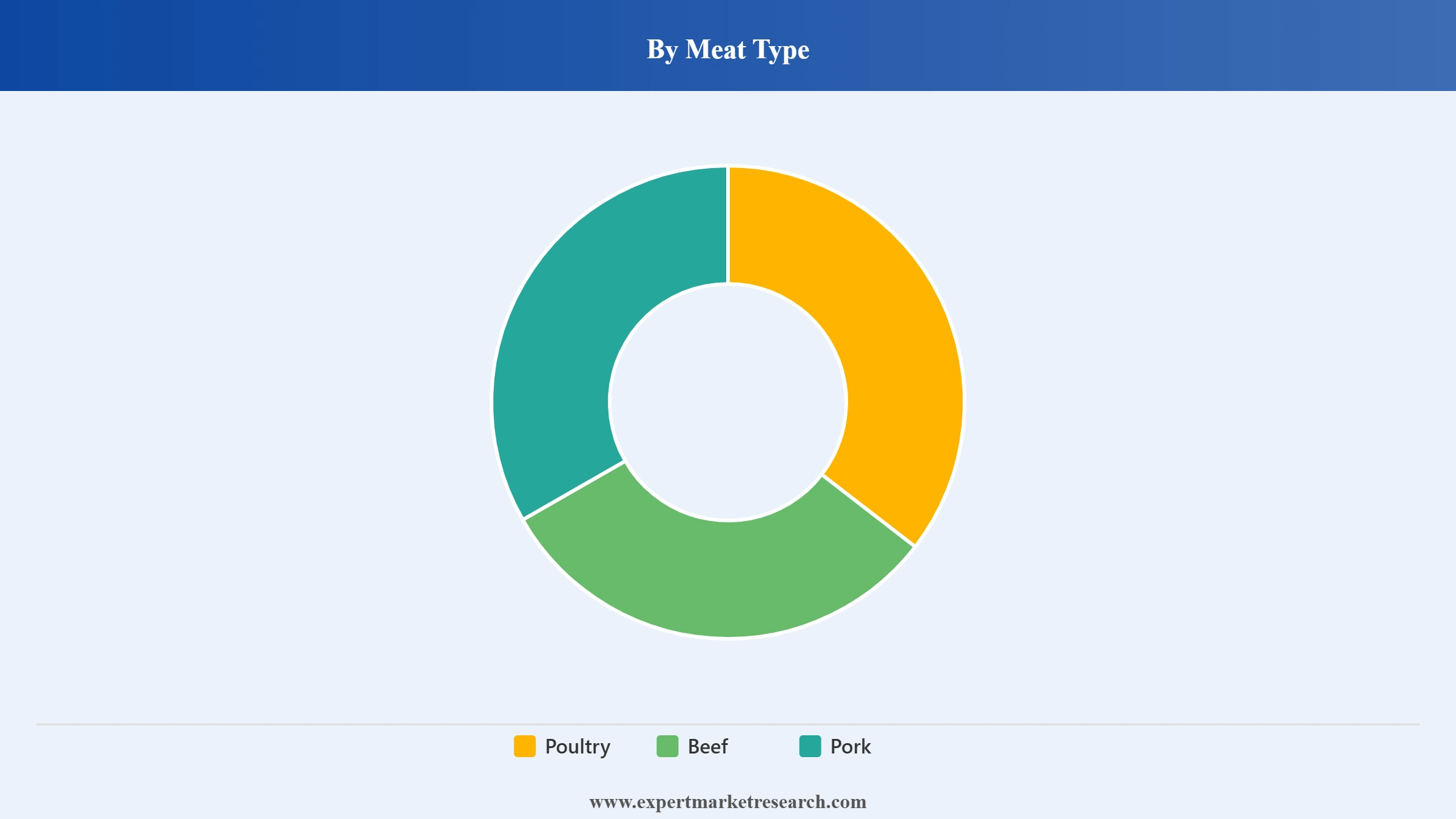
Market Breakup by Meat Type
Key Insight: Poultry accounts for the largest share of the market, driven by its low cost, faster production cycle, and wide consumer acceptance, reinforced by Tyson Foods' December 2025 acquisition of the former Cargill turkey plant in Springdale, Arkansas for further chicken processing capacity. Pork is growing at a fast pace at a projected CAGR of 3.60%, illustrated by Smithfield Foods' April 2026 launch of its globally inspired Meal Ready Cuts line. Beef continues to represent substantial demand tied to well-known brands, though the segment faces structural cattle supply pressure reflected in Tyson's widening beef segment losses. Others captures smaller-volume specialty meat categories, including lamb and game meats that continue serving niche culinary and cultural demand across specific regional and ethnic consumer segments.
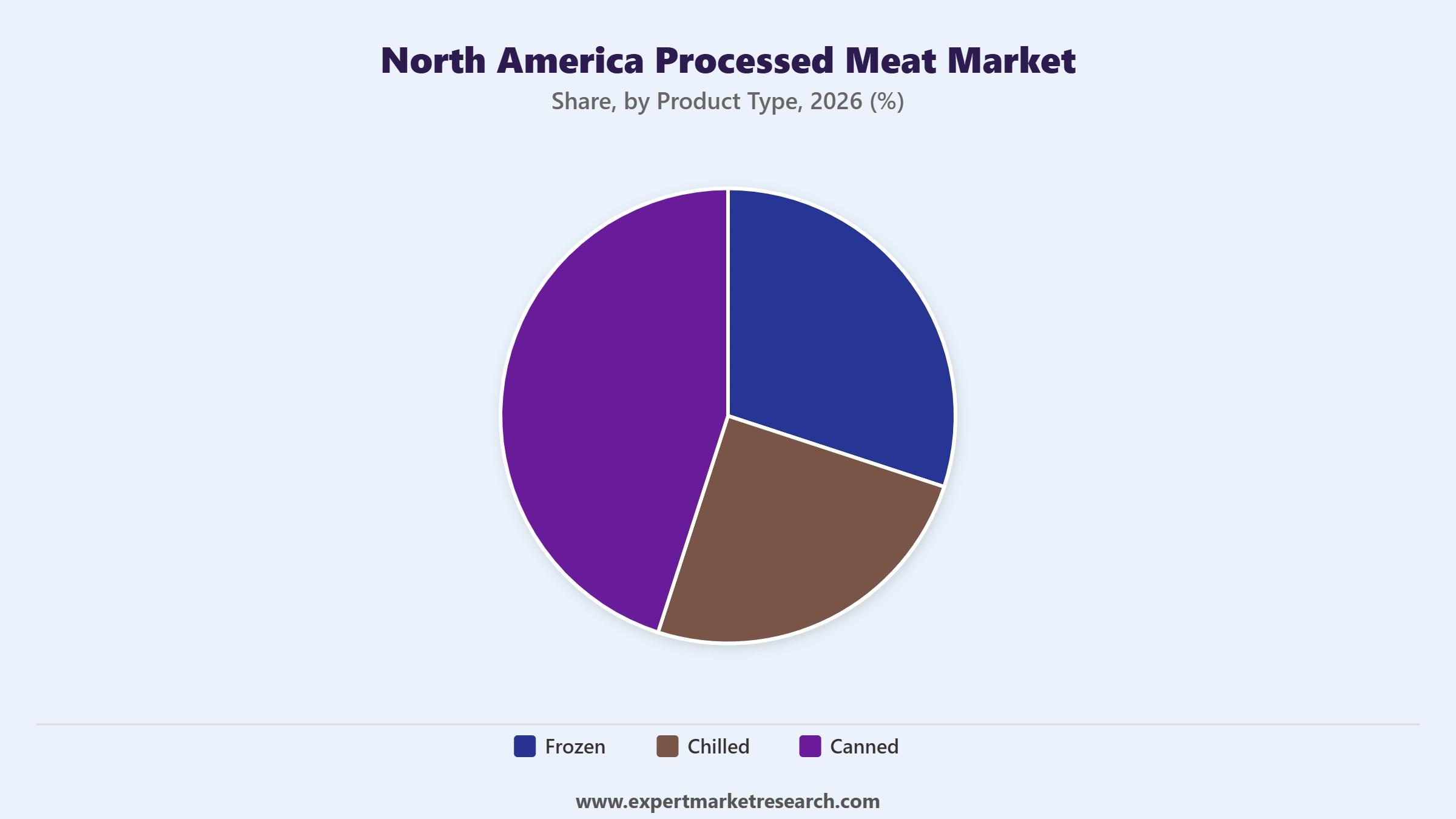
Market Breakup by Product Type
Key Insight: Chilled accounts for the largest share of the market, reflecting consumer preference for fresher, less processed appearance and taste over shelf-stable alternatives. Frozen continues to represent substantial demand tied to convenience and extended shelf life, illustrated by Smithfield's April 2026 Meal Ready Cuts line designed for quick stovetop cooking or air frying. Canned serves cost-conscious, long shelf-life applications including emergency and pantry-staple purchases, a category that continues to see steady, if unspectacular, demand from households prioritising storage stability over premium freshness positioning.
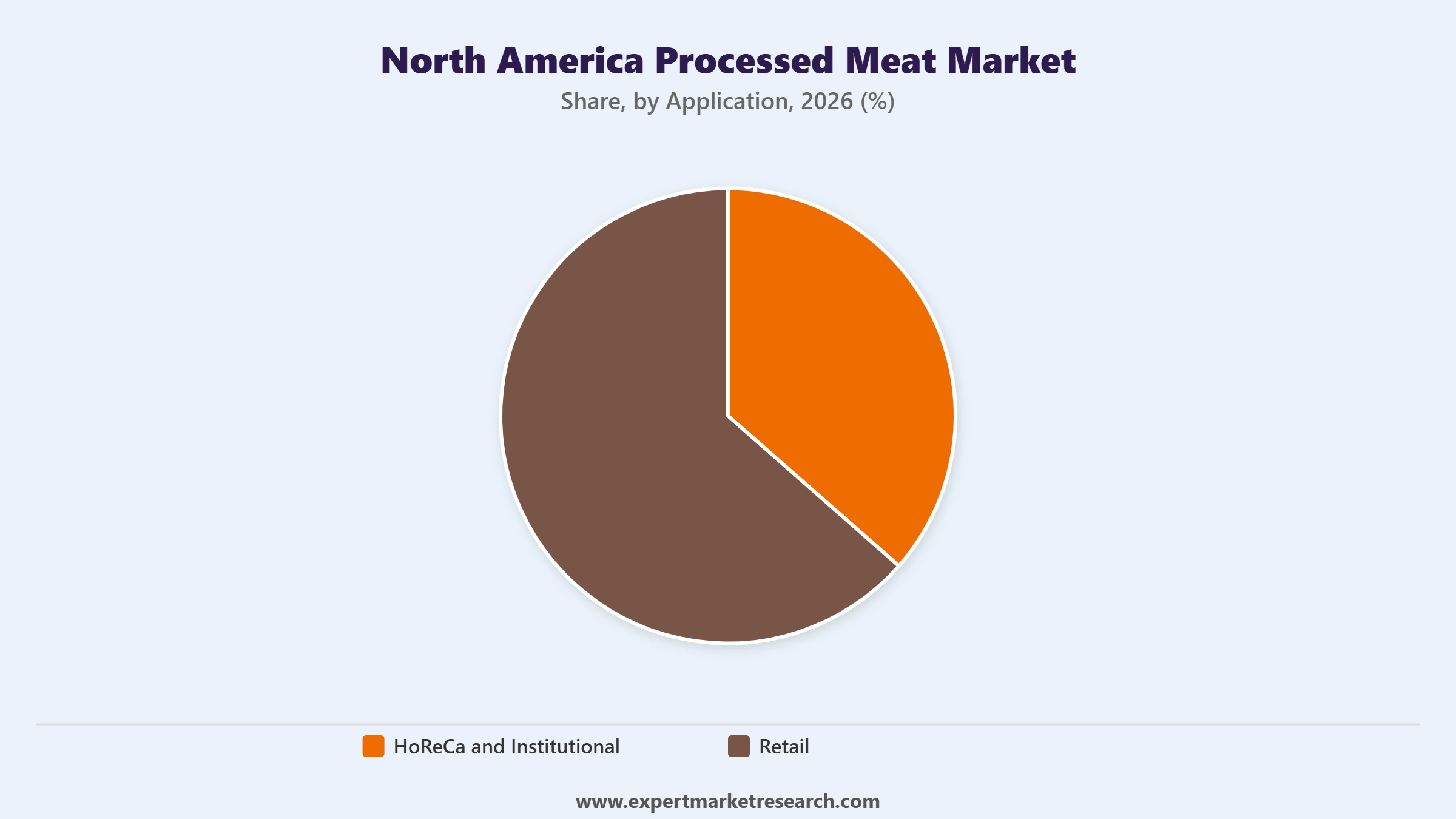
Market Breakup by Application
Key Insight: Retail accounts for the largest share of the market, supported by expanding supermarket and online grocery availability of ready-to-eat processed meat products. HoReCa and Institutional continues to represent substantial demand tied to foodservice operators, reinforced by Hormel Foods' December 2025 emphasis on foodservice-focused chicken tender and sandwich solutions built on its Flash 180 platform, technology the company continues expanding across additional protein categories to serve quick-service restaurant customers.
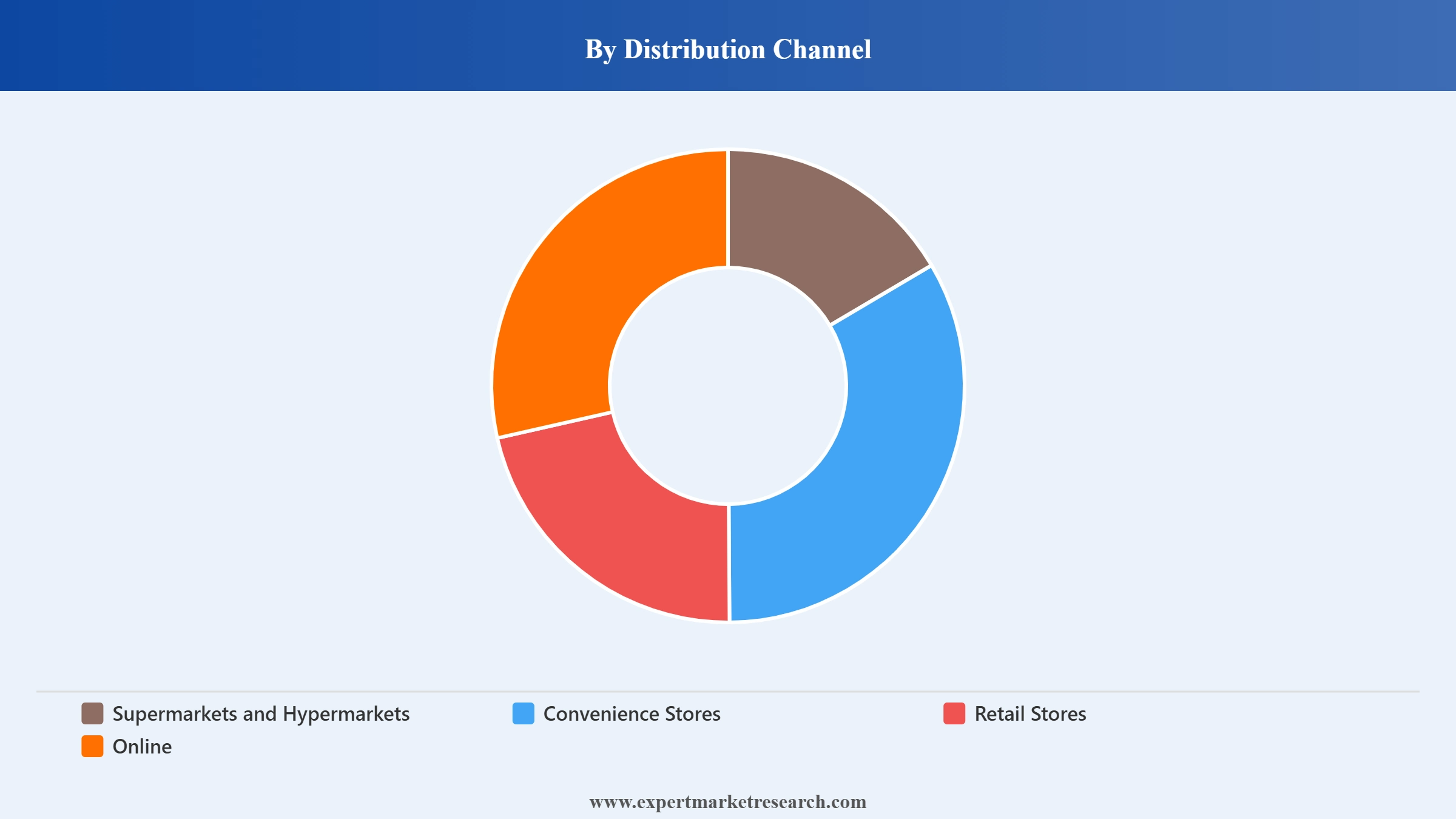
Market Breakup by Distribution Channel
Key Insight: Supermarkets and Hypermarkets accounts for the largest share of the market, reflecting their role as the primary purchase point for household processed meat consumption. Online is growing at a fast pace at a projected CAGR of 5.20%, as expanding e-commerce grocery penetration and insulated cold-chain delivery services make processed meat purchasing increasingly convenient. Convenience Stores serve smaller-format, single-purchase occasions. Retail Stores support broader specialty and butcher-style purchasing. Others encompasses direct-to-consumer and foodservice distributor channels, routes that continue gaining importance as processors seek closer relationships with both individual households and large-scale commercial kitchen customers.
Market Breakup by Region
Key Insight: United States of America accounts for the largest share of the market, anchored by its extensive processing infrastructure and reinforced by Tyson Foods' December 2025 Springdale, Arkansas facility conversion investment. Canada continues to represent substantial demand, with chicken remaining the most consumed processed meat in the country, supported by steady retail and foodservice channel growth, with domestic processors continuing to invest in capacity expansion to meet rising demand across both fresh and further-processed chicken categories.
Read more about this report - Request a Free Sample
By meat type, poultry leads the market while pork grows fastest through premium formats
Poultry's low cost, rapid production cycle, and broad consumer acceptance keep it firmly in the lead across the meat type breakdown, a position Tyson Foods reinforced in December 2025 by converting the former Cargill turkey plant in Springdale, Arkansas into further chicken-processing capacity, a three-year investment programme expected to add meaningful further-processing volume once fully operational.
Read more about this report - Request a Free Sample
Pork is advancing at the fastest pace across the north america processed meat market at a projected CAGR of 3.60%, a trajectory Smithfield's April 2026 Meal Ready Cuts launch captures through globally inspired, minimal-prep formats aimed at premium, convenience-seeking shoppers, a positioning competitors are increasingly studying as a template for their own pork innovation pipelines.
Beef retains strong brand-driven demand even as the segment absorbs structural cattle supply pressure, illustrated by JBS USA's February 2026 groundbreaking on a 150 million dollar expansion of its Cactus, Texas facility, while Others rounds out the category with smaller specialty meat volumes, including lamb and game meats that continue serving smaller, culturally specific consumer segments across the region.
By product type, chilled leads the market while frozen supports convenience-led growth
Chilled formats hold the largest product type share, favoured for their fresher taste and appearance relative to shelf-stable alternatives, particularly among retail shoppers prioritising perceived freshness over the extended shelf life that frozen and canned formats offer at the grocery counter, even where actual nutritional and safety differences between formats remain minimal.
Read more about this report - Request a Free Sample
Frozen continues building momentum on the back of convenience positioning, evidenced by Smithfield's April 2026 Meal Ready Cuts line built for quick stovetop or air-fryer preparation and featuring globally inspired flavours, while Canned serves the more price- and shelf-life-driven end of the category, remaining a reliable staple for budget-conscious households and emergency food supply stockpiling alike.
By application, retail leads the market while HoReCa and institutional demand stays substantial
Retail continues to account for the largest share of the market, supported by expanding supermarket and online grocery availability of ready-to-eat processed meat products that make it straightforward for households to incorporate processed meat into everyday meal planning without additional preparation steps.
Read more about this report - Request a Free Sample
HoReCa and Institutional continues to represent substantial demand tied to foodservice operators, reinforced by Hormel Foods' December 2025 emphasis on foodservice-focused chicken tender and sandwich solutions built on its Flash 180 platform, technology the company continues expanding across additional protein categories to serve quick-service restaurant customers at scale.
By distribution channel, supermarkets and hypermarkets lead while online grows fastest on e-commerce expansion
Supermarkets and Hypermarkets remain the primary purchase point for household processed meat, anchoring the channel breakdown, with major processors continuing to prioritise retail shelf presence over foodservice-only distribution given the channel's clearly dominant share of overall household purchasing volume nationwide today, even as online grocery adoption continues gradually reshaping how a growing minority of shoppers complete their weekly purchases.
Read more about this report - Request a Free Sample
Online is the fastest-growing channel at a projected 5.20% CAGR, propelled by expanding e-commerce grocery penetration and insulated cold-chain parcel delivery making perishable meat purchases increasingly practical online, a shift benefiting processors able to package products for direct-to-door delivery without compromising freshness, an operational capability that continues to separate leading e-commerce-ready brands from smaller competitors still building out cold-chain logistics.
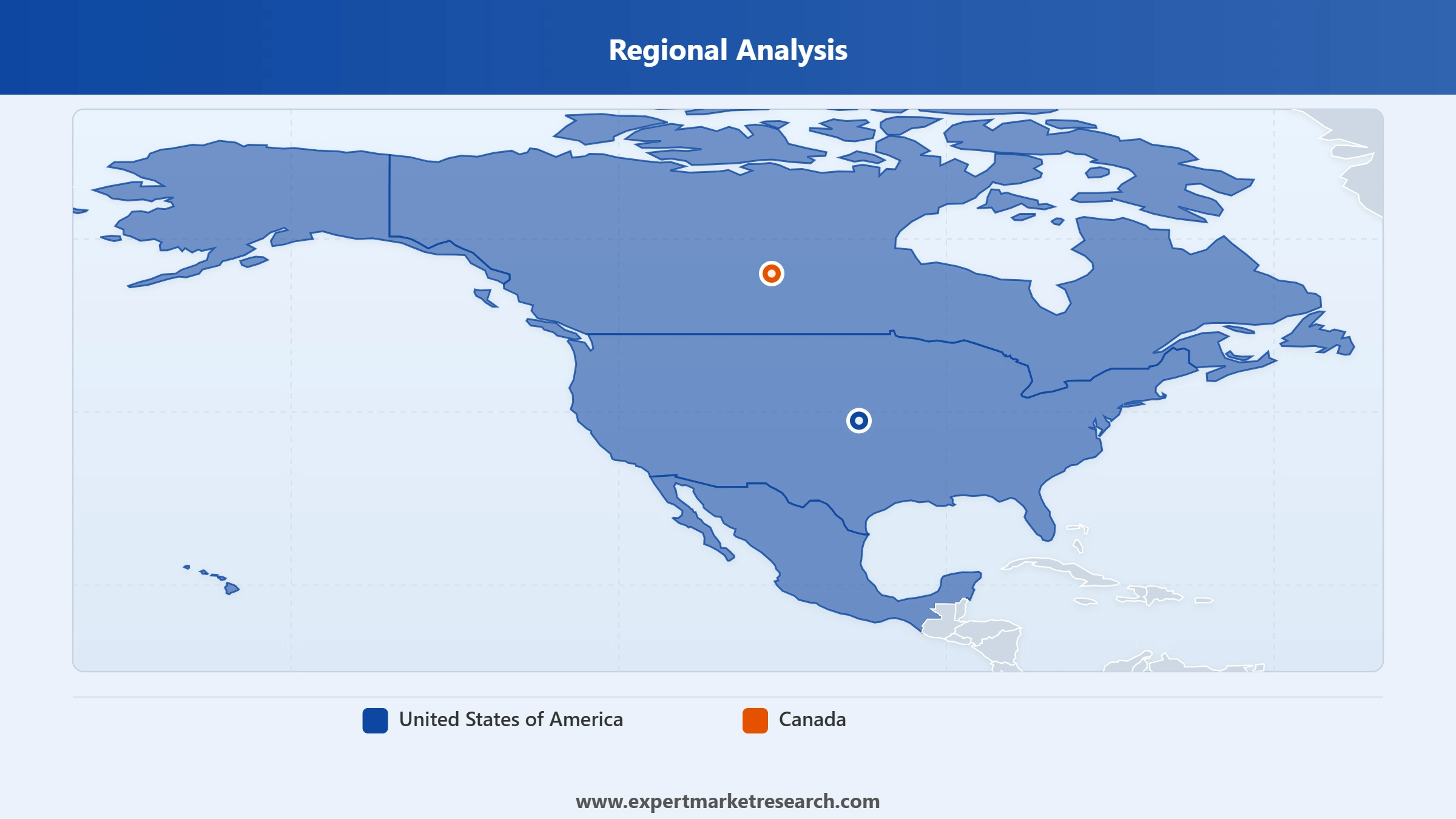
United States commands the largest share of the market through its extensive processing infrastructure
The United States holds the largest share of the North America processed meat market, anchored by its extensive processing infrastructure and reinforced by Tyson Foods' December 2025 investment converting the former Cargill Springdale, Arkansas facility into further-processing capacity.
Read more about this report - Request a Free Sample
Canada continues to represent substantial demand, with chicken remaining the most consumed processed meat nationally, supported by steady retail and foodservice channel growth across the country. Both countries benefit from well-established production technology, feed availability, and government support that facilitate consistent domestic supply alongside export capacity to international markets.
The industry is fragmented, with north america processed meat market companies ranging from diversified agricultural conglomerates to specialist meat processors competing across meat type, product type, and distribution channel segments. Established players operate across the full value chain, from origination and processing through further-processing, branding, and multi-channel distribution to retail and foodservice customers.
Competitive dynamics among north america processed meat players are increasingly shaped by the pace of facility conversion investment, the speed of convenience-focused product innovation, and the depth of protein-category portfolio focus. Processors are investing in further-processing capacity, globally inspired minimal-prep product lines, and strategic portfolio simplification to secure long-term relationships with time-pressed retail and foodservice customers.
Founded in 1865 and headquartered in Minnesota, United States, Cargill provides food, ingredients, agricultural solutions, and industrial products, specialising in grain and oilseed origination, processing and distribution, and customised animal nutrition solutions. In December 2025, the company completed the sale of its former turkey processing plant in Springdale, Arkansas to Tyson Foods, having closed the facility earlier that year. Cargill's diversified agricultural and food ingredient portfolio differentiates its offering from meat-focused specialist competitors.
Founded in 1949 and headquartered in Wisconsin, United States, American Foods Group specialises in meat processing, providing USDA-graded beef, pork, and other protein-based offerings. The company supplies fresh and processed meat to retailers, food services, and international clients. American Foods Group's focus on USDA-graded beef and pork processing differentiates its offering from poultry-concentrated competitors.
Founded in 1935 and headquartered in Springdale, Arkansas, Tyson Foods is one of the largest poultry, beef, and pork processors in the United States. In December 2025, the company finalised its acquisition of the former Cargill turkey plant in its home city, with plans to invest up to USD 127 million converting the facility into a chicken portioning operation. Tyson's scale across all three major protein categories, combined with reported fiscal 2025 sales of USD 54.4 billion, differentiates its offering from single-protein specialist competitors.
Founded in 1936 and headquartered in Smithfield, Virginia, Smithfield Foods manufactures a diverse portfolio of national, super-regional, value, and specialty brands including its flagship Smithfield brand alongside Armour and Eckrich. In April 2026, the company launched its Meal Ready Cuts line, featuring globally inspired, minimal-prep pork products including Korean BBQ and Carne Asada varieties. Smithfield's reported record first-half fiscal 2026 operating profit and vertically integrated pork production model differentiate its offering from less-integrated competitors.
Other key players in the North America processed meat market include Sysco, JBS S.A., Hormel Foods Corporation, Koch Foods, National Beef Packing Company LLC, and OSI Group, among others.
*Please note that this is only a partial list; the complete list of key players is available in the full report. Additionally, the list of key players can be customized to better suit your needs.*
Unlock the latest insights with our North America processed meat market trends 2026 report. Discover regional growth patterns, meat type and product type trends, and key industry players. Stay ahead of competition with trusted data and expert analysis. Download your free sample report today and drive informed decisions in the market.


Upto 15% Off
USD
$2499 $2249
$3999 $3599
$4999 $4249
$5999 $5099


*While we strive to always give you current and accurate information, the numbers depicted on the website are indicative and may differ from the actual numbers in the main report. At Expert Market Research, we aim to bring you the latest insights and trends in the market. Using our analyses and forecasts, stakeholders can understand the market dynamics, navigate challenges, and capitalize on opportunities to make data-driven strategic decisions.*
In 2025, the market reached an approximate value of USD 35.16 Billion.
The market is projected to grow at a CAGR of 3.10% between 2026 and 2035.
The market is estimated to witness a healthy growth in the forecast period of 2026-2035 to reach USD 47.71 Billion by 2035.
Acquiring and converting existing industrial facilities to expand further-processing capacity, launching globally inspired minimal-prep product lines to capture convenience-seeking consumers, and simplifying portfolios around core protein-centric categories.
Key trends aiding market expansion include an increase in the number of processed meat retailers, growing demand for high-value animal protein and convenience food products, and increasing demand for convenience food products, among others.
Major regions in the market are the USA and Canada.
Processed meat is meat supplemented with additives and preservatives including acidifiers, minerals, salts, seasonings, and flavouring agents for end user consumption.
The key players in the market include Cargill, Incorporated, American Foods Group, LLC, Sysco, JBS S.A., Tyson Foods, Inc., Smithfield Foods, Inc., Hormel Foods Corporation, Koch Foods, National Beef Packing Company LLC, and OSI Group, among others.
Chicken is the most consumed meat in Canada.
22% of meat consumed in the US is processed meat.
Processors face structural cattle supply pressure compressing beef segment margins, high concentration among the largest packers raising market power scrutiny, and the ongoing cost of converting or building further-processing capacity.
Explore our key highlights of the report and gain a concise overview of key findings, trends, and actionable insights that will empower your strategic decisions.
| REPORT FEATURES | DETAILS |
| Base Year | 2025 |
| Historical Period | 2019-2025 |
| Forecast Period | 2026-2035 |
| Scope of the Report |
Historical and Forecast Trends, Industry Drivers and Constraints, Historical and Forecast Market Analysis by Segment:
|
| Breakup by Meat Type |
|
| Breakup by Product Type |
|
| Breakup by Application |
|
| Breakup by Distribution Channel |
|
| Breakup by Region |
|
| Market Dynamics |
|
| Competitive Landscape |
|
| Companies Covered |
|
Datasheet
One User
USD 2,499
USD 2,249
tax inclusive*
Single User License
One User
USD 3,999
USD 3,599
tax inclusive*
Five User License
Five User
USD 4,999
USD 4,249
tax inclusive*
Corporate License
Unlimited Users
USD 5,999
USD 5,099
tax inclusive*
*Please note that the prices mentioned below are starting prices for each bundle type. Kindly contact our team for further details.*
Flash Bundle
Small Business Bundle
Growth Bundle
Enterprise Bundle
*Please note that the prices mentioned below are starting prices for each bundle type. Kindly contact our team for further details.*
Flash Bundle
Number of Reports: 3
20%
tax inclusive*
Small Business Bundle
Number of Reports: 5
25%
tax inclusive*
Growth Bundle
Number of Reports: 8
30%
tax inclusive*
Enterprise Bundle
Number of Reports: 10
35%
tax inclusive*
How To Order

Select License Type
Choose the right license for your needs and access rights.

Click on ‘Buy Now’
Add the report to your cart with one click and proceed to register.

Select Mode of Payment
Choose a payment option for a secure checkout. You will be redirected accordingly.
Strategic Solutions for Informed Decision-Making
Gain insights to stay ahead and seize opportunities.

Get insights & trends for a competitive edge.

Track prices with detailed trend reports.

Analyse trade data for supply chain insights.

Leverage cost reports for smart savings

Enhance supply chain with partnerships.

Connect For More Information
Our expert team of analysts will offer full support and resolve any queries regarding the report, before and after the purchase.
Our expert team of analysts will offer full support and resolve any queries regarding the report, before and after the purchase.
We employ meticulous research methods, blending advanced analytics and expert insights to deliver accurate, actionable industry intelligence, staying ahead of competitors.
Our skilled analysts offer unparalleled competitive advantage with detailed insights on current and emerging markets, ensuring your strategic edge.
We offer an in-depth yet simplified presentation of industry insights and analysis to meet your specific requirements effectively.




