Consumer Insights
Uncover trends and behaviors shaping consumer choices today
Procurement Insights
Optimize your sourcing strategy with key market data
Industry Stats
Stay ahead with the latest trends and market analysis.
The North America sliding bearing market attained a value of USD 294.70 Billion in 2025 and is projected to expand at a CAGR of 6.30% through 2035. The market is further expected to achieve USD 542.89 Billion by 2035. Demand is growing for corrosion resistant slide bearings that can operate continuously in slow speed conditions, easier servicing, and longevity of equipment for wastewater treatment and municipal pumping facilities.
Manufacturers in the North America sliding bearing market are altering their offerings with regard to plain-bearing material development to respond to hygiene needs and harsh operating conditions. In September 2026, for instance, igus unveiled iglidur A181PF, a PTFE-free and bisphenol-free sliding material that was designed to be used in food-processing machinery. This innovation allows retaining the dry-running properties while responding to OEMs’ fears related to lubricant contamination and compliance needs. Such an opportunity for business is supported by the growing need for automation, for example, in 2025, food industry installations of robots in the United States increased by 30%.
The competition is becoming increasingly application-oriented. Key companies in North America sliding bearing market include RBC Bearings, SKF Group, igus, Schaeffler, and Saint-Gobain. These companies offer solutions for clients about metallic, polymer, and composite products designed to meet requirements related to loads, temperatures, corrosion, and lubrication. There is also a number of installation conditions, downtime, and other lifecycle factors that should be considered when selecting products. In October 2026, RENK Group agreed to sell its slide bearings business to Miba AG, strengthening strategic focus on defence operations.
The North America sliding bearing market observes two application specific considerations for purchasing. Metal bearings are boosting demand due to their applications in the interface of automotive crankshaft and connecting rod, where film strength, fatigue properties and dimensional tolerance are relevant. In addition, aerospace original equipment manufacturers need light weight, self-lubricating spherical and journal bearings for control systems exposed to vibration, temperature changes, and inaccessible servicing conditions.
Compound Annual Growth Rate
6.3%
Value in USD Billion
2026-2035
Read more about this report - REQUEST FREE SAMPLE COPY IN PDF
Arxis acquired Schatz Bearing, providing enhanced capabilities of engineered bearings for aerospace, defense, and space applications in harsh operating conditions. Suppliers can leverage their aerospace partnerships by designing mission-critical bearing components, advanced materials, and application-focused solutions.
Standard Locknut acquired Jones Bearing, thus gaining access to mounted-bearing products as well as broadening its presence in terms of industrial OEM customers. Companies can use the same strategy to grow in the North America sliding bearing market.
Waukesha Bearings developed NordAlign fluid film bearings, allowing pad change in the uptower and modular integration of main shafts in wind turbines. Bearing manufacturers can design modular bearing pads, engineered polymers, and retrofitting technologies for wind turbine users looking for reduced maintenance costs.
Through its acquisition of Bijur Delimon, Timken expanded its portfolio of automated lubrication solutions, strengthening its capabilities in industrial maintenance and equipment reliability. Companies in the North America sliding bearing market can partner with the lubrication solution companies to come up with integrated maintenance programs.
Operators in the North America sliding bearing market prefer refurbishing existing construction, agricultural, mining, and process equipment rather than replacing whole machines and hence have recurring requirements for replacement sliding bearings, bushings, and wear plates. Plain bearings continue being applicable for use where the equipment works at medium or slow speed with heavy loads, shock, and misalignment of the shaft. This is beneficial to suppliers who can produce replacement parts through reverse engineering and offer customized products and shorter lead time. In September 2025, Cablecraft acquired Radial Bearing Corp., expanding its engineered rod-end and spherical bearing portfolio for aerospace, defense, and industrial markets.
Growing automation is leading to more installation of robotic arms, conveyors, packaging lines, and automated material handling equipment requiring efficient pivot and sliding mechanisms, boosting growth in the North America sliding bearing market. According to International Federation of Robotics, the number of installations of industrial robots in United States increased by 11% to reach 38,000 units in 2025; those in the food industry increased by 30%. Here polymer and composite materials that are used in manufacturing sliding bearings which have low noise and corrosion resistance and do not need regular lubrication, find their application.
Rehabilitation and enhancement of rail capacity will need dependable bearings in bridges, rail-related equipment, freight systems, and maintenance machinery, redefining the entire North America sliding bearing market dynamics. In October 2026, the United States Department of Transportation awarded USD 2.3 billion in grants for 105 rail projects in 45 states, with improvement scheduled for more than 2,000 miles of track. This project addresses the demand from the rail supply chain, which encompasses components that have exposure to vibration, shock loading, weather, and sporadic lubrication. Sliding bearing companies can seek business prospects in bridge movement system, rail car equipment, and infrastructure maintenance machinery by supplying corrosion resistant materials.
Hydropower stations need large and engineered bearing systems in turbines, generators, gates, and auxiliary equipment, propelling growth in the North America sliding bearing market. Reliability and accessibility in servicing directly impact plant availability. The 2026 Hydropower Market Report from the United States Department of Energy has identified 128 projects in the pipeline, with an aggregate capacity of 1.4 GW and 33 operational plants with plans or constructions of additions amounting to 669 MW. The projects generate prospects for the suppliers of journal bearings, thrust bearings, bearing pads, and lubrication systems.
Manufacturing operations remain key driving factors of procurement of industrial machines, machine tools, pumps, compressors, and production machinery which use sliding bearings. According to the North America sliding bearing market analysis, United States industrial production grew 1.4% from the previous year in August 2026 despite the fact that manufacturing production fell 0.3% in the same month. Such contrasting results mean that purchasers are more interested in productivity and maintenance gains rather than expanding capacity. The manufacturers of sliding bearings could provide product solutions in the form of specialized bronze, plastic, and composite bearing materials along with technical audits and predictive replacements.
The Expert Market Research's report titled “North America Sliding Bearing Market Report and Forecast 2026-2035” offers a detailed analysis of the market based on the following segments:
Market Breakup by Bearing Type
Key Insight: Bearing types include radial, linear, thrust, angular contact, and other special-purpose bearings. The radial type of bearing supports rotating shafts and wheelsets subjected to constantly applied radial loads, propelling demand in the North America sliding bearing market. Linear bearings help move components like doors, actuators, and pantographs through controlled motion. Thrust bearings support loads acting axially in rotating and articulating machinery. Angular contact bearings support loads in combination with special assemblies such as articulating bogies and tilting arrangements. Other types of bearing design are used for application-specific geometries, vibration control, and alignment needs. In December 2024, NSK launched high-reliability spherical roller bearings for wind turbine main shafts, reducing raceway wear by over 90%.
Market Breakup by Material
Key Insight: As per the North America sliding bearing market report, the use of metallic and non-metallic bearing materials is dependent on their performance capabilities within the context of railway sliding bearing applications. Metallic bearings such as those made from steel, bronze, and copper alloy are found to be useful for handling heavy loads, high temperatures, and shock loads. On the other hand, non-metallic bearings make use of engineering polymers, PTFE composites, and fiber reinforcements to enhance low friction and wear, light weight, low noise levels, and reduced need for lubricants.
Market Breakup by Railway Type
Key Insight: Railway locomotives need strong sliding bearings for traction devices, suspension, and heavy-duty rotating parts, stimulating demand in the North America sliding bearing market. The diesel multiple unit requires bearings that enable mechanical propulsion, whereas the electric multiple unit needs bearings that can operate well in electrically driven traction and auxiliary devices. Coaches utilize sliding bearings in suspension, doors, and movable parts in passenger areas. Freight wagons create replacement requirements for bearings due to their usage and regular overhaul schedules. Light rail and metro services need quiet and small sliding bearings owing to passenger traffic. High-speed trains need more attention towards accuracy, vibration damping, temperature resistance, and light weight engineering.
Market Breakup by Application
Key Insight: The engine application involves sliding bearings which can withstand constant mechanical loading, high temperatures, and vibrations in the propulsion system. The brake application involves sliding components which must be able to offer smooth motion and safety in brake cycles. The bogie application entails components which allow suspension motion, articulation, and load distribution. Passenger interior applications include sliding mechanisms for passenger doors, foldable steps, and seating mechanisms, thereby accelerating the overall North America sliding bearing market penetration. Passenger exterior applications involve sliding mechanisms in areas such as doors, steps, access covers, and other moving structures which are subject to moisture, dust, and temperature variations.
Market Breakup by Region
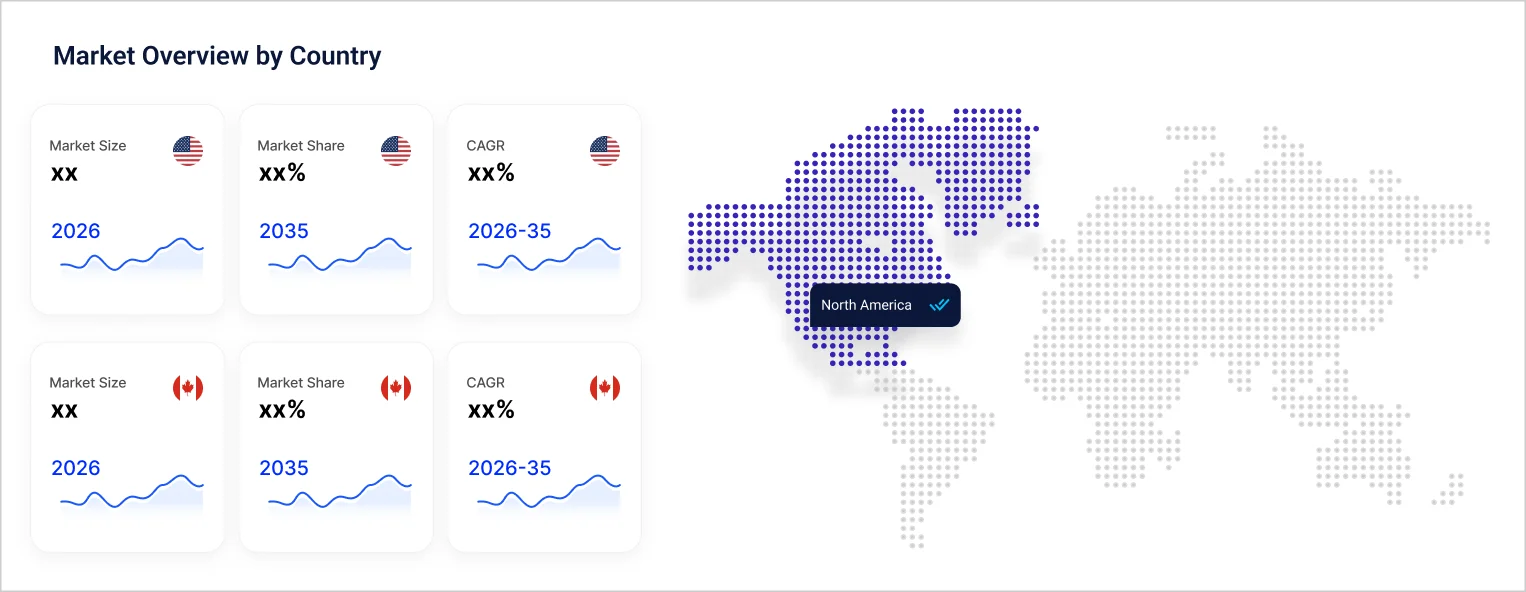
Key Insight: The strengths of the market in North America include the large-scale rail freight system, passenger transit system, aerospace manufacturing industry, and industrial equipment manufacturing industry. All these industries have need for sliding bearings for traction systems, engines, bogies, and large equipment, collectively accelerating the North America sliding bearing market expansion. Canada provides opportunities in mining, transport of crude oil and natural gas, hydropower plants, and modernization of the passenger rail system. The resource-based industries in Canada make use of corrosion resistant and high load bearing parts that can work under difficult conditions.
Read more about this report - REQUEST FREE SAMPLE COPY IN PDF
Radial bearings register the largest share of the market due to their ability to withstand continuous radial loads
Radial bearings constitute major demand in the North America sliding bearing market owing to the need for shaft support for railway wheelsets, bogies, traction system, and rotary components due to their constant radial load. Engineering specifications and capacity to handle heavy loads make them ideal choices for freight and passenger trains. The emphasis of the manufacturers of radial bearings is on improving their wear surface properties, clearance settings, and increasing their service life in order to minimize maintenance. In February 2024, Cablecraft Motion Controls completed its acquisition of Radial Bearing Corp., expanding engineered bearing solutions across aerospace, defense, and industrial sectors.
Linear sliding bearings are boosting growth in the North America sliding bearing market owing to the increased automation in railway components like doors, pantographs, folding stairs, and other moving assemblies. Their capability to move without any complicated lubrication system makes them ideal for use in smaller railway assemblies. The introduction of electromechanical actuators is providing additional business to linear bearings, especially in metro and electric train systems. Companies are working towards making more compact polymer guides and low friction sliding interfaces.
By material, metallic bearings dominate demand in the market due to their load-bearing strength and established railway applications
Metallic bearings continue to be the dominant material segment that is boosting the North America sliding bearing market revenue, owing to the requirement of bearing systems capable of handling heavy loads, shocks, vibrations, and elevated temperatures in railways. The use of bronze, steel, and copper alloy materials is being observed across several traction systems, bogies, and freight wagons. Manufacturers are making efforts to improve the anti-corrosion properties, surface finish, and durability to increase the replacement intervals in railway conditions. In August 2026, Evonik launched VESTAKEEP Easy Slide 2, a fluoropolymer-free PEEK material enhancing slide bearing performance under extreme temperatures and pressures.
The non-metallic bearing segment is witnessing growth in the North America sliding bearing market due to the need for lightweight, self-lubricating, and electrically insulated bearings in railway OEMs. Polymers and composite materials decrease lubrication needs and also facilitate quiet operation in passenger trains. Further, igus is widening its range of polymer bearing products for railways braking system applications.
By railway type, wagons lead demand growth in the market owing to recurring freight fleet maintenance and replacement requirements
Wagons contribute to the growth in the North America sliding bearing market due to the need by freight carriers of reliable bearing assemblies at bogie pivot points, couplings, and suspensions. The bearing assemblies endure shock loading, static loading, and tough operating conditions in freight services. Manufacturers are developing new bearing assembly types made from metallic materials that have good wear resistance to ensure long overhaul periods. Maintenance needs of the freight rolling stock create an opportunity for aftermarket producers.
Developments in high-speed trains create demand for bearing assemblies that can ensure stability while operating at high speeds and various vibrations and loads. In June 2025, the new axlebox bearing by Schaeffler for inboard powered wheelsets was tested by Deutsche Bahn at 405 km/h speed.
Engine and traction applications dominate demand through continuous operating loads and reliability requirements
Engine and traction applications are major demand segments as railway engines need reliable bearing interfaces to help rotate shafts, transmissions, and other mechanical parts. These segments are characterized by constant vibrations, temperature changes, and heavy mechanical loads. Suppliers are focusing on wear resistant materials, better lubrication properties, and maintenance-friendly components. For example, in February 2026, BCA Bearings introduced eight new wheel hub assembly SKUs, expanding aftermarket coverage across 4.3 million North American vehicles.
Interior applications are expanding their shares in the North America sliding bearing market as metro and passenger trains are being equipped with automatic doors, folding stairs, adjustable seats, and movable cabin elements. In October 2026, Miba AG acquired RENK Bearings, expanding its hydrodynamic slide bearings portfolio while enabling RENK Group to prioritize defense operations. Such parts need small-sized sliding parts that would work without noise and endure many cycles of usage.
The United States clocks in the major share of the market owing to its extensive railway and industrial infrastructure
The United States constitutes the biggest regional opportunity for North America sliding bearing market companies, powered by freight transportation, passenger rail upgrades, aerospace manufacturing and industrial machinery applications. Such investments are presenting opportunities for suppliers of sliding bearings components for bogie, traction and infrastructure applications. In September 2026, NSK developed an improved low-friction hub unit bearing, reducing friction by 40% while maintaining muddy water resistance.
Canada constitutes a source of opportunity through passenger rail fleet replacement, mining transportation, energy infrastructure, and heavy industrial machinery applications. In September 2026, the Canadian government invested more than CAD 4.7 billion to allow VIA Rail to purchase and maintain 313 passenger railcars. The fleet replacement program is presenting procurement opportunities for suppliers of suspension, bogie, brake and interior sliding bearing assemblies.
The current competition dynamics among North America sliding bearing market players is becoming increasingly material-oriented and includes product customization and lifecycle performance issues. Besides the common use of metal bushings, manufacturers are switching their attention to self-lubricating polymers, fiber reinforced materials, and hybrid bearings that help decrease maintenance needs. One more competitive issue is the ability to adapt the dimensions and shape of bearings to railway OEMs, equipment manufacturers, and the aftermarket players.
At the same time, the increase in electrification in rail transportation makes companies seek ways to develop electrically insulating and light-weighted products. In addition, the process of fleet renewal stimulates suppliers to offer replacement and refurbishment services. Finally, North America sliding bearing companies are establishing cooperation with the providers of railway components, maintenance services, and engineering firms in order to get long term supply contracts.
Schaeffler AG is based in Germany and was founded in 1946. It offers its bearing and motion technology products to the automobile, industrial, and railway sectors. These products include plain bearings, linear guidance systems, and precision bearings. In its railway business, the company offers application-specific engineering, high-performance material, and components that help enhance reliability and efficiency of equipment used.
The Swedish company, SKF AB, which was founded in 1907 and operates from Gothenburg, Sweden, offers plain bearings, spherical plain bearings, bushings, rod ends, and industrial motion systems. In the railway sector, the company offers spherical plain bearings for bogie applications, articulations, brakes, and doors. The company caters to customers looking for products with high-load capacities and low lubrication needs.
Founded in 1918 and having its head office in Osaka, Japan, NTN Corporation is involved in the production of bearings, driveshafts, and precision parts for use in automobiles and industry. This wide variety of bearings cater to machinery, transportation, and railway clients. It serves OEM and aftermarket needs using precise-engineered components and bearing products for improving equipment efficiency and reliability.
Founded in 1899 and based in North Canton, Ohio, United States, The Timken Company produces engineered bearings and motion control products for transport, aerospace, infrastructure, and industrial industries. With its GGB range of products, it also offers plain-bearing solutions using engineered sliding bearings and materials.
Other key players in the market include THK Co., Ltd., RBC Bearings Inc., igus Inc., MinebeaMitsumi Inc., and Saint-Gobain S.A., among others.
*Please note that this is only a partial list; the complete list of key players is available in the full report. Additionally, the list of key players can be customized to better suit your needs.*
Unlock the latest insights with our North America sliding bearing market trends 2026 report. Discover regional growth patterns, consumer preferences, and key industry players. Stay ahead of competition with trusted data and expert analysis. Download your free sample report today and drive informed decisions in the market.


Upto 15% Off
USD
$2499 $2249
$3999 $3599
$4999 $4249
$5999 $5099


*While we strive to always give you current and accurate information, the numbers depicted on the website are indicative and may differ from the actual numbers in the main report. At Expert Market Research, we aim to bring you the latest insights and trends in the market. Using our analyses and forecasts, stakeholders can understand the market dynamics, navigate challenges, and capitalize on opportunities to make data-driven strategic decisions.*
In 2025, the market reached an approximate value of USD 294.70 Billion.
The market is projected to grow at a CAGR of 6.30% between 2026 and 2035.
The revenue generated from the sliding bearing market is expected to reach USD 542.89 Billion in 2035.
Based on bearing type, the sliding bearing market is split into linear, thrust, radial, angular contact, and others.
The key players in the market include Schaeffler AG, SKF AB, NTN Corp., Timken Co., THK Co., Ltd., RBC Bearings Inc., igus Inc., MinebeaMitsumi Inc., and Saint-Gobain S.A., among others.
Based on the railway type, the market is split into locomotive, Diesel Multiple Unit (DMU), Electric Multiple Unit (EMU), coach, wagon, light rail and metro and high-speed train.
Based on application, the market is split into engine, brakes, bogie, interior and exterior.
Companies face fluctuating copper, steel, and polymer costs, stringent railway qualification requirements, competition from rolling bearings, supply-chain disruptions, and the technical challenge of balancing durability with lightweight, low-maintenance designs.
Stakeholders are expanding application-specific product portfolios, investing in advanced composite materials, strengthening OEM partnerships, improving regional distribution, and integrating predictive wear monitoring into aftermarket services.
Explore our key highlights of the report and gain a concise overview of key findings, trends, and actionable insights that will empower your strategic decisions.
| REPORT FEATURES | DETAILS |
| Base Year | 2025 |
| Historical Period | 2019-2025 |
| Forecast Period | 2026-2035 |
| Scope of the Report |
Historical and Forecast Trends, Industry Drivers and Constraints, Historical and Forecast Market Analysis by Segment:
|
| Breakup by Bearing Type |
|
| Breakup by Material |
|
| Breakup by Railway Type |
|
| Breakup by Application |
|
| Breakup by Region |
|
| Market Dynamics |
|
| Competitive Landscape |
|
| Companies Covered |
|
Datasheet
One User
USD 2,499
USD 2,249
tax inclusive*
Single User License
One User
USD 3,999
USD 3,599
tax inclusive*
Five User License
Five User
USD 4,999
USD 4,249
tax inclusive*
Corporate License
Unlimited Users
USD 5,999
USD 5,099
tax inclusive*
*Please note that the prices mentioned below are starting prices for each bundle type. Kindly contact our team for further details.*
Flash Bundle
Small Business Bundle
Growth Bundle
Enterprise Bundle
*Please note that the prices mentioned below are starting prices for each bundle type. Kindly contact our team for further details.*
Flash Bundle
Number of Reports: 3
20%
tax inclusive*
Small Business Bundle
Number of Reports: 5
25%
tax inclusive*
Growth Bundle
Number of Reports: 8
30%
tax inclusive*
Enterprise Bundle
Number of Reports: 10
35%
tax inclusive*
How To Order

Select License Type
Choose the right license for your needs and access rights.

Click on ‘Buy Now’
Add the report to your cart with one click and proceed to register.

Select Mode of Payment
Choose a payment option for a secure checkout. You will be redirected accordingly.
Strategic Solutions for Informed Decision-Making
Gain insights to stay ahead and seize opportunities.
Get insights & trends for a competitive edge.
Track prices with detailed trend reports.

Analyse trade data for supply chain insights.

Leverage cost reports for smart savings
Enhance supply chain with partnerships.
Connect For More Information
Our expert team of analysts will offer full support and resolve any queries regarding the report, before and after the purchase.
Our expert team of analysts will offer full support and resolve any queries regarding the report, before and after the purchase.
We employ meticulous research methods, blending advanced analytics and expert insights to deliver accurate, actionable industry intelligence, staying ahead of competitors.
Our skilled analysts offer unparalleled competitive advantage with detailed insights on current and emerging markets, ensuring your strategic edge.
We offer an in-depth yet simplified presentation of industry insights and analysis to meet your specific requirements effectively.