

Consumer Insights
Uncover trends and behaviors shaping consumer choices today
Procurement Insights
Optimize your sourcing strategy with key market data
Industry Stats
Stay ahead with the latest trends and market analysis.
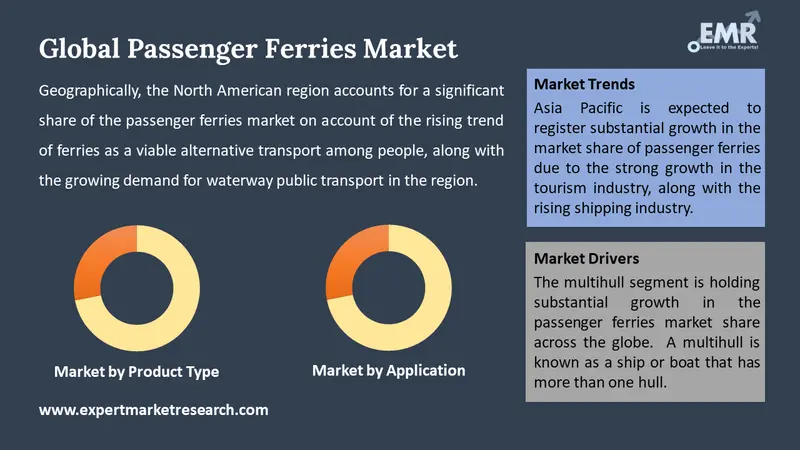
The global passenger ferries market attained a value of USD 3.32 Billion in 2025 and is projected to expand at a CAGR of 4.00% through 2035. The market is further expected to achieve USD 4.91 Billion by 2035. Rising tourism in archipelagic and coastal regions, growing government investment in maritime infrastructure, and the adoption of low emission propulsion systems are helping ferry operators expand fleet capacity and improve route connectivity across established and emerging markets.
Increasing tourist footfall in coastal and island regions is encouraging ferry operators to expand vehicle and passenger capacity, upgrade onboard comfort, and diversify their route networks. At the same time, growing government support for maritime public transport is allowing shipyards to secure long term fleet renewal contracts, plan capacity investments, and forecast newbuild demand more accurately across regional markets.
The passenger ferries market is witnessing further developments as shipbuilders speed up their innovations toward zero emission and battery powered vessels. An example of such innovation was the contract awarded to Nichols Brothers Boat Builders in April 2025 to design and construct two 400 passenger battery electric ferries for San Francisco Bay Ferry under its Rapid Electric Emission Free program. This contract helps accelerate the transition toward electrified commuter routes on the United States west coast.
In addition, passenger ferries market players are allocating more investment funds toward electrification, alternative fuel readiness, and digital fleet management to build resilient orderbooks amid tightening emissions regulations. Companies such as Fincantieri, Damen, and Cemre Shipyard are increasing their investment in battery and LNG propulsion platforms and developing vessels that cater to regional route requirements and sustainability objectives, while shipbuilders in Australia and Turkey are expanding capacity to serve growing export demand for passenger vessels.
Compound Annual Growth Rate
4%
Value in USD Billion
2026-2035
Read more about this report - REQUEST FREE SAMPLE COPY IN PDF
Eastern Shipbuilding Group started construction on the first of three hybrid electric ferries for Washington State Ferries, marking the first time in more than five decades that the operator sourced newbuilds outside the state. Shipbuilders can pursue large public fleet renewal contracts by offering competitive bids and proven battery propulsion designs, capitalizing on such passenger ferries market opportunities.
Incat Tasmania loaded its largest battery electric ferry onto a heavy lift transport vessel for delivery to its South American customer, following completion of construction in Hobart. Shipbuilders can pursue large scale electric vessel programs to demonstrate propulsion capability and strengthen export order pipelines in the global passenger ferries market.
Damen delivered the first of four-battery equipped Island Class ferries built at its Galati shipyard to BC Ferries, supporting a fleet renewal program that increases vehicle and passenger capacity on short coastal routes. Companies can secure repeat fleet orders by standardizing vessel designs across multiple newbuild contracts.
Austal began construction of a 130-meter hydrogen ready high-speed ferry for Swedish operator Gotlandsbolaget at its Cebu shipyard, marking the largest vessel the company has ever built. Companies can diversify propulsion offerings with multi fuel designs, capitalizing on such developments in the passenger ferries market.
Battery and hybrid propulsion is becoming central to the passenger ferries market growth as operators pursue emission reduction targets on short and medium haul routes. Shipbuilders are integrating larger battery packs, shore charging compatibility, and hybrid generator backup to expand route flexibility. For instance, Incat Tasmania is progressing construction of high speed electric catamarans for multiple international operators. In December 2025, Wartsila was contracted to supply electric propulsion systems and waterjets for two battery electric catamaran ferries being built by Incat Tasmania for Danish operator Molslinjen. Regulatory bodies including the International Maritime Organization continue to encourage emission reduction across short sea shipping segments.
Alternative fuel adoption is gaining momentum in the global passenger ferries market as shipyards develop LNG, methanol, and hydrogen ready vessels to meet tightening emissions rules. Manufacturers are redesigning propulsion architecture to allow flexible fuel switching without compromising route speed. For example, Fincantieri continues to expand its portfolio of low emission RoPax vessels for regional operators. In June 2026, Fincantieri delivered Costanza I di Sicilia, an LNG and battery powered RoPax ferry built at its Palermo shipyard. The European Union continues to support alternative fuel infrastructure investment through its maritime decarbonization initiatives.
Government backed fleet renewal is strengthening growth in the passenger ferries market as national and regional authorities replace aging tonnage with modern, higher capacity vessels. Shipyards are working closely with public operators to meet route specific design requirements and accessibility standards. Cemre Shipyard, for instance, is supplying multiple RoPax ferries for Scottish island routes under a long running newbuild program. In January 2026, Cemre Shipyard formally handed over the Isle of Islay ferry to Scottish operator Caledonian Maritime Assets Limited, supporting the Islay and Jura connectivity program. Transport Scotland continues to fund vessel replacement across its island ferry network.
Shipyard capacity utilization is rising across the passenger ferries market as newbuild orderbooks extend further into the decade. Builders are investing in outfitting halls, digital design tools, and modular construction techniques to shorten delivery timelines. Yangzijiang Shipbuilding's Project Hongyuan is underway, expanding its shipbuilding site by 17 percent with RMB 3.0 billion in capex, with completion scheduled for end-2026 and initial shipbuilding activities already started. In May 2026, Cemre Shipyard launched Claymore, the last of four ferries built for Caledonian MacBrayne routes between Skye, Harris, and North Uist, at its Yalova facility in Turkey. Extended orderbooks are helping yards plan multiyear workforce and supply chain commitments.
Program risk management is shaping procurement strategy across the passenger ferries market as operators and shipbuilders navigate cost escalation, port infrastructure gaps, and design changes on large newbuild contracts. Authorities are increasingly requiring feasibility assessments before awarding major vessel orders. In August 2025, HD Hyundai Mipo and New Zealand operator KiwiRail reached a full and final settlement worth NZD 144 million on a cancelled Cook Strait ferry program, resolving costs tied to design and supplier commitments. Government transport agencies continue to review vessel sizing and terminal readiness before committing to future orders.
Read more about this report - REQUEST FREE SAMPLE COPY IN PDF
The EMR’s report titled “Global Passenger Ferries Market Report and Forecast 2026-2035” offers a detailed analysis of the market based on the following segments:
Market Breakup by Product Type
Key Insight: Monohull vessels dominate the passenger ferries market due to their structural simplicity, lower construction cost, and broad compatibility with existing port infrastructure. Multihull designs are recording the quickest growth as operators pursue higher speeds and improved stability on tourist heavy and long-haul coastal routes. Shipyards are increasingly offering both hull configurations to serve varied route profiles, from calm inland waterways to open coastal crossings. The MV Isle of Islay, a Ro-Ro vehicle and passenger ferry built by Cemre Shipyard in Turkey for Caledonian Maritime Assets, was completed on 15 January 2026, with its maiden voyage on 31 March 2026.
Market Breakup by Application
Key Insight: Commercial applications, including scheduled public transit and inter island transport, dominate the passenger ferries market due to consistent government funding and high daily ridership volumes. Private applications, covering leisure charters and resort transfers, are growing at the fastest pace as premium tourism demand rises in archipelagic destinations. Operators are increasingly customizing onboard amenities to serve both commuter and leisure travelers on shared routes. By product, the Yachts segment held the largest market share at about 35% in 2025, serving high-end transport, private charters, and tourism, with North America dominating on the back of mature urban infrastructure, advanced ports, and thriving waterfront tourism.
Market Breakup by Region
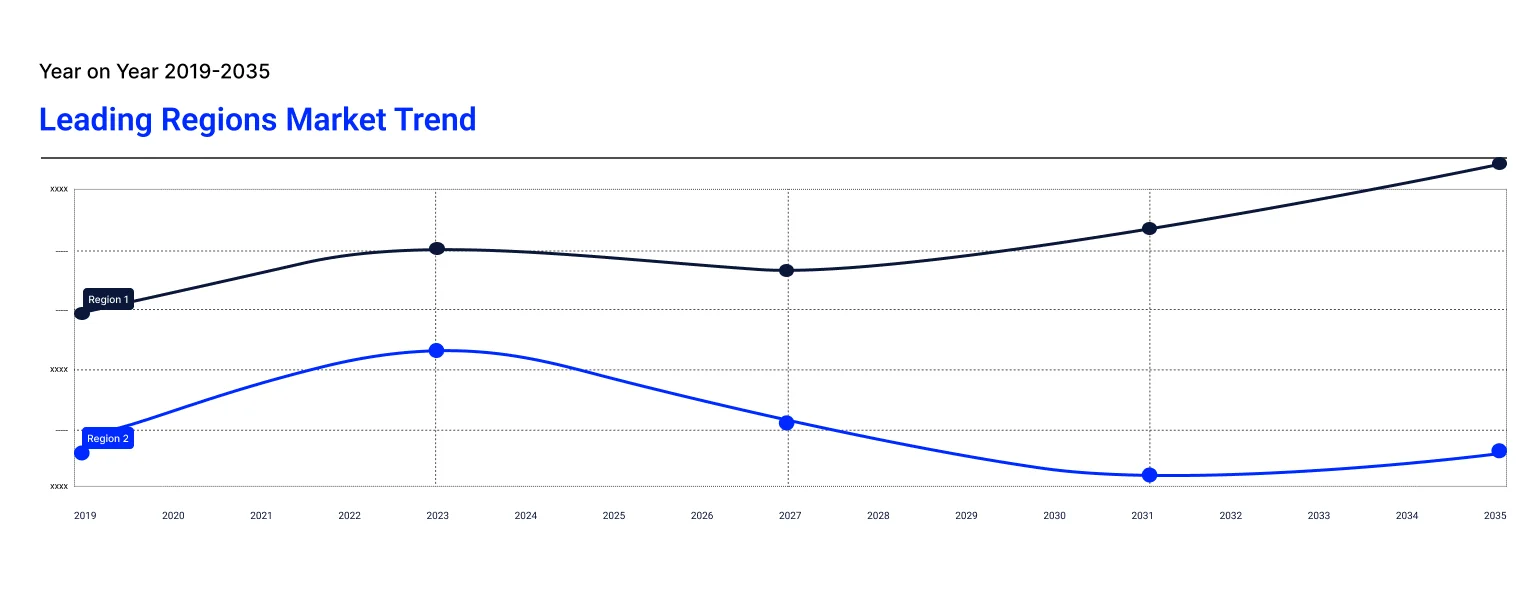
Key Insight: Regional dynamics in the passenger ferries market continue to shape shipbuilder strategy and route investment. Europe leads in fleet modernization and regulatory driven decarbonization, while Asia Pacific is expanding rapidly on the back of archipelagic geography and rising tourism. North America is renewing aging public fleets through state and provincial procurement programs. Latin America is benefiting from growing coastal tourism and export demand for electric vessels, while the Middle East and Africa region is investing in new ferry terminals to support island and coastal connectivity.
By product type, monohull vessels dominate the market due to lower construction costs and broad port compatibility
Monohull ferries hold the largest share of the passenger ferries market owing to their simpler construction process, wider availability of qualified shipyards, and compatibility with existing terminal infrastructure across mature and developing regions. Shipbuilders continue to refine monohull hull forms to improve fuel efficiency and reduce maintenance requirements. Operators favor monohull designs for high-capacity RoPax and RoRo routes that require stable, predictable performance across varying sea conditions. According to the Philippine Ports Authority, RoRo passenger and vehicle traffic across the country's monohull dominated inter island fleet rose 13.3 percent in 2025 to 12.81 million vehicles, with further growth projected in 2026.
Multihull vessels are recording the quickest growth in the passenger ferries market as operators seek faster crossing times, improved passenger stability, and lower fuel consumption per nautical mile on tourist heavy and long-distance coastal routes. Catamaran designs are also gaining favor for their shallow draft, which allows access to smaller ports and island terminals.In July 2026, Marine Group Boat Works secured a USD 30 million contract to build a 46-metre, 524-passenger high-speed catamaran for Catalina Express, designed by Incat Crowther, as part of a low-emissions fleet renewal serving routes between Southern California and Santa Catalina Island.
By application, commercial routes account for the largest share of the market through consistent government funded ridership
Commercial applications dominate the passenger ferries market as public transit authorities and inter island operators maintain scheduled services that generate steady, government supported ridership. Fleet renewal programs in this segment prioritize higher vehicle and passenger capacity, accessibility compliance, and lower emission propulsion. Public operators such as Washington State Ferries in the United States and Caledonian MacBrayne in Scotland continue to work with shipbuilders on multi vessel newbuild programs that replace aging commercial tonnage with modern, higher capacity ferries.
Private and leisure focused applications are expanding rapidly in the passenger ferries market as resort operators and charter companies invest in premium vessels offering enhanced comfort and scenic routing. Operators are differentiating through onboard experience rather than route frequency alone. Coastal destinations with growing high value tourism are attracting dedicated private ferry investment. In June 2026, Eastern Shipbuilding Group delivered Falcon, a new private vehicle passenger ferry, to the Fisher Island Community Association in Florida, expanding the operator's premium leisure fleet.
Read more about this report - REQUEST FREE SAMPLE COPY IN PDF
Europe registers the largest share of the market through regulatory driven fleet decarbonization and dense coastal route networks
Europe leads the passenger ferries market owing to its extensive coastal and inter island route networks, strong regulatory push toward decarbonization, and the presence of established shipbuilders serving both domestic and export markets. Operators across the region are accelerating fleet replacement to meet European Union emission targets while maintaining dense scheduled service across the Mediterranean, Baltic, and North Sea routes. Shipyards in Italy, Spain, and Turkey continue to secure long term newbuild contracts from national and regional ferry operators.
Asia Pacific is the most rapidly developing regional passenger ferries market, powered by archipelagic geography, rising tourism, and expanding maritime infrastructure investment across island nations. Governments across the region are funding new ferry terminals and route expansions to improve connectivity between densely populated coastal cities and outlying islands. In October 2025, the Philippines introduced M/B Dalaray, its first locally developed electric passenger ferry, on a demonstration route along the Pasig River in Manila, reflecting growing regional interest in low emission inland and urban waterway transport. Rising middle class incomes are also driving demand for both commuter and leisure ferry services across Southeast Asia and East Asia.
The global industry is becoming innovation oriented as major passenger ferries companies engage in competition by leveraging electrification, alternative fuel readiness, and modernized vessel design. Manufacturers are enhancing digital design and production tools, sourcing lower emission propulsion systems, and growing their capabilities in fleet renewal programs to serve both public and private operators. Partnerships with propulsion technology providers are allowing shipbuilders to shorten delivery timelines, reduce lifecycle costs, and expand their addressable route markets.
Major passenger ferries market players are focusing on battery and hybrid propulsion, hydrogen readiness, and standardized vessel platforms that can be replicated across multiple newbuild contracts. Opportunities are growing in areas such as shore charging infrastructure compatibility, digital fleet monitoring, and modular RoPax designs suited to varied port conditions. Shipbuilders that combine propulsion innovation with reliable delivery schedules and regional manufacturing presence are expected to hold a competitive advantage over the coming years.
Founded in 1795 and headquartered in Papenburg, Germany, MEYER WERFT is among the oldest shipbuilders serving the global passenger vessel industry, with a long history of constructing large passenger and RoPax ferries alongside cruise tonnage. The company continues to invest in digitalized design and production systems, energy efficient hull forms, and flexible propulsion platforms to serve operators across Europe and beyond.
Founded in 1955 and headquartered in Somerset, Massachusetts, United States, Gladding-Hearn Shipbuilding specializes in aluminum high speed passenger ferries and pilot vessels for operators across North America. The company continues to develop shallow draft, fuel efficient hull designs suited to short haul commuter and harbor routes.
Founded in 1964 and headquartered in Freeland, Washington, United States, Nichols Brothers Boat Builders constructs aluminum and steel ferries, including RoRo and high-speed passenger vessels, for operators across the Pacific Northwest and beyond. The company continues to pursue public fleet renewal contracts requiring specialized hull configurations and battery hybrid propulsion options.
Founded in 1959 and headquartered in Trieste, Italy, Fincantieri is one of the largest global shipbuilders, constructing RoPax ferries, cruise vessels, and specialized maritime platforms across multiple shipyards. The company continues to expand its low emission newbuild portfolio for Mediterranean and international ferry operators.
Other key players in the market include Blount Boats Inc, Greenbay Marine Pte Ltd, and Hijos de J. Barreras, S.A., among others.
*Please note that this is only a partial list; the complete list of key players is available in the full report. Additionally, the list of key players can be customized to better suit your needs.*
Unlock the latest insights with our passenger ferries market trends 2026 report. Discover regional growth patterns, propulsion technology shifts, and key industry players. Stay ahead of competition with trusted data and expert analysis. Download your free sample report today and drive informed decisions in the market.


Upto 15% Off
USD
$2499 $2249
$3999 $3599
$4999 $4249
$5999 $5099


*While we strive to always give you current and accurate information, the numbers depicted on the website are indicative and may differ from the actual numbers in the main report. At Expert Market Research, we aim to bring you the latest insights and trends in the market. Using our analyses and forecasts, stakeholders can understand the market dynamics, navigate challenges, and capitalize on opportunities to make data-driven strategic decisions.*
The market is projected to grow at a CAGR of 4.00% between 2026 and 2035.
Investing in battery electric and hybrid propulsion, expanding hydrogen and LNG ready vessel designs, strengthening public fleet renewal partnerships, standardizing vessel platforms, and pursuing regional manufacturing expansion to shorten delivery timelines.
The technological advancement to reduce the fuel consumption of ships acts as a key trend for the market.
The various product types of passenger ferries include monohull and multihull.
The numerous applications of passenger ferries include private and commercial.
The major regions in the market are North America, Europe, the Asia Pacific, Latin America, and the Middle East and Africa.
The major players in the market are MEYER WERFT GmbH & Co. KG, Gladding-Hearn Shipbuilding, Duclos Corporation, Blount Boats Inc, Nichols Brothers Boat Brothers, Fincantieri S.p.A., Greenbay Marine Pte Ltd, and Hijos de J. Barreras, S.A., among others.
Ferries offer a unique experience, where passengers can move around freely while they travel.
Ferry operations are vehicle or passenger carriers and not carriers of commercial cargo, apart from rail cars.
In 2025, the passenger ferries market reached an approximate value of USD 3.32 Billion.
Shipbuilders face rising construction costs, port infrastructure limitations, extended delivery timelines, evolving emissions regulations, and competition for skilled shipyard labor, all while balancing propulsion innovation with reliable vessel delivery schedules.
Explore our key highlights of the report and gain a concise overview of key findings, trends, and actionable insights that will empower your strategic decisions.
| REPORT FEATURES | DETAILS |
| Base Year | 2025 |
| Historical Period | 2019-2025 |
| Forecast Period | 2026-2035 |
| Scope of the Report |
Historical and Forecast Trends, Industry Drivers and Constraints, Historical and Forecast Market Analysis by Segment:
|
| Breakup by Product Type |
|
| Breakup by Application |
|
| Breakup by Region |
|
| Market Dynamics |
|
| Competitive Landscape |
|
| Companies Covered |
|
Datasheet
One User
USD 2,499
USD 2,249
tax inclusive*
Single User License
One User
USD 3,999
USD 3,599
tax inclusive*
Five User License
Five User
USD 4,999
USD 4,249
tax inclusive*
Corporate License
Unlimited Users
USD 5,999
USD 5,099
tax inclusive*
*Please note that the prices mentioned below are starting prices for each bundle type. Kindly contact our team for further details.*
Flash Bundle
Small Business Bundle
Growth Bundle
Enterprise Bundle
*Please note that the prices mentioned below are starting prices for each bundle type. Kindly contact our team for further details.*
Flash Bundle
Number of Reports: 3
20%
tax inclusive*
Small Business Bundle
Number of Reports: 5
25%
tax inclusive*
Growth Bundle
Number of Reports: 8
30%
tax inclusive*
Enterprise Bundle
Number of Reports: 10
35%
tax inclusive*
How To Order

Select License Type
Choose the right license for your needs and access rights.

Click on ‘Buy Now’
Add the report to your cart with one click and proceed to register.

Select Mode of Payment
Choose a payment option for a secure checkout. You will be redirected accordingly.
Strategic Solutions for Informed Decision-Making
Gain insights to stay ahead and seize opportunities.

Get insights & trends for a competitive edge.

Track prices with detailed trend reports.

Analyse trade data for supply chain insights.

Leverage cost reports for smart savings

Enhance supply chain with partnerships.

Connect For More Information
Our expert team of analysts will offer full support and resolve any queries regarding the report, before and after the purchase.
Our expert team of analysts will offer full support and resolve any queries regarding the report, before and after the purchase.
We employ meticulous research methods, blending advanced analytics and expert insights to deliver accurate, actionable industry intelligence, staying ahead of competitors.
Our skilled analysts offer unparalleled competitive advantage with detailed insights on current and emerging markets, ensuring your strategic edge.
We offer an in-depth yet simplified presentation of industry insights and analysis to meet your specific requirements effectively.




