

Consumer Insights
Uncover trends and behaviors shaping consumer choices today
Procurement Insights
Optimize your sourcing strategy with key market data
Industry Stats
Stay ahead with the latest trends and market analysis.
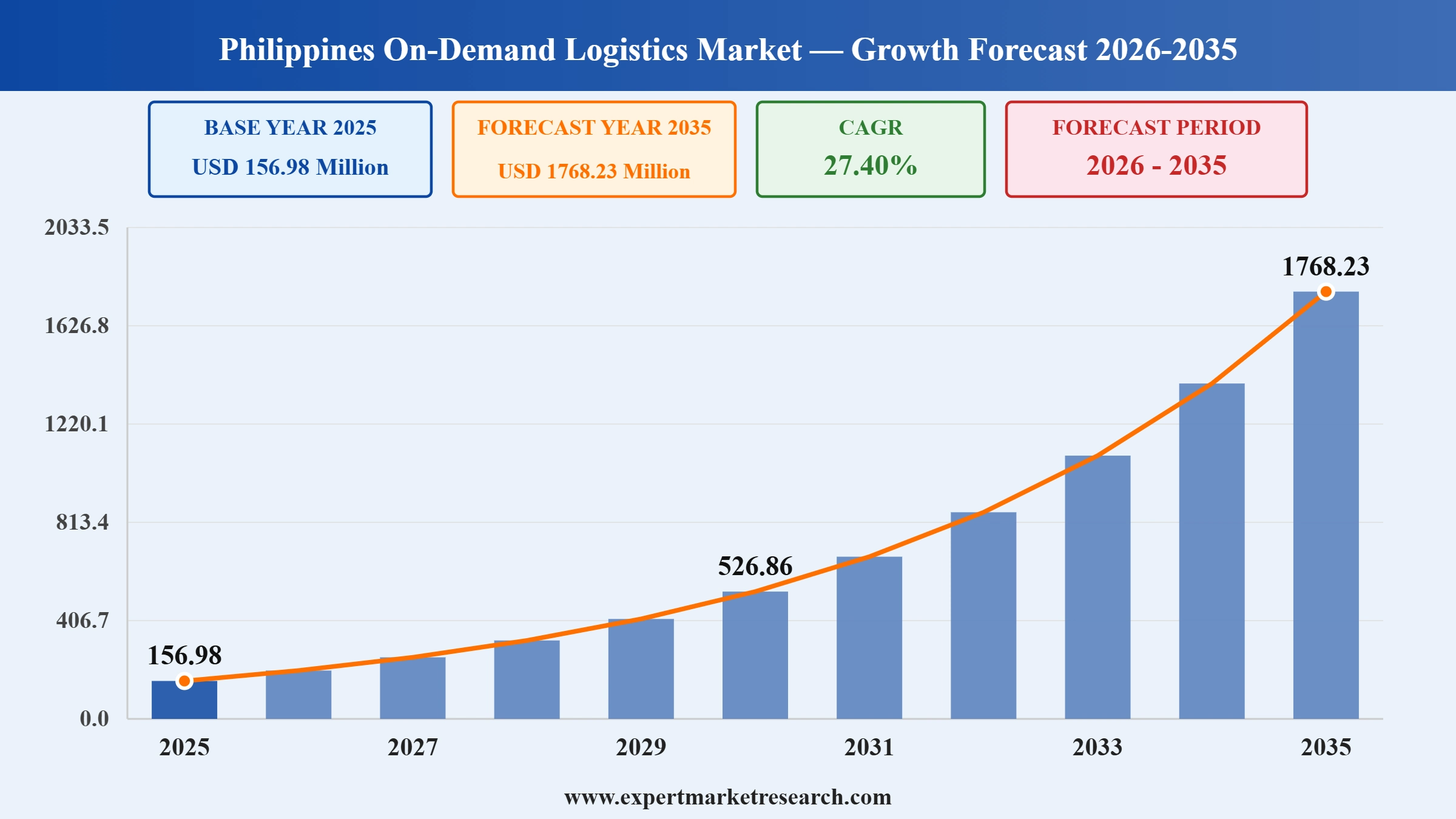
The Philippines on-demand logistics market was valued at USD 156.98 Million in 2025. The industry is expected to grow at a CAGR of 27.40% during the forecast period of 2026-2035. The increasing acceptance of real-time and flexible logistics services designed for informal and non-traditional online retail arrangements continues to drive demand among sellers operating on social commerce platforms like Facebook, TikTok, and Instagram. In turn, all these factors have resulted in the market attaining a valuation of USD 1768.23 Million by 2035.
Read more about this report - REQUEST FREE SAMPLE COPY IN PDF
|
Philippines On Demand Logistics Market Report Summary |
Description |
Value |
|
Base Year |
USD Million |
2025 |
|
Historical Period |
USD Million |
2019-2025 |
|
Forecast Period |
USD Million |
2026-2035 |
|
Market Size 2025 |
USD Million |
156.98 |
|
Market Size 2035 |
USD Million |
1768.23 |
|
CAGR 2019-2025 |
Percentage |
XX% |
|
CAGR 2026-2035 |
Percentage |
27.40% |
|
CAGR 2026-2035 - Market by Service |
Same-Day Delivery |
31.0% |
|
CAGR 2026-2035 - Market by End User |
Business-to-Customer(B2C) |
30.7% |
The Philippines on-demand logistics market is booming. The market growth is primarily driven by the increase in smartphone penetration, widespread consumer expectation of speedy delivery, and the growth of online marketplaces beyond Metro Manila. Important trends in the market include multi-channel fulfillment, fintech integration for cashless transactions, and provincial hubs for support of nationwide coverage. The market can be characterized by tough competition from players like Lalamove, Transportify, and Toktok, who are broadening their portfolios to offer freight, same-day delivery, warehousing, and enterprise solutions. Moreover, the government is pushing digital infrastructure and logistics innovation to drive market expansion.
Two primary niches driving heavy demand in the Philippines on-demand logistics market are healthcare logistics and direct-to-consumer (D2C) brand fulfillment. The medical industry requires rapid, dependable delivery of drugs, medical supplies, and diagnostic kits. Hence, the market observes a huge demand for time-sensitive logistics and specialized handling. On the other hand, the D2C model is flourishing as local entrepreneurs and startups bypass traditional retail setups to sell directly from their websites or social media accounts. In this case, they need practical and affordable tech-enabled logistics assistance for same-day or two-day delivery, online storage, and returns management. Both niches present growth potential for logistics providers with tailored industry solutions.
The key trends of the Philippines on-demand logistics market include government-imposed infrastructure initiatives, integration of cold-chain logistics, digital transformation and automation, and increased focus on sustainable logistics practices.
On July 7, 2026, A.P. Moller Capital announced it had completed its investment for a 40% stake in AC Logistics Holdings Corp., the logistics arm of Ayala Corp., through EMIF II Holding III B.V. The transaction followed AC Logistics' acquisition of an 84% stake in cold chain operator Glacier Megafridge.
In February 2026, Globe Telecom designated AC Logistics Holdings Corp. as its nationwide warehousing and distribution partner, launching operations at AC Logistics' MCX Warehouse in Muntinlupa. AC Logistics will manage, store and dispatch Globe's SIMs, devices and retail collaterals to channels and partners.
In January 2026, the Philippine Competition Commission announced it had cleared the joint venture between Ayala Corp. and EMIF II Holding III B.V., covering the acquisition of approximately 40% of AC Logistics Holdings Corp. The regulator found the transaction unlikely to substantially lessen competition.
In February 2025, Lalamove launched a ride-hailing service in Metro Manila, Pampanga and Cebu, extending beyond its established delivery operations. The company set an initial 2% commission rate for drivers, compared with the 20% to 25% charged by incumbent transport network vehicle service platforms.
The government's ‘Build, Build, Build’ program has enhanced the country's transport infrastructure like roads, ports, and airports, boosting the overall Philippines on-demand logistics market dynamics and trends. One such project includes the PHP 11 billion rehabilitation of Kennon Road that offers new corridors, while upgrading other available routes. This enables logistics firms to maximize operations while reducing transit times for goods carried within the nation. These new developments make an essential mark for the growth of the logistics sector as they smoothen the transit of goods across the region.
The emerging requirement of pharmaceuticals and foods that are temperature-sensitive has resulted in an increased demand cold chain logistics, accelerating the demand in the Philippines on-demand logistics market. As a result, third-party logistics providers have increasingly invested in refrigerated trucks and storage facilities. Companies can find immense opportunities for growth while catering to this increasing demand for temperature-controlled storage and distribution for the pharmaceutical, food, and e-commerce sectors.
The Philippines on-demand logistics industry is increasingly embracing technological tools such as real-time tracking, automated warehouses, and analytics to enhance efficiency. The customs clearance operations, for instance, have sped up to 80% and now take a mere 3 to 5 days on average for the transaction to be completed. This digital transformation is giving rise to better transparency, better tracking capabilities, and more efficient supply chain management.
With an increasing environmental consciousness, companies in the Philippines on-demand logistics market have started to adopt green practices to minimize their contribution to carbon emissions. For example, Payo introduced electric cargo tricycles into its fleet to reduce carbon emissions in July 2023. The initiative forms part of a broad strategy that aims to develop eco-friendly logistics solutions whose principles include bike deliveries and biodegradable pouches.
Factors like the increased acceptance of mobile payments and the growth of hyperlocal commerce have fueled the Philippines on-demand logistics market revenue growth. Digital wallets like GCash and Maya have made cashless transactions a faster and secure authorizing means. These trends have encouraged consumers to engage with app-based delivery alternatives for their small businesses. On the other hand, hyperlocal commerce especially for food, groceries, and other essentials has been creating heavy demand for super-fast local logistics. These factors have propelled increased volumes and frequency of deliveries, compelling providers to increase the capacity and renew innovation for speed and convenience.
Two key opportunities in the Philippines on-demand logistics market lie in serving underserved rural and island regions and providing customizable logistics-as-a-service (LaaS) solutions for MSMEs. Expanding delivery coverage into remote provinces opens up new customer segments, especially since digital adoption is growing, even in areas far from the urban centers. Furthermore, customized LaaS solutions for white-label delivery, warehousing, or fleet management, allow small and medium enterprises to scale without significant capital investments. By closing those gaps, logistics companies can strengthen their market penetration and foster inclusive national e-commerce growth.
The Expert Market Research's report titled “Philippines On-Demand Logistics Market Report and Forecast 2026-2035” offers a detailed analysis of the market based on the following segments:
Market Breakup by Service
Market Breakup by Platform
Market Breakup by End User
Market Breakup by Application
Read more about this report - REQUEST FREE SAMPLE COPY IN PDF
Market Insights by Service
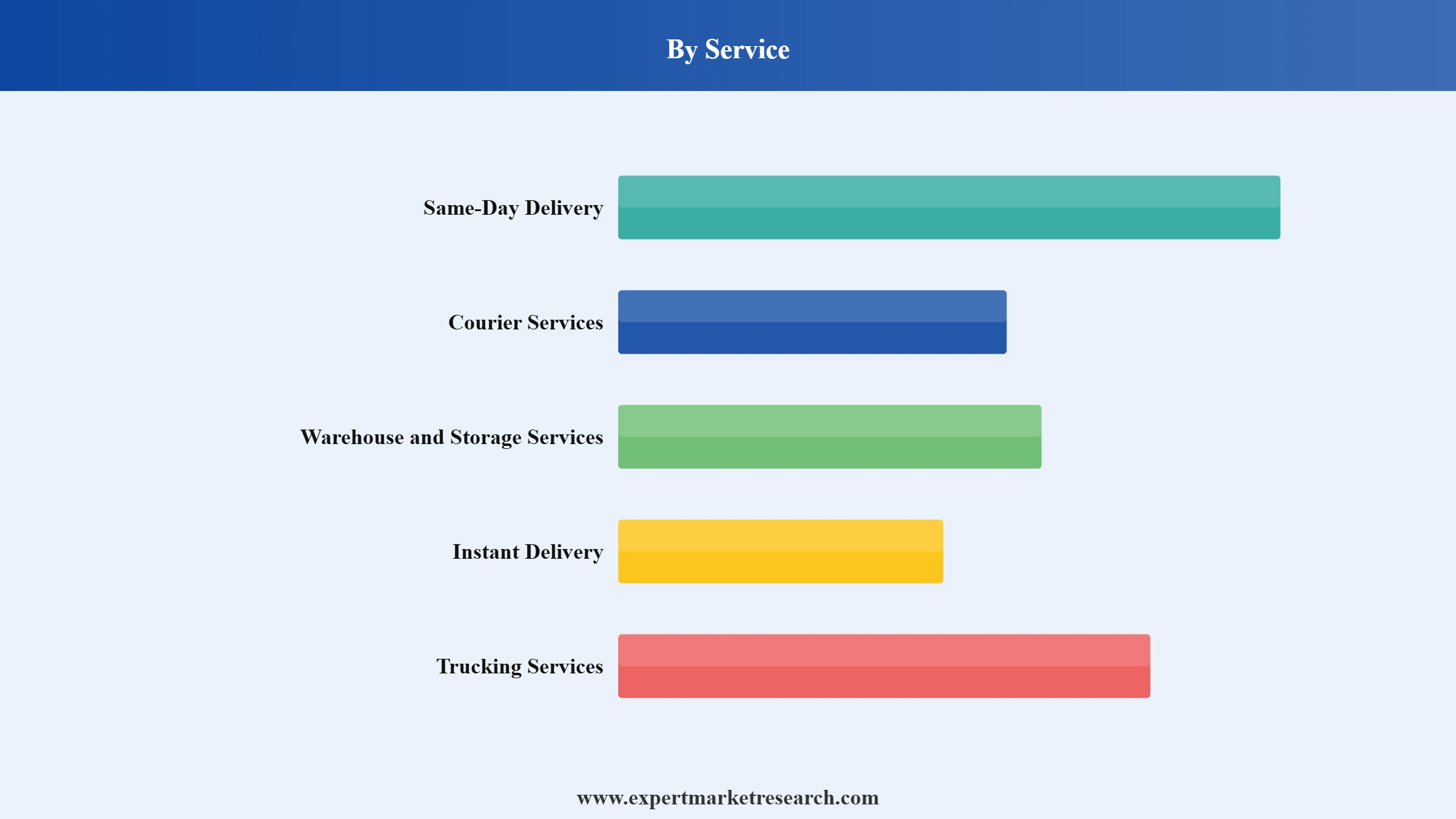
Same-day delivery is becoming rapidly popular with the increased demands for e-commerce by consumers who are inclined to speed, particularly in urban places, thereby stimulating the Philippines on-demand logistics market value. This particular segment is expected to grow at a 31.0% CAGR over the forecast period. Courier services continue to be relevant in the market, for delivering documents and parcels from SMEs and governments. Warehousing and storage services are also growing with increased demands from businesses that are looking for disposable inventory options, especially in Metro Manila and regional hubs. Instant delivery services are booming with various food, grocery, and pharmacy needs, through applications like Grab and Foodpanda. On the other hand, trucking services promote B2B logistics, which is an inter-island distribution process with increasing demand from retail, manufacturing, and agricultural companies seeking reliable, scalable freight transportation systems.
Read more about this report - REQUEST FREE SAMPLE COPY IN PDF
Market Analysis by Platform
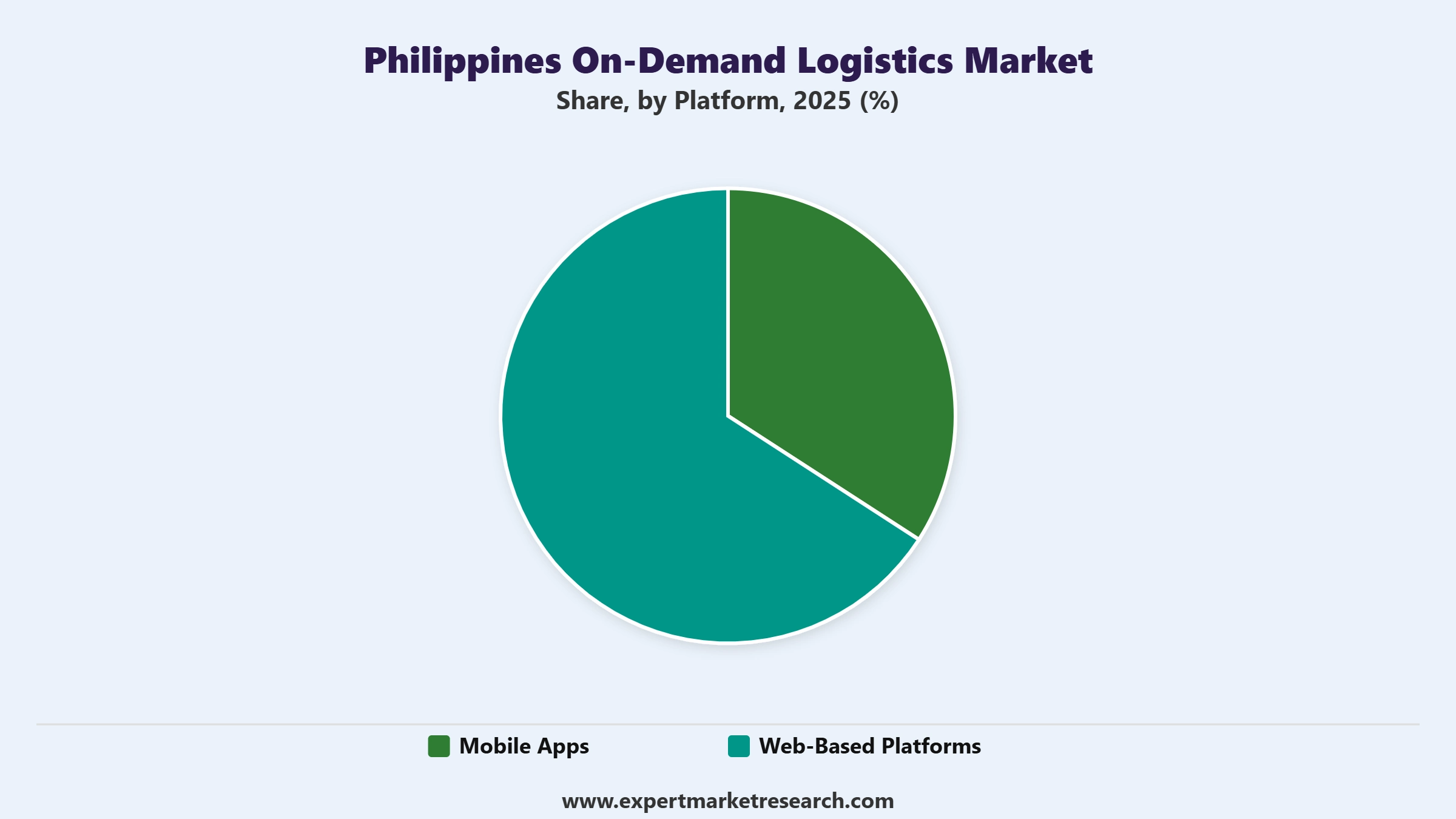
High smartphone penetration and the growing retail use have raised subsequent demands in convenience, real-time tracking, and cashless payments, boosting the Philippines on-demand logistics market development. Platforms like Lalamove, Toktok, and Grab have gained widespread popularity. Meanwhile, the market witnesses an increased use of the web-based platforms among SMEs for booking bulk deliveries and managing logistics data. These platforms enable smooth operations through enterprise-level features.
Read more about this report - REQUEST FREE SAMPLE COPY IN PDF
Market Analysis by End User
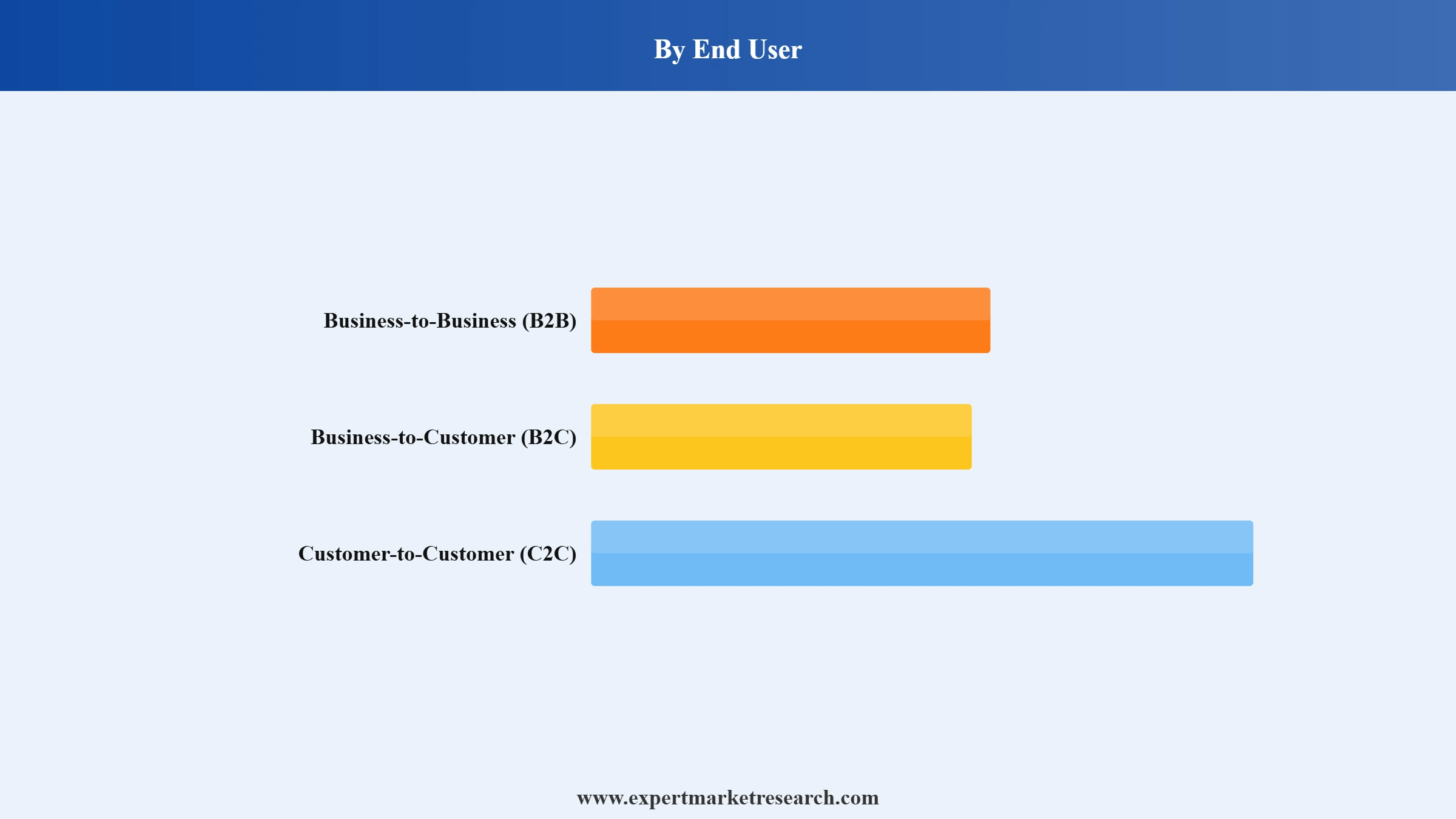
As per the Philippines on-demand logistics market analysis, B2B logistics is growing, with SMEs and large companies looking for scalable, tech-enabled delivery services for distribution of stock, restocking for retail and operational supply chain efficiency. Meanwhile, B2C continues to surge as e-commerce is on the rise, growing through social commerce and consumer expectations for favorable, fast and reliable delivery. The segment is projected to grow at 30.7% CAGR over the forecast period. C2C logistics is emerging as well, with platforms such as Toktok and GrabExpress. These platforms allow individuals to send parcels within metropolitan areas and cities in a convenient manner. All segments of logistics have benefitted from the increased digital technology acceptance across the region, availing flexible, real-time logistics everywhere in urban and provincial areas.
Read more about this report - REQUEST FREE SAMPLE COPY IN PDF
Market Insights by Application
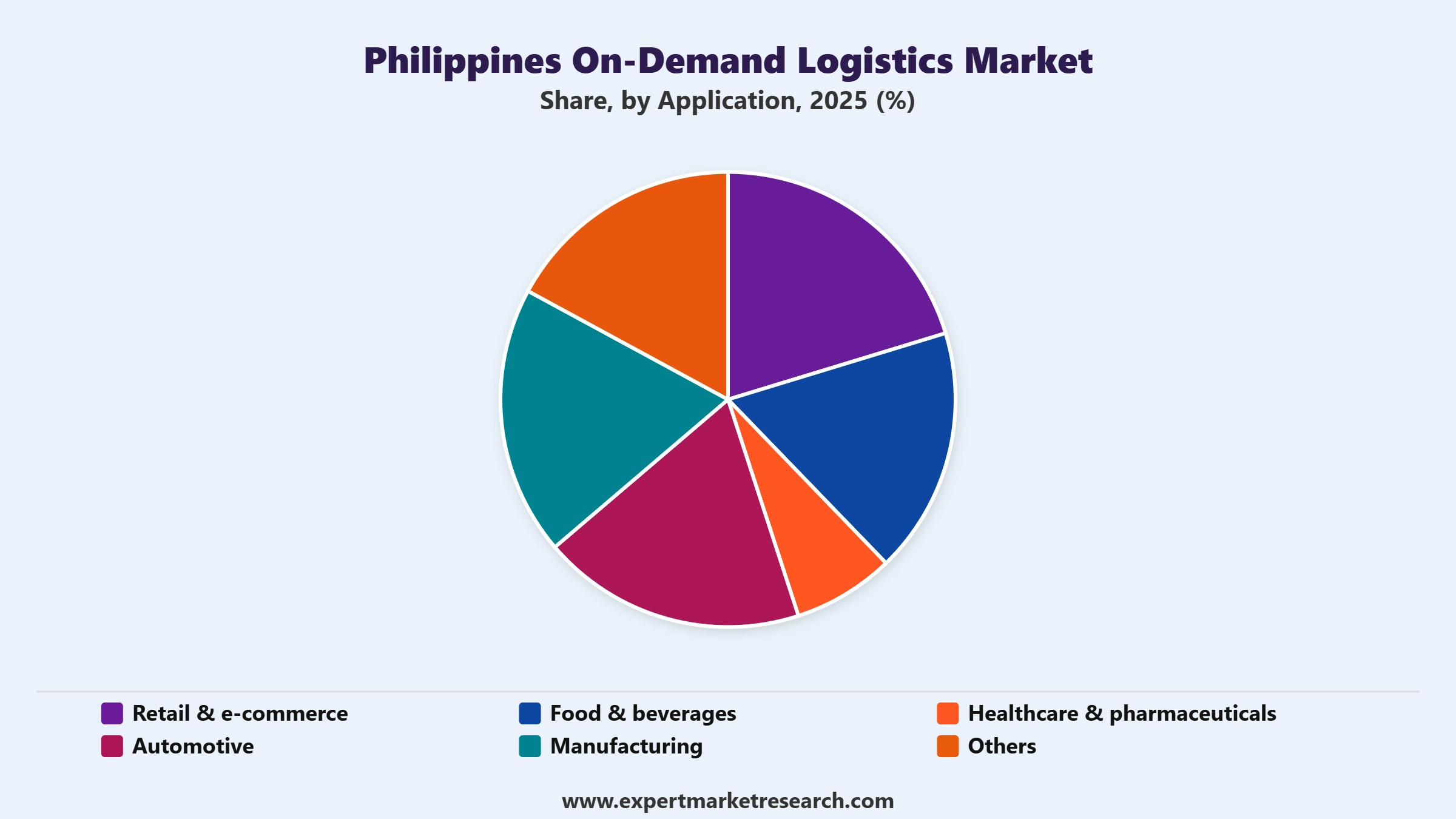
Retail and e-commerce sectors have largely propelled the demand for on-demand logistics in Philippines. The segment growth can be attributed to the continued craze for online shopping and the delivery expansion throughout the region. The segment of food and beverages is boosted by instant delivery services such as GrabFood and Foodpanda. Healthcare and pharmaceuticals gained traction during the pandemic. These sectors necessitate the secure, efficient and timely receipt of medical supplies. Meanwhile, the automotive and manufacturing sectors rely on logistics for spare parts, equipment, and continuity of supply chain.
Read more about this report - REQUEST FREE SAMPLE COPY IN PDF
The Philippines on-demand logistics market players are continuously expanding their service areas while increasing digitalization and giving value-added solutions such as real-time tracking, warehousing, and cold chain services. Most of the Philippines on-demand logistics companies have focused on improving the speed of delivery, developing scalable solutions, and cost-effective alternatives to serve the evolving demands of users under B2B, B2C, and C2C segments.
Bringg is a business-to-enterprise delivery and logistics solutions company, established in 2013. Through technology, Bringg is optimizing processes to achieve greater efficiency, speed, and transparency in delivery operations within the on-demand logistics space of the Philippines.
Founded in 2011 and based in Germany, Delivery Hero has become a global logistics leader in the food delivery segment. The company has also ventured into the Philippines marketplace with their services optimized by internet infrastructure, which help them provide quick and efficient on-demand delivery across food and logistics sectors.
DoorDash, Inc. was established in 2013 and is headquartered in California, United States. The company has gained huge popularity when it comes to on-demand delivery services. They focus on food, retail, and local delivery while considering convenience and speed as key metrics for success in the Philippines.
Established in 2004, headquartered in Chicago, United States, Grubhub is one of the biggest food delivery players. The company partners with local restaurant establishments to ensure fast and reliable delivery in the Philippines.
Other key players in the Philippines on-demand logistics market report are Instacart, Lalamove, Postmates, Shadowfax Technologies Pvt. Ltd., Stuart Delivery Ltd., and Uber Technologies Inc., among others.
*Please note that this is only a partial list; the complete list of key players is available in the full report. Additionally, the list of key players can be customized to better suit your needs.*


Upto 15% Off
USD
$2499 $2249
$3999 $3599
$4999 $4249
$5999 $5099


*While we strive to always give you current and accurate information, the numbers depicted on the website are indicative and may differ from the actual numbers in the main report. At Expert Market Research, we aim to bring you the latest insights and trends in the market. Using our analyses and forecasts, stakeholders can understand the market dynamics, navigate challenges, and capitalize on opportunities to make data-driven strategic decisions.*
In 2025, the Philippines on-demand logistics market reached an approximate value of USD 156.98 Million.
The market is projected to grow at a CAGR of 27.40% between 2026 and 2035.
The market is estimated to witness healthy growth in the forecast period of 2026-2035 to reach a value of around USD 1768.23 Million by 2035.
The major drivers of the market are the increasing acceptance of real-time and flexible logistics services designed for informal and non-traditional online retail arrangements, acceptance of mobile payments and the growth of hyperlocal commerce.
The key trends of the market include government-imposed infrastructure initiatives, integration of cold-chain logistics, digital transformation and automation, and increased focus on sustainable logistics practices.
The various services considered in the market report are same-day delivery, courier services, warehouse and storage services, instant delivery, and trucking services.
The various platforms considered in the market report are mobile apps and web-based platforms.
The end users considered in the Philippines on-demand logistics market report are business-to-business (B2B), business-to-customer (B2C), and customer-to-customer (C2C).
The major players in the market are Bringg Delivery Technologies Ltd., Delivery Hero, DoorDash, Inc., Grubhub, Instacart, Lalamove, Postmates, Shadowfax Technologies Pvt. Ltd., Stuart Delivery Ltd., and Uber Technologies Inc., among others.
Explore our key highlights of the report and gain a concise overview of key findings, trends, and actionable insights that will empower your strategic decisions.
| REPORT FEATURES | DETAILS |
| Base Year | 2025 |
| Historical Period | 2019-2025 |
| Forecast Period | 2026-2035 |
| Scope of the Report |
Historical and Forecast Trends, Industry Drivers and Constraints, Historical and Forecast Market Analysis by Segment:
|
| Breakup by Service |
|
| Breakup by Platform |
|
| Breakup by End User |
|
| Breakup by Application |
|
| Market Dynamics |
|
| Competitive Landscape |
|
| Companies Covered |
|
Datasheet
One User
USD 2,499
USD 2,249
tax inclusive*
Single User License
One User
USD 3,999
USD 3,599
tax inclusive*
Five User License
Five User
USD 4,999
USD 4,249
tax inclusive*
Corporate License
Unlimited Users
USD 5,999
USD 5,099
tax inclusive*
*Please note that the prices mentioned below are starting prices for each bundle type. Kindly contact our team for further details.*
Flash Bundle
Small Business Bundle
Growth Bundle
Enterprise Bundle
*Please note that the prices mentioned below are starting prices for each bundle type. Kindly contact our team for further details.*
Flash Bundle
Number of Reports: 3
20%
tax inclusive*
Small Business Bundle
Number of Reports: 5
25%
tax inclusive*
Growth Bundle
Number of Reports: 8
30%
tax inclusive*
Enterprise Bundle
Number of Reports: 10
35%
tax inclusive*
How To Order

Select License Type
Choose the right license for your needs and access rights.

Click on ‘Buy Now’
Add the report to your cart with one click and proceed to register.

Select Mode of Payment
Choose a payment option for a secure checkout. You will be redirected accordingly.
Strategic Solutions for Informed Decision-Making
Gain insights to stay ahead and seize opportunities.

Get insights & trends for a competitive edge.

Track prices with detailed trend reports.

Analyse trade data for supply chain insights.

Leverage cost reports for smart savings

Enhance supply chain with partnerships.

Connect For More Information
Our expert team of analysts will offer full support and resolve any queries regarding the report, before and after the purchase.
Our expert team of analysts will offer full support and resolve any queries regarding the report, before and after the purchase.
We employ meticulous research methods, blending advanced analytics and expert insights to deliver accurate, actionable industry intelligence, staying ahead of competitors.
Our skilled analysts offer unparalleled competitive advantage with detailed insights on current and emerging markets, ensuring your strategic edge.
We offer an in-depth yet simplified presentation of industry insights and analysis to meet your specific requirements effectively.




