

Consumer Insights
Uncover trends and behaviors shaping consumer choices today
Procurement Insights
Optimize your sourcing strategy with key market data
Industry Stats
Stay ahead with the latest trends and market analysis.
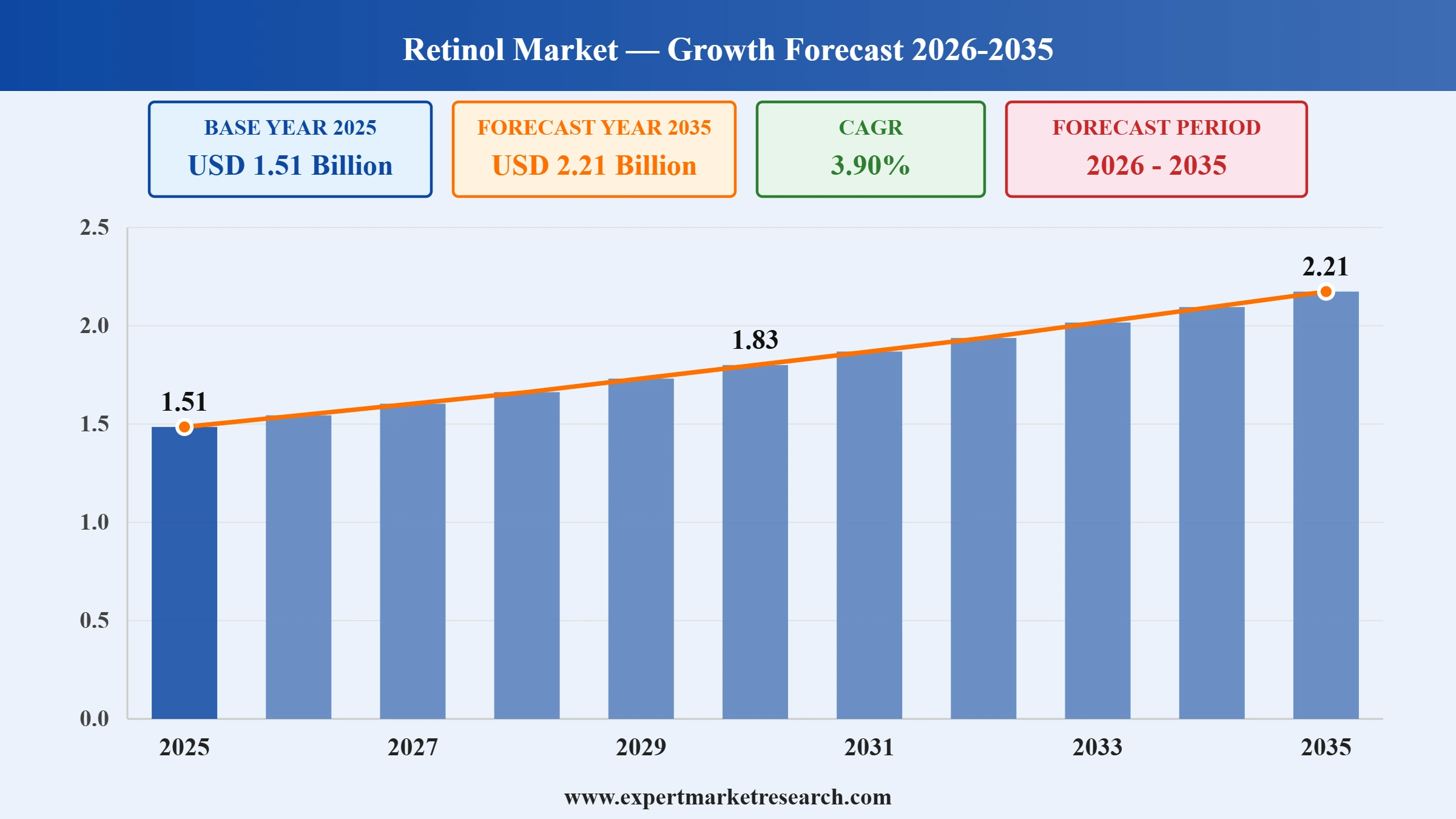
The global retinol market attained a value of USD 1.51 Billion in 2025 and is projected to grow at a CAGR of 3.90% through 2035. The market is further expected to achieve USD 2.21 Billion by 2035, supported by rising demand for anti-aging and skin-renewal formulations, expanding encapsulation and stabilisation technologies that improve retinol's efficacy and tolerability, and growing incorporation of vitamin A derivatives across dietary supplements, fortified food and beverage products, and animal feed. Growth spans natural and synthetic retinol types across personal care and cosmetics, dietary supplements, food and beverage, and animal feed applications, with ingredient suppliers across North America, Europe, Asia Pacific, Latin America, and the Middle East and Africa competing on formulation science, regulatory compliance, and supply reliability.
The regulatory landscape is reshaping product formulation across the market, as authorities tighten oversight of topical vitamin A exposure. The European Commission's amended Cosmetics Regulation took effect on November 1, 2025, capping retinol concentrations at 0.3% in leave-on skin care and 0.05% in body lotions and mandating a "Contains vitamin A" advisory label, with full compliance required by May 1, 2027, prompting formulators to accelerate encapsulation and lower-dose reformulation work across their retinol portfolios. Suppliers are turning to encapsulation platforms such as BASF SE's VitaGuard A technology, launched in January 2025, to ease compliance.
Ingredient suppliers are racing to address retinol's inherent instability through advanced delivery technologies that improve efficacy while easing regulatory and consumer-tolerability pressures. BASF SE disclosed in January 2025 that its newly launched VitaGuard A encapsulation technology, built on patented solid lipid particles, delivered a 37% reduction in forehead wrinkle volume and a 16% increase in skin elasticity in an eight-week clinical study, underscoring how stabilisation science is becoming a key competitive differentiator industry-wide. The pressure has grown since the European Commission's amended Cosmetics Regulation, effective November 1, 2025, tightened permissible retinol concentrations in leave-on formulations.
Beyond topical skin care, suppliers are also deepening investment in the science underpinning vitamin A's broader health and wellness applications, extending stabilisation and delivery-technology expertise from skin-care actives into dietary-supplement and food-fortification ingredient formats. This cross-category push reflects rising nutrition-science investment across the industry as suppliers look to capture vitamin A derivative demand beyond the personal care and cosmetics segment, even as the broader competitive landscape continues to be reshaped by targeted portfolio realignments among established ingredient suppliers.
Read more about this report - REQUEST FREE SAMPLE COPY IN PDF
| Global Retinol Market Report Summary | Description | Value |
| Base Year | USD Billion | 2025 |
| Historical Period | USD Billion | 2019-2025 |
| Forecast Period | USD Billion | 2026-2035 |
| Market Size 2025 | USD Billion | 1.51 |
| Market Size 2035 | USD Billion | 2.21 |
| CAGR 2019-2025 | Percentage | XX% |
| CAGR 2026-2035 | Percentage | 3.90% |
| CAGR 2026-2035 - Market by Region | Asia Pacific | 4.5% |
| CAGR 2026-2035 - Market by Country | India | 5.1% |
| CAGR 2026-2035 - Market by Country | China | 4.4% |
| CAGR 2026-2035 - Market by Type | Synthetic | 4.3% |
| CAGR 2026-2035 - Market by Application | Personal Care and Cosmetics | 4.6% |
| Market Share by Country 2025 | Germany | 4.7% |
BASF introduced Lutavit A/D3 1000/200 NXT, a next-generation microencapsulated formulation combining vitamin A and vitamin D3 in a consistent 5:1 ratio for use across all animal species, manufactured at its Ludwigshafen, Germany site, described as the world's largest vitamin A formulation facility, with an 18-month shelf life under standard storage. Companies can leverage combined micronutrient formulations to simplify premix handling while strengthening their position in the animal feed application segment. This move mirrors the company's broader stabilisation push, including its January 2025 VitaGuard A encapsulated retinol launch for skin care formulations.
dsm-firmenich launched its global "House of Science" campaign to showcase R&D leadership across its Beauty & Care division, spotlighting more than EUR 700 million in annual research investment, over 2,000 dedicated scientists, and sustainability targets including 90% biodegradable bioactives by 2030. Companies can leverage concentrated scientific-capability platforms to accelerate the development of next-generation actives, including vitamin A derivatives, across skin and personal care applications. This platform stands alongside BASF SE's own science push, shown by its October 2025 combined Lutavit A/D3 launch for animal nutrition.
Merck KGaA closed the sale of its Surface Solutions business, including the RonaCare range of beauty and personal care active ingredients, to Global New Material International (GNMI) for approximately EUR 665 million in cash on July 31, 2025, with roughly 1,100 employees transitioning to the acquirer as the company sharpened its focus on life science, healthcare, and electronics operations. Companies can leverage targeted portfolio divestitures to concentrate resources on higher-growth core technology businesses. Merck KGaA, founded in 1668 and headquartered in Darmstadt, Germany, has periodically reshaped its business lines through similar strategic realignments over its long history.
Eluminex Biosciences disclosed on June 9, 2025 that its pentavalent trispecific antibody EB-105, developed alongside the company's retinoid-based ophthalmic pipeline, produced visual acuity gains of +12 to +21 letters across 13 patients at three months with no drug-related adverse events, supporting plans to advance into a multi-dose Part 2 study. Companies can leverage positive early-stage clinical data on retinoid-adjacent therapeutics to attract continued investment into vitamin A derivative research and development. This effort is based out of the company's Suzhou, China headquarters and coordinated with its clinical operations in South San Francisco, California.
BASF presented new stability data for its solid lipid particle retinol delivery system at the IFSCC Congress in Cannes, France, held September 15-18, 2025, reporting an 83% retinol retention rate after four months of storage and a 43% increase in collagen I levels in supporting formulation testing. The findings build on the technology's January 2025 commercial launch as VitaGuard A. Companies can leverage peer-reviewed stability and efficacy data presented at industry congresses to build formulator confidence in next-generation retinol delivery systems. These findings carry added weight given the European Commission's amended Cosmetics Regulation, which tightened topical retinol concentration limits effective November 1, 2025.
dsm-firmenich presented its Healthy Longevity platform at Vitafoods Europe in Barcelona on May 21, 2025, featuring Humiome B2 microbiome-targeted vitamin B2 delivery, ampli-D vitamin D support, and its life'sOMEGA vegan omega-3 portfolio, aimed at biological-aging and cellular-health applications within the dietary supplements category. Companies can leverage cross-category nutrition science platforms to extend vitamin and bioactive ingredient portfolios beyond topical skin care into the dietary supplements application segment. This expansion draws on the same research depth as its Beauty & Care division, backed by over EUR 700 million in annual R&D spending.
Following the July 2025 sale of its Surface Solutions and RonaCare cosmetic-actives business, Merck KGaA retained its Gernsheim, Germany property and GreenTech-Park Fluxum site under a long-term lease to the acquirer, while GNMI guaranteed continued employment at the site through 2032 as part of the transition agreement. Companies can leverage structured divestiture agreements, including retained-property and workforce-continuity terms, to exit non-core categories while preserving regional operational relationships. This arrangement followed the EUR 665 million divestiture of the Surface Solutions and RonaCare businesses to GNMI, which closed on July 31, 2025.
Building on its June 2025 Phase 1b safety and efficacy data, Eluminex Biosciences confirmed plans to initiate Part 2 of its LOTUS study in July 2025, evaluating multiple monthly injections of EB-105 across its retinoid-informed ophthalmic development program headquartered in Suzhou, China, with clinical operations spanning four sites in the United States. Companies can leverage staged multi-part clinical designs to de-risk retinoid-derivative development programs while generating incremental efficacy evidence. This builds on results that showed visual acuity gains of 12 to 21 letters across the trial's 13 participants without any drug-related adverse events.
This Expert Market Research's Report titled "Global Retinol Market Report and Forecast 2026-2035" offers a detailed analysis of the market based on the following segments:
Market Breakup by Type
Key Insight: Synthetic accounts for a substantial share of the global retinol market, at approximately 68% in 2025, owing to its consistent molecular purity and cost-efficient large-scale production, reinforced by BASF SE's January 2025 launch of its VitaGuard A encapsulation technology built on synthetic retinol. Natural is the fastest-growing type segment at an estimated CAGR of 5.20% through 2035, as clean-beauty positioning and plant-derived sourcing gain traction among formulators, an industry shift illustrated by BASF's April 2025 showcase of renewable-feedstock personal care ingredients at in-cosmetics Global in Amsterdam. This type-level dynamic mirrors the broader application picture, where Personal Care and Cosmetics likewise leads with growth forecast at a 4.60% CAGR through 2035.
Market Breakup by Application
Key Insight: Personal Care and Cosmetics leads the application segment with a substantial share of the market, supported by sustained anti-aging and skin-renewal product demand, and is itself forecast to expand at a CAGR of 4.60% through 2035, reinforced by BASF SE's September 2025 IFSCC Congress data showing an 83% retinol retention rate for its encapsulated delivery system. Dietary Supplements is the fastest-growing application at an estimated CAGR of 5.40%, illustrated by dsm-firmenich's May 2025 Healthy Longevity platform launch at Vitafoods Europe. Food and Beverage continues to see steady vitamin A fortification demand across functional and fortified product lines, while Animal Feed is reinforced by BASF's October 2025 launch of its combined Lutavit A/D3 formulation for animal nutrition. Others captures niche industrial and pharmaceutical-adjacent uses of retinol. This application-level pattern parallels the type breakdown, where Synthetic retains a substantial share of approximately 68% while Natural advances fastest at a 5.20% CAGR.
Market Breakup by Region
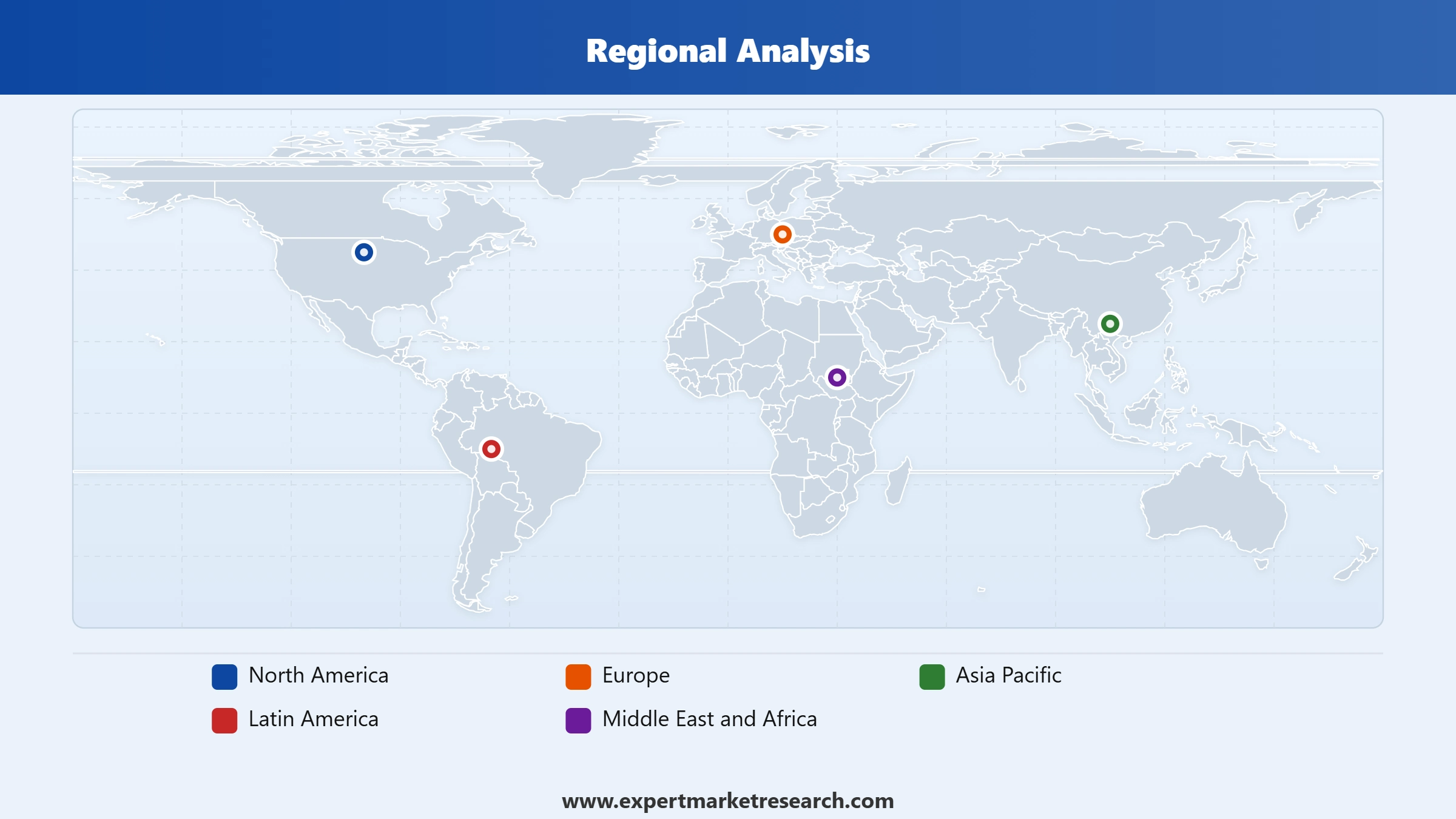
Key Insight: Europe accounts for the largest regional share of the global retinol market at approximately 34.7% in 2025, anchored by the region's deep vitamin A and cosmetic-ingredient manufacturing base across Germany and Switzerland, home to established suppliers including BASF SE and dsm-firmenich. Asia Pacific is the fastest-growing region at an estimated CAGR of 4.50%, with India advancing at approximately 5.10% and China at 4.40%, a trajectory reinforced by Eluminex Biosciences' Suzhou, China-based retinoid-derivative research operations alongside rapidly rising regional skincare and supplement consumption. North America continues to represent a substantial share of demand tied to established anti-aging skincare consumption, while Latin America and the Middle East and Africa represent smaller but steadily developing markets as personal care penetration widens across both regions. This regional pattern parallels the application-level picture, where Personal Care and Cosmetics leads demand while itself growing at a forecast 4.60% CAGR through 2035.
Read more about this report - REQUEST FREE SAMPLE COPY IN PDF
By type, synthetic leads the market while natural grows fastest given accelerating clean-beauty sourcing preferences
Synthetic continues to account for a substantial share of the global retinol market, valued for its consistent molecular structure, high purity, and cost-effective large-scale manufacturing relative to plant-derived alternatives. Large-scale synthetic vitamin A production remains concentrated among a small number of integrated chemical majors, including BASF SE and dsm-firmenich alongside China's Zhejiang NHU, reflecting the high capital intensity and multi-step synthesis expertise required to compete at scale, a structural barrier that continues to reinforce synthetic retinol's share leadership even as reformulation pressure builds under tightening European regulatory concentration limits on topical vitamin A.
Natural is growing at a fast pace across the market at a projected CAGR of 5.20%, as formulators respond to rising clean-beauty and plant-derived sourcing preferences among consumers. US-based biotechnology firm Capra Biosciences disclosed in June 2025 that it is producing retinol through engineered microbial fermentation of industrial waste feedstocks such as thin stillage and glycerol at a pilot facility in Sterling, Virginia, aiming to deliver commercial sample quantities as a petrochemical-free alternative to conventionally synthesised retinol. Development efforts of this kind illustrate the broader industry pivot toward naturally and biologically sourced formulation inputs that is lifting demand for natural retinol alongside adjacent botanical actives, even as synthetic retinol continues to hold approximately 68% of the overall market as of 2025, leaving considerable headroom for natural and bio-based formulations to capture.
By application, personal care and cosmetics leads the market while dietary supplements grows fastest given rising healthy-aging demand
Personal Care and Cosmetics continues to account for a substantial share of the market, supported by sustained global demand for anti-aging, skin-renewal, and acne-treatment formulations. Vitamin A-focused skincare brand Environ Skincare confirmed in June 2025 that it had reformulated six retinol-dependent products, including its Skin EssentiA AVST 4 and 5 and Youth EssentiA Serum 4 ranges, switching to Retinyl Propionate while preserving original vitamin A potency to comply with the European Commission's tightened concentration limits, illustrating how established personal-care formulators are adapting supply chains to sustain retinol-based anti-aging claims under the new rules. This is a segment that is itself projected to expand at a CAGR of 4.60% through 2035 even as regulatory compliance reshapes product formulations across the industry.
Dietary Supplements is growing at a fast pace across the market at a projected CAGR of 5.40%, driven by rising consumer interest in healthy-aging and immune-support nutrition. dsm-firmenich launched its Dry Vitamin A Palmitate NI in October 2024, a stabilised, small-particle dry vitamin A formulation free of BHA, BHT, and microplastics and suited to direct use in supplement and staple-food fortification manufacturing, illustrating how nutrition-science investment is extending vitamin A derivative demand beyond topical skin care into oral supplementation and fortification formats. This pace outstrips the 4.60% CAGR forecast for the larger personal care and cosmetics application segment over the same period.
Read more about this report - REQUEST FREE SAMPLE COPY IN PDF
Europe commands the largest share of the global retinol market at approximately 34.7% in 2025.
This is supported by Germany's deep cosmetic-ingredient manufacturing base, including BASF SE's Ludwigshafen site, which the company describes as the world's largest vitamin A formulation facility following its October 2025 Lutavit A/D3 1000/200 NXT launch, alongside the region's newly effective November 2025 European Commission concentration limits that are accelerating reformulation and encapsulation investment among suppliers serving the market. BASF SE, founded in 1865 and long headquartered in the city, continues to anchor much of this manufacturing capacity within the region.
Asia Pacific is emerging as the fastest-growing region at an estimated CAGR of 4.50%, with India advancing at approximately 5.10% and China at 4.40%, illustrated by BASF SE's November 2025 presence at In-Cosmetics Asia in Bangkok showcasing its personal care ingredient portfolio to regional formulators. North America continues to represent substantial demand tied to established anti-aging skincare consumption and a mature dietary-supplements retail channel, while Latin America and the Middle East and Africa remain smaller but steadily developing markets as personal care penetration widens across both regions. This is even as Europe continues to command the largest overall regional share at approximately 34.7% of the global market as of 2025.
The industry is fragmented, with global retinol market companies ranging from diversified specialty chemical majors to focused biosciences firms competing across type, application, and region segments. Established players operate across the full vitamin A value chain, from raw-material synthesis and encapsulation technology through formulation support and regulatory compliance services for personal care, dietary supplement, food and beverage, and animal feed customers.
Competitive dynamics among global retinol players are increasingly shaped by the depth of stabilisation and delivery-technology investment, the pace of portfolio realignment toward higher-growth core categories, and the strength of regional regulatory-compliance capabilities. Manufacturers are investing in encapsulation science, targeted divestitures and acquisitions, and cross-category nutrition platforms to secure long-term relationships with formulator and ingredient-distribution customers.
Founded in 1865 and headquartered in Ludwigshafen, Germany, BASF SE is a global chemicals major supplying vitamin A derivatives, encapsulated actives, and cosmetic ingredients through its Care Chemicals and animal nutrition businesses. The company launched its VitaGuard A encapsulated retinol technology in January 2025 and followed in October 2025 with Lutavit A/D3 1000/200 NXT, a combined vitamin A and D3 formulation for animal nutrition produced at its Ludwigshafen site.
Formed through the 2023 merger of Royal DSM and Firmenich and dual-headquartered in Kaiseraugst, Switzerland, and Maastricht, Netherlands, dsm-firmenich supplies vitamin A actives, retinol grades, and nutrition ingredients through its Beauty & Care and Health, Nutrition & Care divisions. The company unveiled its "House of Science" innovation platform in September 2025, highlighting more than EUR 700 million in annual research and development investment across its beauty and nutrition portfolios.
Founded in February 2020 and headquartered in Suzhou, China, with clinical operations based in South San Francisco, California, Eluminex Biosciences is a clinical-stage biotechnology company developing retinoid-based and recombinant collagen therapeutics for ophthalmic disease, including its zuretinol acetate vitamin-A visual-cycle asset. The company reported positive Phase 1b results for its retinoid-informed EB-105 program in June 2025, supporting continued investment in retinoid derivative research and development.
Founded in 1668 and headquartered in Darmstadt, Germany, Merck KGaA has long supplied cosmetic and personal care active ingredients through its RonaCare product range within its former Surface Solutions business. The company divested this business, including its RonaCare vitamin and active-ingredient portfolio, to Global New Material International for approximately EUR 665 million in a transaction that closed on July 31, 2025, as it sharpened its strategic focus on life science, healthcare, and electronics operations.
Other participants in the global retinol market include a range of other regional and specialty ingredient suppliers participating in the market.
*Please note that this is only a partial list; the complete list of key players is available in the full report. Additionally, the list of key players can be customized to better suit your needs.*
Unlock the latest insights with our global retinol market trends 2026 report. Discover regional growth patterns, type and application trends, and key industry players. Stay ahead of competition with trusted data and expert analysis. Download your free sample report today and drive informed decisions in the market.


Upto 15% Off
USD
$2499 $2249
$3999 $3599
$4999 $4249
$5999 $5099


*While we strive to always give you current and accurate information, the numbers depicted on the website are indicative and may differ from the actual numbers in the main report. At Expert Market Research, we aim to bring you the latest insights and trends in the market. Using our analyses and forecasts, stakeholders can understand the market dynamics, navigate challenges, and capitalize on opportunities to make data-driven strategic decisions.*
In 2025, the market reached an approximate value of USD 1.51 Billion.
The market is projected to grow at a CAGR of 3.90% between 2026 and 2035.
The market is estimated to witness healthy growth in the forecast period of 2026-2035 to reach a value of around USD 2.21 Billion by 2035.
Key trends aiding the market expansion are increasing pet food sales worldwide, rising appeal for fortified foods, development of pharmaceuticals, and increasing scientific research and development efforts.
The different regions covered in the market report include North America, Europe, the Asia Pacific, Latin America, and the Middle East and Africa.
The different types of retinols in the market are natural and synthetic.
The different applications of retinol include personal care and cosmetics, dietary supplements, food and beverage, and animal feed, among others.
The key players in the market include BASF SE, dsm-firmenich, Eluminex Biosciences, and Merck KGaA, alongside a range of other regional and specialty ingredient suppliers participating in the market.
Suppliers face tightening regulatory limits on topical vitamin A concentrations, the inherent chemical instability of retinol requiring advanced encapsulation investment, and intensifying competition between synthetic-manufacturing scale and rising demand for naturally sourced alternatives.
Investing in encapsulation and stabilisation delivery technologies, expanding vitamin A derivative applications into dietary supplements and animal feed, and realigning portfolios through targeted divestitures and R&D platform investment to concentrate resources on core growth categories.
Explore our key highlights of the report and gain a concise overview of key findings, trends, and actionable insights that will empower your strategic decisions.
| REPORT FEATURES | DETAILS |
| Base Year | 2025 |
| Historical Period | 2019-2025 |
| Forecast Period | 2026-2035 |
| Scope of the Report |
Historical and Forecast Trends, Industry Drivers and Constraints, Historical and Forecast Market Analysis by Segment:
|
| Breakup by Type |
|
| Breakup by Application |
|
| Breakup by Region |
|
| Market Dynamics |
|
| Competitive Landscape |
|
| Companies Covered |
|
Datasheet
One User
USD 2,499
USD 2,249
tax inclusive*
Single User License
One User
USD 3,999
USD 3,599
tax inclusive*
Five User License
Five User
USD 4,999
USD 4,249
tax inclusive*
Corporate License
Unlimited Users
USD 5,999
USD 5,099
tax inclusive*
*Please note that the prices mentioned below are starting prices for each bundle type. Kindly contact our team for further details.*
Flash Bundle
Small Business Bundle
Growth Bundle
Enterprise Bundle
*Please note that the prices mentioned below are starting prices for each bundle type. Kindly contact our team for further details.*
Flash Bundle
Number of Reports: 3
20%
tax inclusive*
Small Business Bundle
Number of Reports: 5
25%
tax inclusive*
Growth Bundle
Number of Reports: 8
30%
tax inclusive*
Enterprise Bundle
Number of Reports: 10
35%
tax inclusive*
How To Order

Select License Type
Choose the right license for your needs and access rights.

Click on ‘Buy Now’
Add the report to your cart with one click and proceed to register.

Select Mode of Payment
Choose a payment option for a secure checkout. You will be redirected accordingly.
Strategic Solutions for Informed Decision-Making
Gain insights to stay ahead and seize opportunities.

Get insights & trends for a competitive edge.

Track prices with detailed trend reports.

Analyse trade data for supply chain insights.

Leverage cost reports for smart savings

Enhance supply chain with partnerships.

Connect For More Information
Our expert team of analysts will offer full support and resolve any queries regarding the report, before and after the purchase.
Our expert team of analysts will offer full support and resolve any queries regarding the report, before and after the purchase.
We employ meticulous research methods, blending advanced analytics and expert insights to deliver accurate, actionable industry intelligence, staying ahead of competitors.
Our skilled analysts offer unparalleled competitive advantage with detailed insights on current and emerging markets, ensuring your strategic edge.
We offer an in-depth yet simplified presentation of industry insights and analysis to meet your specific requirements effectively.




