

Consumer Insights
Uncover trends and behaviors shaping consumer choices today
Procurement Insights
Optimize your sourcing strategy with key market data
Industry Stats
Stay ahead with the latest trends and market analysis.
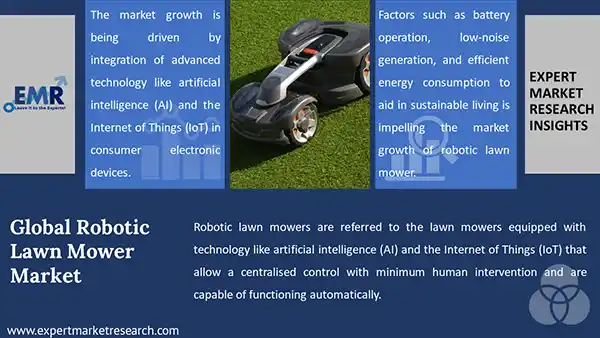
The global robotic lawn mower market attained a value of USD 1305.91 Million in 2025 and is projected to expand at a CAGR of 13.10% through 2035. The market is further expected to achieve USD 4472.39 Million by 2035. Rising labor shortages in landscaping are pushing commercial buyers to adopt autonomous mowing fleets, enabling maintenance schedules, lower insurance risk, and scalable service models.
Suppliers are prioritizing wire-free navigation and high-capacity platforms to support large, complex outdoor sites with predictable performance and lower lifecycle costs. In October 2024, Husqvarna Group expanded its robotic lawn mower portfolio with four new powerful robotic lawnmowers for commercial use including 580L EPOS, 580 EPOS, 560 EPOS, and an updated 535 AWD EPOS, targeting large commercial landscapes without perimeter wires. The model uses satellite-based positioning to manage areas above 50,000 square meters, reducing installation labor and downtime. This launch is significant as commercial groundskeeping accounts for a growing share of professional landscaping contracts, with European municipalities increasingly outsourcing maintenance to technology-driven service providers, accelerating the overall robotic lawn mower market growth.
Manufacturers are moving beyond residential automation toward fleet-ready machines integrated with software platforms. Companies like STIHL and Segway Navimow are embedding cloud connectivity, remote diagnostics, and geofencing to support professional operators managing multiple sites. In March 2025, ANTHBOT announced the official launch of ANTHBOT Genie, an advanced AI-powered robotic mower designed to revolutionize lawn care. Battery chemistry improvements and swappable power units are also shortening charging cycles. Buyers now expect machines to operate quietly, comply with local noise rules, and generate usage data that supports service contracts. These robotic lawn mower market trends show how product differentiation is increasingly built around software reliability and lifecycle cost control.
Compound Annual Growth Rate
13.1%
Value in USD Million
2026-2035
Husqvarna Group announced the introduction of seven advanced robotic lawnmowers featuring AI Vision technology and nighttime operation cameras, solidifying its dominance in smart, low-carbon outdoor maintenance solutions for residential and professional customers. This strengthens the shift toward intelligent, low-carbon robotic mowers that support unattended use across various landscaping applications.
Honda unveiled the latest evolution in easy lawn maintenance with the launch of two new wireless models, namely Miimo 1500i and Miimo 2200i, in its robotic mower lineup. This robotic lawn mower market development highlights rising demand for simplified installation and cable-free operation, making robotic mowing more accessible to mid-sized residential and light commercial users.
Roborock Technology unveiled its latest RockMow & RockNeo smart lawn mower series to the global market. The models include the RockMow Z1, RockMow S1, and RockNeo Q1. Roborock’s RockMow and RockNeo. The series launch signals consumer electronics players entering outdoor robotics, intensifying competition through smart navigation, app control, and aggressive global distribution strategies.
Pandagbot unveiled the Pandag-G1, an entirely electric modular robotic mower, during TechXLR8 Asia 2025. The occasion represented the product's inaugural international showcase and indicated Pandagbot's expansion into global markets. This reflects growing interest in upgradeable robotic mower platforms, enabling customization for diverse landscaping needs and accelerating global robotic lawn mower market expansion.
Wire-free navigation is redefining how robotic lawn mowers are deployed in professional environments. Manufacturers are moving toward RTK and satellite-based positioning systems that eliminate perimeter wire installation. Husqvarna’s CEORA EPOS platform is a clear example, allowing operators to manage large sports grounds and campuses remotely. In February 2025, Husqvarna Group announced the expansion of its boundary wire-free robotic lawnmower range with 13 new models. Municipal buyers increasingly prefer wire-free systems because they reduce setup labor and avoid turf damage during maintenance, reshaping the robotic lawn mower market trends and dynamics.
Vision-based perception systems are becoming a key differentiator in robotic lawn mowers. Companies like Segway Navimow are integrating camera and AI-based obstacle detection to improve safety and operational autonomy. These systems allow machines to identify people, animals, and dynamic objects in real time. This is especially important for use in public spaces where unattended operation is required. In January 2025, MAMMOTION announced advances to its robotic mowing technology and an expanded product lineup at CES 2025. Regulatory agencies are increasingly focused on safety compliance for autonomous outdoor equipment, pushing manufacturers to invest in perception technology, driving demand in the robotic lawn mower market. For commercial buyers, improved safety translates into lower liability risk and higher trust in autonomous operations.
Government regulations are beginning to formally address autonomous machinery used in public and commercial spaces. The European Union’s updated Machinery Regulation places stronger emphasis on software reliability, cybersecurity, and functional safety. While compliance raises development costs, it also creates barriers to entry for low-quality imports, propelling the robotic lawn mower market value. In October 2025, Honda Power Sports & Products announced the launch of its ProZision lineup of battery-powered zero-turn-radius (ZTR) lawn mowers. Companies that invest early in certifications gain preferred supplier status with municipalities and large contractors. Clear regulatory direction is helping buyers justify long-term investments in autonomous mowing fleets.
Labor constraints in landscaping and facility management are accelerating robotic mower adoption. Commercial service providers face rising wage pressure and limited seasonal workforce availability. Robotic mowers help stabilize service delivery by reducing dependence on manual labor. In February 2025, eufy, Anker Innovations' leading robotic appliance and home security brand, announced the launch of its brand-new robot lawn mower models called the eufy Robot Lawn Mower E15 & E18. For landscaping firms managing multiple sites, autonomous mowers improve scheduling predictability and reduce insurance exposure. This trend in the robotic lawn mower market shifts purchasing decisions toward fleet-capable machines with remote management features rather than standalone consumer models.
Manufacturers are repositioning robotic lawn mowers as connected fleet assets supported by software platforms. Cloud-based monitoring, predictive maintenance, and usage analytics are becoming standard requirements. Companies are offering subscription services tied to fleet management dashboards and remote diagnostics. This model appeals to professional buyers managing campuses, municipalities, or sports facilities, creating new robotic lawn mower market opportunities. For example, EGO’s first robotic tools, the RM4000E and the RM2000E, launched in April 2025, can automate mowing for lawns up to 4000m2 and 2000m2 respectively. Governments promoting digital infrastructure adoption are creating opportunities for pilot deployments.
Read more about this report - REQUEST FREE SAMPLE COPY IN PDF
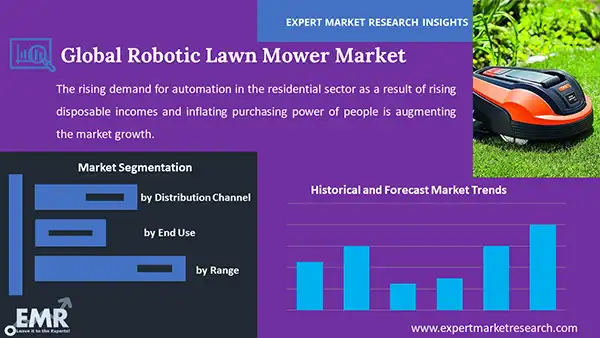
The EMR’s report titled “Global Robotic Lawn Mower Market Report and Forecast 2026-2035” offers a detailed analysis of the market based on the following segments:
Market Breakup by Range
Key Insight: Low range models serve small private lawns and first-time users seeking affordable maintenance equipment. Medium range units dominate because they balance coverage, battery life, and usability. High range systems gain popularity as commercial landscaping expands and fleet adoption increases. Manufacturers align design, pricing, and service plans by range. Each category supports different upgrade cycles and software needs. This structure shows robotic lawn mowers shifting from simple household tools toward professional equipment used in managed environments. Demand in the robotic lawn mower market varies by property size, labor availability, and expectations around automation reliability over time.
Market Breakup by End Use
Key Insight: Residential use anchors majority of the demand volume through homeowner adoption and familiarity with automation. Commercial use largely drives the robotic lawn mower market value as landscaping firms seek efficiency and labor stability. Manufacturers now design platforms that scale from homes to campuses. Service models, warranties, and software access differ sharply by end user. While residential buyers value simplicity and quiet operation, commercial buyers prioritize uptime and fleet control.
Market Breakup by Distribution Channel
Key Insight: Retail channels hold the dominant market share as installation, training, and maintenance remain important. Dealers provide demonstrations and aftersales reassurance. Online channels are gaining major momentum within the robotic lawn mower market dynamics as product familiarity improves and setup becomes simpler. Manufacturers pursue hybrid distribution to expand their reach while preserving service quality. Channel strategy affects pricing control and customer data access as retail supports premium positioning and online channels support speed and scale.
Market Breakup by Region
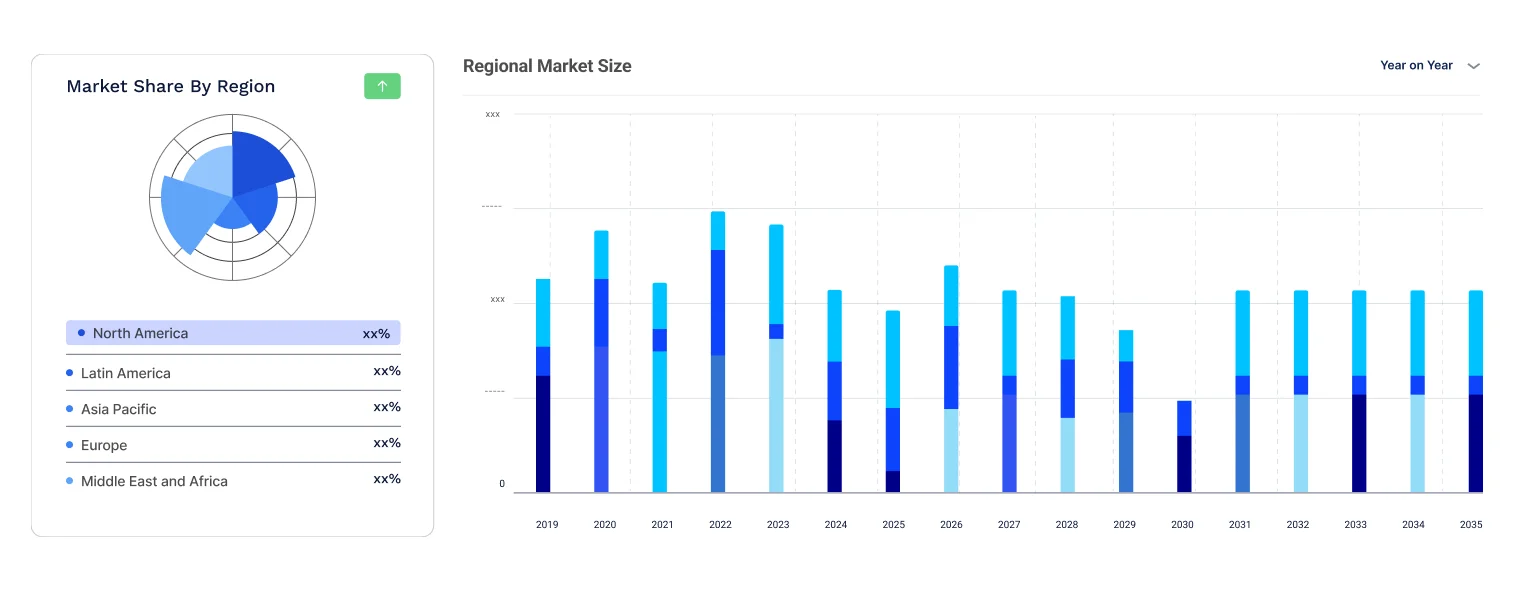
Key Insight: Regional adoption varies based on infrastructure, regulation, and buyer maturity. Europe leads due to policy alignment and early automation culture. Asia Pacific gains major market shares through urbanization and smart technology uptake. North America shows steady adoption tied to professional landscaping demand. Latin America advances gradually as cost barriers ease. The Middle East and Africa robotic lawn mower market growth is driven by infrastructure projects and commercial estates. Manufacturers tailor offerings by region, balancing price, durability, and service support.
Read more about this report - REQUEST FREE SAMPLE COPY IN PDF
Medium range robotic mowers anchor majority of the demand in the market due to balanced capability
Medium range robotic lawn mowers dominate the market because they suit most residential estates and light commercial properties. Manufacturers design most of their product lines in this range to balance cutting capacity, battery life, and price. Landscapers and housing societies favor these models since they manage multiple zones without complex setups. In May 2022, Toro announced the launch of a robotic mower that offers cutting-edge, easy to deploy technology and never-before-seen features for residential yard care category. Medium range units often support app control, scheduling, and basic obstacle detection, accelerating the overall robotic lawn mower market revenue.
High range robotic lawn mowers are gaining major popularity due to commercial landscaping demand. These models serve large campuses, sports fields, and municipal parks. Manufacturers are targeting fleet buyers with wire-free navigation and remote management tools. High range units reduce labor dependency and improve service consistency. Commercial operators accept higher upfront costs for lower long-term maintenance.
Residential use sustains its dominance in the market due to early adoption and familiarity
Residential use largely contributes to the overall robotic lawn mower demand because homeowners value convenience and time saving. Early adoption started in private gardens where noise and emissions mattered. Residential buyers prefer predictable operation and low maintenance, and manufacturers build trust through simple interfaces and safety features. In January 2025, Segway presented its latest flagship, the Segway Navimow X3 Series, at CES 2025 in Las Vegas. The new premium model robot mowers are designed to maintain up to 2.5 acre lawns. Residential dominance in the market reflects consumer comfort with automation rather than scale.
Commercial use is quickly expanding its robotic lawn mower market revenue shares as landscaping firms automate operations. Businesses managing multiple sites adopt robotic mowers to stabilize labor costs. Manufacturers are tailoring machines for durability and fleet control, while commercial buyers demand uptime and remote diagnostics. Contracts often include maintenance services. Municipalities and facility managers drive volume growth. This segment favors vendors that offer software strength in their equipment.
By distribution channel, the retail category accounts for a substantial share of the market due to dealer trust and service support
Retail channels dominate the market since buyers rely on physical dealers for installation and servicing. Robotic lawn mowers require setup guidance and aftersales support. Dealers build trust and offer demonstrations, and manufacturers depend on retail networks for training and warranty handling. This channel supports premium positioning and upselling. Dominance of this distribution mode reflects the complexity of the product rather than price sensitivity.
Online sales are experiencing rapid growth in the robotic lawn mower market as buyers gain confidence in digital platforms. OEM websites and marketplaces simplify ordering and support, and online channels suit repeat buyers and tech-savvy users. Manufacturers also use digital platforms to capture real-world performance data, supporting smarter upgrades and stronger margins. Importantly, online expansion complements retail networks rather than replacing them, allowing brands to reach new audiences.

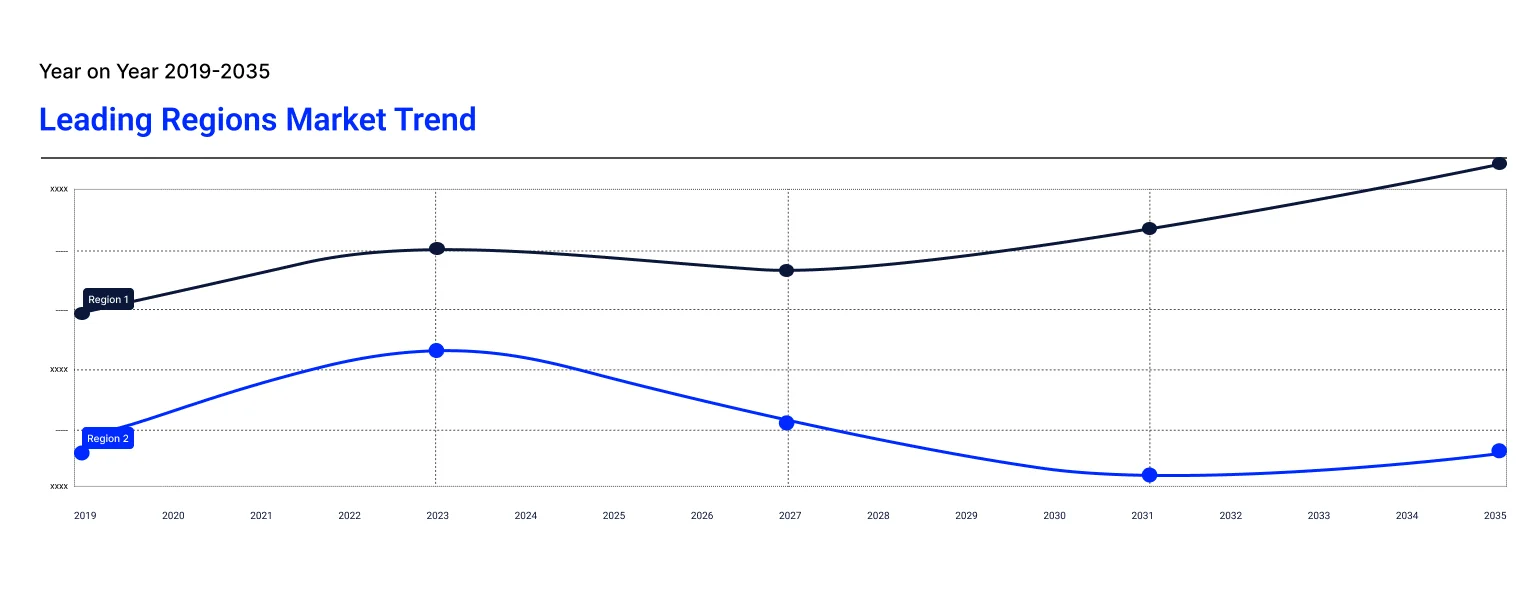
Europe largely drives the robotic lawn mower adoption due to regulation support
Europe remains the dominant region for robotic lawn mowers because automation aligns well with regulatory, environmental, and labor conditions. Buyers across residential and municipal segments prioritize low-noise, electric equipment that complies with strict emissions and safety norms. Manufacturers benefit from established dealer networks and high consumer awareness. Landscaping contractors increasingly integrate robotic mowers into long-term maintenance contracts, especially for parks and sports facilities. Product standards and certifications in Europe also encourage early adoption of advanced navigation and safety features.
The robotic lawn mower market in Asia Pacific is driven by urban expansion and rising acceptance of automation. Dense residential developments and commercial campuses are adopting robotic mowers to manage green spaces efficiently. Manufacturers target this region with scalable models and software-led features. Local distributors help adapt products to varied terrain and climate conditions. Governments promoting smart cities and automation indirectly support adoption. Commercial landscaping services are expanding rapidly, creating demand for fleet-capable systems.
Competition in the global market is centered around autonomy depth, software control, and commercial scalability rather than basic cutting performance. Leading robotic lawn mower companies are investing in wire-free navigation, vision-based obstacle detection, and fleet management platforms to serve municipalities and professional landscapers. Opportunities are expanding in large-area mowing, where labor shortages and service outsourcing favor autonomous fleets.
Robotic lawn mower market players are also focusing on safety certifications and compliance to access public-sector contracts. Another key area is recurring revenue through software subscriptions, remote diagnostics, and predictive maintenance. As buyers demand lower lifetime costs, manufacturers that integrate hardware with reliable software gain an edge. The competitive landscape now favors firms that can deliver dependable automation at scale, supported by strong service networks and upgrade paths.
Established in 1910 and headquartered in Tokyo, Japan, Hitachi leverages its expertise in industrial automation and robotics to support autonomous outdoor equipment development. The company focuses on sensor integration, control systems, and reliability engineering. Hitachi’s approach targets professional and municipal applications where durability, safety, and system stability matter.
Founded in 1689 and headquartered in Stockholm, Sweden, Husqvarna is a pioneer in robotic lawn mowers. The company leads with wire-free EPOS navigation and large-area commercial systems. Husqvarna caters to residential, commercial, and municipal buyers through tiered product lines. Its strategy emphasizes software-driven fleet control, long service life, and strong dealer networks, making it a preferred supplier for professional landscaping contracts globally.
Established in 1958 and headquartered in Seoul, South Korea, LG Electronics approaches robotic lawn mowers through smart home and AI integration. The company focuses on user-friendly automation, connectivity, and design-driven products. LG targets premium residential users seeking seamless app control and quiet operation. Its competitive advantage lies in consumer electronics expertise, allowing integration with broader smart home ecosystems and advanced AI-based navigation features.
Founded in 1886 and headquartered in Gerlingen, Germany, Robert Bosch GmbH applies its engineering depth to robotic lawn mowers through precision sensors and safety systems. Bosch focuses on reliability, compliance, and component-level innovation. Its products appeal to quality-conscious residential and professional users.
*Please note that this is only a partial list; the complete list of key players is available in the full report. Additionally, the list of key players can be customized to better suit your needs.*
Other key players in the market include BOSSMOW, among others.
Unlock the latest insights with our robotic lawn mower market trends 2026 report. Discover regional growth patterns, consumer preferences, and key industry players. Stay ahead of competition with trusted data and expert analysis. Download your free sample report today and drive informed decisions in the market.


Upto 15% Off
USD
$2499 $2249
$3999 $3599
$4999 $4249
$5999 $5099


*While we strive to always give you current and accurate information, the numbers depicted on the website are indicative and may differ from the actual numbers in the main report. At Expert Market Research, we aim to bring you the latest insights and trends in the market. Using our analyses and forecasts, stakeholders can understand the market dynamics, navigate challenges, and capitalize on opportunities to make data-driven strategic decisions.*
In 2025, the market reached an approximate value of USD 1305.91 Million.
The market is projected to grow at a CAGR of 13.10% between 2026 and 2035.
The market is estimated to witness a healthy growth in the forecast period of 2026-2035 to reach about USD 4472.39 Million by 2035.
Stakeholders are investing in autonomy software, expanding commercial partnerships, strengthening dealer service networks, improving safety certifications, and bundling hardware with digital services to secure long-term contracts and recurring revenues.
Technological advancements and innovations and the surging integration of innovative technologies in robotic lawn mowers are the key trends expected to aid the market growth.
The major regional markets for robotic lawn mowers are North America, Latin America, the Asia Pacific, Europe, and the Middle East and Africa.
The different segments based on ranges of robotic lawn mower considered in the market report include low range, medium range, and high range.
The significant end uses of robotic lawn mowers are residential use and commercial use.
The major distribution channels of robotic lawn mowers are retail and online.
The key players in the market include Hitachi, Ltd., Husqvarna Group, LG Electronics, Robert Bosch GmbH, and BOSSMOW, among others.
High development costs, complex safety regulations, variable terrain conditions, battery performance limits, and the need for reliable software updates challenge manufacturers as they scale robotic lawn mower deployments across diverse markets.
Explore our key highlights of the report and gain a concise overview of key findings, trends, and actionable insights that will empower your strategic decisions.
| REPORT FEATURES | DETAILS |
| Base Year | 2025 |
| Historical Period | 2019-2025 |
| Forecast Period | 2026-2035 |
| Scope of the Report |
Historical and Forecast Trends, Industry Drivers and Constraints, Historical and Forecast Market Analysis by Segment:
|
| Breakup by Range |
|
| Breakup by End Use |
|
| Breakup by Distribution Channel |
|
| Breakup by Region |
|
| Market Dynamics |
|
| Competitive Landscape |
|
| Companies Covered |
|
| Report Price and Purchase Option | Explore our purchase options that are best suited to your resources and industry needs. |
| Delivery Format | Delivered as an attached PDF and Excel through email, with an option of receiving an editable PPT, according to the purchase option. |
Datasheet
One User
USD 2,499
USD 2,249
tax inclusive*
Single User License
One User
USD 3,999
USD 3,599
tax inclusive*
Five User License
Five User
USD 4,999
USD 4,249
tax inclusive*
Corporate License
Unlimited Users
USD 5,999
USD 5,099
tax inclusive*
*Please note that the prices mentioned below are starting prices for each bundle type. Kindly contact our team for further details.*
Flash Bundle
Small Business Bundle
Growth Bundle
Enterprise Bundle
*Please note that the prices mentioned below are starting prices for each bundle type. Kindly contact our team for further details.*
Flash Bundle
Number of Reports: 3
20%
tax inclusive*
Small Business Bundle
Number of Reports: 5
25%
tax inclusive*
Growth Bundle
Number of Reports: 8
30%
tax inclusive*
Enterprise Bundle
Number of Reports: 10
35%
tax inclusive*
How To Order

Select License Type
Choose the right license for your needs and access rights.

Click on ‘Buy Now’
Add the report to your cart with one click and proceed to register.

Select Mode of Payment
Choose a payment option for a secure checkout. You will be redirected accordingly.
Strategic Solutions for Informed Decision-Making
Gain insights to stay ahead and seize opportunities.

Get insights & trends for a competitive edge.

Track prices with detailed trend reports.

Analyse trade data for supply chain insights.

Leverage cost reports for smart savings

Enhance supply chain with partnerships.

Connect For More Information
Our expert team of analysts will offer full support and resolve any queries regarding the report, before and after the purchase.
Our expert team of analysts will offer full support and resolve any queries regarding the report, before and after the purchase.
We employ meticulous research methods, blending advanced analytics and expert insights to deliver accurate, actionable industry intelligence, staying ahead of competitors.
Our skilled analysts offer unparalleled competitive advantage with detailed insights on current and emerging markets, ensuring your strategic edge.
We offer an in-depth yet simplified presentation of industry insights and analysis to meet your specific requirements effectively.




