

Consumer Insights
Uncover trends and behaviors shaping consumer choices today
Procurement Insights
Optimize your sourcing strategy with key market data
Industry Stats
Stay ahead with the latest trends and market analysis.

The global robotic welding market size was valued at USD 4861.19 Million in 2025. The industry is expected to grow at a CAGR of 8.00% during the forecast period of 2026-2035 to reach a value of USD 10494.94 Million by 2035. Shortage of skilled welders, along with increasing labor costs, have made industrial giants consider robotic welding systems. This manufacturing trend has gained momentum due to further innovations in collaborative robots that can be easily deployed and in simplified programming interfaces.
Workforce gaps have become a common problem for manufacturers of different sectors, from fabrication to the automotive industry. This has prompted robotics suppliers to provide solutions that lessen the dependence on specialised operators, which is supporting the development of the global robotic welding market. As a result, Path Robotics obtained USD 100 million in venture capital funding in October 2024 to broaden its AI-enabled autonomous welding cells and to speed up the creation of the systems that can function with minimal human intervention, thus providing a direct solution to the labour shortage problem.
On the other hand, existing robotics OEMs operating in the robotic welding market landscape are investing in the development of user-friendly technologies. For example, at FABTECH 2023 in September 2023, ABB presented the use of collaborative robotic welding technologies, among which were cobots created for easy programming and tasks involving high mix/low volume that are appealing to small and medium job shops. This advancement, by integrating autonomous welding features with an intuitive interface, makes it possible for manufacturers to automate the repetitive welding tasks.
Base Year
Historical Period
Forecast Period
The shortage of skilled welders, in countries, such as the UK, Germany, the USA, etc. is compelling automotive and electronics manufacturers to invest in robotic welding.
Fanuc Corporation, Yaskawa Electric Corporation, and Kuka AG are a few of the major companies in the market.
The global robotic welding market is driven by the increasing adoption of Industry 4.0.
Compound Annual Growth Rate
8%
Value in USD Million
2026-2035
*this image is indicative*
The robotic welding market is picking up momentum owing to its increasing uptake across the automotive industry to meet the stringent quality and volume requirements of e-mobility, that manual welding cannot deliver. For instance, in July 2023 KUKA obtained a follow-up order for more friction-stir welding robot installations to complete the EV battery pack production lines. This exemplifies that the growth of e-mobility production is the major factor boosting the demand for robotic welding technology.
New AI-driven vision systems and autonomy innovations in the robotic welding market are making it possible for robots to be operational in complicated settings, which could only be done manually by humans. One prominent case is ABB’s strategic move to LandingAI in September 2023 where generative AI vision capabilities were integrated with robotics to facilitate the rollout and reduce the programming complexity. By using AI vision and no-code tools, welding robots can easily change to different metal part shapes and guarantee quality checks on the production line thus enabling them to penetrate less-traditional lines of high-volume production further.
Continuous upgrades in robot mechanics, controllers, and welding packages help in increasing the cycle speed, accuracy, and user flexibility of replacing the conventional cells with advanced robots, which is contributing to the robotic welding market growth. As an example, ABB announced in June 2024 the launch of its next-generation OmniCore™ control platform to give better motion performance and energy efficiency, thereby upscaling the performance of robotic automation in demanding welding applications. Such innovations are offering higher throughput and quality that are imperative for any competitive manufacturing environment.
Leading robotic welding companies are on the move to strengthen their position in the robotic welding market landscape by acquiring integrators and the tech specialists to become one-stop welding automation solution providers. A good example is Daihen's acquisition of Rolan Robotics in April 2024, which not only consolidates the company's integration presence in Europe but also broadens the offerings of turnkey welding systems. Acting as a one-stop solution provider by offering the best-in-class robotics technology combined with local integration services, vendors can install full welding cells in customer factories with less implementation risk, which further results in the growing demand growing.
The rising number of robots worldwide used in the manufacturing sector is rapidly becoming a tipping point for increased productivity and better-quality output that robotics can bring. This, in turn makes robotic welding an increasingly attractive option. The growing robot density results in lower component unit costs, and quicker automation can be implemented in other facilities. To cite an instance, the International Federation of Robotics in its World Robotics 2024 Report stated that the number of industrial robots in use globally has hit the record of 4,281,585, with the annual installations of robots exceeding 500,000 units for the third consecutive year. The broad adoption trend of robotics concurrently leads to the rapid expansion of the robotic welding market.
Read more about this report - REQUEST FREE SAMPLE COPY IN PDF
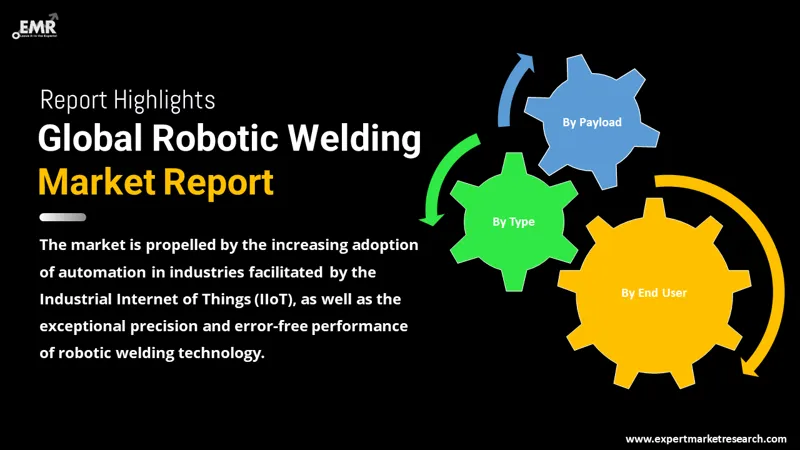
The EMR’s report titled “Global Robotic Welding Market Report and Forecast 2026-2035” offers a detailed analysis of the market based on the following segments:
Market Breakup By Type
Key Insights: The types of robots that the robotic welding market feature are spot-welding robots, arc welding robots, and other robotic welding solutions, each powered by separate industrial drivers. Spot welding robots continue to be the main instruments in mass production of vehicles and home appliances, an example of which is the demonstration by Panasonic of their technology-leading welding machine and associated solutions in May 2025 to upgrade industrial fabrication in India. Arc welding robots are still infiltrating heavy fabrication and complex structural sectors, while the ‘others’ category, comprising TIG, laser and collaborative welding systems, is growing steadily due to digitization-driven SMEs and adoption of flexible automation.
Market Breakup By Payload
Key Insights: The robotic welding market by payload is broken down into less than 50 kg, 50–150 kg, and more than 150 kg, which relates to different industrial automation requirements. Robots that weigh less than 50 kg are used for precision work and in SMEs, those weighing 50–150 kg are mainly found in the sectors of automotive and general fabrication, whereas robots of over 150 kg are used in heavy manufacturing. During Welding & Cutting 2025, Yaskawa unveiled its MOTOMAN SP series capable of handling payloads of up to 250 kg. These are the inventions that stir the enthusiasm of the users of welding applications of light, medium, and heavy-duty nature to take up the technology.
Market Breakup By End User
Key Insights: The robotic welding market scope comprises several end-users, such as automotive and transportation, electrical and electronics, metals and machinery, aerospace and defence, and other end-users that propel adoption through their unique demands. Automakers like Toyota and Volkswagen incorporate robotic welding systems manufactured by FANUC and KUKA for body and chassis assembly at a high pace. On the other hand, companies in the electrical and electronics industry, such as Samsung and Foxconn choose small robots from Universal Robots. Metals and machinery firms like Caterpillar are into heavy-duty welding, while, on the contrary, aerospace companies like Boeing are more concerned with precision, traceability, and quality compliance.
Market Breakup By Region
Key Insights: There are various regions such as North America, Europe, Asia Pacific, Latin America, and the Middle East that dominate the robotic welding market growth because of their regional industrial strengths. North America is mainly powered by the likes of FANUC America, Lincoln Electric, and Rockwell Automation, whereas Europe is the stronghold of KUKA, ABB, and Comau. The Asia Pacific, in terms of volume, is the leader with prominent contributions from Yaskawa, Panasonic, Kawasaki Robotics, and Siasun. On the other hand, Latin America is experiencing an increasing presence of ABB and FANUC, while the Middle East and Africa are depending on international suppliers like KUKA and ABB to carry out large industrial and infrastructure projects.
By type, spot welding robots gain significant traction
The spot-welding robots are in high demand in the robotic welding market mainly supported by constantly evolving product innovations as well as strong demands from car assembly lines where rapid work and accuracy are very important. Various producers are changing spot-welding cells into modular and energy-efficient ones in order to lessen the downtimes and increase the flexibility of their plants. To cite an instance, at Automatica 2025, Comau presented its newly designed N-WG a high-performance welding gun that was made for flexible, fast spot welding that can be easily done with any robot brand. Thus, the car industry and metal production departments can be more agile and efficient. This introduction demonstrates the expansion of the ability and the popularity of big-scale production due to the advancements in tooling and welding hardware.
The demand for arc welding robots is growing in the robotic welding market as more manufacturers require high precision and low energy consumption in their complex applications. Citing an instance, Novarc Technologies announced the launch of NovEye Autonomy Gen 2 in September 2024. The product is equipped with AI and machine-learning-based image processing, designed for fully automated welding of pipes with minimal human intervention and consequently quality being improved. By means of such improvements, arc welding robots can undertake variable geometries and demanding industrial tasks. Hence, it is chosen more in shipbuilding, heavy fabrication, and energy infrastructure, as well as contributing to overall market growth.
By payload, less than 50 kg payload shows notable uptake
Robotic welding market is witnessing noticeable demand for equipment that has a payload of less than 50 kg, owing to its increasing adoption among SMEs and high-mix, low-volume manufacturers who need flexible automation but have limited capital and floor space. Collaborative and compact articulated robots in this category are capable of precision welding and cell auxiliary tasks. For instance, FANUC presented its extended version of CRX 25iA and CR 35iB collaborative robots at Automate 2023, where the payload of up to 50 kg is suitable for welding and handling operations that require flexibility. This expansion is a step forward in the exposure of automation to smaller fabricators.
Robotic welding systems with a payload of more than 150 kg record consistent demand in the robotic welding market owing to their increasing use in heavy fabrication, infrastructure, and large assembly operations that involve the use of thick materials and large fixtures where manual welding is not only inefficient but also unsafe. High payload robots can facilitate material handling that is fully integrated and also long cycle durations with quality that is consistent. As an instance, the company KUKA came up with its KR IONTEC ultra robot that can carry out welding and handling tasks and can be used where the payload is up to 120 kg. Thus, it is a clear indication of the demand for welding automation that is robust and high in different sectors. Such platforms help to increase output in the steel fabrication and energy sectors.
By end-users, aerospace and defence sector records robust growth
The aerospace and defence sector accounts for a substantial share of the global robotic welding market, attributed to the rising use of robotic welding for its great precision, accuracy, and safety regulation compliance in the production of the important structures. To get rid of the inconsistencies and to enhance the traceability of complex assemblies, the manufacturers are making massive investments in smart welding automation. One such example is the signing of an MOU by Techman Robot, CSBC, and AMET in April 2025 to jointly develop smart welding robots for advanced structural fabrication, including aerospace-grade applications. These kinds of collaborations demonstrate the ways in which the defense and aerospace sectors are collaborating with robotics to achieve better quality, higher productivity, and more resistant manufacturing processes.
The electrical and electronics category end-use category contribute significantly to the robotic welding market revenue, as robotic welding emerges to be an insightful solution for accurately joining the parts in the production of consumer and industrial products, especially where flexibility and space-saving automation are of great importance. The major robotics suppliers are increasing their potential to serve the sector with their flexible systems. For instance, at FABTECH 2024, Universal Robots extended its collaborative welding solutions, presenting state-of-the-art cobot welding and multi-axis coordinated motion technologies to improve the precision of small assembly tasks. With such progress, it becomes possible for the producers to embed welding automation in the production of the electronics and appliance industries.
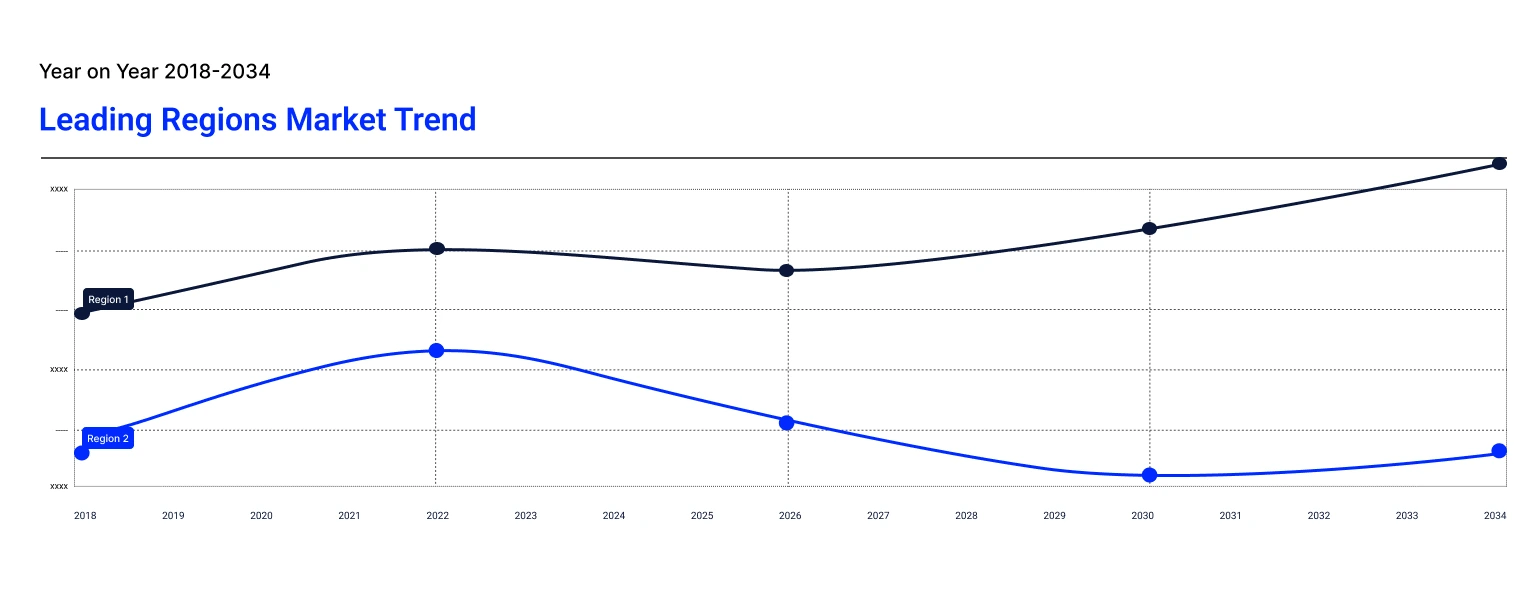
By Region, Asia Pacific leads the market growth
Nevertheless, the Asia Pacific region remains the largest promoter of the growing demand in the robotic welding market, owing to the investments in the automation infrastructure that are necessary to support the automotive, electronics, and general fabrication sectors. To cover the local demand, suppliers are expanding local production and product portfolios. For example, ABB strengthened its leadership in China's robotics in July 2025 by presenting the three new robot families made in its Shanghai mega factory, thus meeting the high-end manufacturing needs of sectors like electronics and consumer industries. In this way, not only does it power local automation supply chains, but it also accelerates welding robot deployment across Asia.
Europe continues to be a lucrative destination for the robotic welding market growth, backed by the local manufacturing and research and development capabilities investments to serve automotive, machinery, and industrial customers. Companies are enhancing the regional production ecosystems by the expansion to better meet the demand for advanced automation. For example, ABB in September 2023 announced its USD 280 million investment to enlarge its Robotics European Campus in Västerås, Sweden, by the integration of manufacturing, research and development, and training to pioneer next-generation robotics technologies. Such investments empower Europe's capability to provide welding robotics solutions tailored to be delivered close to the key industrial customers.
Leading global robotic welding market players are energizing product innovation and strategic expansion to capture the rising demand for automation. These firms such as ABB and FANUC are refining robot accuracy, adaptability, and software integration while extending their production and research and development facilities. For example, ABB's upgrade of its European Robotics Campus and new robot families made in China are, in fact, two different ways of the same company reflecting initiatives to support the industry with local production, shorter delivery times, and advanced welding automation solutions.
The companies operating in the robotic welding market are embracing partnering strategically by forming ecosystem alliances to accelerate the welding solutions implementation and provide turnkey welding solutions. On the side, KUKA and Universal Robots equipment suppliers synergize with system integrators, tooling specialists, and end-users to electrify the automation of specific applications, e.g., automotive or the electronics industry. Such collaborations offer the opportunities of seamless integration, fast execution, and improved service support, thereby enhancing competitive positioning and increasing penetration in small, medium, and large manufacturing segments.
Fanuc Corporation is a Japan-based company that was established in 1956. The company is known for its wide variety of welding and cutting products that are sold under the brand names of FANUC Robot ARC Mate, FANUC Robot M, and FANUC Robot R.
ABB Ltd., a company located in Switzerland and established in 1988, is the provider of different robot models. For example, the powerful IRB 7600 with a massive 630 Kg handling capacity is the right choice for heavy-duty operations.
Yaskawa Electric Corporation is a Japan-based company founded in 1915. It provides AR-Series welding robot models, HC10 series welding cobots, and HC20 series welding cobot.
KUKA AG is a German company that was established in 1898. To meet customer needs with the most effective ARC welding solutions, the company offers KUKA arc welding robots. These robots have been engineered for payloads varying from 6 to 22 kg and can achieve a maximum reach of 3,100 mm.
*Please note that this is only a partial list; the complete list of key players is available in the full report. Additionally, the list of key players can be customized to better suit your needs.*
Other players in the market include EVS TECH Co., Ltd., Estun Automation Co., Ltd., NACHI-FUJIKOSHI Corp., and Panasonic Corporation, among others.
Explore the latest trends shaping the Global Robotic Welding Market 2026-2035 with our in-depth report. Gain strategic insights, future forecasts, and key market developments that can help you stay competitive. Download a free sample report or contact our team for customized consultation on global robotic welding market trends 2026.


Upto 15% Off
USD
$2499 $2249
$3999 $3599
$4999 $4249
$5999 $5099


*While we strive to always give you current and accurate information, the numbers depicted on the website are indicative and may differ from the actual numbers in the main report. At Expert Market Research, we aim to bring you the latest insights and trends in the market. Using our analyses and forecasts, stakeholders can understand the market dynamics, navigate challenges, and capitalize on opportunities to make data-driven strategic decisions.*
Get in touch with us for a customized solution tailored to your unique requirements and save upto 35%!
In 2025, the global robotic welding market reached an approximate value of USD 4861.19 Million.
The market is projected to grow at a CAGR of 8.00% between 2026 and 2035.
The market is estimated to witness a healthy growth in the forecast period of 2026-2035 to reach USD 10494.94 Million by 2035.
Key strategies driving the market include technological innovation, strategic partnerships, geographic expansion, product diversification, and R&D investments to enhance efficiency and flexibility.
The key trends aiding the market include the integration of advanced technologies in robotic welding systems, increasing adoption of Industry 4.0, and improvements in the energy efficiency of welding robots.
The different types of welding robots include spot welding robots and arc welding robots, among others.
The major applications of robotic welding include automotive and transportation, electrical and electronics, metals and machinery, and aerospace and defence, among others.
The key players in the market include Fanuc Corporation, ABB Ltd., Yaskawa Electric Corporation, KUKA AG, EVS TECH Co., Ltd., Estun Automation Co., Ltd., NACHI-FUJIKOSHI Corp., and Panasonic Corporation.
Major challenges include high capital costs, integration complexities, skilled labor shortages, uneven regional adoption, and competition from manual welding alternatives.
Explore our key highlights of the report and gain a concise overview of key findings, trends, and actionable insights that will empower your strategic decisions.
| REPORT FEATURES | DETAILS |
| Base Year | 2025 |
| Historical Period | 2019-2025 |
| Forecast Period | 2026-2035 |
| Scope of the Report |
Historical and Forecast Trends, Industry Drivers and Constraints, Historical and Forecast Market Analysis by Segment:
|
| Breakup by Type |
|
| Breakup by Payload |
|
| Breakup by End User |
|
| Breakup by Region |
|
| Market Dynamics |
|
| Competitive Landscape |
|
| Companies Covered |
|
Datasheet
One User
USD 2,499
USD 2,249
tax inclusive*
Single User License
One User
USD 3,999
USD 3,599
tax inclusive*
Five User License
Five User
USD 4,999
USD 4,249
tax inclusive*
Corporate License
Unlimited Users
USD 5,999
USD 5,099
tax inclusive*
*Please note that the prices mentioned below are starting prices for each bundle type. Kindly contact our team for further details.*
Flash Bundle
Small Business Bundle
Growth Bundle
Enterprise Bundle
*Please note that the prices mentioned below are starting prices for each bundle type. Kindly contact our team for further details.*
Flash Bundle
Number of Reports: 3
20%
tax inclusive*
Small Business Bundle
Number of Reports: 5
25%
tax inclusive*
Growth Bundle
Number of Reports: 8
30%
tax inclusive*
Enterprise Bundle
Number of Reports: 10
35%
tax inclusive*
How To Order

Select License Type
Choose the right license for your needs and access rights.

Click on ‘Buy Now’
Add the report to your cart with one click and proceed to register.

Select Mode of Payment
Choose a payment option for a secure checkout. You will be redirected accordingly.
Gain insights to stay ahead and seize opportunities.

Get insights & trends for a competitive edge.

Track prices with detailed trend reports.

Analyse trade data for supply chain insights.

Leverage cost reports for smart savings

Enhance supply chain with partnerships.

Connect For More Information
Our expert team of analysts will offer full support and resolve any queries regarding the report, before and after the purchase.
Our expert team of analysts will offer full support and resolve any queries regarding the report, before and after the purchase.
We employ meticulous research methods, blending advanced analytics and expert insights to deliver accurate, actionable industry intelligence, staying ahead of competitors.
Our skilled analysts offer unparalleled competitive advantage with detailed insights on current and emerging markets, ensuring your strategic edge.
We offer an in-depth yet simplified presentation of industry insights and analysis to meet your specific requirements effectively.





Share