

Consumer Insights
Uncover trends and behaviors shaping consumer choices today
Procurement Insights
Optimize your sourcing strategy with key market data
Industry Stats
Stay ahead with the latest trends and market analysis.
The global rubber anti-tack agents market attained a value of USD 497.02 Million in 2025 and is projected to expand at a CAGR of 5.50% through 2035. The market is further expected to achieve USD 848.98 Million by 2035. As automation becomes widespread in tire and industrial rubber manufacturing plants, the use of low-residue anti-tack products that increase extrusion performance and reduce surface contamination are being rapidly encouraged.
Bridgestone Americas began phasing in a fatty-acid-derived bio-based anti-tack coating at its Aiken County passenger tyre plant in South Carolina, replacing a portion of conventional zinc stearate dispersions. The shift supports Bridgestone's E8 commitment to reach 50% recycled or renewable inputs by 2030 and follows mounting EU REACH scrutiny of legacy dusting agents, as reported by Tire Business.
India's Bureau of Indian Standards extended mandatory quality certification to several rubber processing chemicals, including anti-tack and release agents, effective from the second quarter under the Quality Control Order regime. The move, flagged in a Ministry of Commerce notification, is expected to consolidate domestic supply around audited producers and reduce reliance on uncertified Chinese shipments, The Economic Times reported.
The rubber anti-tack agents market is growing rapidly as tire producers and rubber processors are gradually increasing their emphasis on production efficiency, clean product lines, and defect prevention in mass production environments. For example, in January 2026, Arkema tripled transparent polyamide production capacity through Singapore plant expansion, strengthening sustainable specialty materials supply across Asian industries. This was in response to an increase in the manufacture of tires in Southeast Asian countries like Thailand and Indonesia, which are exporting automotive components.
The rubber anti-tack agents market is also influenced by the need for stringent environmental regulations and technological innovation in tire and conveyor belt manufacturing plants. For example, in April 2025, Yokohama Rubber launched FLAME GUARD ECO conveyor belts, improving energy efficiency, durability, and flame-retardant industrial material performance. Producers are now opting for alternatives such as water-based, silicone-free, and biodegradable anti-tack products to limit contamination and reduce costs associated with water purification. Manufacturers are increasingly prioritizing compatibility with dipping equipment and rapid extrusion procedures in high-end radial tire manufacture. Large-scale rubber processors are also implementing digital process techniques to eliminate waste in the mixing and storage process phases.
The growing exportation of automotive tires and increased sophistication in industrial rubber processing generate greater demand for advanced technologies, thereby reshaping the rubber anti-tack agents market dynamics. Companies are investing in biodegradable dispersants, dust-reducing coating solutions, and non-silicone alternatives that enhance curing efficiency and overall production cleanliness. At the same time, more stringent environmental controls in the workplace are expected to promote the substitution of minerals in the production process with alternative chemical ingredients. Rubber processing centers in Asia also experience growth in automated dipping systems and extrusion machines, providing potential market entry points for specialized anti-tack additive manufacturers.
Compound Annual Growth Rate
5.5%
Value in USD Million
2026-2035
Read more about this report - REQUEST FREE SAMPLE COPY IN PDF
Hyosung TNC launched a large-scale bio-BDO facility in Vietnam supporting sustainable applications of rubber chemicals and specialty materials production. Such developments provide rubber anti-tack agents market opportunities for businesses to explore the possibility of producing bio-based anti-tack compounds that will satisfy sustainability requirements.
LANXESS unveiled advanced rubber additives and processing techniques that increase the efficiency and performance of rubber products. This leads to more effort on the part of the manufacturers to produce effective anti-tack agents.
Bridgestone Corporation emphasized cutting-edge sustainable tire technologies that support circular material use, improved durability, and reduced environmental impact manufacturing processes. This advancement enables companies in the rubber anti-tack agents market to develop recyclable and environmentally friendly anti-tack agents for sustainable tires and rubber industries.
Toyoda Gosei enhanced its research in sustainable rubber compound materials by emphasizing their lightweight performance, improved durability, and environmental sustainability. These advancements demonstrate possibilities for chemical companies to produce sophisticated anti-tack agents for sustainable rubber compound materials.
The producers of rubber anti-tack agents are continuously coming up with innovations for better dispersion techniques aimed at automated environments, thereby accelerating the growth of the rubber anti-tack agents market. The use of water-based anti-tack dispersions that have controlled particle distribution is aiding tire and industrial rubber companies to avoid problems related to sticking when storing, extruding, and transporting. Companies are focusing on achieving better bath stability and sedimentation control for unobstructed production cycles. The producers of rubber are also considering formulations that minimize contamination within extrusion lines and molds. For example, LANXESS’ new rubber additive Vulkanox HS Scopeblue, launched in March 2025, supports tire manufacturers in producing more sustainable, longer-lasting tires and in achieving their sustainability goals.
Environmental concerns about emissions as well as wastewater treatment in industries are fueling the overall rubber anti-tack agents market penetration. Manufacturers are increasingly moving away from products that contain large amounts of talc and soapstone to environmentally sustainable options that reduce the amount of airborne dust. For example, Struktol introduced advanced rubber additives improving compound processability, viscosity control, extrusion efficiency, and sustainable high-performance rubber manufacturing operations, in January 2026. Environmental standards of European countries relating to discharges of chemicals in industrial settings are also impacting purchasing decisions by tire makers.
Increased capacity expansion of tire manufacturing plants results in significant opportunities in the rubber anti-tack agents market. There is an increase in radial tire manufacturing by automotive manufacturers due to increased EV manufacturing and exports in Asia Pacific. Tire manufacturing plants increasingly demand anti-tack products capable of working well in automated dipping machines, precision extrusion processes, and accelerated curing procedures. Government incentives for automotive exports in Thailand, Vietnam, and India are further fueling investments in rubber manufacturing industries. For example, in May 2026, The Yokohama Rubber Co., Ltd. announced plans to establish new mining and construction machinery tire plants in India and Mexico.
Manufacturers in the rubber industry are increasingly demanding anti-tack formulations that result in a high-quality output and minimize cleaning time. Powder-based products often lead to surface contamination, affecting the curing process and bonding strength of the final product. Specialty additive companies are developing ultrathin dispersions as well as silicone-free products designed specifically for industrial purposes, thereby redefining the rubber anti-tack agents market dynamics. Aligning with this trend, in April 2026, Trelleborg launched bio-based EPDM rubber grades utilizing waste oils, forestry residues, and sustainable circular material technologies.
The rubber anti-tack agents market observes an increasing trend towards regionalization of supply chains for rubber anti-tack agents as firms try to minimize procurement hazards and logistics problems. Specialty chemical firms are now forming alliances with national rubber compounders and tire makers to guarantee stable supply agreements. For instance, in February 2024, BASF strengthened sustainable chemical operations through expanded partnerships, climate initiatives, and advanced low-emission industrial material production strategies. Meanwhile, Southeast Asian governments are promoting national chemical production by the means of industrial incentives and export-oriented strategies.
Read more about this report - REQUEST FREE SAMPLE COPY IN PDF
The Expert Market Research's report titled “Global Rubber Anti-Tack Agents Market Report and Forecast 2026-2035” offers a detailed analysis of the market based on the following segments:
Market Breakup by Type
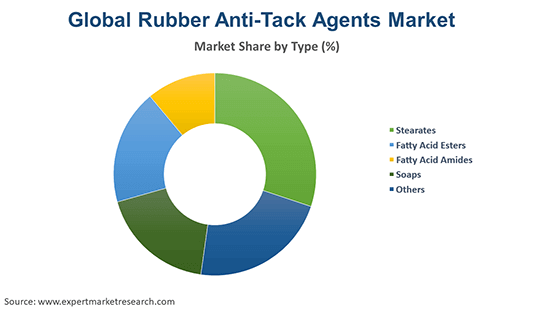
Key Insight: Stearates continue to witness considerable commercial preference within the rubber anti-tack agents market dynamics owing to their thermal stability, cleaner manufacturing process, and ability to be integrated into automated manufacturing systems. The use of fatty acid esters is growing rapidly owing to their eco-friendly nature and reduced contamination problems during the manufacture of rubber using high-speed machinery. Fatty acid amides continue to experience growing adoption in applications where improved lubrication and ease of release from surfaces are key considerations in the industrial manufacture of rubber products. Soap-derived anti-tack compounds continue to be relevant among companies looking for practical solutions for manufacturing processes involving generic rubber products. Demonstrating this shift, in December 2023, OMV partnered with Synthos supplying sustainable butadiene, supporting lower-emission synthetic rubber and circular chemical manufacturing initiatives.
Market Breakup by Region
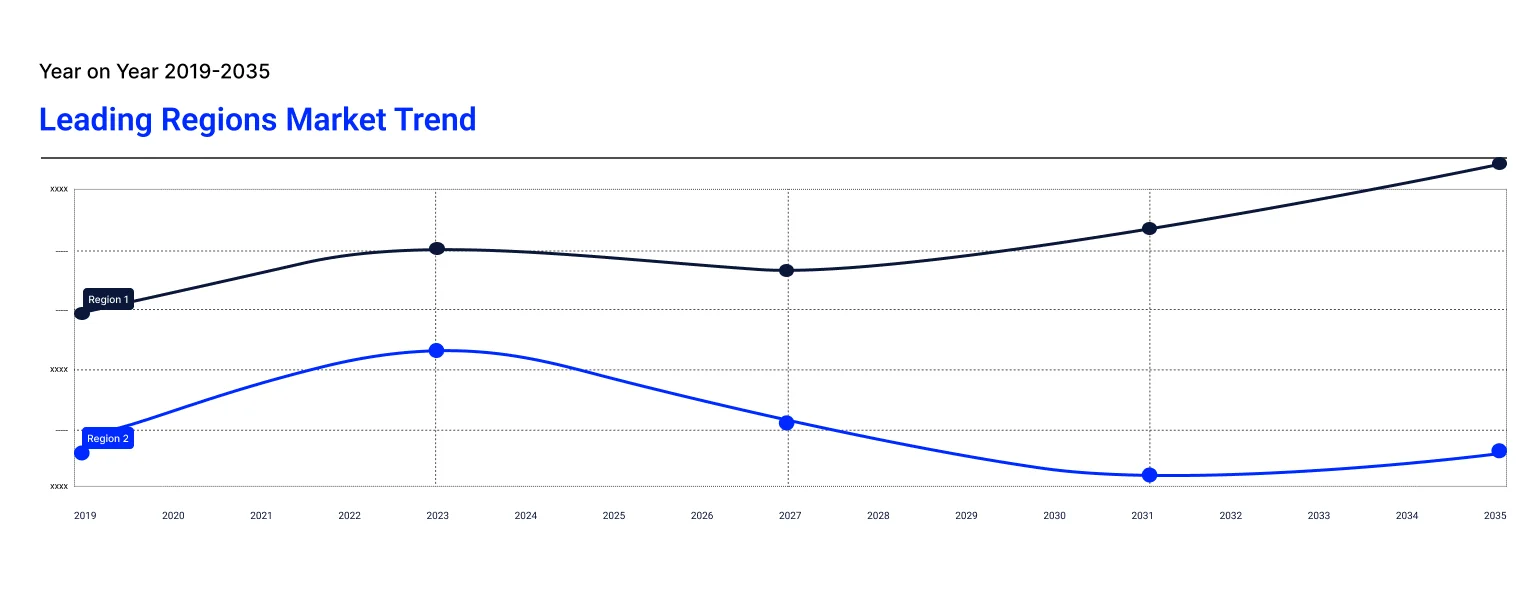
Key Insight: Asia Pacific leads the global rubber anti-tack agents market revenue growth owing to automotive manufacturing, rising industrial rubber production, and processing facilities. North America boasts the advantage of sophisticated automated processes and the increasing need for environmentally friendly additives. Europe is focusing on sustainability and biodegradability of process chemicals as per more stringent environmental laws. Latin America is gradually improving its demand situation by modernizing its industries as well as automotive parts manufacturing. The Middle East and Africa region is increasingly expanding its share in the market owing to investment in infrastructure, diversification in industries, and interests in local manufacture of specialty chemicals.
By type, stearates account for a substantial share of the market demand due to superior dispersion and processing stability
The dominance of stearates in the global rubber anti-tack agents market is expected to continue due to manufacturers' appreciation for the uniformity of their coating performance as well as compatibility with automated rubber processing systems. There is an increased demand among rubber producers for zinc and calcium stearates in the tire manufacturing industries as a means of preventing sticking during the process of storing and extruding the tires without compromising their curing quality. Stearate-formulated products are also preferred by producers for their reduced surface residue formation relative to powdered varieties. For example, in April 2024, ACS researchers developed sustainable bio-based anti-tack coatings improving rubber processing efficiency, recyclability, and environmentally responsible industrial manufacturing performance.
The anticipated growth in the adoption of fatty acid esters in industrial rubber processing is being led by the increasing preference by rubber processors towards environmental-friendly materials. Fatty acid esters are gaining considerable attention as a result of their ability to provide a cleaner processing environment as well as preventing the creation of dust in addition to wastewater pollution. Tire producers are adopting fatty acid esters in automated dipping processes due to their improved compatibility with synthetic rubber varieties like EPDM and nitrile rubbers.
Read more about this report - REQUEST FREE SAMPLE COPY IN PDF
Asia Pacific leads the market expansion through rising tire manufacturing and exports
Asia Pacific dominates the global rubber anti-tack agents market owing to active tire manufacturing, increased rubber processing activities, and high automotive exports. Countries such as China, India, Thailand, and Indonesia remain hot spots for investments in huge rubber processing plants fitted with automation-based extrusion and dipping equipment. The need for effective anti-tack agents capable of improving efficiencies while minimizing contamination risks in export-focused production is growing in Asia Pacific. Industrial development incentives from the government and readily available raw materials are driving chemical manufacturing growth in the region. In June 2025, Tripura became the second largest source of natural rubber after Kerala for the first time in 10 years in India.
Middle East and Africa represent one of the fastest-growing regional rubber anti-tack agents markets owing to diversification initiatives that are promoting investments in automobile assembling, construction materials, and industrial manufacturing processes. The demand for modernized production lines for improving product quality and consistency is leading to a rise in the adoption of anti-tack agents. Gulf nations are specifically expanding downstream petrochemicals and specialty chemicals to promote industrial development. Across Africa, the growth of infrastructure projects is generating increased demand for conveyors, industrial hoses, and seals.
The market is expected to experience increased competition, with industry players focusing on technologies that are more environmentally friendly, biodegradable, and specialized according to application. The use of aqueous formulations, silicon-free coatings, and products that minimize residues for easy automation during the rubber manufacturing process is becoming the new strategy for rubber anti-tack agents market players.
Partnerships with manufacturers of tires as well as other rubber processing industries are also becoming vital for establishing sustained supply relationships. In addition, manufacturers are setting up production plants in strategic regions to limit their logistical constraints while ensuring improved customer service. Rubber anti-tack agent companies are increasingly engaging in specialized applications that involve EPDM, nitrile, and butyl rubber compounds. There are also business possibilities arising from rubber product manufacture for the electric vehicles and industrial conveyor systems industries, among others.
Formed in 1986 and based in Chicago, Illinois, United States, Hallstar Innovations Corp. is a company that provides specialty chemicals technology for industrial processes and performance materials. It aims to provide customized anti-tack products with cleaner rubber handling, greater dispersibility stability, and greater efficiency in production. Hallstar Innovations Corp. is keen to develop environmentally friendly materials suitable for the modern automated rubber processing environment that requires lesser contaminants.
Lion Specialty Chemicals Co., Ltd. was formed in 2015 and is headquartered in Tokyo, Japan. This firm deals in the provision of performance chemicals used in the industrial processing industry. Its key focus area is developing rubber processing chemicals that have advanced blocking resistance qualities and generate minimal residues during processing.
Established in 1971 and based in Pennsylvania, United States, McGee Industries, Inc. is involved in producing specialty chemicals and process materials used in rubber production processes. Anti-tack technology is the core focus of McGee Industries which ensures easy rubber extrusion, storage, and transportation. Besides, customized formulations are also offered by the company to cater to the needs of manufacturers developing industrial hose, automotive sealings, and engineered rubber products.
Established in 1948 and based in Albany, Georgia, United States, Sasco Chemical Group, Inc. produces specialty processing additives used in industrial rubber production processes. Dispersion performance, reduced airborne contamination, and automation capability are the major focus areas for Sasco Chemical Group's anti-tack technologies. In addition, the company specializes in customized formulations for tire production, molded rubber products, and engineered elastomer production industries.
Other key players in the market include Schill + Seilacher Struktol GmbH, among others.
*Please note that this is only a partial list; the complete list of key players is available in the full report. Additionally, the list of key players can be customized to better suit your needs.*
Unlock the latest insights with our rubber anti-tack agents market trends 2026 report. Discover regional growth patterns, consumer preferences, and key industry players. Stay ahead of competition with trusted data and expert analysis. Download your free sample report today and drive informed decisions in the market.


Upto 15% Off
USD
$2499 $2249
$3999 $3599
$4999 $4249
$5999 $5099


*While we strive to always give you current and accurate information, the numbers depicted on the website are indicative and may differ from the actual numbers in the main report. At Expert Market Research, we aim to bring you the latest insights and trends in the market. Using our analyses and forecasts, stakeholders can understand the market dynamics, navigate challenges, and capitalize on opportunities to make data-driven strategic decisions.*
The market is projected to grow at a CAGR of 5.50% between 2026 and 2035.
The major drivers of the market include population growth and increased disposable incomes.
The key trends guiding the market are the growing demand for rubber in automotive HVAC and the increasing use of rubber in packaging and healthcare applications.
The major regions in the market are North America, Latin America, Middle East and Africa, Europe, and Asia Pacific.
Stearates, fatty acid esters, fatty acid amides, and soaps, among others are the leading types in the market.
The major players in the market are Hallstar Innovations Corp., Lion Specialty Chemicals Co., Ltd. (TYO: 4912), McGee Industries, Inc., Sasco Chemical Group, Inc., and Schill + Seilacher "Struktol" GmbH, among others.
Explore our key highlights of the report and gain a concise overview of key findings, trends, and actionable insights that will empower your strategic decisions.
| REPORT FEATURES | DETAILS |
| Base Year | 2025 |
| Historical Period | 2019-2025 |
| Forecast Period | 2026-2035 |
| Scope of the Report |
Historical and Forecast Trends, Industry Drivers and Constraints, Historical and Forecast Market Analysis by Segment:
|
| Breakup by Type |
|
| Breakup by Region |
|
| Market Dynamics |
|
| Competitive Landscape |
|
| Companies Covered |
|
| Report Price and Purchase Option | Explore our purchase options that are best suited to your resources and industry needs. |
| Delivery Format | Delivered as an attached PDF and Excel through email, with an option of receiving an editable PPT, according to the purchase option. |
Datasheet
One User
USD 2,499
USD 2,249
tax inclusive*
Single User License
One User
USD 3,999
USD 3,599
tax inclusive*
Five User License
Five User
USD 4,999
USD 4,249
tax inclusive*
Corporate License
Unlimited Users
USD 5,999
USD 5,099
tax inclusive*
*Please note that the prices mentioned below are starting prices for each bundle type. Kindly contact our team for further details.*
Flash Bundle
Small Business Bundle
Growth Bundle
Enterprise Bundle
*Please note that the prices mentioned below are starting prices for each bundle type. Kindly contact our team for further details.*
Flash Bundle
Number of Reports: 3
20%
tax inclusive*
Small Business Bundle
Number of Reports: 5
25%
tax inclusive*
Growth Bundle
Number of Reports: 8
30%
tax inclusive*
Enterprise Bundle
Number of Reports: 10
35%
tax inclusive*
How To Order

Select License Type
Choose the right license for your needs and access rights.

Click on ‘Buy Now’
Add the report to your cart with one click and proceed to register.

Select Mode of Payment
Choose a payment option for a secure checkout. You will be redirected accordingly.
Strategic Solutions for Informed Decision-Making
Gain insights to stay ahead and seize opportunities.

Get insights & trends for a competitive edge.

Track prices with detailed trend reports.

Analyse trade data for supply chain insights.

Leverage cost reports for smart savings

Enhance supply chain with partnerships.

Connect For More Information
Our expert team of analysts will offer full support and resolve any queries regarding the report, before and after the purchase.
Our expert team of analysts will offer full support and resolve any queries regarding the report, before and after the purchase.
We employ meticulous research methods, blending advanced analytics and expert insights to deliver accurate, actionable industry intelligence, staying ahead of competitors.
Our skilled analysts offer unparalleled competitive advantage with detailed insights on current and emerging markets, ensuring your strategic edge.
We offer an in-depth yet simplified presentation of industry insights and analysis to meet your specific requirements effectively.




