

Consumer Insights
Uncover trends and behaviors shaping consumer choices today
Procurement Insights
Optimize your sourcing strategy with key market data
Industry Stats
Stay ahead with the latest trends and market analysis.
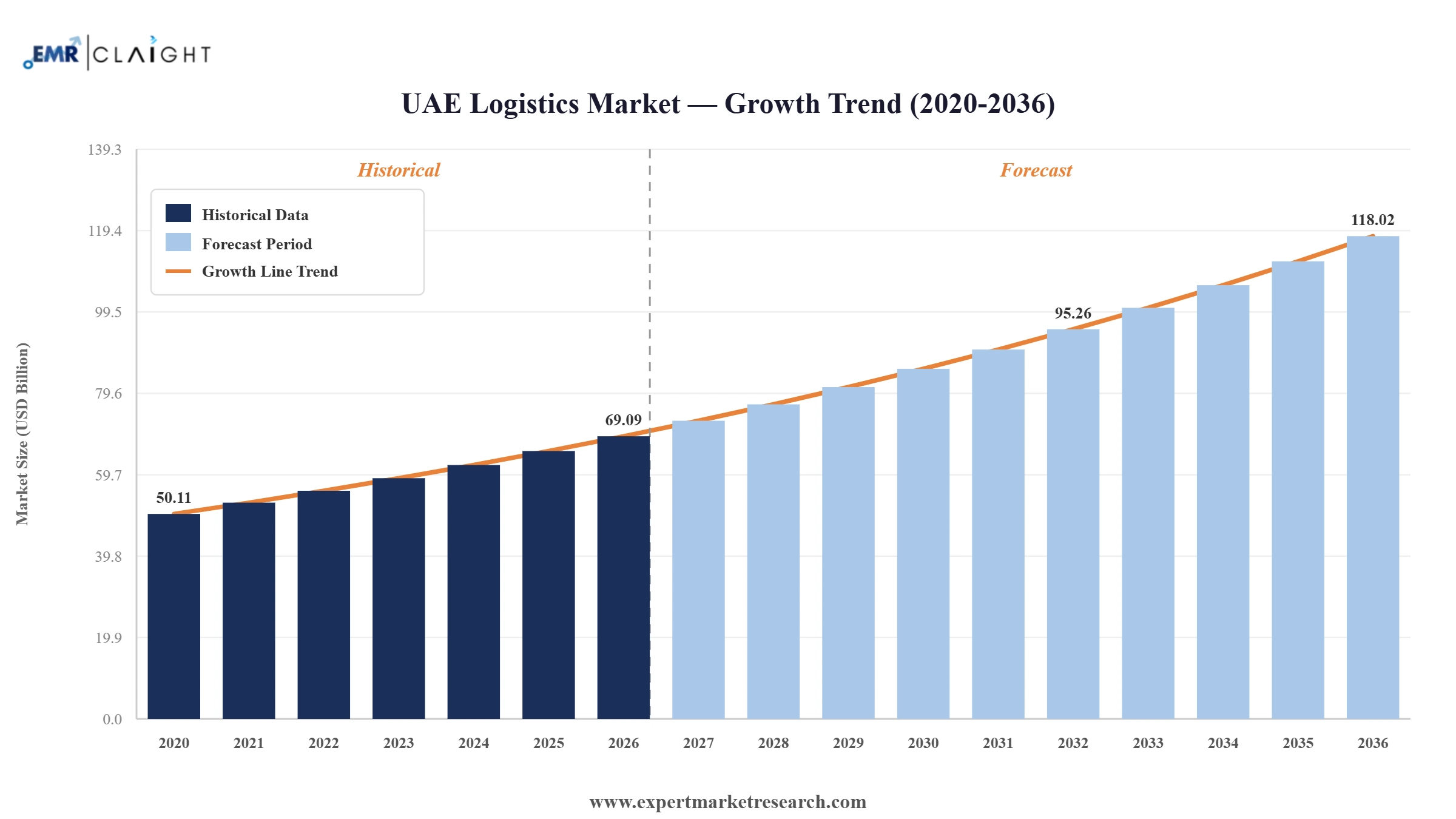
The UAE logistics market attained a value of USD 65.49 Billion in 2025 and is projected to expand at a CAGR of 5.50% through 2035. The market is further expected to achieve USD 111.87 Billion by 2035, driven by the country's position as a global trade and re-export hub, sustained investment in port, airport, and free-zone infrastructure, and rapid e-commerce-led warehousing demand. Growth spans 2PL, 3PL, and 4PL service models moving freight by road, sea, rail, and air across manufacturing, retail, healthcare, and technology supply chains, with logistics providers increasingly competing on integrated, technology-enabled service depth across Dubai, Abu Dhabi, and the other Emirates.
Sustained non-oil trade growth and continued investment in port, airport, and free-zone infrastructure continue to anchor steady demand across the UAE logistics market. The country's non-oil foreign trade reached a record AED1.937 trillion (USD527.3 billion) in the first half of 2026, supporting 3 percent real GDP growth in the first quarter, as manufacturers, retailers, and healthcare distributors increasingly favour integrated, technology-enabled logistics partners over fragmented, single-mode providers.
The UAE logistics market is witnessing further developments as global and regional providers realign their Emirates-based footprints around larger, purpose-built logistics districts, particularly Dubai South and Jebel Ali. Jebel Ali Free Zone attracted AED854 million (USD232.5 million) in new investments during the first four months of 2026 alone, reinforcing its position as home to more than 11,000 businesses from over 150 countries.
In addition, ongoing consolidation among global logistics and freight forwarding groups is reshaping competitive dynamics, as larger providers acquire specialised contract logistics and last-mile capability to offer more comprehensive, end-to-end supply chain solutions. The enhanced ecosystem continues to attract multinational healthcare distributors, with Novo Nordisk establishing one of its three global distribution hubs in the UAE as part of the sector's 2026 expansion, reinforcing the country's growing appeal for temperature-sensitive inventory management.
Read more about this report - REQUEST FREE SAMPLE COPY IN PDF
Regional logistics providers are increasingly building dedicated, regulator-certified facilities to serve the fast-growing pharmaceutical and healthcare distribution segment rather than relying on general-purpose warehousing. Aramex opened a dedicated regional healthcare and pharmaceutical logistics hub in Dubai South Free Zone in March 2026, a 5,600 square metre facility certified by the UAE Ministry of Health and Prevention, offering freight, customs clearance, temperature-controlled warehousing, and last-mile delivery built to Good Distribution Practice standards. Companies can leverage dedicated, regulator-certified healthcare logistics hubs to capture pharmaceutical distribution demand requiring specialised compliance capability beyond general warehousing.
Global logistics groups continue expanding dedicated Middle East innovation and distribution capacity to serve the region's fast-growing e-commerce and industrial demand. DHL Group opened its expanded Middle East and Africa Innovation Center in Dubai South in December 2025, one of only four such centres worldwide, while DHL Supply Chain confirmed a EUR120 million investment in a 55,000 square metre multi-user warehouse under a 38-year agreement, located near the upcoming Al Maktoum International Airport. Companies can commit multi-decade lease agreements for large-scale regional warehousing to secure long-term capacity ahead of anticipated demand growth.
Global freight forwarders continue pursuing large-scale acquisitions to expand contract logistics footprint and consolidate market position across competitive corridors. DSV completed its acquisition of Schenker from Deutsche Bahn for EUR14.3 billion in April 2025, one of the largest consolidation deals in global logistics history, significantly expanding DSV's global freight forwarding and contract logistics footprint across the UAE and wider Middle East and creating one of the world's largest logistics providers by revenue. Companies can pursue large-scale consolidation acquisitions to expand contract logistics footprint and secure market-leading scale across competitive freight forwarding corridors.
Global parcel and logistics majors continue signing dedicated facility agreements within established Middle East logistics districts to secure port-connected distribution capacity. UPS and Dubai South signed an agreement in March 2025 to open a new facility within Dubai South's Logistics District, part of the company's broader Middle East expansion strategy, with the facility providing bonded corridor access to Jebel Ali Port and connecting Middle East businesses to more than 200 countries and territories worldwide. Companies can secure dedicated facilities within established logistics districts to access bonded port corridors connecting regional operations to global trade networks.
Large logistics groups are increasingly acquiring established contract logistics operations rather than building capability organically across new geographies and service lines. CMA CGM agreed in July 2026 to acquire FedEx Supply Chain for $1.4 billion, a deal nearly tripling CEVA Logistics' North American contract logistics operations while establishing multi-year ocean and air freight agreements between the two companies going forward. The transaction significantly expands CMA CGM's logistics arm beyond core ocean freight into integrated warehousing and fulfilment services across key North American markets. Companies can pursue contract logistics acquisitions to rapidly scale warehousing and fulfilment capability beyond core ocean or air freight operations.
Providers managing large, geographically dispersed warehouse networks increasingly standardise on a single technology platform rather than maintaining fragmented facility-specific systems across regions. Aramex selected Softeon in January 2026 as its strategic Warehouse Management System partner, planning deployment across more than 70 facilities worldwide to improve visibility, efficiency, and overall customer experience across its regional and global network. The rollout is expected to unify inventory tracking and order fulfilment processes previously managed through disparate legacy systems across the company's expanding footprint. Companies can standardise warehouse management technology across dispersed facility networks to improve visibility and operational efficiency at scale.
Automotive manufacturers increasingly consolidate regional parts distribution into single, purpose-built facilities rather than operating multiple smaller regional warehouses across the Middle East. DB Schenker and Ford opened a 42,000 square metre parts distribution centre in Dubai South's Logistics District in January 2025, featuring SAP S/4HANA warehouse management software to optimise inventory levels and delivery times across the region. The facility is designed to serve Ford's dealer network across the Middle East and North Africa from a single consolidated hub. Companies can consolidate regional parts distribution into single, technology-enabled facilities to optimise inventory management and delivery times across dealer networks.
Cross-border trucking capacity between Europe and the Gulf has become an increasingly constrained resource as regional freight patterns continue shifting toward land-based corridors. Aramex reported in September 2026 that it had expanded its owner-operated and leased trucking capacity to service growing Europe-to-Middle East demand, alongside plans to expand owned warehouse space from 500,000 to 1.2 million square metres over the coming years. The expansion reflects sustained growth in overland freight volumes as shippers seek alternatives to congested maritime and air corridors. Companies can expand owner-operated trucking capacity to capture growing overland freight demand amid congestion across alternative shipping corridors.
This Expert Market Research's Report titled "UAE Logistics Market Report and Forecast 2026-2035" offers a detailed analysis of the market based on the following segments:
Market Breakup by Model Type
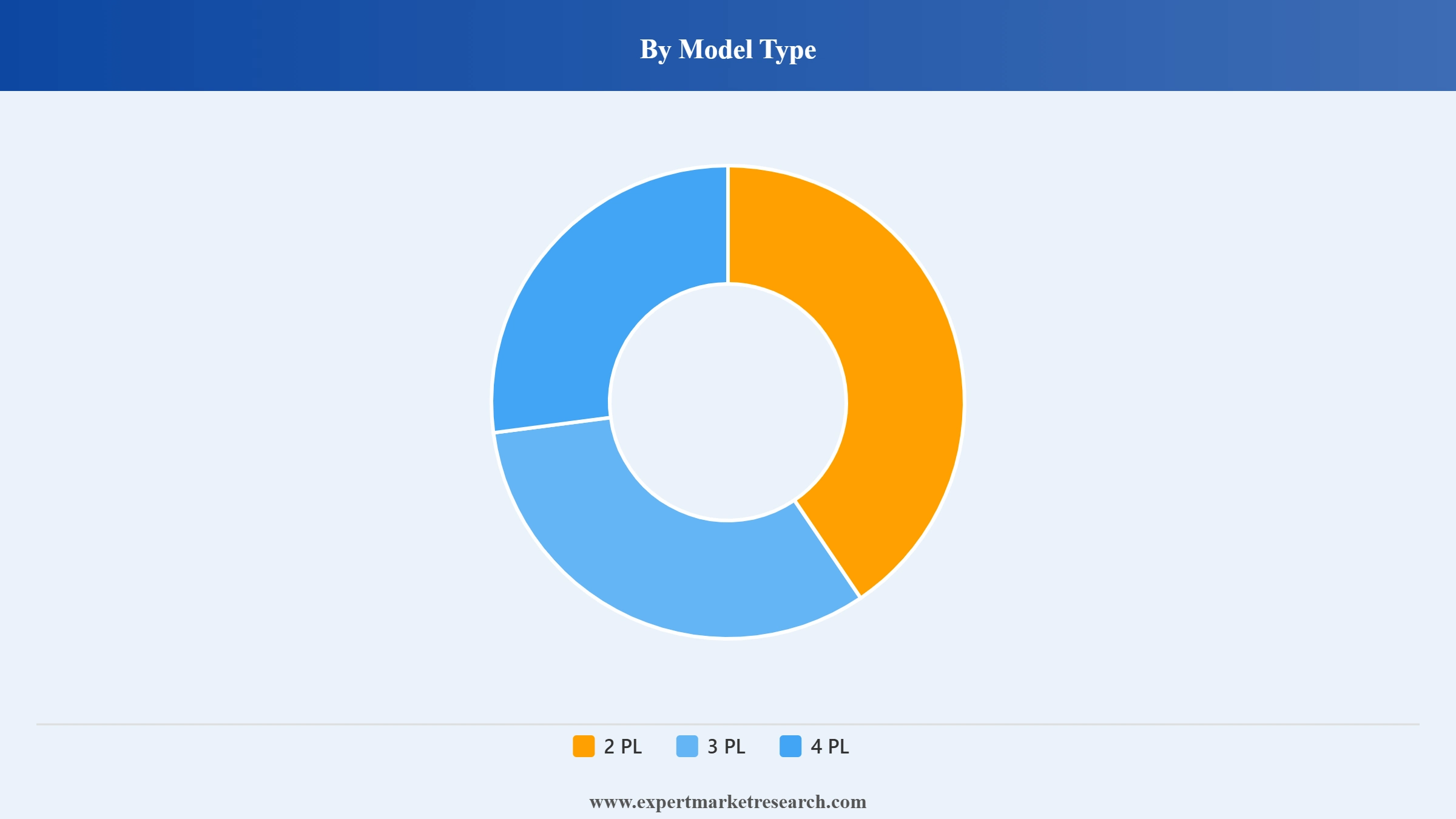
Key Insight: 3 PL accounts for the largest share of the market, reflecting sustained demand for outsourced transportation and warehousing management from shippers seeking cost efficiency without building full in-house supply chain orchestration capability. 2 PL continues to serve businesses requiring standalone transportation or warehousing capacity without broader coordination needs. Others captures niche first-party logistics arrangements and specialised freight models serving smaller-scale shippers outside the standard PL tiers. 4 PL is growing fastest as shippers increasingly outsource strategic planning and multi-carrier coordination to specialist orchestrators, illustrated by CMA CGM's July 2026 agreement to acquire FedEx Supply Chain for $1.4 billion, nearly tripling CEVA Logistics' contract logistics operations and reinforcing the broader industry shift toward integrated 4PL consolidation across competitive corridors.
Market Breakup by Transportation Mode
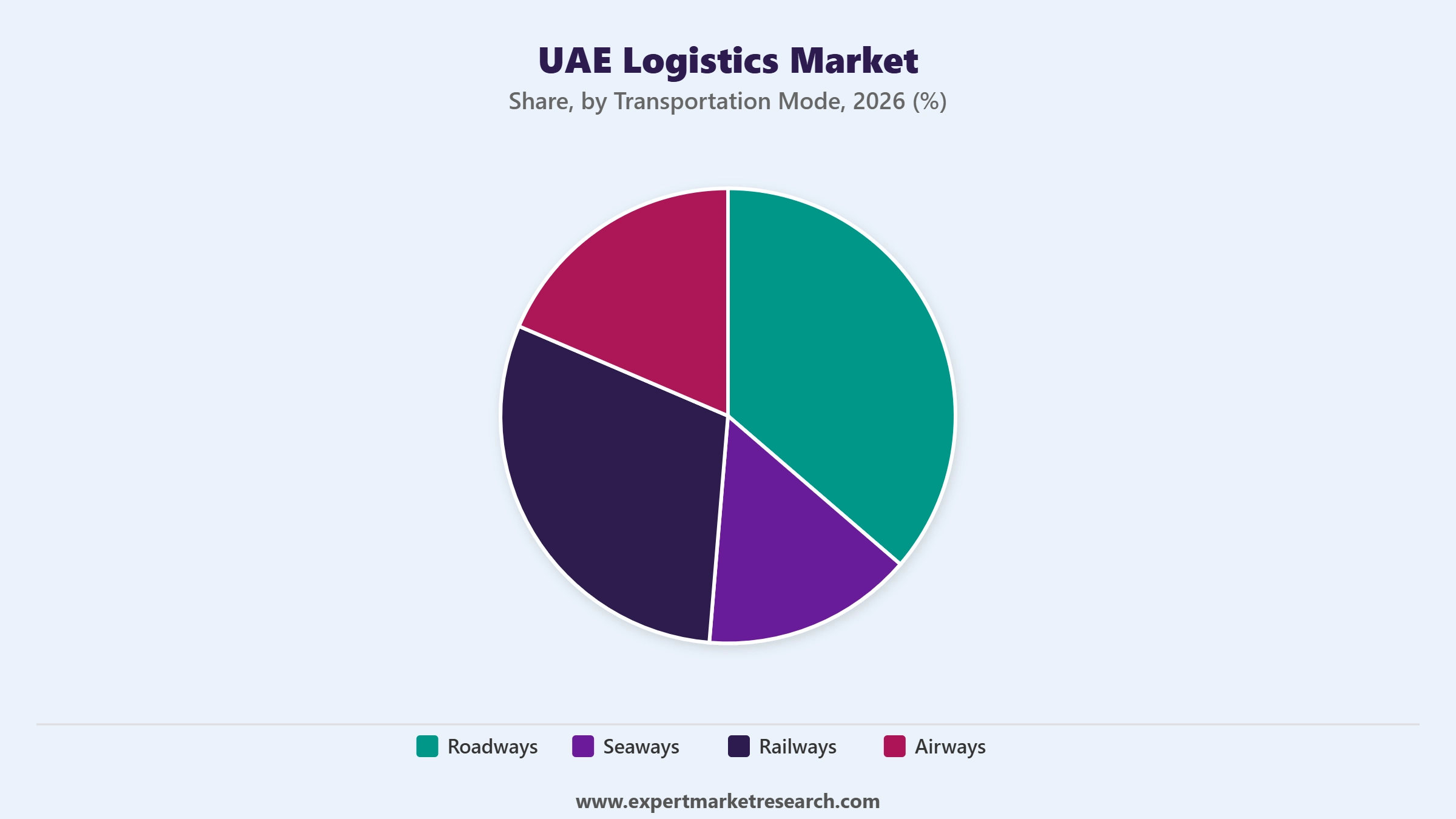
Key Insight:Seaways accounts for the largest share of the market, serving high-volume containerised trade through Jebel Ali Port, one of the world's largest and busiest container ports serving the wider Gulf region. Airways supports time-sensitive, high-value cargo through Dubai International and the developing Al Maktoum International Airport. Railways remains an emerging mode tied to the Etihad Rail network's continued expansion. Roadways is growing fastest, with Aramex reporting in September 2026 expanded owner-operated and leased trucking capacity to meet rising Europe-to-Gulf land freight demand amid shifting regional trade routes and congestion across alternative maritime corridors.
Market Breakup by End Use
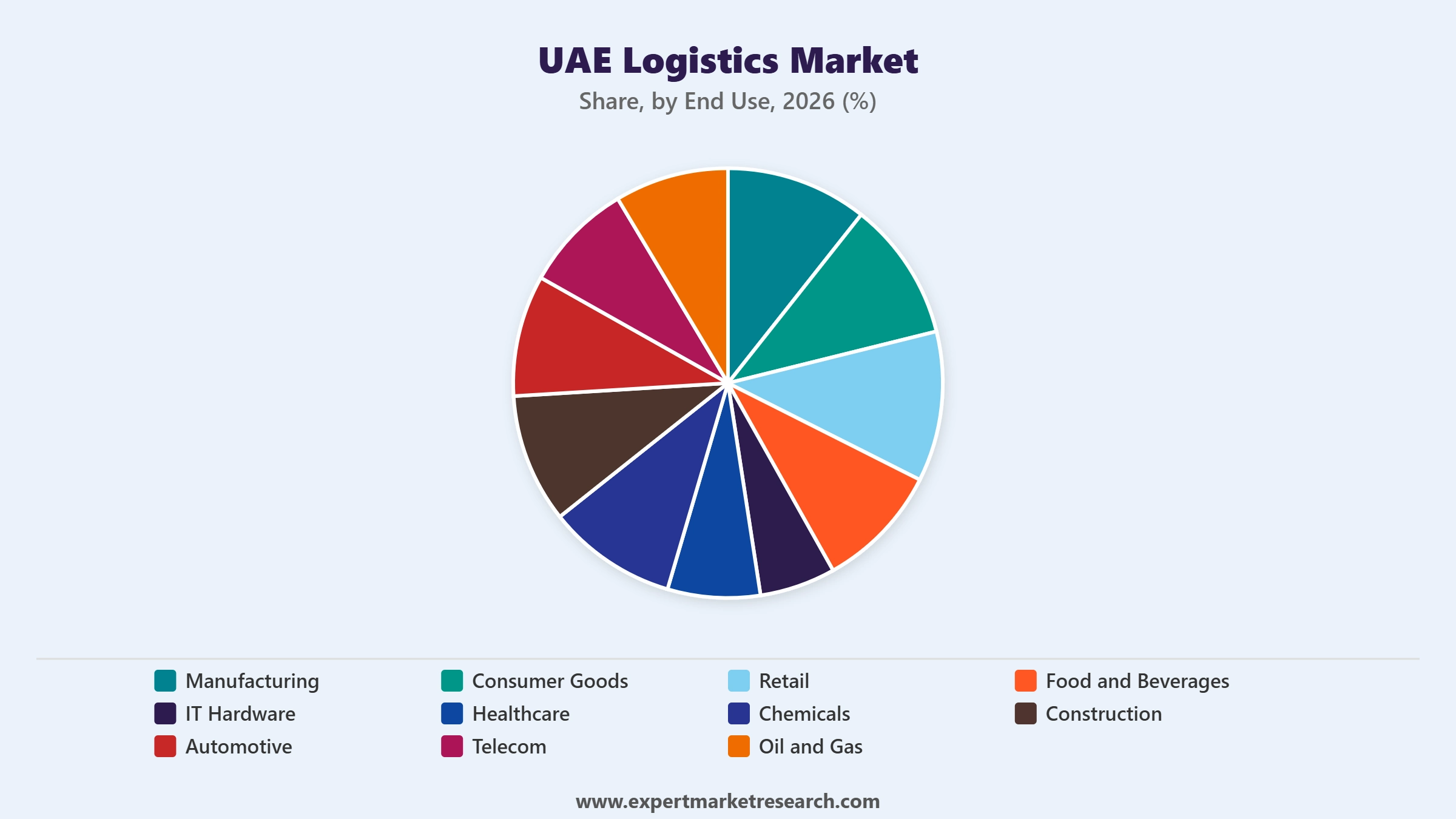
Key Insight: Manufacturing accounts for the largest share of the market, reflecting the logistics-intensive movement of raw materials and finished industrial goods across the Emirates' free zones and industrial districts. Retail, Consumer Goods, Food and Beverages, IT Hardware, Chemicals, Construction, Telecom, Oil and Gas, and Others each continue to sustain distinct volume tied to the UAE's diversified trade and re-export economy. Automotive demand is reinforced by DB Schenker and Ford's January 2025 opening of a 42,000 square metre parts distribution centre in Dubai South. Healthcare is growing fastest, illustrated by Aramex's March 2026 opening of a regulated pharmaceutical logistics hub in Dubai South certified by the UAE Ministry of Health and Prevention for temperature-controlled distribution.
Market Breakup by Region
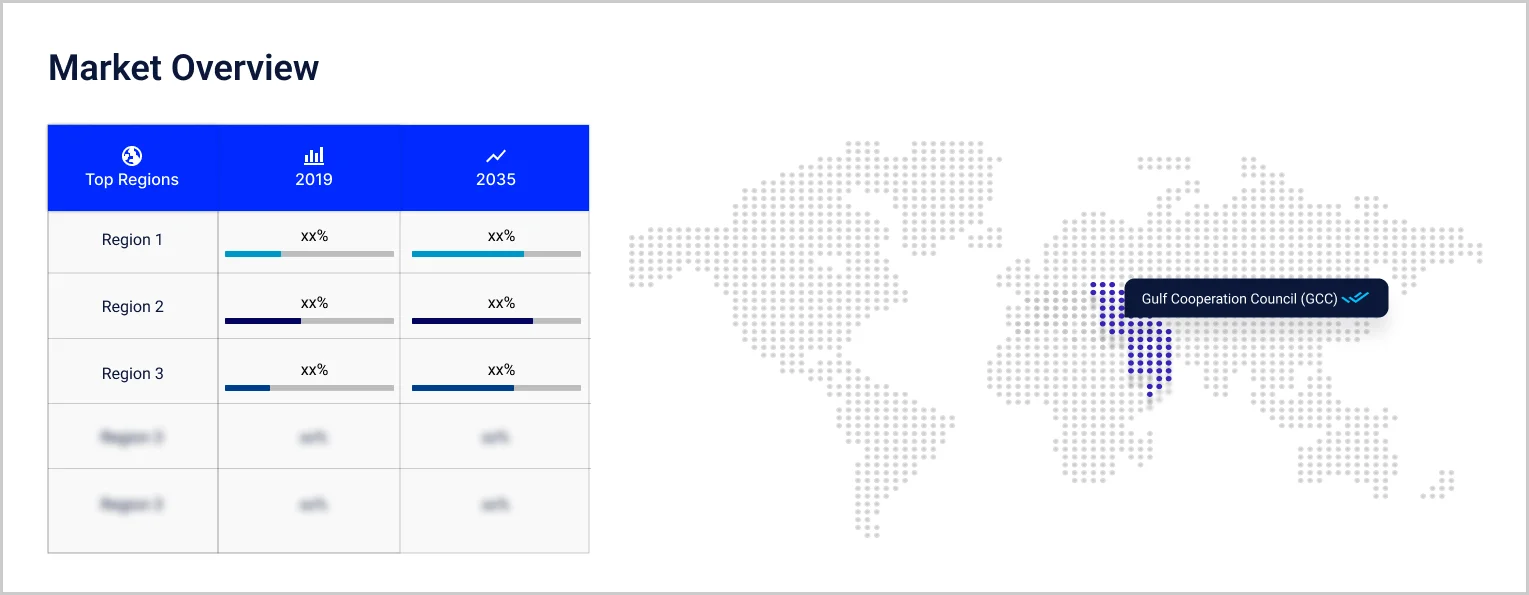
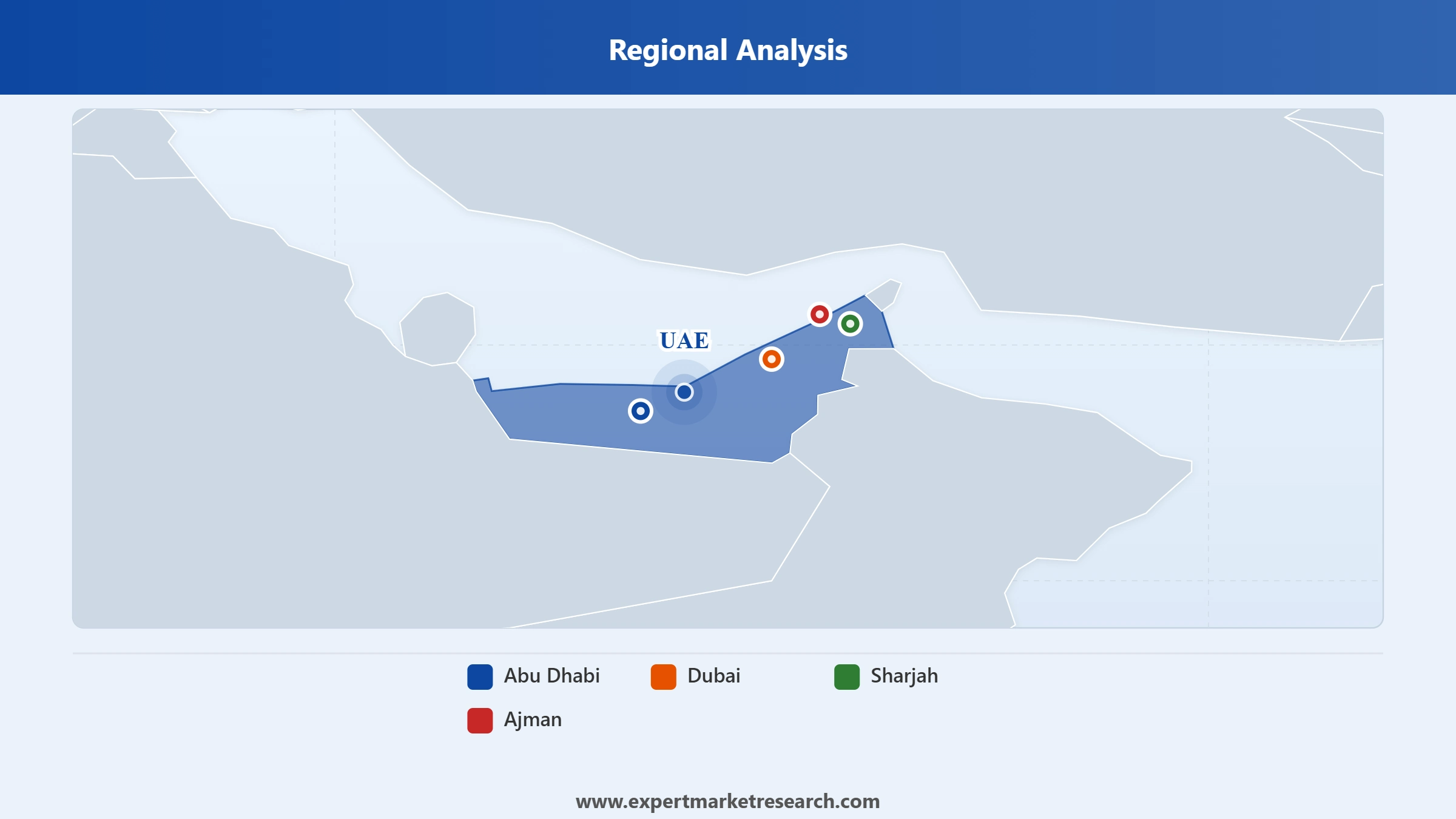
Key Insight: Dubai accounts for the largest share of the market, anchored by Jebel Ali Port, Dubai International Airport, and the expanding Dubai South logistics district hosting major international operators. Sharjah, Ajman, and Others together serve smaller-scale industrial and trading logistics activity across the remaining Emirates, benefiting from lower operating costs relative to Dubai. Abu Dhabi is the fastest-growing region, reinforced by DHL Group's December 2025 commitment of EUR120 million to a new carbon-neutral, 55,000 square metre warehouse near the upcoming Al Maktoum International Airport, supporting broader regional logistics capacity expansion across the wider Emirates.
Read more about this report - REQUEST FREE SAMPLE COPY IN PDF
By model type, 3 PL leads the market while 4 PL grows fastest given rising demand for outsourced orchestration
3 PL continues to account for the largest share of the market, reflecting sustained shipper preference for outsourcing transportation and warehousing to specialised providers rather than building in-house capability. Industry estimates published in August 2026 valued the UAE's 3PL segment at approximately USD8.2 billion, reflecting sustained demand for outsourced warehousing and distribution management.
Read more about this report - REQUEST FREE SAMPLE COPY IN PDF
4 PL is growing fastest as shippers increasingly outsource strategic planning and multi-carrier coordination to specialist orchestrators managing end-to-end supply chains. The UAE established a Logistics Integration Council in September 2025, led by the Minister of Energy and Infrastructure, to coordinate integrated supply chain services across free zones and transport modes nationwide.
By transportation mode, seaways leads the market while roadways grows fastest given expanding cross-border trucking capacity
Seaways continues to account for the largest share of the market, tied to sustained containerised trade through Jebel Ali Port serving re-export and transhipment flows across South Asia, Africa, and Europe. DP World confirmed in March 2026 that Jebel Ali remained fully operational, backing the port with approximately $3 billion in 2026 capital expenditure.
Read more about this report - REQUEST FREE SAMPLE COPY IN PDF
Roadways is the fastest-growing mode as shippers reroute cargo away from disrupted maritime corridors. DP World moved 500,000 TEU through GCC road and rail corridors since March 2026, supporting around 3,000 truck movements a day, as regional shipping lines adjust routing amid Strait of Hormuz disruption affecting Gulf sea traffic.
By end use, manufacturing leads the market while healthcare grows fastest given rising pharmaceutical import volumes
Manufacturing continues to account for the largest share of the market, reflecting the logistics-intensive movement of raw materials and finished industrial goods across the Emirates' free zones. Etihad Rail transported roughly 1.8 million tonnes of sulphur and more than 4 million tonnes of aggregates across its network in 2026, supporting industrial and construction material flows nationwide.
Read more about this report - REQUEST FREE SAMPLE COPY IN PDF
Healthcare is the fastest-growing end use as pharmaceutical importers scale regulated cold-chain storage capacity across the Emirates. Kuehne+Nagel achieved Emirates Drug Establishment certification in August 2025 to store raw pharmaceutical materials at Dubai South, adding dedicated 2-8°C chambers and GxP-restricted areas supporting the region's growing regulated pharmaceutical distribution requirements nationwide.
Dubai commands the largest share of the market through its concentrated port, airport, and free zone infrastructure
Dubai holds the largest share of the UAE logistics market, anchored by Jebel Ali Port and Dubai International Airport alongside the expanding Dubai South logistics district, which continues to attract major international operators including Aramex, DHL, and UPS through dedicated facility investments.
Read more about this report - REQUEST FREE SAMPLE COPY IN PDF
Abu Dhabi is emerging as the fastest-growing region at an estimated CAGR of 6.40%, reinforced by DHL Group's December 2025 commitment of EUR120 million to a new carbon-neutral warehouse supporting broader regional logistics capacity expansion. Sharjah continues to serve as a cost-competitive logistics base benefiting from lower operating costs relative to Dubai. Ajman rounds out the market with smaller-scale industrial and trading activity tied to domestic and near-regional markets. Others captures smaller-volume logistics activity across the remaining Emirates, including Ras Al Khaimah, Fujairah, and Umm Al Quwain, where more limited port and airport infrastructure continues to constrain overall throughput relative to Dubai and Abu Dhabi.
The industry is fragmented, with UAE logistics market companies ranging from global integrated logistics conglomerates to specialist regional and local freight forwarders competing across model type, transportation mode, and end-use segments across the Emirates.
Competitive dynamics among UAE logistics players are increasingly shaped by the scale of dedicated regional warehousing investment, the depth of local free zone presence, and the strength of contract logistics and healthcare-certified distribution capability. Manufacturers and providers are investing in expanded local facilities, technology standardisation, and specialised certification to secure long-term relationships with industrial, retail, and healthcare customers.
Founded in 1982 and headquartered in Dubai, United Arab Emirates, Aramex is a global logistics leader listed on the Dubai Financial Market since 2005, operating across more than 600 cities in 70 countries with over 16,000 employees. The company opened a dedicated healthcare logistics hub in Dubai South in March 2026, certified by the UAE Ministry of Health and Prevention, while also selecting Softeon as its strategic Warehouse Management System partner and expanding its trucking fleet capacity across Europe-to-Gulf corridors. Aramex's combination of regional density and specialised healthcare certification differentiates its offering from broader international competitors.
Founded in 1907 and headquartered in Atlanta, Georgia, United States, UPS is one of the world's largest package delivery and supply chain management companies, connecting businesses across more than 200 countries and territories worldwide. UPS signed an agreement with Dubai South in March 2025 for a new facility within the Logistics District, providing bonded corridor access to Jebel Ali Port. UPS's global integrated air and ground network differentiates its offering from regional specialists focused solely on Middle East corridors.
Founded in 1872 and headquartered in Essen, Germany, Schenker AG, operating as DB Schenker, is a leading logistics provider offering land, air, and ocean transportation services across more than 130 countries worldwide. In April 2025, DSV completed its EUR14.3 billion acquisition of Schenker from Deutsche Bahn, significantly reshaping the competitive landscape, while DB Schenker separately opened a 42,000 square metre Ford parts distribution centre in Dubai South. The DSV-Schenker combination differentiates its offering through unmatched global freight forwarding scale.
Founded in 1995 and headquartered in Bonn, Germany, Deutsche Post AG, operating under the DHL Group brand, is one of the world's largest logistics companies, providing mail, express, freight forwarding, and supply chain services across the globe. DHL opened its expanded Middle East and Africa Innovation Center in Dubai South in December 2025, one of only four such centres worldwide, alongside a EUR120 million commitment to a new 55,000 square metre warehouse. DHL's innovation-centre investment differentiates its offering from competitors focused solely on standard warehousing.
Other key players in the UAE logistics market include Global Shipping & Logistics LLC, C.H. Robinson Worldwide Inc., DSV A/S, FedEx Corporation, CMA CGM Group (CEVA Logistics SA), Kuehne + Nagel International AG, Expeditors International of Washington, Inc., Kintetsu World Express Inc., A.P. Møller – Mærsk A/S, Al Furat LLC, DGL Group, Emirates Logistics LLC, Hellman Worldwide Logistics, Jenae Logistics LLC, Mac World Logistic LLC, Masstrans Freight LLC, Modern Freight Company LLC, Move One Inc., Platinum Shipping & Logistics LLC, UAE Cargo Services, and Union Logistics Ltd., among others.
*Please note that this is only a partial list; the complete list of key players is available in the full report. Additionally, the list of key players can be customized to better suit your needs.*
Unlock the latest insights with our UAE logistics market trends 2026 report. Discover regional growth patterns, model type and transportation mode adoption trends, and key industry players. Stay ahead of competition with trusted data and expert analysis. Download your free sample report today and drive informed decisions in the market.


Upto 15% Off
USD
$2499 $2249
$3999 $3599
$4999 $4249
$5999 $5099


*While we strive to always give you current and accurate information, the numbers depicted on the website are indicative and may differ from the actual numbers in the main report. At Expert Market Research, we aim to bring you the latest insights and trends in the market. Using our analyses and forecasts, stakeholders can understand the market dynamics, navigate challenges, and capitalize on opportunities to make data-driven strategic decisions.*
In 2025, the market reached an approximate value of USD 65.49 Billion.
The market is projected to grow at a CAGR of 5.50% between 2026 and 2035.
The market is estimated to witness healthy growth in the forecast period of 2026-2035 to reach USD 111.87 Billion by 2035.
Investing in purpose-built, technology-enabled warehousing within major logistics districts, pursuing contract logistics acquisitions to broaden service depth, and expanding regulated healthcare and pharmaceutical distribution capacity are among the leading strategies shaping the market.
Key trends aiding the market expansion include the growth of e-commerce, the increasing reliance on 3PLs, integration of technology, and a shift towards customer-centric logistics.
The market is broken down into Dubai, Abu Dhabi, and others.
Manufacturing, consumer goods, retail, food and beverage, IT hardware, healthcare, chemicals, construction, automotive, telecom, oil and gas, and other industries might be the categories into which the UAE logistics market can be divided based on the end use. Currently, manufacturing holds the biggest portion of the market.
The UAE logistics market is divided into three categories based on the type of model: 2PL, 3PL, and 4PL. At the moment, 3PL controls the vast bulk of the market.
The key players in the market include Aramex International LLC, United Parcel Service, Inc., Schenker AG, Deutsche Post AG, Global Shipping & Logistics LLC, C.H. Robinson Worldwide Inc., DSV A/S, FedEx Corporation, CMA CGM Group (CEVA Logistics SA), Kuehne + Nagel International AG, Expeditors International of Washington, Inc., Kintetsu World Express Inc., A.P. Møller – Mærsk A/S, Al Furat LLC, DGL Group, Emirates Logistics LLC, Hellman Worldwide Logistics, Jenae Logistics LLC, Mac World Logistic LLC, Masstrans Freight LLC, Modern Freight Company LLC, Move One Inc., Platinum Shipping & Logistics LLC, UAE Cargo Services, and Union Logistics Ltd.
Due to consumers' shifting preferences for online retail platforms over traditional brick-and-mortar distribution channels for the acquisition of a wide range of goods and services, the abrupt onset of the COVID-19 pandemic has resulted in an increase in the efficiency of logistical processes.
Roadways, seaways, railroads, and airplanes are the several transportation modes that make up the UAE logistics market. Roadways currently hold a certain market dominance among these.
Providers face intensifying competition from large-scale global consolidation activity, rising demand for regulated healthcare and pharmaceutical warehousing capacity, and the need to expand multimodal infrastructure alongside continued growth in cross-border e-commerce and re-export trade volumes
Explore our key highlights of the report and gain a concise overview of key findings, trends, and actionable insights that will empower your strategic decisions.
| REPORT FEATURES | DETAILS |
| Base Year | 2025 |
| Historical Period | 2019-2025 |
| Forecast Period | 2026-2035 |
| Scope of the Report |
Historical and Forecast Trends, Industry Drivers and Constraints, Historical and Forecast Market Analysis by Segment:
|
| Breakup by Model Type |
|
| Breakup by Transportation Mode |
|
| Breakup by End Use |
|
| Breakup by Region |
|
| Market Dynamics |
|
| Competitive Landscape |
|
| Companies Covered |
|
Datasheet
One User
USD 2,499
USD 2,249
tax inclusive*
Single User License
One User
USD 3,999
USD 3,599
tax inclusive*
Five User License
Five User
USD 4,999
USD 4,249
tax inclusive*
Corporate License
Unlimited Users
USD 5,999
USD 5,099
tax inclusive*
*Please note that the prices mentioned below are starting prices for each bundle type. Kindly contact our team for further details.*
Flash Bundle
Small Business Bundle
Growth Bundle
Enterprise Bundle
*Please note that the prices mentioned below are starting prices for each bundle type. Kindly contact our team for further details.*
Flash Bundle
Number of Reports: 3
20%
tax inclusive*
Small Business Bundle
Number of Reports: 5
25%
tax inclusive*
Growth Bundle
Number of Reports: 8
30%
tax inclusive*
Enterprise Bundle
Number of Reports: 10
35%
tax inclusive*
How To Order

Select License Type
Choose the right license for your needs and access rights.

Click on ‘Buy Now’
Add the report to your cart with one click and proceed to register.

Select Mode of Payment
Choose a payment option for a secure checkout. You will be redirected accordingly.
Strategic Solutions for Informed Decision-Making
Gain insights to stay ahead and seize opportunities.

Get insights & trends for a competitive edge.

Track prices with detailed trend reports.

Analyse trade data for supply chain insights.

Leverage cost reports for smart savings

Enhance supply chain with partnerships.

Connect For More Information
Our expert team of analysts will offer full support and resolve any queries regarding the report, before and after the purchase.
Our expert team of analysts will offer full support and resolve any queries regarding the report, before and after the purchase.
We employ meticulous research methods, blending advanced analytics and expert insights to deliver accurate, actionable industry intelligence, staying ahead of competitors.
Our skilled analysts offer unparalleled competitive advantage with detailed insights on current and emerging markets, ensuring your strategic edge.
We offer an in-depth yet simplified presentation of industry insights and analysis to meet your specific requirements effectively.




