

Consumer Insights
Uncover trends and behaviors shaping consumer choices today
Procurement Insights
Optimize your sourcing strategy with key market data
Industry Stats
Stay ahead with the latest trends and market analysis.
The United States automotive relay market size is projected to grow at a CAGR of 5.10% between 2026 and 2035. The market is being aided by the increasing demand for electric vehicles domestically and internationally.
Compound Annual Growth Rate
5.1%
2026-2035
Read more about this report - REQUEST FREE SAMPLE COPY IN PDF
Electromechanical relays are quickly becoming popular due to their relatively advanced capabilities as compared to traditional coil relays. Apart from having a compact size and weighing 30% less than traditional versions, they provide protection from reversed battery polarity and the risk of overvoltage. They act as effective devices for current switching and do not operate noisily. Moreover, they are easily compatible with traditional port control units, which makes their usage simple. This is expected to drive the United States automotive relay market expansion over the forecast period.
The increasing production and sales of electric vehicles are expected to boost the demand for high voltage relays in the United States. High voltage relays are deployed in battery management systems for ensuring vehicle safety during charging and in power distribution systems for controlling the operation of air conditioners and other onboard electronics systems. They also facilitate vehicle movement by controlling the flow of electricity to the traction motors. The wide-ranging application of high voltage relays is expected to leverage the United States automotive relay market growth.
The increasing demand for protective and signal relays among automotive manufacturers is also expected to influence the market growth. This is because of increasing consumer demand for safe and technologically advanced passenger vehicles.
Read more about this report - REQUEST FREE SAMPLE COPY IN PDF
"United States Automotive Relay Market Report and Forecast 2026-2035" offers a detailed analysis of the market based on the following segments:
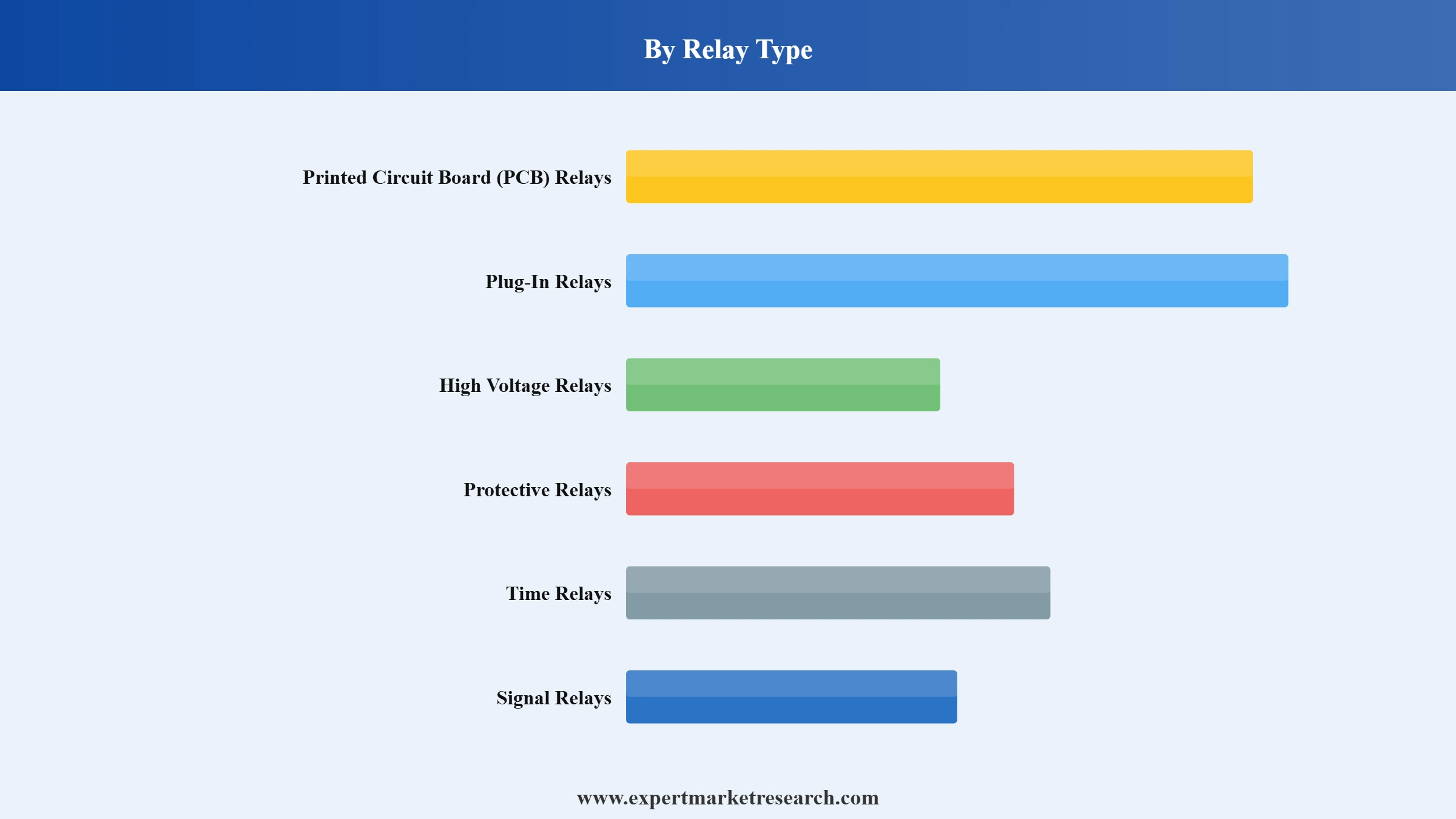
Market Breakup by Relay Type
Key Insight: Among the various relay types used in automotive applications, PCB relays hold a commanding position in the United States market. Their ability to integrate directly into electronic control units makes them indispensable across a wide range of vehicle functions, from ABS and cruise control to power windows and engine management. High voltage relays are the fastest-growing type, driven by the expanding electric vehicle fleet. According to Argonne National Laboratory, over 1.5 million plug-in electric vehicles were sold in the US in 2025, each requiring high voltage relays in battery management and power distribution systems. Plug-in relays continue to serve legacy and mid-range vehicle platforms, while protective and signal relays are gaining momentum as NHTSA's Federal Motor Vehicle Safety Standard No. 127, finalised in May 2024, mandates automatic emergency braking across new light vehicles, pushing automakers to build more sophisticated relay-dependent safety architectures into their designs.
Market Breakup by Vehicle Type
Key Insight: Passenger cars remain the largest vehicle type segment in the United States automotive relay market, reflecting the sheer volume of personal vehicle sales. According to Kelley Blue Book, Americans purchased a record 1.3 million battery electric vehicles in 2024, with passenger car platforms accounting for the majority of EV registrations. Commercial vehicles represent a steadily growing segment, supported by expanding freight and logistics activity, with NHTSA also extending ABS mandates to heavy vehicles, which sustains relay demand across braking and safety systems in this category. The electric vehicle segment is the most dynamic growth area, as each battery electric vehicle requires significantly more relay components than a conventional internal combustion engine vehicle, particularly for battery management, pre-charge circuits, and high voltage power distribution, creating a structural uplift in relay volumes per unit produced.
Market Breakup by Ampere
Key Insight: The ampere rating of automotive relays directly reflects the electrical demands of different vehicle systems. The 5A to 15A range serves lower-load applications such as signal relays, interior lighting, and sensor circuits, which are present across virtually every vehicle category and drive consistent baseline demand. The 16A to 35A segment covers mid-range applications including locking systems, engine management modules, and HVAC controls, making it broadly applicable across both passenger and commercial vehicles. The above 35A segment is experiencing the strongest growth trajectory, driven entirely by the electrification of powertrains. High voltage relay systems in battery electric vehicles, which manage traction motor control and DC fast charging circuits, routinely operate at several hundred amps, placing them in a fundamentally different demand category and positioning the high ampere segment as the most important growth driver within this breakup over the forecast period.
Market Breakup by Application
Key Insight: Automotive relays serve a diverse and growing range of vehicle applications, with each category tied to a specific regulatory or consumer demand driver. Locking systems represent one of the most universal applications, present across every vehicle class and required in both OEM assembly and aftermarket servicing. ABS control is a structurally mandated application in the US, with NHTSA having required electronic stability control under FMVSS No. 126 since 2007 and now expanding braking mandates through FMVSS No. 127, ensuring sustained relay demand in this segment. Engine management modules rely heavily on PCB and plug-in relays for fuel injection, ignition timing, and cooling fan control across internal combustion and hybrid platforms. The lamps and lights segment is evolving alongside the shift to LED and adaptive lighting systems, which require precision relay switching. The others category, which includes ADAS functions, HVAC, and seat control, is expanding in tandem with rising consumer expectations for vehicle comfort and automated safety features.
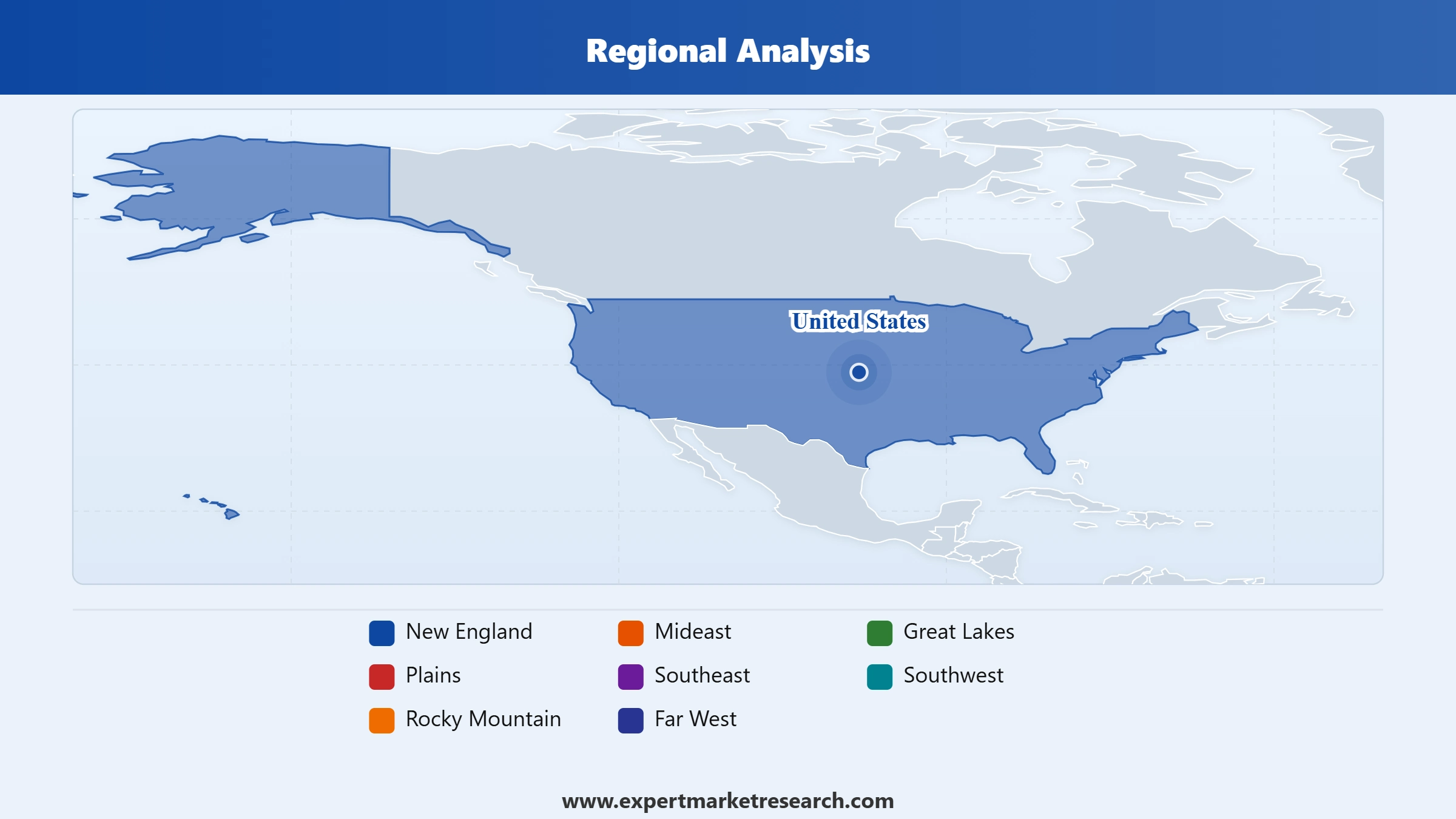
Market Breakup by Region
Key Insight: The regional distribution of the United States automotive relay market is closely aligned with the geography of vehicle manufacturing and EV investment. The Great Lakes region, encompassing Michigan, Ohio, Indiana, and Illinois, remains the historic core of US automotive production, with Detroit anchoring OEM assembly operations for major domestic manufacturers. The Southeast is emerging as a significant growth region, driven by foreign automakers establishing and expanding manufacturing facilities in states such as Alabama, Tennessee, Georgia, and South Carolina, attracted by competitive labour costs and state-level incentive programmes. According to RMI, a Battery Belt has formed stretching from Michigan through Indiana, Ohio, Kentucky, Tennessee, Georgia, and the Carolinas, concentrating EV and battery supply chain investment in a corridor that directly supports relay demand. The Far West, particularly California, remains the largest single-state EV consumer market in the country, generating aftermarket and service relay demand, while the Southwest and Plains regions are growing in line with broader vehicle fleet expansion and logistics infrastructure development.
Read more about this report - REQUEST FREE SAMPLE COPY IN PDF
The key United States automotive relay market players are:
Read more about this report - REQUEST FREE SAMPLE COPY IN PDF
The United States automotive relay market faces ongoing pressure from component supply chain vulnerabilities that continue to affect the broader automotive electronics sector. Although the acute semiconductor shortage of the early 2020s has eased, S&P Global Mobility has warned that a renewed shortage in mature process nodes, specifically those ranging from 40 nanometres and above, which are heavily used in automotive applications, could resurface through 2026 and beyond. Automotive relay manufacturers depend on a stable supply of electronic subcomponents, and any disruption to mature node chip availability directly affects production schedules and bill-of-materials costs. The concentration of key component manufacturing outside the United States also exposes domestic relay producers to geopolitical risks and logistics disruptions that are difficult to hedge against in the short term.
On the restraints side, the expiration of federal electric vehicle purchase incentives has introduced near-term uncertainty into EV demand projections, which in turn affects the forward outlook for high voltage relay consumption. The One Big Beautiful Bill Act, signed into law in July 2025, terminated the Section 30D New Clean Vehicle Credit for vehicles acquired after September 30, 2025, seven years earlier than originally scheduled under the Inflation Reduction Act. The Center for Climate and Energy Solutions noted that repealing this credit risks reducing consumer EV purchasing ability and weakening the domestic battery supply chain, both of which have downstream implications for the high voltage relay segment that depends on continued EV production volumes.
Despite these headwinds, the market carries meaningful long-term opportunity, particularly as domestic semiconductor manufacturing capacity expands. The CHIPS and Science Act of 2022 allocated approximately USD 52.7 billion to semiconductor manufacturing, research, and workforce development, alongside a 25% manufacturing investment tax credit. The Commerce Department's CHIPS for America programme has supported investments targeting mature node production specifically serving automotive applications, with analysts expecting domestic capacity in this segment to ease supply constraints by 2026 and 2027. A more resilient domestic supply chain for automotive-grade electronics will reduce procurement risks for relay manufacturers and support more stable production cost structures over the forecast period.


Upto 15% Off
USD
$3999 $3599
$2499 $2249
$4999 $4249
$5999 $5099


*While we strive to always give you current and accurate information, the numbers depicted on the website are indicative and may differ from the actual numbers in the main report. At Expert Market Research, we aim to bring you the latest insights and trends in the market. Using our analyses and forecasts, stakeholders can understand the market dynamics, navigate challenges, and capitalize on opportunities to make data-driven strategic decisions.*
The market is projected to grow at a CAGR of 5.10% between 2026 and 2035.
The different relay types considered in the market report include printed circuit board (PCB) relays, plug-in relays, high voltage relays, protective relays, time relays, and signal relays.
The different vehicle types in the market include passenger cars, commercial vehicles, and electric vehicles.
The different applications of automotive relays include locking systems, ABS control, engine management modules, and lamps/lights, among others.
The major regions in the market include the New England, Mideast, Great Lakes, Plains, Southeast, Southwest, Rocky Mountain, and Far West.
The key market players are Robert Bosch GmbH, TE Connectivity Ltd., Denson Corp., Panasonic Holdings Corp., Fujitsu Ltd., LS e-Mobility Solutions Co. Ltd., MTA S.p.A., Hella GmbH & Co. KGaA, Zettler Group, Hongfa Technology Co. Ltd., and Song Chuan Group Company (Song Chuan USA Inc.), among others.
Explore our key highlights of the report and gain a concise overview of key findings, trends, and actionable insights that will empower your strategic decisions.
| REPORT FEATURES | DETAILS |
| Base Year | 2025 |
| Historical Period | 2019-2025 |
| Forecast Period | 2026-2035 |
| Scope of the Report |
Historical and Forecast Trends, Industry Drivers and Constraints, Historical and Forecast Market Analysis by Segment:
|
| Breakup by Relay Type |
|
| Breakup by Vehicle Type |
|
| Breakup by Ampere |
|
| Breakup by Application |
|
| Breakup by Region |
|
| Market Dynamics |
|
| Competitive Landscape |
|
| Companies Covered |
|
Single User License
One User
USD 3,999
USD 3,599
tax inclusive*
Datasheet
One User
USD 2,499
USD 2,249
tax inclusive*
Five User License
Five User
USD 4,999
USD 4,249
tax inclusive*
Corporate License
Unlimited Users
USD 5,999
USD 5,099
tax inclusive*
*Please note that the prices mentioned below are starting prices for each bundle type. Kindly contact our team for further details.*
Flash Bundle
Small Business Bundle
Growth Bundle
Enterprise Bundle
*Please note that the prices mentioned below are starting prices for each bundle type. Kindly contact our team for further details.*
Flash Bundle
Number of Reports: 3
20%
tax inclusive*
Small Business Bundle
Number of Reports: 5
25%
tax inclusive*
Growth Bundle
Number of Reports: 8
30%
tax inclusive*
Enterprise Bundle
Number of Reports: 10
35%
tax inclusive*
How To Order

Select License Type
Choose the right license for your needs and access rights.

Click on ‘Buy Now’
Add the report to your cart with one click and proceed to register.

Select Mode of Payment
Choose a payment option for a secure checkout. You will be redirected accordingly.
Strategic Solutions for Informed Decision-Making
Gain insights to stay ahead and seize opportunities.

Get insights & trends for a competitive edge.

Track prices with detailed trend reports.

Analyse trade data for supply chain insights.

Leverage cost reports for smart savings

Enhance supply chain with partnerships.

Connect For More Information
Our expert team of analysts will offer full support and resolve any queries regarding the report, before and after the purchase.
Our expert team of analysts will offer full support and resolve any queries regarding the report, before and after the purchase.
We employ meticulous research methods, blending advanced analytics and expert insights to deliver accurate, actionable industry intelligence, staying ahead of competitors.
Our skilled analysts offer unparalleled competitive advantage with detailed insights on current and emerging markets, ensuring your strategic edge.
We offer an in-depth yet simplified presentation of industry insights and analysis to meet your specific requirements effectively.




