

Consumer Insights
Uncover trends and behaviors shaping consumer choices today
Procurement Insights
Optimize your sourcing strategy with key market data
Industry Stats
Stay ahead with the latest trends and market analysis.
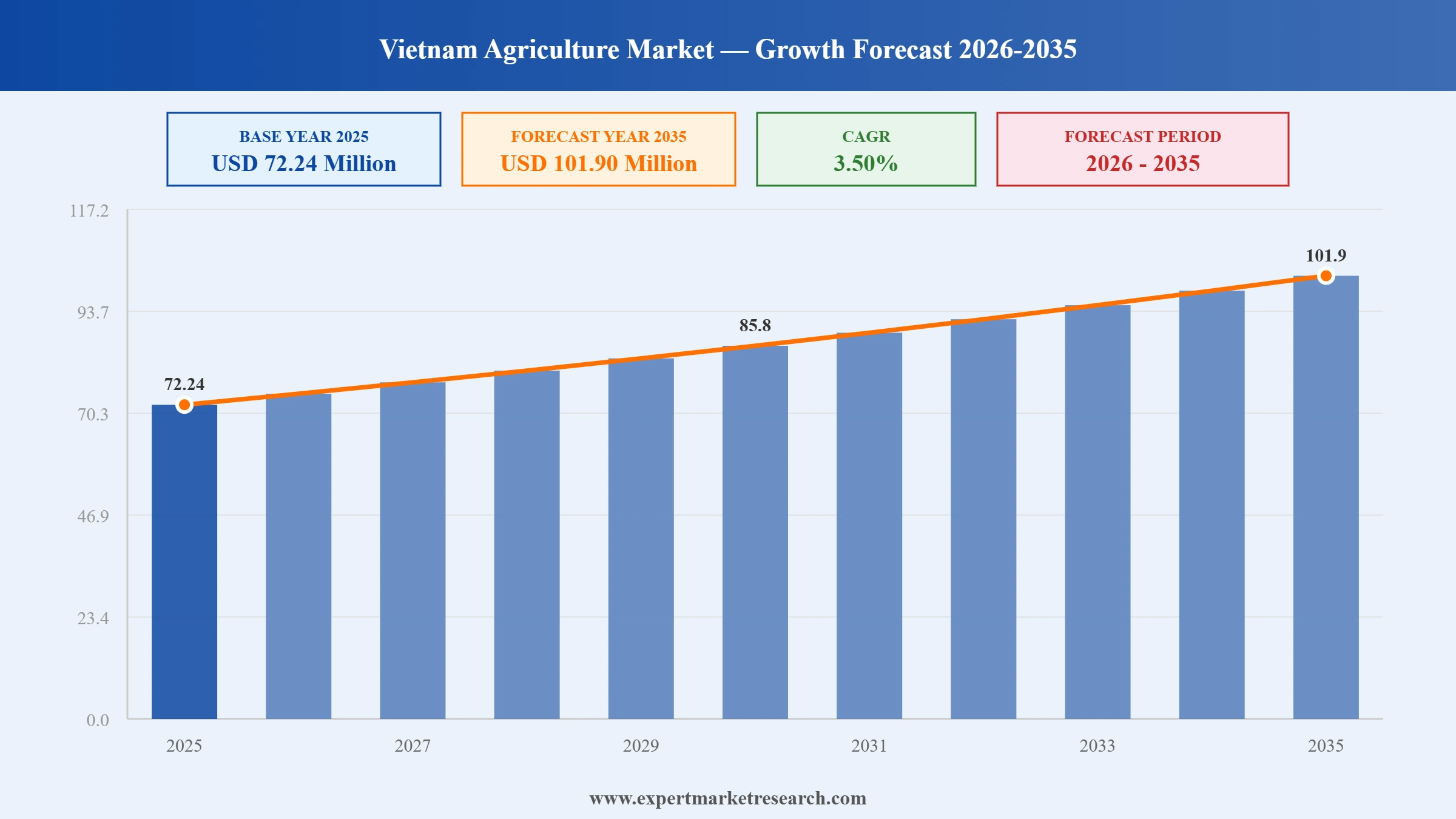
The Vietnam Agriculture Market reached a value of USD 72.24 Million at 2025 and is projected to expand at a CAGR of around 3.50% during the forecast period of 2026-2035. With growing agricultural exports under bilateral trade agreements, accelerating smart farming adoption, expansion of fisheries and aquaculture, and government-led agricultural modernisation initiatives, the market is expected to reach USD 101.90 Million by 2035.
According to the USDA Foreign Agricultural Service, Vietnam confirmed its new Minister of Agriculture and Environment in April 2026 as part of its new government term. The leadership continuity is relevant to the Vietnam agriculture market because it supports policy stability around farm modernization, export growth, and sustainability priorities across crops, livestock, and agribusiness supply chains.
According to the USDA, a U.S. agricultural trade mission to Vietnam was launched in March 2026 to expand market access and deepen bilateral farm trade. The move is important for the Vietnam agriculture market because rising import and export linkages can influence feed demand, input sourcing, crop competitiveness, and investment across the country’s fast-growing agricultural value chain.
Read more about this report - REQUEST FREE SAMPLE COPY IN PDF
|
Vietnam Agriculture Market Report Summary |
Description |
Value |
|
Base Year |
USD Million |
2025 |
|
Historical Period |
USD Million |
2019-2025 |
|
Forecast Period |
USD Million |
2026-2035 |
|
Market Size 2025 |
USD Million |
72.24 |
|
Market Size 2035 |
USD Million |
101.90 |
|
CAGR 2019-2025 |
Percentage |
XX% |
|
CAGR 2026-2035 |
Percentage |
3.50% |
|
CAGR 2026-2035 - Market by Sector |
Farming |
XX% |
The Vietnam Agriculture Market is undergoing a structural transformation shaped by the adoption of smart farming technologies, the entry and consolidation of global agri-corporations, growing export orientation under bilateral trade agreements, and a rising emphasis on sustainable and organic production methods that align with international buyer standards.
Dongfeng Motor Company launched its new X9 fuel tractor, specifically engineered for Vietnamese agricultural operating conditions, at a major product launch conference held in Ho Chi Minh City in December 2025. The tractor is designed to handle Vietnam's diverse terrain, including the narrow and water-saturated paddy fields of the Mekong Delta, where standard heavy equipment has historically been impractical. The launch reflects growing interest from Chinese and other international agricultural equipment manufacturers in Vietnam's mechanisation transition, which is being accelerated by rural labour shortages as workers migrate to urban manufacturing zones, pushing farmers toward equipment investment to maintain productivity.
A leading regional high-tech agriculture firm signed a formal agreement with Indonesia's Sungai Budi Group in March 2025 to execute collaboration commitments under a previously established MoU for advanced agricultural technology transfer in Southeast Asia, with implications for Vietnam's precision farming sector. The agreement targets technology sharing in areas including drone-based crop monitoring, soil analytics, and automated irrigation systems. As a significant agricultural economy in the region, Vietnam stands to benefit from the technology deployment frameworks emerging from such bilateral partnerships, particularly as it modernises farming practices in the Mekong River Delta and Red River Delta under the National Digital Transformation Program.
Vietnam's Truong Hai Group Corporation (THACO) announced an investment of over USD 1 billion in February 2025 to establish a large 786-hectare industrial park in Binh Duong province, focused on mechanical manufacturing including agricultural machinery and equipment. The investment is designed to reduce Vietnam's dependence on imported agricultural equipment by building domestic manufacturing capacity for tractors, harvesting machinery, and irrigation systems. The Binh Duong facility is part of THACO's broader agri-industrial ecosystem strategy that spans automotive, agriculture, and mechanical manufacturing, contributing to Vietnam's ambitions to develop a more integrated and self-sufficient agricultural supply chain.
Bayer AG formally inaugurated the Better Life Farming (BLF) Alliance in Vietnam in 2025, targeting local smallholder coffee and durian producers across key agricultural provinces. The initiative provides participating farmers with access to advanced crop protection technologies, agronomy expertise, and precision farming advisory services designed to improve yields and produce quality. By focusing on two of Vietnam's most commercially important export crops, the program aims to bridge the productivity and sustainability gap between smallholder farming practices and the standards required by international buyers. The BLF Alliance is part of Bayer's broader global commitment to smallholder agriculture empowerment and reflects the growing role of multinational agri-corporations in Vietnam's rural development ecosystem.
Summit Agro International Ltd., a subsidiary of Japanese conglomerate Sumitomo Corporation, acquired a 49% stake in Hop Tri Investment Corporation, a leading crop protection product provider in Vietnam, in 2025. The acquisition gives Sumitomo's agricultural subsidiary a significant foothold in Vietnam's pesticides and crop protection distribution network, which serves rice, vegetable, and fruit farmers across the country's major growing regions. The deal reflects the sustained interest of Japanese agri-businesses in Vietnam's agricultural input market, where growing demand for professional-grade crop protection products is being driven by the commercial agriculture sector's drive to meet international export quality standards.
Vietnam's National Digital Transformation Program has placed agriculture among its priority sectors, targeting the digitisation of farming practices across an estimated 30 million hectares of farmland. Drones for crop spraying and monitoring, satellite-based precision farming systems, and IoT-enabled soil and water sensors are gaining adoption among commercial farmers and agri-cooperatives, particularly in the Mekong Delta and Central Highlands. This digital shift is improving input efficiency, reducing pesticide overuse, and enabling traceability systems that meet the documentation requirements of export markets. Vietnam agriculture market growth in the digital farming segment is supported by government co-investment and active technology partnerships between Vietnamese firms and global agricultural technology providers. In 2025, Bayer's Better Life Farming Alliance in Vietnam brought precision agronomy advisory services to smallholder coffee and durian producers, illustrating how corporate-backed digital programs are reaching even smallholder segments.
The EU-Vietnam Free Trade Agreement has been a powerful structural driver of Vietnam's agricultural sector, reducing or eliminating tariff barriers for Vietnamese rice, seafood, fruits, and processed agricultural products entering EU markets. The resulting export opportunity is encouraging Vietnamese farmers and processors to invest in certifications, supply chain infrastructure, and quality upgrades that align with European food safety and sustainability standards. Global trading companies including Cargill, Louis Dreyfus, and Olam have deepened their Vietnam supply chain investments in response to expanding trade flows. In 2025, Summit Agro's acquisition of a 49% stake in crop protection company Hop Tri reflects international confidence in Vietnam's export-oriented agricultural input sector and the growing commercial sophistication of domestic agri-businesses seeking global distribution partnerships.
One of the most persistent structural challenges in Vietnam's agricultural sector is the ongoing migration of rural labour to urban manufacturing and services, creating workforce shortages in farming communities across the Red River Delta and Mekong regions. This pressure is accelerating the adoption of agricultural machinery, from transplanting machines and combine harvesters for rice to mechanised harvesting systems for coffee and vegetable crops. The tractor market in particular is scaling, and domestic manufacturing capacity is beginning to develop around this demand. In February 2025, THACO announced a USD 1 billion industrial park in Binh Duong dedicated in part to agricultural machinery manufacturing, representing a strategic effort to localise production of equipment that reduces the sector's dependence on imported machinery.
Consumer awareness around food safety, chemical residues, and environmental impact is rising sharply in Vietnam's domestic market and among international importers, creating genuine market pull for organic and bio-agricultural products. Vietnamese producers of tea, coffee, fruit, and vegetables are increasingly pursuing organic certification through EU, USDA, or local VietGAP standards to access premium export pricing. The government has issued a national strategy on organic agriculture targeting a 2-3% share of organic farming area by 2030. Bio-agriculture, which includes biological pest control, biofertilizers, and compost-based soil health practices, is gaining favour among cost-conscious farmers recognising long-term productivity benefits. In December 2025, international machinery providers including Dongfeng actively tailored new equipment for Vietnam's diversified smallholder crop profile, signaling growing investment in meeting the specific needs of the country's evolving agricultural base.
The Expert Market Research's report titled "Vietnam Agriculture Market Report and Forecast 2026 to 2035" offers a detailed analysis of the market based on the following segments:
Market Breakup by Sector
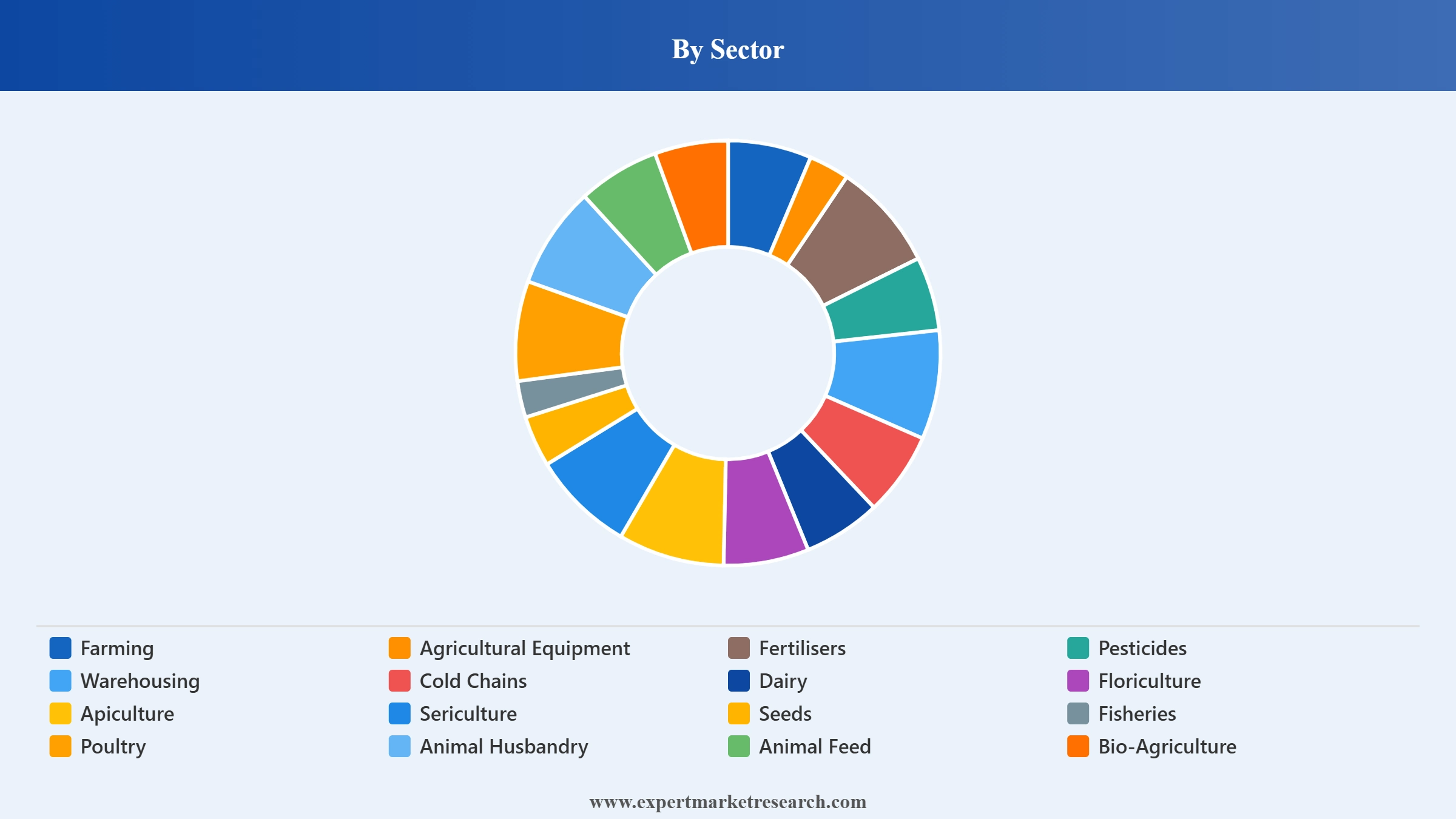
Key Insight: The Farming sector drives the largest share of the Vietnam Agriculture Market, anchored by Vietnam's globally significant rice export programme, world-leading robusta coffee production, and rapidly growing fruit and vegetable export volumes. The Fisheries sector is the second-most critical, given Vietnam's position among the world's top five seafood exporters and the continued expansion of aquaculture in the Mekong Delta. Agricultural Equipment is a fast-growing sector as mechanisation advances, driven by rural labour shortages. Bio-Agriculture is emerging as the highest-growth segment as organic and biological input adoption accelerates under government strategy and international buyer pressure. Fertilizers and Pesticides together represent a stable mid-tier demand segment, with the latter attracting significant global corporate investment including Sumitomo's 2025 acquisition of a stake in Hop Tri.
Market Breakup by Region
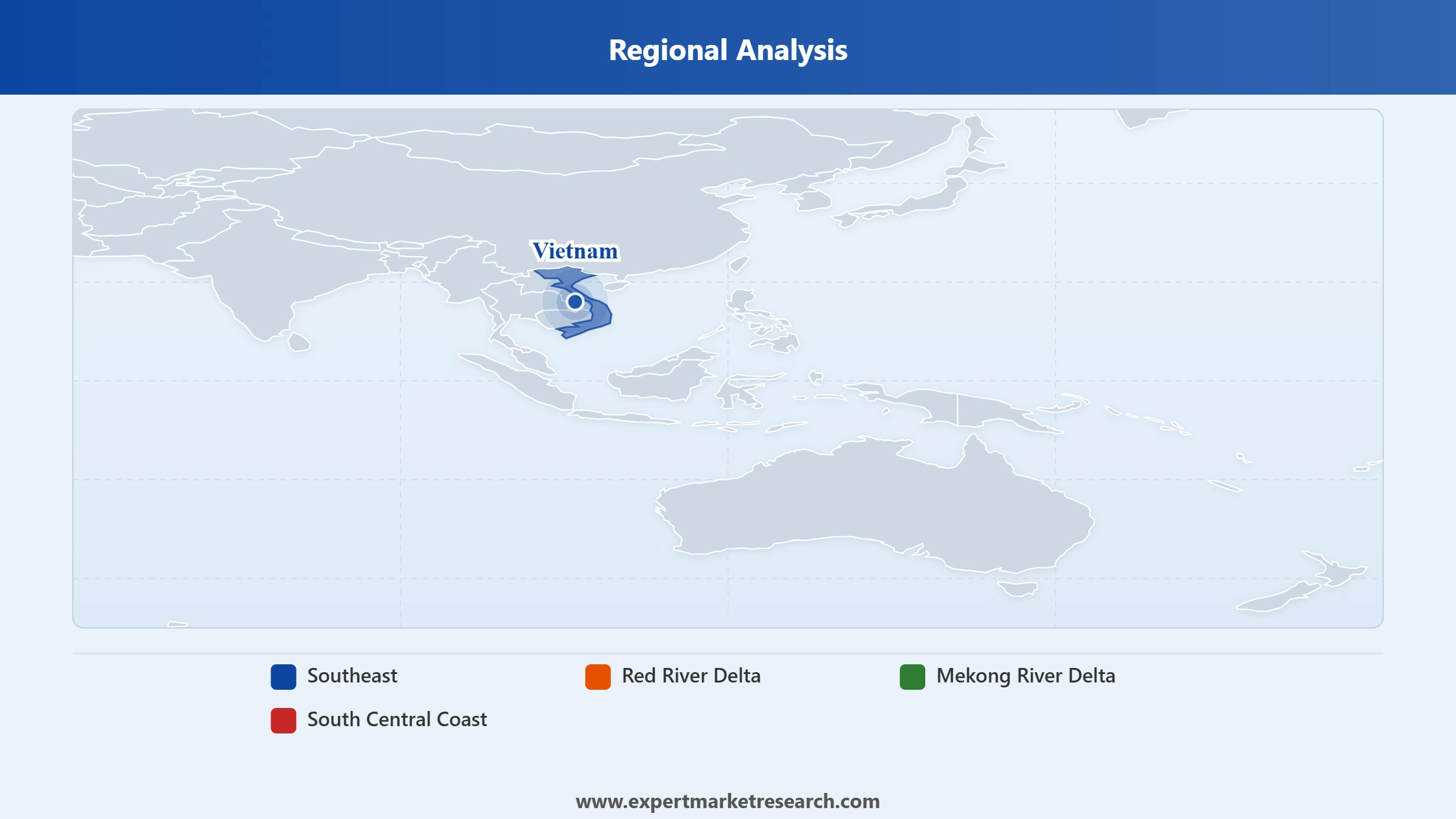
Key Insight: The Mekong River Delta is Vietnam's most productive agricultural region and holds the largest market share, accounting for approximately 50% of the country's total rice output and the majority of its aquaculture and fruit production. The Red River Delta is the second-most important region, serving as the primary agricultural base for northern Vietnam with intensive rice cultivation and growing horticulture activity. The Southeast region, centred on Ho Chi Minh City and adjacent provinces, functions more as a processing, logistics, and agri-export hub than a primary production zone, benefiting from port infrastructure and cold chain investment. The South Central Coast contributes cashew, coffee, and fishing output, with coastal fisheries forming a critical income base for communities across Khanh Hoa, Phu Yen, and Binh Dinh provinces.
Read more about this report - REQUEST FREE SAMPLE COPY IN PDF
The Farming sector commands the dominant share of the Vietnam Agriculture Market by revenue, reflecting the central role of staple crop production - particularly rice, coffee, and cassava - in the national agricultural output. Vietnam is among the world's top three rice exporters, with annual shipments exceeding 7 million tonnes in recent years, while its robusta coffee output serves the global instant coffee and blended coffee industries. Fisheries represent the second-largest share, with aquaculture production of shrimp, pangasius, and tilapia serving export markets in the US, EU, Japan, and China. The fertilizers and pesticides sectors together hold a meaningful combined share driven by the input-intensive nature of Vietnam's commercial crop cultivation. Bio-Agriculture holds the smallest current share but is projected to grow at the fastest pace through the forecast period.
Read more about this report - REQUEST FREE SAMPLE COPY IN PDF
Within the regional segmentation, the Mekong River Delta dominates by volume and value of agricultural output, while the Red River Delta contributes significantly to northern Vietnam's food security and commercial vegetable production. From an investment and logistics standpoint, the Southeast region disproportionately attracts corporate supply chain infrastructure spending given its proximity to Ho Chi Minh City's export terminals and processing zones. The South Central Coast, while smaller in total output, contributes high-value export commodities including premium cashews and specialty fisheries products that punch above their weight in market value terms.
Read more about this report - REQUEST FREE SAMPLE COPY IN PDF
The Mekong River Delta, spanning 13 provinces from Long An to Ca Mau, is the engine of Vietnam's agricultural export economy. The region produces roughly 50% of the country's rice, 70% of its fruit, and the majority of its freshwater and brackish aquaculture output. Key infrastructure investments in irrigation, dyke systems, and cold chain logistics are progressively improving the Delta's ability to meet international food safety and traceability requirements for export. Major agri-corporations including Cargill, Olam, and Louis Dreyfus have established significant grain trading and processing operations in the Delta, reflecting its centrality to Vietnam's agricultural value chain. Climate change adaptation is becoming an increasingly urgent priority for the region, as saltwater intrusion, flooding, and temperature variability threaten productivity in low-lying farming areas and are prompting shifts toward more climate-resilient crop varieties and aquaculture species.
The Red River Delta in northern Vietnam serves as the agricultural backbone of the country's northern half, with dense smallholder rice cultivation, growing commercial vegetable production for domestic urban markets, and increasing aquaculture activity in coastal provinces including Quang Ninh and Hai Phong. The region benefits from proximity to Hanoi's consumer market and the northern logistics corridor connecting to China. Precision farming and cooperative-based agricultural modernisation are advancing faster in the Red River Delta than in some southern regions due to stronger institutional support and higher proximity to Hanoi-based research and extension services. The Southeast region, though not a primary crop production zone, plays an outsized role in agricultural processing, packaging, and cold chain logistics, connecting domestic producers to export markets through Ho Chi Minh City's international port and airport infrastructure.
The Vietnam Agriculture Market attracts a mix of global commodity trading companies, multinational crop science firms, large local conglomerates, and specialist agri-businesses that collectively form a competitive landscape spanning the full agricultural value chain. At the trading and commodity level, Cargill, Olam, and Louis Dreyfus operate large-scale procurement and processing networks focused on rice, coffee, and aquaculture products. In the crop inputs segment, global players including Bayer, BASF, and ADAMA compete for market share in fertilizers, pesticides, and seeds. Local companies including The PAN Group and Vingroup's agri-division are building vertically integrated food and agriculture supply chains that capture more value domestically.
The competitive dynamic is shifting in favour of players with integrated technology-to-market capabilities. Companies that combine agri-input supply with digital farming services, certified supply chains, and direct connections to export buyers are gaining sustainable competitive positions. Foreign direct investment in the sector is being actively courted by the Vietnamese government through tax incentives and agricultural industrial zone development, creating entry opportunities for international firms seeking local production platforms.
Cargill, Incorporated, founded in 1865 and headquartered in Minnetonka, Minnesota, operates extensively across Vietnam's grain trading, animal nutrition, and aquafeed sectors. The company is among the largest purchasers of Vietnamese rice and other commodities for export, with significant grain handling infrastructure in the Mekong Delta region. In animal nutrition, Cargill Vietnam operates feed mills supplying both the poultry and aquaculture sectors, leveraging the company's global nutritional science capabilities for local formulation. Cargill's integrated supply chain model, combining raw material procurement, processing, and distribution, gives it a structural cost advantage over smaller domestic competitors.
Founded in 1989 and headquartered in Nigeria, Olam is a leading player in the export of coffee, cashew nuts, and rice in Vietnam. The company's digital traceability tools and precision farming practices are used to reach high level quality for sales to premium global buyers in compliance with EU sustainability norms.
Headquartered in Ho Chi Minh City, V.A.F. deals in exports of fruits and vegetables. This company is investing in cold chain logistics and organic certification to meet high-end markets demands in Japan, Korea, and Europe.
Established in 2015, Agrideco works with sustainable rice and fresh produce. It directly works with farmers in promoting Good Agricultural Practices (GAP) and engages in e-commerce channels for home-grown organic delivery services.
Other players operating in the market include Louis Dreyfus Company, ADAMA, The PAN Group, Vingroup, Bayer AG, and BASF Vietnam Co., Ltd., among others.
*Please note that this is only a partial list; the complete list of key players is available in the full report. Additionally, the list of key players can be customized to better suit your needs.*
Gain a decisive advantage in Vietnam's evolving agriculture market with our comprehensive 2026 market intelligence report. Whether you are a global commodity trading firm evaluating procurement strategy, a crop protection company assessing channel expansion, an investor targeting agri-tech or cold chain infrastructure, or a government agency benchmarking sector progress, this report delivers the depth and precision you need. Download your free sample today and uncover the strategic opportunities within Vietnam's dynamic agriculture sector.


Upto 15% Off
USD
$2499 $2249
$3999 $3599
$4999 $4249
$5999 $5099


*While we strive to always give you current and accurate information, the numbers depicted on the website are indicative and may differ from the actual numbers in the main report. At Expert Market Research, we aim to bring you the latest insights and trends in the market. Using our analyses and forecasts, stakeholders can understand the market dynamics, navigate challenges, and capitalize on opportunities to make data-driven strategic decisions.*
In 2025, the Vietnam agriculture market reached an approximate value of USD 72.24 Million.
The market is projected to grow at a CAGR of 3.50% between 2026 and 2035.
The key players in the market include Cargill, Incorporated, Olam Group, V.A.F Vietnam Agriculture Food Co., LTD, Agrideco Vietnam Company Limited, Louis Dreyfus Company, ADAMA, The PAN Group, Vingroup, Bayer AG, and BASF Vietnam Co., Ltd., among others.
Key strategies driving the market include enhancing efficiency through digitization in farming practices, developing green and organic agriculture practices, using vertical farming and employing agri-fintech solutions.
The major sectors driving demand in the market are farming, agricultural equipment, fertilizers, and pesticides.
Explore our key highlights of the report and gain a concise overview of key findings, trends, and actionable insights that will empower your strategic decisions.
| REPORT FEATURES | DETAILS |
| Base Year | 2025 |
| Historical Period | 2019-2025 |
| Forecast Period | 2026-2035 |
| Scope of the Report |
Historical and Forecast Trends, Industry Drivers and Constraints, Historical and Forecast Market Analysis by Segment:
|
| Breakup by Sector |
|
| Breakup by Region |
|
| Market Dynamics |
|
| Competitive Landscape |
|
| Companies Covered |
|
Datasheet
One User
USD 2,499
USD 2,249
tax inclusive*
Single User License
One User
USD 3,999
USD 3,599
tax inclusive*
Five User License
Five User
USD 4,999
USD 4,249
tax inclusive*
Corporate License
Unlimited Users
USD 5,999
USD 5,099
tax inclusive*
*Please note that the prices mentioned below are starting prices for each bundle type. Kindly contact our team for further details.*
Flash Bundle
Small Business Bundle
Growth Bundle
Enterprise Bundle
*Please note that the prices mentioned below are starting prices for each bundle type. Kindly contact our team for further details.*
Flash Bundle
Number of Reports: 3
20%
tax inclusive*
Small Business Bundle
Number of Reports: 5
25%
tax inclusive*
Growth Bundle
Number of Reports: 8
30%
tax inclusive*
Enterprise Bundle
Number of Reports: 10
35%
tax inclusive*
How To Order

Select License Type
Choose the right license for your needs and access rights.

Click on ‘Buy Now’
Add the report to your cart with one click and proceed to register.

Select Mode of Payment
Choose a payment option for a secure checkout. You will be redirected accordingly.
Strategic Solutions for Informed Decision-Making
Gain insights to stay ahead and seize opportunities.

Get insights & trends for a competitive edge.

Track prices with detailed trend reports.

Analyse trade data for supply chain insights.

Leverage cost reports for smart savings

Enhance supply chain with partnerships.

Connect For More Information
Our expert team of analysts will offer full support and resolve any queries regarding the report, before and after the purchase.
Our expert team of analysts will offer full support and resolve any queries regarding the report, before and after the purchase.
We employ meticulous research methods, blending advanced analytics and expert insights to deliver accurate, actionable industry intelligence, staying ahead of competitors.
Our skilled analysts offer unparalleled competitive advantage with detailed insights on current and emerging markets, ensuring your strategic edge.
We offer an in-depth yet simplified presentation of industry insights and analysis to meet your specific requirements effectively.




