

Consumer Insights
Uncover trends and behaviors shaping consumer choices today
Procurement Insights
Optimize your sourcing strategy with key market data
Industry Stats
Stay ahead with the latest trends and market analysis.
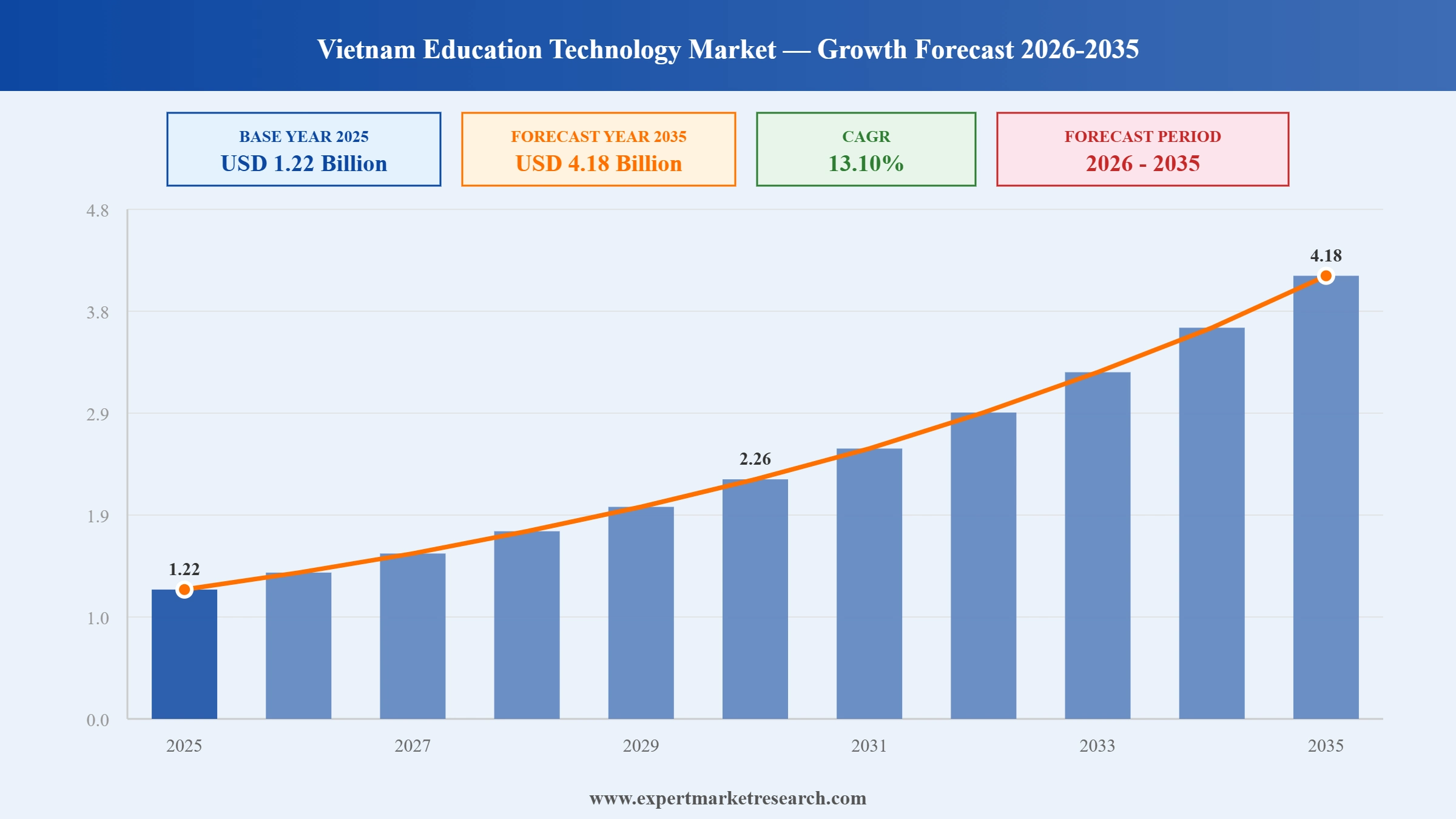
The Vietnam Education Technology Market reached a value of USD 1.22 Billion at 2025 and is projected to expand at a CAGR of around 13.10% during the forecast period of 2026-2035. With government-driven digital education transformation targeting full system digitization by 2030, growing demand for AI-personalized K-12 learning platforms, rising enterprise upskilling budgets driven by tech sector skill shortages, and sustained foreign investment in Vietnamese edtech companies, the market is expected to reach USD 4.18 Billion by 2035.
Read more about this report - REQUEST FREE SAMPLE COPY IN PDF
| Vietnam Education Technology Market Report Summary |
Description |
Value |
|
Base Year |
USD Billion |
2025 |
|
Historical Period |
USD Billion |
2019-2025 |
|
Forecast Period |
USD Billion |
2026-2035 |
|
Market Size 2025 |
USD Billion |
1.22 |
|
Market Size 2035 |
USD Billion |
4.18 |
|
CAGR 2019-2025 |
Percentage |
XX% |
|
CAGR 2026-2035 |
Percentage |
13.10% |
|
CAGR 2026-2035 - Market by End User |
Enterprises |
14.8% |
|
CAGR 2026-2035 - Market by Type |
Content |
14.3% |
|
CAGR 2026-2035 - Market by Deployment Mode |
Cloud-based |
15.4% |
The Vietnam Education Technology Market is being shaped by the government's ambitious digitalization agenda, rapid adoption of AI-powered and personalized learning tools, strong investor interest in K-12 and language learning platforms, and growing enterprise demand for technology-based workforce upskilling. These converging forces are transforming Vietnam's education ecosystem from traditional classroom-based delivery to a hybrid, digitally augmented model accessible across income levels and geographies.
British University Vietnam inaugurated the second phase of its Ecopark campus in April 2025, featuring specialized laboratories and smart classrooms designed to support a fully paperless learning environment. The expansion reflects the broader trend of international educational institutions investing in technology-integrated physical infrastructure in Vietnam, combining global academic standards with local edtech capabilities. The smart campus model incorporates interactive learning tools, cloud-connected facilities, and collaborative digital workspaces that align with the Vietnamese government's education digitalization objectives for the country's higher education sector.
Vietnam hosted the "Education Vietnam 2025" exhibition for the first time, an event originating from the Korean Educational Technology and Content Exhibition. The inaugural exhibition showcased advanced education technologies including augmented reality, virtual reality, metaverse learning environments, coding platforms, and STEAM education tools. The event attracted 120 exhibitors from 8 countries and approximately 20,000 visitors from 15 countries, positioning Vietnam as an emerging hub for education technology exchange in Southeast Asia and signaling growing international commercial interest in the Vietnamese edtech market.
The Asian Development Bank announced its first private sector investment in Vietnam's education sector, leading a USD 150 million sustainability-linked loan to Vinschool, one of Vietnam's largest private K-12 school systems. The investment marks a landmark moment for the Vietnamese education technology market, signaling the confidence of major development finance institutions in the country's educational infrastructure growth potential. The loan is tied to sustainability targets, reflecting the growing integration of ESG criteria into educational infrastructure financing and reinforcing Vietnam's attractiveness as a destination for education sector investment.
Leaders from the UK and Vietnamese higher education sectors convened to launch the British Council's four-year UK-Viet Nam iTechPath initiative, aimed at expanding long-term partnerships in talent development, technology education, and innovation between the two countries. The initiative builds on Vietnam's updated legal framework that has attracted over USD 4.5 billion in foreign investment and facilitated 430 joint educational programs. iTechPath is expected to strengthen digital skills pathways for Vietnamese students, establish curriculum development partnerships, and create structured exchange programs between UK and Vietnamese universities focused on technology-led education.
Prep, a Vietnamese edtech startup focused on English language exam preparation and test readiness, raised USD 7 million in a funding round led by Cercano Management Asia and Northstar Venture. The investment supports Prep's expansion of its AI-powered exam preparation platform, which serves students preparing for IELTS, TOEFL, and other standardized English proficiency assessments. The funding round underscores continued investor confidence in Vietnam's language learning edtech segment, which benefits from high demand among students and professionals seeking international opportunities, overseas study, and career advancement in Vietnam's expanding international business sector.
The Vietnamese government has committed to digitizing the entire national education system by 2030, as part of the broader National Digital Transformation Program. The Ministry of Education and Training is implementing online public services, developing a comprehensive national education database, and mandating digital literacy integration across all school levels. The government committed 14.4% of national expenditure, equivalent to approximately USD 18.7 billion, to education, with the 2026 education budget reaching VND 630 trillion. This systemic policy commitment is the single most powerful structural driver of the Vietnam education technology market, creating mandatory and sustained demand for hardware, software, cloud infrastructure, and digital content across the country's 26,000 general education schools and 650 higher education institutions.
Artificial intelligence is rapidly becoming the central competitive differentiator in Vietnam's edtech market, with platforms incorporating AI tutors, adaptive learning algorithms, automated assessment tools, and personalized learning pathways. The Vietnam National Forum on Education Innovation with AI, launched at RMIT University Vietnam's Hanoi campus with participation from the Ministry of Education, UNICEF Vietnam, and the Australian Embassy, reflects government and international stakeholder recognition of AI's transformative potential for Vietnamese education. Domestically, Edupia's AI-driven English learning courses for K-12 students, reaching over 6 million mobile app users, exemplify how Vietnamese edtech companies are leveraging AI to scale affordable, personalized language and academic instruction. This trend is driving Vietnam education technology market growth across both consumer and institutional segments.
Vietnam's edtech market is attracting significant international investment and partnership activity, reflecting global recognition of the country's large and growing student population, rising education spending, and digital infrastructure readiness. In 2025, approximately 70 investment funds injected over USD 400 million into Vietnamese edtech startups, with Singapore emerging as the most active investor geography. The ADB's USD 150 million loan to Vinschool, the British Council's four-year iTechPath initiative, and the USD 24 million raised by Edupia represent a range of international engagement from development finance to private venture capital. These partnerships are accelerating product sophistication, curriculum development, and market reach for Vietnamese edtech platforms while connecting them to global networks and standards.
Vietnam's rapid economic development, combined with critical skill shortages in high-technology sectors including semiconductors, renewable energy, ICT, and logistics, is driving growing corporate demand for technology-based employee training and upskilling platforms. An estimated 20,000 semiconductor engineers are needed in Vietnam within the next five years. Companies are increasingly offering online tuition reimbursement and deploying corporate learning management systems to enable continuous employee development. Platforms like Coursera, Udemy, and domestic providers are expanding their enterprise offerings in Vietnam, while the government's emphasis on vocational training reform is creating new infrastructure investment demand in the enterprise learning technology segment, diversifying the edtech market beyond its traditional consumer and K-12 base.
The report of the Expert Market Research report titled "Vietnam Education Technology Market Report and Forecast 2026 to 2035" offers a detailed analysis of the market based on the following segments:
Market Breakup by Sector
Key Insight: K-12 is the dominant sector in Vietnam's education technology market, underpinned by the country's large school-age population, government digital literacy mandates, and strong demand for interactive learning, exam preparation, and STEM content platforms. Companies including HOCMAI and Azota serve millions of K-12 students with digital study tools and test preparation resources. Preschool edtech is growing through app-based early learning platforms targeting Vietnam's large urban young parent demographic. Higher education is the fastest-evolving segment, driven by university autonomy reforms, increasing foreign investment, and demand for online and hybrid programs that align academic offerings with workforce needs.
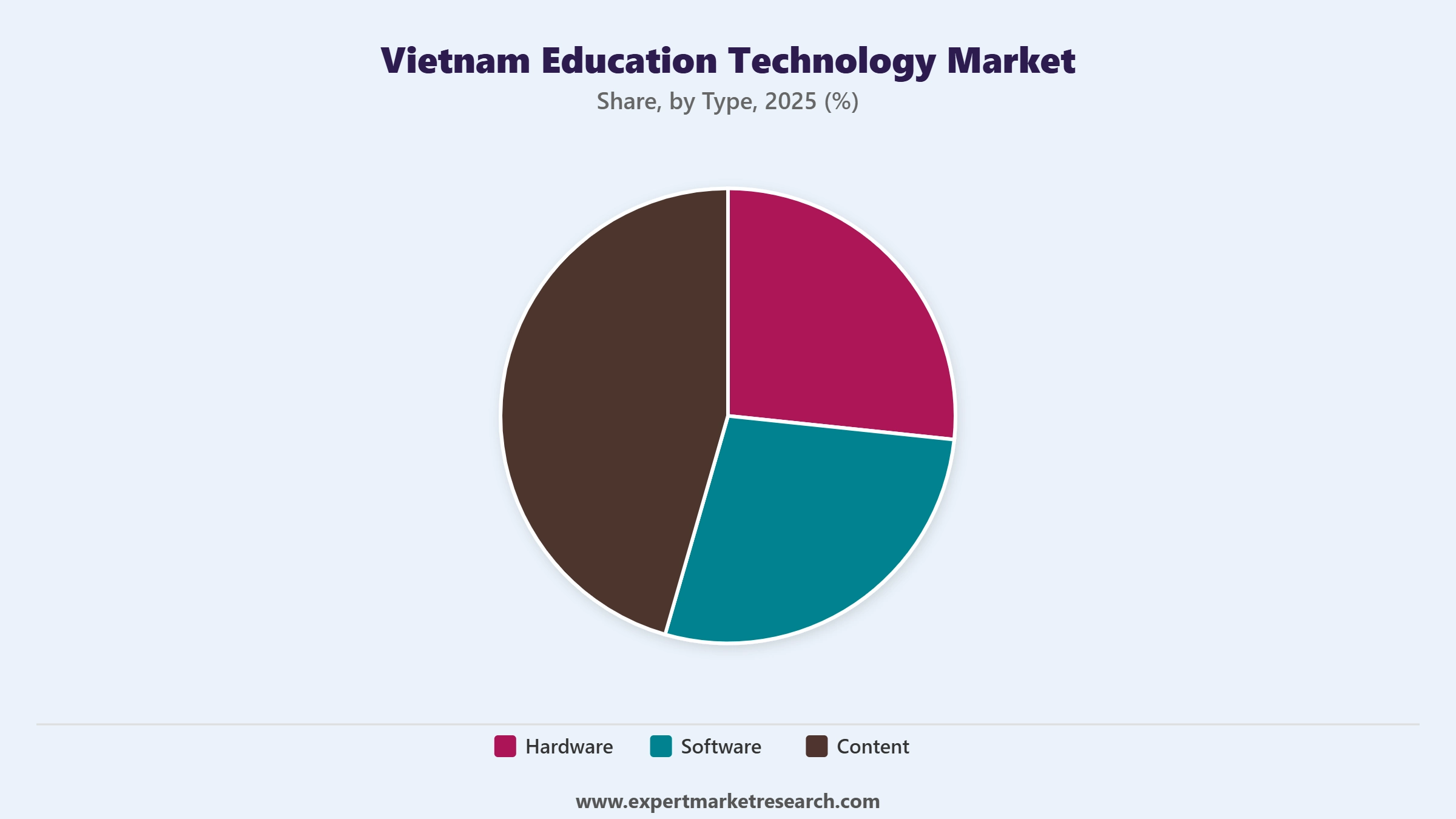
Market Breakup by Type
Key Insight: The hardware component leads Vietnam education technology market, accounting for a high share driven by the upsurge in demand for hardware such as laptops, tablets, and interactive whiteboards. In 2024, manufacturers like Samsung and ViewSonic provided IoT-based smart school solutions that boosted interactivity in the classroom. Government-led efforts for digital transformation in education further propel investment in rugged, high-performance hardware.
Market Breakup by Deployment Mode
Key Insight: Cloud-based deployment is the dominant and fastest-growing mode in Vietnam's edtech market, driven by Vietnam's high mobile internet penetration of 78.8% and the widespread use of smartphones as primary learning devices, particularly among K-12 students. Cloud platforms enable scalable, affordable distribution of educational content to students across urban and rural areas without requiring significant local hardware infrastructure at each school. On-premises deployment remains relevant in higher education institutions and enterprise training environments where data security requirements, limited internet connectivity in some regions, or compliance considerations make local deployment preferable. However, the government's push for cloud-connected national education databases is expected to accelerate cloud adoption even in these segments over the forecast period.
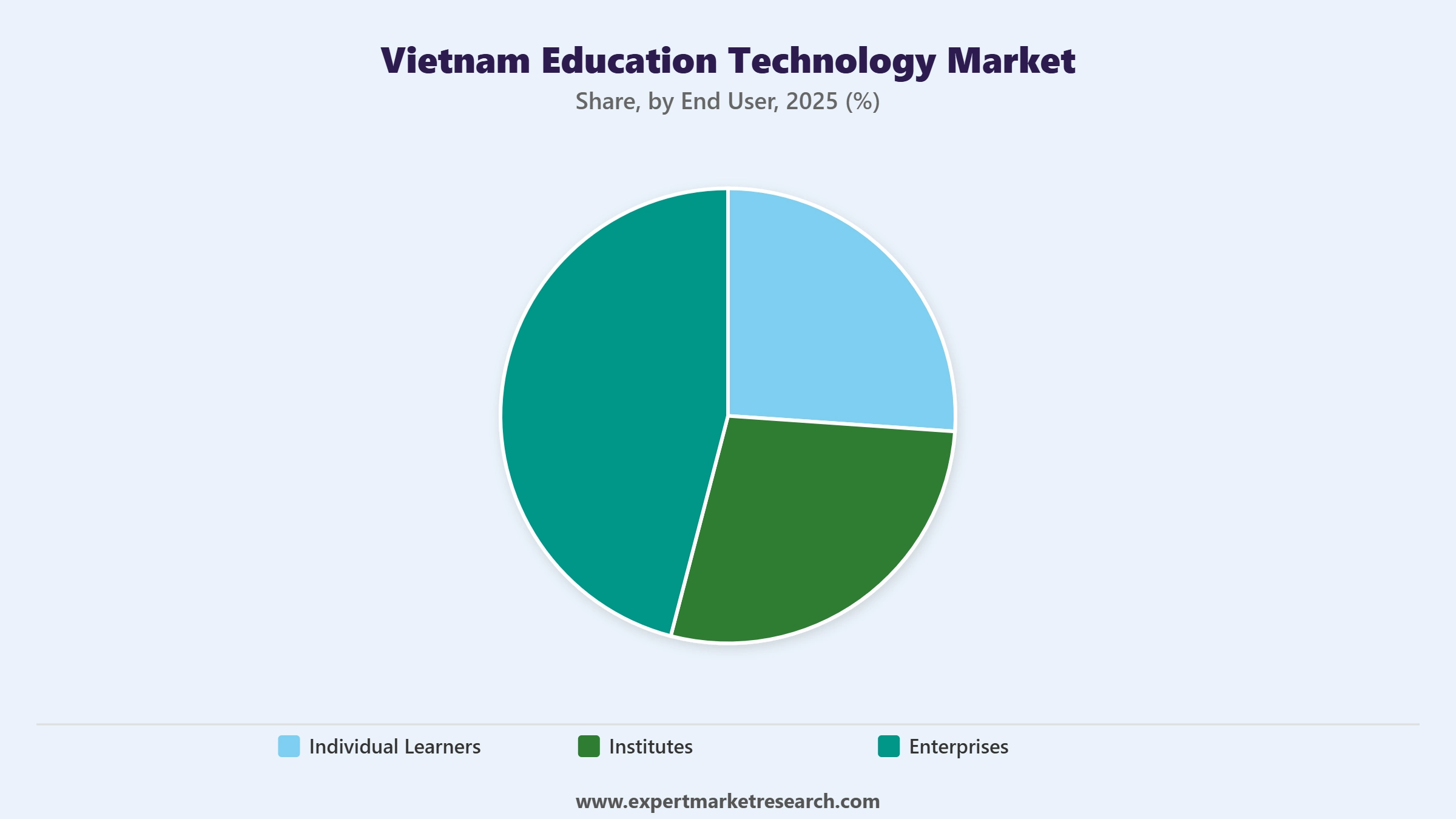
Market Breakup by End User
Key Insight: Individual learners are the largest end user category by volume in Vietnam's edtech market, driven by parents investing in supplementary K-12 learning apps, English language platforms, and university entrance exam preparation tools. Mobile-first platforms such as Edupia's app with 6 million users reflect the scale of individual learner demand. Institutes, including public and private schools, universities, and vocational training centers, are the largest end user by value, as institutional procurement of hardware, learning management systems, and digital content drives large-ticket spending. Enterprises represent a fast-growing segment as Vietnam's expanding corporate sector invests in digital upskilling platforms to address talent gaps in high-technology industries critical to the country's economic development goals.
Read more about this report - REQUEST FREE SAMPLE COPY IN PDF
By Sector
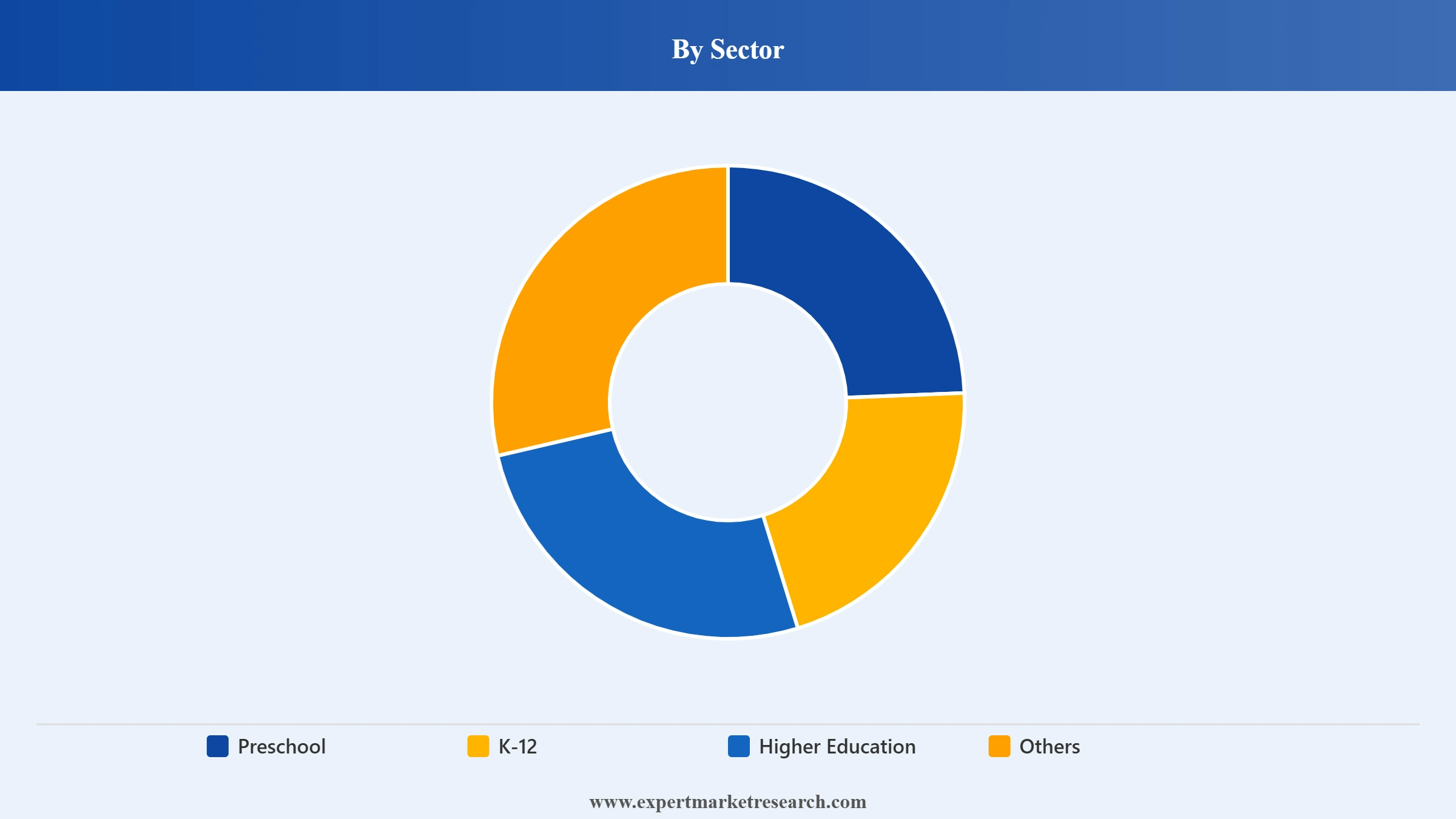
K-12 commands the dominant position in the Vietnam education technology market, reflecting both the sheer scale of Vietnam's school-age population and the deep integration of technology into K-12 learning driven by government digital literacy mandates. Platforms serving K-12 students with exam preparation content, English language learning, and STEM resources have attracted the majority of venture capital investment in the country. Higher education is growing rapidly as university autonomy reforms enable institutions to invest in digital infrastructure and online program delivery, while enterprise edtech is emerging as the next significant growth segment driven by workforce skills deficits.
Read more about this report - REQUEST FREE SAMPLE COPY IN PDF
By Type
Hardware holds the largest share of Vietnam's edtech market by value, as the baseline investment in devices, interactive classroom infrastructure, and connectivity equipment is substantial and precedes software and content adoption. The shift to digital classrooms across Vietnam's large school network creates ongoing hardware refresh demand. Software is the most dynamically growing segment, with AI-powered platforms attracting both venture funding and institutional procurement budgets. Content is a high-value segment particularly for language learning, as English proficiency remains a strategic career and academic priority for Vietnamese students and professionals, driving sustained demand for localized, high-quality digital language content from providers such as ILA Vietnam and VUS.
Read more about this report - REQUEST FREE SAMPLE COPY IN PDF
By End User
Individual learners represent the largest volume segment, with millions of Vietnamese students and parents independently investing in mobile learning apps, exam preparation tools, and language courses. This segment's growth is enabled by affordable data plans, widespread smartphone ownership, and Vietnam's culture of strong parental investment in children's education. Institutes hold the largest value share, as school-wide and university-wide technology deployments involve significant hardware, software licensing, and content subscription budgets. Enterprise end users are the fastest-growing segment by incremental spend, as Vietnam's technology sector growth creates urgent corporate demand for upskilling platforms in AI, software development, and advanced manufacturing disciplines.
Read more about this report - REQUEST FREE SAMPLE COPY IN PDF
The Vietnam Education Technology Market features a combination of domestic Vietnamese edtech companies, international language and learning brands, and a growing number of venture-backed startups serving K-12, higher education, and enterprise segments. The market is competitive, with differentiation based on content quality, AI personalization capabilities, brand trust, and price accessibility for the mass market.
International companies face significant localization challenges in Vietnam, giving domestic players with Vietnamese-language content, culturally resonant pedagogy, and local teaching staff a competitive advantage in K-12 and language learning. However, international brands benefit from global credibility in higher education and corporate training contexts. The significant influx of venture investment since 2023, including over USD 400 million injected by approximately 70 funds in 2025, is enabling leading domestic platforms to scale rapidly and invest in AI-powered product development that narrows the technology gap with international incumbents.
ILA Vietnam is one of Vietnam's most established English language learning centers, operating a national network of language training centers serving students from preschool through adult education. ILA combines physical learning centers with digital platform offerings, providing structured English language curricula aligned with international proficiency standards. The company's deep brand recognition, experienced local teaching faculty, and blended learning model integrating online and in-person instruction position it as a leading player in Vietnam's substantial language education technology segment, which benefits from strong and growing demand for English proficiency across all education levels.
VUS is one of Vietnam's largest and most recognized English language learning organizations, operating an extensive network of centers across Vietnam with a focus on English proficiency education from beginner to advanced levels. Affiliated with the Vietnam-USA Society, VUS offers internationally aligned curricula and certification programs that carry significant credibility with Vietnamese students and employers. VUS has invested in digital learning platforms and blended learning formats to complement its physical center network, enabling flexible access to its programs for students in both urban and regional locations across Vietnam.
Topia Edtech Group is a Vietnamese online education company that has developed a comprehensive platform offering distance learning, professional development programs, and higher education courses for Vietnamese learners. The group has established partnerships with universities and educational institutions to deliver accredited online degree and certification programs, positioning it at the intersection of higher education technology and professional upskilling. Topia's digital platform has expanded its reach significantly by serving learners who require flexible, self-paced education options that complement their professional lives, addressing Vietnam's growing demand for continuous learning and career advancement.
Founded in 2018 and headquartered in Hanoi, Edupia is a rapidly growing Vietnamese edtech company specializing in AI-driven online English learning for K-12 students. The company's mobile app has surpassed 6 million users, offering live classes and personalized tutoring services delivered by Vietnamese instructors with AI-assisted content adaptation. Edupia has raised USD 24 million in total funding from investors including ThinkZone Ventures and Jungle Ventures, reflecting strong investor confidence in its product-market fit and scalable model. The company is expanding beyond Vietnam into Indonesia, Thailand, and Myanmar, signaling its ambition to become a regional K-12 language learning platform.
Other key players in the market are TEKY, Edubit, Hachium, HOCMAI education Inc., and Others.
*Please note that this is only a partial list; the complete list of key players is available in the full report. Additionally, the list of key players can be customized to better suit your needs.*
Vietnam's education technology market is one of Southeast Asia's most compelling growth stories, combining government-mandated digital transformation, a massive young population, surging private investment, and a cultural emphasis on academic achievement and skills acquisition. Our comprehensive Vietnam Education Technology Market Report for 2026 covers every critical dimension from K-12 AI platform growth to government smart school infrastructure, higher education digitalization, and enterprise upskilling trends. Whether you are an edtech investor, a global educational content provider, a hardware manufacturer targeting institutional buyers, or a developer building the next generation of personalized learning tools, this report gives you the strategic intelligence to capture Vietnam's edtech opportunity. Download your free sample today.


Upto 15% Off
USD
$2499 $2249
$3999 $3599
$4999 $4249
$5999 $5099


*While we strive to always give you current and accurate information, the numbers depicted on the website are indicative and may differ from the actual numbers in the main report. At Expert Market Research, we aim to bring you the latest insights and trends in the market. Using our analyses and forecasts, stakeholders can understand the market dynamics, navigate challenges, and capitalize on opportunities to make data-driven strategic decisions.*
At 2025, the market reached an approximate value of USD 1.22 Billion.
The market is projected to grow at a CAGR of 13.10% between 2026 and 2035.
The market is projected to grow significantly during the forecast period 2026 to 2035 to reach USD 4.18 Billion by 2035.
The Vietnam Education Technology Market is driven by the government's National Digital Transformation Program targeting full digitization of the education system by 2030, supported by an education budget accounting for 14.4% of national expenditure. Vietnam's 78.8% internet penetration rate and near-ubiquitous mobile smartphone ownership enable broad access to digital learning platforms. The country's large young population and strong cultural emphasis on education create robust consumer demand for K-12 tutoring, English language learning, and STEM platforms. Growing enterprise demand for workforce upskilling in high-technology sectors, combined with significant domestic and international venture investment totaling over USD 400 million from approximately 70 funds in 2025, is accelerating product development and market reach for leading Vietnamese edtech companies.
By sector, the Vietnam education technology market is divided into Preschool, K-12, Higher Education, and Others. K-12 is the dominant segment, representing approximately 81.5% of total edtech market revenues driven by Vietnam's large school-age population and deep government integration of digital tools in schools. Preschool edtech is growing through mobile-first early learning apps. Higher education is expanding through online and hybrid program delivery, university autonomy reforms, and increasing foreign investment. The Others category includes vocational training, professional development, and enterprise learning platforms, which are growing rapidly as Vietnam addresses skill gaps in its technology-driven economy.
The key trends include the Vietnamese government's systematic digitalization of the national education system by 2030, accelerating adoption of AI-powered and personalized learning platforms across K-12 and language education, strong international investment and partnership activity from development finance institutions and venture capital funds, enterprise edtech expansion driven by workforce skill shortages in high-technology sectors, and growing mobile-first platform adoption enabled by Vietnam's near-universal smartphone penetration.
The key players in the market include ILA Vietnam Co. Ltd., VUS (Vietnam USA Society English Centers), Topia Edtech Group, Edupia, TEKY, Edubit, Hachium, and HOCMAI education Inc.
Explore our key highlights of the report and gain a concise overview of key findings, trends, and actionable insights that will empower your strategic decisions.
| REPORT FEATURES | DETAILS |
| Base Year | 2025 |
| Historical Period | 2019-2025 |
| Forecast Period | 2026-2035 |
| Scope of the Report |
Historical and Forecast Trends, Industry Drivers and Constraints, Historical and Forecast Market Analysis by Segment:
|
| Breakup by Sector |
|
| Breakup by Type |
|
| Breakup by Deployment Mode |
|
| Breakup by End User |
|
| Market Dynamics |
|
| Competitive Landscape |
|
| Companies Covered |
|
Datasheet
One User
USD 2,499
USD 2,249
tax inclusive*
Single User License
One User
USD 3,999
USD 3,599
tax inclusive*
Five User License
Five User
USD 4,999
USD 4,249
tax inclusive*
Corporate License
Unlimited Users
USD 5,999
USD 5,099
tax inclusive*
*Please note that the prices mentioned below are starting prices for each bundle type. Kindly contact our team for further details.*
Flash Bundle
Small Business Bundle
Growth Bundle
Enterprise Bundle
*Please note that the prices mentioned below are starting prices for each bundle type. Kindly contact our team for further details.*
Flash Bundle
Number of Reports: 3
20%
tax inclusive*
Small Business Bundle
Number of Reports: 5
25%
tax inclusive*
Growth Bundle
Number of Reports: 8
30%
tax inclusive*
Enterprise Bundle
Number of Reports: 10
35%
tax inclusive*
How To Order

Select License Type
Choose the right license for your needs and access rights.

Click on ‘Buy Now’
Add the report to your cart with one click and proceed to register.

Select Mode of Payment
Choose a payment option for a secure checkout. You will be redirected accordingly.
Strategic Solutions for Informed Decision-Making
Gain insights to stay ahead and seize opportunities.

Get insights & trends for a competitive edge.

Track prices with detailed trend reports.

Analyse trade data for supply chain insights.

Leverage cost reports for smart savings

Enhance supply chain with partnerships.

Connect For More Information
Our expert team of analysts will offer full support and resolve any queries regarding the report, before and after the purchase.
Our expert team of analysts will offer full support and resolve any queries regarding the report, before and after the purchase.
We employ meticulous research methods, blending advanced analytics and expert insights to deliver accurate, actionable industry intelligence, staying ahead of competitors.
Our skilled analysts offer unparalleled competitive advantage with detailed insights on current and emerging markets, ensuring your strategic edge.
We offer an in-depth yet simplified presentation of industry insights and analysis to meet your specific requirements effectively.




