

Consumer Insights
Uncover trends and behaviors shaping consumer choices today
Procurement Insights
Optimize your sourcing strategy with key market data
Industry Stats
Stay ahead with the latest trends and market analysis.
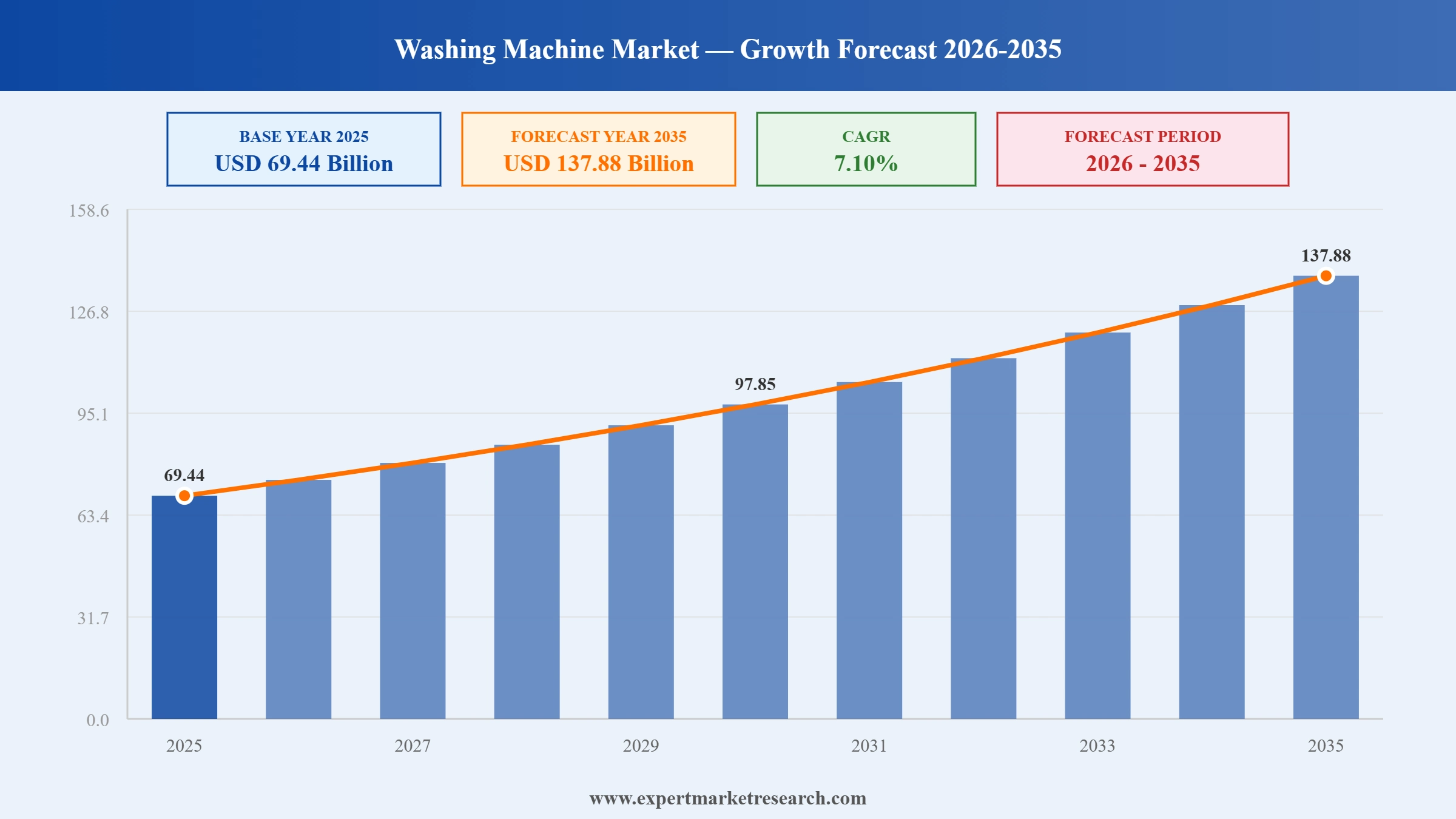
The global washing machine market reached USD 69.44 Billion in 2025 and is projected to grow at a CAGR of 7.10% between 2026 and 2035, reaching USD 137.88 Billion by 2035, according to Expert Market Research. This sustained growth reflects the convergence of rising household formation across high-growth emerging markets, accelerating smart technology integration, growing energy efficiency mandates, and a structural consumer shift toward AI-connected laundry appliances. According to World Bank projections, approximately 5.3 billion people are projected to join the global middle class by 2030, with the majority of growth occurring in Asia Pacific, Africa, and Latin America creating an enormous structural demand base for branded automatic washing machines in markets currently underserved by formal retail and branded appliances.
The washing machine industry spans residential and commercial end-use segments, multiple product types including front-load, top-load, and mini/portable formats, and technology tiers from semi-automatic through fully automatic to AI-connected smart appliances. Companies including Samsung, Whirlpool, LG Electronics, Haier, Bosch, Miele, Electrolux, and Panasonic are competing across all tiers, with innovation concentrated in AI load sensing, adaptive water dosing, steam sanitisation, and smart home ecosystem integration.

Read more about this report - REQUEST FREE SAMPLE COPY IN PDF
The washing machine market refers to the global commercial ecosystem encompassing the design, manufacture, distribution, and sale of laundry appliances used for mechanically washing clothing, household textiles, and industrial fabrics. The market includes all product types front-load washing machines, top-load washing machines, twin-tub semi-automatic washers, portable and mini washing machines, and washer-dryer combination units across the full spectrum of technology tiers from basic semi-automatic models to AI-enabled fully automatic smart appliances with IoT connectivity and smart home ecosystem integration.
The washing machine industry landscape operates across two primary end-use segments: the residential segment serving individual households (approximately 75% of global market revenues) and the commercial segment serving hotels, hospitals, multi-unit residential complexes, laundromats, and institutional operations. Distribution encompasses traditional offline channels, rapidly growing e-commerce platforms, and direct-to-consumer digital channels operated by major brands. The global washing machine market is shaped by demographic, technological, regulatory, and competitive forces that collectively define its growth trajectory across the 2026 to 2035 forecast period.
Read more about this report - REQUEST FREE SAMPLE COPY IN PDF
Urbanisation across Asia Pacific, Sub-Saharan Africa, and Latin America is the primary driver of volume growth, creating tens of millions of first-time washing machine buyer households annually. World Bank projections indicate 5.3 billion global middle class consumers by 2030 the majority of growth occurring in Asia and Africa regions where washing machine penetration remains significantly below developed-market levels. India, with penetration below 15% of total households against a population of 1.4 billion, represents the single largest structural growth opportunity in the global market.
AI and IoT connectivity represent the most commercially significant growth driver by value, enabling premium pricing uplift of 25–40% relative to comparable conventional models. Samsung's Bespoke AI Laundry lineup unveiled at CES 2026, Whirlpool's FreshFlow Vent and UV Clean technologies showcased at KBIS 2026, LG's AI DD 2.0 platform with enhanced fabric sensing and pet-care cycles, and Samsung's 2026 Bespoke AI Laundry Combo with AI Wash & Dry+ all demonstrate the sustained pace of AI innovation across the premium tier. As Samsung has demonstrated with its new LCD jog-dial Bespoke AI variant positioned below touchscreen flagships on price, smart features are progressively migrating from ultra-premium to mainstream price tiers.
Government programmes expanding electricity and water access in emerging markets are directly enabling first-time washing machine adoption. India's Saubhagya Scheme materially expanded the addressable market for electric household appliances in rural and semi-urban Indian markets. Similar electrification programmes across Sub-Saharan Africa are creating foundational conditions for washing machine market penetration in geographies where utility access was previously the primary adoption barrier.
Read more about this report - REQUEST FREE SAMPLE COPY IN PDF
Regulatory mandates for energy and water efficiency are driving product replacement cycles in mature European markets and raising quality baselines globally. EU Ecodesign 2021 regulations have effectively required standardisation of inverter motor technology, cold wash capabilities, and eco cycle programming. Whirlpool's introduction of the FreshFlow Vent System at KBIS 2026 for odour reduction without rewashing cycles, and Bosch's ActiveOxygen technology that refreshes laundry using ozone, exemplify how energy efficiency imperatives are continuously driving innovation investment.
The structural consumer migration from semi-automatic to fully automatic, and from conventional to AI-connected smart washing machines, drives average selling price uplift and market revenue growth above underlying unit volume trends. Front-load machines, commanding 15–40% price premiums over top-loaders, are gaining share in urban India and premium Asian segments. LG India's 2026 range launch with separate Essential and Premium series illustrates how manufacturers are addressing both the premiumisation and value segments simultaneously to maximise market coverage.
By 2026, AI has moved from a premium novelty to an operational differentiator embedded across mid-range and premium washing machine tiers. Samsung's Bespoke AI Laundry Combo unveiled at CES 2026 and globally in May 2026 demonstrates real-time fabric type, soil level, and load size analysis that automatically optimises washing and drying settings. LG's AI DD 2.0 platform launched in India in May 2026 with enhanced fabric sensing, motion control, and remote cycle management through the ThinQ app brings AI fabric care to both the Essential and Premium product tiers. The 2026 CES and KBIS exhibitions confirmed that AI load sensing, adaptive detergent dosing, and off-peak energy scheduling are now the primary competitive battlegrounds for premium washing machine market share.
IoT ecosystem integration around washing machines deepened significantly in 2026. Samsung's Bixby voice integration in the Bespoke AI Laundry Combo, showcased in May 2026, makes appliance interaction conversational rather than command-driven a significant UX advancement for smart home consumers. LG's AI DD 2.0 range launched in India offers Wi-Fi connectivity and automatic detergent dispensing across both Essential and Premium tiers, extending smart connectivity beyond the ultra-premium segment. Whirlpool's UV Clean sanitisation technology in the KBIS 2026 Maytag front-load tower addresses post-pandemic consumer hygiene priorities within a connected appliance ecosystem context.
Read more about this report - REQUEST FREE SAMPLE COPY IN PDF
Washer-dryer combination appliances experienced strong momentum in 2026, with Samsung's Bespoke AI Washer Dryer Combo 10 kg + 6 kg launched in the Philippines (March 2026) and the 2026 Bespoke AI Laundry Combo unveiled globally (May 2026) as landmark launches. LG's AI DD 2.0 range also includes washer-dryer combination models with up to 16 kg capacity, launched in December 2025. The combination format is growing rapidly across European apartment markets, premium Southeast Asian urban segments, and Indian consumers seeking space-efficient single-unit solutions.
Waterless and ultra-low-water washing technologies are gaining commercial importance across water-stressed markets. Samsung's EcoBubble technology, which creates concentrated bubble solutions enabling effective washing at lower temperatures with reduced water volumes, is commercially available across Samsung's product range. Specialist waterless technology developers are advancing polymer bead-based cleaning systems that dramatically reduce water and detergent consumption per cycle. As water scarcity intensifies across Middle Eastern, South Asian, and North African markets, these technologies are expected to transition from premium niche to mainstream commercial relevance.
The distribution landscape for washing machines is undergoing structural transformation as e-commerce captures growing share. LG India's 2026 range launch was made available simultaneously through LG brand stores, multi-brand retail, and major e-commerce platforms illustrating the omnichannel imperative for major appliance brands in India. In China, JD.com and Tmall dominate major appliance e-commerce. Samsung's Philippines pre-order campaign (March 2026) was exclusively digital, demonstrating the viability of e-commerce-first launch strategies for premium appliances across Southeast Asian markets.
The global washing machine market faces several structural and cyclical challenges that create headwinds for profitability and expansion. Raw material cost volatility particularly for steel, copper, aluminium, and semiconductor components remains the most persistent operational challenge, directly compressing gross margins where retail pricing competition and consumer price sensitivity limit pass-through capacity. The supply chain disruptions during the 2021–2023 semiconductor shortage exposed deep structural vulnerabilities in concentrated electronic component sourcing from Taiwan, South Korea, and China, prompting major manufacturers to invest in supply chain diversification at significant cost. Intensifying competition from Chinese manufacturers including Haier, Midea, and TCL which have systematically improved product quality while maintaining aggressive export pricing continues to compress margins and challenge market share for established Western and Korean brands.
Several structural dynamics restrain the pace of market expansion in specific segments and geographies. Price sensitivity in highest-potential emerging markets India, Sub-Saharan Africa, Southeast Asia creates a ceiling on fully automatic and smart washing machine adoption among the broad addressable household base, limiting premium segment growth to urban income segments despite strong structural demand. Unreliable electricity supply and voltage fluctuation in Sub-Saharan African and South Asian markets damage appliance electronics and create consumer hesitancy around expensive purchases without reliable warranty infrastructure. The long washing machine replacement cycle averaging 10–12 years in developed markets constrains annual replacement demand volumes, creating dependence on new household formation as the primary volume catalyst. Regulatory fragmentation across energy efficiency standards, safety certifications, and water performance requirements across national markets additionally imposes compliance costs that burden manufacturers and international exporters serving multiple geographies.
Despite these headwinds, the global washing machine market presents exceptional commercial opportunities. The structural underpenetration of automatic washing machines in South Asian, Sub-Saharan African, and Southeast Asian markets against the World Bank's projection of 5.3 billion global middle class consumers by 2030 offers the largest long-term volume growth opportunity in the global appliance industry. The smart washing machine tier is simultaneously creating premium value opportunities in developed markets and aspiring upper-middle segments of India, China, and ASEAN as AI and IoT features migrate down the price curve evidenced by Samsung's new entry-level Bespoke AI LCD jog-dial variant at CES 2026. Government electricity access programmes including India's Saubhagya Scheme are progressively removing utility access barriers that historically prevented washing machine adoption among hundreds of millions of rural and semi-urban consumers. For comprehensive opportunity sizing, investment-grade segment forecasts, and strategic entry frameworks across all five regional geographies, explore Expert Market Research's complete Washing Machine Market report.
Expert Market Research's Washing Machine Market report provides comprehensive segmentation analysis across product type, technology, capacity, end use, and distribution channel dimensions, with market size, share, and CAGR data for each segment over the full 2026 to 2035 forecast period.
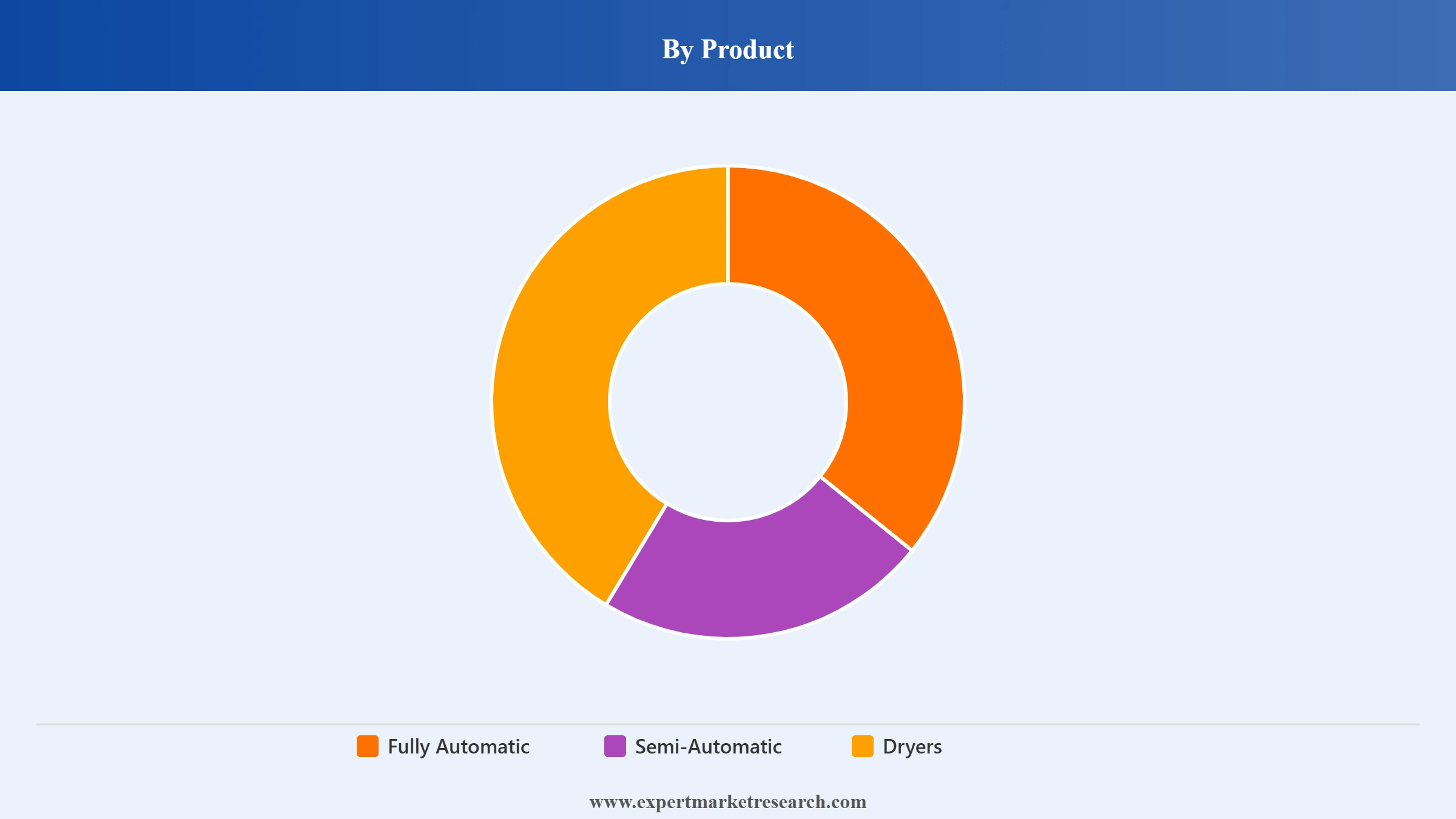
Market Breakup by Product
Key Insight: Front-load washing machines hold the largest share by revenue, commanding 15–40% price premiums over top-loaders through superior water and energy efficiency, higher spin speeds, and premium positioning. Top-load machines lead by unit volume across North America, India, and Latin America. Mini and portable washing machines are the fastest-growing format, particularly in China and European studio apartment markets. Washer-dryer combinations are growing strongly following Samsung's 2026 Bespoke AI Combo launches (CES January, Philippines March, Global May) and LG's AI DD 2.0 combination models.
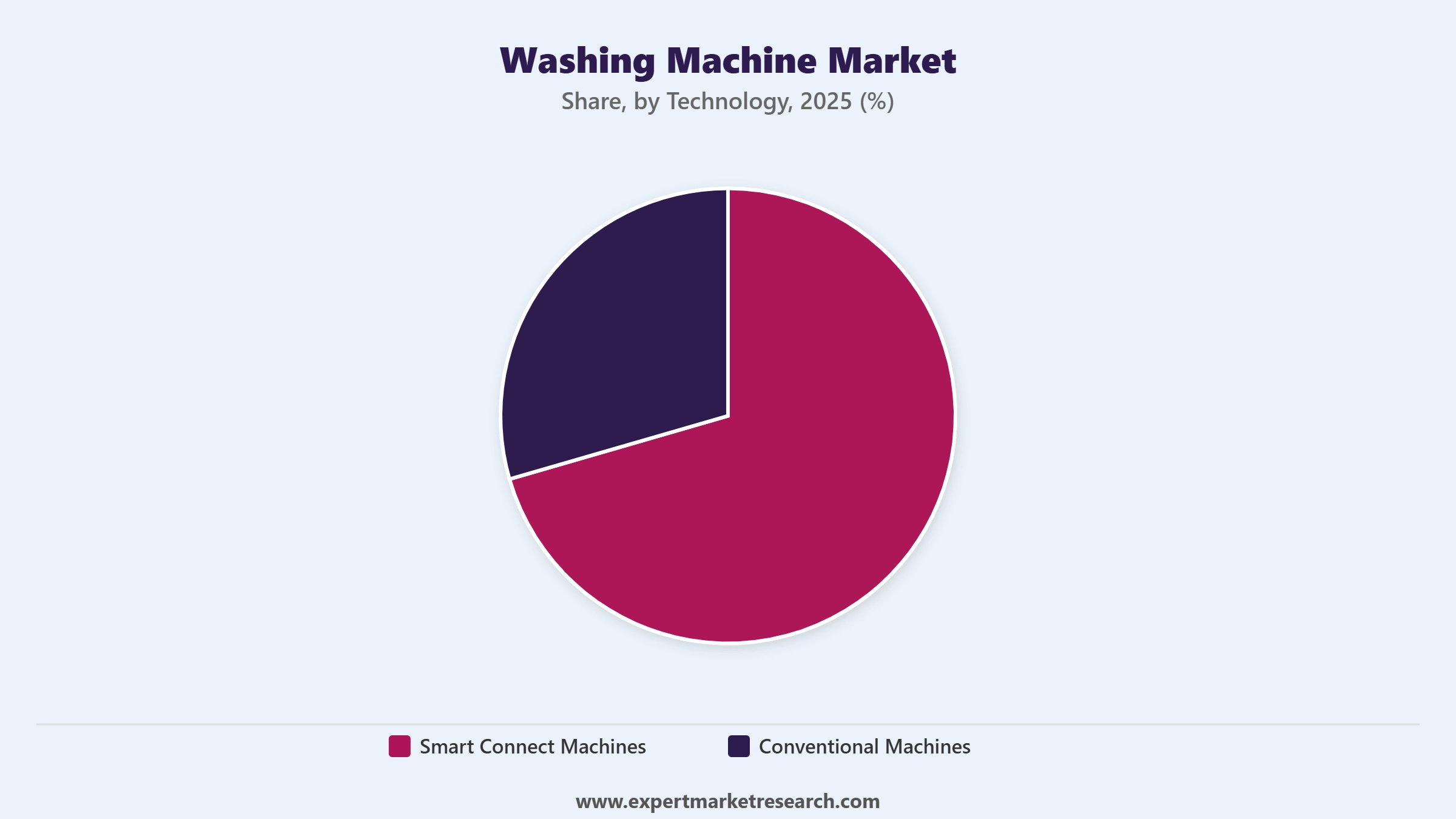
Market Breakup by Technology
Key Insight: The fully automatic segment is the largest and fastest-growing technology tier, estimated at approximately USD 60.7 billion in 2025 and projected to reach USD 91.3 billion by 2035 . Semi-automatic machines retain significant presence in India, Sub-Saharan Africa, and parts of Southeast Asia. Smart/IoT-connected machines enabled by Wi-Fi, Bluetooth, AI load sensing, and voice assistant integration are growing above the overall 7.10% CAGR, with Samsung (Bespoke AI), LG (ThinQ AI DD 2.0), and Whirlpool (UV Clean + FreshFlow) as the principal innovators in 2026.
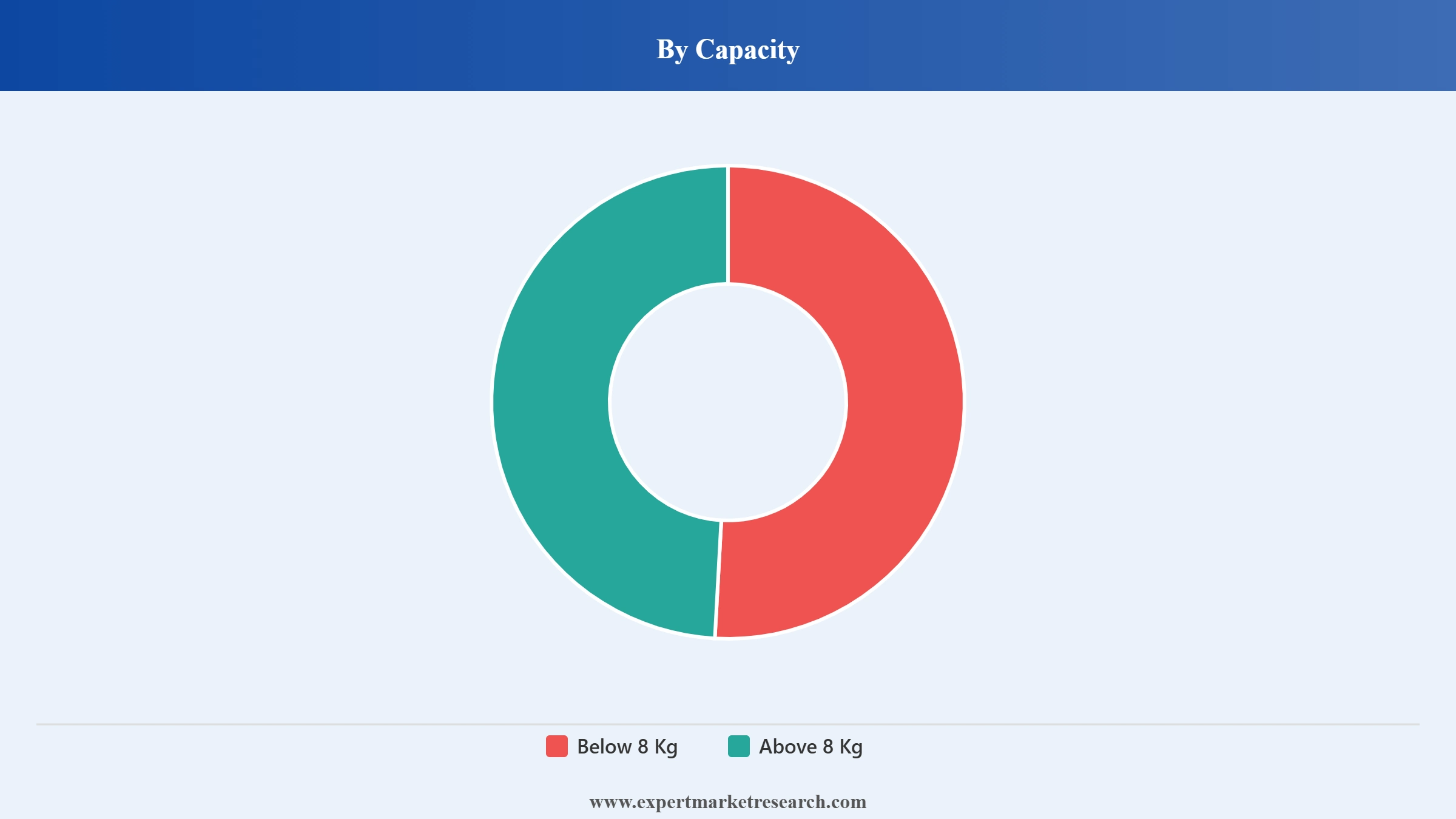
Market Breakup by Capacity
Key Insight: The 5-8 kg capacity range is the largest segment globally, serving mainstream household requirements for families of 2-4 persons. Above-8 kg large-capacity machines are the fastest-growing capacity segment, driven by multi-generational household compositions in Asia and commercial laundry demand. The 10 kg+ category has significant momentum following Samsung's Bespoke AI Washer Dryer Combo (10 kg + 6 kg) launched in the Philippines (March 2026) and LG's 16 kg AI DD 2.0 models (December 2025). Below-5 kg mini washing machines are growing rapidly in compact urban markets.
Market Breakup by End-Use
Key Insight: The residential segment accounts for approximately 75% of global washing machine market revenues in 2025 . The commercial segment commands significantly higher average unit values, driven by throughput capacity, cycle durability, and total cost of ownership requirements. LG's commercial laundry partnership expansion with WASH in the US and Canada (2024) demonstrates the strategic importance major manufacturers attach to the commercial laundry services segment.
Market Breakup by Region
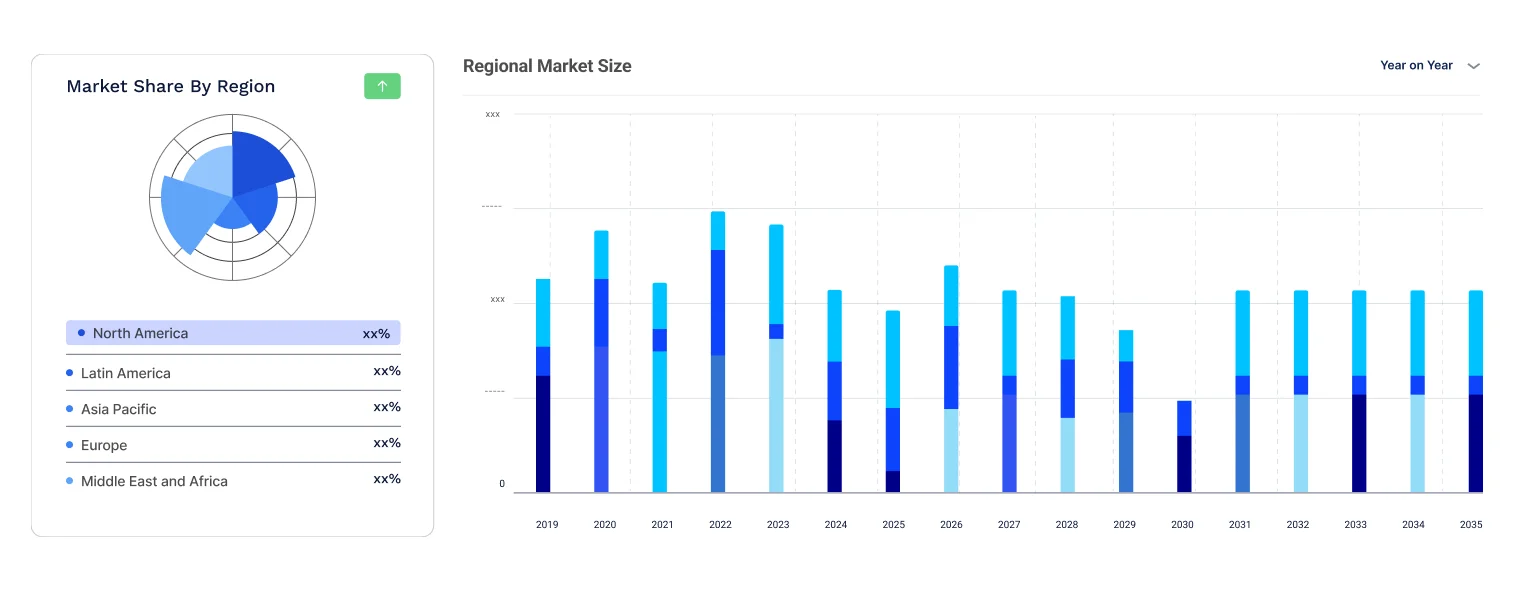
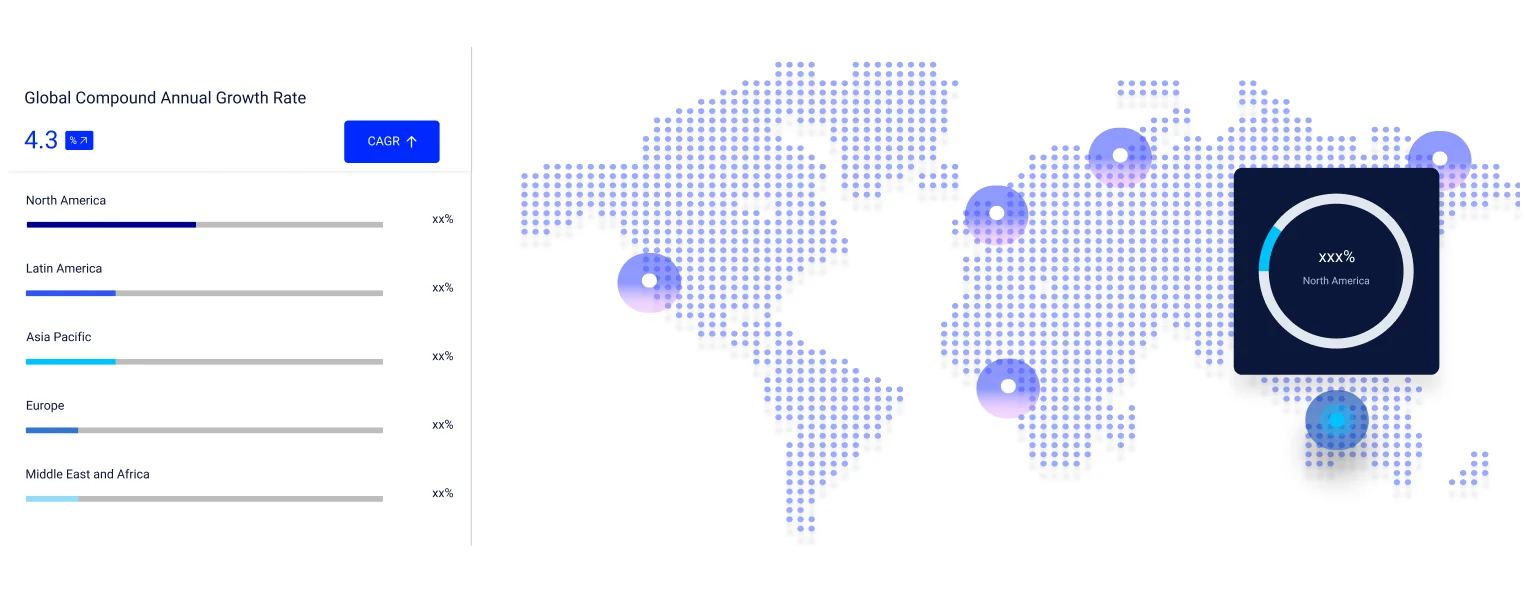
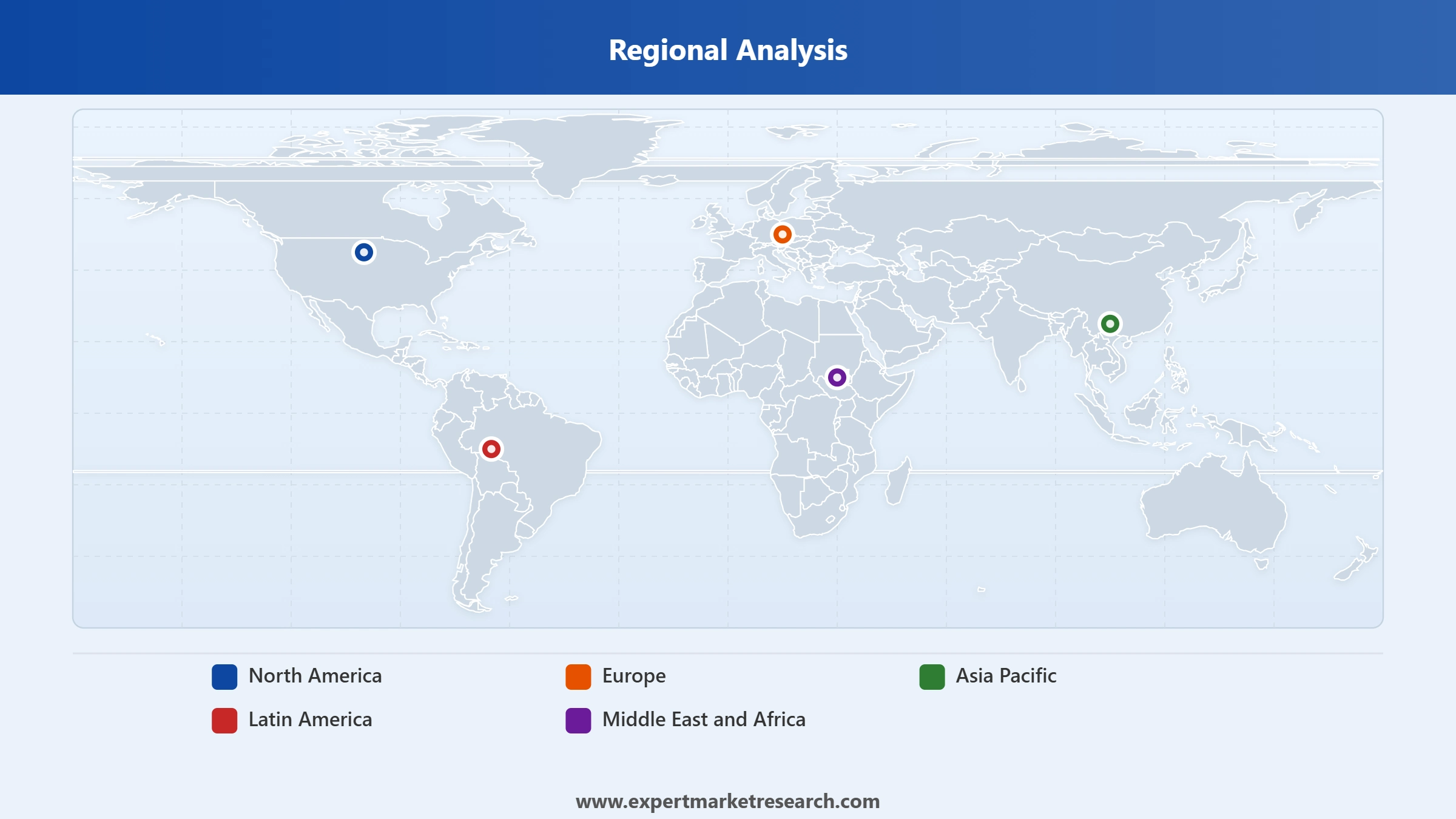
Key Insight: Asia Pacific holds the largest share in the global washing machine market powered by rising appliance adoption, urban housing and premiumization that create a deep and steady demand base. North America grows at an accelerated speed as home renovation cycles and smart-appliance ecosystems boosts washer upgrades. Europe maintains stable demand shaped by energy-efficiency expectations and compact home layouts. Latin America prioritizes affordability and durability, while Middle East & Africa emphasize ruggedness and water-management reliability.
Read more about this report - REQUEST FREE SAMPLE COPY IN PDF
Asia Pacific dominates the global washing machine market, accounting for approximately 41% of global revenues in 2025, and is projected to record the highest regional CAGR over the 2026 to 2035 forecast period. China is the world's largest washing machine manufacturing and consumption market. India is the most structurally significant high-growth national market, with penetration below 15% of total households and government electrification programmes including the Saubhagya Scheme progressively enabling first-time appliance adoption in rural and semi-urban markets. LG India's May 2026 home appliances range launch with dual Essential and Premium series directly addresses the full spectrum of Indian consumer purchasing power. Samsung's Philippines high-capacity launch (March 2026) illustrates the brand's Southeast Asian market investment. South Korea and Japan are mature high-penetration markets; Vietnam, Indonesia, Thailand, and the Philippines are the fastest-growing ASEAN frontier markets.
North America accounts for approximately 24% of global revenues, anchored by the United States. Whirlpool's KBIS 2026 showcase of the Maytag Pet Pro Top Load Laundry System and FreshFlow Vent front-load tower underscores the brand's commitment to US manufacturing and premium product leadership in its home market. Samsung's AI-powered Bespoke AI Laundry lineup unveiled at CES 2026 targets the North American premium consumer segment with faster wash-to-dry cycles and enhanced heat exchanger technology. Key country highlights include Canada's growing demand for energy-efficient front-load appliances aligned with provincial energy rebate programmes, and Mexico's expanding middle-class driving entry-level fully automatic adoption.
Read more about this report - REQUEST FREE SAMPLE COPY IN PDF
Europe represents approximately 22% of global revenues. The EU Ecodesign 2021 regulation, which mandates minimum energy performance standards, has raised the technology baseline across all products sold in the European Union. Germany, France, UK, Italy, and Spain are the primary revenue contributors. Germany leads European smart appliance adoption; right-to-repair frameworks coming into effect across the EU are additionally shaping product durability and after-sales service market dynamics.
The Middle East and Africa region accounts for approximately 8% of global revenues, with Gulf Cooperation Council states as the most commercially developed sub-market. UAE, Saudi Arabia, Qatar, Kuwait, and Bahrain constitute a premium appliance market with high consumer disposable incomes and cultural preference for large-capacity front-load machines from Samsung, LG, and Miele. Sub-Saharan Africa with Nigeria, Kenya, South Africa, Ethiopia, and Tanzania as frontier markets is at an earlier adoption stage, with government electricity access programmes and expanding mobile retail networks progressively enabling washing machine market formalisation. Electricity access initiatives across Sub-Saharan Africa are a key structural demand enabler for the household appliance category.
Latin America accounts for approximately 5% of global revenues, with Brazil and Mexico as primary markets. Whirlpool's Brastemp and Consul brands lead the Brazilian market alongside Samsung, LG, and Electrolux. Mexico's market is growing through urbanisation and dual-income household formation. The broader region is at an early premiumisation stage, with significant volume opportunity in the transition from semi-automatic to fully automatic machines as incomes rise across major metropolitan areas.
The market is crowded, but the real competition is no longer about drum size. It now centers on who can best protect fabrics, reduce utility bills, and eliminate hassle for busy households and small businesses. Key washing machine market players like LG, Samsung, BSH and IFB are all pushing AI-driven wash logic, auto-dosing and quieter operation as anchor differentiators. At the same time, there is a clear opportunity in professional and multi-housing laundry, where uptime, remote monitoring and rugged design matter more than chrome accents.
Washing machine companies that bundle machines with service contracts, spare-parts reliability and app-based diagnostics are finding better margins and long-term retention cycles. Another focus area is sustainability, where brands experiment with microplastic filters, low-temperature stain removal, and recycled-plastic cabinets.
LG Electronics Inc., founded in 1958 and headquartered in Seoul, South Korea, positions its washing machines around AI fabric care and low-noise operation. The company’s portfolio ranges from compact front-loaders to large-capacity AI washer-dryer combos aimed at premium urban households. LG leans heavily on smart connectivity, auto-dose and steam features to reduce manual decision-making for users.
Samsung Electronics Co., Ltd., established in 1969 and headquartered in South Korea, focuses on blending strong design with practical innovation in the washing machine segment. Its range covers front-load and top-load models with digital inverter motors, eco-bubble style wash systems and app-based smart control.
BSH Home Appliances, part of BSH Hausgeräte GmbH founded in 1967 and headquartered in Munich, Germany, is best known for Bosch and Siemens laundry brands. It positions its front-load washers around energy efficiency, fabric care and robust build quality for European and global urban homes. BSH focuses on quiet operation, precise water management and gentle drum movements to protect garments.
IFB Appliances, under IFB Industries founded in 1974 and headquartered in Kolkata, India, is a key washing machine player in India and select international markets. The company built its reputation on front-load machines with strong wash performance, fabric-focused programs and in-house service coverage.
*Please note that this is only a partial list; the complete list of key players is available in the full report. Additionally, the list of key players can be customized to better suit your needs.*
Other key players in the market include Voltas Limited, Panasonic Corporation, Toshiba Lifestyle Products and Services Corporation, Whirlpool Corporation, Electrolux, and GE Appliances, among others.
Unlock the latest insights with our washing machine market trends 2026 report. Discover regional growth patterns, consumer preferences, and key industry players. Stay ahead of competition with trusted data and expert analysis. Download your free sample report today and drive informed decisions in the market.


Upto 15% Off
USD
$2999 $2699
$4399 $3959
$5599 $4759
$6659 $5660


*While we strive to always give you current and accurate information, the numbers depicted on the website are indicative and may differ from the actual numbers in the main report. At Expert Market Research, we aim to bring you the latest insights and trends in the market. Using our analyses and forecasts, stakeholders can understand the market dynamics, navigate challenges, and capitalize on opportunities to make data-driven strategic decisions.*
In 2025, the market reached an approximate value of USD 69.44 Billion.
The market is projected to grow at a CAGR of 7.10% between 2026 and 2035.
The market is estimated to witness a healthy growth in the forecast period of 2026-2035 to reach about USD 137.88 Billion by 2035.
Stakeholders are refining AI wash platforms, partnering with detergents, expanding service contracts, localizing drum programs, investing in recycled materials, and positioning washers as long-term fabric-care systems rather than simple water-and-spin appliances.
The industry is projected to be propelled by the increasing trend of smart homes, the rising demand for smart washing machines, and the integration of the Internet of things (IoT) in washing machines.
The major regions in the industry are North America, Latin America, the Middle East and Africa, Europe, and the Asia Pacific.
The major products of washing machine in the industry are fully automatic, semi-automatic, and dryers.
The different technologies of washing machine are smart connect machines and conventional machines.
The various capacities of washing machine are below 8 kg and above 8 kg.
The significant end uses in the market are commercial and residential.
The key players in the market include LG Electronics Inc., Samsung Electronics Co., Ltd., BSH Home Appliances Ltd, IFB Appliances, Voltas Limited, Panasonic Corporation, Toshiba Lifestyle Products and Services Corporation, Whirlpool Corporation, Electrolux, and GE Appliances, among others.
Companies are juggling rising input costs, intense price competition, fast technology cycles, evolving energy regulations, and the need to maintain strong service networks while still convincing buyers to upgrade before machines fail.
Explore our key highlights of the report and gain a concise overview of key findings, trends, and actionable insights that will empower your strategic decisions.
| REPORT FEATURES | DETAILS |
| Base Year | 2025 |
| Historical Period | 2019-2025 |
| Forecast Period | 2026-2035 |
| Scope of the Report |
Historical and Forecast Trends, Industry Drivers and Constraints, Historical and Forecast Market Analysis by Segment:
|
| Breakup by Product |
|
| Breakup by Technology |
|
| Breakup by Capacity |
|
| Breakup by End-Use |
|
| Breakup by Region |
|
| Market Dynamics |
|
| Trade Data Analysis |
|
| Competitive Landscape |
|
| Companies Covered |
|
Datasheet
One User
USD 2,999
USD 2,699
tax inclusive*
Single User License
One User
USD 4,399
USD 3,959
tax inclusive*
Five User License
Five User
USD 5,599
USD 4,759
tax inclusive*
Corporate License
Unlimited Users
USD 6,659
USD 5,660
tax inclusive*
*Please note that the prices mentioned below are starting prices for each bundle type. Kindly contact our team for further details.*
Flash Bundle
Small Business Bundle
Growth Bundle
Enterprise Bundle
*Please note that the prices mentioned below are starting prices for each bundle type. Kindly contact our team for further details.*
Flash Bundle
Number of Reports: 3
20%
tax inclusive*
Small Business Bundle
Number of Reports: 5
25%
tax inclusive*
Growth Bundle
Number of Reports: 8
30%
tax inclusive*
Enterprise Bundle
Number of Reports: 10
35%
tax inclusive*
How To Order

Select License Type
Choose the right license for your needs and access rights.

Click on ‘Buy Now’
Add the report to your cart with one click and proceed to register.

Select Mode of Payment
Choose a payment option for a secure checkout. You will be redirected accordingly.
Strategic Solutions for Informed Decision-Making
Gain insights to stay ahead and seize opportunities.

Get insights & trends for a competitive edge.

Track prices with detailed trend reports.

Analyse trade data for supply chain insights.

Leverage cost reports for smart savings

Enhance supply chain with partnerships.

Connect For More Information
Our expert team of analysts will offer full support and resolve any queries regarding the report, before and after the purchase.
Our expert team of analysts will offer full support and resolve any queries regarding the report, before and after the purchase.
We employ meticulous research methods, blending advanced analytics and expert insights to deliver accurate, actionable industry intelligence, staying ahead of competitors.
Our skilled analysts offer unparalleled competitive advantage with detailed insights on current and emerging markets, ensuring your strategic edge.
We offer an in-depth yet simplified presentation of industry insights and analysis to meet your specific requirements effectively.




