

Consumer Insights
Uncover trends and behaviors shaping consumer choices today
Procurement Insights
Optimize your sourcing strategy with key market data
Industry Stats
Stay ahead with the latest trends and market analysis.
The wood recycling market attained a value of USD 22.43 Billion in 2025. The market is expected to grow at a CAGR of 5.10% during the forecast period of 2026-2035. By 2035, the market is expected to reach USD 36.89 Billion.
Governments across the world are imposing stricter laws regarding waste management and the diversion of landfills. Consequently, industries are under pressure to find ways to reuse and recycle wood waste. This is happening because, in the European Union, they are directing and implementing the circular economy action plans, which, among other things, demand recycled content quotas and sustainable procurement as these mandates not only raise the costs of compliance but also create a stable demand for recycled wood products.
The wood recycling market is significantly impacted by new technologies, such as AI/robotic sorting, optical and X-ray-based separation, and automated contamination detection, which are all the initiatives to maximize capacity and material recovery. TOMRA Recycling launched the updated X-TRACT™ system using the state-of-the-art X-Ray Transmission (XRT) technology for accurate wood waste sorting precisely in May 2025. More efficient methods of decontamination are reducing the number of paints, adhesives, and metals that impair the quality of recycled wood. At the same time, product specification tightening also allows the processors to requalify the product to be used in higher value applications.
Compound Annual Growth Rate
5.1%
Value in USD Billion
2026-2035
ABB Robotics and Stena Recycling launched a partnership to recycle ABB’s yearly ~1,300 tonnes of wood waste from its Västerås factory. Instead of burning the wood, it is chipped and turned into particle boards for furniture. The initiative boosts ABB’s material recycling rate from 36% to over 90%, reducing their environmental footprint.
VLS Environmental Solutions introduced a Pallet Recycling Program to convert discarded wood pallets into clean, renewable energy. By repurposing wood waste into fuel, the program supports sustainability goals while offering cost-effective waste management and energy recovery solutions across multiple sectors.
DIEFFENBACHER and Unilin Technologies partnered to commercialize “Osiris,” Unilin’s patented fiberboard recycling technology. This collaboration aims to advance sustainability in flooring and panel production by enabling complete recycling of wood fiberboards like MDF, HDF, THDF, and insulation boards, promoting a circular economy in wood-based material industries.
Farrans launched a partnership with Community Wood Recycling to promote sustainable construction practices to divert wood waste from landfill by reusing and recycling timber from construction sites. It also supports social impact by creating training and employment opportunities for disadvantaged people via a nationwide network of social enterprises.
Rapid urban development is boosting the wood recycling market share via construction, renovation, and demolition. As per the United Nations, 68% of the global population is projected to live in urban areas by 2050. Regions, such as Asia-Pacific, Latin America, and emerging economies are seeing high infrastructure growth, which results in more wood waste that needs recycling. This offers opportunities for collection, processing, and supply of recycled wood materials, especially in regions lacking mature waste infrastructure.
To meet increasing volumes of wood waste and higher-quality standards, investments in infrastructure, such as collection systems, sorting yards, processing plants, and biomass plants are growing. This includes better logistic systems, pretreatment facilities, advanced drying, decontamination, and separation technologies. In December 2024, Solum A/S opened a robotic sorting facility for construction waste in Roskilde, Denmark, deploying ZenRobotics technology, to achieve high-purity wood separation.
The construction and demolition sectors are propelling the wood recycling industry value. As
Green building becomes mainstream; there is increased demand for recycled wood products like panels, structural elements, and flooring. Builders are using engineered wood with recycled components to reduce environmental footprint and meet sustainable procurement requirements. Certifications, such as LEED and BREEAM also reward the use of reclaimed or recycled materials, pushing architects and developers to source sustainable alternatives.
Buyers increasingly require proof of origin, contamination levels, recycled content, and life-cycle assessments. Tools like blockchain, digital material passports, and GPS or QR tag-based monitoring are being adopted to ensure traceability and transparency across the supply chain. These technologies allow for real-time tracking of wood waste from source to reuse, ensuring compliance with environmental regulations and sustainability benchmarks. Certifications and third-party audits also help in the growth of the wood recycling market.
More companies are integrating circular economy practices like designing reusability, repair, reclamation, and closed-loop supply chains. In August 2023, Unilin partnered with Wood Loop to collect surplus wood waste from the waste, demolition, and recycling sectors. Business models also include wood reuse, depot systems, pallet pooling, second life furniture. Such models reduce dependency on virgin wood and lead to more efficient use of resource flows. They also align with regulatory trends and consumer expectations.
Read more about this report - REQUEST FREE SAMPLE COPY IN PDF
The EMR’s report titled “Wood Recycling Market Report and Forecast 2026-2035” offers a detailed analysis of the market based on the following segments:
Market Breakup by Grade
Key Insight: The paper and paperboard segment is picking up considerable momentum. Corrugated and Kraft Grade is the segment leader, spurred by booming packaging and e-commerce industries on account of its excellent fiber strength and high recyclability. Mixed Grade comes next, which is a mix of many different types of papers usually collected through municipal recycling with wide but lower value uses. Newspapers and Magazines are next in line, with falling volumes because of digital media but still utilized in tissue and printing paper.
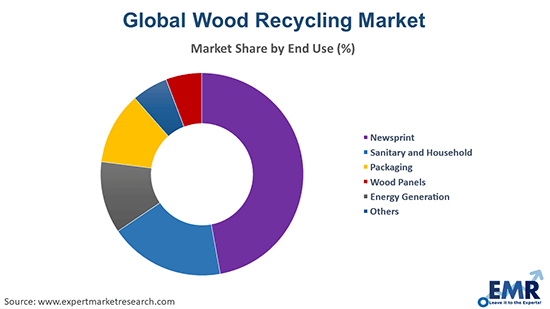
Market Breakup by End Use
Key Insight: In the wood recycling industry, the packaging segment leads, with its growth primarily fueled by the need for green and affordable materials. Recycled wood and paper products, particularly corrugated boards and kraft paper, are widely utilized in shipping, e-commerce, retail, and food packaging. In November 2023, Fedemco, the representative of Spain's wooden packaging sector, introduced the Ecowoox certification to encourage sustainability. Lightweight, resistant, and biodegradable packaging produced from recycled fibers lowers dependence on virgin pulp even more and enables companies to achieve environmental compliance and minimize carbon footprints.
Market Breakup by Region
Key Insight: North America wood recycling market leads with sophisticated infrastructure, strong environmental regulations, and robust government support. In June 2025, the government of Quebec invested USD 25.5 million to support secondary wood manufacturing, such as panel manufacturing and recycled wood utilization. Rising embracement of green building standards and biomass energy programs fuel further expansion. Moreover, increasing awareness of circular economy concepts among industries and consumers fuels innovation and market demand for recycled wood products in packaging, panels, and power generation.
Wood Recycling Grades to Gain Momentum
The wood recycling industry is divided into Grade A, B, and C, depending on contamination levels and end-use potential. Grade A wood is best suited for making animal bedding, particleboard, and biomass fuel. Grade B is fit for energy recovery and panelboard manufacturing after processing. Grade C is generally utilized in biomass power plants under stringent regulation. In March 2025, Clarity Environmental launched a specialized division for recycling Grade C wood waste, encompassing products such as un-faced chipboard, MDF, and plywood. Every grade indicates varying processing requirements and market value.
Surging Wood Recycling Application in Wood Panels & Energy Generation
Wood panels, such as particleboard, MDF, and fiberboard is a significant area of application for recycled wood. Grade A and B wood chips are employed to make panels, particularly for the construction and furniture sectors. With demand for engineered wood products increasing, producers are increasingly replacing virgin wood with recycled material to keep costs and environmental footprints low. Wood recycling for panel manufacturing is in line with circular construction principles, restricts deforestation, and assists in achieving green building certifications.
Power generation is one of the main trends in the wood recycling market. Wood of lower quality that cannot be recycled or made into high-quality products is transformed into biomass fuel or pellets. In October 2024, Rexus Bioenergy unveiled proposals to build Singapore's first circular biomass power plant in Jurong that treats a minimum of 100,000 tons of plant and wood waste per year, including rejected pallets and construction materials. Government policies and renewable energy mandates within Europe, North America, and select regions of Asia are propelling the use of biomass.
Booming Wood Recycling Activities in Europe & Asia Pacific
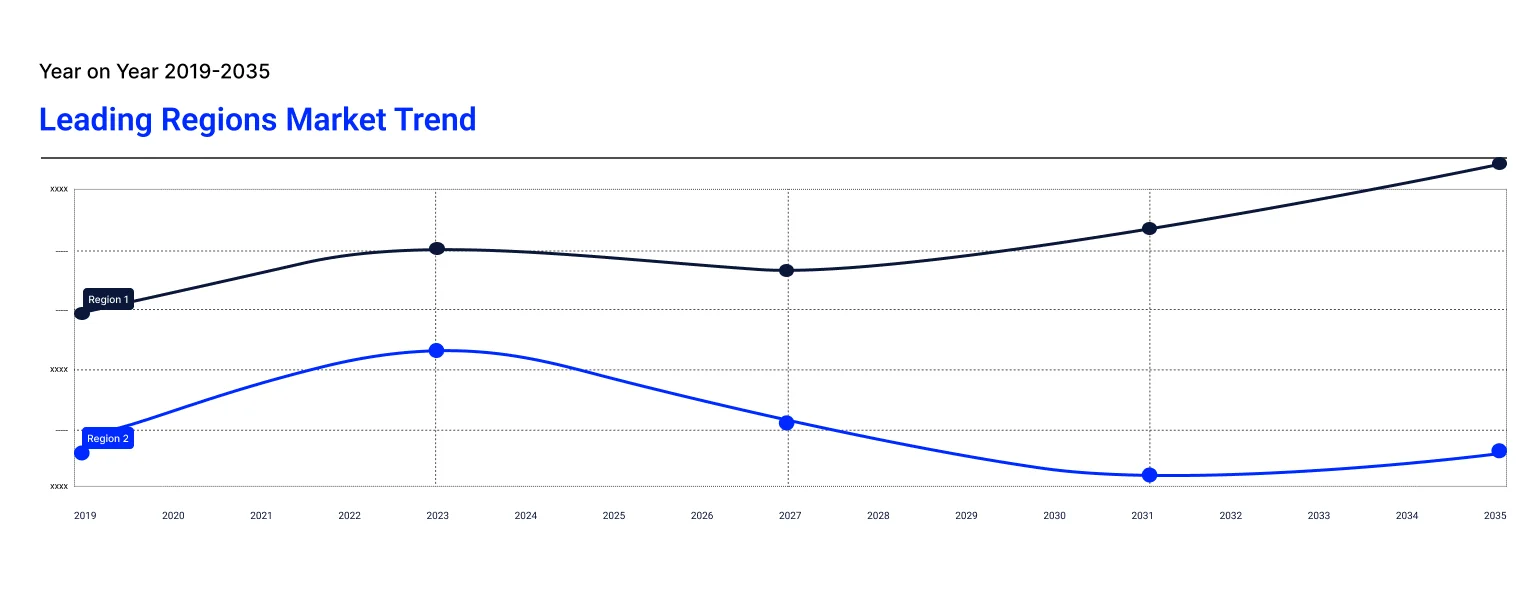
Europe is placed higher in market leadership, driven by expansive waste management policies, like the European Union Waste Framework Directive. Germany, Sweden, and the Netherlands are at the forefront with advanced sorting and processing facilities. The wood waste volumes coming from the construction and demolition industries support recycling into panels, bioenergy, and composites. Much focus on green building certifications and climate goals drives the regional wood recycling market expansion.
Asia Pacific is the world's most rapidly expanding center of recycled wood. Urbanization and industrialization generate high volumes of wood waste, but gaps in infrastructure and uneven policies stifle recycling effectiveness. China, Japan, and India are investing in new processing mills, biomass power plants, and collection networks to increase recovery. In February 2024, Jiangsu Kingwood Industrial Co., Ltd. put Beijing's first demonstration plant of biomass fuel into production with an annual output of 100,000 tons and processes approximately 120,000 tons of landscaping and large wood waste annually.
Market leaders in the wood recycling industry are implementing strategic measures to capture growth, efficiency, and sustainability. The most notable one is investing in recycling technology, such as automated sorting equipment and shredders that enhance efficiency and product quality. Firms are also investing in the development of collection and processing infrastructure to enhance capacity and accessibility. Also, collaboration with the construction, demolition, and municipal solid waste industry is a crucial approach to maintaining source of raw material. Also, companies are diversifying their business by turning recycled wood into value added products such as mulch, particleboard, biofuel, and animal bedding for use in a variety of end-user industries.
Sustainable and environmentally compliant businesses pursue environmentally sustainable practices and certifications, including the FSC (Forest Stewardship Council) or ISO. Businesses are creating consumer and business-focused marketing programs that emphasize sustainability initiatives which resonate with consumers and businesses concerned with the environment. Moreover, expanding into new geographies in emerging markets, and research & development investments to explore new uses of recycled wood are also imperative.
Established in 1996, Evergreen Paper Recycling LLC is headquartered in Texas, United States. It deals with commercial and industrial recycling services. The company has expanded through strategic acquisitions and provides end-to-end services, such as waste audits and disposal. Evergreen is known for its customer-oriented service and landfill diversion commitment.
Global Waste Recyclers Ltd was founded in 1985 and is based in Chennai, India. It is a leading company in South Asia's paper recycling industry, with big-scale operations and a global presence. The company leads the way in sustainable procurement and empowers informal waste pickers, enabling inclusive growth in the recycling sector.
Based in Toronto, Canada, Hanna Paper Recycling was established in 1977. A high-grade paper recycling industry leader, it recycles more than 300,000 tons per year. The firm offers secure shredding and tailored recycling programs and has just joined Sustana to form a vertically integrated paper production and fiber recovery network.
Established in 1979, Interwest Paper Inc. is based in South Salt Lake, Utah, the United States. It serves Western America with paper, plastic, and metal recycling. As part of Pro Recycling Group, it recently invested in major facility upgrades to increase efficiency and capacity, reinforcing its role as a regional recycling hub.
*Please note that this is only a partial list; the complete list of key players is available in the full report. Additionally, the list of key players can be customized to better suit your needs.*
Other players in the wood recycling market are Northstar Recycling Company, Ricova International Inc., and Sappi ReFibre, among others.
Unlock valuable insights into the wood recycling market trends 2026 with our expert-curated report. Get access to industry forecasts, growth drivers, and regional breakdowns to make informed decisions. Download your free sample report today and stay ahead in the competitive recycling sector. Start shaping your sustainability strategy now!


Upto 15% Off
USD
$2499 $2249
$3999 $3599
$4999 $4249
$5999 $5099


*While we strive to always give you current and accurate information, the numbers depicted on the website are indicative and may differ from the actual numbers in the main report. At Expert Market Research, we aim to bring you the latest insights and trends in the market. Using our analyses and forecasts, stakeholders can understand the market dynamics, navigate challenges, and capitalize on opportunities to make data-driven strategic decisions.*
The market is projected to grow at a CAGR of 5.10% between 2026 and 2035.
Key strategies driving the market include increasing adoption of circular economy practices, government regulations promoting sustainable waste management, rising demand for recycled wood in construction and energy sectors, technological advancements in sorting and processing, and growing environmental awareness among industries and consumers to reduce landfill waste and carbon emissions.
The development of favourable policies and concessions to promote the manufacturing of biomass energy and the use of sustainable and renewable sources of energy are the key trends guiding the growth of the industry.
The major regions in the industry are North America, Latin America, the Middle East and Africa, Europe, and the Asia Pacific. North America accounting for the largest share in the market.
Wood and paper and paperboard are the major grades of the product in the market. Wood is further segmented into grade A, grade B and grade C while paper and paperboard are divided into mixed grade, corrugated and kraft grade, and newspapers and magazines, among others.
Newsprint, sanitary and household, packaging, wood panels, and energy generation, among others are the end-use sectors of the product in the market.
The key players in the market report include Evergreen Paper Recycling LLC, Global Waste Recyclers Ltd, Hanna Paper Recycling, Interwest Paper Inc., Northstar Recycling Company, Ricova International Inc., and Sappi ReFibre, among others.
In 2025, the market reached an approximate value of USD 22.43 Billion.
The market is estimated to witness a healthy growth in the forecast period of 2026-2035 to reach about USD 36.89 Billion by 2035.
The packaging segment dominates, largely driven by the demand for sustainable and cost-effective materials.
Explore our key highlights of the report and gain a concise overview of key findings, trends, and actionable insights that will empower your strategic decisions.
| REPORT FEATURES | DETAILS |
| Base Year | 2025 |
| Historical Period | 2019-2025 |
| Forecast Period | 2026-2035 |
| Scope of the Report |
Historical and Forecast Trends, Industry Drivers and Constraints, Historical and Forecast Market Analysis by Segment:
|
| Breakup by Grade |
|
| Breakup by End-Use |
|
| Breakup by Region |
|
| Market Dynamics |
|
| Competitive Landscape |
|
| Companies Covered |
|
| Report Price and Purchase Option | Explore our purchase options that are best suited to your resources and industry needs. |
| Delivery Format | Delivered as an attached PDF and Excel through email, with an option of receiving an editable PPT, according to the purchase option. |
Datasheet
One User
USD 2,499
USD 2,249
tax inclusive*
Single User License
One User
USD 3,999
USD 3,599
tax inclusive*
Five User License
Five User
USD 4,999
USD 4,249
tax inclusive*
Corporate License
Unlimited Users
USD 5,999
USD 5,099
tax inclusive*
*Please note that the prices mentioned below are starting prices for each bundle type. Kindly contact our team for further details.*
Flash Bundle
Small Business Bundle
Growth Bundle
Enterprise Bundle
*Please note that the prices mentioned below are starting prices for each bundle type. Kindly contact our team for further details.*
Flash Bundle
Number of Reports: 3
20%
tax inclusive*
Small Business Bundle
Number of Reports: 5
25%
tax inclusive*
Growth Bundle
Number of Reports: 8
30%
tax inclusive*
Enterprise Bundle
Number of Reports: 10
35%
tax inclusive*
How To Order

Select License Type
Choose the right license for your needs and access rights.

Click on ‘Buy Now’
Add the report to your cart with one click and proceed to register.

Select Mode of Payment
Choose a payment option for a secure checkout. You will be redirected accordingly.
Strategic Solutions for Informed Decision-Making
Gain insights to stay ahead and seize opportunities.

Get insights & trends for a competitive edge.

Track prices with detailed trend reports.

Analyse trade data for supply chain insights.

Leverage cost reports for smart savings

Enhance supply chain with partnerships.

Connect For More Information
Our expert team of analysts will offer full support and resolve any queries regarding the report, before and after the purchase.
Our expert team of analysts will offer full support and resolve any queries regarding the report, before and after the purchase.
We employ meticulous research methods, blending advanced analytics and expert insights to deliver accurate, actionable industry intelligence, staying ahead of competitors.
Our skilled analysts offer unparalleled competitive advantage with detailed insights on current and emerging markets, ensuring your strategic edge.
We offer an in-depth yet simplified presentation of industry insights and analysis to meet your specific requirements effectively.




