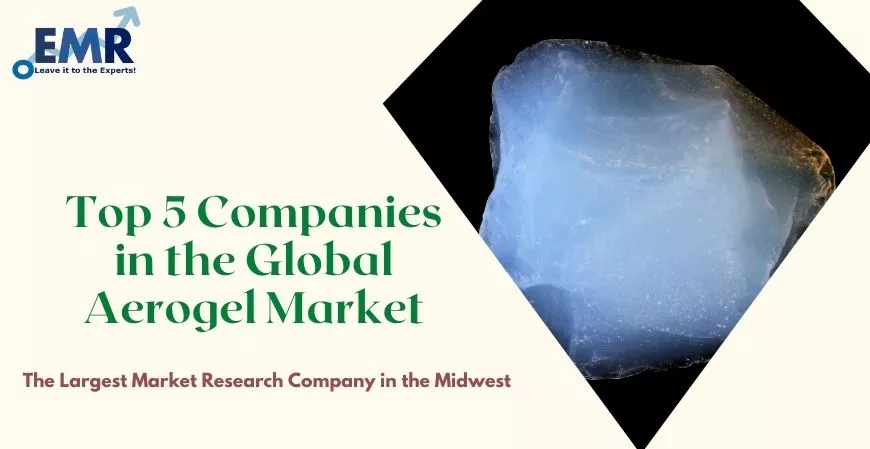
The global aerogel market was valued at USD 1038.79 Million in 2025 and is expected to grow at a CAGR of 10.00% from 2026 to 2035, reaching USD 2694.35 Million by 2035. Aerogel is a solid mesoporous foam made by removing the liquid portion of a gel and substituting it with gas. It is made up of an integrated nanostructure network with a minimum porosity of 50%. Although it is solid, it is brittle, light, and has low thermal conductivity, making it an excellent insulating material.
North America is the leading region in terms of aerogel material development and application. It is the world's leading aerogel industry in terms of product growth, pricing, and application. Because of its reduced thickness, improved insulating qualities, and low thermal conductivity, the oil and gas application is predominantly driven by the North American aerogel industry, which has a high need for advanced solutions. The growing usage of aerogel materials in automotive, marine, and aerospace applications in North America is predicted to propel the aerogel market.
Aerogel blankets form the top category in North America. Blankets are utilised in end-use applications such as building and construction, apparel, and automotive insulation. Water repellence is a beneficial attribute of this commodity, contributing to its demand in these end-use markets. Aerogel insulation panels are utilised in residential and industrial structures for daylighting and cavity filling.
Read more about this report - REQUEST FREE SAMPLE COPY IN PDF
Producing aerogel materials requires a significant amount of R&D, making the entire process costly. Aerogel structures are created using synthetic procedures which are less flexible. Aerogel manufacturing requires a complex facility due to the highly specialised processing mechanisms. The most expensive step in the process of aerogel manufacturing is supercritical drying.
Top 5 Aerogel Companies Worldwide | Best Manufacturers
1. Aspen Aerogels
| Headquarters: |
Northborough, United States |
| Establishment: |
2001 |
| Website: |
https://www.aerogel.com/ |
Aspen Aerogels manufactures flexible aerogel insulation products that outperform competitive materials by up to five times while also providing versatility, space savings, and ease of handling. Oil and gas production and processing, building and construction, appliances, transportation, and aerospace are among the industries served by the company.
2. Aerogel Technologies
| Headquarters: |
Boston, United States of America |
| Establishment: |
2004 |
| Website: |
http://www.aerogeltechnologies.com/ |
Aerogel Technologies is the world's leading producer of monolithic aerogel materials. Aerogel Technologies develops multifunctional lightweight super insulating aerogel materials for use in materials research, engineering, particle and nuclear physics, advanced manufacturing, construction, consumer electronics, aerospace, oil reclamation, and education.
3. Svenska Aerogel Holding AB
| Headquarters: |
Sweden |
| Establishment: |
2000 |
| Website: |
https://www.aerogel.se/ |
Quartzene Next Generation Aerogel is a unique product manufactured by Svenska Aerogel. Quartzene enables materials to be employed in a variety of ways, resulting in completely new properties. The ultimate product becomes more efficient as a result of the addition of Quartzene, as it uses less material, weighs less, replaces plastic, and saves energy.
4. Green Earth Aerogel Technologies
| Headquarters: |
Barcelona |
| Establishment: |
2011 |
| Website: |
http://green-earth-aerogel.es/ |
GEAT SL (Green Earth Aerogel Technologies Sociedad Limitada) is Spain's largest aerogel manufacturer. Aerogels are innovative nano porous materials having uses in energy efficiency, energy storage, and renewable energy.
5. Cabot Corporation
| Headquarters: |
Boston, United States of America |
| Establishment: |
1882 |
| Website: |
https://www.cabotcorp.com/ |
Cabot Corporation, based in Boston, Massachusetts, is a leading global specialty chemical and performance materials company. They provide high-performance solutions that address customers' current challenges while also preparing them for future needs. They specialise in creating and handling ultrafine particles, modifying the surfaces of ultrafine particles to change their functionality, and designing particles to impart certain properties to composites.











Share