The United States IT spending market was valued at USD 1.35 Trillion in 2025 and is expected to grow at a CAGR of 3.80% from 2026 to 2035, reaching USD 1.96 Trillion by 2035. As per the analysis by Expert Market Research, the market is expected to be driven by the increasing collaborations, implementation of AI and ML, and increased government spending.
IT services encompass the applications and data solutions utilised by companies to facilitate the management and optimisation of data and communication within their operations. These services support workflow by assisting with the setup, management, and troubleshooting of various elements such as networks, software, and cloud computing.
IT spending refers to the allocation of financial resources by organisations for investment in IT infrastructure, software, services, and related resources. This includes expenditures on hardware, software development, maintenance, cybersecurity, and IT support. The amount allocated to IT spending is influenced by factors such as business objectives, technological advancements, regulatory requirements, and competitive landscapes. As technology continues to evolve, IT spending becomes increasingly vital for organisations seeking to improve efficiency, innovation, and competitive advantage. By tracking IT spending trends, organisations gain insights into technological priorities and investments across different sectors, enabling them to adapt to industry trends effectively.
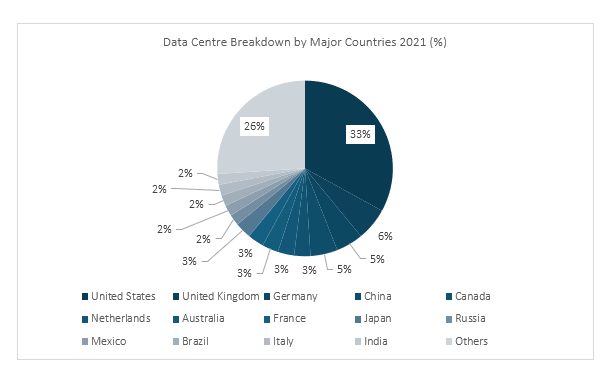
The increasing adoption of cloud computing, driven by advancements in cloud solutions and data management, is poised to fuel United States IT spending market growth. Cloud services offer numerous advantages, empowering companies to enhance their profitability significantly. This factor stands as a key catalyst for the IT spending market in the United States.
The United States has embarked on numerous collaborative initiatives with emerging nations such as India. Established tech firms are partnering with emerging markets to broaden their reach. By providing their technology and services, these companies aim to catalyse growth in both regional and global IT spending markets.
The increasing deployment of database management systems (DBMS) correlates with the exponential growth in available data for analysis. This surge in demand for data services is expected to fuel the United States IT spending market expansion.
Top IT Spending Companies in the United States:
1. Accenture Plc
| Headquarters: |
Dublin, Ireland |
| Establishment: |
1989 |
| Website: |
www.accenture.com |
Accenture, a global professional services firm, excels in digital, cloud, and security solutions across 40+ industries. Offering Strategy and Consulting, Technology and Operations Services, and Accenture Song, supported by a vast network of Advanced Technology and Intelligent Operations centres. Operating in 120+ countries, the company harness the power of technology and human innovation to drive value and collective success. With 733,000 employees worldwide, presence in 200+ cities across 49 countries, and serving over 9,000 clients globally, Accenture is committed to embracing change for positive impact.
2. IBM Corporation
| Headquarters: |
New York, United States |
| Establishment: |
1911 |
| Website: |
www.ibm.com |
IBM, a multinational technology corporation, delivers IT services, products, and solutions globally. Their offerings span computer hardware and software manufacturing, infrastructure and hosting services, consulting, and cloud solutions. As the world's largest industrial research organisation, IBM operates 19 research facilities worldwide and provides hybrid cloud and AI services. Established in 1911 as CTR and later rebranded as IBM in 1924, the company is headquartered in Armonk, New York, and operates in 170+ countries.
3. Cognizant Technology Solutions Corporation
| Headquarters: |
New Jersey, United States |
| Establishment: |
1994 |
| Website: |
www.cognizant.com |
Cognizant (Nasdaq-100: CTSH) is a trailblazer in modernising businesses, offering technology solutions that empower clients to adapt, innovate processes, and enhance customer experiences in dynamic world. With a history spanning 25 years, the company originated as a technology development arm of The Dun & Bradstreet Corporation, later becoming an independent entity in 1996. Cognizant collaborates with global market leaders, leveraging its expertise to help established companies evolve and thrive. The company focuses on digitisation, process automation, and technology infrastructure modernisation to ensure clients remain beloved brands in today's ever-evolving technology landscape. With a global workforce of 346,600 employees, Cognizant has achieved a total revenue of USD 19.4 billion.
4. Google LLC (Alphabet Inc.)
| Headquarters: |
California, United States |
| Establishment: |
2015 |
| Website: |
abc.xyz |
Alphabet, a conglomerate encompassing various companies like Google, Verily Life Sciences, GV, Calico, and X, restructured in October 2015. Serving as the parent holding company of Google, Alphabet organised its diverse businesses into Google Services, Google Cloud, and collectively as Other Bets for non-Google entities. The structural shift aimed to foster the success of individual businesses through strong leadership and autonomy, with Google remaining the largest entity within the Alphabet portfolio.
5. Intel Corporation
| Headquarters: |
California, United States |
| Establishment: |
1968 |
| Website: |
www.intel.com |
Intel Corporation, a global technology giant based in Santa Clara, California, pioneers computing and related solutions since 1968. Founded by Robert Noyce, Gordon Moore, and Arthur Rock, Intel's diverse product lineup includes CPUs, microprocessors, and solid-state drives. Their strategy leverages software, silicon, and platforms to drive digital transformation, impacting industries from self-driving cars to environmental conservation. With a mission to shape the future through AI, analytics, and cloud-to-edge technology, Intel has profoundly influenced society for over 50 years, embodying Moore's Law by advancing semiconductor design and manufacturing to address evolving challenges.











Share