

Consumer Insights
Uncover trends and behaviors shaping consumer choices today
Procurement Insights
Optimize your sourcing strategy with key market data
Industry Stats
Stay ahead with the latest trends and market analysis.
Graft-versus-host disease (GVHD) is a serious immune-mediated complication of allogeneic stem cell or bone marrow transplants, where donor immune cells attack the recipient’s tissues. According to Rushin Patel et al. (2024), GVHD affects approximately 40% of allo-HSCT recipients. According to the graft-versus-host disease pipeline analysis by Expert Market Research, the GVHD treatment market is expanding rapidly, with novel immunosuppressants, targeted biologics, kinase inhibitors, and cell-based therapies in development, driving growth at a significant CAGR over the next decade. The growing number of transplants, unmet medical needs in steroid-refractory cases, and R&D focus on safer, more effective therapies support substantial market and clinical progress.
Major companies involved in the graft versus host disease pipeline analysis include Cynata Therapeutics Limited, ReAlta Life Sciences, Inc., and others.
Leading drugs currently in the pipeline include RLS-0071, CYP-001, AC-003, and others.
The rising late-stage clinical candidates, increased focus on targeted immunotherapies, and growing biologics development are expected to accelerate treatment innovation and expand therapeutic options in the coming years.
The Graft Versus Host Disease Pipeline Analysis Report by Expert Market Research gives comprehensive insights into graft versus host disease therapeutics currently undergoing clinical trials. It covers various aspects related to the details of each of these drugs under development for graft versus host disease. The graft versus host disease report assessment includes the analysis of over 100 pipeline drugs and 50+ companies. The graft versus host disease pipeline landscape will include an analysis based on efficacy and safety measure outcomes published for the trials, including their adverse effects on patients suffering from the condition, and alignment with graft versus host disease treatment guidelines to ensure optimal care practices.
The assessment part will include a detailed analysis of each drug, drug class, clinical studies, phase type, drug type, route of administration, and ongoing product development activities related to graft versus host disease.
Read more about this report - Request a Free Sample
Graft versus host disease is a serious complication following allogeneic stem cell or bone marrow transplantation, where donated immune cells attack the recipient’s healthy tissues. It commonly affects the skin, liver, and gastrointestinal tract. The condition occurs due to immune incompatibility between donor and host, triggering inflammatory immune responses. Severity ranges from mild to life-threatening.
Graft versus host disease treatments include corticosteroids as first-line therapy, followed by immunosuppressive agents, targeted biologics, and emerging cell therapies to control immune activity and reduce tissue damage in cases. In December 2024, the United States Food and Drug Administration approved remestemcel-L-rknd, an allogeneic mesenchymal stromal cell therapy, for steroid-refractory acute graft versus host disease in pediatric patients, marking a major advancement within the market drug pipeline for severe transplant complications.
The pipeline is expanding in response to the rising disease burden and unmet clinical needs. According to Rushin Patel et al., 2024, graft-versus-host disease affects nearly 40% of allogeneic hematopoietic stem cell transplant recipients, making it a leading post-transplant complication. As per Yifan Pang et al., 2023, approximately 8,000 transplants occur annually in the United States and over 50,000 globally, increasing long-term survivor populations. Chronic graft-versus-host disease incidence ranges between 30% and 70% within five years, driving demand for targeted therapies and innovative immunomodulatory drugs.
This section of the report covers the analysis of graft versus host disease drug candidates based on several segmentations, including:
By Phase
The pipeline assessment report covers 50+ drug analyses based on phase:
By Drug Class
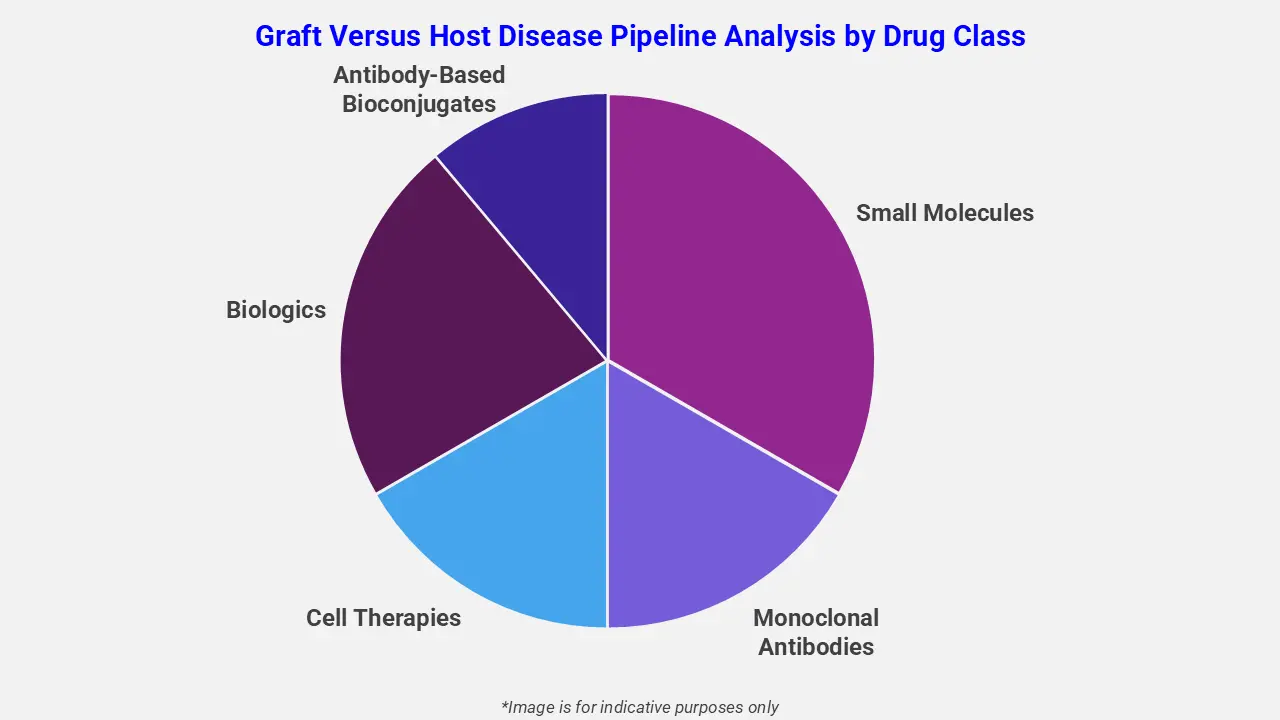
The graft versus host disease pipeline analysis report covers 50+ drug analyses based on drug classes:
By Route of Administration
The pipeline assessment report covers 50+ drug analyses based on the route of administration:
The report covers phase I, phase II, phase III, phase IV, and early-phase drugs. The coverage includes an in-depth analysis of each drug across these phases. According to EMR analysis, phase II covers a major share of the total Graft Versus Host Disease clinical trials, at 55%, driven by strong clinical validation and increasing therapeutic focus on graft versus host disease. Phase I accounts for 24%, supported by rising research investments. Phase III contributes 12% due to late-stage advancements. Phase IV represents 6% with post-approval expansion.
The drug molecule categories covered under the graft versus host disease pipeline analysis include small molecules, monoclonal antibodies, cell therapies, biologics, and antibody-based bioconjugates. The graft versus host disease report provides a comparative analysis of the drug classes for each drug in various phases of clinical trials for graft versus host disease. Janus Kinase inhibitors are gaining attention in the graft-versus-host disease drug pipeline for their anti-inflammatory potential. For example, Itacitinib, an investigational selective Janus Kinase 1 inhibitor, is being evaluated for graft-versus-host disease prevention in stem cell transplant patients. Early clinical findings indicate improved safety and reduced disease severity compared to standard preventive therapies.
The EMR report for the graft versus host disease pipeline covers the profile of key companies involved in clinical trials and their drugs under development. It provides a detailed graft versus host disease therapeutic assessment, analyzing the competitive dynamics of the clinical trial landscape. Below is the list of a few players involved in graft versus host disease clinical trials:
This section covers the detailed analysis of each drug under multiple phases, including phase I, phase II, phase III, phase IV, and emerging drugs for graft versus host disease. It includes product description, trial ID, study type, drug class, mode of administration, and recruitment status of graft versus host disease drug candidates.
RLS-0071 (Pegtarazimod) is being developed by ReAlta Life Sciences, Inc. and is currently advancing through a Phase II open-label, dose-escalation and expansion study for the treatment of steroid-refractory acute graft-versus-host disease. The study examines safety, tolerability, pharmacokinetics, pharmacodynamics, optimal dosing, and therapeutic efficacy in hospitalized patients. Pegtarazimod is a 15-amino-acid peptide that selectively inhibits complement activation at C1, myeloperoxidase activity, and neutrophil extracellular trap formation, thereby reducing inflammatory tissue damage associated with donor immune cell attacks.
CYP-001 is an induced pluripotent stem cell (iPSC)-derived mesenchymal stem cell (MSC) therapy being developed by Cynata Therapeutics Limited for the treatment of high-risk acute graft versus host disease (aGvHD). The Phase II study is currently recruiting and is examining the efficacy and safety of CYP-001 in combination with corticosteroids compared to corticosteroids alone. The objective of this phase is to assess immune modulation, inflammation reduction, and clinical response. CYP-001 is being administered through intravenous infusion, leveraging MSCs’ immunoregulatory properties to restore immune balance.
AC-003 is an oral small-molecule RIPK1 kinase inhibitor being developed by Accro Bioscience (Suzhou) Limited for the treatment of steroid-refractory acute graft versus host disease (aGVHD). The Phase Ib study is currently recruiting and is evaluating the safety, tolerability, pharmacokinetics, pharmacodynamics, and preliminary efficacy of AC-003 capsules in adult patients with grade II–IV aGVHD. The drug is working by selectively inhibiting RIPK1-mediated inflammatory signaling pathways, thereby reducing immune-driven tissue damage while preserving graft-versus-leukemia activity without causing broad immunosuppression.
*Please note that this is only a partial list; the complete list of drugs will be available in the full report.*
The Graft Versus Host Disease Pipeline Analysis Report provides a strategic overview of the latest and future landscape of treatments for graft versus host disease. It provides necessary information for making informed investment decisions along with research, development, and strategic planning efforts. The stakeholders will benefit from the essential insights into graft versus host disease collaborations, regulatory environments, and potential growth opportunities.
Graft Versus Host Disease (GvHD) Treatment Market
Graft Versus Host Disease (GVHD) Epidemiology Forecast
Steroid Refractory Acute Graft Versus Host Disease Pipeline Analysis Report


Upto 15% Off
USD
$1999 $1799
$3099 $2789
$4599 $3909
$5999 $5099


*While we strive to always give you current and accurate information, the numbers depicted on the website are indicative and may differ from the actual numbers in the main report. At Expert Market Research, we aim to bring you the latest insights and trends in the market. Using our analyses and forecasts, stakeholders can understand the market dynamics, navigate challenges, and capitalize on opportunities to make data-driven strategic decisions.*
Explore our key highlights of the report and gain a concise overview of key findings, trends, and actionable insights that will empower your strategic decisions.
|
Scope of the Report |
Details |
|
Drug Pipeline by Clinical Trial Phase |
|
|
Route of Administration |
|
|
Drug Classes |
|
|
Leading Sponsors Covered |
|
|
Geographies Covered |
|
Mini Report
One User
USD 1,999
USD 1,799
tax inclusive*
Single User License
One User
USD 3,099
USD 2,789
tax inclusive*
Five User License
Five User
USD 4,599
USD 3,909
tax inclusive*
Corporate License
Unlimited Users
USD 5,999
USD 5,099
tax inclusive*
*Please note that the prices mentioned below are starting prices for each bundle type. Kindly contact our team for further details.*
Flash Bundle
Small Business Bundle
Growth Bundle
Enterprise Bundle
*Please note that the prices mentioned below are starting prices for each bundle type. Kindly contact our team for further details.*
Flash Bundle
Number of Reports: 3
20%
tax inclusive*
Small Business Bundle
Number of Reports: 5
25%
tax inclusive*
Growth Bundle
Number of Reports: 8
30%
tax inclusive*
Enterprise Bundle
Number of Reports: 10
35%
tax inclusive*
How To Order

Select License Type
Choose the right license for your needs and access rights.

Click on ‘Buy Now’
Add the report to your cart with one click and proceed to register.

Select Mode of Payment
Choose a payment option for a secure checkout. You will be redirected accordingly.
Strategic Solutions for Informed Decision-Making
Gain insights to stay ahead and seize opportunities.

Get insights & trends for a competitive edge.

Track prices with detailed trend reports.

Analyse trade data for supply chain insights.

Leverage cost reports for smart savings

Enhance supply chain with partnerships.

Connect For More Information
Our expert team of analysts will offer full support and resolve any queries regarding the report, before and after the purchase.
Our expert team of analysts will offer full support and resolve any queries regarding the report, before and after the purchase.
We employ meticulous research methods, blending advanced analytics and expert insights to deliver accurate, actionable industry intelligence, staying ahead of competitors.
Our skilled analysts offer unparalleled competitive advantage with detailed insights on current and emerging markets, ensuring your strategic edge.
We offer an in-depth yet simplified presentation of industry insights and analysis to meet your specific requirements effectively.




