

Consumer Insights
Uncover trends and behaviors shaping consumer choices today
Procurement Insights
Optimize your sourcing strategy with key market data
Industry Stats
Stay ahead with the latest trends and market analysis.


The Saudi Arabia crop protection chemicals market was valued at USD 900.12 Million in 2025. The market is expected to grow at a CAGR of 4.20% during the forecast period of 2026-2035 to reach a value of USD 1358.24 Million by 2035. Climate-adapted crop protection formulations are gaining traction as Saudi growers prioritize predictable field performance under heat stress and restricted irrigation conditions.
One of the main factors driving market growth is stricter regulatory oversight that prefers suppliers who have been able to provide solid documentation of their residues and product safety. Similarly, because of the growing professionalism of the farm sector, buyers are increasingly demanding not only product consistency but also technical accountability from growers. Such farmers depend on well-validated data, boosting the Saudi Arabia crop protection chemicals market growth.
The Saudia Arabia crop protection chemicals market is noticing a significant change, following Bayer's launch of new herbicides, targeting resistant weeds and boosting crop protection efficacy in August 2025. The products have been made to maintain their effectiveness in saline soils, which are typical of central agricultural areas. Such developments are in line with the increasing demand on farmers to secure their yields under water-limited irrigation systems where the chances of losing crops are high.
Product pipelines continue to be under the impact of regulatory frameworks. The Ministry of Environment, Water and Agriculture has raised the bar for the evaluation of residues and the impact on the environment. As a consequence, those suppliers who already possess toxicology and residue data are benefiting from such trends. Firms like BASF and Syngenta are re-formulating their current approved active ingredients instead of bringing in new molecules, thereby reshaping the Saudi Arabia crop protection chemicals market dynamics. This approach not only lessens the regulatory hurdles but also affords them the scope for product performance differentiation. In January 2023, Saudi Arabia’s Ministry of Investment signed an agreement worth USD 1 billion to manufacture specialized agriculture chemicals within the Kingdom.
Compound Annual Growth Rate
4.2%
Value in USD Million
2026-2035
|
Saudi Arabia Crop Protection Chemicals Market Report Summary |
Description |
Value |
|
Base Year |
USD Million |
2025 |
|
Historical Period |
USD Million |
2019-2025 |
|
Forecast Period |
USD Million |
2026-2035 |
|
Market Size 2025 |
USD Million |
900.12 |
|
Market Size 2035 |
USD Million |
1358.24 |
|
CAGR 2019-2025 |
Percentage |
XX% |
|
CAGR 2026-2035 |
Percentage |
4.20% |
|
CAGR 2026-2035 - Market by Type |
Fungicide |
4.6% |
|
CAGR 2026-2035 - Market by Type |
Herbicide |
4.4% |
|
CAGR 2026-2035 - Market by Application Mode |
Seed Treatment |
4.8% |
|
CAGR 2026-2035 - Market by Crop Type |
Fruits and Vegetables |
4.7% |
|
2025 Market Share by Type |
Insecticide |
19.2% |
ICBA launched Good Agricultural Practices framework strengthening integrated chemical management against red palm weevil infestations across Saudi date farming regions. Crop protection companies can develop targeted insecticide programs, monitoring tools, and advisory services aligned with GAP-led pest management initiatives, leveraging this Saudi Arabia crop protection chemicals market opportunity.
SALIC and Syngenta signed strategic agreement advancing crop protection, seed technologies, and sustainable input deployment supporting Saudi food security goals. Other suppliers can partner on localized formulations, integrated input packages, and long-term supply agreements supporting national programs.
Songwon announced plans to build additive blends manufacturing facility in Saudi Arabia strengthening regional supply chains for specialty agricultural chemicals. Crop protection formulators can source locally produced additives to improve product stability, shelf life, and performance under arid farming conditions, following these Saudi Arabia crop protection chemicals market trends.
Syngenta deployed artificial intelligence tools accelerating discovery and development of next generation crop protection molecules with improved efficacy profiles globally. Regional agrochemical firms can adopt AI-driven screening and formulation tools to shorten development cycles and address resistance challenges.
Crop protection manufacturers in Saudi Arabia are adapting their products to withstand the local extreme climate. Heat-stable emulsions and salt-tolerant active ingredients are being used instead of regular global products. These changes directly affect the degradation rates and the efficiency of spraying. Companies are doing local trials to determine precisely the best application time. This diminishes the need for re-spraying and prevents plant stress, boosting growth in the Saudi Arabia crop protection chemicals market. In January 2026, NADEC began field trials of EF Polymer organic soil additive to cut irrigation water use, boost soil health, and support climate-resilient agriculture in Saudi Arabia.
More stringent registration frameworks are leading to a simplification of portfolios. Inefficient low-value stock keeping units (SKUs) are being discontinued. Manufacturers are focusing better on a limited number of products that have stronger safety profiles. The readiness of products for regulatory compliance now affects the timing of launches more than the size of marketing budgets. Companies with well-established compliance systems are at a stage where they can move more swiftly. This trend in the Saudi Arabia crop protection chemicals market is altering the nature of competition, whereby the speed to the approval depends more on the quality of the documentation than on the amount of innovation. In December 2024, Syngenta Crop Protection announced collaboration with AI-informed crop health company Enko to discover novel weed control molecules.
Biological crop protection products are becoming more common. Global manufacturers are positioning bio-fungicides and bio-stimulants as tools to manage resistance. These products are being combined with synthetic programs instead of completely substituting them. This mixture of approaches reduces the adoption risk and allows a gradual change of the portfolio, redefining the Saudi Arabia crop protection chemicals market opportunities. In September 2025, Bionema Group Ltd launched BoostBio SP 400, a new bio-based spray adjuvant designed to improve the performance of both chemical and biological crop protection products.
Distributors are becoming technical partners. Suppliers are investing heavily in training programs that focus on educating the mode of action of the products and crop diagnostics. This further solidifies the premium positioning. Products that are supported by technical guidance get shelf priority. Pricing discussions are increasingly being based on product performance, boosting the Saudi Arabia crop protection chemicals market value. Suppliers who maintain strong distributor relationships are expected to have repeat businesses and gain brand loyalty. In October 2023, Corteva Agriscience partnered with Alveo Technologies to expand the offering of new eco-friendly molecular sensing and disease diagnostics technologies.
Local production partnerships are expanding across the Saudi Arabia crop protection chemicals market scope. Saudi agribusiness firms are licensing active ingredients from global innovators and producing finished formulations domestically. This improves supply reliability and regulatory alignment. In October 2025, Brenntag experts presented integrated crop protection solutions and supply chain innovations at the Saudi Agriculture Exhibition, addressing nutrient management, pest challenges, and logistical efficiency for growers.
The EMR’s report titled “Saudi Arabia Crop Protection Chemicals Market Report and Forecast 2026-2035” offers a detailed analysis of the market based on the following segments:
Market Breakup by Type
Key Insight: Herbicides continue to dominate because weed pressure directly affects large commercial farms and forage systems. Fungicides are gaining momentum as protected cultivation increases disease exposure. In April 2024, ADAMA Ltd. announced the launch of Maxentis, a new versatile fungicide that delivers reliable control over a broad range of diseases in wheat, barley, and oilseed rape, to increase yields and improve income. Insecticides remain relevant where pest cycles accelerate under heat stress. Other product types serve specialty crops and localized needs. Each segment considered in the Saudi Arabia crop protection chemicals market report addresses a different operational risk.
Market Breakup by Application Mode
Key Insight: Foliar spray boosts majority of the demand in the Saudi Arabia crop protection chemicals market due to speed, flexibility, and ease of integration into existing farm operations. Seed treatment is expanding as growers seek early-stage protection and labor efficiency. Soil treatment supports root-zone control where irrigation practices demand stability. Other methods serve controlled or niche environments. Application decisions are influenced by timing sensitivity, workforce availability, and equipment access. Companies tailor formulations to match preferred delivery modes.
Market Breakup by Crop Type
Key Insight: Grains and cereals dominate the industry due to acreage scale and food security priorities. Fruits and vegetables gain momentum as protected cultivation expands. Pulses and oilseeds benefit from diversification strategies. Other crops represent specialty production with targeted protection needs. Crop economics across the Saudi Arabia crop protection chemicals market scope determine chemistry selection. High-value crops demand precision and compliance, while broad-acre crops prioritize consistency and cost control.
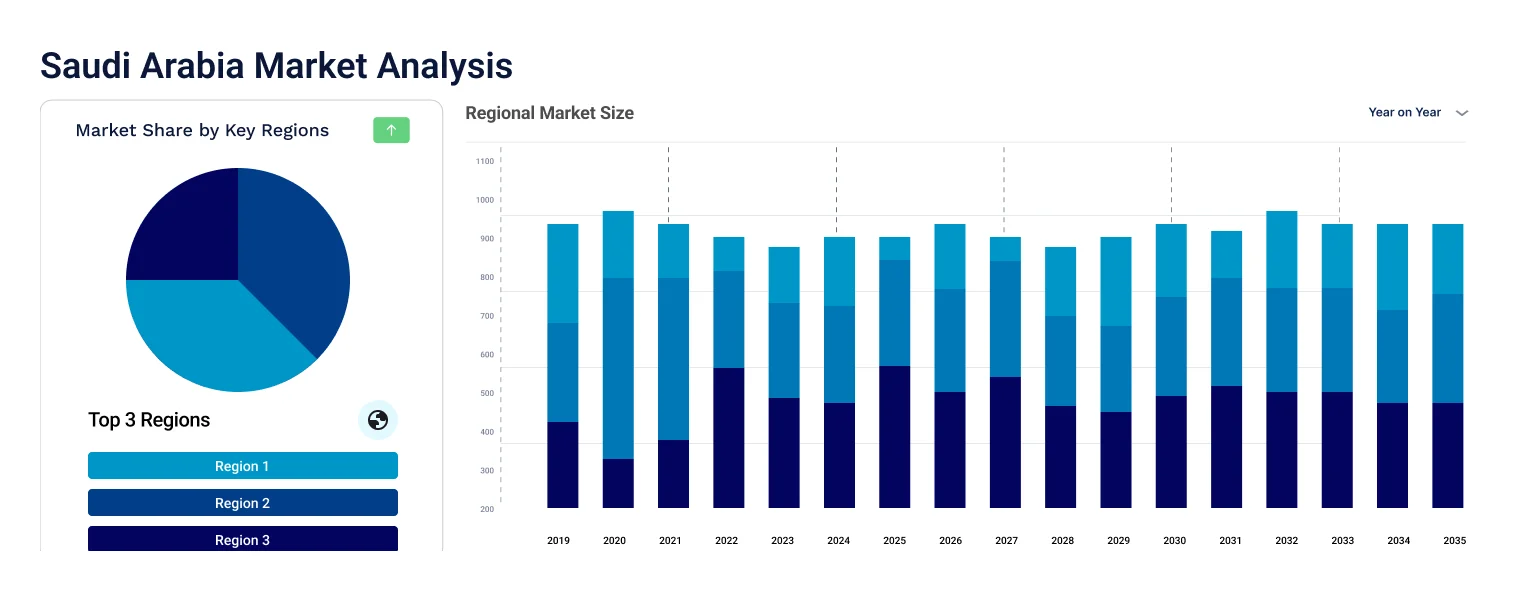
By type, herbicides register the largest share of the market due to resistance control needs and large-scale cereal cultivation
Herbicides continue to be the main crop production component in the Saudi Arabia crop protection chemicals market with a considerable number of large-scale farms going through the phenomenon of persistent weed resistance. Farmers opt for selective and residual herbicides which can withstand the extreme heat and saline irrigation conditions. Rather than bringing in new molecules, companies are mainly focused on reformulating their existing active ingredients. This not only speeds up the approval process but also guarantees predictable results in the field. The highest demand comes from commercial cereal and forage farmers who have a well-organized procurement system. In March 2025, AGROSUS project announced the launch of a groundbreaking weed database, featuring detailed information on 117 weed species, including their herbicide resistance, herbicide treatments, and agroecological management strategies.
Fungicides are rapidly expanding their share in the Saudi Arabia crop protection chemicals market because of the rise in protected cultivation. Vegetables grown in greenhouses ar susceptible to fungal diseases which are mostly caused by factors such as humidity and temperature changes. Suppliers are introducing systemic fungicides that have longer residual effects and lower phytotoxicity. Moreover, biologically compatible fungicides that do not harm the environment are being increasingly used as part of integrated disease management programs. Companies are facilitating adoption through the provision of disease forecasting tools and crop-specific spray schedules.
By application mode, foliar spray dominates usage due to rapid action and operational flexibility
Foliar spraying is the main way of applying pesticides because it gives farmers an almost instant response in the field and allows them to decide when to spray. Besides that, farmers like to see pests and diseases being visibly controlled without having to change the irrigation schedules. Manufacturers encourage foliar programs at different stages of the crop cycle to get more repeat usage. In August 2025, Bayer launched Plenexos foliar pest management solution enhancing broad-spectrum control with improved uptake and resistance management for diverse crops.
Seed treatment is also contributing to the Saudi Arabia crop protection chemicals market revenue as growers prioritize early-stage crop protection. Treated seeds reduce initial pest pressure and improve stand uniformity. Companies are introducing multi-active coatings combining fungicides and insecticides. These treatments lower dependence on early foliar sprays. Suppliers position seed treatment as a risk-management tool rather than yield enhancement. Local customization improves performance in Saudi soils. Growth in this category is also driven by labor efficiency and predictable early protection.
By crop type, grains and cereals account for the bigger market share due to food security focus and cultivation scale
Grains and cereals largely drive the Saudi Arabia crop protection chemicals market value by a high margin, as food security at the national level is a top priority. To keep weeds and diseases in check, large, cultivated areas need proper and consistent treatment. Suppliers customize their offerings for wheat and barley crops grown under irrigation. The existence of long-term contracts between distributors and suppliers is an indication of steady demand. In April 2025, Saudi Arabia launched the Saudi Agricultural Bank Limited (SABL) to support grain production, financing, and supply chain stability for domestic food security.
Fruits and vegetables are the most rapidly expanding crop category, due to the fast pace of greenhouse construction. Pressure from pests and diseases has become greater, leading to a focus on specific fungicides and insecticides. Residue compliance continues to be a high priority for high-quality retail and export markets. Short pre-harvest intervals and biological approaches are being emphasized. Technical advice services are a key factor in brand choice.
Competition in the market is shaped by localization, regulatory readiness, and technical service depth. Top Saudi Arabia crop protection chemicals market players leverage strong research capabilities and proven active ingredients. Local companies provide market access and customization. Product differentiation increasingly depends on formulation performance under heat and saline conditions.
A number of lucrative opportunities can be found in biological integration, seed treatment expansion, and precision-compatible solutions. Saudi Arabia crop protection chemical companies investing in agronomic advisory services build long-term relationships. Strategic partnerships reduce regulatory and operational barriers. Portfolio discipline matters more than scale. Suppliers aligned with national food security goals gain relevance. Climate adaptability and compliance reliability define competitive advantages. Market leadership depends on execution consistency rather than rapid product launches.
Astra Agricultural, founded in 1988 and based in Riyadh, Saudi Arabia, is a company providing crop protection solutions that are adapted to local environments. The firm changes product formulations to suit Saudi climate conditions. Through strong technical support and distributor networks, they are able to successfully penetrate the market for cereals and vegetables.
Bayer, founded in 1863 and headquartered in Leverkusen, Germany, is a manufacturer of advanced herbicide and fungicide products. The firm imports to Saudi Arabia advanced systems for weed and disease control. The company's approach to resistance management along with climate-adapted formulations is based on field trials and the use of digital agronomy tools.
Founded in 2007 and based in Riyadh, Saudi Arabia, Saudi delta is a company that primarily deals with distribution services and local production. The firm collaborates with international licensors to provide compliant formulations while ensuring a strong presence in the local market.
Established in 1865 and based in Ludwigshafen, Germany, BASF is a company that concentrates on re-formulated approved active molecules. The company puts an emphasis on regulatory compliance and nurturing of farming knowledge especially for heat, stressed systems.
*Please note that this is only a partial list; the complete list of key players is available in the full report. Additionally, the list of key players can be customized to better suit your needs.*
Other key players in the market include SABIC, among others.
Explore the latest trends shaping the Saudi Arabia crop protection chemicals Market 2026-2035 with our in-depth report. Gain strategic insights, future forecasts, and key market developments that can help you stay competitive. Download a free sample report or contact our team for customized consultation on Saudi Arabia crop protection chemicals market trends 2026.


Upto 15% Off
USD
$2499 $2249
$3999 $3599
$4999 $4249
$5999 $5099


*While we strive to always give you current and accurate information, the numbers depicted on the website are indicative and may differ from the actual numbers in the main report. At Expert Market Research, we aim to bring you the latest insights and trends in the market. Using our analyses and forecasts, stakeholders can understand the market dynamics, navigate challenges, and capitalize on opportunities to make data-driven strategic decisions.*
In 2025, the Saudi Arabia crop protection chemicals market reached an approximate value of USD 900.12 Million.
The market is projected to grow at a CAGR of 4.20% between 2026 and 2035.
The key players in the market include Astra Agricultural Co. Ltd., Bayer AG, Saudi delta company, BASF SE, and SABIC, among others.
Companies are strengthening local trials, expanding technical training, integrating biologicals, improving regulatory readiness, and aligning portfolios with arid farming needs while supporting distributors more actively.
Regulatory complexity, resistance development, climate stress, and slow adoption of new chemistries challenge suppliers despite increasing demand for reliable and compliant crop protection solutions.
Explore our key highlights of the report and gain a concise overview of key findings, trends, and actionable insights that will empower your strategic decisions.
| REPORT FEATURES | DETAILS |
| Base Year | 2025 |
| Historical Period | 2019-2025 |
| Forecast Period | 2026-2035 |
| Scope of the Report |
Historical and Forecast Trends, Industry Drivers and Constraints, Historical and Forecast Market Analysis by Segment:
|
| Breakup by Type |
|
| Breakup by Application Mode |
|
| Breakup by Crop Type |
|
| Market Dynamics |
|
| Competitive Landscape |
|
| Companies Covered |
|
Datasheet
One User
USD 2,499
USD 2,249
tax inclusive*
Single User License
One User
USD 3,999
USD 3,599
tax inclusive*
Five User License
Five User
USD 4,999
USD 4,249
tax inclusive*
Corporate License
Unlimited Users
USD 5,999
USD 5,099
tax inclusive*
*Please note that the prices mentioned below are starting prices for each bundle type. Kindly contact our team for further details.*
Flash Bundle
Small Business Bundle
Growth Bundle
Enterprise Bundle
*Please note that the prices mentioned below are starting prices for each bundle type. Kindly contact our team for further details.*
Flash Bundle
Number of Reports: 3
20%
tax inclusive*
Small Business Bundle
Number of Reports: 5
25%
tax inclusive*
Growth Bundle
Number of Reports: 8
30%
tax inclusive*
Enterprise Bundle
Number of Reports: 10
35%
tax inclusive*
How To Order

Select License Type
Choose the right license for your needs and access rights.

Click on ‘Buy Now’
Add the report to your cart with one click and proceed to register.

Select Mode of Payment
Choose a payment option for a secure checkout. You will be redirected accordingly.
Strategic Solutions for Informed Decision-Making
Gain insights to stay ahead and seize opportunities.

Get insights & trends for a competitive edge.

Track prices with detailed trend reports.

Analyse trade data for supply chain insights.

Leverage cost reports for smart savings

Enhance supply chain with partnerships.

Connect For More Information
Our expert team of analysts will offer full support and resolve any queries regarding the report, before and after the purchase.
Our expert team of analysts will offer full support and resolve any queries regarding the report, before and after the purchase.
We employ meticulous research methods, blending advanced analytics and expert insights to deliver accurate, actionable industry intelligence, staying ahead of competitors.
Our skilled analysts offer unparalleled competitive advantage with detailed insights on current and emerging markets, ensuring your strategic edge.
We offer an in-depth yet simplified presentation of industry insights and analysis to meet your specific requirements effectively.




