

Consumer Insights
Uncover trends and behaviors shaping consumer choices today
Procurement Insights
Optimize your sourcing strategy with key market data
Industry Stats
Stay ahead with the latest trends and market analysis.
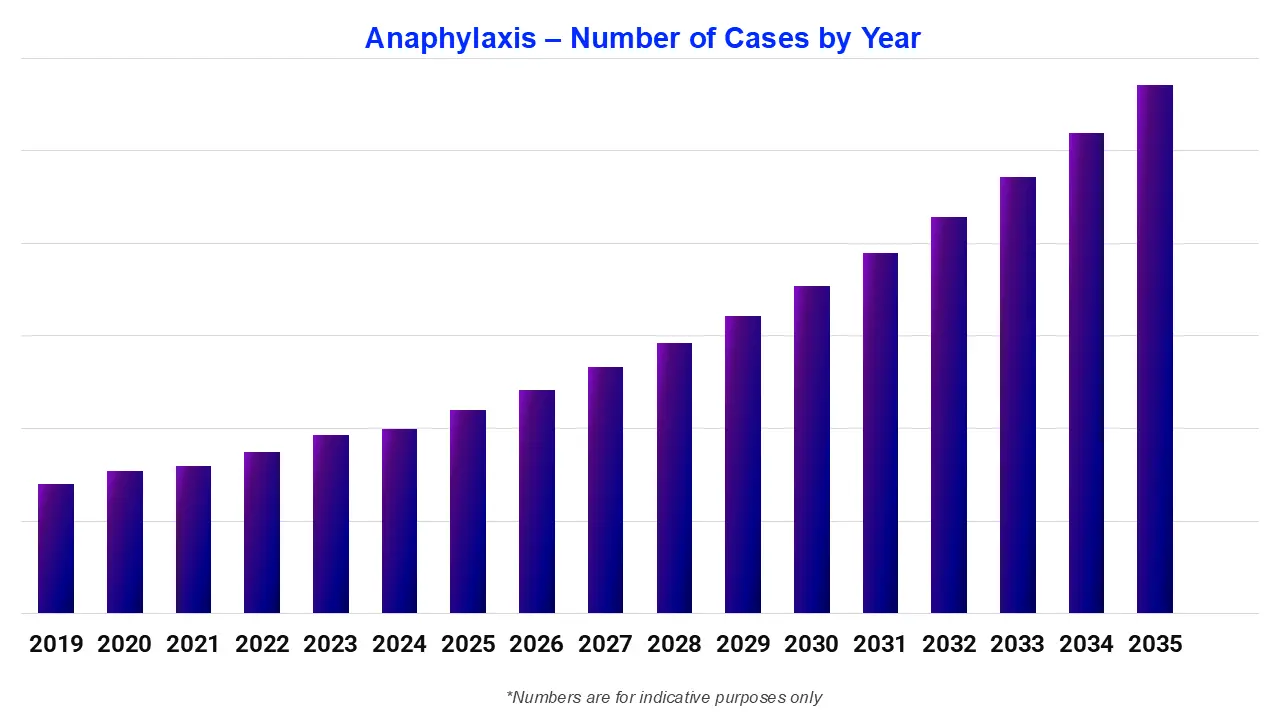
Anaphylaxis is a potentially fatal systemic hypersensitivity reaction characterized by rapid onset and involvement of multiple organ systems, particularly the respiratory, cardiovascular, gastrointestinal, and cutaneous systems. According to Wang et al., 2024, lifetime prevalence of anaphylaxis has been estimated at approximately 1.6–5.1%, although epidemiological estimates vary according to diagnostic criteria and case ascertainment. According to the Anaphylaxis Epidemiology Forecast by Expert Market Research, the condition continues to represent a significant clinical burden because of increasing allergic disease, recurrent emergency presentations, diagnostic under-recognition, and the need for rapid administration of epinephrine.
Base Year
Historical Period
Forecast Period
Read more about this report - REQUEST FREE SAMPLE COPY IN PDF
Expert Market Research's “Anaphylaxis Epidemiology Forecast Report 2026-2035” offers comprehensive information on the prevalence and demographics of Anaphylaxis. It projects the future incidence and prevalence rates of Anaphylaxis cases across various populations. The study covers age, gender, and type as major determinants of the Anaphylaxis population. The report highlights patterns in the prevalence of Anaphylaxis over time and projects future trends based on multiple variables.
The report provides a comprehensive overview of the disease, as well as historical and projected data on the epidemiology of Anaphylaxis in the 8 major markets.
Regions Covered
Anaphylaxis is a severe, life-threatening allergic reaction. It occurs rapidly after exposure to allergens like foods, insects, or medications. Immune systems release a flood of chemicals, causing systemic shock. Blood pressure drops suddenly, and airways narrow, blocking normal breathing. Symptoms include rashes, a rapid pulse, nausea, and dizziness. Immediate treatment requires an epinephrine injection and emergency medical care. Without prompt intervention, it can be fatal. Managing the condition involves identifying triggers and carrying an epinephrine auto-injector at all times.
|
Parameter |
Insight |
|
Largest Patient Pool |
United States |
|
Fastest Growing Country |
Japan |
|
High-Risk Population |
Individuals with previous anaphylaxis, food allergies, asthma, mast-cell disorders, cardiovascular disease, or exposure to known allergens |
|
Key Diagnostic Method |
Clinical assessment supported by serum tryptase and allergological testing when indicated |
|
Major Risk Factor |
Previous severe allergic reaction and re-exposure to the causative allergen |
|
Major gap in the market |
Delayed recognition, inconsistent diagnosis, and suboptimal epinephrine administration |
The Anaphylaxis epidemiology division offers information on the patient pool from history to the present as well as the projected trend for each of the 8 major markets. Expert Market Research provides both current and predicted trends for the Anaphylaxis epidemiology scenario by examining a wide range of studies. Additionally, the report covers the diagnosed patient pool for Anaphylaxis and their trends. The data is broken down into specific categories, such as total prevalent cases in males and females, and total diagnosed cases across different age groups and patient pools.
|
Epidemiology Segment |
Key Insights |
|
Diagnosed Prevalent Cases of the Disease |
According to Chaaban et al., 462,906 anaphylaxis cases were identified in the United States between 2004 and 2016, with incidence increasing from 153 to 218 cases per 100,000 population during the study period. The authors also identified substantial variation according to age, sex, and trigger. |
|
Gender-Specific Cases of the Disease |
According to Chaaban et al., females were more likely than males to experience anaphylaxis, with a female-to-male incidence rate ratio of approximately 1.19 in the U.S. population-based analysis. Sex differences vary by age and trigger, however, and should not be generalized across all forms of anaphylaxis. |
|
Age-Specific Cases of the Disease |
Anaphylaxis occurs across all age groups, but its epidemiology differs substantially with age. Children and adolescents have a particularly important burden of food-induced anaphylaxis, whereas medications and insect venom account for a greater proportion of reactions among adults. The U.S. population-based study demonstrated significant age-related variation in incidence and causative agents. |
|
Ethnicity-Wise Cases of the Disease |
Available epidemiological evidence indicates that anaphylaxis occurs across diverse ethnic populations, but reliable ethnicity-specific prevalence estimates remain limited. Differences in food exposure, genetic susceptibility, healthcare access, diagnostic practices, and reporting systems can influence observed rates. Consequently, ethnicity should not be presented as a single established epidemiological risk category without specifying the population and trigger. |
|
Mortality and Survival Analysis of the Disease |
Anaphylaxis is potentially fatal, but fatal outcomes are uncommon relative to the overall number of reactions. Mortality varies considerably according to trigger, age, comorbidities, and treatment delay. According to Turner et al., fatal anaphylaxis remains rare in population-level studies, while older age, cardiovascular disease, asthma, and delayed or inadequate epinephrine treatment can contribute to severe outcomes. |
|
Disease Type |
Prevalence |
|
Food is a major trigger of anaphylaxis, particularly in children. Important triggers include peanut, tree nuts, milk, egg, wheat, and shellfish, although the distribution differs by geography and age. Contemporary Asian surveillance demonstrates substantial variation in food triggers between countries, highlighting regional differences in allergen exposure and dietary patterns. |
|
|
Drug-Induced Anaphylaxis |
Drug-induced anaphylaxis is a major subtype, particularly among adults and in hospital or perioperative settings. In the U.S., medication-induced anaphylaxis increased approximately 15-fold during 2004–2016. Japanese pharmacovigilance data identified 16,916 reported drug-induced anaphylaxis cases and 418 fatalities between 2005 and 2017; diagnostic agents and biological preparations were frequent causes. |
|
Venom-Induced Anaphylaxis |
Hymenoptera venom, including bee and wasp venom, represents an important trigger, particularly among adults. European registry data demonstrate substantial venom-associated disease and fatality, supporting specialist evaluation and venom immunotherapy for appropriately selected patients. |
|
Idiopathic and Other Anaphylaxis |
A proportion of reactions remain without an identifiable trigger after appropriate evaluation and are classified as idiopathic anaphylaxis. Other clinically recognized categories include perioperative, exercise-associated, vaccine-associated, allergen-immunotherapy-associated, and pregnancy-associated anaphylaxis. Current practice guidance recommends additional evaluation in selected patients with recurrent or unexplained severe reactions. |
Read more about this report - REQUEST FREE SAMPLE COPY IN PDF
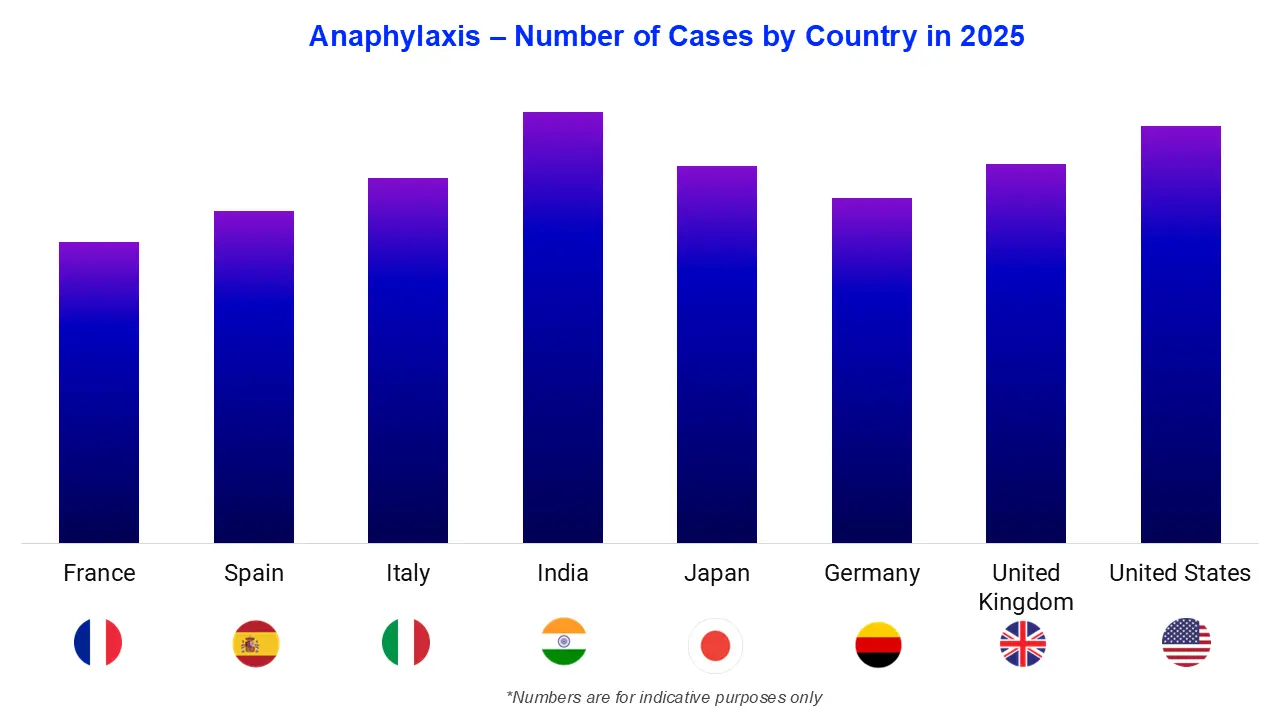
The Anaphylaxis epidemiology data and findings for the United States, Germany, Spain, Italy, France, the United Kingdom, Japan, and India are also provided in the epidemiology section.
|
Country |
Key Insights |
|
United States |
According to Chaaban et al., 462,906 anaphylaxis cases were identified in a U.S. database between 2004 and 2016. Incidence increased from 153 to 218 per 100,000 population, while women were 1.19 times more likely than men to present with anaphylaxis. Medication-induced anaphylaxis increased 15-fold during the study period, highlighting the growing burden of drug-related anaphylaxis in the United States. |
|
Germany |
Germany is a major contributor to the European Anaphylaxis Registry and has generated substantial evidence concerning fatal and near-fatal anaphylaxis. European registry analyses identify food, drugs, and insect venom among the principal triggers, with trigger distribution strongly influenced by age and clinical setting. |
|
France |
According to Tanno et al., 2024, analysis of French hospitalization data from 2012–2021 found an average hospitalization rate for anaphylaxis of 1.34 per 100,000 population per year, while severe anaphylaxis admissions occurred at 0.08 per 100,000 per year. Among severe cases with an identified trigger, drugs accounted for 45.6%, followed by food at 9.3% and insect stings at 7.2%. |
|
Italy |
Italy has contributed to European evidence on anaphylaxis and fatal hypersensitivity reactions, although a directly comparable contemporary national all-cause incidence estimate is not sufficiently established to justify a single figure. European registry evidence remains useful for characterizing trigger-specific risk and mortality. |
|
Spain |
Spain contributes to European anaphylaxis surveillance and published fatality analyses. However, available studies differ in population, trigger, and ascertainment methodology; therefore, a single contemporary national incidence figure should not be presented without specifying the underlying dataset. |
|
United Kingdom |
The United Kingdom has established national surveillance and has contributed substantially to the epidemiological characterization of anaphylaxis. However, incidence estimates vary according to whether emergency presentations, hospital admissions, or clinically confirmed episodes are measured; consequently, estimates should be reported with their specific study methodology. |
|
Japan |
According to Japanese nationwide pharmacovigilance data, 16,916 anaphylaxis cases and 418 fatalities were reported between 2005 and 2017. Drug-induced anaphylaxis occurred at an estimated 1.03 cases per 100,000 population per year, while fatal cases occurred at approximately 0.03 per 100,000 per year. Diagnostic agents and biological preparations were frequent causes. |
|
India |
India has a clinically important but incompletely quantified anaphylaxis burden. Available evidence is dominated by hospital-based studies, case series, and trigger-specific investigations rather than comprehensive national surveillance. Therefore, a precise contemporary national incidence or prevalence estimate should not be stated without a clearly defined population-based source. |
According to published studies, substantial gaps remain in the epidemiological characterization, standardized diagnosis, and timely management of anaphylaxis. These limitations are particularly pronounced in regions where national surveillance systems are incomplete. The 2024 Asian multicountry study highlighted disparities in both anaphylaxis triggers and management and specifically noted limited epidemiological reporting across Asia. Opportunities include development of standardized national surveillance systems, improved identification of high-risk populations, broader access to specialist allergy services, standardized diagnostic pathways, improved availability of epinephrine delivery devices, and systematic post-anaphylaxis evaluation. Contemporary practice guidance also supports assessment for underlying mast-cell disorders in selected patients with severe, recurrent, or unexplained anaphylaxis.
The management of anaphylaxis primarily focuses on rapid recognition and immediate intramuscular epinephrine administration, followed by appropriate airway, respiratory, and circulatory support. According to Wang et al., 2024, anaphylaxis remains a clinical diagnosis and epinephrine is the first-line treatment; risk assessment, patient education, and appropriate provision of epinephrine are central components of long-term management. Acute and baseline serum tryptase measurements can support diagnostic evaluation in selected cases, particularly when mast-cell disease is suspected. Perioperative anaphylaxis requires subsequent allergological investigation to identify the responsible agent; the 2024 French GERAP survey identified neuromuscular blocking agents as the principal cause, followed by antibiotics.


Upto 15% Off
USD
$1999 $1799
$2999 $2699
$4399 $3739
$5799 $4929


*While we strive to always give you current and accurate information, the numbers depicted on the website are indicative and may differ from the actual numbers in the main report. At Expert Market Research, we aim to bring you the latest insights and trends in the market. Using our analyses and forecasts, stakeholders can understand the market dynamics, navigate challenges, and capitalize on opportunities to make data-driven strategic decisions.*
Explore our key highlights of the report and gain a concise overview of key findings, trends, and actionable insights that will empower your strategic decisions.
|
Report Features |
Details |
|
Base Year |
2025 |
|
Historical Period |
2019-2025 |
|
Forecast Period |
2026-2035 |
|
Epidemiology Statistics Provided |
|
|
Segmentation Provided |
|
|
Geographies Covered |
|
Datasheet
One User
USD 1,999
USD 1,799
tax inclusive*
Single User License
One User
USD 2,999
USD 2,699
tax inclusive*
Five User License
Five User
USD 4,399
USD 3,739
tax inclusive*
Corporate License
Unlimited Users
USD 5,799
USD 4,929
tax inclusive*
*Please note that the prices mentioned below are starting prices for each bundle type. Kindly contact our team for further details.*
Flash Bundle
Small Business Bundle
Growth Bundle
Enterprise Bundle
*Please note that the prices mentioned below are starting prices for each bundle type. Kindly contact our team for further details.*
Flash Bundle
Number of Reports: 3
20%
tax inclusive*
Small Business Bundle
Number of Reports: 5
25%
tax inclusive*
Growth Bundle
Number of Reports: 8
30%
tax inclusive*
Enterprise Bundle
Number of Reports: 10
35%
tax inclusive*
How To Order

Select License Type
Choose the right license for your needs and access rights.

Click on ‘Buy Now’
Add the report to your cart with one click and proceed to register.

Select Mode of Payment
Choose a payment option for a secure checkout. You will be redirected accordingly.
Strategic Solutions for Informed Decision-Making
Gain insights to stay ahead and seize opportunities.

Get insights & trends for a competitive edge.

Track prices with detailed trend reports.

Analyse trade data for supply chain insights.

Leverage cost reports for smart savings

Enhance supply chain with partnerships.

Connect For More Information
Our expert team of analysts will offer full support and resolve any queries regarding the report, before and after the purchase.
Our expert team of analysts will offer full support and resolve any queries regarding the report, before and after the purchase.
We employ meticulous research methods, blending advanced analytics and expert insights to deliver accurate, actionable industry intelligence, staying ahead of competitors.
Our skilled analysts offer unparalleled competitive advantage with detailed insights on current and emerging markets, ensuring your strategic edge.
We offer an in-depth yet simplified presentation of industry insights and analysis to meet your specific requirements effectively.




