Consumer Insights
Uncover trends and behaviors shaping consumer choices today
Procurement Insights
Optimize your sourcing strategy with key market data
Industry Stats
Stay ahead with the latest trends and market analysis.
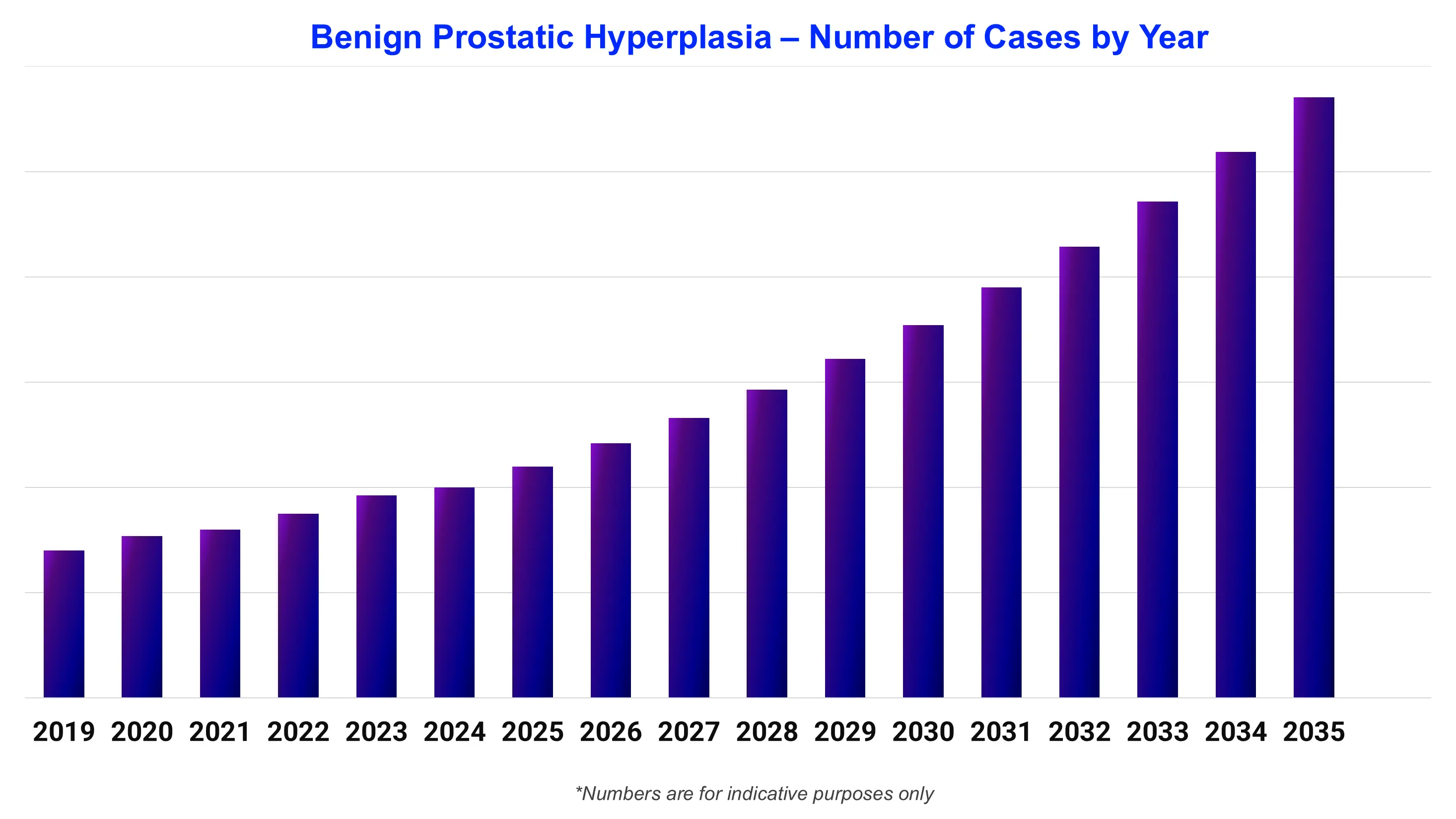
Benign prostatic hyperplasia (BPH) is a non-cancerous proliferation of glandular and stromal tissue in the prostate. It can contribute to prostate enlargement and lower urinary tract symptoms, including weak urinary stream, hesitancy, incomplete bladder emptying, urgency and nocturia. The 2023 Japan Community Health Survey included 3,122 male respondents, of whom 234 (7.5%) reported having BPH. According to Benign Prostatic Hyperplasia Epidemiology Forecast by Expert Market Research (EMR), the overall epidemiological state of Benign Prostatic Hyperplasia (BPH) is characterized by a stable age-adjusted risk profile paired with a massive, exploding absolute global burden.
Base Year
Historical Period
Forecast Period
Read more about this report - REQUEST FREE SAMPLE COPY IN PDF
Expert Market Research's “Benign Prostatic Hyperplasia Epidemiology Forecast Report 2026-2035” offers comprehensive information on the prevalence and demographics of Benign Prostatic Hyperplasia. It projects the future incidence and prevalence rates of Benign Prostatic Hyperplasia cases across various populations. The study covers age, gender, and type as major determinants of the Benign Prostatic Hyperplasia population. The report highlights patterns in the prevalence of Benign Prostatic Hyperplasia over time and projects future trends based on multiple variables.
The report provides a comprehensive overview of the disease, as well as historical and projected data on the epidemiology of Benign Prostatic Hyperplasia in the 8 major markets.
Regions Covered
Benign prostatic hyperplasia (BPH) is a non-cancerous proliferation of glandular and stromal tissue in the prostate. It can contribute to prostate enlargement and lower urinary tract symptoms, including weak urinary stream, hesitancy, incomplete bladder emptying, urgency and nocturia. However, urinary symptoms are not specific to BPH, and histological hyperplasia, prostate enlargement and obstruction are distinct clinical concepts. The 2026 American Urological Association guideline emphasizes appropriate evaluation and individualized treatment of bothersome symptoms.
|
Parameter |
Insight |
|
Largest Patient Pool |
United States |
|
Fastest Growing Country |
India |
|
High-Risk Population |
The principal high-risk group is older men, because BPH and related urinary symptoms become more common with advancing age. |
|
Key Diagnostic Method |
Diagnosis begins with a clinical history, physical examination and assessment of symptom severity, commonly using the International Prostate Symptom Score (IPSS). Urinalysis helps identify alternative causes of urinary symptoms. |
|
Major Risk Factor |
Advancing age is the principal established demographic risk factor for BPH. Androgen signalling is involved in prostate growth, while metabolic health and other age-associated conditions may influence symptom burden and progression. |
|
Major gap in the market |
A major gap is the absence of harmonized, recent national data distinguishing histologically confirmed BPH, clinically diagnosed prostate enlargement and symptom-defined lower urinary tract disease. |
The Benign Prostatic Hyperplasia epidemiology division offers information on the patient pool from history to the present as well as the projected trend for each of the 8 major markets. Expert Market Research provides both current and predicted trends for the Benign Prostatic Hyperplasia epidemiology scenario by examining a wide range of studies. Additionally, the report covers the diagnosed patient pool for Benign Prostatic Hyperplasia and their trends. The data is broken down into specific categories, such as total prevalent cases in males and females, and total diagnosed cases across different age groups and patient pools.
|
Epidemiology Segment |
Key Insights |
|
Diagnosed Prevalent Cases of the Disease |
As of 2019, there were an estimated 94 million prevalent cases of BPH globally, representing a significant increase from approximately 51 million cases in the year 2000. The absolute global volume of prevalent BPH cases has reached 112.5 million, a sharp 122% increase from the 50.7 million cases tracked in 1990. |
|
Gender-Specific Cases of the Disease |
Benign Prostatic Hyperplasia (BPH) is an exclusively male-specific condition, meaning its prevalence rate in the biological female population is 0%. Because BPH is defined as the non-malignant, cellular proliferation of tissue within the prostate gland, it physically cannot occur in individuals who do not possess a prostate |
|
Age-Specific Cases of the Disease |
The age-specific prevalence of Benign Prostatic Hyperplasia (BPH) follows a remarkably linear upward trajectory. The condition exhibits distinct timelines depending on whether it is measured histologically (microscopic tissue changes under a microscope) or clinically (visible physical enlargement causing lower urinary tract symptoms, or LUTS). Prevalence experiences an aggressive spike. Roughly 40% to 50% of men between ages 51 and 60 develop pathological or clinical BPH. |
|
Ethnicity-Wise Cases of the Disease |
Black / African-American men, experience a 41% higher overall risk of developing symptomatic BPH compared to White men. More notably, their risk for severe urinary symptoms increases by 68%. Data from the U.S. Veteran Population shows they are also diagnosed at a significantly younger age (an average of 63.1 years versus 66.7 years for White men). |
|
Mortality and Survival Analysis of the Disease |
Benign Prostatic Hyperplasia (BPH) is fundamentally a non-malignant condition that carries an excellent long-term survival rate, with overall survival matching that of the general age-matched population. The condition itself rarely causes direct mortality; instead, risk is driven by severe untreated complications or the stress of surgical interventions in elderly patients with pre-existing health conditions. In countries with advanced healthcare infrastructures, direct mortality from BPH has leveled off at an extremely low baseline of roughly 1.4 to 4.5 deaths per million men annually. |
Read more about this report - REQUEST FREE SAMPLE COPY IN PDF
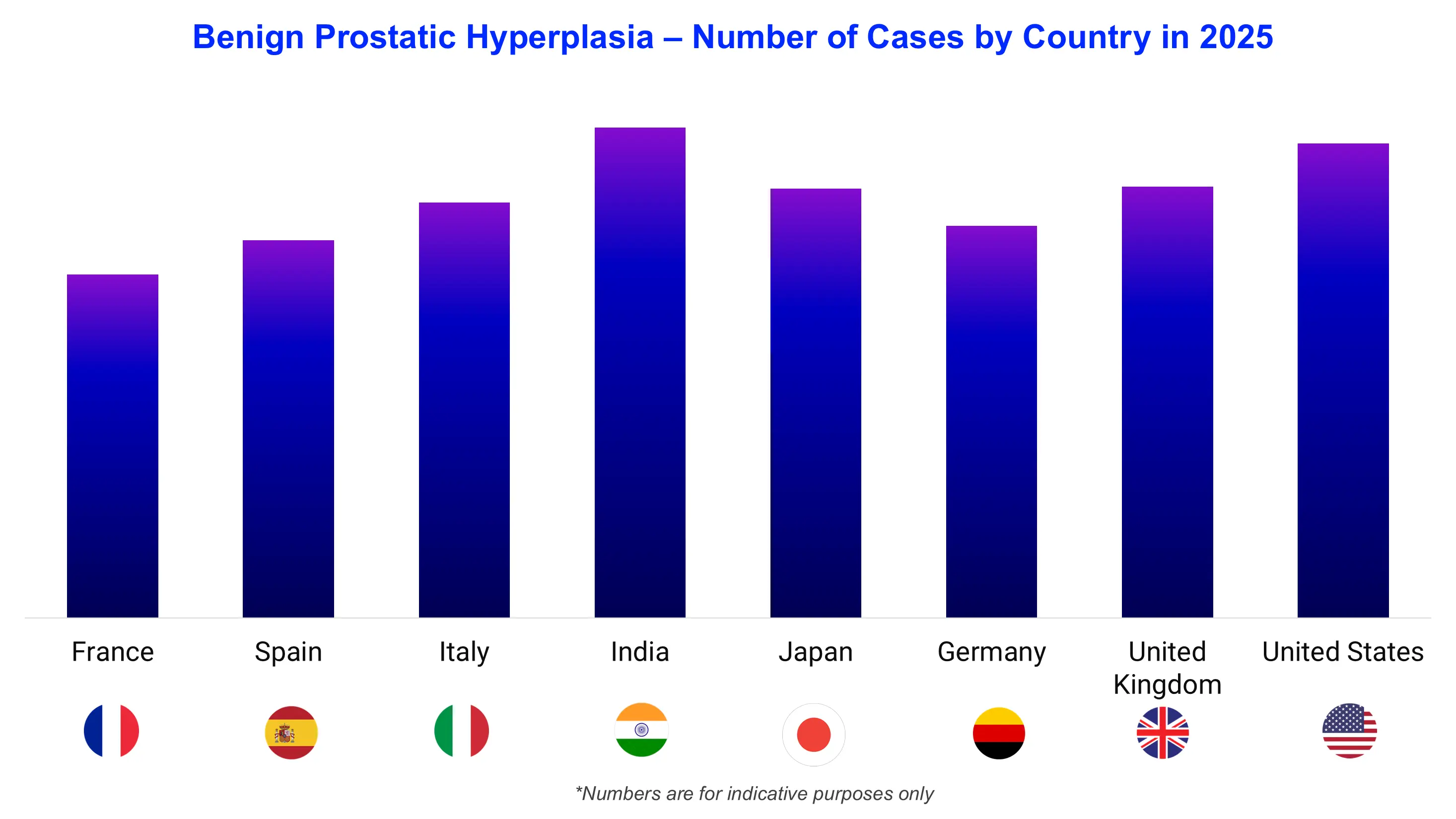
The Benign Prostatic Hyperplasia epidemiology data and findings for the United States, Germany, Spain, Italy, France, the United Kingdom, Japan, and India are also provided in the epidemiology section.
|
Country |
Key Insights |
|
United States |
Benign prostatic hyperplasia (BPH) affects an estimated 26 million to 38 million men in the United States. It stands as the most common non-cancerous prostate tumor found in aging men. The prevalence of BPH is heavily tied to age, transitioning from a relatively rare condition in younger years to an almost universal development in late adulthood |
|
Germany |
In Germany, the prevalence of benign prostatic hyperplasia (BPH) mirrors the aging trend seen across western nations. Real-world claims data from the German InGef research database indicates an overall baseline prevalence of approximately 3% to 6.7% across the entire male population, climbing sharply into an almost universal development in elderly age groups. Projections show that more than 3.2 million out of roughly 11.6 million men over the age of 50 in Germany live with a physically enlarged prostate. |
|
France |
In France, benign prostatic hyperplasia (BPH) represents a significant clinical burden, with community-based data indicating that approximately 15% to 20% of men over the age of 50 to 60 report moderate-to-severe symptoms. Among the nation's aging male population, it is estimated that between 855,000 and 1,140,000 French men live with symptomatic BPH. However, the actual diagnostic and consultative footprint varies significantly depending on whether a patient seeks formal medical care or is evaluated during routine general practice visits. |
|
Italy |
In Italy, benign prostatic hyperplasia (BPH) represents a massive public health challenge, currently affecting more than 6 million men across the nation. Reflecting Italy’s position as one of the world's oldest populations, health technology assessments and urological registries show that the total number of diagnosed cases surged by roughly 29% between 2000 and 2019, growing from 1,540,000 to 1,990,000 clinically managed cases. |
|
Spain |
In Spain, the overall population prevalence of benign prostatic hyperplasia (BPH) defined comprehensively by symptoms, urinary flow obstruction, and prostate enlargement is approximately 11.8% among men aged 40 and older. Regional epidemiological studies, such as cross-sectional population analyses conducted in regions like Andalusia and Madrid, indicate that lower urinary tract symptoms (LUTS) related to BPH affect 20% to 30% of Spanish men aged 50 and older, with symptom prevalence and prostate volume rising in direct parallel with age. |
|
United Kingdom |
In the United Kingdom, benign prostatic hyperplasia (BPH) and associated lower urinary tract symptoms (LUTS) affect an estimated 3 million men. Approximately 25% of UK men aged 40 to 79 experience symptomatic BPH, making it one of the most frequent urological presentations managed across the National Health Service (NHS). |
|
Japan |
In Japan, the overall real-world clinical prevalence of benign prostatic hyperplasia (BPH) is estimated at 4.4% across general male inpatient and broader health tracking data, but anatomical and symptomatic presence climbs dramatically in alignment with Japan's super-aging demographic. Data from nationwide registry reports, such as the Japanese Urological Association guidelines and large-scale population surveys, shows that prostatic enlargement impacts roughly 70% of males aged 60-69 years and 80% to 90% of those aged 70 and older. |
|
India |
In India, benign prostatic hyperplasia (BPH) affects approximately 25% of men in their 40s, climbing sharply to 50% by the seventh decade (age 60–70) and reaching over 80% to 90% in men in their 80s. Data from the Global Burden of Disease Study indicates an absolute case count rising from 9.55 million in 2000 to 18.2 million cases in 2019, representing an estimated burden of roughly 3,480 cases per 100,000 population. |
Across the eight countries, the principal opportunities are better differentiation of BPH from other causes of lower urinary tract symptoms, earlier assessment of bothersome symptoms, and improved access to personalised medical or procedural treatment. Standardised reporting of prostate volume, symptom severity, urinary retention, treatment response and adverse effects would strengthen comparisons between countries. Minimally invasive procedures and updated medical regimens offer additional treatment choices, but their suitability depends on prostate anatomy, symptom profile, comorbidities and patient preferences. Current evidence does not support ranking the eight countries by prevalence growth.
Treatment is determined by symptom severity, prostate characteristics, complications and patient preferences. Men with mild or minimally bothersome symptoms may be managed with monitoring and lifestyle advice. Alpha-blockers can improve symptoms; 5-alpha-reductase inhibitors may be used when prostate enlargement is present and can reduce the risk of progression in suitable patients. Other options include tadalafil, selected combination therapies and procedures such as transurethral resection, laser enucleation, prostatic urethral lift and water-vapour thermal therapy. Treatment choice should follow current local guidance and individual clinical assessment.


Upto 15% Off
USD
$2699 $2429
$4299 $3869
$5799 $4949
$6999 $5949


*While we strive to always give you current and accurate information, the numbers depicted on the website are indicative and may differ from the actual numbers in the main report. At Expert Market Research, we aim to bring you the latest insights and trends in the market. Using our analyses and forecasts, stakeholders can understand the market dynamics, navigate challenges, and capitalize on opportunities to make data-driven strategic decisions.*
Explore our key highlights of the report and gain a concise overview of key findings, trends, and actionable insights that will empower your strategic decisions.
|
Report Features |
Details |
|
Base Year |
2025 |
|
Historical Period |
2019-2025 |
|
Forecast Period |
2026-2035 |
|
Epidemiology Statistics Provided |
|
|
Segmentation Provided |
|
|
Geographies Covered |
|
Datasheet
One User
USD 2,699
USD 2,429
tax inclusive*
Single User License
One User
USD 4,299
USD 3,869
tax inclusive*
Five User License
Five User
USD 5,799
USD 4,949
tax inclusive*
Corporate License
Unlimited Users
USD 6,999
USD 5,949
tax inclusive*
*Please note that the prices mentioned below are starting prices for each bundle type. Kindly contact our team for further details.*
Flash Bundle
Small Business Bundle
Growth Bundle
Enterprise Bundle
*Please note that the prices mentioned below are starting prices for each bundle type. Kindly contact our team for further details.*
Flash Bundle
Number of Reports: 3
20%
tax inclusive*
Small Business Bundle
Number of Reports: 5
25%
tax inclusive*
Growth Bundle
Number of Reports: 8
30%
tax inclusive*
Enterprise Bundle
Number of Reports: 10
35%
tax inclusive*
How To Order

Select License Type
Choose the right license for your needs and access rights.

Click on ‘Buy Now’
Add the report to your cart with one click and proceed to register.

Select Mode of Payment
Choose a payment option for a secure checkout. You will be redirected accordingly.
Strategic Solutions for Informed Decision-Making
Gain insights to stay ahead and seize opportunities.
Get insights & trends for a competitive edge.
Track prices with detailed trend reports.
Analyse trade data for supply chain insights.

Leverage cost reports for smart savings
Enhance supply chain with partnerships.

Connect For More Information
Our expert team of analysts will offer full support and resolve any queries regarding the report, before and after the purchase.
Our expert team of analysts will offer full support and resolve any queries regarding the report, before and after the purchase.
We employ meticulous research methods, blending advanced analytics and expert insights to deliver accurate, actionable industry intelligence, staying ahead of competitors.
Our skilled analysts offer unparalleled competitive advantage with detailed insights on current and emerging markets, ensuring your strategic edge.
We offer an in-depth yet simplified presentation of industry insights and analysis to meet your specific requirements effectively.