Consumer Insights
Uncover trends and behaviors shaping consumer choices today
Procurement Insights
Optimize your sourcing strategy with key market data
Industry Stats
Stay ahead with the latest trends and market analysis.
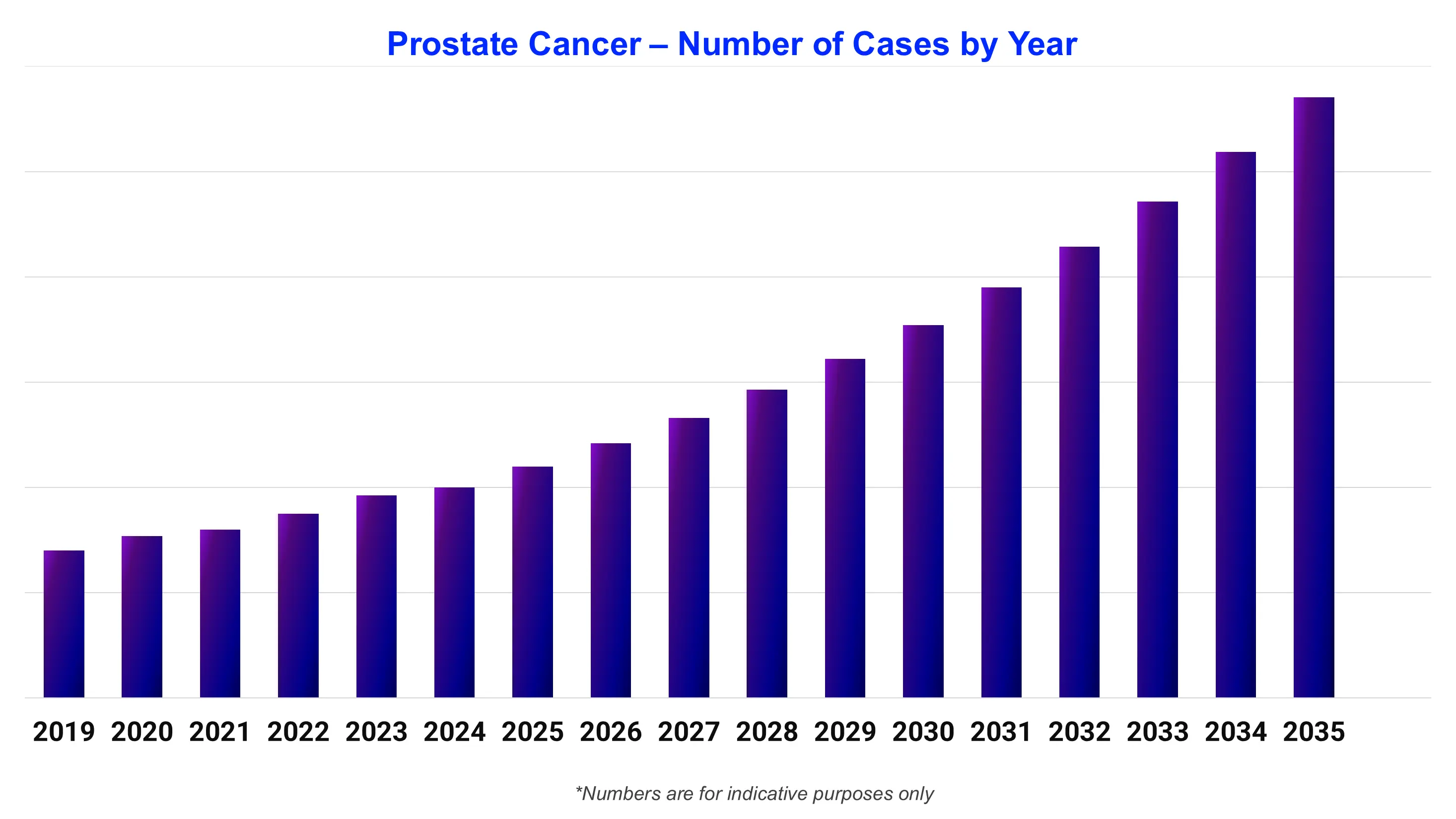
Prostate cancer is a malignancy that develops in the prostate gland and primarily affects men. According to Global Action on Men’s Health, it is the most frequently diagnosed cancer among men in 112 countries and the leading cause of cancer death among men in 48 countries. According to prostate cancer epidemiology forecast by Expert Market Research, the disease represents a substantial global burden.
Base Year
Historical Period
Forecast Period
Read more about this report - REQUEST FREE SAMPLE COPY IN PDF
Expert Market Research's “Prostate Cancer Epidemiology Forecast Report 2026-2035” offers comprehensive information on the prevalence and demographics of prostate cancer. It projects the future incidence and prevalence rates of prostate cancer cases across various populations. The study covers age, gender, and type as major determinants of the prostate cancer population. The report highlights patterns in the prevalence of prostate cancer over time and projects future trends based on multiple variables.
The report provides a comprehensive overview of the disease, as well as historical and projected data on the epidemiology of prostate cancer in the 8 major markets.
Regions Covered
Prostate cancer is a malignant tumor that develops in the prostate gland, most commonly originating from glandular cells that produce prostate fluid. The disease generally occurs when genetic and molecular abnormalities cause prostate cells to grow and divide uncontrollably. Most prostate cancers are adenocarcinomas, although less common histological types can occur. Disease behavior ranges from localized, slow-growing tumors to aggressive cancers that invade surrounding tissues or metastasize to distant organs. Prostate adenocarcinoma is the predominant type and accounts for the vast majority of prostate cancer cases.
|
Parameter |
Insight |
|
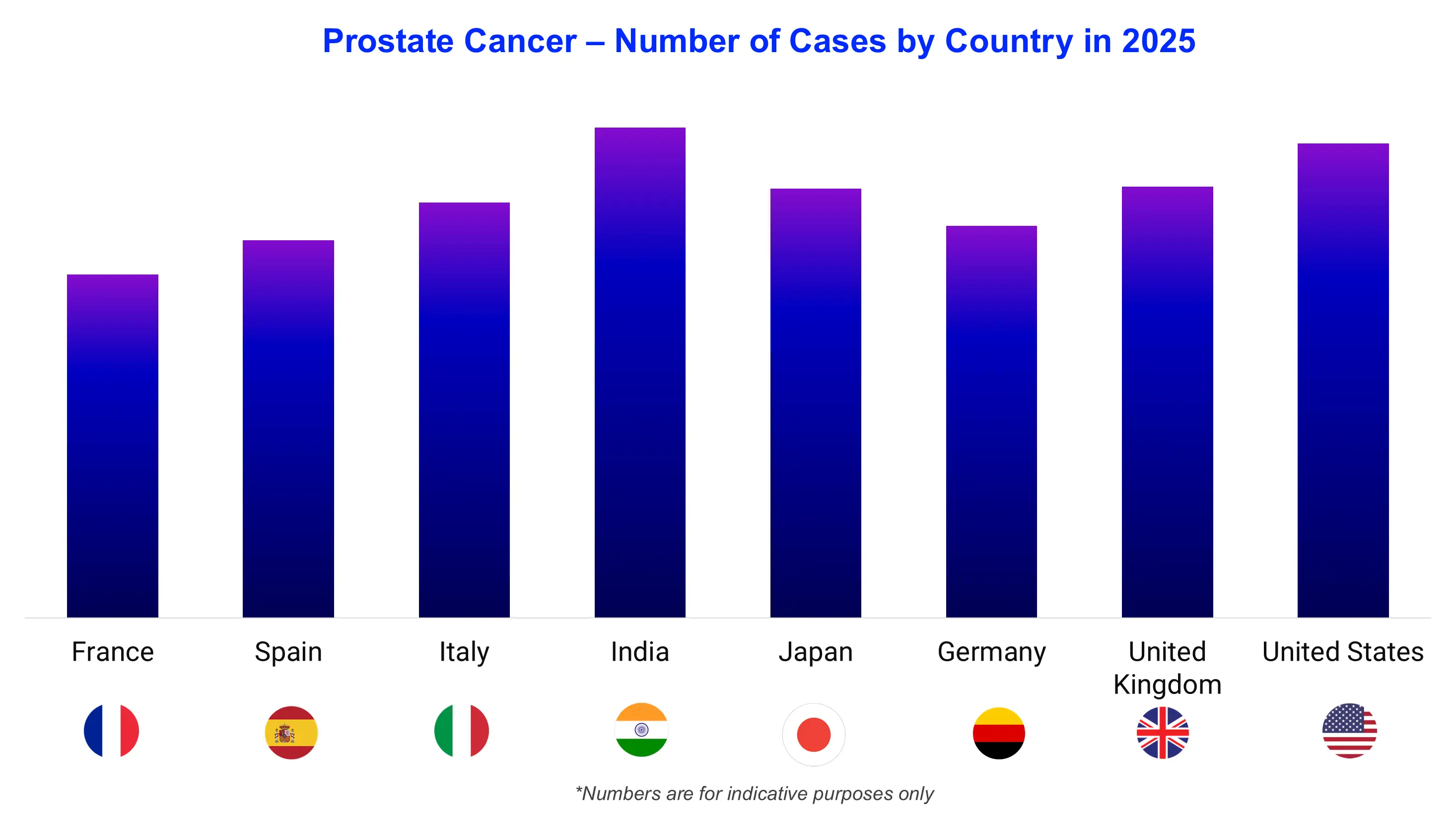
Largest Patient Pool |
United States |
|
Fastest Growing Country |
India |
|
High-Risk Population |
Older men, particularly those with a family history of prostate cancer |
|
Key Diagnostic Method |
Prostate-specific antigen (PSA) testing followed by diagnostic evaluation, including biopsy when indicated |
|
Major Risk Factor |
Increasing age |
|
Major gap in the market |
Underdiagnosis and delayed detection, particularly among men with limited access to screening and diagnostic services |
The prostate cancer epidemiology division offers information on the patient pool from history to the present as well as the projected trend for each of the 8 major markets. Expert Market Research provides both current and predicted trends for the prostate cancer epidemiology scenario by examining a wide range of studies. Additionally, the report covers the diagnosed patient pool for prostate cancer and their trends. The data is broken down into specific categories, such as total prevalent cases in males and females, and total diagnosed cases across different age groups and patient pools.
|
Epidemiology Segment |
Key Insights |
|
Diagnosed Prevalent Cases of the Disease |
Prostate cancer was the second most commonly diagnosed cancer and the fifth leading cause of cancer death among men worldwide, with more than 1.46 million estimated cases in 2022. According to Global Action on Men’s Health, it was the most frequently diagnosed cancer among men in 112 countries. |
|
Gender-Specific Cases of the Disease |
Prostate cancer represents a major cancer burden among men globally. According to the Centers for Disease Control and Prevention, prostate cancer was the most common cancer among men in the United States in 2022, with 255,395 new cases reported. |
|
Age-Specific Cases of the Disease |
According to the Centers for Disease Control and Prevention, 5% of prostate cancer cases in the United States in 2022 occurred among men aged 45–54 years, 52% among men aged 55–69 years, and 43% among men aged 70 years or older. |
|
Ethnicity-Wise Cases of the Disease |
According to the Centers for Disease Control and Prevention, 70% of prostate cancer cases in the United States in 2022 occurred among non-Hispanic White men, 16% among non-Hispanic Black men, and 8% among Hispanic men. According to Muhammad Haider et al., Black men in the United Kingdom have twice the incidence and mortality of White men. |
|
Mortality and Survival Analysis of the Disease |
According to Elizabeth J. Schafer et al., prostate cancer caused approximately 396,000 deaths worldwide in 2022, with mortality projected to reach approximately 712,000 deaths by 2040. According to Albers et al., the five-year survival rate in Germany was approximately 90%. |
|
Disease Type |
Prevalence |
|
Acinar adenocarcinoma |
Acinar adenocarcinoma is the predominant histologic type of prostate cancer. A large US SEER analysis reported acinar adenocarcinoma in 99.63% of prostate cancer cases. In India, adenocarcinoma accounted for approximately 92% of histological subtypes in hospital-based registry data. |
|
Ductal adenocarcinoma |
Ductal adenocarcinoma is an uncommon histologic subtype of prostate cancer. The WHO classification literature reports ductal adenocarcinoma in approximately 2.6% of prostate cancers, while the pure form accounts for only 0.2%–0.4%. |
|
Other prostate carcinomas and sarcomas |
Other histologic subtypes are rare. In a US SEER analysis, neuroendocrine, mucinous, and signet-ring cell carcinomas accounted for 0.12%, 0.06%, and 0.01%, respectively. India’s registry reported neuroendocrine tumors in 0.6% of cases. |
Read more about this report - REQUEST FREE SAMPLE COPY IN PDF
The prostate cancer epidemiology data and findings for the United States, Germany, Spain, Italy, France, the United Kingdom, Japan, and India are also provided in the epidemiology section.
|
Country |
Key Insights |
|
United States |
According to the Centers for Disease Control and Prevention, 255,395 new prostate cancer cases were reported in the United States in 2022, with an incidence rate of 119 per 100,000 males. Prostate cancer was the most common cancer among men, and 70% of cases were diagnosed at the localized stage. |
|
Germany |
According to Albers et al., approximately 75,000 new prostate cancer cases were reported in Germany in 2022, making prostate cancer the most common cancer among men. The average age at diagnosis was 71 years in 2021, and approximately three-quarters of tumors were diagnosed at an early stage. |
|
France |
According to Elizabeth J. Schafer et al., the prostate cancer incidence rate in France was 84.5 per 100,000 men, while the mortality rate was 8.7 per 100,000 men. Incidence rates stabilized, while mortality rates continued to decrease by approximately 1.0–3.0% annually. |
|
Italy |
Prostate cancer contributes to the epidemiological burden among older men in Italy, with population aging contributing to the number of men at risk of developing the disease. |
|
Spain |
According to MD Anderson Cancer Center, an estimated 29,002 new prostate cancer cases were expected in Spain. Prostate cancer was the most frequent tumor among men and the third most common cause of cancer death among Spanish men. |
|
United Kingdom |
According to Muhammad Haider et al., prostate cancer is the most commonly diagnosed cancer among men in the United Kingdom, with a lifetime risk of 1 in 8. Black men have twice the incidence and mortality of White men, while Asian men have a lifetime risk of approximately 1 in 13. |
|
Japan |
According to Takahiro Kimura et al., Japan recorded an estimated 98,600 new prostate cancer cases in 2023. Prostate cancer was the most common cancer among Japanese men and the sixth most common cause of cancer death. More than 10% of patients had evidence of metastases at initial diagnosis. |
|
India |
According to Tata Memorial Centre Advanced Centre for Treatment, Research & Education in Cancer, India reported 34,540 prostate cancer cases and 16,783 deaths in 2020. According to Ranjan Kumar Prusty et al., prostate cancer diagnoses have increased in recent years, associated with population aging, urbanization, and changes in health-seeking behavior. |
A major gap in the prostate cancer epidemiology landscape is the potential for delayed diagnosis, particularly where awareness, risk assessment, and access to diagnostic services remain limited. Differences in healthcare infrastructure and diagnostic practices across the United States, European countries, Japan, and India can contribute to variations in disease detection. Emerging opportunities include improving risk-stratified screening approaches, expanding access to prostate-specific antigen testing and follow-up diagnostics, and strengthening awareness among older men and individuals with a family history. Molecular and biomarker-based approaches may further support earlier detection and more precise disease classification.
Prostate cancer treatment depends on disease stage, tumor characteristics, patient age, overall health, and treatment preferences. Localized disease may be managed through active surveillance, radical prostatectomy, or radiation therapy, including external-beam radiation and brachytherapy. Advanced or metastatic disease may require androgen deprivation therapy, chemotherapy, androgen receptor pathway inhibitors, or other systemic treatments. Selected patients may receive targeted radioligand therapies or immunotherapy based on tumor characteristics. Androgen deprivation therapy remains an important treatment approach for advanced hormone-sensitive and castration-resistant prostate cancer.
Castrate-Resistant Prostate Cancer Market
Metastatic Castration-Resistant Prostate Cancer Pipeline Analysis Report


Upto 15% Off
USD
$2699 $2429
$4299 $3869
$5799 $4949
$6999 $5949


*While we strive to always give you current and accurate information, the numbers depicted on the website are indicative and may differ from the actual numbers in the main report. At Expert Market Research, we aim to bring you the latest insights and trends in the market. Using our analyses and forecasts, stakeholders can understand the market dynamics, navigate challenges, and capitalize on opportunities to make data-driven strategic decisions.*
Explore our key highlights of the report and gain a concise overview of key findings, trends, and actionable insights that will empower your strategic decisions.
|
Report Features |
Details |
|
Base Year |
2025 |
|
Historical Period |
2019-2025 |
|
Forecast Period |
2026-2035 |
|
Epidemiology Statistics Provided |
|
|
Segmentation Provided |
|
|
Geographies Covered |
|
Datasheet
One User
USD 2,699
USD 2,429
tax inclusive*
Single User License
One User
USD 4,299
USD 3,869
tax inclusive*
Five User License
Five User
USD 5,799
USD 4,949
tax inclusive*
Corporate License
Unlimited Users
USD 6,999
USD 5,949
tax inclusive*
*Please note that the prices mentioned below are starting prices for each bundle type. Kindly contact our team for further details.*
Flash Bundle
Small Business Bundle
Growth Bundle
Enterprise Bundle
*Please note that the prices mentioned below are starting prices for each bundle type. Kindly contact our team for further details.*
Flash Bundle
Number of Reports: 3
20%
tax inclusive*
Small Business Bundle
Number of Reports: 5
25%
tax inclusive*
Growth Bundle
Number of Reports: 8
30%
tax inclusive*
Enterprise Bundle
Number of Reports: 10
35%
tax inclusive*
How To Order

Select License Type
Choose the right license for your needs and access rights.

Click on ‘Buy Now’
Add the report to your cart with one click and proceed to register.

Select Mode of Payment
Choose a payment option for a secure checkout. You will be redirected accordingly.
Strategic Solutions for Informed Decision-Making
Gain insights to stay ahead and seize opportunities.
Get insights & trends for a competitive edge.
Track prices with detailed trend reports.
Analyse trade data for supply chain insights.

Leverage cost reports for smart savings
Enhance supply chain with partnerships.
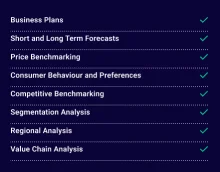
Connect For More Information
Our expert team of analysts will offer full support and resolve any queries regarding the report, before and after the purchase.
Our expert team of analysts will offer full support and resolve any queries regarding the report, before and after the purchase.
We employ meticulous research methods, blending advanced analytics and expert insights to deliver accurate, actionable industry intelligence, staying ahead of competitors.
Our skilled analysts offer unparalleled competitive advantage with detailed insights on current and emerging markets, ensuring your strategic edge.
We offer an in-depth yet simplified presentation of industry insights and analysis to meet your specific requirements effectively.