

Consumer Insights
Uncover trends and behaviors shaping consumer choices today
Procurement Insights
Optimize your sourcing strategy with key market data
Industry Stats
Stay ahead with the latest trends and market analysis.
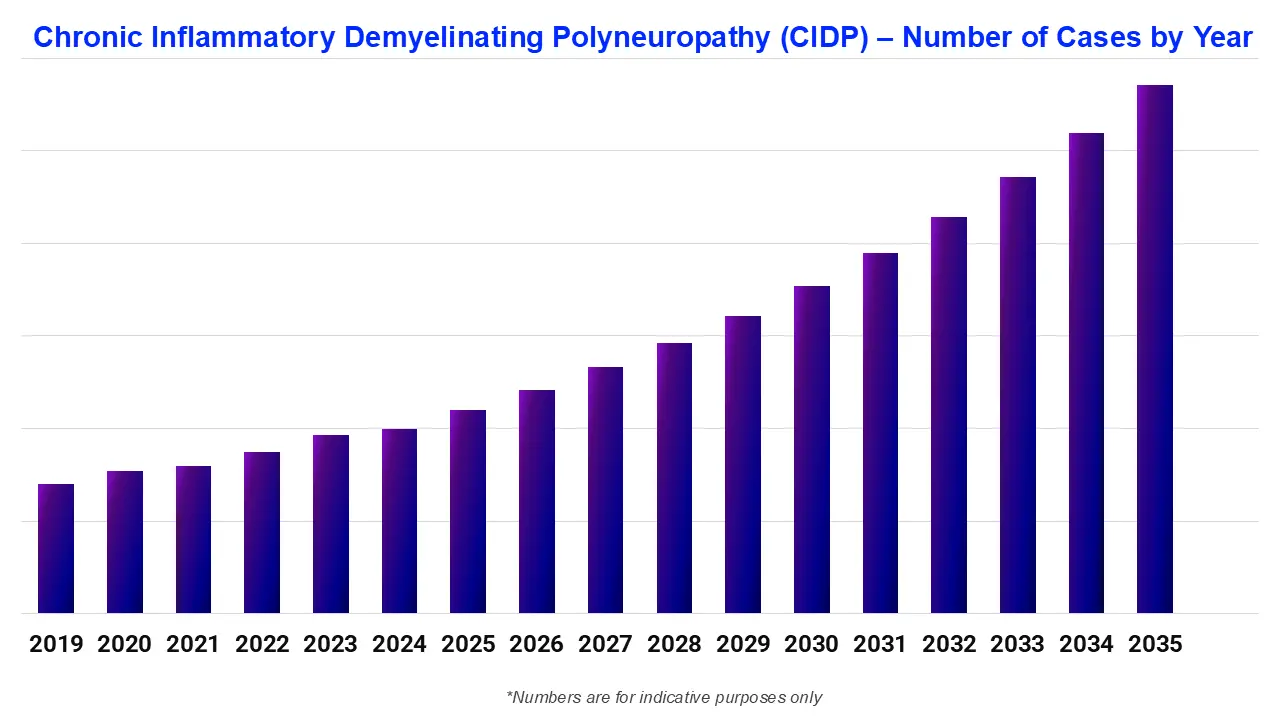
Chronic inflammatory demyelinating polyneuropathy (CIDP) is a rare immune-mediated neurological disorder that damages the myelin sheath of peripheral nerves, causing progressive weakness and sensory impairment. According to Cleveland Clinic, 0.8 to 8.9 new cases occur per 100,000 people annually in the United States. According to the chronic inflammatory demyelinating polyneuropathy (CIDP) epidemiology analysis by Expert Market Research, the condition represents a significant neurological disorder requiring continued epidemiological assessment.
Base Year
Historical Period
Forecast Period
Read more about this report - Request a Free Sample
Expert Market Research's “Chronic Inflammatory Demyelinating Polyneuropathy (CIDP) Epidemiology Forecast Report 2026-2035” offers comprehensive information on the prevalence and demographics of chronic inflammatory demyelinating polyneuropathy (CIDP). It projects the future incidence and prevalence rates of chronic inflammatory demyelinating polyneuropathy (CIDP) cases across various populations. The study covers age, gender, and type as major determinants of the chronic inflammatory demyelinating polyneuropathy (CIDP) population. The report highlights patterns in the prevalence of chronic inflammatory demyelinating polyneuropathy (CIDP) over time and projects future trends based on multiple variables.
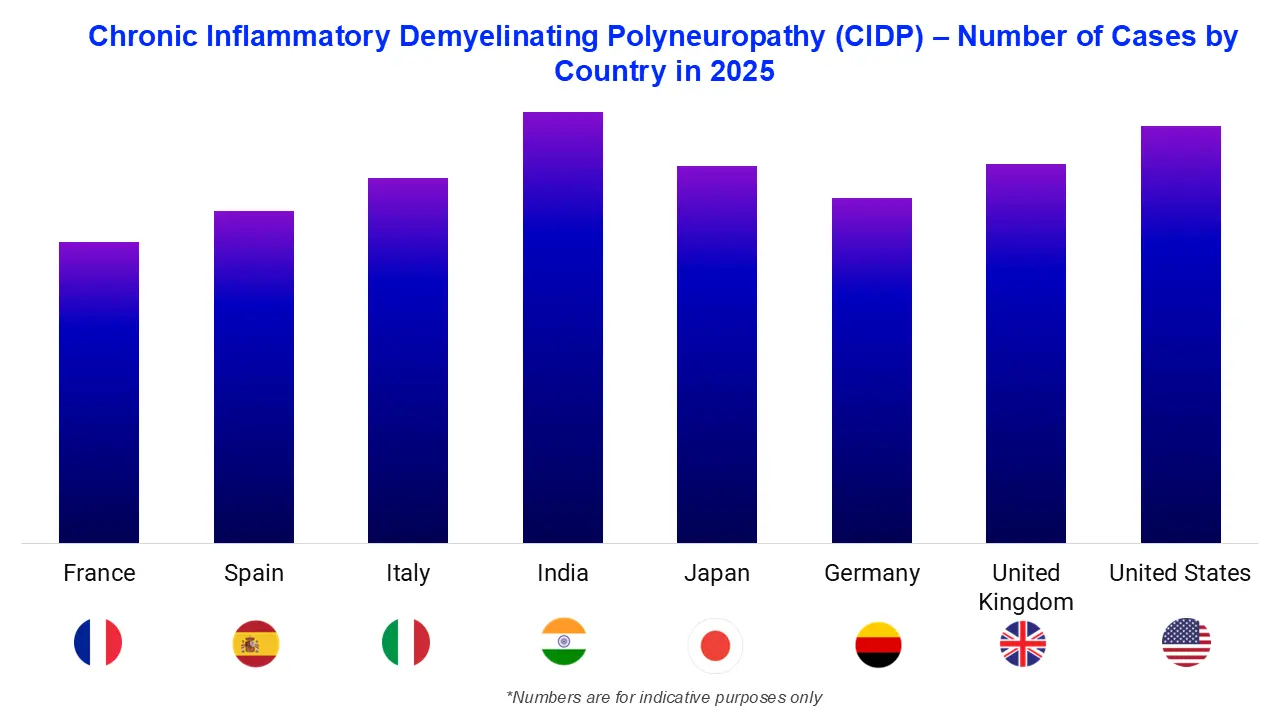
The report provides a comprehensive overview of the disease, as well as historical and projected data on the epidemiology of chronic inflammatory demyelinating polyneuropathy (CIDP) in the 8 major markets.
Regions Covered
Chronic inflammatory demyelinating polyneuropathy (CIDP) is a rare, immune-mediated neurological disorder in which the immune system mistakenly attacks the myelin sheath surrounding peripheral nerves. This damage disrupts nerve signal transmission and can cause progressive or recurring muscle weakness, sensory loss, impaired reflexes, and difficulties with walking and balance. CIDP may develop gradually over at least eight weeks and can follow a progressive, relapsing-remitting, or monophasic course. Recognized variants may predominantly affect sensory, motor, or specific nerve distributions.
|
Parameter |
Insight |
|
Largest Patient Pool |
United States |
|
Fastest Growing Region |
India |
|
High-Risk Population |
Older adults, particularly individuals with immune-mediated disorders |
|
Key Diagnostic Method |
Nerve conduction studies and electromyography |
|
Major Risk Factor |
Immune system dysregulation |
|
Major gap in the market |
Delayed diagnosis and misdiagnosis due to clinical overlap with other neuropathies |
The chronic inflammatory demyelinating polyneuropathy (CIDP) epidemiology division offers information on the patient pool from history to the present as well as the projected trend for each of the 8 major markets. Expert Market Research provides both current and predicted trends for the chronic inflammatory demyelinating polyneuropathy (CIDP) epidemiology scenario by examining a wide range of studies. Additionally, the report covers the diagnosed patient pool for chronic inflammatory demyelinating polyneuropathy (CIDP) and their trends. The data is broken down into specific categories, such as total prevalent cases in males and females, and total diagnosed cases across different age groups and patient pools.
|
Epidemiology Segment |
Key Insights |
|
Diagnosed Prevalent Cases of the Disease |
According to Zeinab Rajabally et al., 2025, CIDP prevalence was 6.18 per 100,000. Reported prevalence across populations ranges from 0.7 to 10.3 cases per 100,000 people, indicating variation in the diagnosed disease burden. |
|
Gender-Specific Cases of the Disease |
According to Garcia-Castillo María Ariana et al., 2024, CIDP demonstrates a male predominance, with gender rate ratios ranging from 1.5 to 4. The condition primarily affects adults, indicating a greater reported burden among adult male populations. |
|
Age-Specific Cases of the Disease |
As per Rare Disease Advisor, CIDP incidence increases with advancing age, particularly among individuals aged 50 years and older, with peak incidence occurring between 40 and 60 years. According to Garcia-Castillo María Ariana et al., 2024, incidence also rises with advancing age. |
|
Ethnicity-Wise Cases of the Disease |
According to Zeinab Rajabally et al., 2025, CIDP prevalence was 2.64 per 100,000 among Asian subjects compared with 10.15 per 100,000 among white subjects. Incidence was 0.24 versus 0.86 per 100,000 per year, respectively. |
|
Mortality and Survival Analysis of the Disease |
Mortality and survival patterns are relevant to assessing the long-term epidemiological burden of CIDP, particularly because the condition primarily affects adults and may require continued management over time. |
|
Disease Type |
Prevalence |
|
Typical (Classical) CIDP |
Represents the major form of CIDP, characterized by symmetrical motor and sensory involvement affecting both proximal and distal limbs. |
|
Multifocal Acquired Demyelinating Sensory and Motor Neuropathy (MADSAM) |
A significant atypical CIDP variant, also known as Lewis-Sumner syndrome, characterized by asymmetrical and patchy motor and sensory involvement. |
|
Distal Acquired Demyelinating Symmetrical Neuropathy (DADS) |
A recognized CIDP variant that primarily involves the distal portions of the limbs, with sensory symptoms generally more prominent than motor weakness. |
|
Others |
Other recognized variants include pure motor CIDP, pure sensory CIDP, sensory-predominant CIDP, motor-predominant CIDP, and focal CIDP, reflecting different patterns of motor, sensory, and nerve involvement. |
Read more about this report - Request a Free Sample
The chronic inflammatory demyelinating polyneuropathy (CIDP) epidemiology data and findings for the United States, Germany, Spain, Italy, France, the United Kingdom, Japan, and India are also provided in the epidemiology section.
|
Country |
Key Insights |
|
United States |
According to Cleveland Clinic, researchers estimate 0.8 to 8.9 new CIDP cases per 100,000 people each year in the United States, demonstrating variation in reported annual incidence estimates. |
|
Germany |
CIDP epidemiology in Germany can be assessed through prevalence and incidence patterns, with the disease burden primarily observed among adult populations and increasing with advancing age. |
|
France |
CIDP epidemiology in France can be assessed based on prevalence, incidence, age distribution, and gender patterns, with adult populations representing the primary affected group. |
|
Italy |
CIDP epidemiology in Italy reflects the broader adult disease burden, with epidemiological assessment focused on prevalence, incidence, age distribution, and differences between male and female populations. |
|
Spain |
CIDP epidemiology in Spain can be evaluated through population-level prevalence and incidence patterns, including the distribution of cases by age and gender and the increasing incidence observed with advancing age. |
|
United Kingdom |
According to Zeinab Rajabally et al., 2025, CIDP prevalence in the United Kingdom was 6.18 per 100,000, while mean incidence was 0.54 per 100,000 per year. Prevalence and incidence were lower among Asian subjects than white subjects. |
|
Japan |
According to Motoi Kuwahara et al., 2024, CIDP prevalence in Japan was 3.3 persons per 100,000 population, providing a country-specific measure of the disease burden. |
|
India |
According to Zeinab Rajabally et al., 2025, Asian populations including Indian, Pakistani, and Bangladeshi subjects had lower CIDP prevalence than white subjects, particularly among individuals aged 50 years and older. |
A major gap in the CIDP epidemiology landscape is the potential for delayed diagnosis and misdiagnosis, as the disease can resemble other peripheral neuropathies and neurological disorders. Limited disease awareness and variations in diagnostic practices may further affect the identification and reporting of patients across regions. Emerging opportunities include improving epidemiological surveillance, increasing specialist access, and strengthening early diagnostic pathways, particularly in developing healthcare markets such as India. Greater availability of standardized diagnostic approaches and real-world patient data could also improve disease characterization and support the development of more targeted treatment strategies.
Chronic inflammatory demyelinating polyneuropathy (CIDP) treatment aims to reduce immune-mediated nerve damage, improve muscle strength, and preserve long-term function. First-line treatment options commonly include intravenous immunoglobulin, corticosteroids, and plasma exchange. Patients with persistent or treatment-resistant disease may receive immunosuppressive or other immunomodulatory therapies under specialist supervision. Physical therapy, occupational therapy, and rehabilitation can help maintain mobility and support daily functioning. Treatment selection depends on disease severity, clinical subtype, treatment response, and individual patient needs.
Chronic Inflammatory Demyelinating Polyneuropathy Therapeutics Market
North America Chronic Inflammatory Demyelinating Polyneuropathy Therapeutics Market


Upto 15% Off
USD
$1999 $1799
$2999 $2699
$4399 $3739
$5799 $4929


*While we strive to always give you current and accurate information, the numbers depicted on the website are indicative and may differ from the actual numbers in the main report. At Expert Market Research, we aim to bring you the latest insights and trends in the market. Using our analyses and forecasts, stakeholders can understand the market dynamics, navigate challenges, and capitalize on opportunities to make data-driven strategic decisions.*
Explore our key highlights of the report and gain a concise overview of key findings, trends, and actionable insights that will empower your strategic decisions.
|
Report Features |
Details |
|
Base Year |
2025 |
|
Historical Period |
2019-2025 |
|
Forecast Period |
2026-2035 |
|
Epidemiology Statistics Provided |
|
|
Segmentation Provided |
|
|
Geographies Covered |
|
Datasheet
One User
USD 1,999
USD 1,799
tax inclusive*
Single User License
One User
USD 2,999
USD 2,699
tax inclusive*
Five User License
Five User
USD 4,399
USD 3,739
tax inclusive*
Corporate License
Unlimited Users
USD 5,799
USD 4,929
tax inclusive*
*Please note that the prices mentioned below are starting prices for each bundle type. Kindly contact our team for further details.*
Flash Bundle
Small Business Bundle
Growth Bundle
Enterprise Bundle
*Please note that the prices mentioned below are starting prices for each bundle type. Kindly contact our team for further details.*
Flash Bundle
Number of Reports: 3
20%
tax inclusive*
Small Business Bundle
Number of Reports: 5
25%
tax inclusive*
Growth Bundle
Number of Reports: 8
30%
tax inclusive*
Enterprise Bundle
Number of Reports: 10
35%
tax inclusive*
How To Order

Select License Type
Choose the right license for your needs and access rights.

Click on ‘Buy Now’
Add the report to your cart with one click and proceed to register.

Select Mode of Payment
Choose a payment option for a secure checkout. You will be redirected accordingly.
Strategic Solutions for Informed Decision-Making
Gain insights to stay ahead and seize opportunities.

Get insights & trends for a competitive edge.

Track prices with detailed trend reports.

Analyse trade data for supply chain insights.

Leverage cost reports for smart savings

Enhance supply chain with partnerships.

Connect For More Information
Our expert team of analysts will offer full support and resolve any queries regarding the report, before and after the purchase.
Our expert team of analysts will offer full support and resolve any queries regarding the report, before and after the purchase.
We employ meticulous research methods, blending advanced analytics and expert insights to deliver accurate, actionable industry intelligence, staying ahead of competitors.
Our skilled analysts offer unparalleled competitive advantage with detailed insights on current and emerging markets, ensuring your strategic edge.
We offer an in-depth yet simplified presentation of industry insights and analysis to meet your specific requirements effectively.




