

Consumer Insights
Uncover trends and behaviors shaping consumer choices today
Procurement Insights
Optimize your sourcing strategy with key market data
Industry Stats
Stay ahead with the latest trends and market analysis.
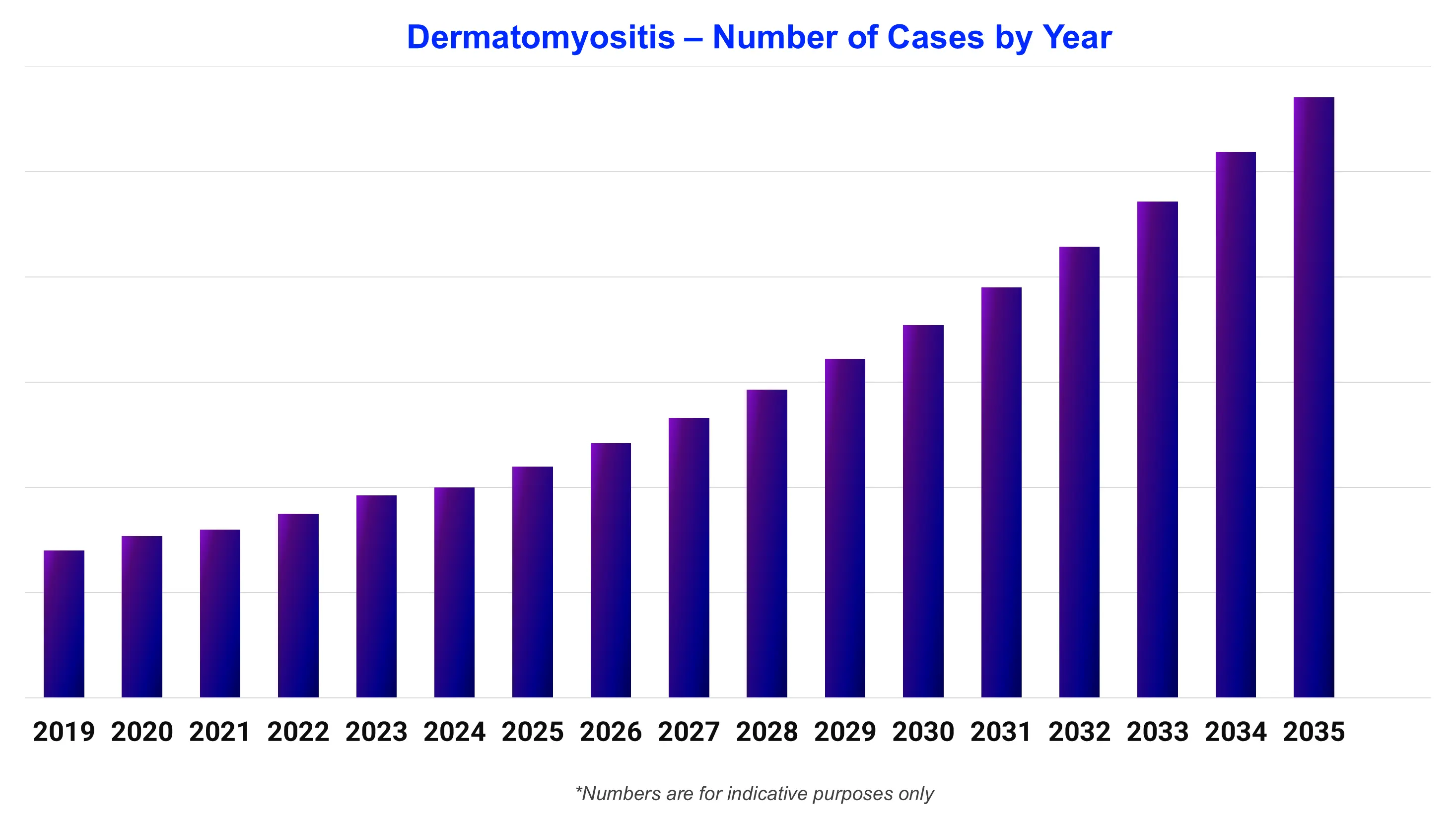
Dermatomyositis is a rare autoimmune inflammatory myopathy characterized by muscle weakness and distinctive skin manifestations. According to Christina Thymalil et al. (2024), its global incidence ranges from 1 to 10 cases per million people, with an estimated prevalence of 5 to 20 cases per 100,000 people. As per the dermatomyositis epidemiology forecast by Expert Market Research, disease prevalence remains an important indicator of the affected population.
Base Year
Historical Period
Forecast Period
Read more about this report - REQUEST FREE SAMPLE COPY IN PDF
Expert Market Research's “Dermatomyositis Epidemiology Forecast Report 2026-2035” offers comprehensive information on the prevalence and demographics of dermatomyositis. It projects the future incidence and prevalence rates of dermatomyositis cases across various populations. The study covers age, gender, and type as major determinants of the dermatomyositis population. The report highlights patterns in the prevalence of dermatomyositis over time and projects future trends based on multiple variables.
The report provides a comprehensive overview of the disease, as well as historical and projected data on the epidemiology of dermatomyositis in the 8 major markets.
Regions Covered
Dermatomyositis is a rare, acquired inflammatory disease characterized by muscle weakness and distinctive skin rashes. It is an autoimmune condition in which the immune system mistakenly attacks the body's own tissues, causing inflammation that can affect skeletal muscles and the skin. Common manifestations include weakness in muscles close to the trunk, a violet or reddish rash around the eyelids, and skin changes over the knuckles. The disease can also affect the lungs, joints, and swallowing muscles. Clinical presentations include adult-onset and juvenile dermatomyositis, with some cases associated with underlying malignancy or interstitial lung disease. Idiopathic inflammatory myopathy is a related clinical term that encompasses dermatomyositis and other inflammatory muscle disorders.
|
Parameter |
Insight |
|
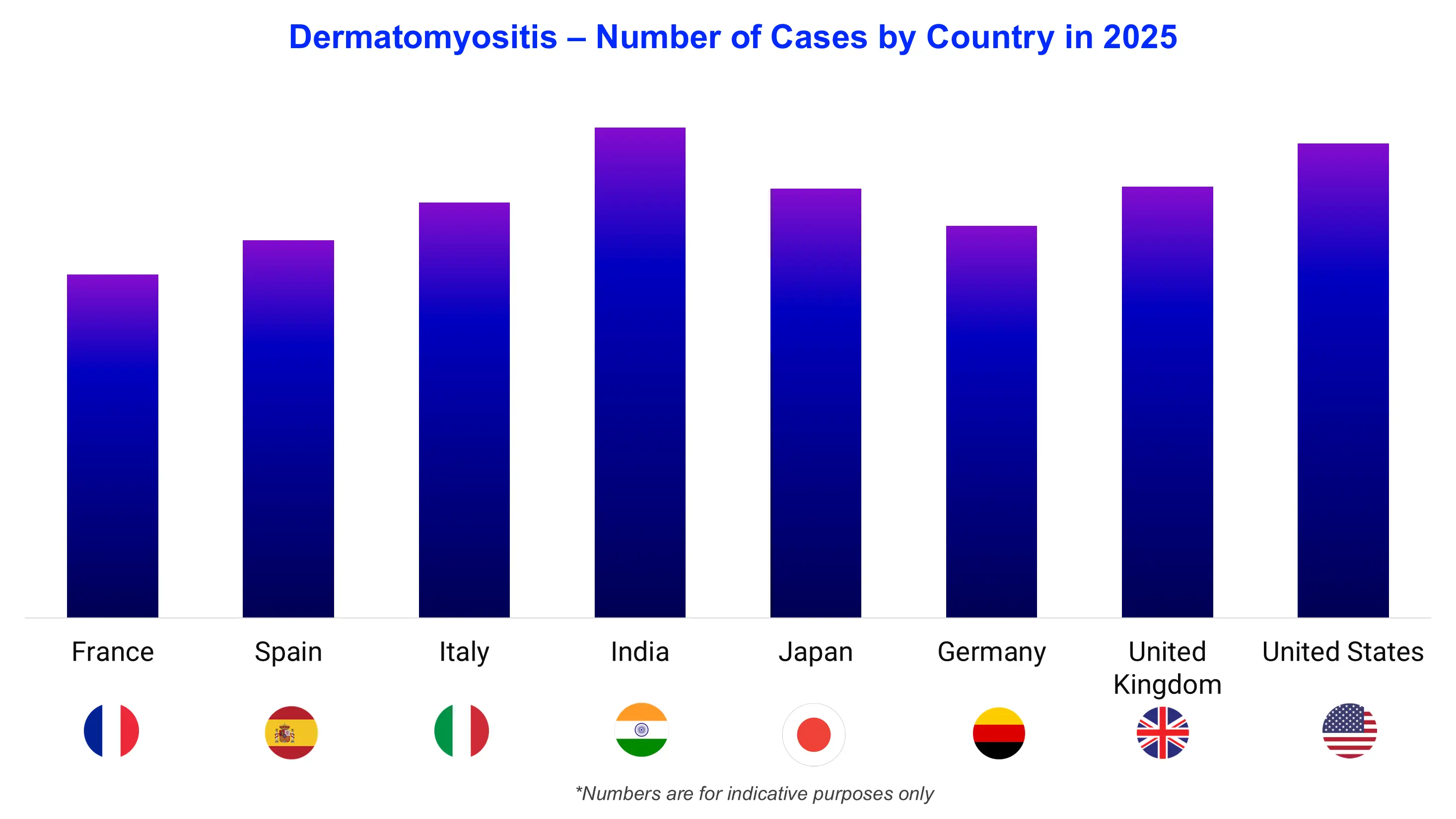
Largest Patient Pool |
United States |
|
Fastest Growing Region |
India |
|
High-Risk Population |
Females and individuals in childhood or middle-to-late adulthood |
|
Key Diagnostic Method |
Clinical assessment supported by laboratory and specialized testing |
|
Major Risk Factor |
Dermatomyositis is an autoimmune inflammatory disease. Adult-onset disease may be associated with malignancy, while genetic and environmental contributions remain under investigation |
|
Major gap in the market |
Diagnostic delays and limited disease-specific treatment options |
The dermatomyositis epidemiology division offers information on the patient pool from history to the present as well as the projected trend for each of the 8 major markets. Expert Market Research provides both current and predicted trends for the dermatomyositis epidemiology scenario by examining a wide range of studies. Additionally, the report covers the diagnosed patient pool for dermatomyositis and their trends. The data is broken down into specific categories, such as total prevalent cases in males and females, and total diagnosed cases across different age groups and patient pools.
|
Epidemiology Segment |
Key Insights |
|
Diagnosed Prevalent Cases of the Disease |
According to Christina Thymalil et al. (2024), global dermatomyositis prevalence is estimated at 5-20 cases per 100,000 people. Healio reports an adult prevalence of 21.4 per 100,000 in the United States. These estimates reflect different populations and should be interpreted in context. |
|
Gender-Specific Cases of the Disease |
As reported by Christina Thymalil et al. (2024), dermatomyositis is approximately twice as common in females as in males. Patrick Gordon et al. (2026) also reported an 84% higher incidence of dermatomyositis among females in an England-based population cohort. |
|
Age-Specific Cases of the Disease |
According to Wayan Julita K. Putri (2023), dermatomyositis has a bimodal age distribution, with peaks at 5-14 and 45-64 years. Juvenile dermatomyositis commonly begins between 4 and 10 years, as reported by Jung Woo Rhim (2021). |
|
Ethnicity-Wise Cases of the Disease |
According to Christina Thymalil et al. (2024), higher prevalence has been reported among African American adults. Patrick Gordon et al. (2026) found higher dermatomyositis incidence among South Asian and Black populations than among White populations in England. |
|
Mortality and Survival Analysis of the Disease |
The supplied epidemiological information does not quantify mortality or survival rates. Population-level assessment should consider long-term outcomes alongside age at onset, sex, ethnicity, and disease-associated complications, without inferring mortality estimates from incidence or prevalence figures. |
|
Disease Type |
Prevalence |
||
|
Classic Dermatomyositis |
A major form of dermatomyositis characterized by typical skin rashes and symmetrical proximal muscle weakness. |
||
|
Clinically Amyopathic Dermatomyositis (CADM) |
A recognized subtype characterized by typical skin manifestations without clinically apparent muscle weakness. |
||
|
Hypomyopathic Dermatomyositis |
A less apparent form involving characteristic skin manifestations and subtle or subclinical muscle involvement. |
||
|
Postmyopathic Dermatomyositis (PmDM) |
A less common form in which skin symptoms persist after muscle inflammation has resolved or become well controlled. |
||
|
Juvenile Dermatomyositis (JDM) |
A distinct form affecting children and adolescents, often associated with muscle weakness, vascular manifestations, and calcinosis. |
||
|
Malignancy-Associated Dermatomyositis |
A clinically important subtype associated with underlying malignancy, particularly in adults, requiring consideration of cancer-related associations. |
Read more about this report - REQUEST FREE SAMPLE COPY IN PDF
The dermatomyositis epidemiology data and findings for the United States, Germany, Spain, Italy, France, the United Kingdom, Japan, and India are also provided in the epidemiology section.
|
Country |
Key Insights |
|
United States |
According to Healio, adult dermatomyositis incidence is 15.2 cases per million person-years, with a prevalence of 21.4 cases per 100,000 people. Jung Woo Rhim (2021) reported juvenile dermatomyositis incidence of approximately 3 cases per million children annually. |
|
Germany |
In Germany, dermatomyositis prevalence may be influenced by improved disease recognition, access to specialist care, and more effective identification of autoimmune inflammatory myopathies among adult and pediatric populations. |
|
France |
Increased awareness of autoimmune disorders and improved diagnostic evaluation may contribute to the identification of more dermatomyositis cases, including patients with varied age-related presentations, in France. |
|
Italy |
In Italy, greater recognition of dermatomyositis among older adults and children, alongside improved access to specialist assessment, may support the identification of previously unrecognized cases. |
|
Spain |
Improvements in the recognition and diagnosis of rare autoimmune conditions may contribute to identifying dermatomyositis cases across different age groups and reducing underdiagnosis in Spain. |
|
United Kingdom |
According to Jung Woo Rhim (2021), juvenile dermatomyositis incidence is approximately 3.2 cases per million children annually. Patrick Gordon et al. (2026) reported higher dermatomyositis incidence among females and among South Asian and Black populations than among males and White populations in England. |
|
Japan |
As reported by Hinako Suzuki et al. (2023), the prevalence of polymyositis/dermatomyositis ranges from 10 to 13 cases per 100,000 people. This estimate covers the combined disease category rather than dermatomyositis alone. |
|
India |
According to Dibyasundar Mahanta et al. (2024), the reported incidence of dermatomyositis in Indian adults is 2.8-3 cases per 100,000 adults. This estimate should be interpreted according to the measure and population specified in the source. |
Across the United States, Germany, France, Italy, Spain, the United Kingdom, Japan, and India, dermatomyositis presents opportunities to improve early diagnosis, disease monitoring, and access to effective treatment. Its variable presentation across muscle, skin, and other organs can delay recognition and complicate disease management. A major unmet need is the development of therapies that provide sustained disease control while reducing reliance on long-term corticosteroids. Additional opportunities include improving access to specialist assessment, myositis antibody testing, and screening for associated complications, including interstitial lung disease and malignancy where clinically indicated.
Dermatomyositis treatment aims to control inflammation, improve muscle strength, manage skin symptoms, and prevent organ complications. Systemic corticosteroids, such as prednisone, are commonly used as initial therapy, while steroid-sparing immunosuppressants, including methotrexate, azathioprine, or mycophenolate mofetil, may help maintain disease control and reduce long-term corticosteroid exposure. Intravenous immunoglobulin may be used in selected patients, particularly those with severe muscle weakness or inadequate response to conventional treatment. Topical therapies, sun protection, and antimalarial medicines may help manage skin manifestations. Physical therapy and regular monitoring support functional recovery and identify complications. Immunomodulatory therapy is an important treatment approach, with selection guided by disease severity and organ involvement.


Upto 15% Off
USD
$2699 $2429
$4299 $3869
$5799 $4949
$6999 $5949


*While we strive to always give you current and accurate information, the numbers depicted on the website are indicative and may differ from the actual numbers in the main report. At Expert Market Research, we aim to bring you the latest insights and trends in the market. Using our analyses and forecasts, stakeholders can understand the market dynamics, navigate challenges, and capitalize on opportunities to make data-driven strategic decisions.*
Explore our key highlights of the report and gain a concise overview of key findings, trends, and actionable insights that will empower your strategic decisions.
|
Report Features |
Details |
|
Base Year |
2025 |
|
Historical Period |
2019-2025 |
|
Forecast Period |
2026-2035 |
|
Epidemiology Statistics Provided |
|
|
Segmentation Provided |
|
|
Geographies Covered |
|
Datasheet
One User
USD 2,699
USD 2,429
tax inclusive*
Single User License
One User
USD 4,299
USD 3,869
tax inclusive*
Five User License
Five User
USD 5,799
USD 4,949
tax inclusive*
Corporate License
Unlimited Users
USD 6,999
USD 5,949
tax inclusive*
*Please note that the prices mentioned below are starting prices for each bundle type. Kindly contact our team for further details.*
Flash Bundle
Small Business Bundle
Growth Bundle
Enterprise Bundle
*Please note that the prices mentioned below are starting prices for each bundle type. Kindly contact our team for further details.*
Flash Bundle
Number of Reports: 3
20%
tax inclusive*
Small Business Bundle
Number of Reports: 5
25%
tax inclusive*
Growth Bundle
Number of Reports: 8
30%
tax inclusive*
Enterprise Bundle
Number of Reports: 10
35%
tax inclusive*
How To Order

Select License Type
Choose the right license for your needs and access rights.

Click on ‘Buy Now’
Add the report to your cart with one click and proceed to register.

Select Mode of Payment
Choose a payment option for a secure checkout. You will be redirected accordingly.
Strategic Solutions for Informed Decision-Making
Gain insights to stay ahead and seize opportunities.

Get insights & trends for a competitive edge.

Track prices with detailed trend reports.

Analyse trade data for supply chain insights.

Leverage cost reports for smart savings

Enhance supply chain with partnerships.

Connect For More Information
Our expert team of analysts will offer full support and resolve any queries regarding the report, before and after the purchase.
Our expert team of analysts will offer full support and resolve any queries regarding the report, before and after the purchase.
We employ meticulous research methods, blending advanced analytics and expert insights to deliver accurate, actionable industry intelligence, staying ahead of competitors.
Our skilled analysts offer unparalleled competitive advantage with detailed insights on current and emerging markets, ensuring your strategic edge.
We offer an in-depth yet simplified presentation of industry insights and analysis to meet your specific requirements effectively.




