

Consumer Insights
Uncover trends and behaviors shaping consumer choices today
Procurement Insights
Optimize your sourcing strategy with key market data
Industry Stats
Stay ahead with the latest trends and market analysis.
Systemic lupus erythematosus (SLE) is a chronic autoimmune disease in which the immune system attacks healthy tissues, causing inflammation and potential organ damage. As per the Centers for Disease Control and Prevention (CDC), more than 200,000 people in the United States are estimated to have SLE. According to the systemic lupus erythematosus epidemiology forecast by Expert Market Research, disease prevalence supports continued attention to autoimmune disorders and their management.
Base Year
Historical Period
Forecast Period
Read more about this report - REQUEST FREE SAMPLE COPY IN PDF
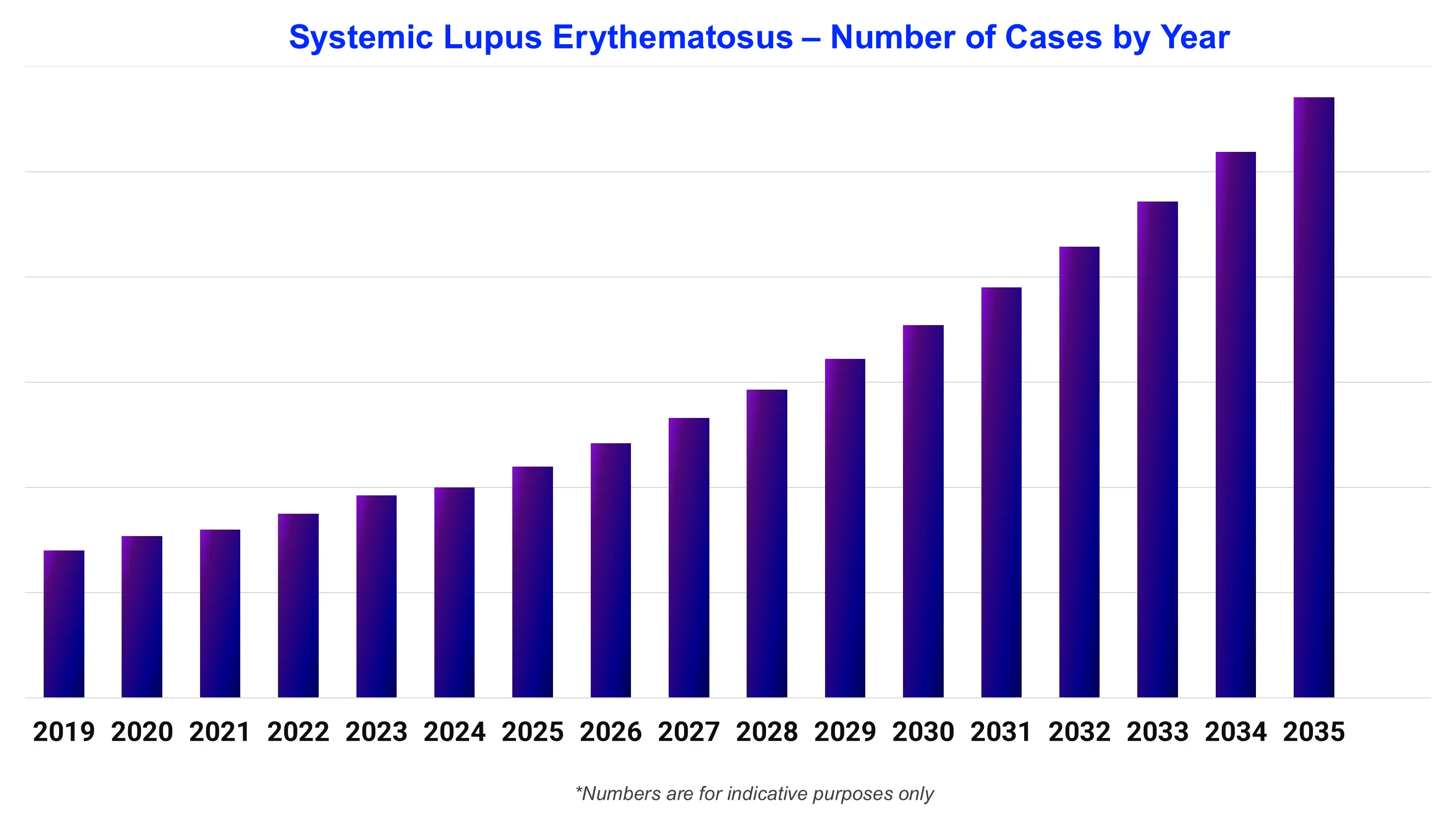
Expert Market Research's “Systemic Lupus Erythematosus Epidemiology Forecast Report 2026-2035” offers comprehensive information on the prevalence and demographics of systemic lupus erythematosus. It projects the future incidence and prevalence rates of systemic lupus erythematosus cases across various populations. The study covers age, gender, and type as major determinants of the systemic lupus erythematosus population. The report highlights patterns in the prevalence of systemic lupus erythematosus over time and projects future trends based on multiple variables.
The report provides a comprehensive overview of the disease, as well as historical and projected data on the epidemiology of systemic lupus erythematosus in the 8 major markets.
Regions Covered
Systemic lupus erythematosus (SLE) is a chronic autoimmune disease in which the immune system mistakenly attacks healthy tissues, causing inflammation and damage to multiple organs, including the skin, joints, kidneys, heart, lungs, and nervous system. Its development involves genetic susceptibility, hormonal influences, environmental exposures, and immune system dysfunction. The disease can follow periods of remission and flare-ups, with severity varying among patients. Common manifestations include fatigue, joint pain, skin rashes, and kidney involvement. SLE is a major form of systemic autoimmune disease, requiring long-term monitoring and individualized clinical management.
|
Parameter |
Insight |
|
Largest Patient Pool |
United States |
|
Fastest Growing Region |
India |
|
High-Risk Population |
Women, particularly those of childbearing age, and certain racial and ethnic populations have a higher risk of developing SLE. The disease can also affect men and children. |
|
Key Diagnostic Method |
Antinuclear antibody (ANA) blood testing, interpreted alongside symptoms, physical examination, and other laboratory findings. An ANA result alone does not establish an SLE diagnosis. |
|
Major Risk Factor |
Genetic susceptibility, hormonal influences, environmental exposures, and immune system dysfunction contribute to SLE development; no single factor explains all cases. |
|
Major gap in the market |
Delayed or missed diagnosis, challenges in recognizing varied symptoms, and the need for effective long-term disease control and prevention of organ damage. |
The systemic lupus erythematosus epidemiology division offers information on the patient pool from history to the present as well as the projected trend for each of the 8 major markets. Expert Market Research provides both current and predicted trends for the systemic lupus erythematosus epidemiology scenario by examining a wide range of studies. Additionally, the report covers the diagnosed patient pool for systemic lupus erythematosus and their trends. The data is broken down into specific categories, such as total prevalent cases in males and females, and total diagnosed cases across different age groups and patient pools.
|
Epidemiology Segment |
Key Insights |
|
Diagnosed Prevalent Cases of the Disease |
According to the Centers for Disease Control and Prevention (CDC), approximately 204,000 people in the United States have systemic lupus erythematosus (SLE), including around 184,000 females and 20,000 males. Globally, the PACE Hospitals estimates an overall SLE prevalence of 43.7 per 100,000 people. |
|
Gender-Specific Cases of the Disease |
According to the Lupus Foundation of America, approximately 90% of people with lupus are women. The CDC similarly reports that women account for approximately nine out of every ten cases, highlighting the substantial gender disparity in disease prevalence. |
|
Age-Specific Cases of the Disease |
According to the CDC, women of childbearing age, particularly those aged 15–44 years, have the highest risk of developing SLE. The Lupus Foundation of America also identifies this age group as the period when most people with lupus develop the disease. |
|
Ethnicity-Wise Cases of the Disease |
According to the CDC, Black or African American, Hispanic, Asian, and American Indian and Alaska Native populations are more affected by SLE than White populations. Black and American Indian and Alaska Native women are two to three times more likely to develop lupus than White women. |
|
Mortality and Survival Analysis of the Disease |
According to Elizabeth C. Jury et al. (2023), cardiovascular disease remains the leading cause of mortality among people with SLE, while younger patients with juvenile-onset SLE face an increased relative risk of mortality. The CDC also reports higher lupus-related mortality rates among Black people than White people. |
|
Disease Type |
Prevalence |
|
Type 1 SLE |
Represents acute, objectively measurable inflammatory disease activity, including organ-threatening flares such as lupus nephritis, inflammatory arthritis, and acute skin manifestations. It represents the major disease-activity component requiring particular attention because of its potential for organ damage. |
|
Type 2 SLE |
Encompasses persistent symptoms such as fatigue, widespread pain, and cognitive difficulties that may continue even when acute inflammation is controlled. It represents a distinct, symptom-focused component of SLE rather than a formally established minor disease subtype. |
Read more about this report - REQUEST FREE SAMPLE COPY IN PDF
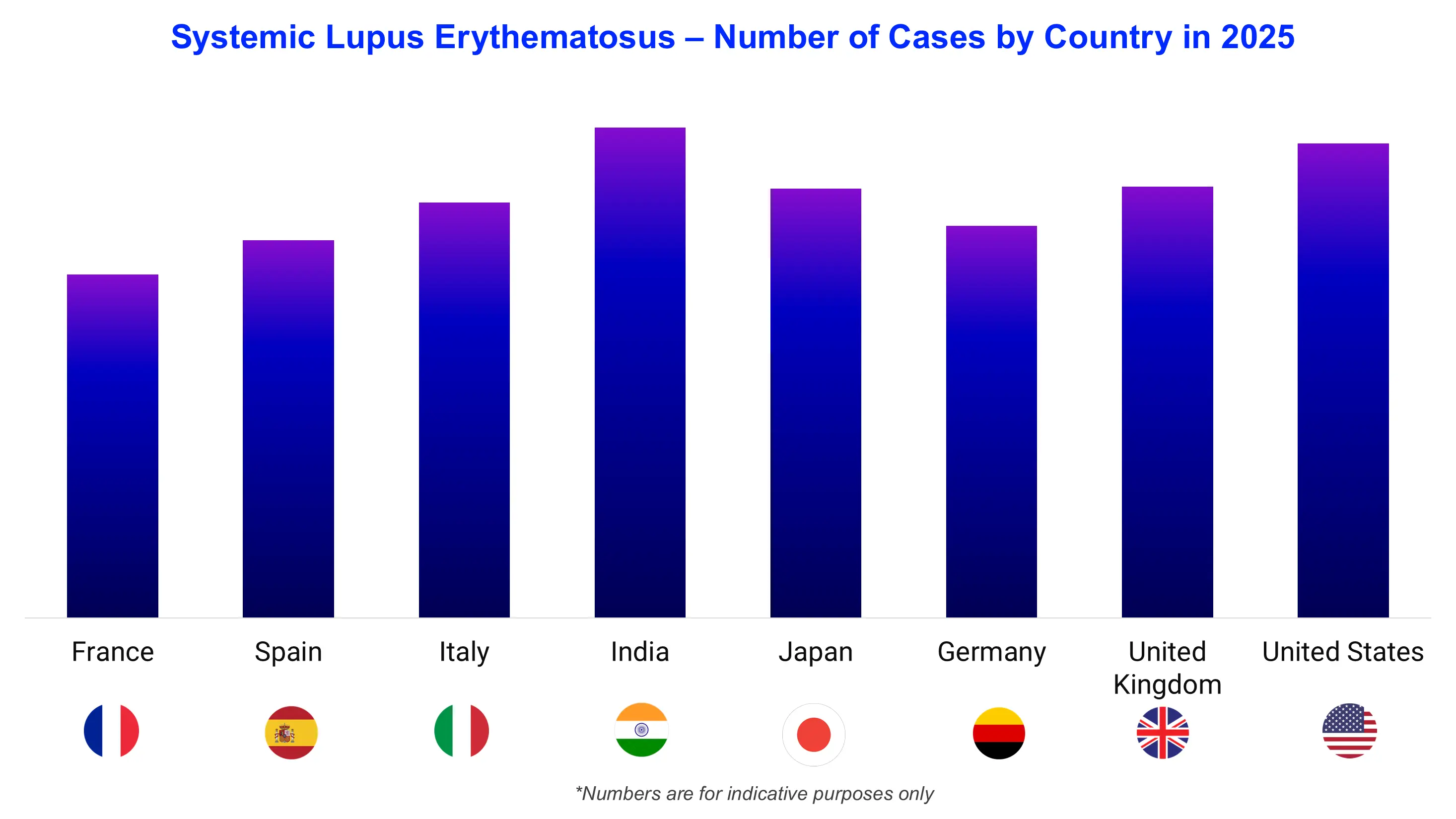
The systemic lupus erythematosus epidemiology data and findings for the United States, Germany, Spain, Italy, France, the United Kingdom, Japan, and India are also provided in the epidemiology section.
|
Country |
Key Insights |
|
United States |
According to the Centers for Disease Control and Prevention, an estimated 204,000 people have SLE, including approximately 184,000 females and 20,000 males. Women aged 15–44 years have the highest risk of developing the disease. Black and American Indian and Alaska Native women are two to three times more likely to develop lupus than White women. |
|
Germany |
Increasing recognition of diagnosed cases, long-term disease monitoring needs, and differences in access to specialist care may influence the recorded SLE burden and demand for ongoing treatment in Germany. |
|
France |
Regional differences in population characteristics, disease distribution, and access to diagnosis may contribute to variations in the recorded SLE burden across metropolitan France and its overseas territories. |
|
Italy |
The higher burden among women, regional variation in diagnosed cases, and the need for long-term management of chronic disease may influence SLE-related healthcare demand across Italy. |
|
Spain |
Geographic differences between rural and urban populations, variation in case identification, and the greater disease burden among women may affect the distribution of SLE cases and healthcare requirements across Spain. |
|
United Kingdom |
According to Elizabeth C. Jury et al. (2023), SLE affects approximately one in 1,000 people in the United Kingdom and primarily affects women. The authors also identify cardiovascular disease as the leading cause of mortality among people with SLE. |
|
Japan |
According to Yokogawa et al. (2025), 74,277 patients met the study's SLE definition in Japan between April 2019 and March 2020. The estimated prevalence was 60 per 100,000 people, with prefectural estimates ranging from 47 to 102 per 100,000. |
|
India |
According to PACE Hospitals, the reported prevalence of SLE in India is approximately 3.2 per 100,000 people. The source notes that prevalence may be higher in urban areas and that more cases are being identified in tertiary care hospitals as urbanization continues. |
Systemic lupus erythematosus presents opportunities to improve early diagnosis and long-term disease management across the United States, Germany, France, Italy, Spain, the United Kingdom, Japan, and India. Its diverse clinical manifestations can delay recognition, while organ involvement, particularly lupus nephritis, increases the need for timely diagnosis and appropriate treatment. A key opportunity is strengthening access to rheumatology services, antibody testing, and routine organ monitoring. Further growth potential lies in biologic therapies and individualized treatment strategies for patients whose disease remains active despite conventional treatment, subject to country-specific approvals, reimbursement, and access.
Systemic lupus erythematosus treatment aims to control inflammation, prevent disease flares, minimize organ damage, and improve quality of life. Hydroxychloroquine is commonly used as foundational therapy, while nonsteroidal anti-inflammatory drugs may help manage selected symptoms. Corticosteroids and immunosuppressants, including mycophenolate mofetil and azathioprine, may be prescribed according to disease severity and organ involvement. Biologic therapies, such as belimumab and anifrolumab, provide additional options for eligible patients with active disease. Treatment is individualized according to clinical manifestations, disease activity, and safety considerations, with targeted immunotherapy contributing to the expansion of treatment options.


Upto 15% Off
USD
$2699 $2429
$4299 $3869
$5799 $4949
$6999 $5949


*While we strive to always give you current and accurate information, the numbers depicted on the website are indicative and may differ from the actual numbers in the main report. At Expert Market Research, we aim to bring you the latest insights and trends in the market. Using our analyses and forecasts, stakeholders can understand the market dynamics, navigate challenges, and capitalize on opportunities to make data-driven strategic decisions.*
Explore our key highlights of the report and gain a concise overview of key findings, trends, and actionable insights that will empower your strategic decisions.
|
Report Features |
Details |
|
Base Year |
2025 |
|
Historical Period |
2019-2025 |
|
Forecast Period |
2026-2035 |
|
Epidemiology Statistics Provided |
|
|
Segmentation Provided |
|
|
Geographies Covered |
|
Datasheet
One User
USD 2,699
USD 2,429
tax inclusive*
Single User License
One User
USD 4,299
USD 3,869
tax inclusive*
Five User License
Five User
USD 5,799
USD 4,949
tax inclusive*
Corporate License
Unlimited Users
USD 6,999
USD 5,949
tax inclusive*
*Please note that the prices mentioned below are starting prices for each bundle type. Kindly contact our team for further details.*
Flash Bundle
Small Business Bundle
Growth Bundle
Enterprise Bundle
*Please note that the prices mentioned below are starting prices for each bundle type. Kindly contact our team for further details.*
Flash Bundle
Number of Reports: 3
20%
tax inclusive*
Small Business Bundle
Number of Reports: 5
25%
tax inclusive*
Growth Bundle
Number of Reports: 8
30%
tax inclusive*
Enterprise Bundle
Number of Reports: 10
35%
tax inclusive*
How To Order

Select License Type
Choose the right license for your needs and access rights.

Click on ‘Buy Now’
Add the report to your cart with one click and proceed to register.

Select Mode of Payment
Choose a payment option for a secure checkout. You will be redirected accordingly.
Strategic Solutions for Informed Decision-Making
Gain insights to stay ahead and seize opportunities.

Get insights & trends for a competitive edge.

Track prices with detailed trend reports.

Analyse trade data for supply chain insights.

Leverage cost reports for smart savings

Enhance supply chain with partnerships.

Connect For More Information
Our expert team of analysts will offer full support and resolve any queries regarding the report, before and after the purchase.
Our expert team of analysts will offer full support and resolve any queries regarding the report, before and after the purchase.
We employ meticulous research methods, blending advanced analytics and expert insights to deliver accurate, actionable industry intelligence, staying ahead of competitors.
Our skilled analysts offer unparalleled competitive advantage with detailed insights on current and emerging markets, ensuring your strategic edge.
We offer an in-depth yet simplified presentation of industry insights and analysis to meet your specific requirements effectively.




